It’s been one week since I arrived at the farm.
I’ve just been watching. Slowing down. Learning the rhythm of the farm.
Mornings begin with greeting everyone.
Today when I walked in, I saw Anshul and Reuben sitting together (a rare sight, because both of them are constantly moving around the farm). When I reached them, I realised they were discussing: which greens to include in the salad box that’s
It’s been one week since I arrived at the farm.
I’ve just been watching. Slowing down. Learning the rhythm of the farm.
Mornings begin with greeting everyone.
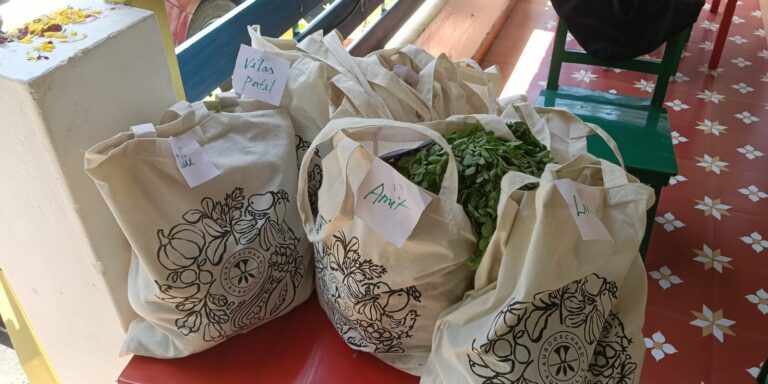
Today when I walked in, I saw Anshul and Reuben sitting together (a rare sight, because both of them are constantly moving around the farm). When I reached them, I realised they were discussing: which greens to include in the salad box that’s launching next week.
Anshul noticed me and immediately joked, “Reuben ask her, she only eats salad.”
So we started listing every edible green that is currently growing.
Then Anshul asked me to go around the farm and harvest whatever we could use to make a sample salad today itself. I was excited, but I wasn’t sure if I remembered all the directions properly.
Luckily, Reuben became my saviour. He took me around the entire farm, plant by plant.
We harvested together. Both of us were genuinely so happy because it’s been so long since we actually harvested something with our hands. There is something extremely grounding about directly touching the soil and the plants again.
But I was also feeling a lil guilty like I was taking his kitchen time… but in that exact moment he said:
“Astha thank you – I’ve been so occupied in kitchen experiments that I haven’t visited the farm, the soil in so long. It feels so good to be back.”
That sentence relieved every bit of guilt.
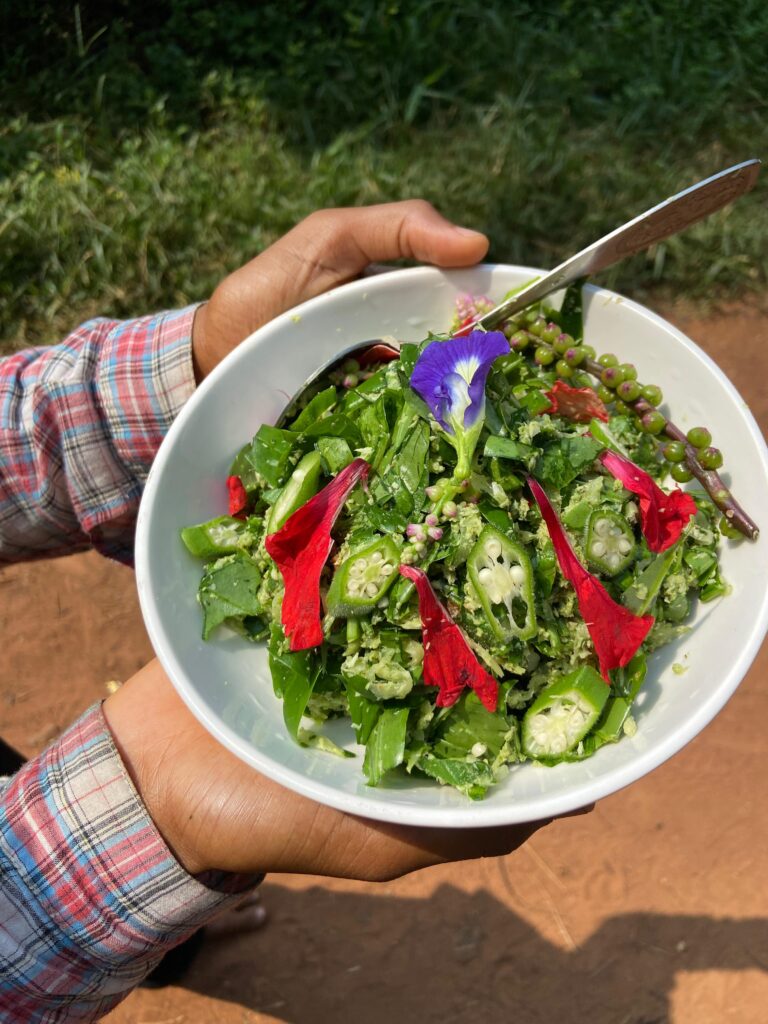
Then the whole team (Charan, Reuben and Ram) gathered around to see the final salad we made. We photographed it. We ate it. We LOVED the flavours.
The next day again, we tested a second version.
This time the dressing was even better. We also measured the exact quantity and box size.
Now, it feels real.
(…and here is where the science comes in)
Join our newsletter for exclusive updates!
AuroOrchard is certified organic by the Tamil Nadu Organic Certification (ORG/SC/1906/001683) Department accredited by APEDA (Agricultural and Processed Food Products Exports Development Authority), New Delhi, Ministry of Commerce and Industry, Government of India.
AuroOrchard Poultry is recognised under the Certified Humane Program, a globally recognised, independent, international auditing body dedicated to creating a more humane world for farm animals.