In Tamil Nadu, farm workers (cultivators and labourers) have dropped from ~62% of the total workforce in the state in 1981 to ~41% in 2001, and in a more recent study from 40% in 2012 to 22% in 2022
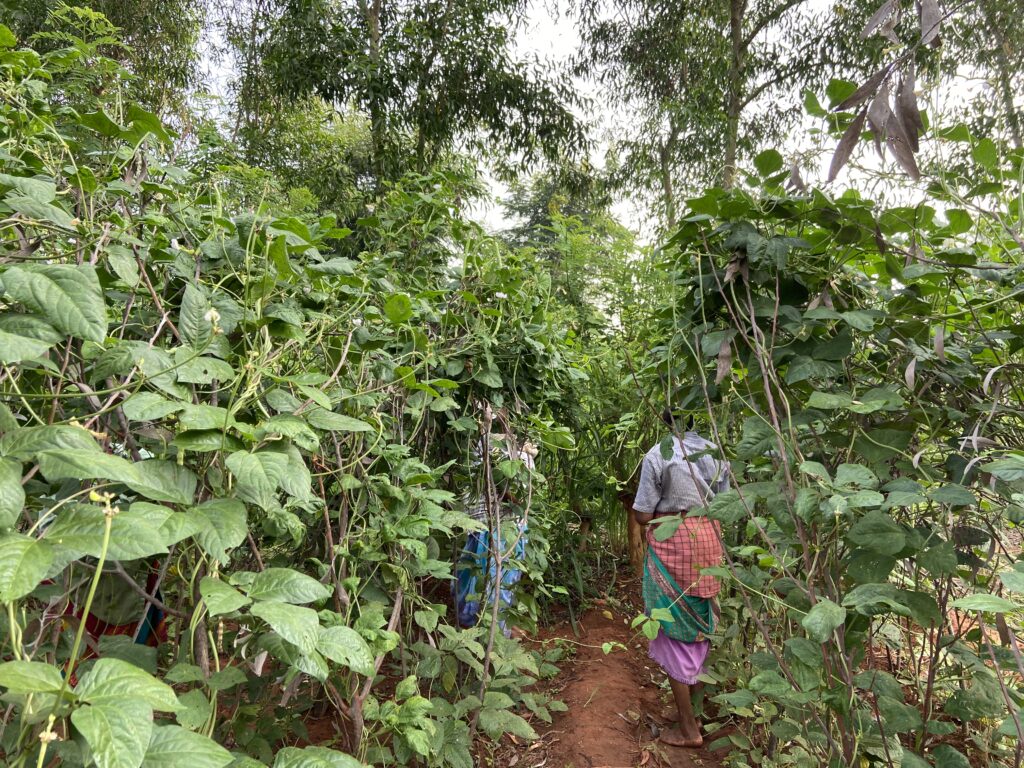
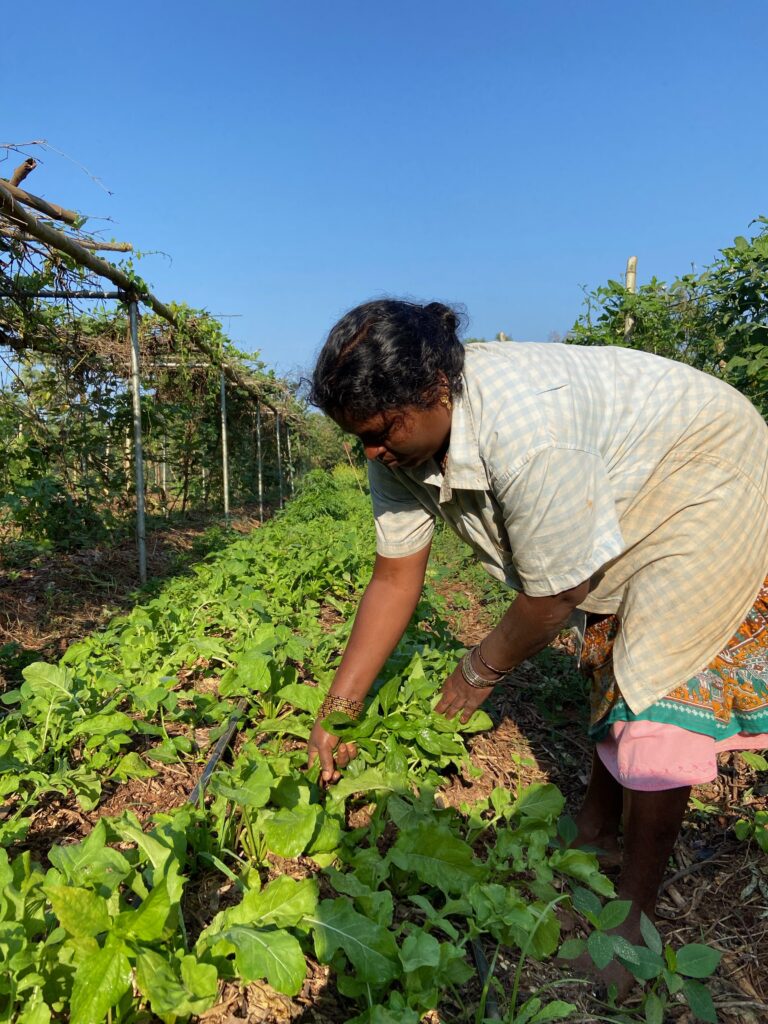
“However they roam, the world must follow still the plougher’s team;
Though toilsome, culture of the ground as noblest toil esteem.”— Thirukural | v. 1031
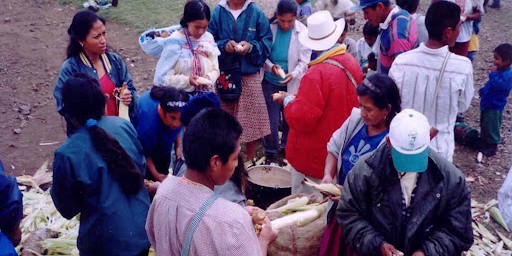
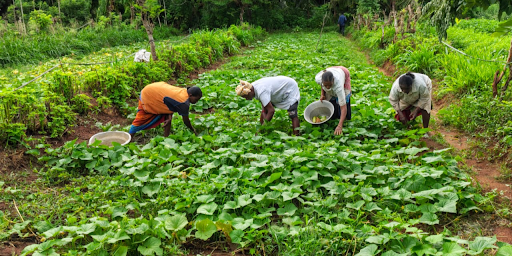
In Tamil Nadu, farm workers (cultivators and labourers) have dropped from ~62% of the total workforce in the state in 1981 to ~41% in 2001, and in a more recent study from 40% in 2012 to 22% in 2022 (Vijayabaskar, 2017; Gunasekar, 2025). The number keeps declining and is only representative of the same trend across the country and the world . The causes are complex and range from fragmentation of land leaving farming unviable on small lands (95% of farmers have land less than 5 acres), heavy work load, indebtedness, discrimination, lack of welfare schemes or accessibility and better paying opportunities as urban labour (Gunasekar, 2025). The National Sample Survey of 2005 reported that 40% of the farmers did not like farming and were of the opinion that, given a choice, they would take up some other career. 27% found it ‘not profitable’, another 8% reported that it is ‘risky’ and another 5% did not like it for ‘other reasons’.
Research also shows that about 45 farmers commit suicide in India every day with an increase of 2.5% every year (Nagraj et al., 2014). These numbers are highly conservative as farmer deaths remain under-reported and farmers who do not own land, especially women and children are excluded (Haluwalia, 2025). The reasons again are complex ranging from socio-cultural, financial and psychological. Thus, youth is being lost from agriculture to the increasing urbanisation, we are also slowly bleeding out the existing farmers. Scholars have imagined this culmination of this shift into a “post-agrarian” state, a state of transition from agricultural sector to the manufacturing and service sector (Vijayabaskar, 2017) – eventually, a world without agriculture.
In a recent article, Torero, the Chief Economist of the Food and Agriculture Organization of the United Nations, points out the declining number of people involved in agriculture, the rising median age of the current farming populations and the lack of job opportunities for young people. His thesis is that agriculture is more than just “growing food” and that young people can be lured into agriculture through tech-startups, supply chain solutions and so on. There is also a general sense amongst agrarian scholars that creating jobs in the urban sector will lead to social emancipation of agriculture workers. They largely suggest that as long as rural youth find quality jobs outside of the farms, the state would have exercised good political and social intervention. While this is appreciated, it still doesn’t answer the fundamental question- what agriculture can we have in the next fifty years if there are no farmers at all?– the farmers who are involved in “growing food”. Who will grow food in the coming decades if the post-agrarian paradigm was to be fully realised and leaves a vacuum in rural life and agricultural work? How can social, cultural and spiritual skills be reproduced that make the very foundation of agriculture?
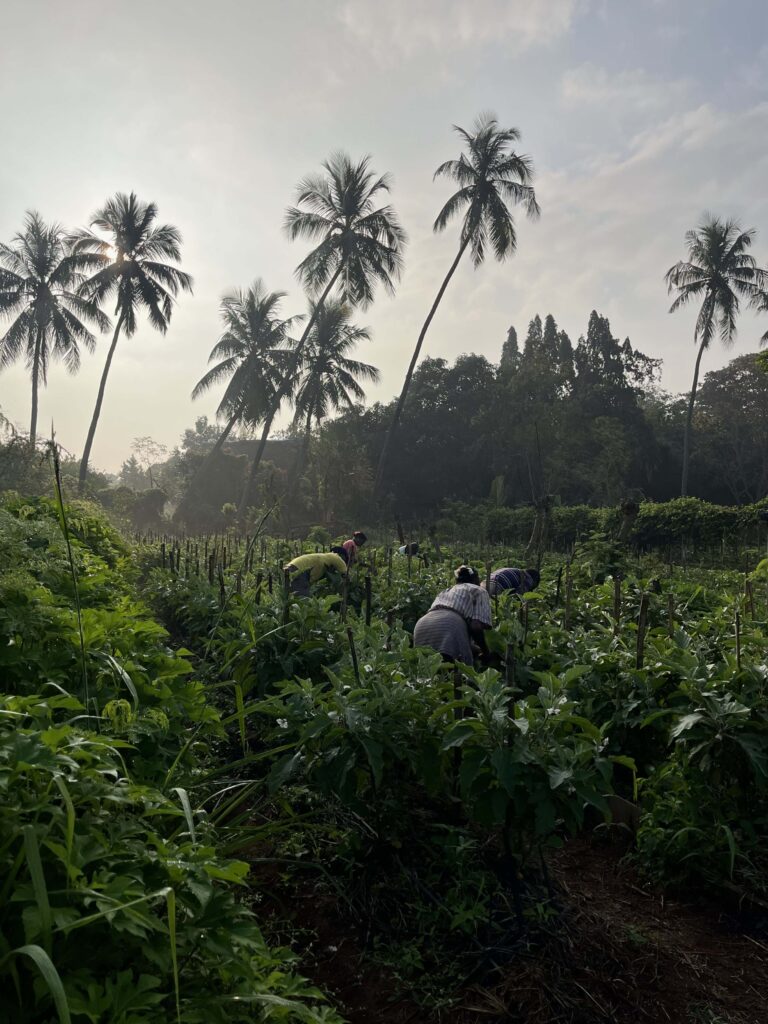
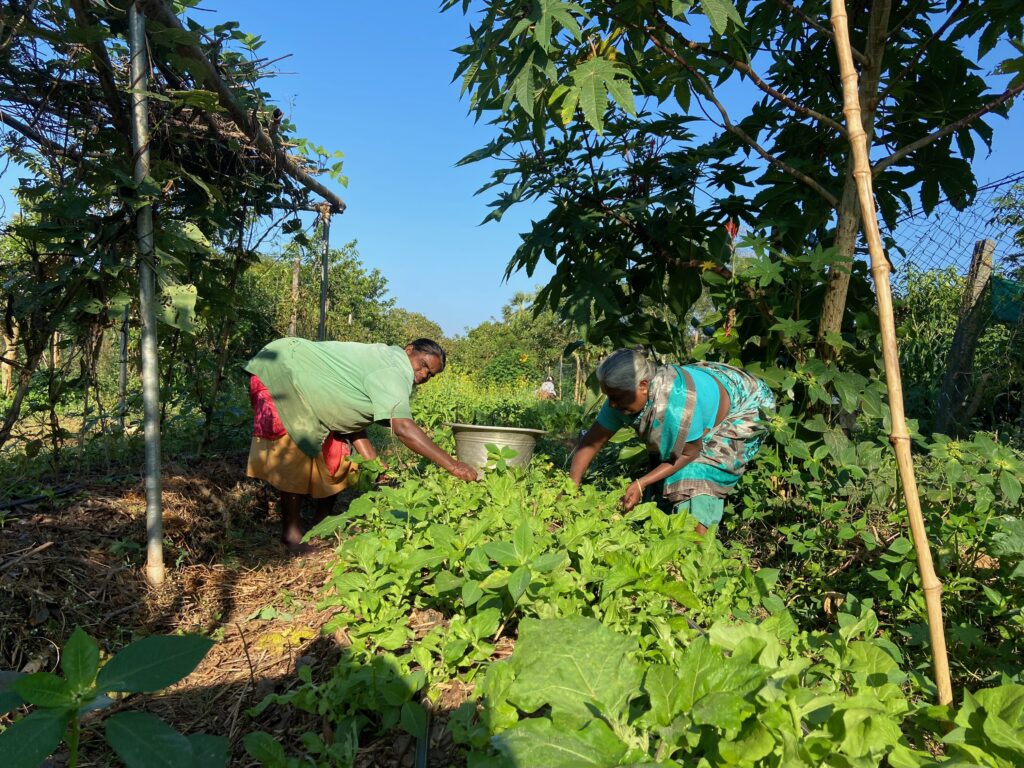
This story is even more stark in Auroville, where we aspire to be self-sufficient through karma yoga and spiritual realisation in material work. Out of the 2665 adult Aurovilians (Census 2025), only 49 are farming, and this includes part-time farmers as well. That’s less than 2% of Aurovilians working on the farms–1 Aurovilian farmer for 55 Aurovilians. This number is also one-third of the number of labour hired from the villages around Auroville for permanent or seasonal farmwork (around 140 people). We have outsourced our difficult work to the villages for cheaper labour while we engage in ‘higher’ pursuits of a spiritualised community. We must acknowledge that we are not only far from self-sufficiency in terms of food quantities, but also in terms of work despite the fact that the community keeps growing. Moreover, the median age of the existing farmers is rising with only a few young Aurovilians involved. So, where is the next generation of farmers of Auroville? And how can we even expect to have young people join the farms when the perception of farming is that of a ‘profession of poverty’, constant battle with wildlife, lack of acknowledgement for Auroville grown food within the community and a growing mistrust and lack of support (financial and otherwise) from the Auroville governance for farmers?
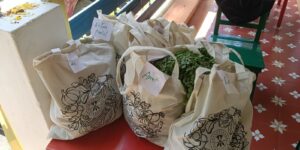
In the last two years, AuroOrchard has made a deliberate effort to welcome new volunteers, newcomers and young Aurovilians on the farm by offering them an opportunity for different kinds of works (field work–vegetables, orchards, harvesting, cooking, food preservation, documentation, research, education). We now have 7 newcomers on the farm, learning about farming and helping us build a new team for the future. All these newcomers are supported directly by the farm with no support from the central fund. This puts a lot of financial pressure on the farm and restricts us from taking more young people and engaging them in meaningful work as they embark on their journey in Auroville. To support a new generation of farmers, we have started diversifying our income through preserved products from the farm and educational programs. And yet, this is not enough. This year, we are raising funds to support this young team.
Additionally, we are trying to reason with the Auroville governance that this is worth investing in–for engaging newcomers as well as supporting one of the most crucial activities for sustenance and growth- growing food. We need a radical reorientation of our policy for the farms, which also means giving up all the neoliberal and capitalist measures that seem to have completely overtaken all aspects of Auroville’s work. Agriculture will need to be situated beyond ‘just’ an activity of growing food, but a necessity for connecting with the land, for social, cultural and spiritual regeneration, as well as a path of karma yoga in service to the land and the community. The policies of the next five years will determine the future of Auroville’s agriculture, its aspiration of food self-sufficiency and its access to consciously grown food. Would we really lose a generation of farmers due to lack of will, support and care?
“However they roam, the world must follow still the plougher’s team;
Though toilsome, culture of the ground as noblest toil esteem.”— Thirukural | v. 1031
In Tamil Nadu, farm workers (cultivators and labourers) have dropped from ~62% of the total workforce in the state in 1981 to ~41% in 2001, and in a more recent study from 40% in 2012 to 22% in 2022 (Vijayabaskar, 2017; Gunasekar, 2025). The number keeps declining and is only representative of the same trend across the country and the world . The causes are complex and range from fragmentation of land leaving farming unviable on small lands (95% of farmers have land less than 5 acres), heavy work load, indebtedness, discrimination, lack of welfare schemes or accessibility and better paying opportunities as urban labour (Gunasekar, 2025). The National Sample Survey of 2005 reported that 40% of the farmers did not like farming and were of the opinion that, given a choice, they would take up some other career. 27% found it ‘not profitable’, another 8% reported that it is ‘risky’ and another 5% did not like it for ‘other reasons’.
Research also shows that about 45 farmers commit suicide in India every day with an increase of 2.5% every year (Nagraj et al., 2014). These numbers are highly conservative as farmer deaths remain under-reported and farmers who do not own land, especially women and children are excluded (Haluwalia, 2025). The reasons again are complex ranging from socio-cultural, financial and psychological. Thus, youth is being lost from agriculture to the increasing urbanisation, we are also slowly bleeding out the existing farmers. Scholars have imagined this culmination of this shift into a “post-agrarian” state, a state of transition from agricultural sector to the manufacturing and service sector (Vijayabaskar, 2017) – eventually, a world without agriculture.
In a recent article, Torero, the Chief Economist of the Food and Agriculture Organization of the United Nations, points out the declining number of people involved in agriculture, the rising median age of the current farming populations and the lack of job opportunities for young people. His thesis is that agriculture is more than just “growing food” and that young people can be lured into agriculture through tech-startups, supply chain solutions and so on. There is also a general sense amongst agrarian scholars that creating jobs in the urban sector will lead to social emancipation of agriculture workers. They largely suggest that as long as rural youth find quality jobs outside of the farms, the state would have exercised good political and social intervention. While this is appreciated, it still doesn’t answer the fundamental question- what agriculture can we have in the next fifty years if there are no farmers at all?– the farmers who are involved in “growing food”. Who will grow food in the coming decades if the post-agrarian paradigm was to be fully realised and leaves a vacuum in rural life and agricultural work? How can social, cultural and spiritual skills be reproduced that make the very foundation of agriculture?
This story is even more stark in Auroville, where we aspire to be self-sufficient through karma yoga and spiritual realisation in material work. Out of the 2665 adult Aurovilians (Census 2025), only 49 are farming, and this includes part-time farmers as well. That’s less than 2% of Aurovilians working on the farms–1 Aurovilian farmer for 55 Aurovilians. This number is also one-third of the number of labour hired from the villages around Auroville for permanent or seasonal farmwork (around 140 people). We have outsourced our difficult work to the villages for cheaper labour while we engage in ‘higher’ pursuits of a spiritualised community. We must acknowledge that we are not only far from self-sufficiency in terms of food quantities, but also in terms of work despite the fact that the community keeps growing. Moreover, the median age of the existing farmers is rising with only a few young Aurovilians involved. So, where is the next generation of farmers of Auroville? And how can we even expect to have young people join the farms when the perception of farming is that of a ‘profession of poverty’, constant battle with wildlife, lack of acknowledgement for Auroville grown food within the community and a growing mistrust and lack of support (financial and otherwise) from the Auroville governance for farmers?
In the last two years, AuroOrchard has made a deliberate effort to welcome new volunteers, newcomers and young Aurovilians on the farm by offering them an opportunity for different kinds of works (field work–vegetables, orchards, harvesting, cooking, food preservation, documentation, research, education). We now have 7 newcomers on the farm, learning about farming and helping us build a new team for the future. All these newcomers are supported directly by the farm with no support from the central fund. This puts a lot of financial pressure on the farm and restricts us from taking more young people and engaging them in meaningful work as they embark on their journey in Auroville. To support a new generation of farmers, we have started diversifying our income through preserved products from the farm and educational programs. And yet, this is not enough. This year, we are raising funds to support this young team.
Additionally, we are trying to reason with the Auroville governance that this is worth investing in–for engaging newcomers as well as supporting one of the most crucial activities for sustenance and growth- growing food. We need a radical reorientation of our policy for the farms, which also means giving up all the neoliberal and capitalist measures that seem to have completely overtaken all aspects of Auroville’s work. Agriculture will need to be situated beyond ‘just’ an activity of growing food, but a necessity for connecting with the land, for social, cultural and spiritual regeneration, as well as a path of karma yoga in service to the land and the community. The policies of the next five years will determine the future of Auroville’s agriculture, its aspiration of food self-sufficiency and its access to consciously grown food. Would we really lose a generation of farmers due to lack of will, support and care?
Join our newsletter for exclusive updates!
AuroOrchard is certified organic by the Tamil Nadu Organic Certification (ORG/SC/1906/001683) Department accredited by APEDA (Agricultural and Processed Food Products Exports Development Authority), New Delhi, Ministry of Commerce and Industry, Government of India.
AuroOrchard Poultry is recognised under the Certified Humane Program, a globally recognised, independent, international auditing body dedicated to creating a more humane world for farm animals.