There is a common myth that imbalances in insect populations will disappear if agricultural systems are brought “back into balance.” This assumption rests on the idea that agriculture itself is a balanced ecosystem, which is fundamentally incorrect. Agricultural systems—even in their most natural forms—are human-designed systems, shaped by human needs, diets, and production goals.
There is a common myth that imbalances in insect populations will disappear if agricultural systems are brought “back into balance.” This assumption rests on the idea that agriculture itself is a balanced ecosystem, which is fundamentally incorrect. Agricultural systems—even in their most natural forms—are human-designed systems, shaped by human needs, diets, and production goals.
While diversification and ecological practices can reduce the severity of pest outbreaks, they cannot eliminate them. Modern agriculture, which serves diets limited to a relatively small range of vegetables and fruits, necessarily restricts the diversity that can be accommodated on the farm. In this sense, persistent insect pressure is an inherent feature of agriculture. It cannot be completely resolved, only moderated through careful and continuous management (Oerke, 2005).
Moreover, pest pressure today is shaped not only by on-farm diversity, but by the biology of the larger landscape and by changing climatic conditions. Research in agroecology and landscape ecology helps explain why pest pressure can remain high even in diversified farms. Studies show that while ecological practices like crop diversification and habitat enhancement can increase populations of natural enemies, they do not always translate into consistent pest suppression in every field because pest regulation depends strongly on landscape context and habitat structure beyond the farm boundary. For example, natural pest control tends to be stronger in complex, patchy landscapes, with abundant non-crop habitats that support predators and parasitoids, but this effect varies and is not guaranteed (Bianchi et al., 2006; Poveda et al., 2025).
Another important limitation of ecological pest regulation lies in the difference between ecological and agricultural time scales. Predator–prey relationships, soil food webs, and habitat-based regulation often require many years to stabilise, whereas farms operate on seasonal cycles that demand immediate outcomes. Farmers must harvest crops within weeks or months, not decades. This temporal mismatch means that even ecologically well-designed farms often need active interventions to bridge the gap between long-term ecological recovery and short-term production needs.
In our own production analyses, we found that we lose around 30% of certain crops due to insect damage. These include borers, mealybugs, hoppers, and beetles on brinjal; aphids on long beans; blister beetles on lady fingers and beans; and red gourd beetles on pumpkins, cucumbers, and other gourds—despite years of intercropping, flowering hedges, and multi-layered cropping systems.
To prevent severe losses, we have so far relied on neem oil sprays and commercially available biopesticides such as Beauveria bassiana (a fungus) and Bacillus thuringiensis (a bacterium). While effective to a degree, these are purchased inputs. We have therefore been exploring more diverse, farm-made preparations such as Themmor Karaisal, Panchagavya, and fermented leaf extracts using plants like Calotropis, Adhatoda, castor, and moonflower—though not yet with full consistency. Our goal has never been a complete elimination of insects, but the cultivation of systems capable of tolerating a certain level of damage without catastrophic crop loss. So far, we have accepted around 30% as the fair share, our contribution to the ecology, the tax the farmer pays to the land for setting up agriculture. However, given the precarious financial situation on the farm as well as the pressure to deliver more food for the community, we are forced to re-assess if some of these losses can be avoided without damaging the ecosystem.
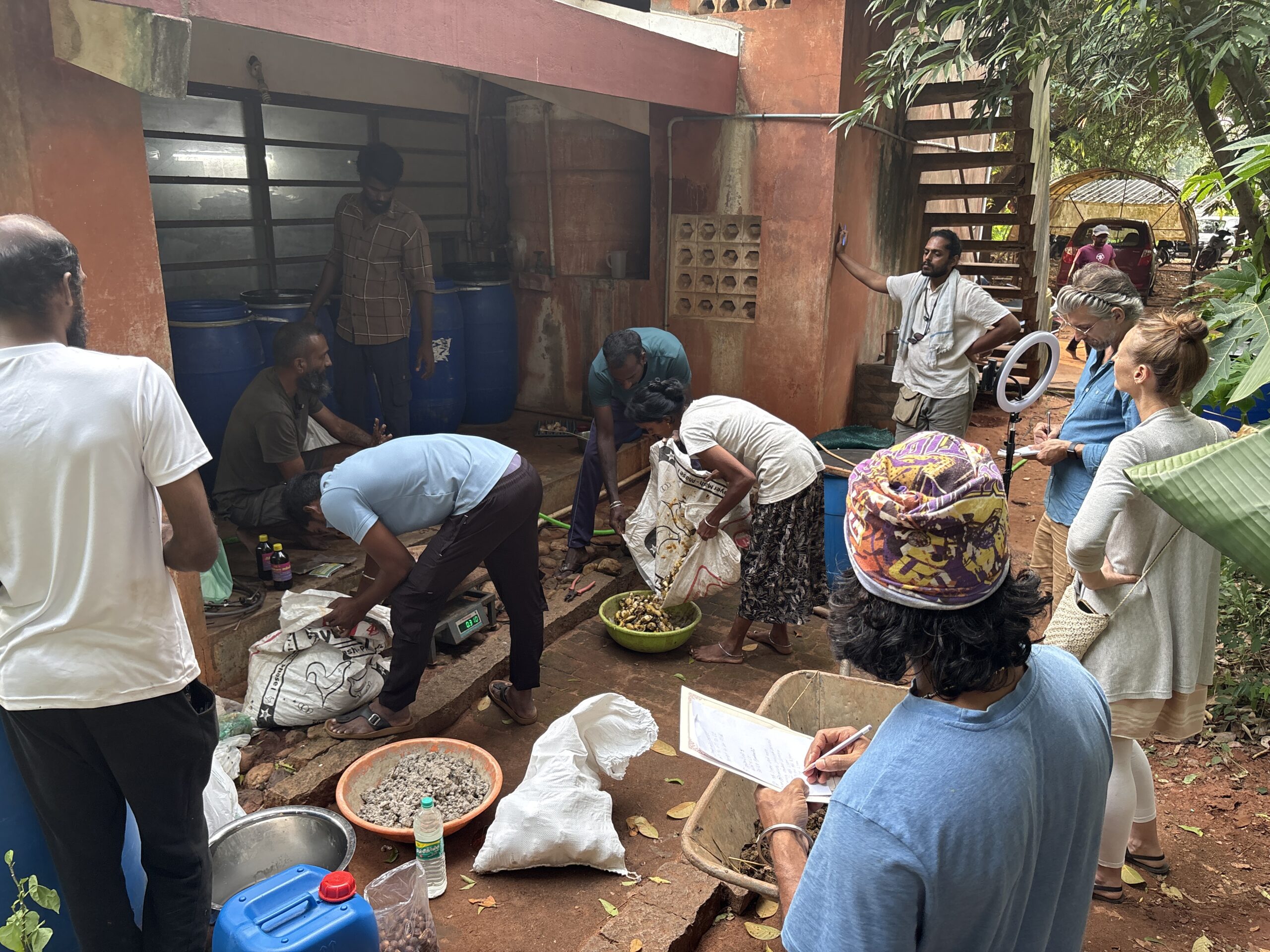
Recently, we met the Aarka team (Elen and Shankar), who have developed formulations aimed at rebuilding functional ecological relationships that were historically embedded in farming systems, though under very different population, climatic, and landscape conditions. Their herbal preparation, Aarka, can be applied in dilution and combined with other ferments—such as oil mixes, fish amino acids, and Themmor Karaisal—for foliar sprays to reduce fungal, bacterial, and insect pressure. These bioferments not only prevent “pests” but also deliver essential herb compounds and micronutrients to the plants, strengthening them and building their own capacity to deal with biological pressures.
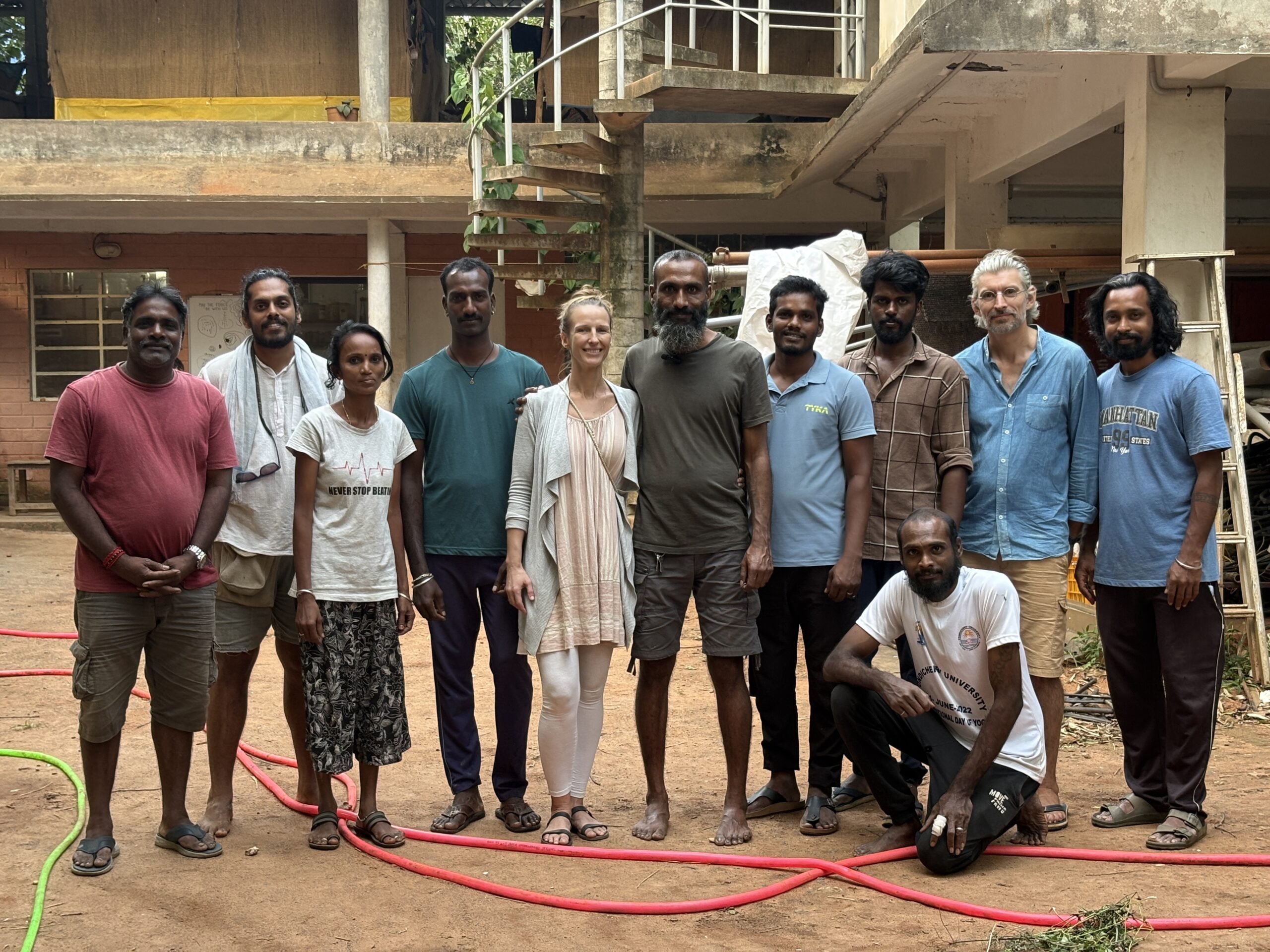
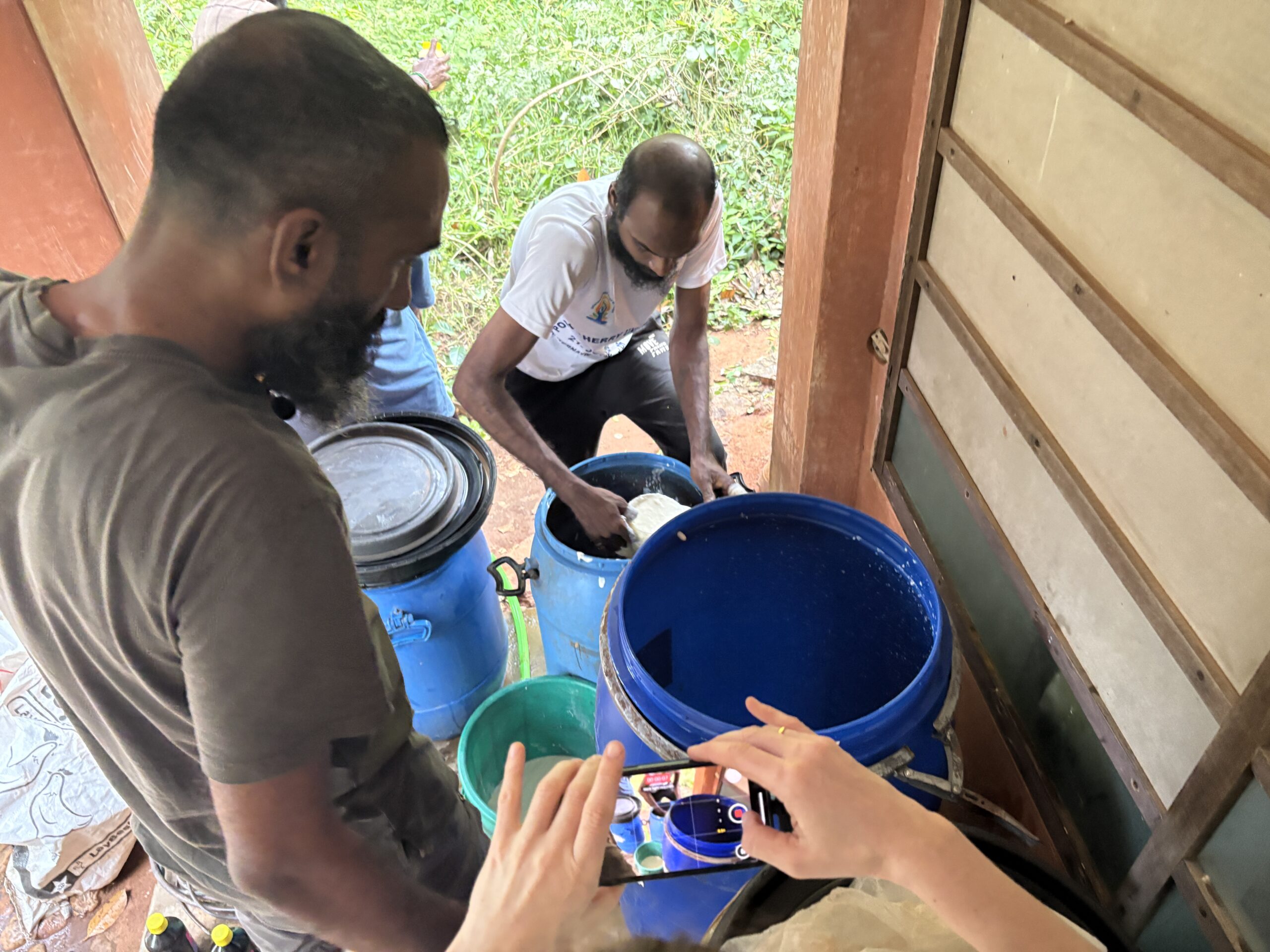
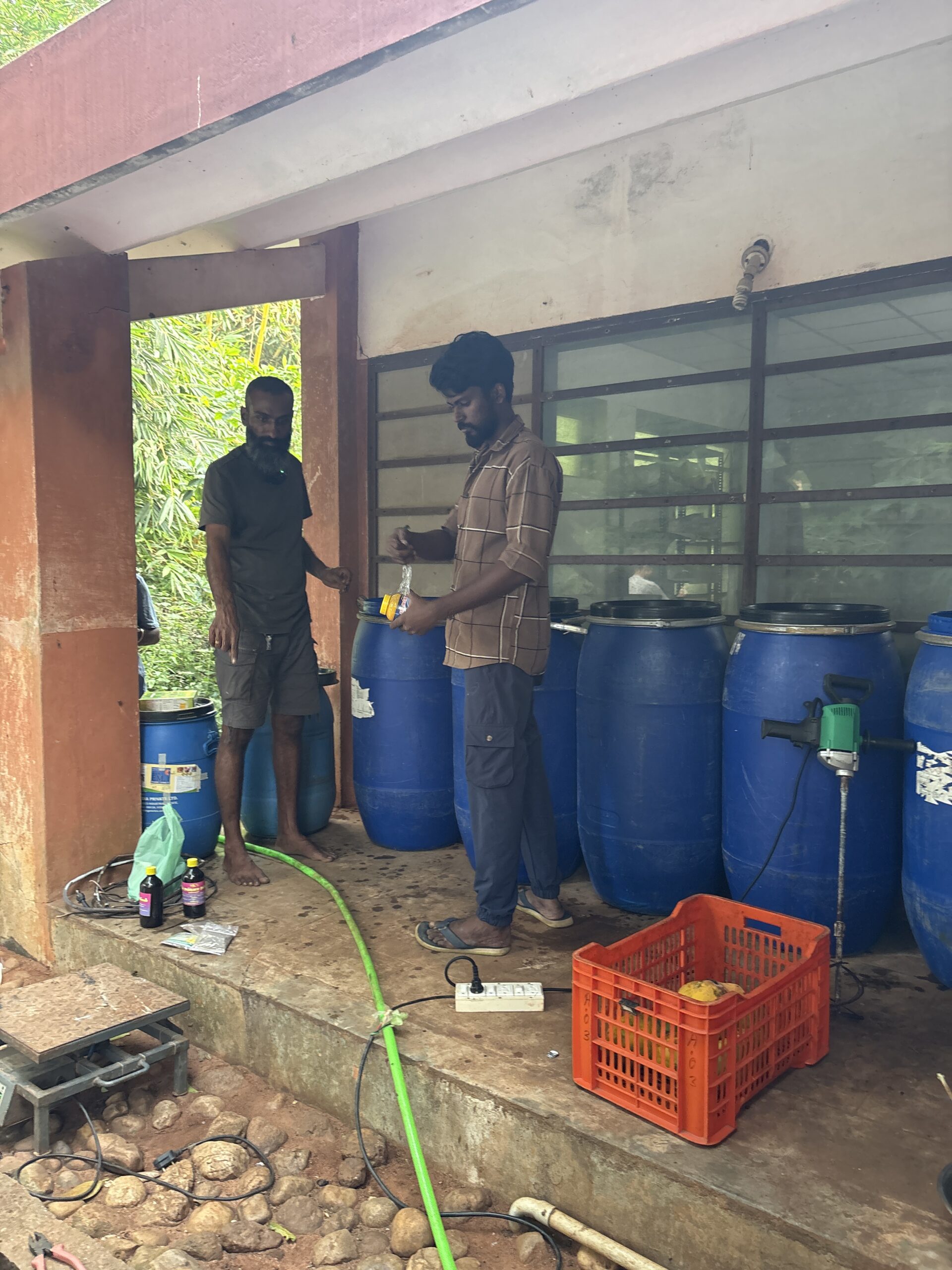
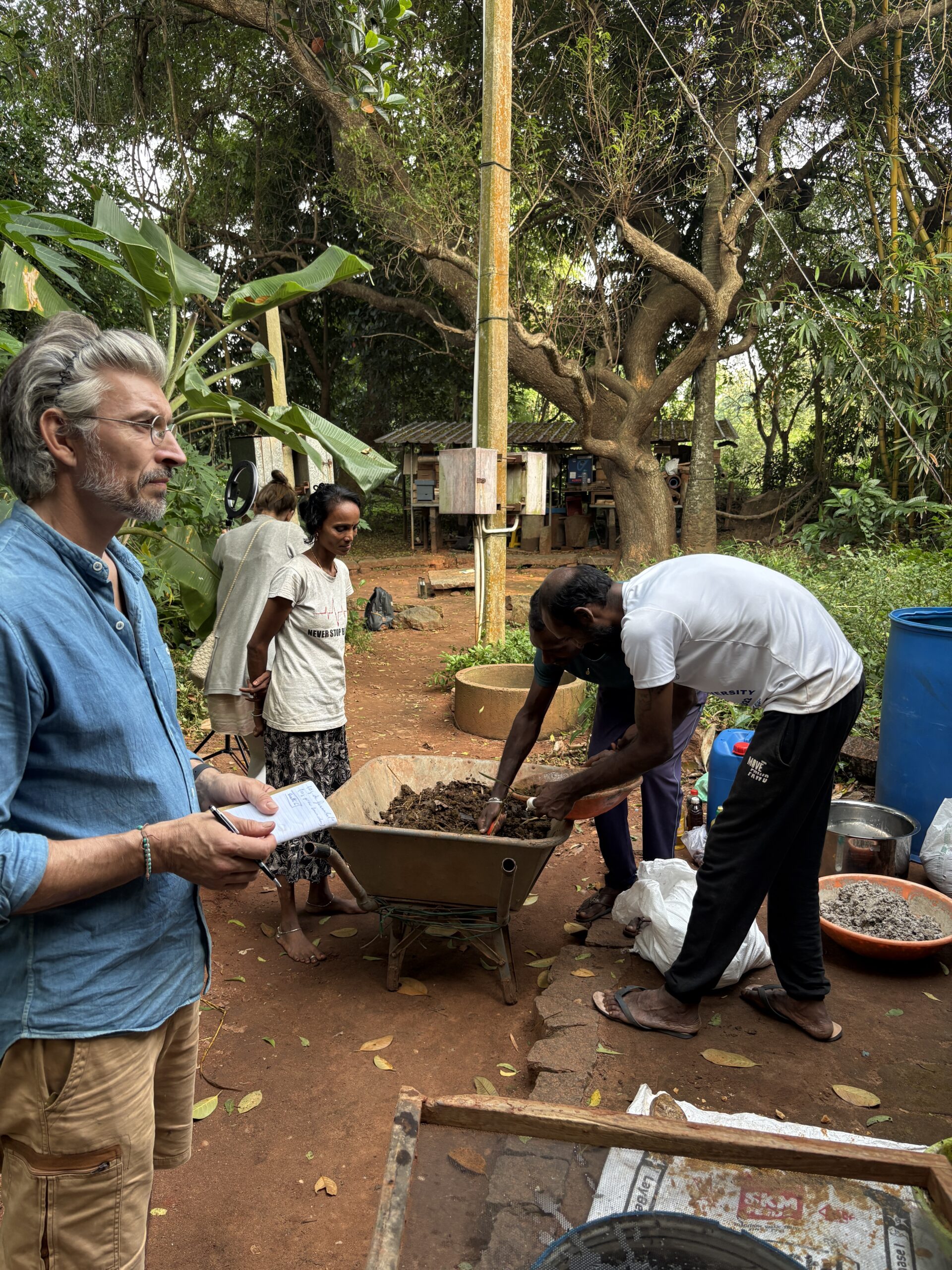
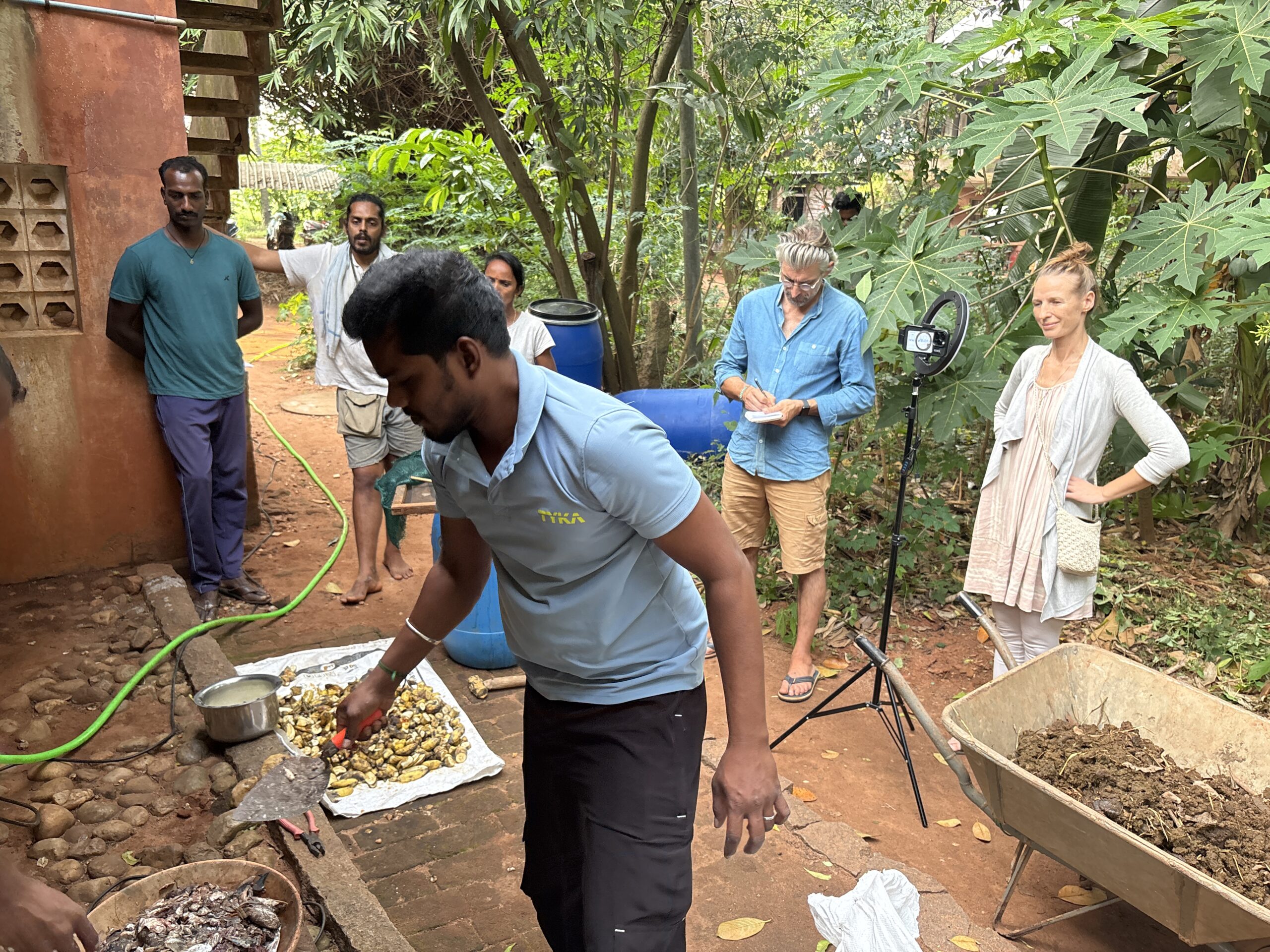
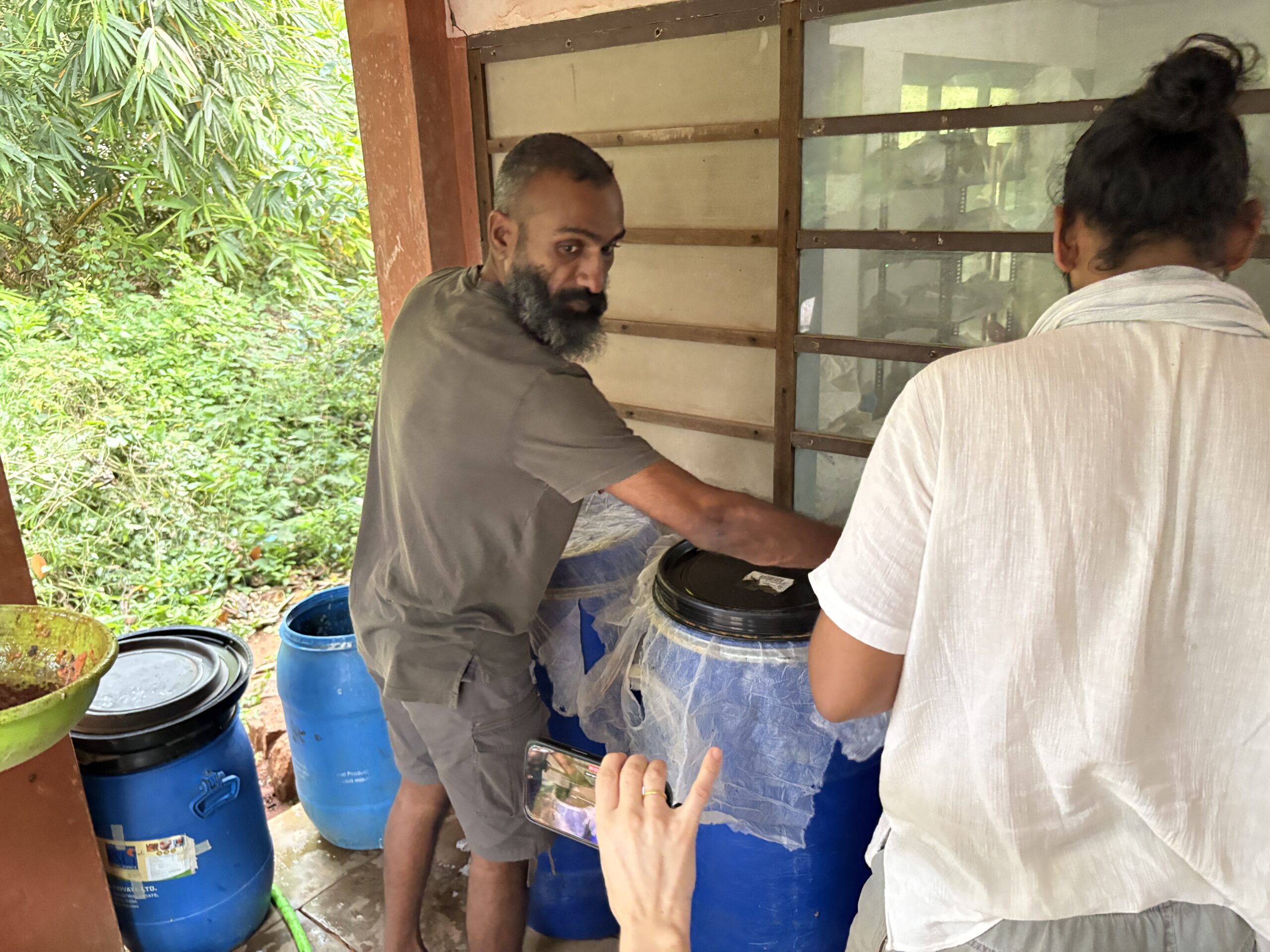
We organised an afternoon of preparing these different formulations together with our team and developed a plan to use them more consistently, as part of an ongoing effort to reduce crop losses while working within the ecological limits of contemporary agriculture. Our brewery now consists of the following ferments:
In the coming days, weeks and months, we aim to consistently inoculate our soil and plant ecology with these ferments and observe the response in terms of plant health and productivity.
There is a common myth that imbalances in insect populations will disappear if agricultural systems are brought “back into balance.” This assumption rests on the idea that agriculture itself is a balanced ecosystem, which is fundamentally incorrect. Agricultural systems—even in their most natural forms—are human-designed systems, shaped by human needs, diets, and production goals.
While diversification and ecological practices can reduce the severity of pest outbreaks, they cannot eliminate them. Modern agriculture, which serves diets limited to a relatively small range of vegetables and fruits, necessarily restricts the diversity that can be accommodated on the farm. In this sense, persistent insect pressure is an inherent feature of agriculture. It cannot be completely resolved, only moderated through careful and continuous management (Oerke, 2005).
Moreover, pest pressure today is shaped not only by on-farm diversity, but by the biology of the larger landscape and by changing climatic conditions. Research in agroecology and landscape ecology helps explain why pest pressure can remain high even in diversified farms. Studies show that while ecological practices like crop diversification and habitat enhancement can increase populations of natural enemies, they do not always translate into consistent pest suppression in every field because pest regulation depends strongly on landscape context and habitat structure beyond the farm boundary. For example, natural pest control tends to be stronger in complex, patchy landscapes, with abundant non-crop habitats that support predators and parasitoids, but this effect varies and is not guaranteed (Bianchi et al., 2006; Poveda et al., 2025).
Another important limitation of ecological pest regulation lies in the difference between ecological and agricultural time scales. Predator–prey relationships, soil food webs, and habitat-based regulation often require many years to stabilise, whereas farms operate on seasonal cycles that demand immediate outcomes. Farmers must harvest crops within weeks or months, not decades. This temporal mismatch means that even ecologically well-designed farms often need active interventions to bridge the gap between long-term ecological recovery and short-term production needs.
In our own production analyses, we found that we lose around 30% of certain crops due to insect damage. These include borers, mealybugs, hoppers, and beetles on brinjal; aphids on long beans; blister beetles on lady fingers and beans; and red gourd beetles on pumpkins, cucumbers, and other gourds—despite years of intercropping, flowering hedges, and multi-layered cropping systems.
To prevent severe losses, we have so far relied on neem oil sprays and commercially available biopesticides such as Beauveria bassiana (a fungus) and Bacillus thuringiensis (a bacterium). While effective to a degree, these are purchased inputs. We have therefore been exploring more diverse, farm-made preparations such as Themmor Karaisal, Panchagavya, and fermented leaf extracts using plants like Calotropis, Adhatoda, castor, and moonflower—though not yet with full consistency. Our goal has never been a complete elimination of insects, but the cultivation of systems capable of tolerating a certain level of damage without catastrophic crop loss. So far, we have accepted around 30% as the fair share, our contribution to the ecology, the tax the farmer pays to the land for setting up agriculture. However, given the precarious financial situation on the farm as well as the pressure to deliver more food for the community, we are forced to re-assess if some of these losses can be avoided without damaging the ecosystem.
Recently, we met the Aarka team (Elen and Shankar), who have developed formulations aimed at rebuilding functional ecological relationships that were historically embedded in farming systems, though under very different population, climatic, and landscape conditions. Their herbal preparation, Aarka, can be applied in dilution and combined with other ferments—such as oil mixes, fish amino acids, and Themmor Karaisal—for foliar sprays to reduce fungal, bacterial, and insect pressure. These bioferments not only prevent “pests” but also deliver essential herb compounds and micronutrients to the plants, strengthening them and building their own capacity to deal with biological pressures.
We organised an afternoon of preparing these different formulations together with our team and developed a plan to use them more consistently, as part of an ongoing effort to reduce crop losses while working within the ecological limits of contemporary agriculture. Our brewery now consists of the following ferments:
In the coming days, weeks and months, we aim to consistently inoculate our soil and plant ecology with these ferments and observe the response in terms of plant health and productivity.
Join our newsletter for exclusive updates!
AuroOrchard is certified organic by the Tamil Nadu Organic Certification (ORG/SC/1906/001683) Department accredited by APEDA (Agricultural and Processed Food Products Exports Development Authority), New Delhi, Ministry of Commerce and Industry, Government of India.
AuroOrchard Poultry is recognised under the Certified Humane Program, a globally recognised, independent, international auditing body dedicated to creating a more humane world for farm animals.