Does Auroville only have one long summer season? That is how it feels. But even the subtle differences make a lot of difference in farming. When I came to Auroville in 2019, I had only farmed in the mountains. I was used to four distinct
Does Auroville only have one long summer season? That is how it feels. But even the subtle differences make a lot of difference in farming. When I came to Auroville in 2019, I had only farmed in the mountains. I was used to four distinct seasons- of course with their own subtleties, but still the distinction between summer, autumn, winter, spring was quite pronounced. It took me about two years to understand that Auroville actually has six seasons! We have been planning our crops based on this understanding since 2022. Only much later, and recently, I found out that ancient Tamizh literature like Tolkaapiyam, also identifies six seasons for Tamil Nadu. This system of six seasons is called Paruvangal. Each season lasts exactly two Tamizh months, beginning with the Tamizh New Year in mid-April. Interestingly, my observations align perfectly with this age-old system.
I will first describe how I observe seasons. The typical cycle of seasons is based on the position of the Earth in relationship to the Sun. The four main events in this yearly cycle with the Sun are- the two equinoxes, where the Earth is in perfect alignment with the Sun and the two solstices, where the Earth is tilted closest or farthest from the Sun. Since we are very close to the equator (12 degrees North) in Auroville, we don’t see the pronounced effects of these movements, and yet there are subtle changes.
We can use the visual of breathing in and out- the most fundamental cycle that we experience. As the Earth moves in her cycle, it too breathes in and out. The beginning of the in-breath starts with the Autumn Equinox (September 21st)*. This is the period of going inwards, the year is winding down, we begin to reflect on the activity so far, some have the need to retreat into contemplation and silence, the land starts to cool down after summer and the rhythm of life becomes more relaxed. The peak of this in-breath comes at the Winter solstice (December 21st), the longest night of the year. In-breath, the period of inner activity continues until Spring Equinox (March 21st). We then move to the out-breath, where life starts to wake up from its slumber, flowers bloom, the land and air start to get warmer, microbes and insects multiply, and there is an impulse for external activity. The peak of this cycle is reached at the Summer solstice (June 21st) and this period itself continues until the Autumn Equinox (September 21st), after which it repeats itself.
While these periods and patterns don’t apply as per dates and months in the same way to all locations on the Earth, the principles apply to all places and people. Even if not coordinated with seasons, we can easily observe these cycles in our own life. This is the template on which Auroville’s six seasons are based.

* These descriptions apply to all of us in the Northern hemisphere of the planet. These patterns will be the exact opposite for people living in the Southern hemisphere.
In the case of Auroville, or perhaps larger Tamil Nadu, the two extreme points are Summer and Monsoon, and, in my scheme, they become the reference for all the other seasons. And due to our location close to the equator as well as our proximity to the oceans, our seasons are not only influenced by solar cycles but also by oceanic and wind phenomena. The correlation of these seasons with the calendar months and the Tamizh Paruvangal is as follows:
English calendar |
Solar event |
Breath cycle |
Paruvangal |
Tamizh calendar | |
|---|---|---|---|---|---|
Pre-Summer
|
Mid-Feb to Mid-April
|
Spring Equinox
|
Out-breath
|
Pin-pani (Late dew)
|
Masi & Panguni
|
Summer
|
Mid-April to Mid-June
|
-
|
Out-breath
|
Ila-venil (Tender heat)
|
Chittirai & Vaikasi
|
Post-Summer
|
Mid-June to Mid-Aug
|
Summer Solstice
|
Peak of out-breath
|
Mudhu-venil (Mature heat)
|
Ani & Adi
|
Pre-Monsoon
|
Mid-Aug to Mid-Oct
|
Autumn Equinox
|
In-breath
|
Kar (Dark clouds)
|
Avani & Purattasi
|
Monsoon
|
Mid-Oct to Mid-Dec
|
-
|
In-breath
|
Kulir (Cold)
|
Aippasi & Kartikai
|
Post-monsoon
|
Mid-Dec to Mid-Feb
|
Winter Solstice
|
Peak of in-breath
|
Mun-pani (Early dew)
|
Margali & Tai
|
I will now describe what these seasons mean to us and how we organise our work based on them.
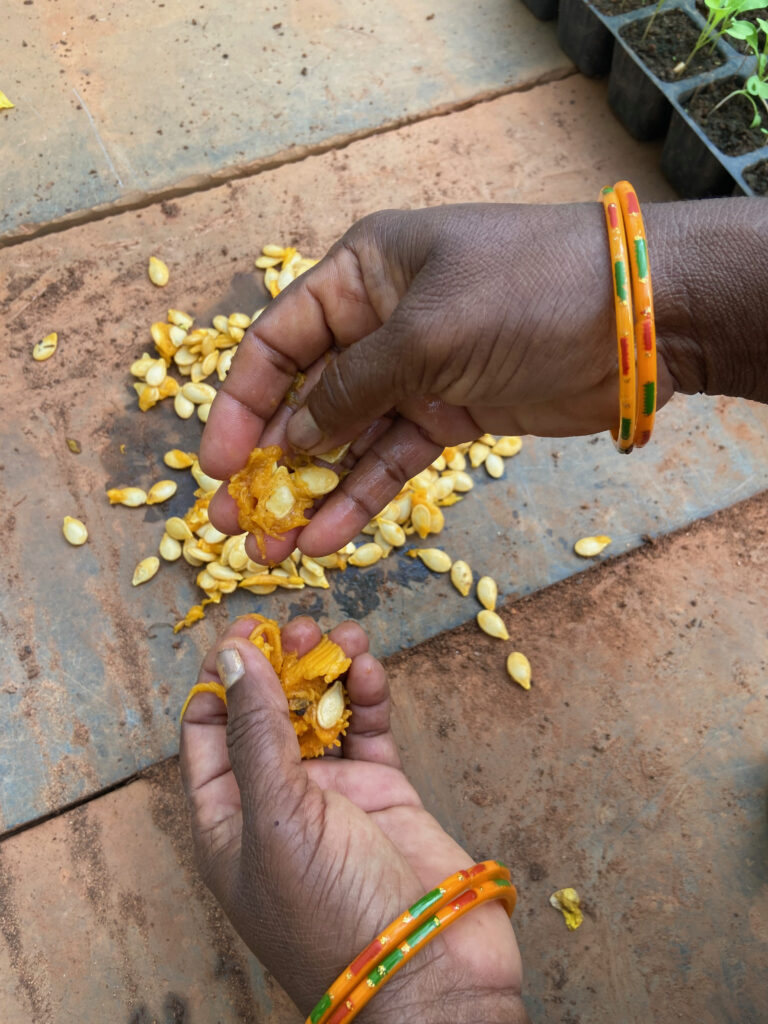
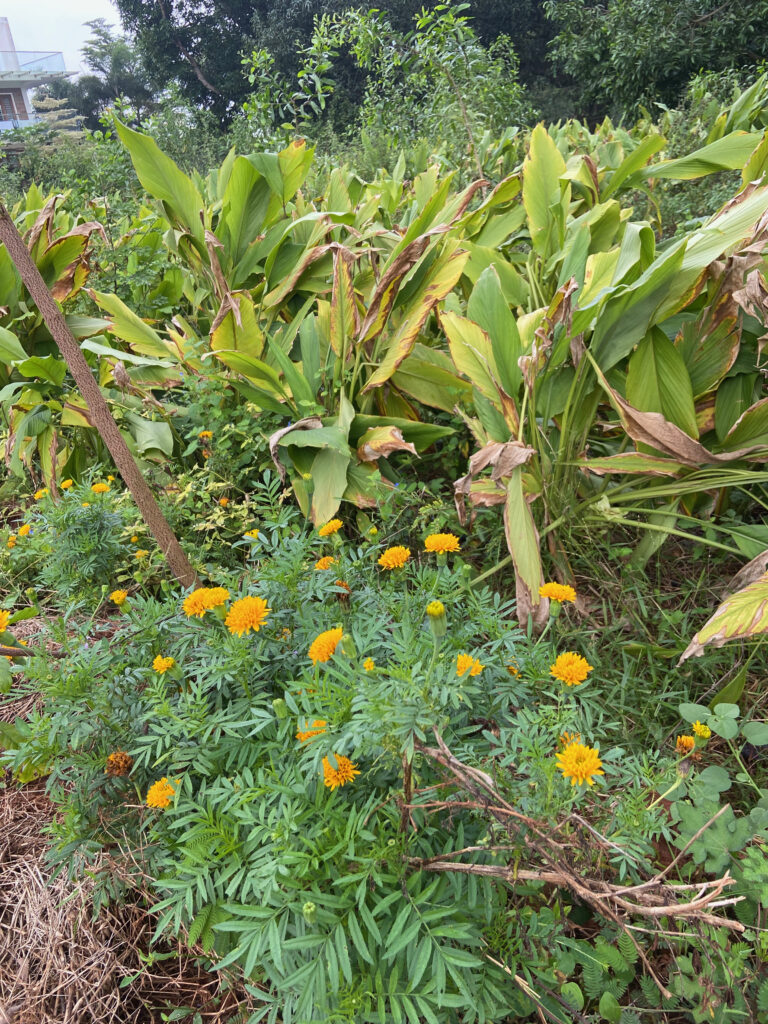
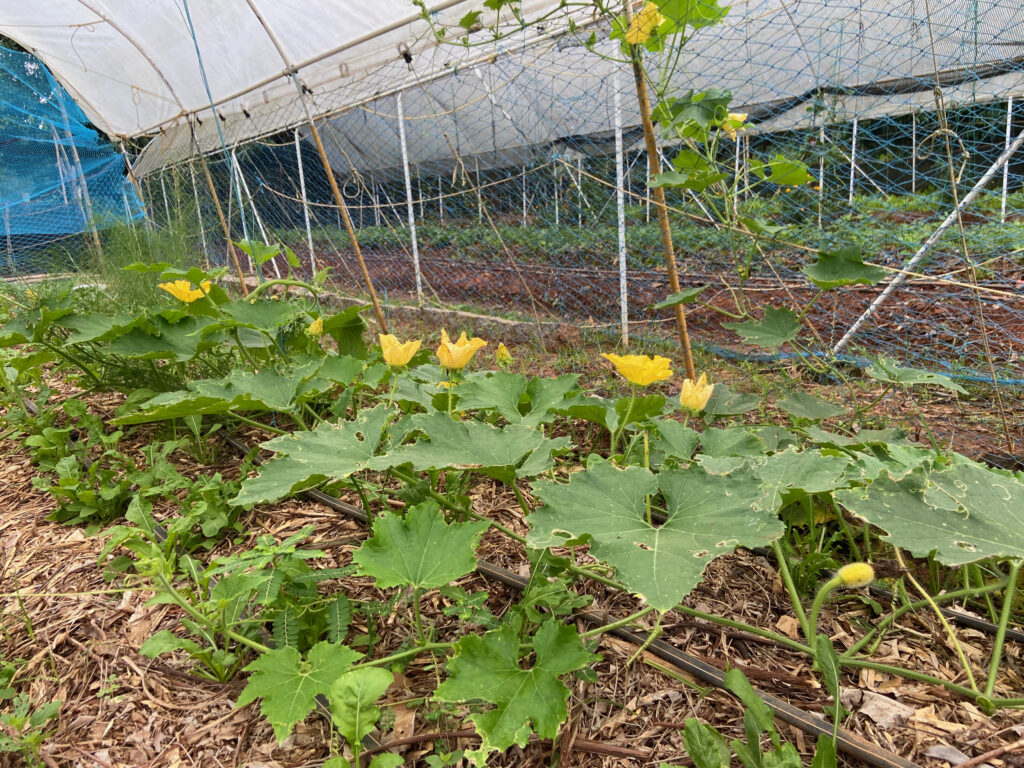
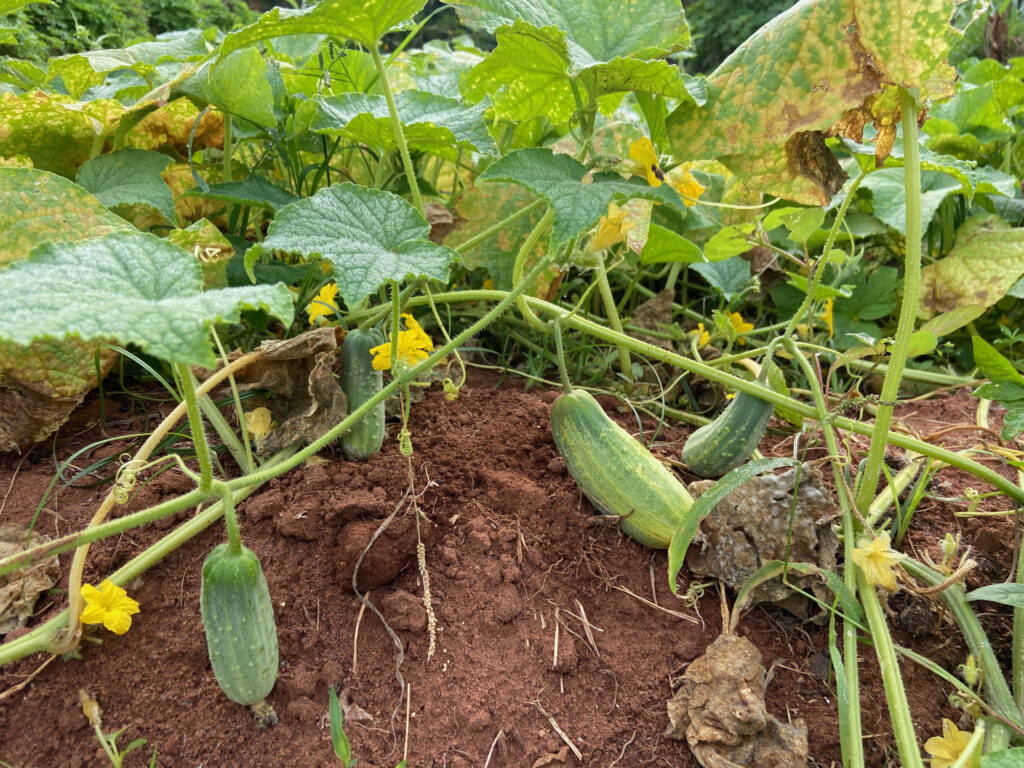
I will put this as the first as this is right after the Pongal festival in mid-January. The first season of a new cycle, and I will call this Pre-Summer. The days are still a bit short and the mornings and evenings are still cool. During this season, we continue planting summer crops like pumpkins, cucumbers, and gourds from the late previous season. We could continue planting some winter crops like spinach, lettuce etc. but the quality of those in this season is not that great due to hot days. The flavour is different and the texture is harder. During Pre-Summer, life is blooming, we can see a diversity of flowers on crops and trees. This is also the best time to save seeds. This season is closely associated with the Post-monsoon season, the last in the cycle (Mun-pani).
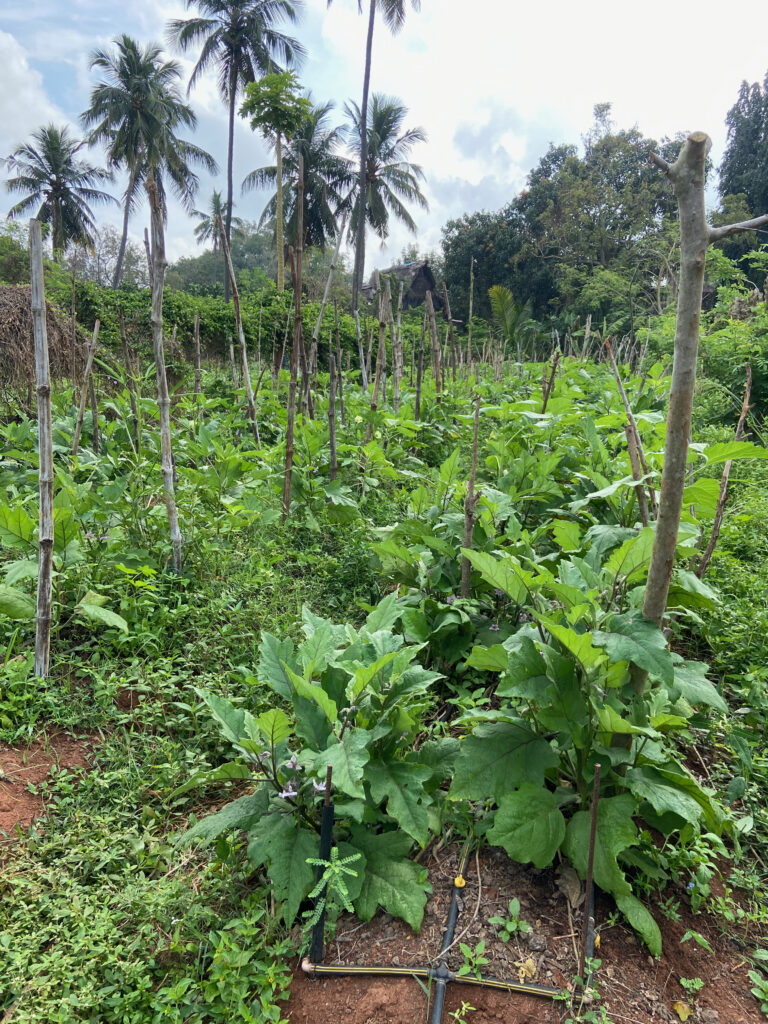
Then, the sun starts to rise in the sky and the days as well as the nights are warmer. This is what I would call the real Summer. The production during this time starts to be limited to a few crops. It’s not so much due to heat but due to limitation of water and pressure from pests. Like many places have winter hibernation, we have summer hibernation in Auroville. Trees shed their leaves to conserve water, and all life, including human beings, slows down. Farmers who can irrigate heavily can still manage to get beans, cucumbers, pumpkins, and gourds. Brinjal and ladies fingers still do well in this season. This is the time when we put our beds and fields to rest by planting green manure, preparing for the summer monsoon and planting.
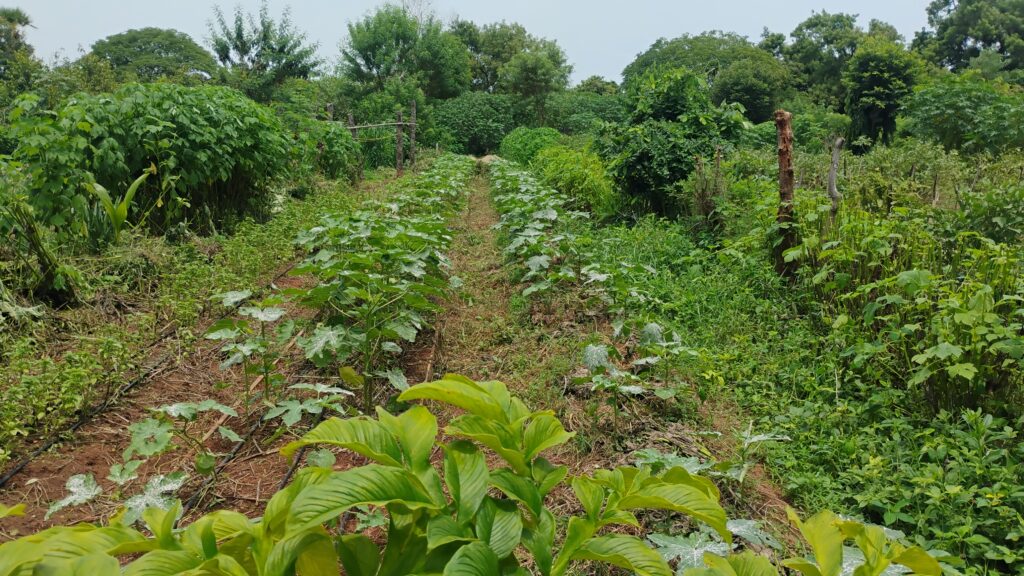
The mid to late June showers bring some relief from the heat and life to the parched soil. During this time, we can start growing crops the same as Pin-Pani but also some other crops like cluster beans, flat beans etc.- its still a bit early for these crops but we can still do it. Of course, within this period falls the Aadi masam (mid-July) with heavy winds, when Papayas break and we have an abundance of green papayas in Auroville. Post-Aadi masam is really good for planting a diversity of crops. This is an interesting season because it is post-summer rain but it is not as cool as the post-monsoon season. So, it is in some ways similar to Pre-Summer and that is reflected in the kind of crops we can plant. We can start to grow some arugula in the shade, some greens, and prepare for planting yams and sweet potatoes.
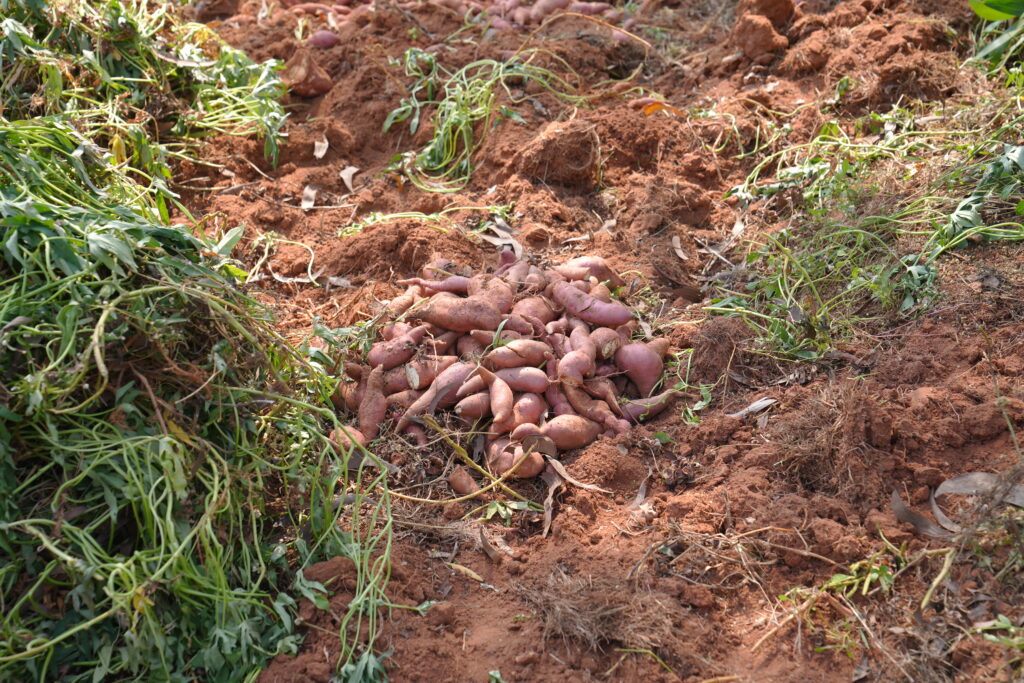
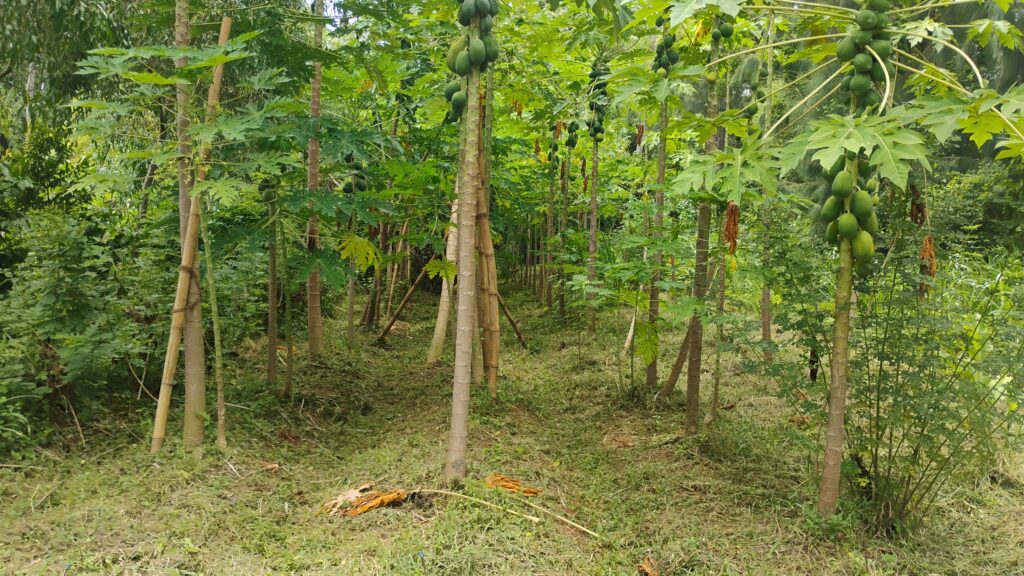
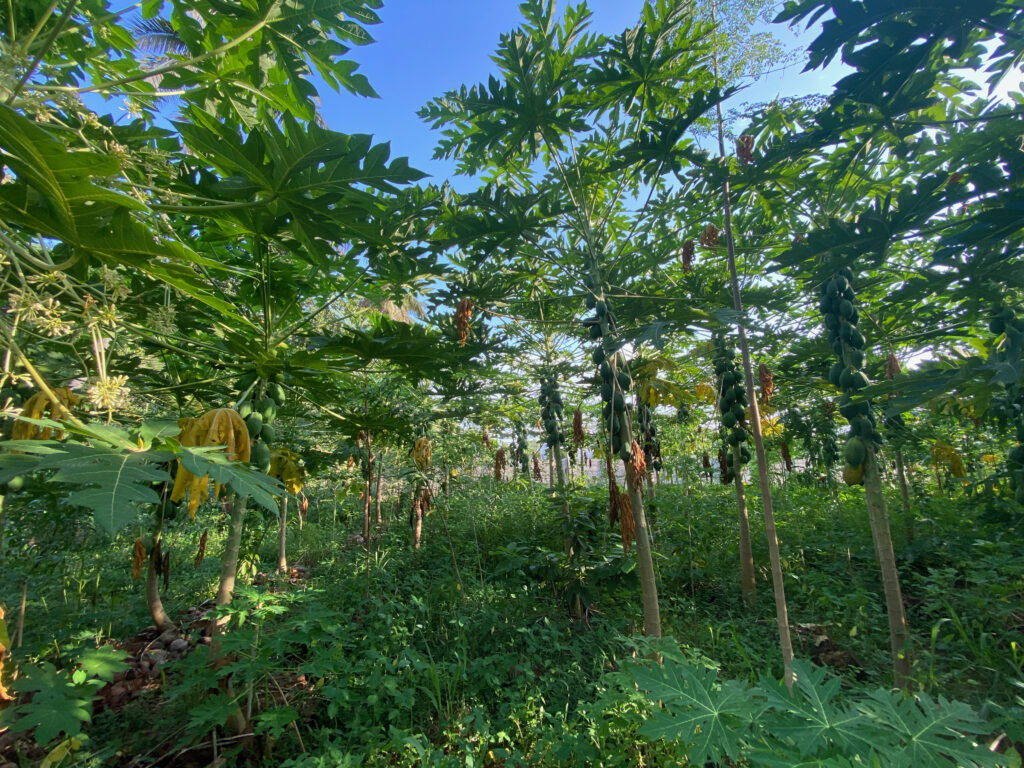
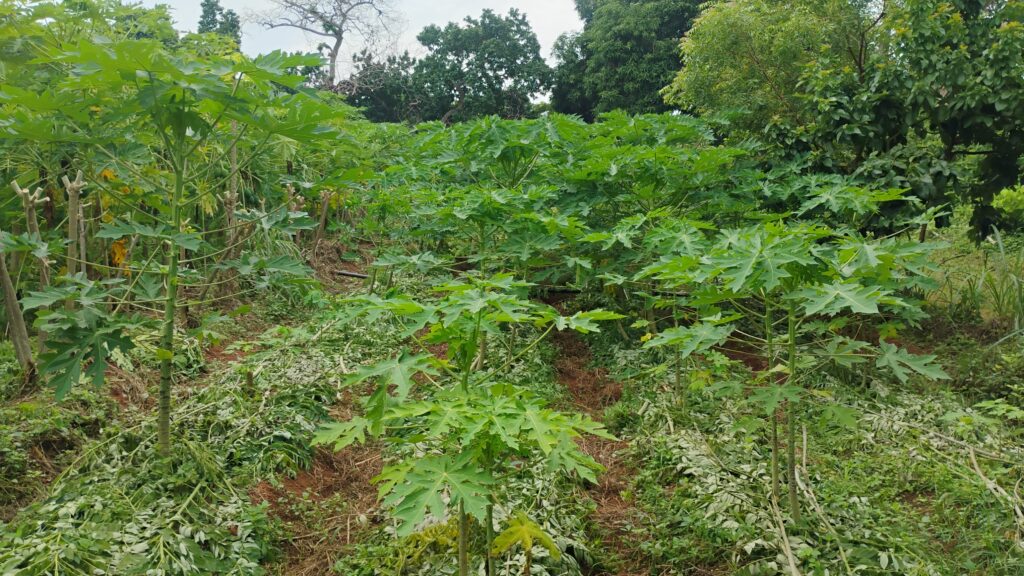
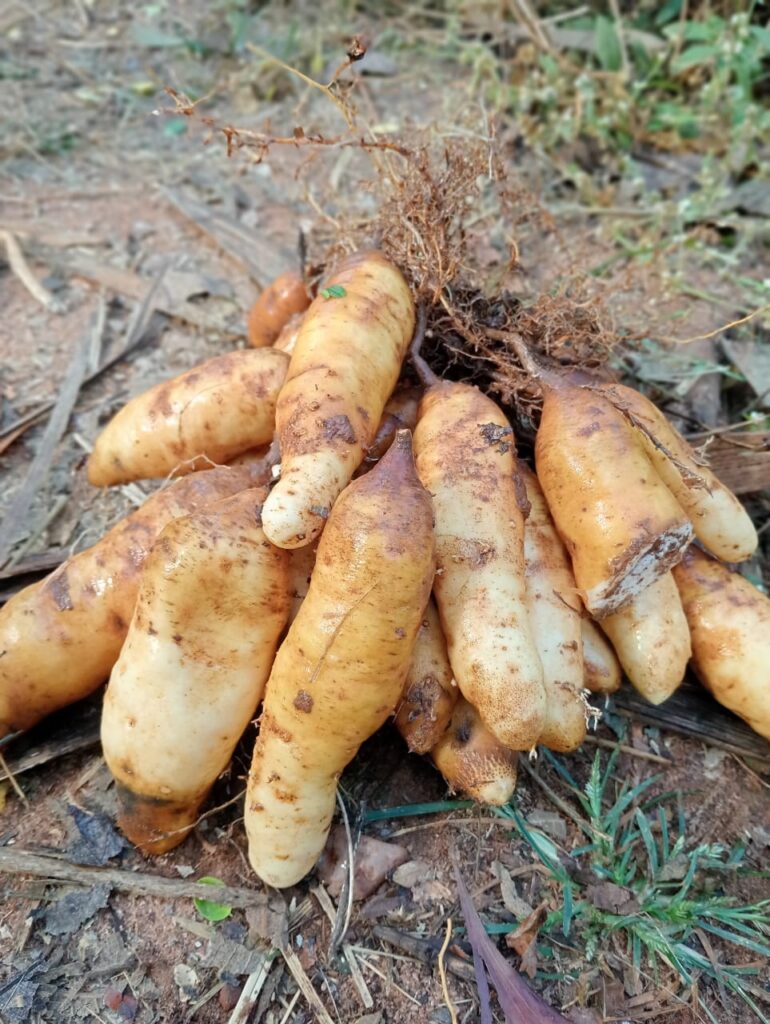
This is a transition season in preparation for the monsoon and what we colloquially call the ‘Auroville winter’. Early in this season, we finish planting yams and sweet potatoes, winged beans and basella. In the initial years, I learnt from Deepika (Pebble Garden) that winged beans like the avaraikai only flower when the days are short. Therefore, we can plant them anytime during the year, but they will only flower post-monsoon, around/after the Winter solstice. So, the winged beans are planted in this season to build enough vegetation for good flowering in post-Monsoon. This is a very interesting season also for the green house and can be used creatively to get crops that are usually difficult here like Palak and an early start to Arugula.
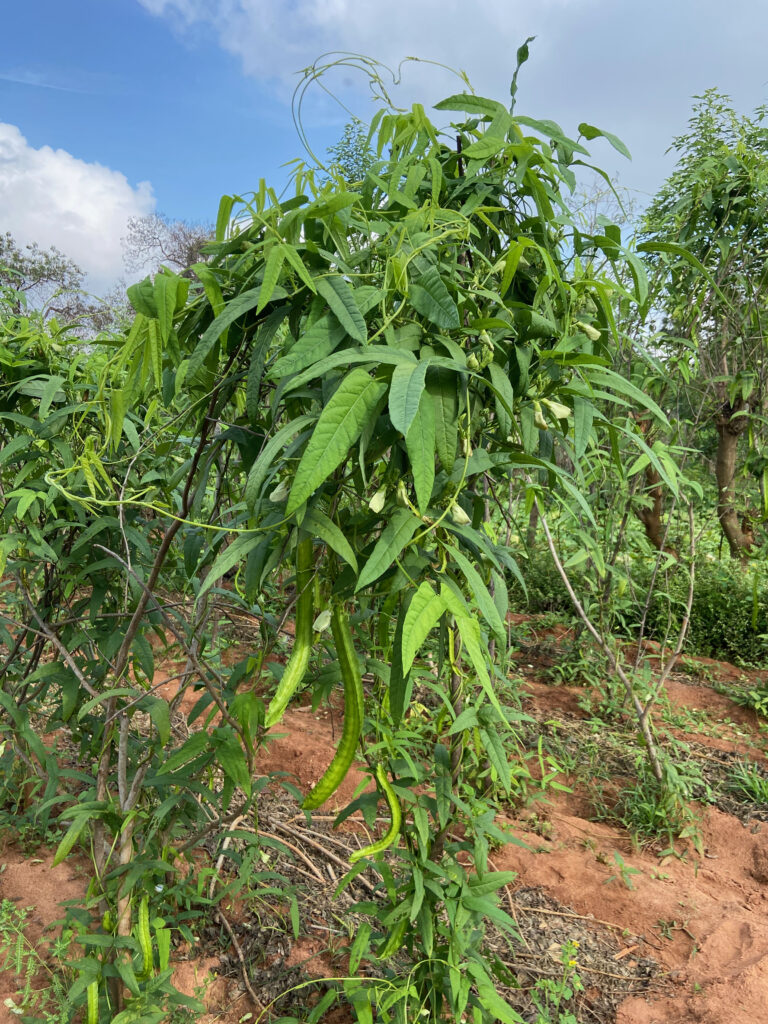
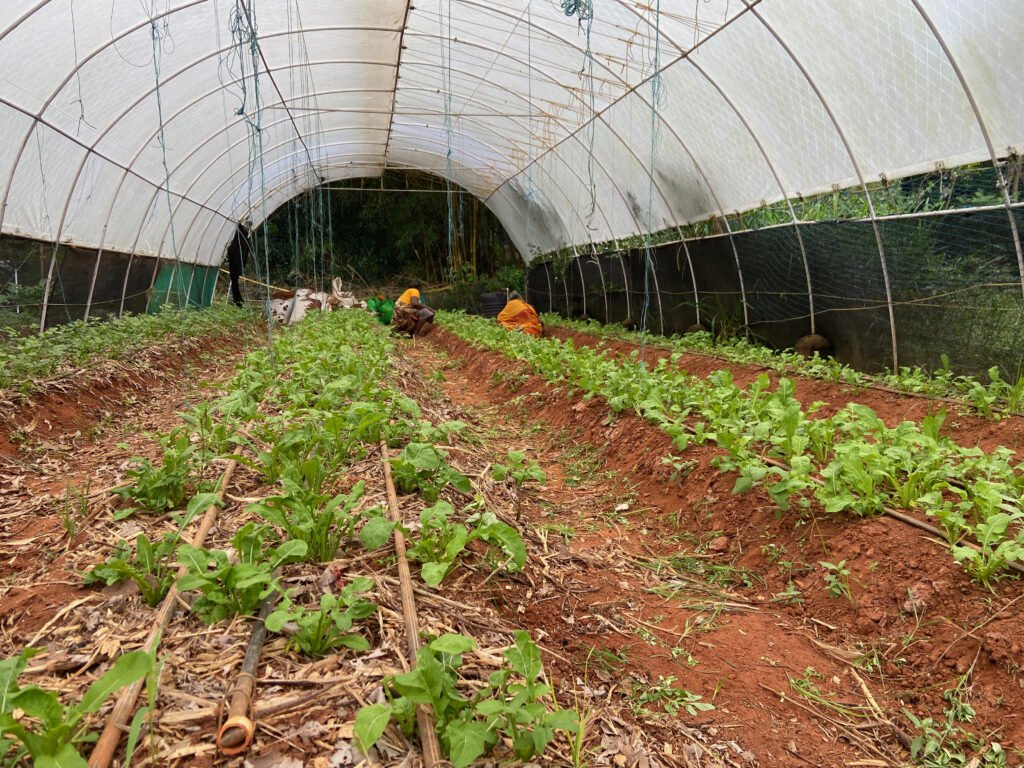
And finally the monsoon arrives. The temperature drops, moisture is high and the days are cloudy. Plant activity decreases significantly due to lack of sun and soil saturated with water. This leads to a drop in production at the farm. Brinjal and ladies fingers still do manage in this season but there are no gourds, no spinach, very limited beans. We can continue to grow in the green house. This is also the time when farmers start their tomato crops. We use this season to grow cover crops and green manures to prepare for the winter season planting.
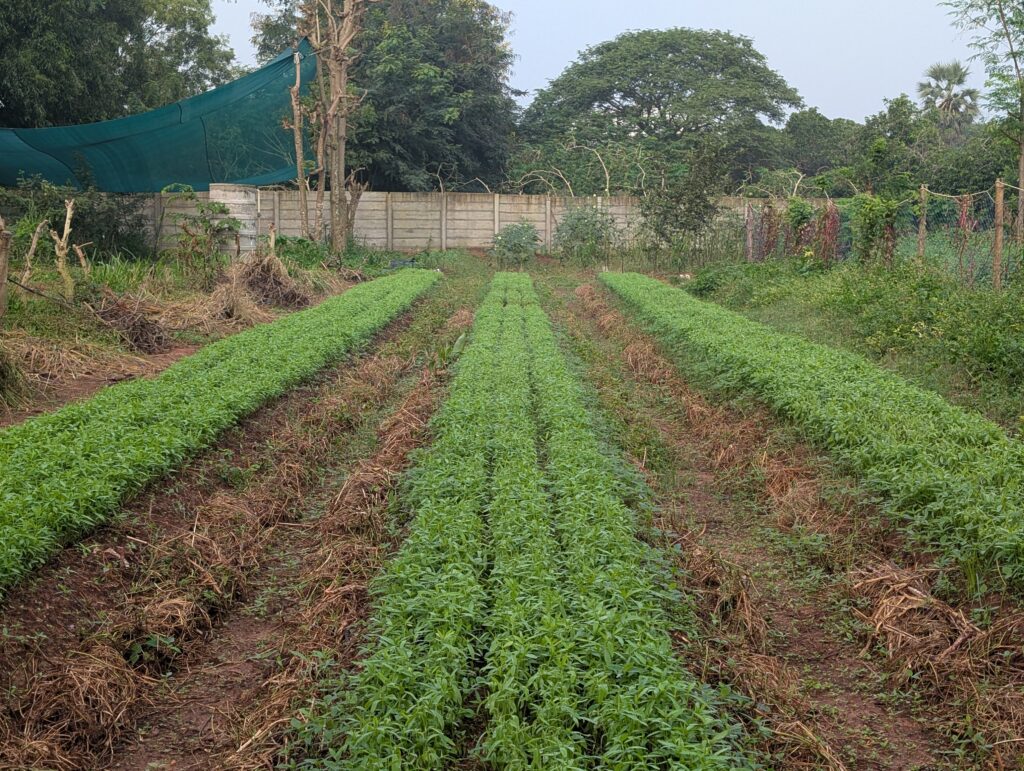
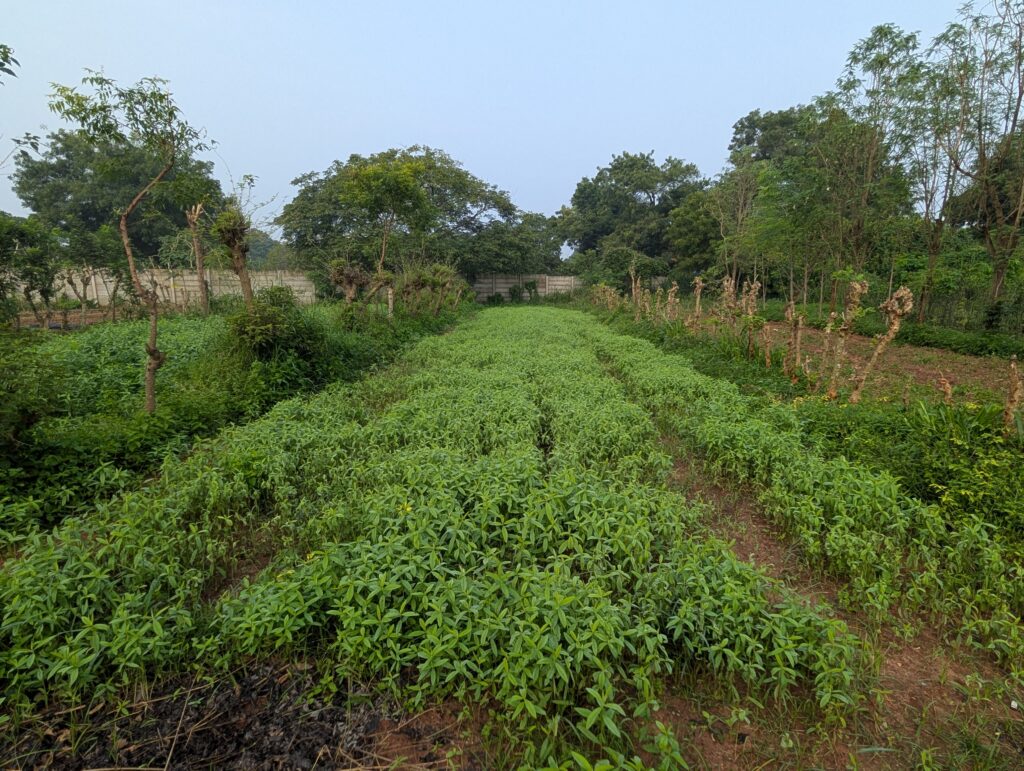
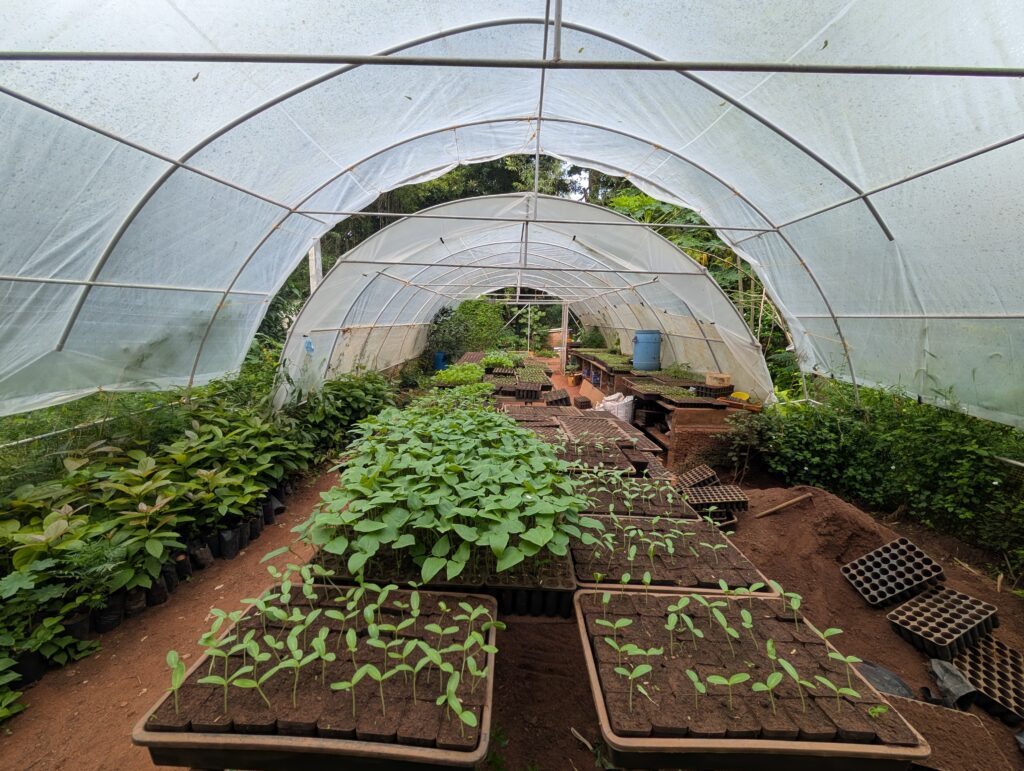
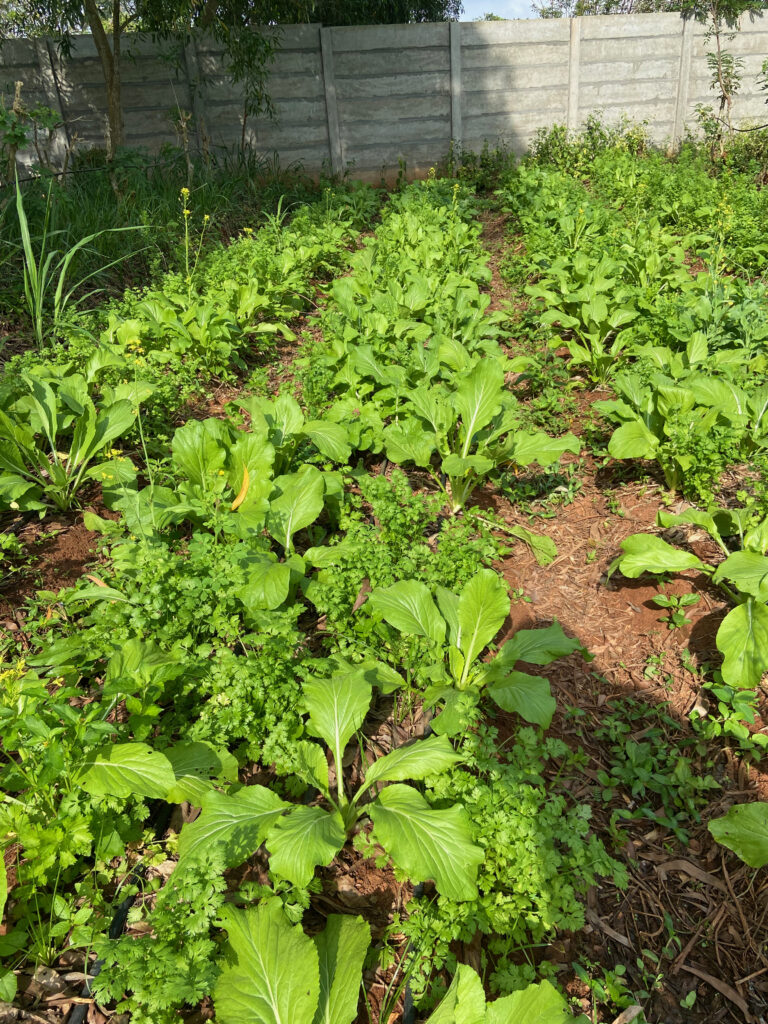
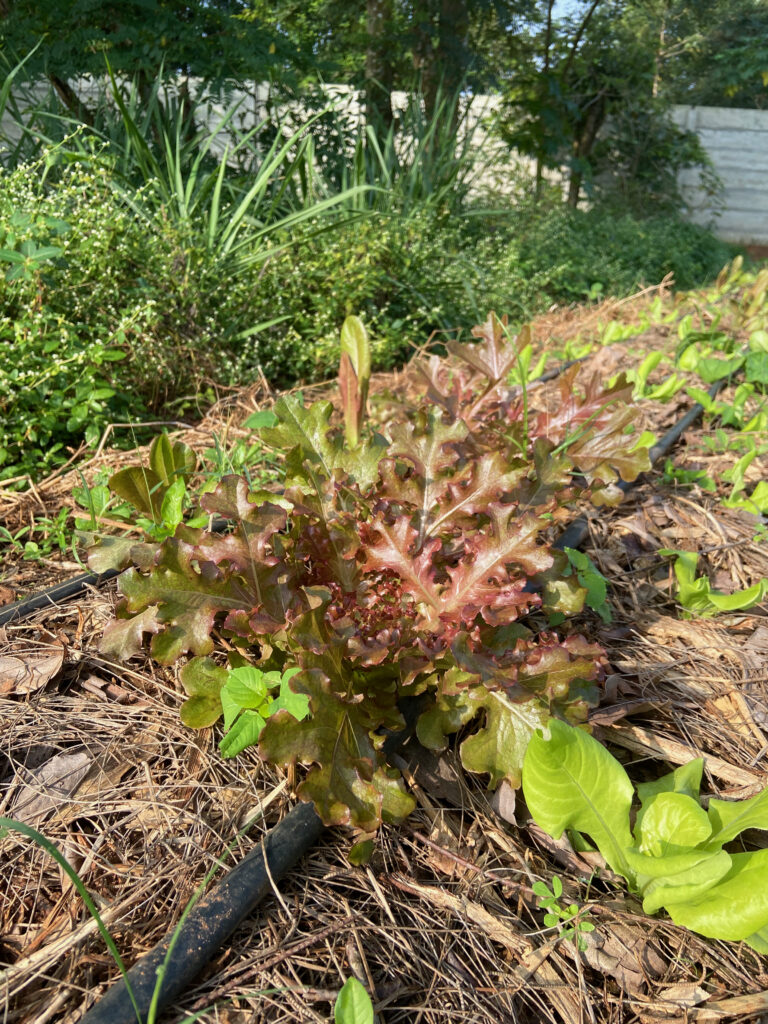
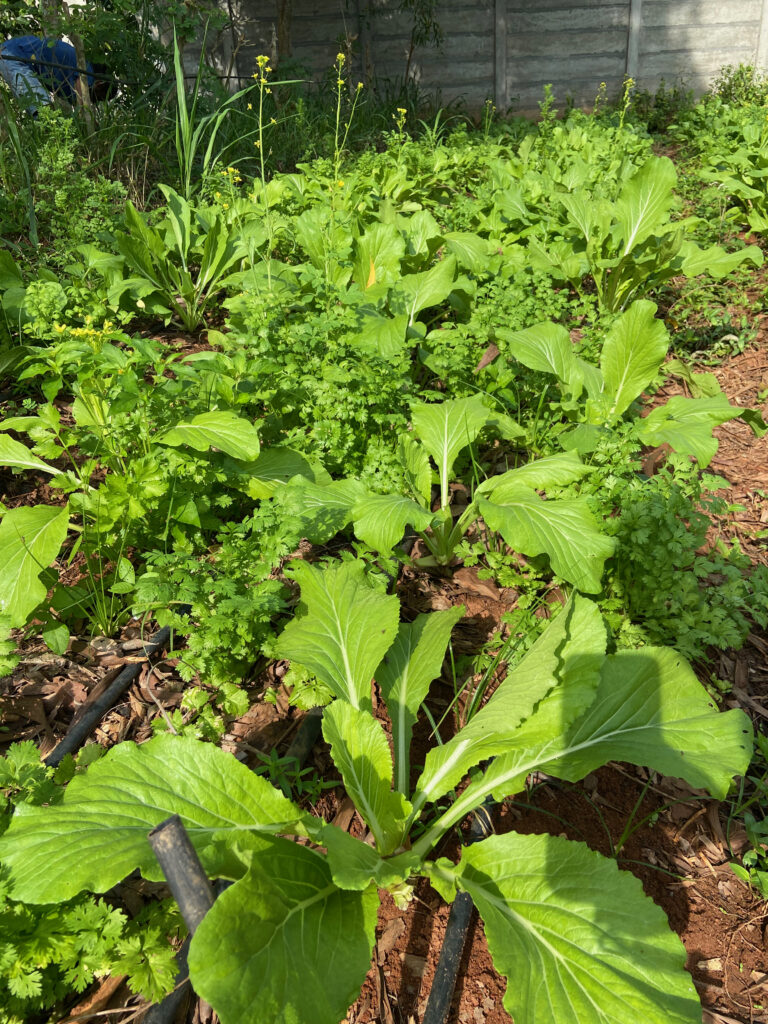
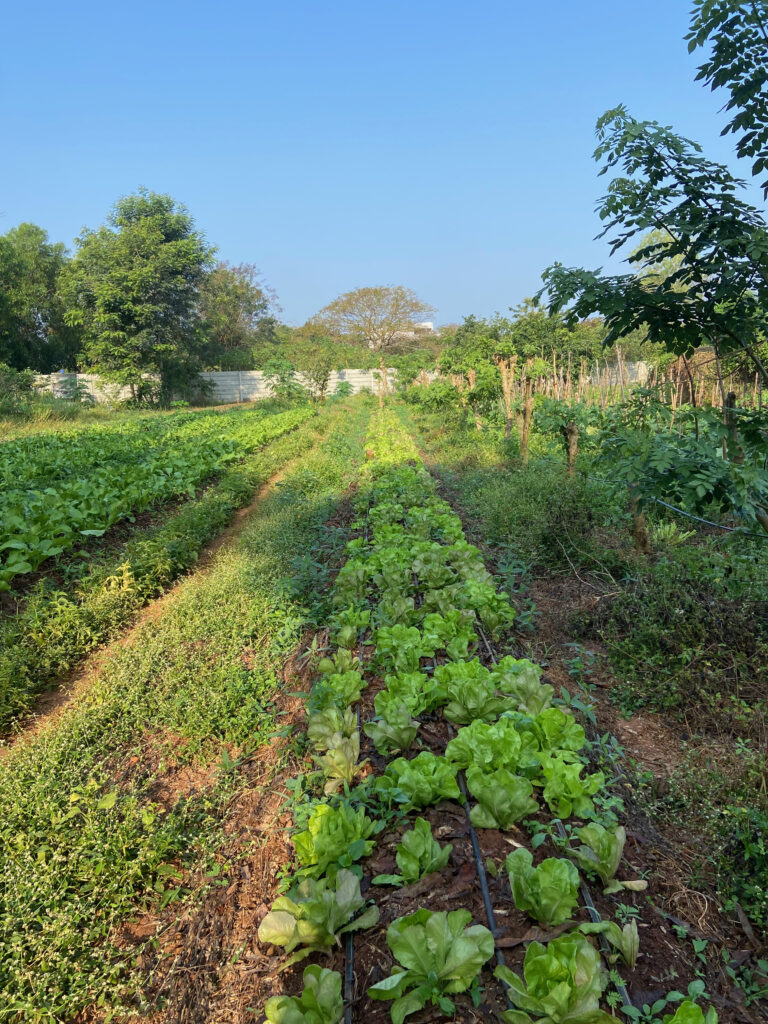
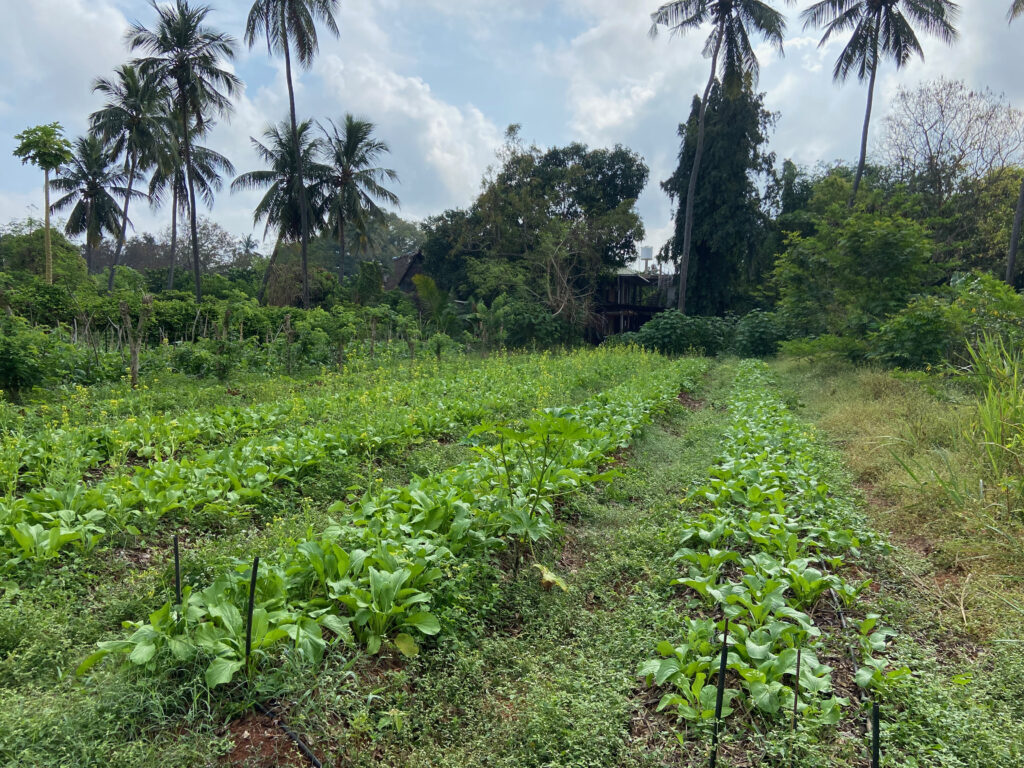
As the rain clouds pass, the temperature drops significantly, the days are sunny and there is good moisture in the air and in the soil. This is effectively our Spring and life starts to flourish again. This is most special season for us as we can grow a wide diversity of crops that we cannot grow in Auroville otherwise- greens and salads like lettuce, arugula, pokchoy, spinach and herbs like celery, coriander, dill along with the usual suspects-cucumbers, pumpkin, beans, brinjal, ladies fingers.
While this is a cold period, agriculturally speaking, we don’t really have a “winter” as even the crops we plant during this time are not winter crops (potato, onion, garlic, peas, carrots, wheat etc.). The crops we plant in this season are the crops that you usually would plant after winter in other parts of the world.
In these six-seasons we organise our life and the life of the farm. What appears as a long summer is a vibrant dynamic of subtle changes in temperature, moisture and wind, allowing for the wonderful biodiversity and agro-biodiversity of Auroville. I invite you to observe these changes and how these seasons impact our daily lives, our food, our mood and our work.
Join our newsletter for exclusive updates!
AuroOrchard is certified organic by the Tamil Nadu Organic Certification (ORG/SC/1906/001683) Department accredited by APEDA (Agricultural and Processed Food Products Exports Development Authority), New Delhi, Ministry of Commerce and Industry, Government of India.
AuroOrchard Poultry is recognised under the Certified Humane Program, a globally recognised, independent, international auditing body dedicated to creating a more humane world for farm animals.