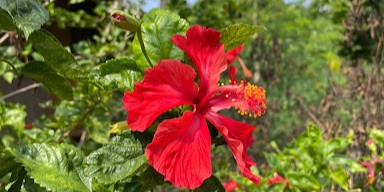
My first weeks at AuroOrchard have been a mix of discoveries, challenges, and moments of reflection. Coming to India to live and work on a farm has allowed me to experience a different rhythm of life and to start seeing everyday things
From 14–16 August 2026, at Pebble Garden and AuroOrchard, we explored ecological restoration, farming, seed saving, food and our relationship with the land. Learning from the Land brought together practical work, walks and conversations, with opportunities to connect ideas with what we could observe and try ourselves.
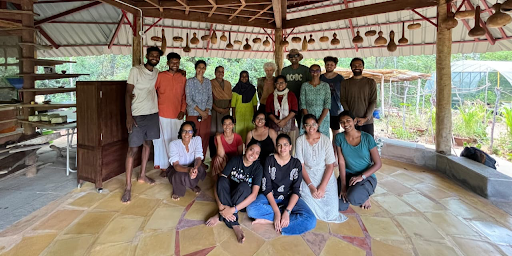
We had a wonderful group of people interested in this work. Some were just beginning to explore farming, some already had land, and others came with well-developed projects. There was joy in being together as a learning community, sharing our experiences, challenging our assumptions and opening ourselves to learning from each other.
We began by looking at the relationship between landscape and culture through Ainthinai, the five ecological landscapes described in the Tamil Sangam tradition. Each brings together particular plants, animals, occupations, foods and ways of life. This gave us a starting point for discussing how soil, rainfall and vegetation shape agriculture and how, over time, agricultural practices become part of a culture.
At Pebble Garden, Bernard and Deepika shared their experience of working with land that once had exposed rock, gullies and very little topsoil. We looked at the contour bunds and small water bodies that helped slow and retain water, and the pioneer plants that established themselves in these conditions. We discussed the role of plants such as Dodonaea viscosa, Stylosanthes hamata and acacias and how they contributed biomass and shade, gradually creating conditions for other species to grow. Termites and monsoon flows also featured in the account of how soil had moved and accumulated across the site. Seeing these changes on the ground helped us understand the sequence of the work: what could be planted initially, what those plants made possible, and how the choices changed as the land recovered.
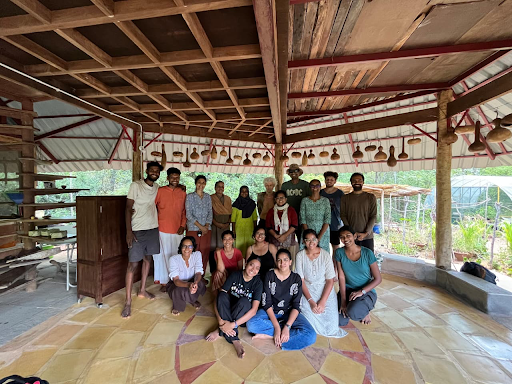
At AuroOrchard, Rahul’s session on systems thinking helped us examine the relationships between different parts of the farm. We considered water, soil, plants, compost, people and markets, and how a decision in one area affects work elsewhere. What we plant, for example, depends on the season and soil, but also on the people available to care for it and where the harvest will go.
Anshul shared his developing ideas on integral agriculture, drawing on the physical, vital, mental, spiritual and psychic dimensions of Sri Aurobindo’s integral philosophy. We discussed how farming involves ecological conditions alongside labour, economics, technology, community and our own motivations and experiences. This opened questions about how we assess a farming practice. How do we understand something that works well ecologically but is difficult to sustain financially? What changes when we adopt a new technology? And how does working on the land affect the people involved? These conversations drew on the practical difficulties of running a farm, where different needs do not always fit neatly together.
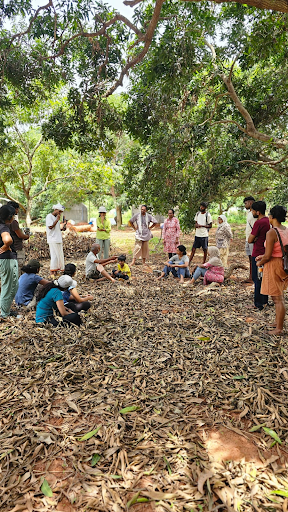
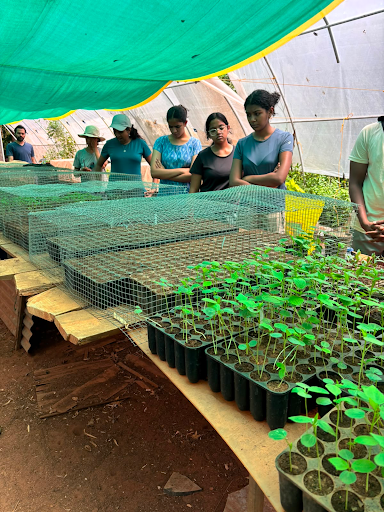
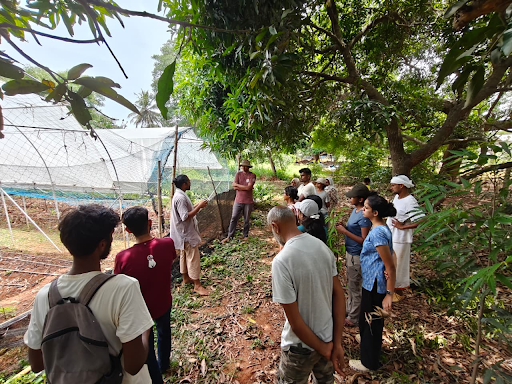
The practical sessions included working with beds, irrigation and plants. They gave us opportunities to relate the discussions to particular tasks: checking moisture, observing how water moves, looking at plant growth and deciding what attention was needed. We also explored soil care and composting, including the use of mulch, the return of organic matter and ways to avoid compaction. In discussing compost, we looked at how different materials, moisture and air contribute to decomposition, and what we need to pay attention to when managing a pile. Moving between discussion and work was useful. An explanation could give us a starting point, but applying it brought further questions. How wet is the soil below the surface? Is water reaching the roots? What are we noticing about a plant, and what might we need to observe for longer before acting?
Charan’s session on food and health brought the conversation to our eating habits and the relationships between food, culture and the body. We discussed how the history of what we eat continues to influence our meals, and considered the connections between everyday food choices and health.
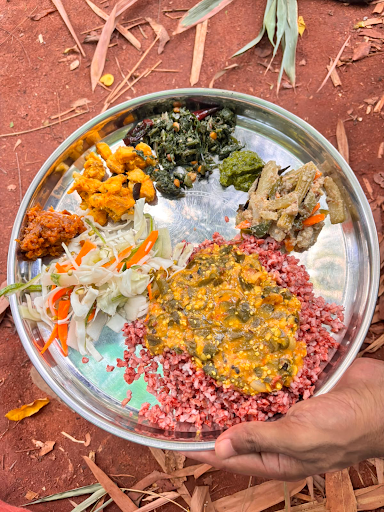
The meals during the workshop included produce from AuroOrchard, grains from other Auroville farms and preparations drawing on Tamil food traditions. These gave us something concrete to connect with the discussions about crops, diversity and food culture. We also explored the diversity within familiar crops such as brinjal, alongside yams, winged beans and perennial leafy vegetables. This led to conversations about the relationship between conserving a variety, knowing how to grow it and continuing to use it in the kitchen.
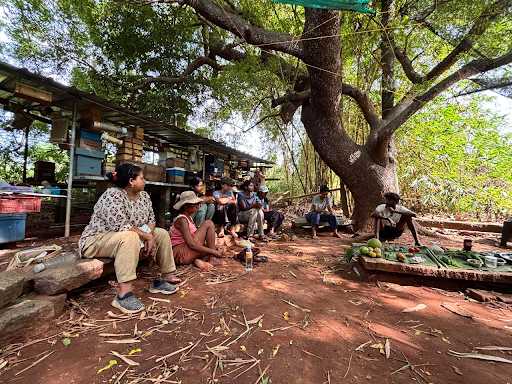
At Pebble Garden, we learned about Bernard and Deepika’s work conserving and sharing 136 varieties. The session covered seed viability, physical and genetic purity, pollination, and the use of isolation or hand pollination when maintaining particular varieties.
We discussed how seed harvesting and processing differ between crops. Beans can be left to dry on the plant, while crops with seeds enclosed in fleshy fruit need different handling. Knowing when a seed is mature and how to prepare it for storage requires familiarity with the plant and attention over time. Their experience helped us appreciate the regular work involved in seed conservation: growing plants, observing them, selecting, harvesting, processing and sharing seeds so that the varieties continue to be cultivated.
Across the three days, we kept returning to the relationship between observation and action. At Pebble Garden, we could see changes built through years of work. At AuroOrchard, we encountered the ongoing decisions and uncertainties of a working farm. The practical sessions and conversations allowed us to examine both. We came away with questions to continue working with: how much can we understand about a place before deciding what to change? How do we balance the different needs within a farm? What place do food culture, seed conservation and our own experience have in those decisions?
Hosting the workshop was also part of our learning about the farm as an educational space. We are grateful to everyone who brought their questions, experiences and openness to these three days, and we look forward to seeing how the learning continues in our respective work.
Join our newsletter for exclusive updates!
AuroOrchard is certified organic by the Tamil Nadu Organic Certification (ORG/SC/1906/001683) Department accredited by APEDA (Agricultural and Processed Food Products Exports Development Authority), New Delhi, Ministry of Commerce and Industry, Government of India.
AuroOrchard Poultry is recognised under the Certified Humane Program, a globally recognised, independent, international auditing body dedicated to creating a more humane world for farm animals.