Vermicompost at AuroOrchardㅤㅤㅤㅤ
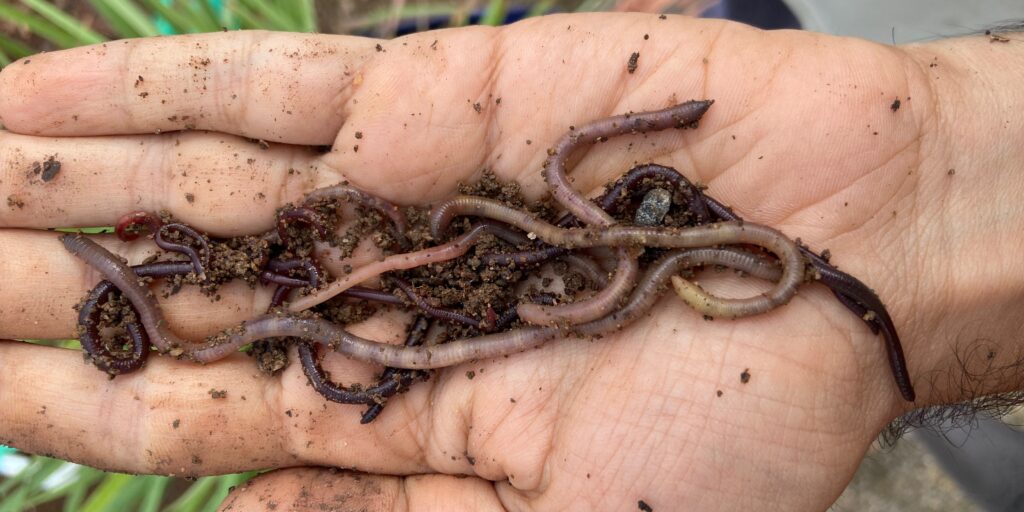
In December 2025, we decided to revive the vermicompost experiments at the farm. The earlier experiments done with different varieties of worms are documented Vermicompost, made using earthworms, has several advantages over other forms, including a better compost structure, better soil biology, and faster composting. Vermicomposting is primarily done in India with red wriggler worms (Eisenia Fetida). These worms are readily available outside, but since the garden team at Matrimandir has been preparing vermicompost, we reached out to them and received worms from their compost. Home » Blog » Vermicompost at AuroOrchard Vermicompost at AuroOrchard Febuary 2026 · Chintan Jadwani In December 2025, we decided to revive the vermicompost experiments at the farm. The earlier experiments done with different varieties of worms are documented here. Vermicompost, made using earthworms, has several advantages over other forms, including a better compost structure, better soil biology, and faster composting. Vermicomposting is primarily done in India with red wriggler worms (Eisenia Fetida). These worms are readily available outside, but since the garden team at Matrimandir has been preparing vermicompost, we reached out to them and received worms from their compost. A few days before introducing the worms, we prepared a bed in two compost containers that we had at the farm. The bed was prepared using charcoal, coconut husk, leaves, soil from the farm, and cow dung slurry. Since we had two containers, we planned to have two different setups – in one container we wanted to introduce only the red wriggler worms, and in the second container we wanted to add some indigenous worms from the soil at the farm. The indigenous worms are generally found deeper in the soil, while the wriggler ones stay on the top. Multiple containers allowed us to have this simple comparative experiment to see if there are any differences in the compost. After introducing the worms, we have been periodically observing how and whether the worms have been spreading across the container, introducing certain foods, and maintaining the moisture. Initially, we introduced chopped banana stems, but we did not notice much activity around them. We did not want to introduce other vegetables and fruit peels in the first weeks, as these would potentially introduce other insects and worms, so we decided to feed them mainly cow dung slurry twice a week. The activity, growth and spread of worms have been slow in December and January. These two months have been colder and have had a longer winter season than last year, and we think the activity was reduced due to this. In early February, we introduced some raw kitchen waste from the farm in one of the containers and quickly noticed an increase in activity. Also, as the weather is getting warmer, we are seeing an increase in the number of worms and their spread across the container. For the coming months, we will continue feeding them with kitchen waste, cow dung, and later reintroduce banana stems. Please reach out to us if you have suggestions on how we can improve. Previous Article Featured Articles Monthly Updatesㅤㅤㅤㅤㅤㅤㅤㅤ 23 Feb 2026 Year-end updatesㅤㅤㅤㅤㅤㅤㅤㅤ 20 Dec 2025 Vermicompost at AuroOrchardㅤㅤㅤㅤ 24 Feb 2026 The World of Bananasㅤㅤㅤㅤㅤㅤ 24 Feb 2026
Conscious Technology Lab Update
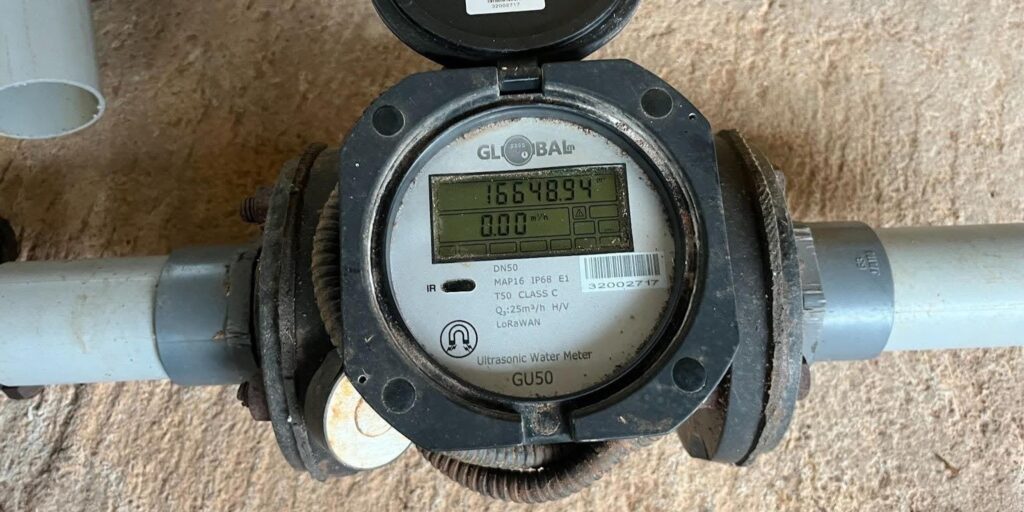
We have installed a float sensor with a controller for sump automation. With this setup, when the sump becomes empty, the three-phase motor starts automatically, and once the sump is full, the controller stops the motor automatically. The required cabling has been installed using a trench with proper casing, Pump Automation has helped save labour time. Home » Blog » Conscious Technology Lab Update Conscious Technology Lab Update January 2026 · Azhaganandan We have installed a float sensor with a controller for sump automation. With this setup, when the sump becomes empty, the three-phase motor starts automatically, and once the sump is full, the controller stops the motor automatically. The required cabling has been installed using a trench with proper casing, Pump Automation has helped save labour time. Additionally, a float sensor with a controller has been installed for the overhead water tank. When the tank is empty, the three-phase motor starts automatically, and it stops once the tank is full. The cabling for this system has also been installed through a trenched casing. As a result, water wastage has been effectively eliminated through this automation. LoRa (Long Range) Gateway setup has been initiated by reflashing the firmware and configuring the operating system. This will help us re-install the water meters on all the three borewells. This system was dismantled after the land exchange as one of the borewells was lost and we were uncertain about the other two. LoRa (Long Range) Gateway setup has been initiated by reflashing the firmware and configuring the operating system. This will help us re-install the water meters on all the three borewells. This system was dismantled after the land exchange as one of the borewells was lost and we were uncertain about the other two. Previous Article Featured Articles Monthly Updatesㅤㅤㅤㅤㅤㅤㅤㅤ 29 Jan 2026 Year-end updatesㅤㅤㅤㅤㅤㅤㅤㅤ 20 Dec 2025 Conscious Technology Lab Update 30 Jan 2026 Eating for Nourishment or Habit: A personal … 30 Jan 2026
Our Brewery for Plant Health
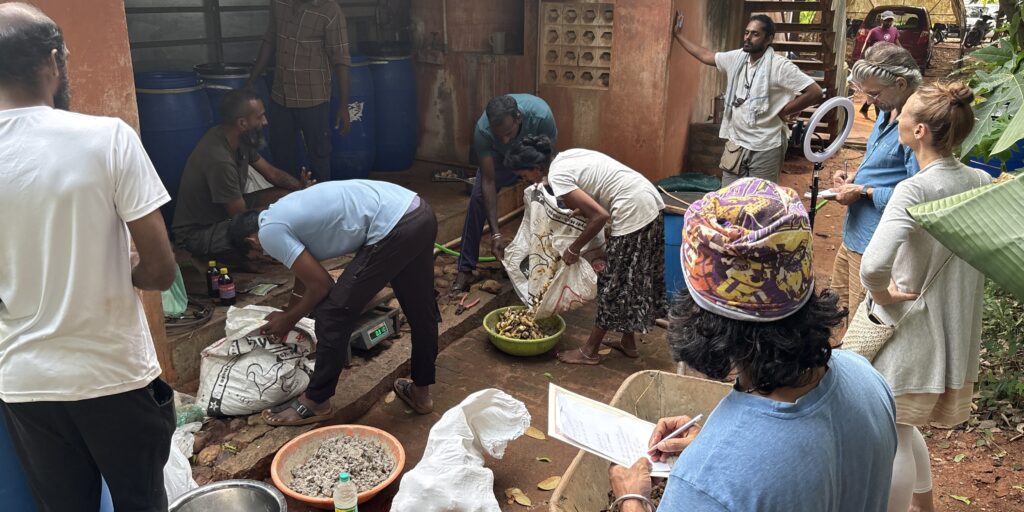
There is a common myth that imbalances in insect populations will disappear if agricultural systems are brought “back into balance.” This assumption rests on the idea that agriculture itself is a balanced ecosystem, which is fundamentally incorrect. Agricultural systems—even in their most natural forms—are human-designed systems, shaped by human needs, diets, and production goals. Home » Blog » Our Brewery for Plant Health Our Brewery for Plant Health December 2025 · Anshul Aggarwal There is a common myth that imbalances in insect populations will disappear if agricultural systems are brought “back into balance.” This assumption rests on the idea that agriculture itself is a balanced ecosystem, which is fundamentally incorrect. Agricultural systems—even in their most natural forms—are human-designed systems, shaped by human needs, diets, and production goals. While diversification and ecological practices can reduce the severity of pest outbreaks, they cannot eliminate them. Modern agriculture, which serves diets limited to a relatively small range of vegetables and fruits, necessarily restricts the diversity that can be accommodated on the farm. In this sense, persistent insect pressure is an inherent feature of agriculture. It cannot be completely resolved, only moderated through careful and continuous management (Oerke, 2005). Moreover, pest pressure today is shaped not only by on-farm diversity, but by the biology of the larger landscape and by changing climatic conditions. Research in agroecology and landscape ecology helps explain why pest pressure can remain high even in diversified farms. Studies show that while ecological practices like crop diversification and habitat enhancement can increase populations of natural enemies, they do not always translate into consistent pest suppression in every field because pest regulation depends strongly on landscape context and habitat structure beyond the farm boundary. For example, natural pest control tends to be stronger in complex, patchy landscapes, with abundant non-crop habitats that support predators and parasitoids, but this effect varies and is not guaranteed (Bianchi et al., 2006; Poveda et al., 2025). Another important limitation of ecological pest regulation lies in the difference between ecological and agricultural time scales. Predator–prey relationships, soil food webs, and habitat-based regulation often require many years to stabilise, whereas farms operate on seasonal cycles that demand immediate outcomes. Farmers must harvest crops within weeks or months, not decades. This temporal mismatch means that even ecologically well-designed farms often need active interventions to bridge the gap between long-term ecological recovery and short-term production needs. In our own production analyses, we found that we lose around 30% of certain crops due to insect damage. These include borers, mealybugs, hoppers, and beetles on brinjal; aphids on long beans; blister beetles on lady fingers and beans; and red gourd beetles on pumpkins, cucumbers, and other gourds—despite years of intercropping, flowering hedges, and multi-layered cropping systems. To prevent severe losses, we have so far relied on neem oil sprays and commercially available biopesticides such as Beauveria bassiana (a fungus) and Bacillus thuringiensis (a bacterium). While effective to a degree, these are purchased inputs. We have therefore been exploring more diverse, farm-made preparations such as Themmor Karaisal, Panchagavya, and fermented leaf extracts using plants like Calotropis, Adhatoda, castor, and moonflower—though not yet with full consistency. Our goal has never been a complete elimination of insects, but the cultivation of systems capable of tolerating a certain level of damage without catastrophic crop loss. So far, we have accepted around 30% as the fair share, our contribution to the ecology, the tax the farmer pays to the land for setting up agriculture. However, given the precarious financial situation on the farm as well as the pressure to deliver more food for the community, we are forced to re-assess if some of these losses can be avoided without damaging the ecosystem. Recently, we met the Aarka team (Elen and Shankar), who have developed formulations aimed at rebuilding functional ecological relationships that were historically embedded in farming systems, though under very different population, climatic, and landscape conditions. Their herbal preparation, Aarka, can be applied in dilution and combined with other ferments—such as oil mixes, fish amino acids, and Themmor Karaisal—for foliar sprays to reduce fungal, bacterial, and insect pressure. These bioferments not only prevent “pests” but also deliver essential herb compounds and micronutrients to the plants, strengthening them and building their own capacity to deal with biological pressures. We organised an afternoon of preparing these different formulations together with our team and developed a plan to use them more consistently, as part of an ongoing effort to reduce crop losses while working within the ecological limits of contemporary agriculture. Our brewery now consists of the following ferments: Aarka solution fermented with sugars and proteins Jeevamrit (fermented mix of cow dung and urine) Panchagavya (fermented mix of the five gifts from the cow–dung, urine, milk, curd, ghee) Themmor Karaisal (fermented mix of curd and coconut milk) Oil concoction (Castor, Mahua, Pongam and Neem oils) Fish amino acids (fish waste fermented with banana) Biopotash solution (ash in rainwater) In the coming days, weeks and months, we aim to consistently inoculate our soil and plant ecology with these ferments and observe the response in terms of plant health and productivity. There is a common myth that imbalances in insect populations will disappear if agricultural systems are brought “back into balance.” This assumption rests on the idea that agriculture itself is a balanced ecosystem, which is fundamentally incorrect. Agricultural systems—even in their most natural forms—are human-designed systems, shaped by human needs, diets, and production goals. While diversification and ecological practices can reduce the severity of pest outbreaks, they cannot eliminate them. Modern agriculture, which serves diets limited to a relatively small range of vegetables and fruits, necessarily restricts the diversity that can be accommodated on the farm. In this sense, persistent insect pressure is an inherent feature of agriculture. It cannot be completely resolved, only moderated through careful and continuous management (Oerke, 2005). Moreover, pest pressure today is shaped not only by on-farm diversity, but by the biology of the larger landscape and by changing climatic conditions. Research in agroecology
The Flying Houseㅤㅤㅤㅤㅤㅤㅤㅤㅤㅤㅤ
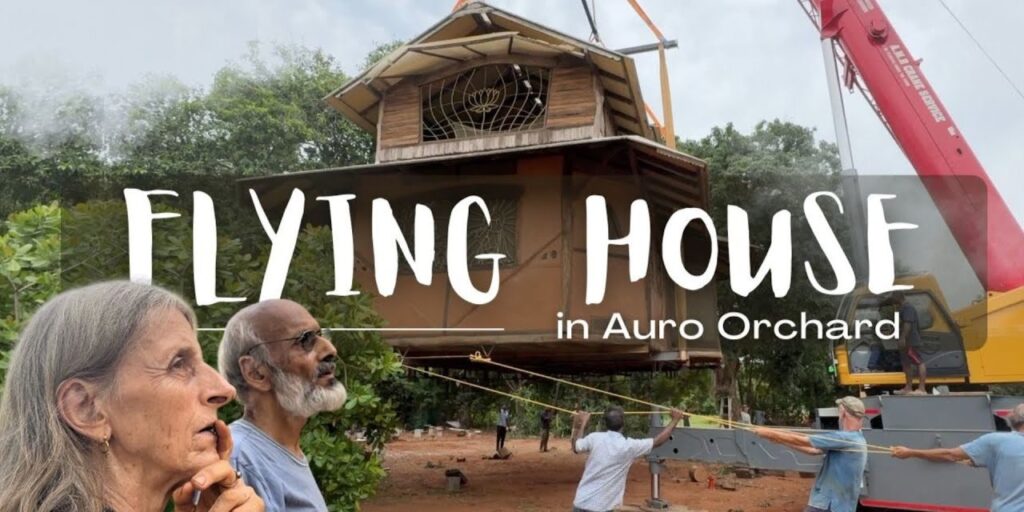
Here we are sharing a ’story within the story’, of the house of two Aurovilians that was discovered to be ‘on the wrong side’ of the new boundary, and was saved and air-lifted thanks to the efforts of a whole community that came together in solidarity. Watch the adventure of Auro Orchard’s Flying House’ in its epic journey of … 35 metres, back onto the soil of Auroville! Home » Blog » The Flying House The Flying House November 2025 · Jasmin Maheshwari https://www.youtube.com/watch?v=Hqe1SwP3qJA Auro Orchard has survived the loss of more than a third of its land and vital infrastructure in the ‘land exchanges’ two years ago. How the farm recovered and today has started to shine with new light, is a story of resilience and grace that is yet to be told. Here we are sharing a ’story within the story’, of the house of two Aurovilians that was discovered to be ‘on the wrong side’ of the new boundary, and was saved and air-lifted thanks to the efforts of a whole community that came together in solidarity. Watch the adventure of Auro Orchard’s Flying House’ in its epic journey of … 35 metres, back onto the soil of Auroville! Previous ArticleNext Article Featured Articles Abundance Product of the Month 22 Oct 2025 Monthly Updatesㅤㅤㅤㅤㅤㅤㅤㅤ 22 Oct 2025 Recipe Alert!ㅤㅤㅤㅤㅤㅤㅤㅤㅤㅤㅤ 01 Dec 2025 The Flying Houseㅤㅤㅤㅤㅤㅤㅤㅤㅤㅤㅤ 01 Dec 2025
Discovering the Golden Eggfruit…
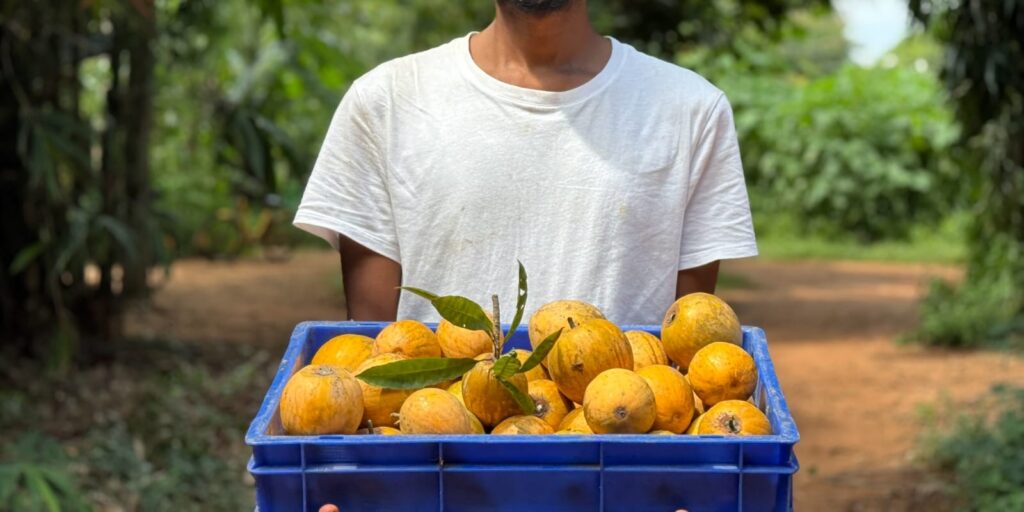
Over the last few weeks at Auro Orchard, I’ve been spending most of my days around the fruit trees, observing, tasting, and doing small bits of research on the fruits growing here. Since I mostly eat fruits throughout the day, this kind of work feels very natural to me it’s both nourishment and exploration at the same time. During these walks, I came across our eggfruit trees, and noticing the bright yellow fruits hanging from the branches felt almost like spotting little suns tucked among the leaves. Harvesting them was a fun experience on its own, and a couple of ripe ones had even fallen perfectly to the ground, soft and ready to eat. The moment I opened one, the texture really stood out: dense, creamy, and yolk-like, almost like scooping out a rich egg yolk but in a sweet, custardy form. The flavor is unlike any other fruit I’ve tried, intensely sweet and extremely satisfying, the kind of fruit you can have only half or one at a time because it fills you up so quickly. Home » Blog » Discovering the Golden Eggfruit: A Sweet Journey at AuroOrchard Discovering the Golden Eggfruit: A Sweet Journey at AuroOrchard November 2025 · Charan Over the last few weeks at Auro Orchard, I’ve been spending most of my days around the fruit trees, observing, tasting, and doing small bits of research on the fruits growing here. Since I mostly eat fruits throughout the day, this kind of work feels very natural to me it’s both nourishment and exploration at the same time. During these walks, I came across our eggfruit trees, and noticing the bright yellow fruits hanging from the branches felt almost like spotting little suns tucked among the leaves. Harvesting them was a fun experience on its own, and a couple of ripe ones had even fallen perfectly to the ground, soft and ready to eat. The moment I opened one, the texture really stood out: dense, creamy, and yolk-like, almost like scooping out a rich egg yolk but in a sweet, custardy form. The flavor is unlike any other fruit I’ve tried, intensely sweet and extremely satisfying, the kind of fruit you can have only half or one at a time because it fills you up so quickly. Eggfruit, also known as canistel, originally comes from Mexico and Central America and later spread to countries in the Caribbean and other tropical regions. Even though it has been around for centuries, it’s still not widely known in India. The tree itself is slow to mature and typically takes around eight years before it begins to produce fruit, which makes the harvest feel even more meaningful. Here at the orchard, as we continue enjoying these unique fruits, we’re also exploring different ways to process them, especially turning them into ice creams and simple frozen desserts to see how their natural creaminess transforms when chilled. It’s been a lovely discovery and definitely one of the more fascinating fruits I’ve spent time with recently. Have you tasted this fruit before? We would love to hear your experience. Over the last few weeks at Auro Orchard, I’ve been spending most of my days around the fruit trees, observing, tasting, and doing small bits of research on the fruits growing here. Since I mostly eat fruits throughout the day, this kind of work feels very natural to me it’s both nourishment and exploration at the same time. During these walks, I came across our eggfruit trees, and noticing the bright yellow fruits hanging from the branches felt almost like spotting little suns tucked among the leaves. Harvesting them was a fun experience on its own, and a couple of ripe ones had even fallen perfectly to the ground, soft and ready to eat. The moment I opened one, the texture really stood out: dense, creamy, and yolk-like, almost like scooping out a rich egg yolk but in a sweet, custardy form. The flavor is unlike any other fruit I’ve tried, intensely sweet and extremely satisfying, the kind of fruit you can have only half or one at a time because it fills you up so quickly. Eggfruit, also known as canistel, originally comes from Mexico and Central America and later spread to countries in the Caribbean and other tropical regions. Even though it has been around for centuries, it’s still not widely known in India. The tree itself is slow to mature and typically takes around eight years before it begins to produce fruit, which makes the harvest feel even more meaningful. Here at the orchard, as we continue enjoying these unique fruits, we’re also exploring different ways to process them, especially turning them into ice creams and simple frozen desserts to see how their natural creaminess transforms when chilled. It’s been a lovely discovery and definitely one of the more fascinating fruits I’ve spent time with recently. Have you tasted this fruit before? We would love to hear your experience. Previous ArticleNext Article Featured Articles Abundance Product of the Month 22 Oct 2025 Monthly Updatesㅤㅤㅤㅤㅤㅤㅤㅤ 22 Oct 2025 The Unstructured Calling: Finding My Rhythmㅤㅤ 30 Nov 2025 Hands-On Approach 29 Nov 2025
The Unstructured Calling: Finding My Rhythmㅤㅤ

Five months ago, I dedicated myself to a period of deep self-experimentation focused on health. Having spent years consuming raw, plant-based foods, I already understood the immense power of food. Yet, the true revelation, refined after a year spent back in the accelerated pace and sterility of city life following my earlier farm volunteering experiences, was the profound importance of a daily, tangible reconnection with nature, the sun, and, crucially, the soil. That time away crystallized what was missing: the rich, microbial life of a natural farm/forest. Home » Blog » The Unstructured Calling: Finding My Rhythm and Resilience in AuroOrchard’s Soil The Unstructured Calling: Finding My Rhythm and Resilience in AuroOrchard’s Soil November 2025 · Astha Khandelwal Five months ago, I dedicated myself to a period of deep self-experimentation focused on health. Having spent years consuming raw, plant-based foods, I already understood the immense power of food. Yet, the true revelation, refined after a year spent back in the accelerated pace and sterility of city life following my earlier farm volunteering experiences, was the profound importance of a daily, tangible reconnection with nature, the sun, and, crucially, the soil. That time away crystallized what was missing: the rich, microbial life of a natural farm/forest. I wasn’t just looking for just physical work; my purpose was to reconnect with the land to enhance my personal growth. Having volunteered at farms with rigid schedules before, this time I sought something different: a place that would honor my slow pace and allow me to explore without a structured plan, enabling me to truly understand where I could contribute. That search led me, quite naturally, to AuroOrchard, the source of my weekly basket. When I shared my interests: working with the soil, embracing food, and developing recipes to preserve nutritional integrity. Anshul’s response was one of profound trust: “Just come to the farm and explore for a week. Engage in whatever you feel like.” That openness made me feel I had truly found my place. I began simply by observing the farm’s daily rhythm: the conversations, the mulching, the sowing, the weeding, and the processing. I was just watching, slowing down, capturing little observations, feeling that magnetic pull to return every morning. The Science of Feeling “Called” This daily, effortless call back to the earth aligns beautifully with the science of the Gut-Immune-Brain Axis. The sense of peace and belonging is not abstract; it’s rooted in measurable biological mechanisms. Working near and engaging with the soil exposes us to environmental microorganisms, notably the “feel-good” bacteria Mycobacterium vaccae. This exposure through inhalation of bioaerosols released during farming can stimulate serotonin production in the brain, inducing states of greater happiness and relaxation, and providing a powerful buffer against stress and anxiety. It is, in essence, the body’s co-evolved response to the presence of these “Old Friends” from the natural world, which our immune systems rely on for proper calibration and resilience. The Grounding Moment and the Salad’s Genesis I’ve spent my initial days just watching… observing the harvesting, mulching, and sowing. (Visit my Instagram profile @dhanyawadearth and check the ‘November Notes’ highlight to see all my observations so far) After a week of gentle observation, my role became concrete. I walked in one morning to find Anshul and Ruben discussing the launch of a new seasonal salad box. “Ruben ask her, she only eats salad” Anshul joked, Soon, I was tasked with walking the farm with Ruben, harvesting every edible green we could use for a sample salad. As we harvested together, Ruben mentioned, “Astha, thank you. I’ve been so occupied in kitchen experiments that I haven’t visited the farm, the soil in so long. It feels so good to be back.” That spontaneous moment was a powerful demonstration of Earthing or Grounding. The human body is electrically conductive, and direct physical contact with the Earth’s surface, like placing bare hands on the soil, allows it to absorb a continuous supply of free electrons. These electrons function as systemic antioxidants, neutralizing the unstable molecules that drive inflammation. The sense of relief and calm Ruben and I both felt was not just emotional; it was a physical electrical reset, reducing our inflammatory load and enhancing our overall well-being. This biophysical connection is a vital, yet often overlooked, part of preventative health. The Nutritional Mandate: Preserving Life Force The subsequent creation of the Farm Seasonal Salad box, which is now happily finding its way into weekly baskets, was guided by principles that bridge soil health and human physiology: Honoring the Seasonal Offering: We prioritize plants that grow robustly in their home climate. This practice ensures plants produce maximum secondary metabolites, yielding higher polyphenols and, consequently, superior antioxidant potential. This is the critical, indirect link to the human gut microbiome: plants grown in microbially rich soils yield nutrient-dense food which, when consumed, provides the best substrate for a diverse and healthy gut ecosystem. Maximizing Micronutrient Retention: We serve the produce raw because essential compounds like Vitamin C, folate, and many carotenoids are heat-labile. By offering a raw, same-day harvest, we ensure maximum micronutrient retention. Digestive & Antioxidant Support: Raw Papaya contains powerful proteolytic enzymes (papain and chymopapain) that assist protein breakdown and improve gut transit. The Chlorophyll in the greens, molecularly similar to hemoglobin, is studied for its ability to support hemoglobin status and act as an antioxidant defense. The successful launch of the Farm Seasonal Salad box is a true testament to the team’s dedicated work and our collective commitment to nutritional integrity. Since the launch, Janani, Raghu, and Ruben have been actively involved in every meticulous step of production: harvesting, cleaning, sorting, drying, chopping, grating, mixing, and packaging. I am particularly proud of how this initiative operates in a closed-loop system, allowing us to receive immediate feedback from customers and act upon it, be it perfecting a dressing or actively seeking sustainable alternatives to plastic packaging, such as our experiments with banana leaves. My time here – from figuring out kitchen revamps to harvesting the
Experiments with Syntropic Agriculture

In the last few years, we have observed that the consumption of Auroville vegetables is going down within Auroville. The five most consumed vegetables in Auroville- Potato, Tomato, Onion, Cauliflower and Carrot don’t grow here locally. The demand for locally grown vegetables is low in our international city and even then, we are competing with produce available in Pondicherry and around at very low prices. Considering all this, we have consciously decided to grow more fruits as there is a lot that we can grow and that is still is being bought from outside- Papaya, Banana, Pineapple, Chikoo, Guava, Citrus, Coconut, Jackfruit, Custard apple, Ramphal, Avocado, and so forth. Home » Blog » Experiments with Syntropic Agriculture Experiments with Syntropic Agriculture July 2025 · Anshul Aggarwal In the last few years, we have observed that the consumption of Auroville vegetables is going down within Auroville. The five most consumed vegetables in Auroville- Potato, Tomato, Onion, Cauliflower and Carrot don’t grow here locally. The demand for locally grown vegetables is low in our international city and even then, we are competing with produce available in Pondicherry and around at very low prices. Considering all this, we have consciously decided to grow more fruits as there is a lot that we can grow and that is still is being bought from outside- Papaya, Banana, Pineapple, Chikoo, Guava, Citrus, Coconut, Jackfruit, Custard apple, Ramphal, Avocado, and so forth. We are now either densifying the existing orchards or reorganizing some orchards towards more efficient and productive plantations. Main design objectives: Increase fruit production in the next 2-5 years. Employ syntropic methods to increase density and use biomass to feed the soil. Try new plants like Coffee and Cacao- create microclimate to support these species. Entropy, Negantropy and Syntropy The idea of entropy originated in the late 19th century in thermodynamic studies. Entropy is the measure of disorderness of a system, a measure of its chaos (Clausius, 1865). The conventional understanding suggests whenever a system goes through any transformation, the entropy of the system increases, giving us the famous axiom that the universe is increasingly moving towards chaos. While this may be true for theoretical models and isolated systems, we, in fact, observe a completely opposite phenomenon in living systems that are transforming all the time. Later scientists observed that what we see as chaos in living systems over time, is in fact, higher forms of natural order, spontaneous configurations that make the system more and more stable. A seed releases its energy to germinate, to grow as a plant, as a tree towards higher complexities of life and order. Human beings learn over time to develop a more and more complex consciousness. This leads us to the idea of a decreasing entropy of systems, a negative entropy, or negentropy (Schrödinger, 1944). While negentropy gives us a new perspective of what is happening in nature, it still doesn’t tell us why it is happening-why is disorder moving to more order. Syntropy fills this gap. It adds a teleological aspect to the transformation of systems. Syntropy suggests that we become what we become not only because of what we were, but also because of what we could be. A tree unfolds from a seed not only because of the nature of the seed, but the potential of becoming a tree that is inherent in it. This understanding highlights a goal, a pull from the future towards higher orders, as much as a push from the past foundations. We can also relate this idea to Yoga, a movement towards a complete union, a path of progress, development and unfolding of a harmony in greater complexities. What is Syntropic Farming? The concept of Syntropic farming method was developed by Swiss farmer and researcher Ernst Götsch, who settled in Brazil in the 1980s. Originally trained as a geneticist and plant breeder, Götsch became disillusioned with conventional agriculture and began experimenting with natural regeneration processes in tropical ecosystems. His approach, outlined in his influential paper “Breakthrough in Agriculture”, proposes that human cultivation can regenerate rather than deplete ecosystems. At its core, syntropic farming is based on ecological succession and stratification, mimicking the structure and dynamics of natural forests. Instead of combating nature, it works in harmony with it by planting a consortium of species—pioneer, secondary, and climax—across different light strata and life cycles. This method emphasizes high biodiversity, minimal external inputs, and a continuous process of pruning and biomass management to accelerate soil fertility and system evolution. How is it different from Permaculture’s Food Forest? It is important to make this distinction as a syntropic forest is significantly different from a food forest. Firstly, the goal of a syntropic forest is ecological restoration and not necessarily to provide food. It works on the principle of ecological succession and stratas which translates to light requirements and life cycles. In a food forest, however, the goal is to fit as many edible species into one consortium based on vertical spacing/layering as possible. There is emphasis on ‘support species’ in Syntropic farming to support soil fertility and main crop. In a food forest, edible crops are privileged over other crops. Also, syntropic systems are way more dynamic than a food forest. A syntropic system changes form with the completion of the life cycle of each plant. On the other hand, the idea in a food forest is to put together a system that will stay in the same consortium for as long as possible. In a syntropic system, Papaya may be grown as an initial species to use light and will be cut down after a couple of years to allow the main fruit crop under it to grow further. The goal in the food forest, on the other side, will be to preserve the Papaya and perhaps increase the spacing within the main fruit crop to allow for Papaya to continue growing. We will talk about the benefits of the syntropic approach over food forest in the following sections. Site Selection