The Six Seasons of Aurovilleㅤㅤㅤㅤ
Does Auroville only have one long summer season? That is how it feels. But even the subtle differences make a lot of difference in farming. When I came to Auroville in 2019, I had only farmed in the mountains. I was used to four distinct Home » Blog » The Six Seasons of Auroville The Six Seasons of Auroville April 2026 · Anshul Aggarwal Does Auroville only have one long summer season? That is how it feels. But even the subtle differences make a lot of difference in farming. When I came to Auroville in 2019, I had only farmed in the mountains. I was used to four distinct seasons- of course with their own subtleties, but still the distinction between summer, autumn, winter, spring was quite pronounced. It took me about two years to understand that Auroville actually has six seasons! We have been planning our crops based on this understanding since 2022. Only much later, and recently, I found out that ancient Tamizh literature like Tolkaapiyam, also identifies six seasons for Tamil Nadu. This system of six seasons is called Paruvangal. Each season lasts exactly two Tamizh months, beginning with the Tamizh New Year in mid-April. Interestingly, my observations align perfectly with this age-old system. I will first describe how I observe seasons. The typical cycle of seasons is based on the position of the Earth in relationship to the Sun. The four main events in this yearly cycle with the Sun are- the two equinoxes, where the Earth is in perfect alignment with the Sun and the two solstices, where the Earth is tilted closest or farthest from the Sun. Since we are very close to the equator (12 degrees North) in Auroville, we don’t see the pronounced effects of these movements, and yet there are subtle changes. We can use the visual of breathing in and out- the most fundamental cycle that we experience. As the Earth moves in her cycle, it too breathes in and out. The beginning of the in-breath starts with the Autumn Equinox (September 21st)*. This is the period of going inwards, the year is winding down, we begin to reflect on the activity so far, some have the need to retreat into contemplation and silence, the land starts to cool down after summer and the rhythm of life becomes more relaxed. The peak of this in-breath comes at the Winter solstice (December 21st), the longest night of the year. In-breath, the period of inner activity continues until Spring Equinox (March 21st). We then move to the out-breath, where life starts to wake up from its slumber, flowers bloom, the land and air start to get warmer, microbes and insects multiply, and there is an impulse for external activity. The peak of this cycle is reached at the Summer solstice (June 21st) and this period itself continues until the Autumn Equinox (September 21st), after which it repeats itself. While these periods and patterns don’t apply as per dates and months in the same way to all locations on the Earth, the principles apply to all places and people. Even if not coordinated with seasons, we can easily observe these cycles in our own life. This is the template on which Auroville’s six seasons are based. The breathing cycle of the Earth * These descriptions apply to all of us in the Northern hemisphere of the planet. These patterns will be the exact opposite for people living in the Southern hemisphere. In the case of Auroville, or perhaps larger Tamil Nadu, the two extreme points are Summer and Monsoon, and, in my scheme, they become the reference for all the other seasons. And due to our location close to the equator as well as our proximity to the oceans, our seasons are not only influenced by solar cycles but also by oceanic and wind phenomena. The correlation of these seasons with the calendar months and the Tamizh Paruvangal is as follows: English calendar Solar event Breath cycle Paruvangal Tamizh calendar Pre-Summer Mid-Feb to Mid-April Spring Equinox Out-breath Pin-pani (Late dew) Masi & Panguni Summer Mid-April to Mid-June – Out-breath Ila-venil (Tender heat) Chittirai & Vaikasi Post-Summer Mid-June to Mid-Aug Summer Solstice Peak of out-breath Mudhu-venil (Mature heat) Ani & Adi Pre-Monsoon Mid-Aug to Mid-Oct Autumn Equinox In-breath Kar (Dark clouds) Avani & Purattasi Monsoon Mid-Oct to Mid-Dec – In-breath Kulir (Cold) Aippasi & Kartikai Post-monsoon Mid-Dec to Mid-Feb Winter Solstice Peak of in-breath Mun-pani (Early dew) Margali & Tai I will now describe what these seasons mean to us and how we organise our work based on them. Pre-Summer Paruvangal: Pin-pani (Late dew) | Tamizh calendar: Masi & Panguni | English calendar: Mid-Feb to Mid-April I will put this as the first as this is right after the Pongal festival in mid-January. The first season of a new cycle, and I will call this Pre-Summer. The days are still a bit short and the mornings and evenings are still cool. During this season, we continue planting summer crops like pumpkins, cucumbers, and gourds from the late previous season. We could continue planting some winter crops like spinach, lettuce etc. but the quality of those in this season is not that great due to hot days. The flavour is different and the texture is harder. During Pre-Summer, life is blooming, we can see a diversity of flowers on crops and trees. This is also the best time to save seeds. This season is closely associated with the Post-monsoon season, the last in the cycle (Mun-pani). Summer Paruvangal: Ila-venil (Tender heat) | Tamizh calendar: Chittirai & Vaikasi | English calendar: Mid-April to Mid-June Then, the sun starts to rise in the sky and the days as well as the nights are warmer. This is what I would call the real Summer. The production during this time starts to be limited to a few crops. It’s not so much due to heat but due to limitation of water and pressure from pests. Like many places
Food Sovereignty and Seeds of AuroOrchard
Since the Second World War, the agriculture paradigm has shifted dramatically to keep pace with the evolving industrial and economic paradigms. The culture of mono-cropping has grown on some ill-found assumptions and hard realities of the changing social structures in farming communities. As much as monoculture is believed to be the only way to produce high-yields, and a dominant solution to feeding the world, it is also easier for farmers who have no option than to resort to mechanization due to lack of hands working on the fields. The farmers who lack the resources to buy machines or employ family members on the farm suffer the most. However, despite the illusory success of turning large acres of land into monocrop systems, the inequity in food distribution couldn’t have been higher than ever. As per studies done in recent times, collectively we grow food already for about 10 billion people (calorie equivalence) but over a third of this food is wasted while harvesting, storing, shipping and so forth (Holt-Giménez et al., 2012). Home » Blog » Food Sovereignty and Seeds of AuroOrchard Food Sovereignty and Seeds of AuroOrchard March 2026 · Anshul Aggarwal Since the Second World War, the agriculture paradigm has shifted dramatically to keep pace with the evolving industrial and economic paradigms. The culture of mono-cropping has grown on some ill-found assumptions and hard realities of the changing social structures in farming communities. As much as monoculture is believed to be the only way to produce high-yields, and a dominant solution to feeding the world, it is also easier for farmers who have no option than to resort to mechanization due to lack of hands working on the fields. The farmers who lack the resources to buy machines or employ family members on the farm suffer the most. However, despite the illusory success of turning large acres of land into monocrop systems, the inequity in food distribution couldn’t have been higher than ever. As per studies done in recent times, collectively we grow food already for about 10 billion people (calorie equivalence) but over a third of this food is wasted while harvesting, storing, shipping and so forth (Holt-Giménez et al., 2012). Small farms feed the world Interestingly, over 70% of the food that we end up eating, still comes from small-farms (25 acres or less) managed by communities and families for subsistence, and not from large mechanized monocrop systems as we are made to believe. Also small farms have been found to be 4-5 times more productive than large farms because of their intensive diverse cropping integrated with animal rearing(Lerman & Sutton, 2008; Small farmers feed the world, Grain, 2014). We do have enough food to feed the planet and almost three quarters of it comes from small farms. So where does large scale industrial agriculture fit in this story and how can it help if production is not really the primary challenge? The industrialization of agriculture has led to large scale disempowerment of small farmers, degraded rural lands and culture and polluted our soil, water and air and the poor stay hungry no matter how much more food is produced on this planet. Our overwhelming stress on strategies and policies to feed the world are focused only on producing more food. But we forget that this also means more food of a certain quality. As the world wakes up to appreciate the subtle nuances of relationships of humans with nature, other humans and themselves, the subtle qualities of food and their relationship with human health must also be considered. Cheap food does not mean good food and as a global collective, feeding the world population is rather an insufficient objective. That all on this planet should have access to clean and wholesome food is an idea worth living and fighting for, and large scale industrial agriculture has very little to offer in this regard. The solution of lack of access could lie in decentralization and localization of production and distribution. But the road ahead is difficult, especially for small farmers. Changing climatic patterns and a demand from consumers of non-seasonal, non-local produce due to changes in diet preferences, loss of knowledge of using traditional and local foods along with loss of traditional seed varieties due to lack of skill and subsidies on hybrid seeds has led to a loss in agricultural biodiversity and a degradation of local food systems. As a result farmers have had to grow food based on the lopsided market demands and economic incentives. This trend is, of course, changing slowly and research and experimentation in rediscovering a balance of natural farming in the current ecological and social paradigms is emerging both on the fields and within the new food distribution enterprises. Human role in agro-bio-diversity One of the aspects of re-discovering this balance and re-establishing the lost relationship with the land is letting go of our conceptions of order and monocultures towards revitalising the biodiversity in our ecosystems. Since human impact has surpassed that of all others, we have been shaping the evolutionary process of biodiversification, consciously and unconsciously. Our very existence has a definite impact and our role in the ecosystem implores us to walk, work, eat and modify our environment for survival. Yet, in the last few centuries or even since agriculture began thousands of years ago, our impact on our environment has been steadily increasing as we slowly seem to be losing track of what is important and are moving from modification to exploitation. Communities based on land and in forests have evolved with their ecosystems since millennia. They themselves have been a part of the biodiversity of the land. Not only have humans evolved within the ecosystems, they have also contributed in protecting and furthering the evolution of these systems. The Amazon forests, which are now being referred to as the oldest food forests, are the perfect example of how human culture can support and enhance biodiversity and create a synthesis of wild and humanized ecosystems (Panko, 2023;
Experiments with Faulkner’s Method …
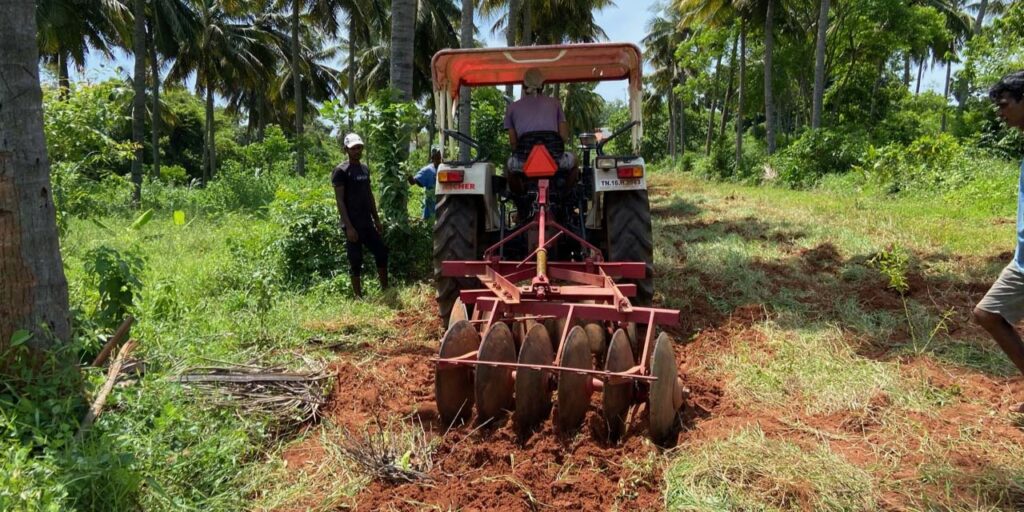
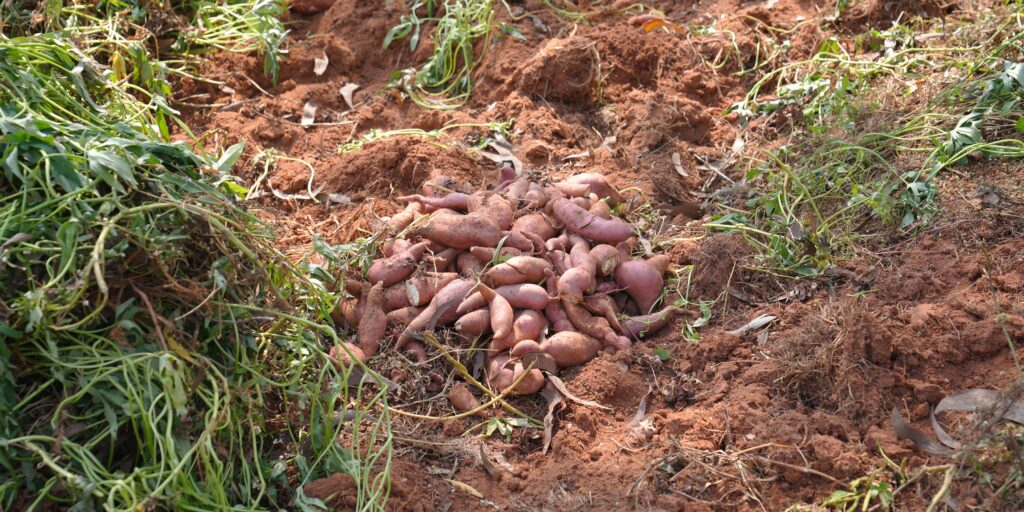
AuroOrchard soil is red sandy loam with very low baseline organic carbon (~0.2%). Whatever organic matter we add decomposes rapidly under heat, termites, and rain. Unless we keep feeding the soil, the carbon disappears. This challenge is not only ecological but also practical. Raised beds, which we also practice, protect soils well — but they demand immense labour to establish and maintain. With today’s scarcity of farm workers, scaling raised beds across large areas is difficult. Home » Blog » Experiments with Faulkner’s Method of Shallow Ploughing Experiments with Faulkner’s Method of Shallow Ploughing January 2026 · Anshul Aggarwal AuroOrchard soil is red sandy loam with very low baseline organic carbon (~0.2%). Whatever organic matter we add decomposes rapidly under heat, termites, and rain. Unless we keep feeding the soil, the carbon disappears. This challenge is not only ecological but also practical. Raised beds, which we also practice, protect soils well — but they demand immense labour to establish and maintain. With today’s scarcity of farm workers, scaling raised beds across large areas is difficult. In 2022, we came across the work of American agronomist Edward H. Faulkner, who advocated for shallow soil disturbance with a tractorised disc harrow. This paper describes our trials with this approach. Treading lightly with machines Mechanisation in Indian farming is often debated in absolutes: either as the culprit of soil degradation or as the saviour of productivity. On the one hand, mechanisation is unavoidable. With rural labour scarce and costly, even small farms depend on machines. On the other hand, not all mechanisation is equal. Large rototillers dig deep, pulverise soils, and burn fuel. They are unsuited to fragile sandy soils where organic matter is easily oxidised and lost. Our guiding question was whether we could use the tractor differently, in a way that it helps build soil structure rather than breaking it. Faulkner (1943) wrote in his Ploughman’s Folly: “No one has ever advanced a scientific reason for plowing… The sole reason for plowing is tradition.” Faulkner suggested that shallow stirring, not deep inversion, keeps soil fertile. And this is where the disc harrow comes into the picture. The disc harrow makes it possible to cut at 3–5 inches, slicing biomass without inverting the soil. The result is that the surface residues remain, decomposition is encouraged, and deeper horizons are undisturbed. The outcome is dramatically different from that of a roto-tiller, which has become ubiquitous now. Reconciling the ideal of no-till Globally, conservation agriculture promotes no-till, leaving soils undisturbed and residues on the surface. While effective in temperate soils, its results are mixed in sandy tropical contexts. Meta-analyses (Ogle et al., 2019) and sandy-soil trials (Wang et al., 2025) show that no-till does not automatically raise soil carbon in these contexts unless there is abundant residue input. Residues on the surface often decompose or disappear too quickly, leaving little trace for the following crop. Brazilian research confirms that in sandy soils, no-till only works when combined with continuous cover cropping to sustain organic inputs (Silva et al., 2024). Our practice of shallow disc-harrowing is not a rejection of no-till. We disturb only the top 5 inches, just enough to fold residues into the biologically active layer, while still protecting deeper horizons. In other words, we are guided by the same principle—minimise disturbance while maximising residue cover—but adapt it to the faster carbon cycle of sandy tropical soils. Cover Crops and Organic Matter Cycling We paired the disc harrow with cultivating cover crops — Sunnhemp (Crotalaria juncea) and Cowpea (Vigna unguiculata) and developed two methods: Surface ploughing: Residues are chopped and left on the soil. Within three weeks, termites, worms and microbes reduce them to humus. This was done when the field can be left on its own for a while before planting. Shallow incorporation (~5 inches): Biomass is lightly mixed into the topsoil, speeding decomposition and providing a fertility “pulse” for crops. This was done when planting was urgent and a faster decomposition was required. Both methods reduced weeds, conserved moisture, and returned organic matter to the soil. Studies confirm that tropical soils, especially sandy ones, lose organic matter quickly. Adekiya et al. (2023) have concluded in their research that: “tropical soils are characterized by rapid decomposition of organic matter, leading to relatively low levels of soil organic carbon.” Our shallow disc harrow practice seems to strike a balance: speeding up decomposition enough to feed the soil, while avoiding deep inversion that accelerates carbon loss. Our first trials We tested this approach on a 0.5 acre field which had not been cultivated for over three years. It was full of wild grasses and cows would frequent it for grazing. We grew two cycles of biomass-one legume and one cereal and incorporated them in the soil with shallow discing. This entire process took about six months. We harvested 4 tonnes of sweet potato from this field after five months of planting. Local averages are about 5–6 tonnes per acre, so our yield was significantly higher per unit area. Of course, yields depend on many factors, but this result raised the possibility that shallow incorporation can improve both fertility and productivity. Research from northeast Thailand shows that even a 1 g/kg increase in SOC can boost yields by ~300 kg/ha in rice (Arunrat et al., 2020). While soils and crops differ, the principle is the same: small gains in SOC can translate into meaningful yield improvements in sandy soils. The most surprising allies were termites. After surface ploughing, termite galleries appeared quickly, pulling residues into the soil. Within weeks, what looked like rough mulch became humus. Earthworms followed, leaving casts across the field. The social aspect of mechanisation We also maintain over fifty raised beds (30 sq. m. each) managed under no-till. These systems protect organic matter well, but they require a lot of human labour to maintain, especially for weeding. With today’s scarcity of farm workers, scaling raised beds to larger areas is difficult. This work is physically demanding, and we observe less
Our Brewery for Plant Health
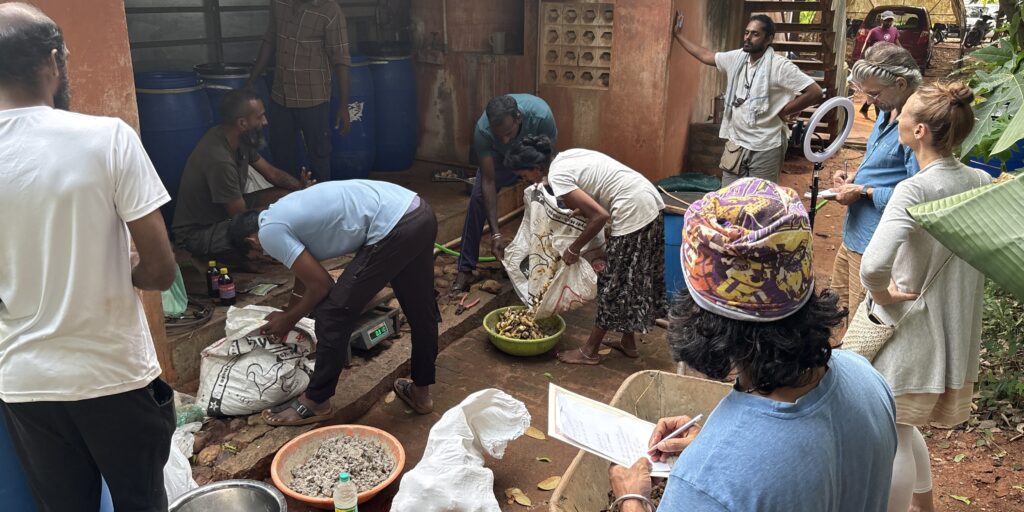
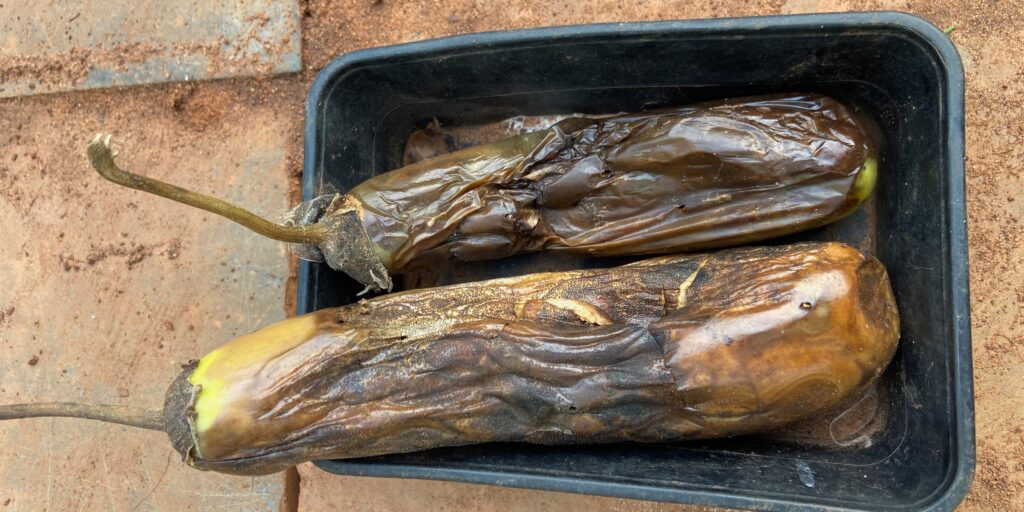
There is a common myth that imbalances in insect populations will disappear if agricultural systems are brought “back into balance.” This assumption rests on the idea that agriculture itself is a balanced ecosystem, which is fundamentally incorrect. Agricultural systems—even in their most natural forms—are human-designed systems, shaped by human needs, diets, and production goals. Home » Blog » Our Brewery for Plant Health Our Brewery for Plant Health December 2025 · Anshul Aggarwal There is a common myth that imbalances in insect populations will disappear if agricultural systems are brought “back into balance.” This assumption rests on the idea that agriculture itself is a balanced ecosystem, which is fundamentally incorrect. Agricultural systems—even in their most natural forms—are human-designed systems, shaped by human needs, diets, and production goals. While diversification and ecological practices can reduce the severity of pest outbreaks, they cannot eliminate them. Modern agriculture, which serves diets limited to a relatively small range of vegetables and fruits, necessarily restricts the diversity that can be accommodated on the farm. In this sense, persistent insect pressure is an inherent feature of agriculture. It cannot be completely resolved, only moderated through careful and continuous management (Oerke, 2005). Moreover, pest pressure today is shaped not only by on-farm diversity, but by the biology of the larger landscape and by changing climatic conditions. Research in agroecology and landscape ecology helps explain why pest pressure can remain high even in diversified farms. Studies show that while ecological practices like crop diversification and habitat enhancement can increase populations of natural enemies, they do not always translate into consistent pest suppression in every field because pest regulation depends strongly on landscape context and habitat structure beyond the farm boundary. For example, natural pest control tends to be stronger in complex, patchy landscapes, with abundant non-crop habitats that support predators and parasitoids, but this effect varies and is not guaranteed (Bianchi et al., 2006; Poveda et al., 2025). Another important limitation of ecological pest regulation lies in the difference between ecological and agricultural time scales. Predator–prey relationships, soil food webs, and habitat-based regulation often require many years to stabilise, whereas farms operate on seasonal cycles that demand immediate outcomes. Farmers must harvest crops within weeks or months, not decades. This temporal mismatch means that even ecologically well-designed farms often need active interventions to bridge the gap between long-term ecological recovery and short-term production needs. In our own production analyses, we found that we lose around 30% of certain crops due to insect damage. These include borers, mealybugs, hoppers, and beetles on brinjal; aphids on long beans; blister beetles on lady fingers and beans; and red gourd beetles on pumpkins, cucumbers, and other gourds—despite years of intercropping, flowering hedges, and multi-layered cropping systems. To prevent severe losses, we have so far relied on neem oil sprays and commercially available biopesticides such as Beauveria bassiana (a fungus) and Bacillus thuringiensis (a bacterium). While effective to a degree, these are purchased inputs. We have therefore been exploring more diverse, farm-made preparations such as Themmor Karaisal, Panchagavya, and fermented leaf extracts using plants like Calotropis, Adhatoda, castor, and moonflower—though not yet with full consistency. Our goal has never been a complete elimination of insects, but the cultivation of systems capable of tolerating a certain level of damage without catastrophic crop loss. So far, we have accepted around 30% as the fair share, our contribution to the ecology, the tax the farmer pays to the land for setting up agriculture. However, given the precarious financial situation on the farm as well as the pressure to deliver more food for the community, we are forced to re-assess if some of these losses can be avoided without damaging the ecosystem. Recently, we met the Aarka team (Elen and Shankar), who have developed formulations aimed at rebuilding functional ecological relationships that were historically embedded in farming systems, though under very different population, climatic, and landscape conditions. Their herbal preparation, Aarka, can be applied in dilution and combined with other ferments—such as oil mixes, fish amino acids, and Themmor Karaisal—for foliar sprays to reduce fungal, bacterial, and insect pressure. These bioferments not only prevent “pests” but also deliver essential herb compounds and micronutrients to the plants, strengthening them and building their own capacity to deal with biological pressures. We organised an afternoon of preparing these different formulations together with our team and developed a plan to use them more consistently, as part of an ongoing effort to reduce crop losses while working within the ecological limits of contemporary agriculture. Our brewery now consists of the following ferments: Aarka solution fermented with sugars and proteins Jeevamrit (fermented mix of cow dung and urine) Panchagavya (fermented mix of the five gifts from the cow–dung, urine, milk, curd, ghee) Themmor Karaisal (fermented mix of curd and coconut milk) Oil concoction (Castor, Mahua, Pongam and Neem oils) Fish amino acids (fish waste fermented with banana) Biopotash solution (ash in rainwater) In the coming days, weeks and months, we aim to consistently inoculate our soil and plant ecology with these ferments and observe the response in terms of plant health and productivity. There is a common myth that imbalances in insect populations will disappear if agricultural systems are brought “back into balance.” This assumption rests on the idea that agriculture itself is a balanced ecosystem, which is fundamentally incorrect. Agricultural systems—even in their most natural forms—are human-designed systems, shaped by human needs, diets, and production goals. While diversification and ecological practices can reduce the severity of pest outbreaks, they cannot eliminate them. Modern agriculture, which serves diets limited to a relatively small range of vegetables and fruits, necessarily restricts the diversity that can be accommodated on the farm. In this sense, persistent insect pressure is an inherent feature of agriculture. It cannot be completely resolved, only moderated through careful and continuous management (Oerke, 2005). Moreover, pest pressure today is shaped not only by on-farm diversity, but by the biology of the larger landscape and by changing climatic conditions. Research in agroecology
Flow of fire and water on the farmㅤㅤ
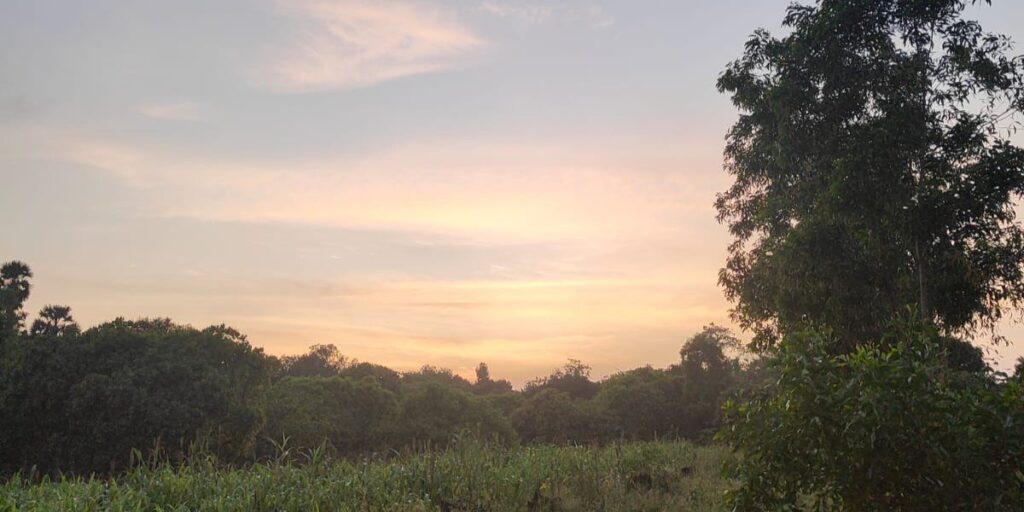
In the Sāṃkhya school of Indian philosophy, the unfolding of matter from spirit gives rise to the senses and to the five elemental manifestations of the material world. From space, emerges air, the principle of movement, and fire, the principle of transformation. Then comes water, carrying flow, continuity, and the subtle pulsations of energy through matter. From the settling of this movement is born earth, the solid ground where life takes form and rests in its full potential. Home » Blog » Flow of fire and water on the farm Flow of fire and water on the farm December 2025 · Anshul Aggarwal In the Sāṃkhya school of Indian philosophy, the unfolding of matter from spirit gives rise to the senses and to the five elemental manifestations of the material world. From space, emerges air, the principle of movement, and fire, the principle of transformation. Then comes water, carrying flow, continuity, and the subtle pulsations of energy through matter. From the settling of this movement is born earth, the solid ground where life takes form and rests in its full potential. Farming is an interaction of all these elements—an ongoing exchange between soil, water, light, air, and the consciousness of the one who tends them. While the Sun remains the primary fire and source of energy, we now also work with another form of fire: electricity, which powers pumps, motors, vehicles, tools, and the quiet machines woven into daily life on the farm. Similarly, rain brings water in its natural rhythm, but we have also learnt to draw from the rainwater stored underground. The farm has three borewells, each serving a specific area and purpose. In this way, the ancient flows of fire and water manifest today as the flows of electricity and irrigation lines across the land. These flows move together; they remain the source of energy for all work on the farm. Over the last fifty-eight years, these flows have gradually expanded to cover a large part of the farm. But further extension is needed to serve areas still cultivated sub-optimally. One might ask: why expand this infrastructure at all? Shouldn’t some parts remain free of artificial flows? Aren’t the Sun and the rain enough? Isn’t natural vegetation sufficient? These questions are part of an enduring dilemma in human life. Our footprint on the planet is large; the footprint of farming especially so. Agriculture is the world’s largest consumer of water, a driver of deforestation and biodiversity loss, a source of carbon emissions, and—in its industrial form—the cause of immense ecological, animal, and human suffering. In such a scenario, it is natural to think that the solution lies in withdrawal: if only humans stepped back, perhaps the earth would regain its balance. We witnessed glimpses of this during the Covid pandemic, when air grew cleaner and wildlife briefly reclaimed spaces near cities. But this brings us to a deeper question: what then is the role of humanity at all? It cannot be inaction. And as our experience shows, even the smallest human action today has ecological and social consequences. Integral Yoga would tell us that our role is not domination but participation—a conscious collaboration with the creative force of nature for mutual growth and progress. Agriculture is one of the clearest expressions of this human–nature participation. Thus, expanding human activity on the farm can arise from two very different impulses–domination, colonisation, and control, or service to the land and to the community—enhancing the ecosystem, the soil, the earth, and producing food for the people we serve. We strive (with successes and failures) toward the latter. In the coming year, we aim to expand our micro-irrigation network as we establish new orchard blocks and diversify existing fruit areas. This year we have learned how communities of crops support one another and reduce the overall water footprint of the farm—simply because the soil remains densely covered with vegetation: some plants grown as food for the farm, others as food for the soil, insects, bees, and birds. Our primary focus will be the mango and cashew orchards, the oldest sections of the farm, which at present are monocultures. Our experiments with cultivating pineapple, ginger, turmeric, yam, and taro within existing orchards have given remarkable results, and we hope to continue this diversification. And water needs energy to flow. As our irrigation network expands, so does the need for energy—whether through electrical connections, lines, or solar-powered pumps. Meanwhile, some of the existing infrastructure, built over many decades, now needs repair and renewal. These are our goals for the coming year—to tend to the flows of fire and water on the farm, the two essential elements for movement and transformation without which both the earth and human consciousness remain sterile. And given the changes the farm (and Auroville) has witnessed in the last few years, it is evident that the psyche of the farm too needs a movement and transformation, as it goes through a radical transition socially, politically and economically. Previous Article Featured Articles Monthly Updatesㅤㅤㅤㅤㅤㅤㅤㅤ 28 Nov 2025 Abundance Product of the Month 22 Oct 2025 Flow of fire and water on the farmㅤㅤ 03 Dec 2025 Hands-On Approachㅤㅤㅤㅤㅤㅤㅤㅤㅤ 29 Nov 2025
The Unstructured Calling: Finding My Rhythmㅤㅤ

Five months ago, I dedicated myself to a period of deep self-experimentation focused on health. Having spent years consuming raw, plant-based foods, I already understood the immense power of food. Yet, the true revelation, refined after a year spent back in the accelerated pace and sterility of city life following my earlier farm volunteering experiences, was the profound importance of a daily, tangible reconnection with nature, the sun, and, crucially, the soil. That time away crystallized what was missing: the rich, microbial life of a natural farm/forest. Home » Blog » The Unstructured Calling: Finding My Rhythm and Resilience in AuroOrchard’s Soil The Unstructured Calling: Finding My Rhythm and Resilience in AuroOrchard’s Soil November 2025 · Astha Khandelwal Five months ago, I dedicated myself to a period of deep self-experimentation focused on health. Having spent years consuming raw, plant-based foods, I already understood the immense power of food. Yet, the true revelation, refined after a year spent back in the accelerated pace and sterility of city life following my earlier farm volunteering experiences, was the profound importance of a daily, tangible reconnection with nature, the sun, and, crucially, the soil. That time away crystallized what was missing: the rich, microbial life of a natural farm/forest. I wasn’t just looking for just physical work; my purpose was to reconnect with the land to enhance my personal growth. Having volunteered at farms with rigid schedules before, this time I sought something different: a place that would honor my slow pace and allow me to explore without a structured plan, enabling me to truly understand where I could contribute. That search led me, quite naturally, to AuroOrchard, the source of my weekly basket. When I shared my interests: working with the soil, embracing food, and developing recipes to preserve nutritional integrity. Anshul’s response was one of profound trust: “Just come to the farm and explore for a week. Engage in whatever you feel like.” That openness made me feel I had truly found my place. I began simply by observing the farm’s daily rhythm: the conversations, the mulching, the sowing, the weeding, and the processing. I was just watching, slowing down, capturing little observations, feeling that magnetic pull to return every morning. The Science of Feeling “Called” This daily, effortless call back to the earth aligns beautifully with the science of the Gut-Immune-Brain Axis. The sense of peace and belonging is not abstract; it’s rooted in measurable biological mechanisms. Working near and engaging with the soil exposes us to environmental microorganisms, notably the “feel-good” bacteria Mycobacterium vaccae. This exposure through inhalation of bioaerosols released during farming can stimulate serotonin production in the brain, inducing states of greater happiness and relaxation, and providing a powerful buffer against stress and anxiety. It is, in essence, the body’s co-evolved response to the presence of these “Old Friends” from the natural world, which our immune systems rely on for proper calibration and resilience. The Grounding Moment and the Salad’s Genesis I’ve spent my initial days just watching… observing the harvesting, mulching, and sowing. (Visit my Instagram profile @dhanyawadearth and check the ‘November Notes’ highlight to see all my observations so far) After a week of gentle observation, my role became concrete. I walked in one morning to find Anshul and Ruben discussing the launch of a new seasonal salad box. “Ruben ask her, she only eats salad” Anshul joked, Soon, I was tasked with walking the farm with Ruben, harvesting every edible green we could use for a sample salad. As we harvested together, Ruben mentioned, “Astha, thank you. I’ve been so occupied in kitchen experiments that I haven’t visited the farm, the soil in so long. It feels so good to be back.” That spontaneous moment was a powerful demonstration of Earthing or Grounding. The human body is electrically conductive, and direct physical contact with the Earth’s surface, like placing bare hands on the soil, allows it to absorb a continuous supply of free electrons. These electrons function as systemic antioxidants, neutralizing the unstable molecules that drive inflammation. The sense of relief and calm Ruben and I both felt was not just emotional; it was a physical electrical reset, reducing our inflammatory load and enhancing our overall well-being. This biophysical connection is a vital, yet often overlooked, part of preventative health. The Nutritional Mandate: Preserving Life Force The subsequent creation of the Farm Seasonal Salad box, which is now happily finding its way into weekly baskets, was guided by principles that bridge soil health and human physiology: Honoring the Seasonal Offering: We prioritize plants that grow robustly in their home climate. This practice ensures plants produce maximum secondary metabolites, yielding higher polyphenols and, consequently, superior antioxidant potential. This is the critical, indirect link to the human gut microbiome: plants grown in microbially rich soils yield nutrient-dense food which, when consumed, provides the best substrate for a diverse and healthy gut ecosystem. Maximizing Micronutrient Retention: We serve the produce raw because essential compounds like Vitamin C, folate, and many carotenoids are heat-labile. By offering a raw, same-day harvest, we ensure maximum micronutrient retention. Digestive & Antioxidant Support: Raw Papaya contains powerful proteolytic enzymes (papain and chymopapain) that assist protein breakdown and improve gut transit. The Chlorophyll in the greens, molecularly similar to hemoglobin, is studied for its ability to support hemoglobin status and act as an antioxidant defense. The successful launch of the Farm Seasonal Salad box is a true testament to the team’s dedicated work and our collective commitment to nutritional integrity. Since the launch, Janani, Raghu, and Ruben have been actively involved in every meticulous step of production: harvesting, cleaning, sorting, drying, chopping, grating, mixing, and packaging. I am particularly proud of how this initiative operates in a closed-loop system, allowing us to receive immediate feedback from customers and act upon it, be it perfecting a dressing or actively seeking sustainable alternatives to plastic packaging, such as our experiments with banana leaves. My time here – from figuring out kitchen revamps to harvesting the
COMPOST TEA: A Natural Probiotic for Soil and Plants
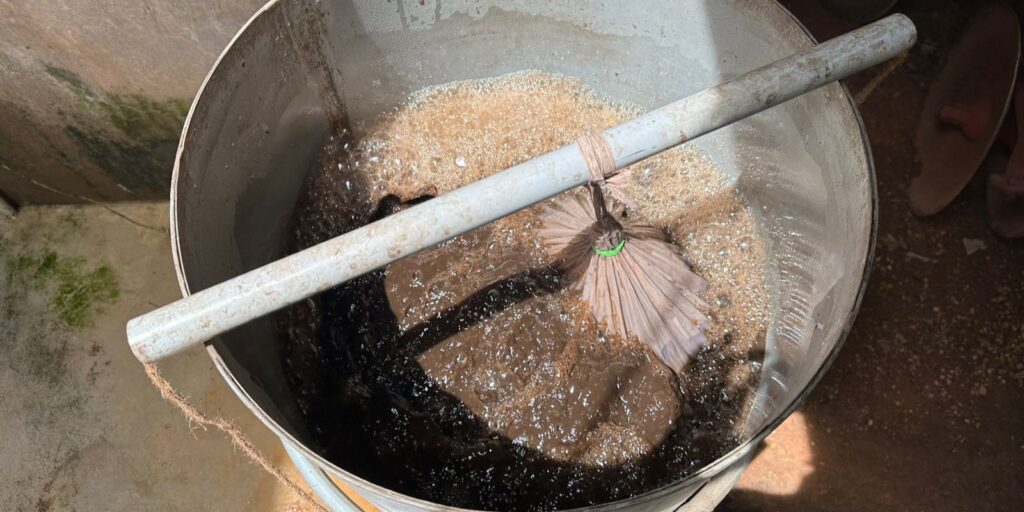
As Dr. Elaine Ingham said, “there is no soil on this planet lacking nutrients to grow plants”, in other words there is intrinsically food (organic matter) in the soil, that we actually just enrich with mulch and compost in farming, according to the needs of our crops. However, sometimes there is not enough microbes to eat that food and release nutrients for the plants. Excess of food can turn into excessive oxidation and there is no conversion back to nutrients. Then compost becomes interesting because it contains a diverse amount of beneficial microbial population which contributes to the decomposition of the organic matter. In that sense spreading solid mature compost can be a solution, but it can be hard to do on a large cultivated area (heavy physical efforts, time consuming process). Turn it into a liquid form seems to be an easier way to do it on an agricultural scale. Dr. Elaine Ingham is the one who helped create the modern version of it : a compost tea using aerobic reaction. Home » Blog » COMPOST TEA: A Natural Probiotic for Soil and Plants COMPOST TEA: A Natural Probiotic for Soil and Plants July 2025 · Lucile As Dr. Elaine Ingham said, “there is no soil on this planet lacking nutrients to grow plants”, in other words there is intrinsically food (organic matter) in the soil, that we actually just enrich with mulch and compost in farming, according to the needs of our crops. However, sometimes there is not enough microbes to eat that food and release nutrients for the plants. Excess of food can turn into excessive oxidation and there is no conversion back to nutrients. Then compost becomes interesting because it contains a diverse amount of beneficial microbial population which contributes to the decomposition of the organic matter. In that sense spreading solid mature compost can be a solution, but it can be hard to do on a large cultivated area (heavy physical efforts, time consuming process). Turn it into a liquid form seems to be an easier way to do it on an agricultural scale. Dr. Elaine Ingham is the one who helped create the modern version of it : a compost tea using aerobic reaction. Compost tea is an organic liquid fertilizer made by brewing mature compost in water with the aim to extract and multiply the beneficial microorganisms present in this compost, through aerobic processes, and introduce it to either directly to the roots or plants to rebalance and enrich the microbiome life. Using compost tea is a permaculture practice that respects the life in the soil, understands how important it is, helps it grow without harming it while still allowing farming to continue. The main intention is important : to make all systems more efficient, in other words an healthy system which works on its own and not with the aim of exploiting the soil. Compost tea can be poured to the roots of the plant to enrich microbial life of the soil as we just explained or it can be applied as a foliar spray by sprinkling it on the leaves to strengthen and protect them. More precisely, compost tea protects the pores on the leaves (called stomata). Because they are open areas, bacteria can deposit there. In general, good bacteria in the compost tea can live on the stomata protecting them from bad bacteria. To make compost tea we first need to start with good cultured mature compost (6 month to 1 year in age). Mature compost means material that only grows beneficial organisms. It is important because we must be sure that nasty elements like pathogens and parasites in the compost have been killed by the composting process, which requires high enough temperature for a long enough time. As a reminder, compost should be made of green and wood materials that help bacteria and fungi grow, and their growth causes the temperature to rise in the compost pile. Of course compost must be made based on what our soil needs. If we need more bacteria, we add more green materials. If we need more fungi, we add wood materials. It depends on what the soil is missing and what biology we want to bring back. Then, to permit our starting culture to grow we need a specific favorable environment who provides space, medium, food and a process to make our compost tea : it’s our machine. In this machine we have : Contents : The tea tank : who should be round shape, with no sharp corners to helps water and air move freely, avoid collect and bacteria from growing and be easy to clean. A tea bag : used to hold the compost during brewing, who will be able to block solid particles and allows microorganisms to pass through. Perfect mesh size is 400-800 microns. The bag should be placed where water and air can flow through it easily and be partially filled to do not block water flow. The medium : Water to extract the beneficial organisms off the solid surface of compost. Water have to be free of chlorine and chloramine which might effect the organisms in the compost extract. For that purpose we use humic acid which is adequate to kill any toxic chemicals that are present in the water. Humic acid also causes the dark brown color in the compost. By chlorine, chloramine, sulfates it decolonizes the humic acid so it is therefore its easier to notice their presence and adapt the concentration of humic acid. Water we brew have to be at room temperature so that the microbial growth is flourishing. The food : The type of food we add to compost tea will influence which kinds of microorganisms grow. It all depends on what we want to achieve. If we want to develop bacteria, we use foods that promote fast bacterial growth. If we want to grow fungi, we need to feed the fungi directly with more complex foods. Here are some good options : Jaggery (unrefined sugar) who helps develop bacteria, promoting rapid microbial growth during brewing.