Agriculture, from the Latin agrum meaning land and cultura meaning to cultivate, carries within it both the physical and the spiritual dimensions of care. It is the same cultura that gives us the word culture — the cultivation of the human spirit through shared work, art, and meaning. We understand agriculture as this extended act of care — a field where ecology and community meet, and where the growth of food and the growth of people are inseparable.
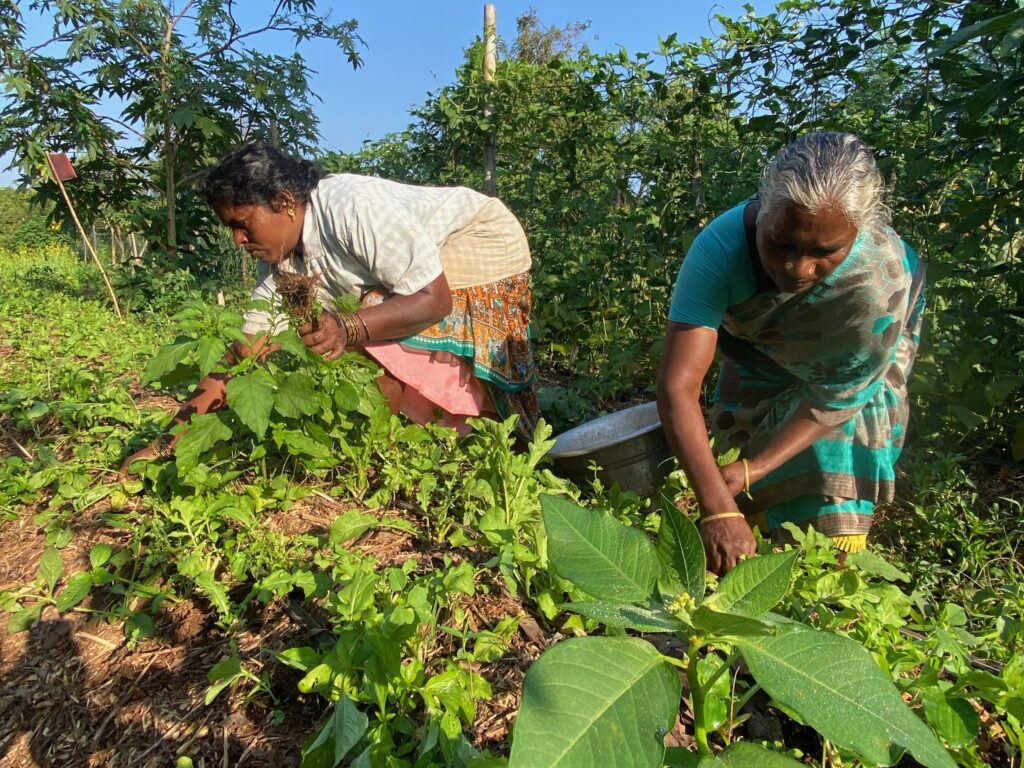
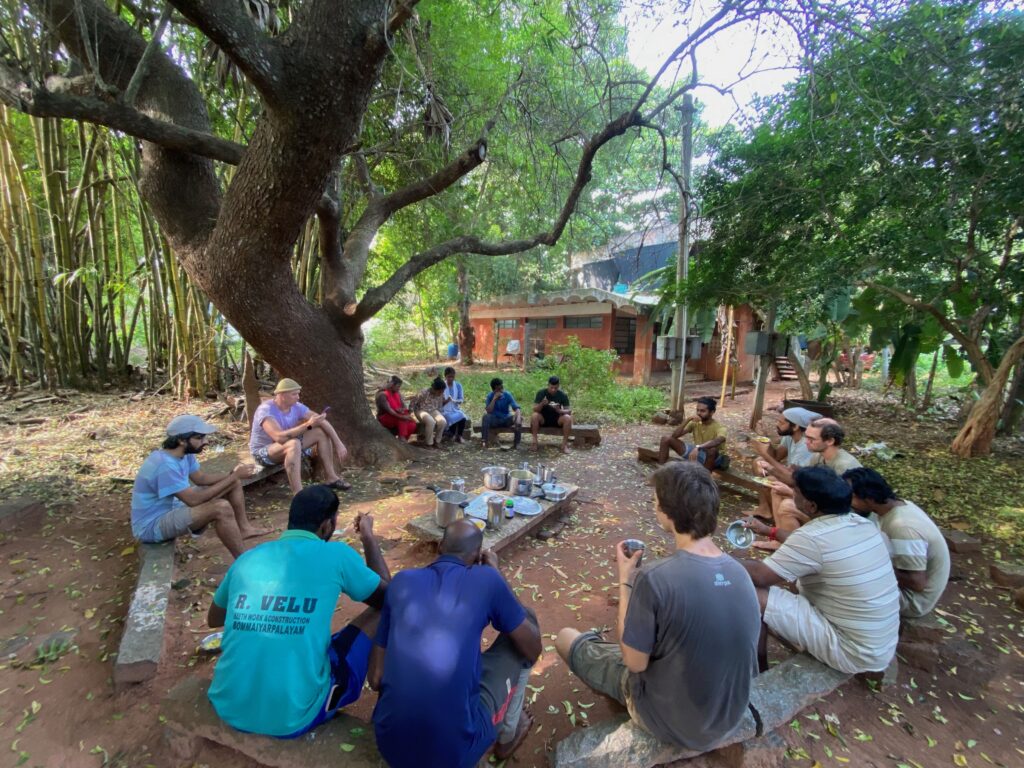
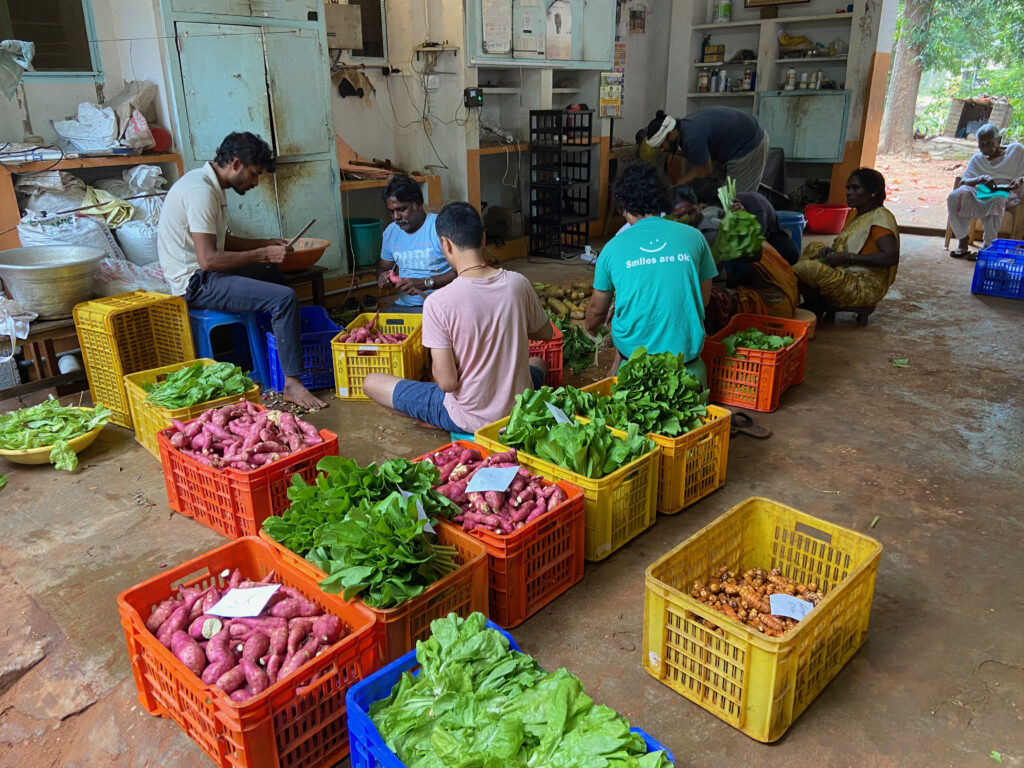
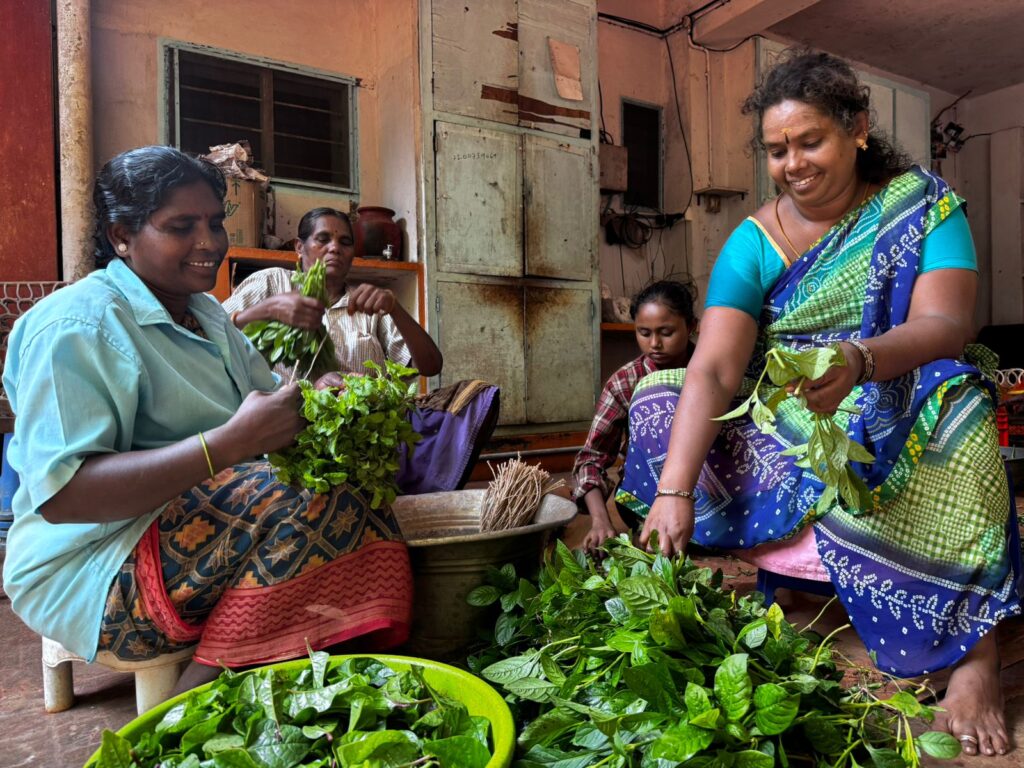
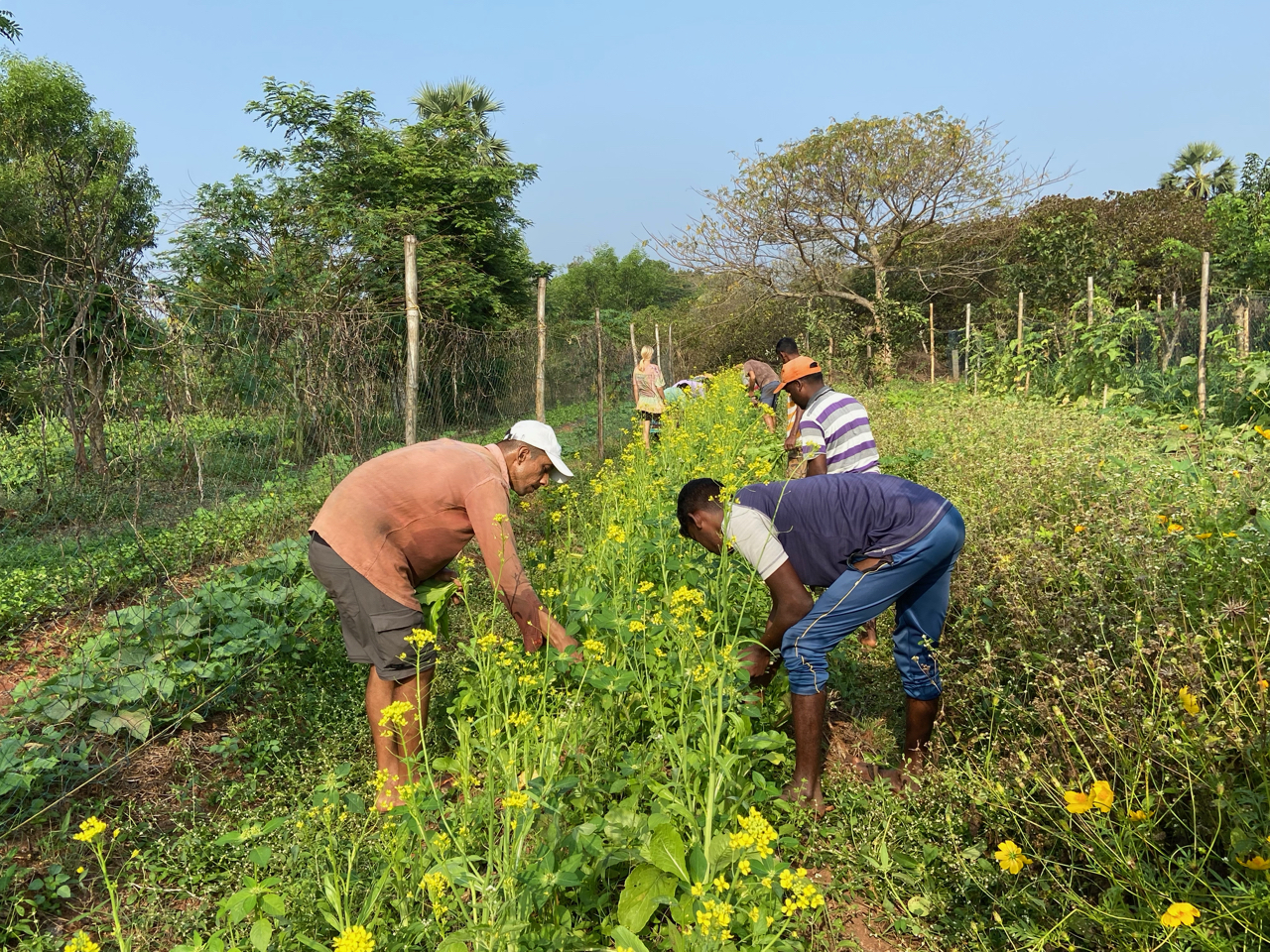
The farm team lies at the heart of this culture. Around thirty people work at AuroOrchard. Most come from the villages surrounding Auroville — Moratandi, Irumbai, Edaiyanchavadi, and Sedarapet. We also have a few Aurovilians and an increasing number of newcomers — aspirants who wish to join Auroville’s collective experiment. This makes our team diverse in culture, experience, age, and interest, yet united by a shared purpose: to grow food for Auroville. The relationships built through daily fieldwork — planting, harvesting, repairing, composting, cooking — become lessons in cooperation and humility. In these everyday interactions, the abstract idea of community takes tangible form. Work becomes a practice of listening, of mutual support, of learning to labor, struggle, and fail together — and to begin again.
Yet farming as a livelihood faces deep structural challenges. Across the world, agricultural workers are undervalued, and the number of active farmers continues to decline. Long hours, physical strain, and uncertain income have pushed many away from the land. In Marxist terms, this reflects the extraction of surplus value — the gap between the value created by workers and the wages they receive. In modern food systems, profits accumulate with intermediaries and corporations, while the labor that sustains the soil remains unseen. This alienation — of humans from the fruits of their labor and from nature itself — lies at the heart of our social and ecological crises.
At AuroOrchard, we organize work around cooperation rather than competition, valuing the wellbeing of people as much as production. The farm is not run for profit but for sustenance, learning, and shared growth. Wages and responsibilities are distributed transparently; decisions emerge through dialogue; and knowledge flows freely among workers, volunteers, and learners. Through this collective process, the field becomes both workplace and classroom — a space for self-development and shared stewardship.
Our community is cultivated each morning as work begins and reaffirmed each evening as the land rests. Agriculture, in its deepest sense, is this practice of living culture — an economy of care where the true value of work is measured not only in yield but in the strength of the relationships it nourishes.
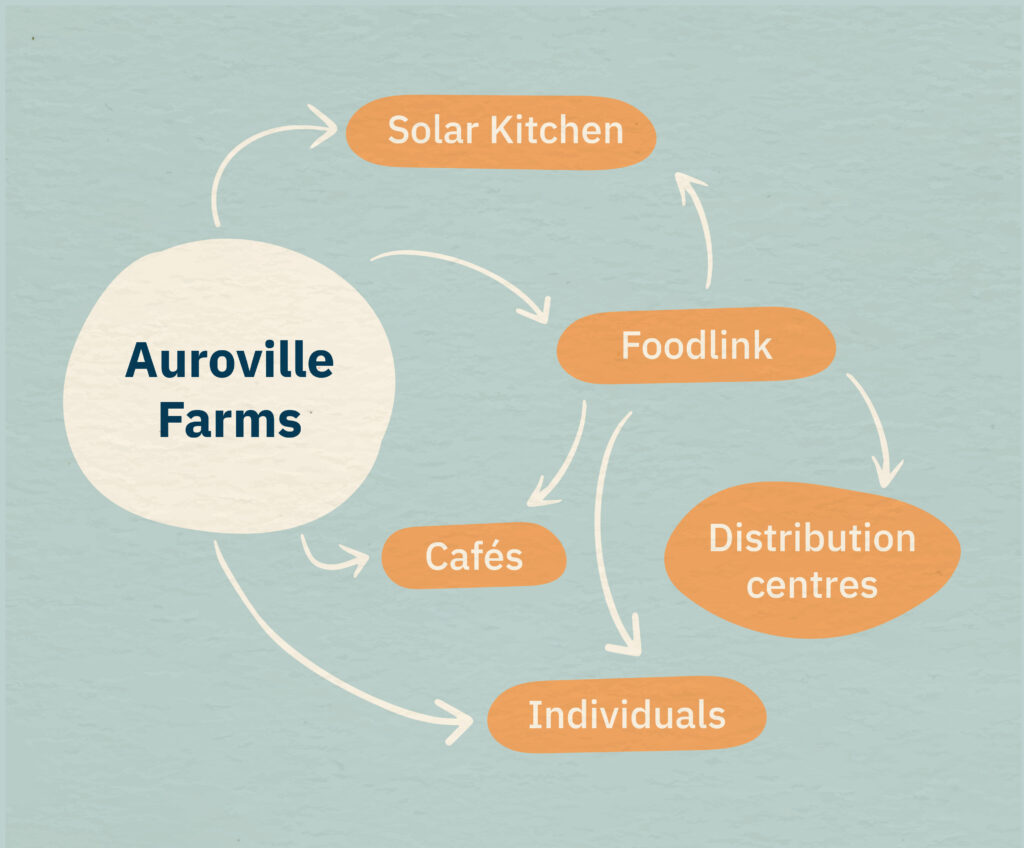
These relationships extend beyond the farm to the community units and individuals where we supply the food grown on the farm.
Agriculture, from the Latin agrum meaning land and cultura meaning to cultivate, carries within it both the physical and the spiritual dimensions of care. It is the same cultura that gives us the word culture — the cultivation of the human spirit through shared work, art, and meaning. We understand agriculture as this extended act of care — a field where ecology and community meet, and where the growth of food and the growth of people are inseparable.
The farm team lies at the heart of this culture. Around thirty people work at AuroOrchard. Most come from the villages surrounding Auroville — Moratandi, Irumbai, Edaiyanchavadi, and Sedarapet. We also have a few Aurovilians and an increasing number of newcomers — aspirants who wish to join Auroville’s collective experiment. This makes our team diverse in culture, experience, age, and interest, yet united by a shared purpose: to grow food for Auroville. The relationships built through daily fieldwork — planting, harvesting, repairing, composting, cooking — become lessons in cooperation and humility. In these everyday interactions, the abstract idea of community takes tangible form. Work becomes a practice of listening, of mutual support, of learning to labor, struggle, and fail together — and to begin again.
Yet farming as a livelihood faces deep structural challenges. Across the world, agricultural workers are undervalued, and the number of active farmers continues to decline. Long hours, physical strain, and uncertain income have pushed many away from the land. In Marxist terms, this reflects the extraction of surplus value — the gap between the value created by workers and the wages they receive. In modern food systems, profits accumulate with intermediaries and corporations, while the labor that sustains the soil remains unseen. This alienation — of humans from the fruits of their labor and from nature itself — lies at the heart of our social and ecological crises.
At AuroOrchard, we organize work around cooperation rather than competition, valuing the wellbeing of people as much as production. The farm is not run for profit but for sustenance, learning, and shared growth. Wages and responsibilities are distributed transparently; decisions emerge through dialogue; and knowledge flows freely among workers, volunteers, and learners. Through this collective process, the field becomes both workplace and classroom — a space for self-development and shared stewardship.
Our community is cultivated each morning as work begins and reaffirmed each evening as the land rests. Agriculture, in its deepest sense, is this practice of living culture — an economy of care where the true value of work is measured not only in yield but in the strength of the relationships it nourishes.
These relationships extend beyond the farm to the community units and individuals where we supply the food grown on the farm.