Archaeological studies show that agriculture began around ten thousand years ago. This marks a radical turn in human history — the moment we decided to “tame” nature, clear forests, and establish field crops. It was an important step in our individuation from nature, leading to a profound change in our relationship with ecosystems.
Today, faced with the climate crisis, species extinction, soil and water pollution, and the rapid loss of biodiversity, we are called to imagine an agriculture that not only respects ecosystems but actively heals them. Natural farming, organic farming, Permaculture, Biodynamic, and many others are valuable efforts to re-establish our lost connection with nature. Yet each has its own limits. We have found agroecology — a system of agriculture based on the ecology of one’s context — to be a powerful framework that combines traditional knowledge with modern understanding in exploring a form of agriculture that allows for mutual healing between humans and the Earth.
We have a long way to go in realizing these principles fully, but they are the foundation that guides our ecological work at AuroOrchard.
Archaeological studies show that agriculture began around ten thousand years ago. This marks a radical turn in human history — the moment we decided to “tame” nature, clear forests, and establish field crops. It was an important step in our individuation from nature, leading to a profound change in our relationship with ecosystems.
Today, faced with the climate crisis, species extinction, soil and water pollution, and the rapid loss of biodiversity, we are called to imagine an agriculture that not only respects ecosystems but actively heals them. Natural farming, organic farming, Permaculture, Biodynamic, and many others are valuable efforts to re-establish our lost connection with nature. Yet each has its own limits. We have found agroecology — a system of agriculture based on the ecology of one’s context — to be a powerful framework that combines traditional knowledge with modern understanding in exploring a form of agriculture that allows for mutual healing between humans and the Earth.
We have a long way to go in realizing these principles fully, but they are the foundation that guides our ecological work at AuroOrchard.
1. Diversity and Synergy
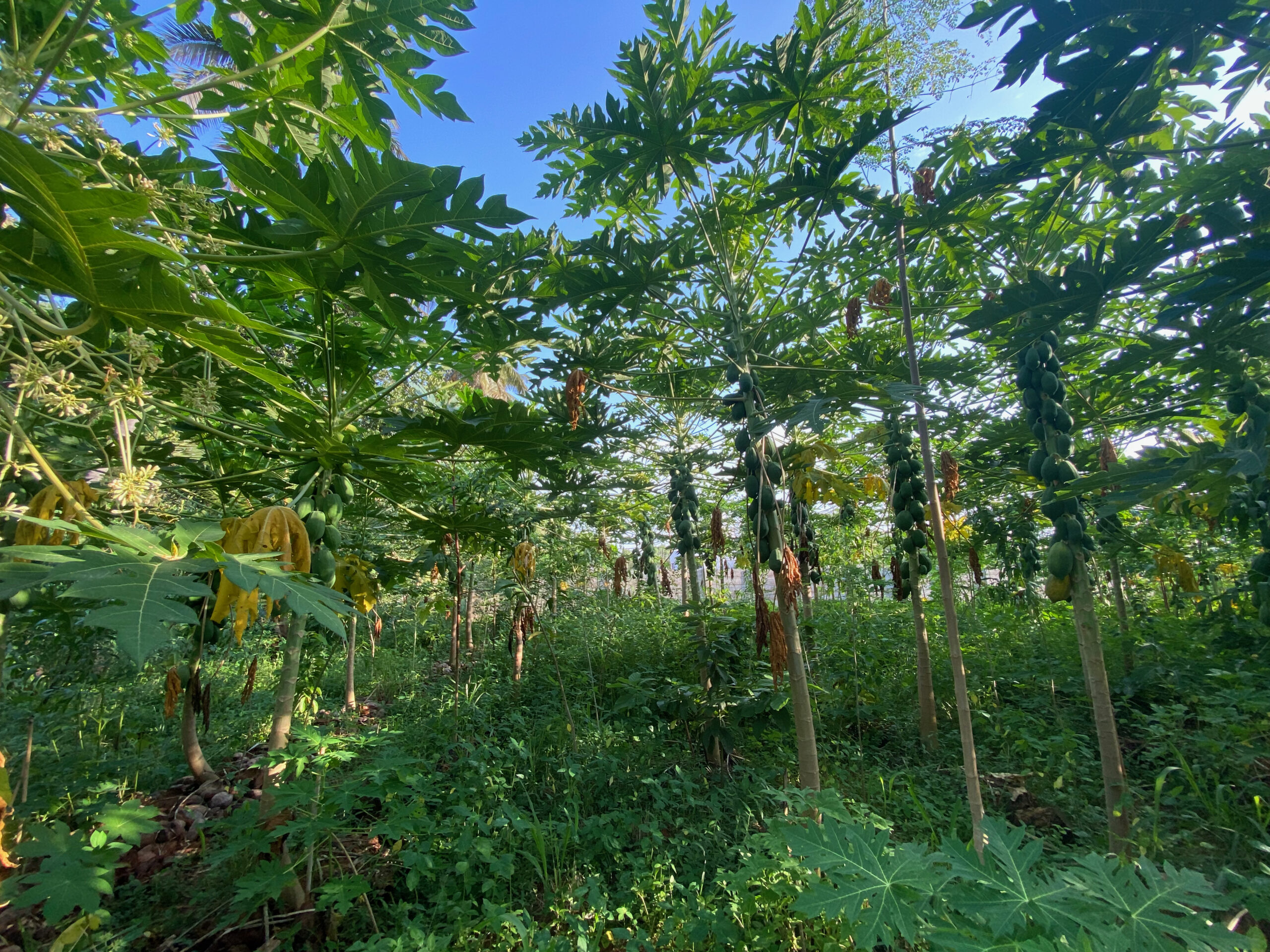
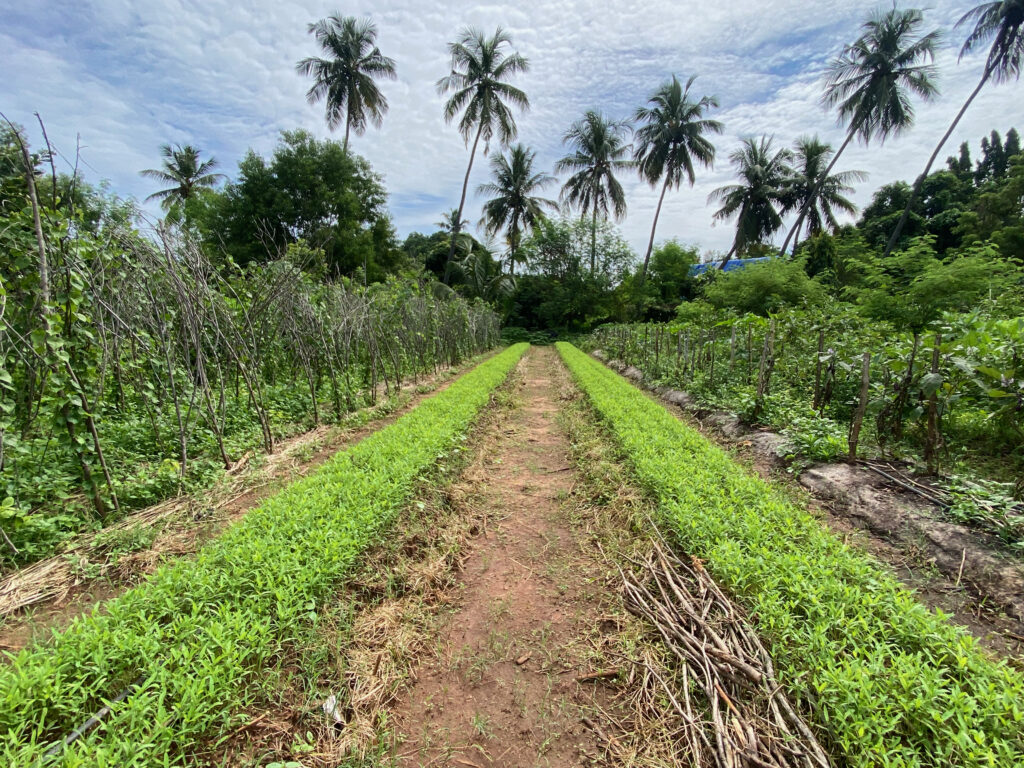
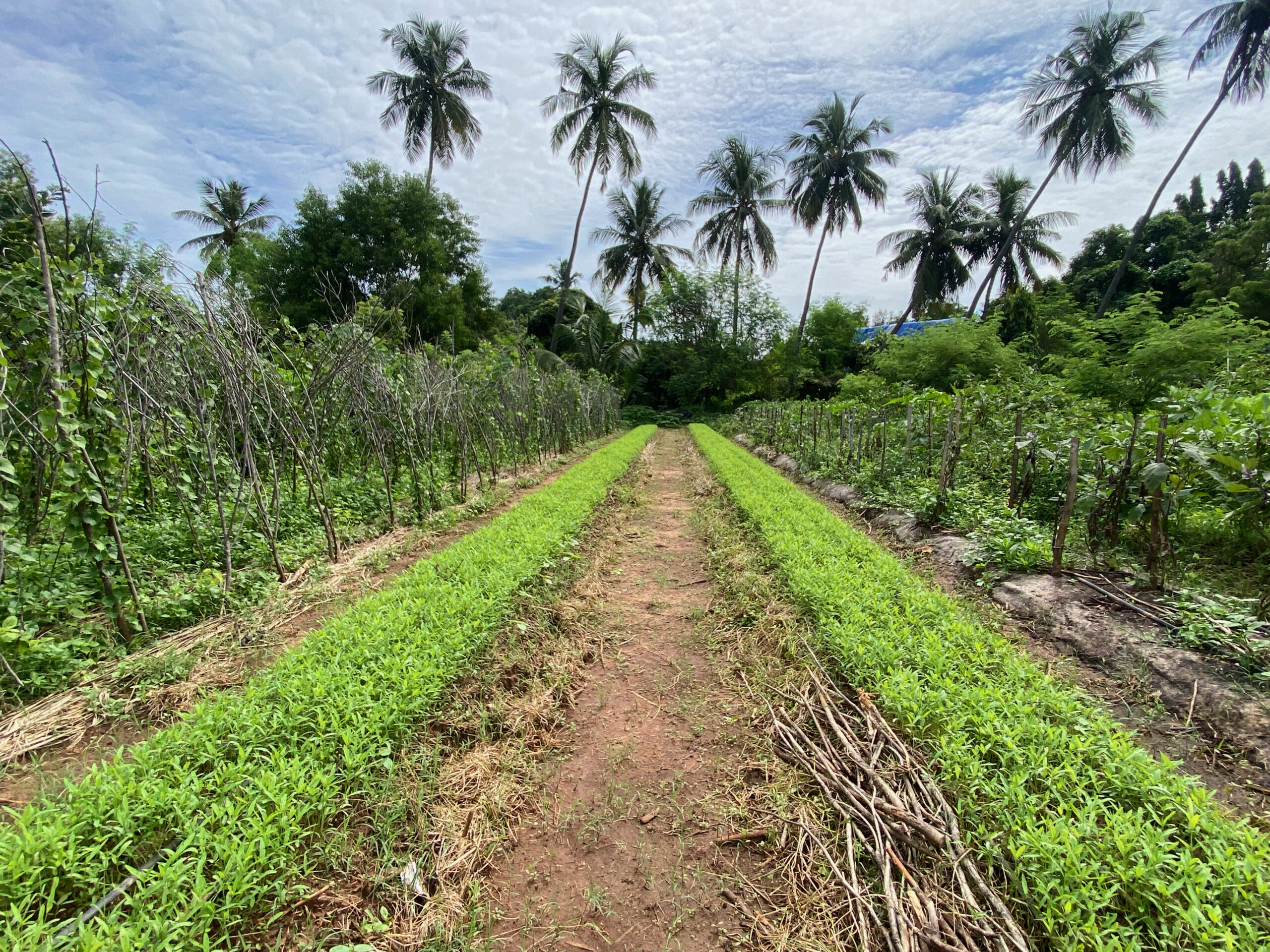
We cultivate diversity through multilayered orchards — mango, banana, papaya, avocado, citrus, and jackfruit interplanted with legumes, herbs, and root crops. The vegetable beds are surrounded by a wide variety of trees that supply biomass and attract pollinators. These mixed canopies hold a delicate balance between the wilderness of a forest and the openness of cultivated fields. Synergy arises when species support one another through biomass production, soil cover, root interactions, shade, and other ecosystem functions.
2. Soil Health and Nutrient Cycling
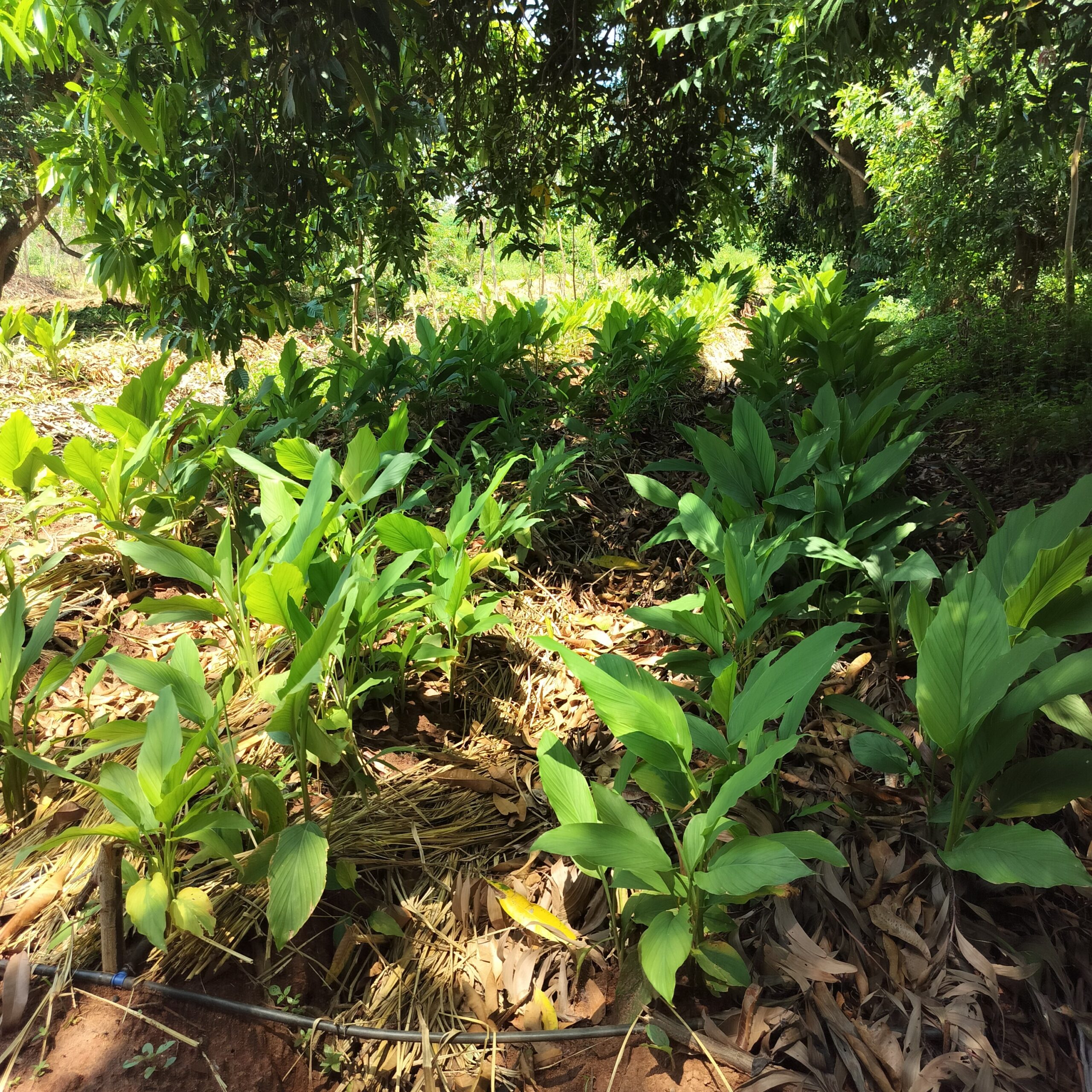
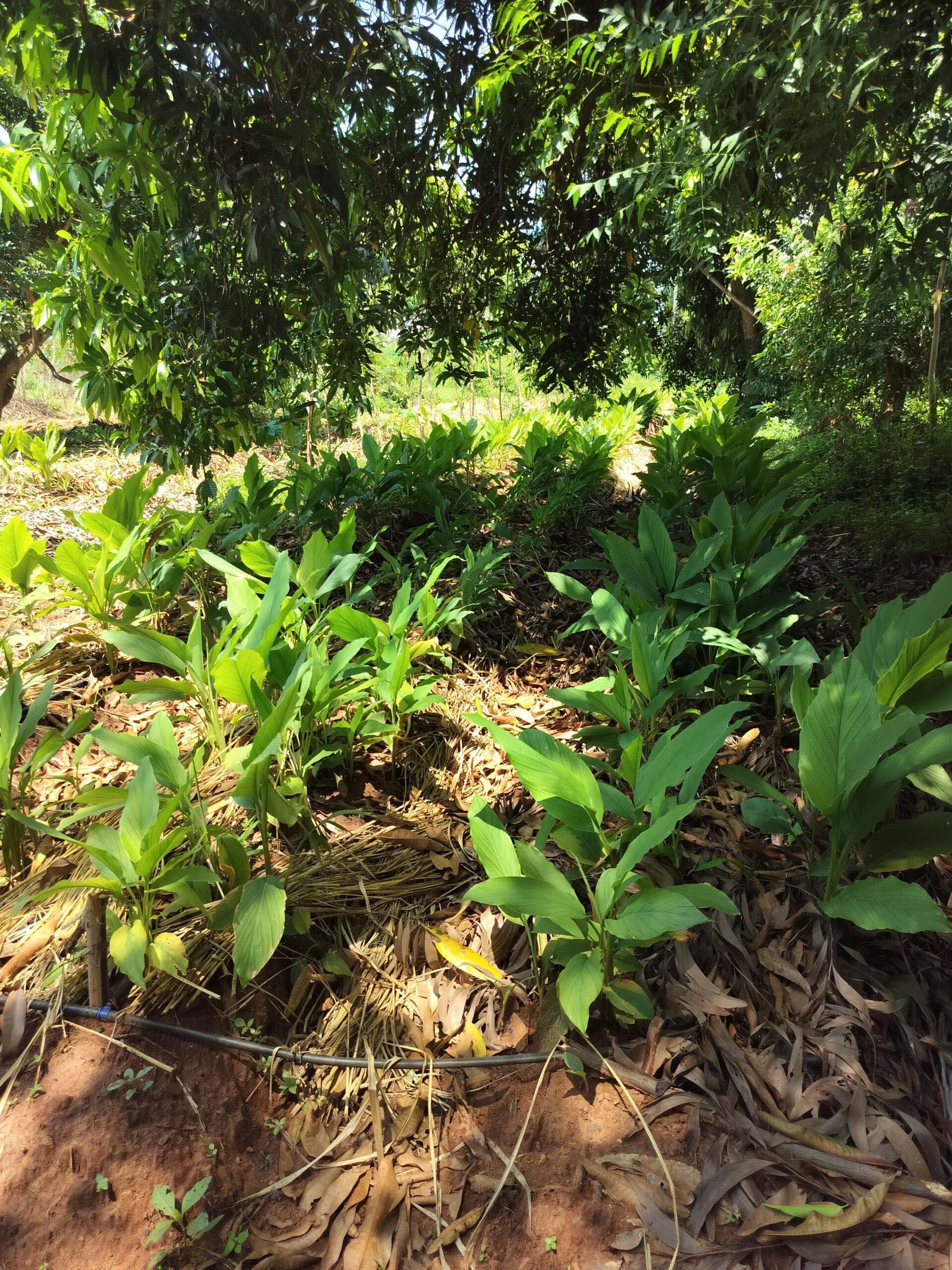
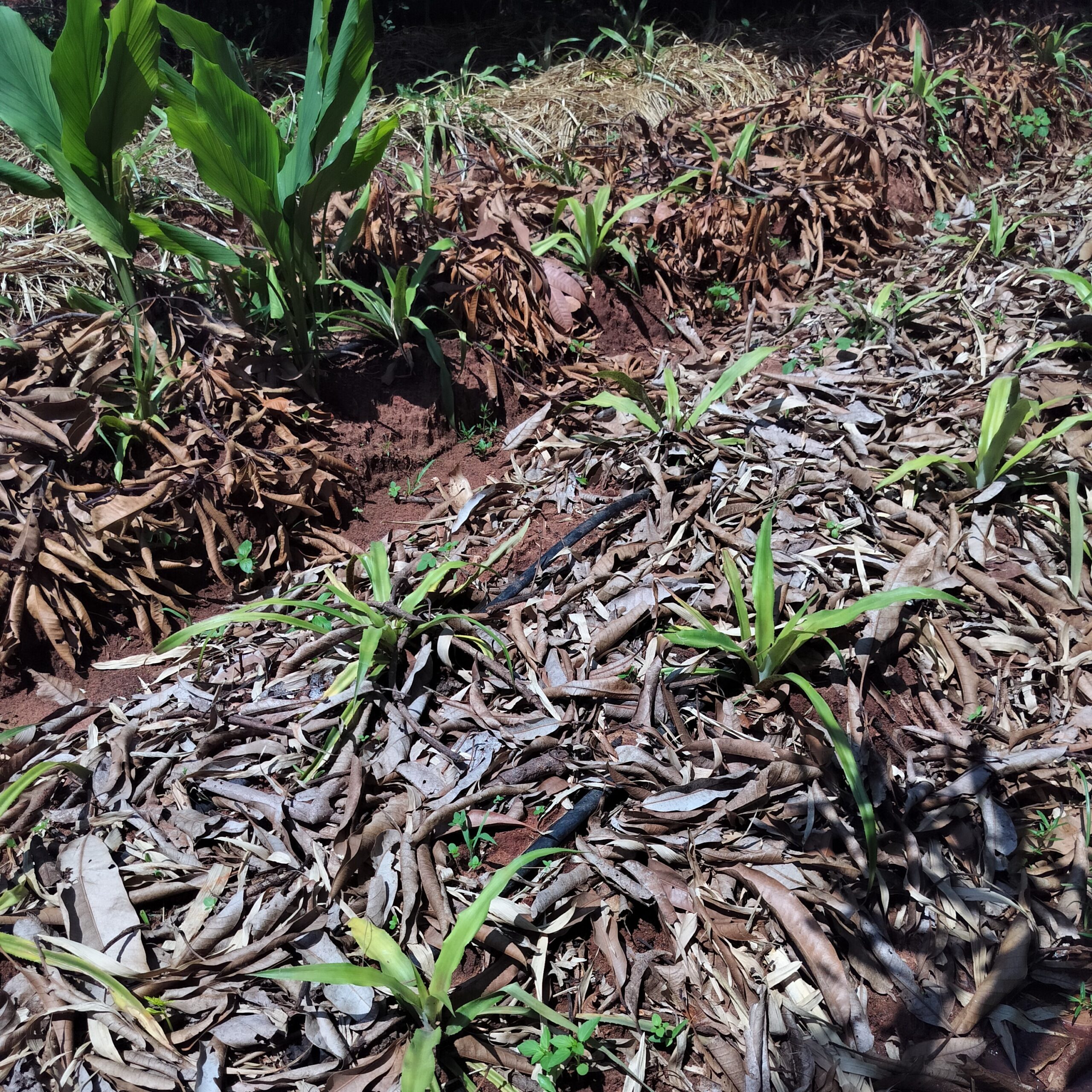
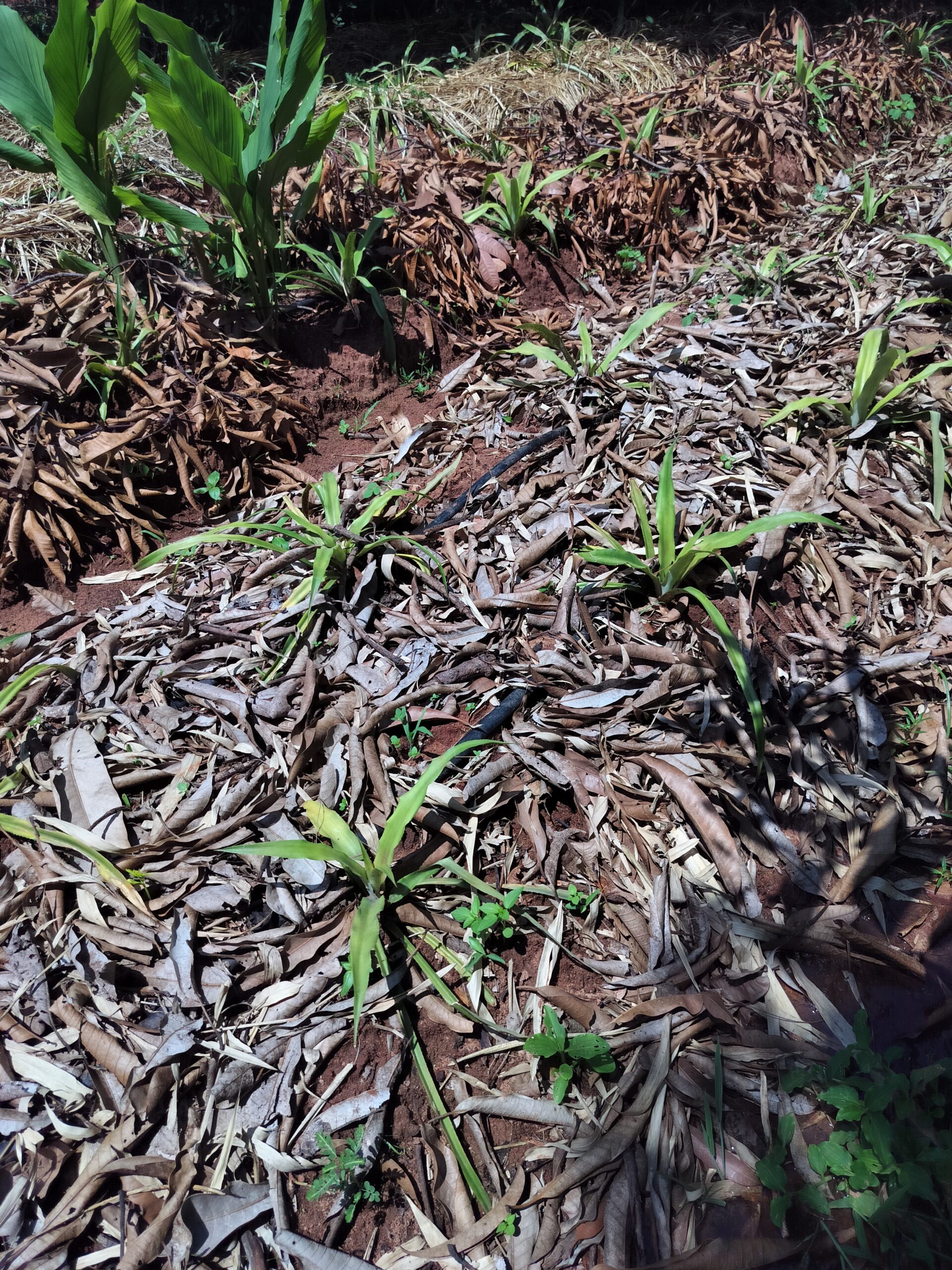
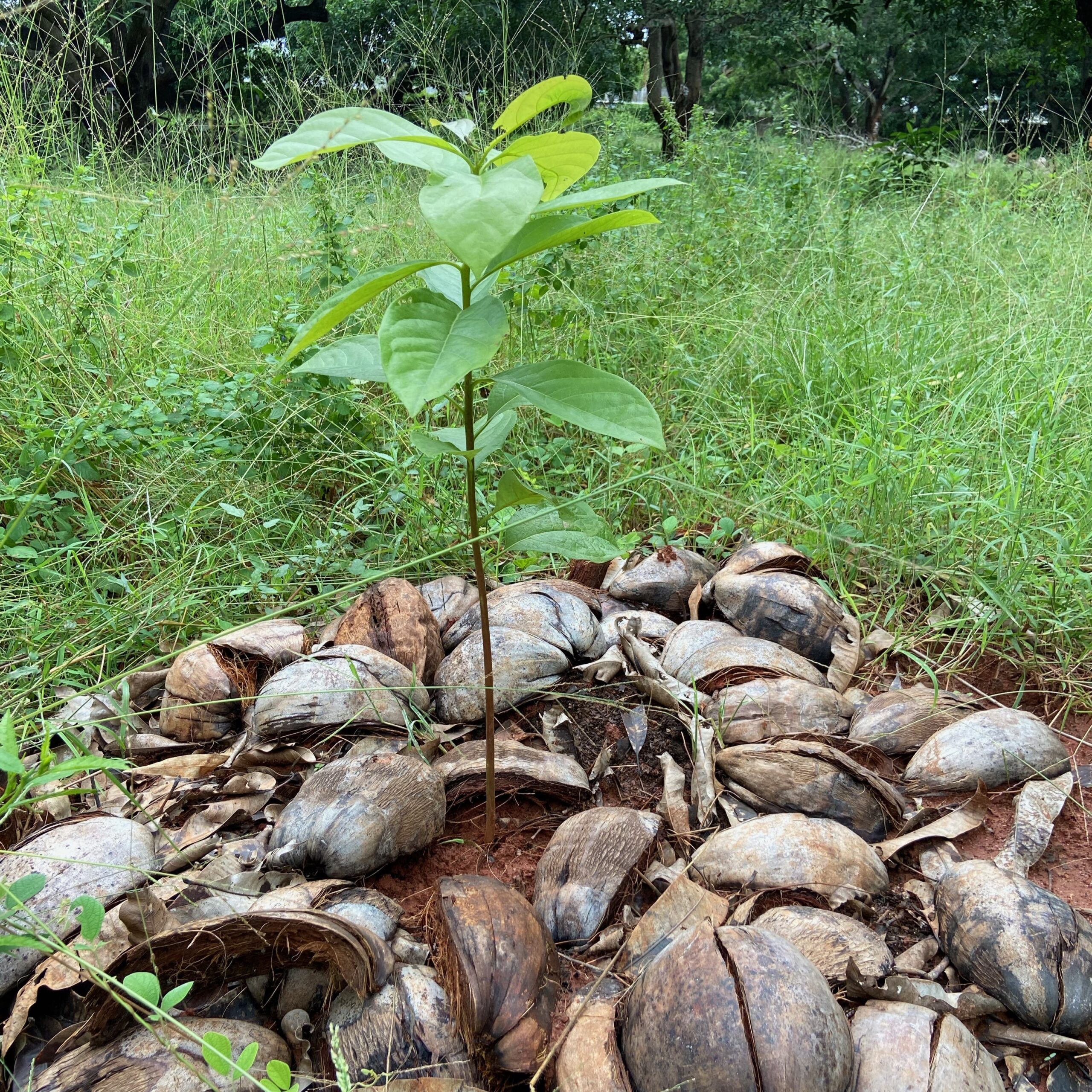
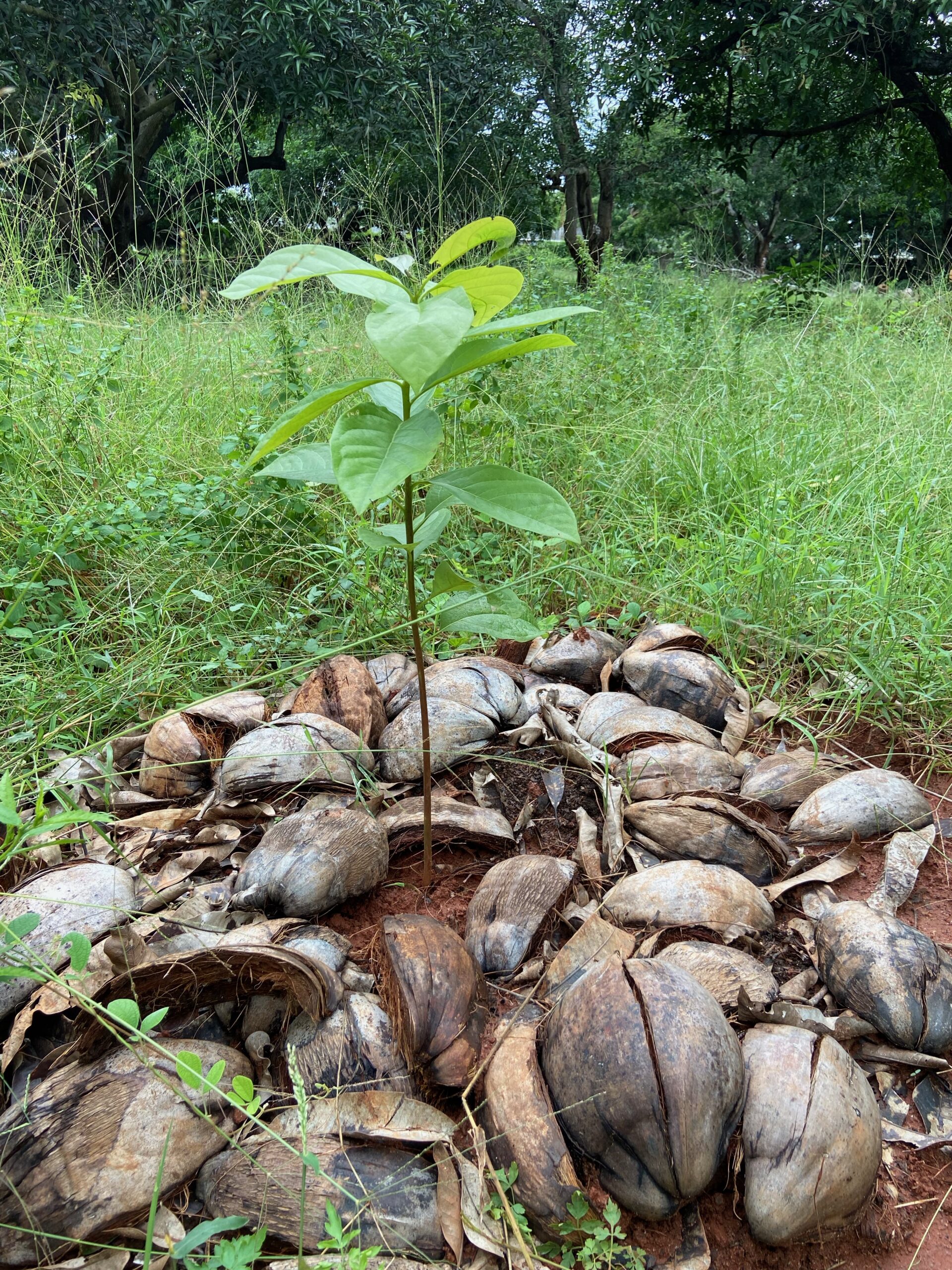
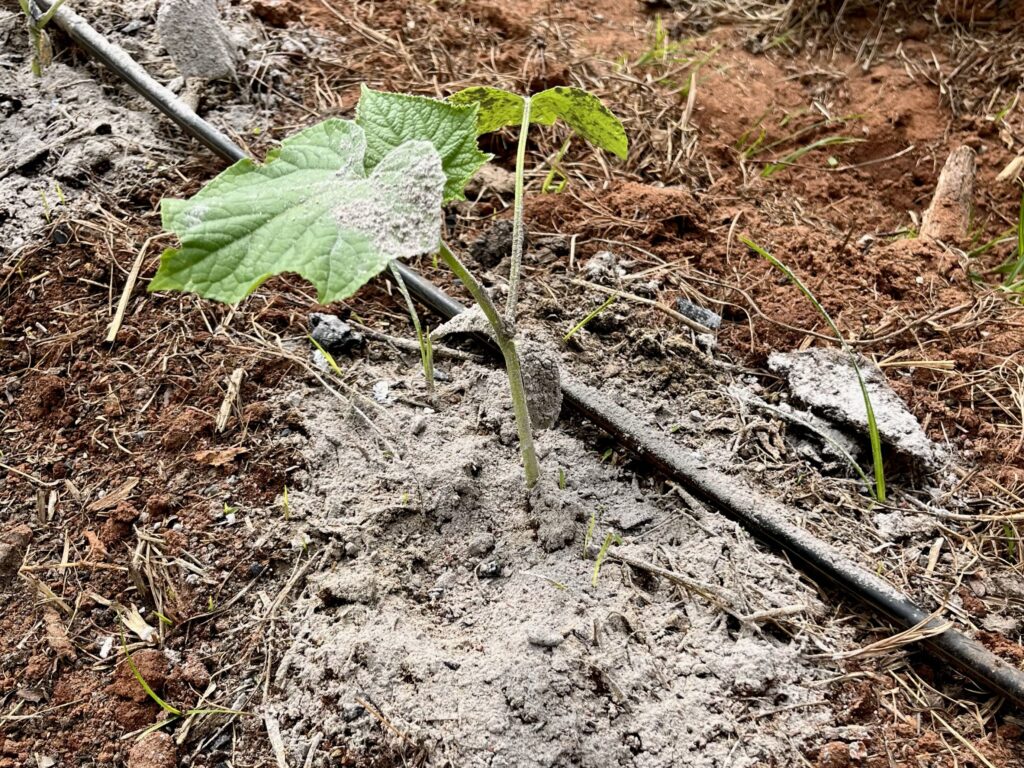
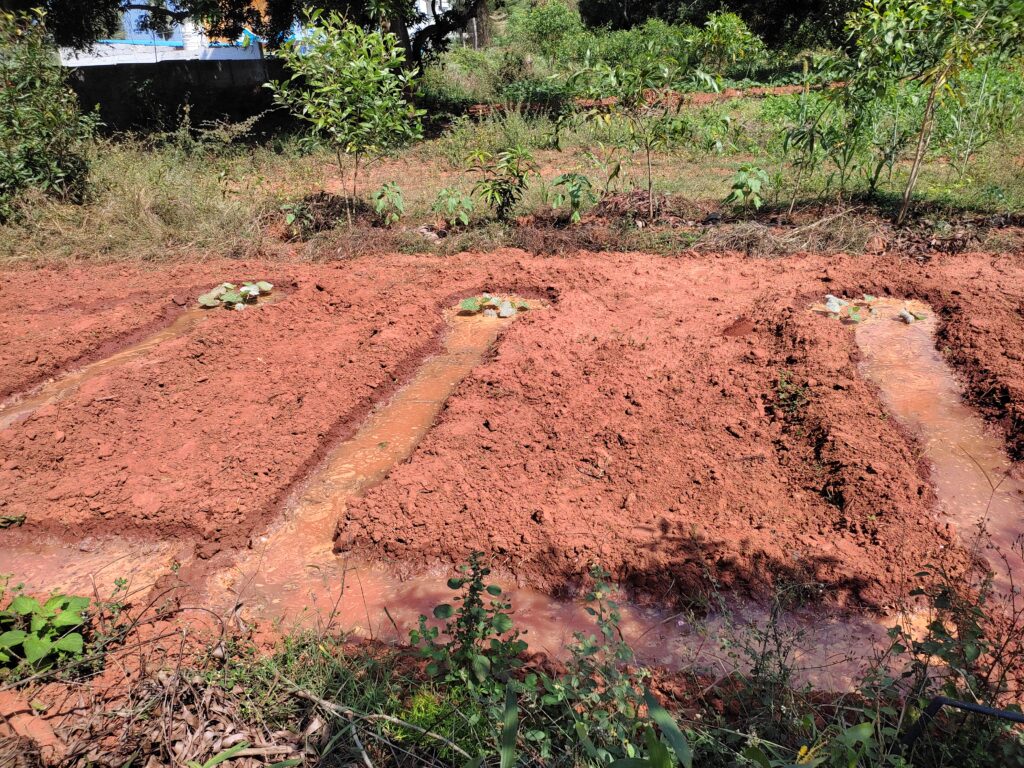
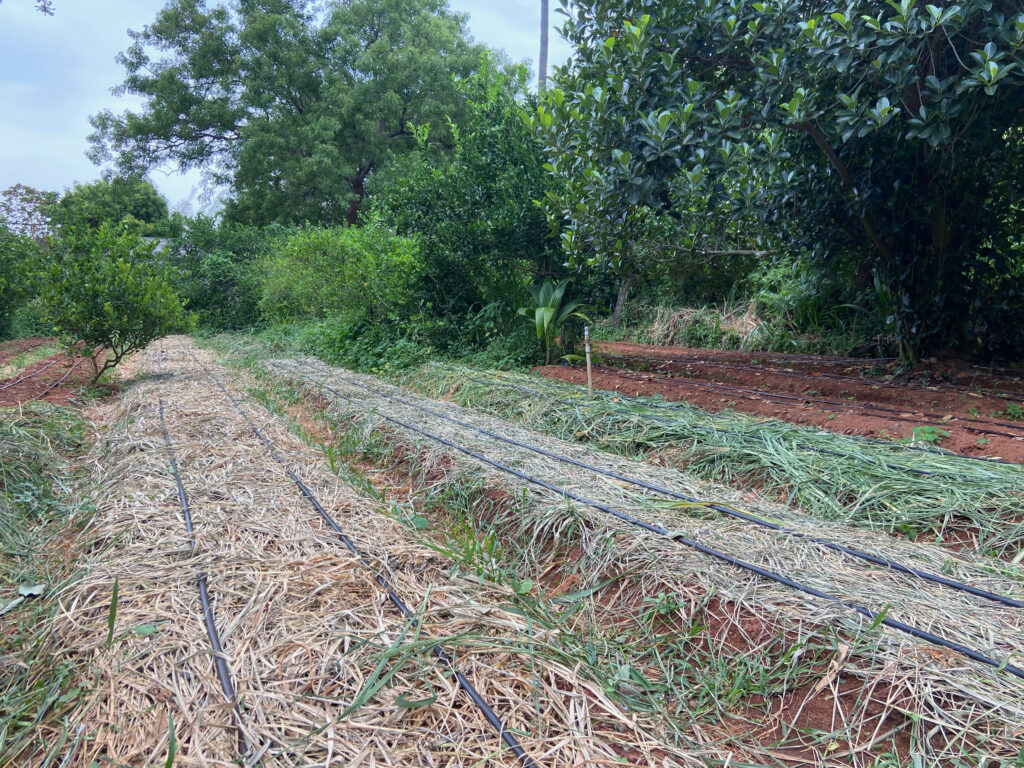
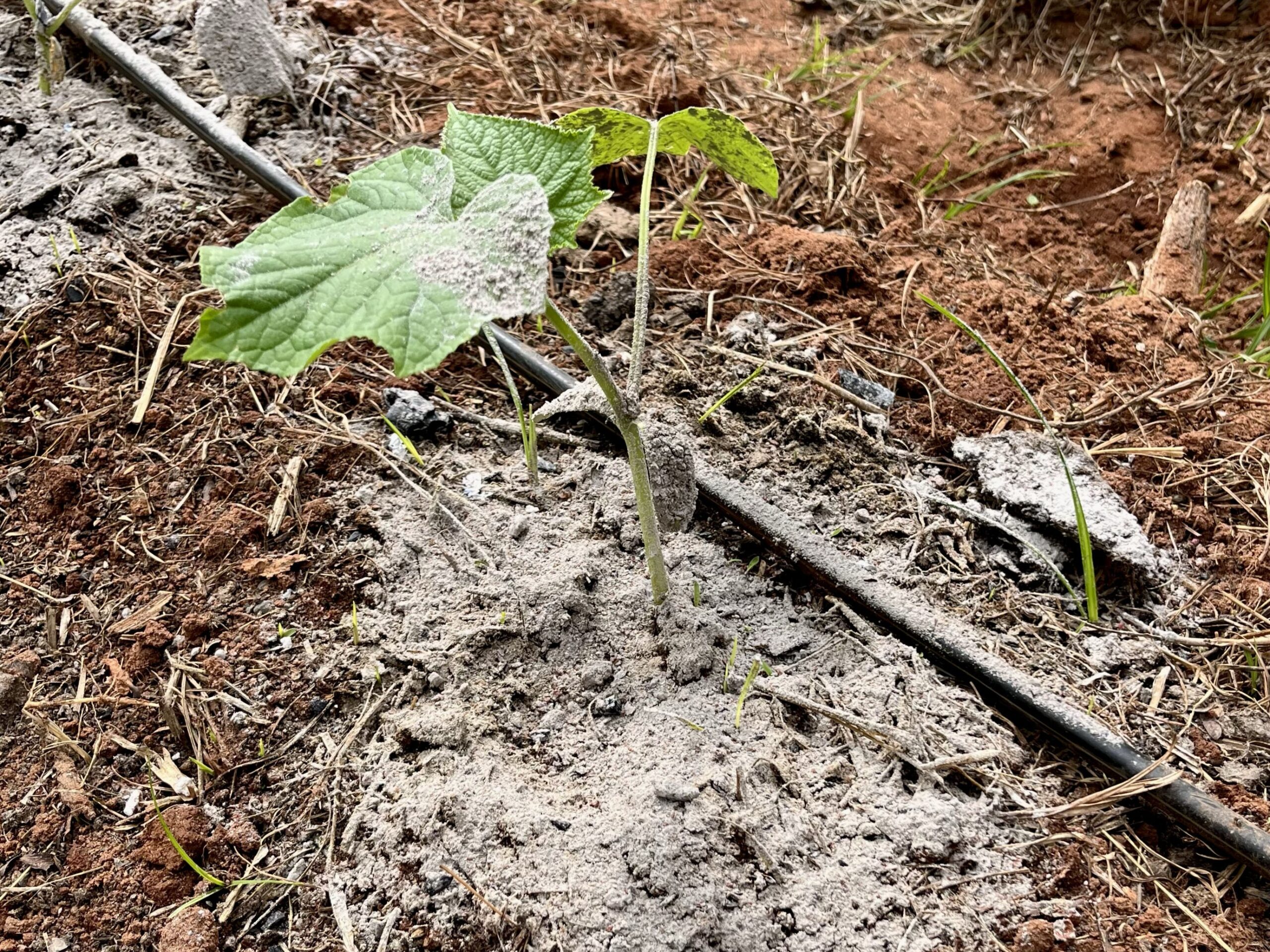
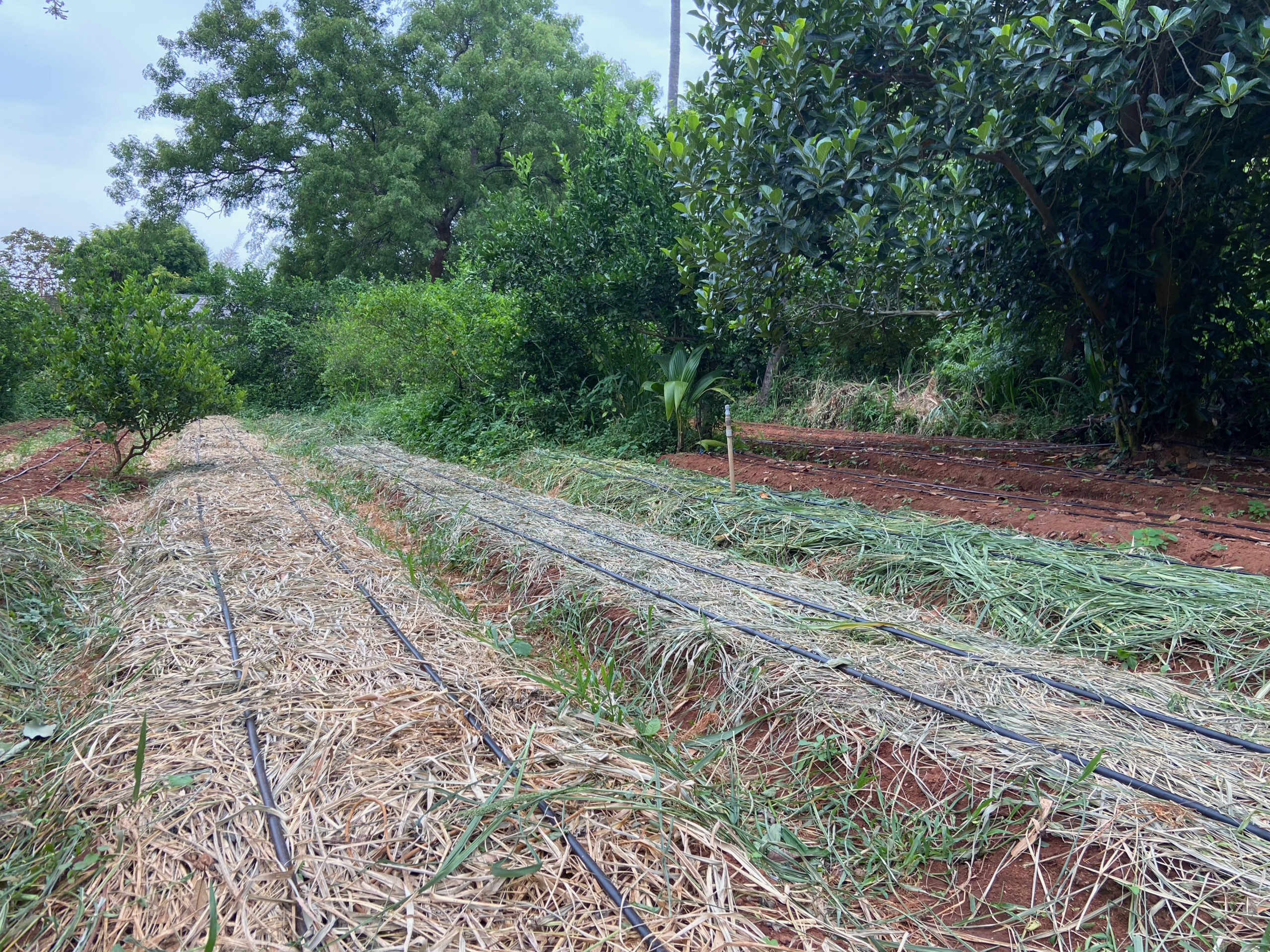
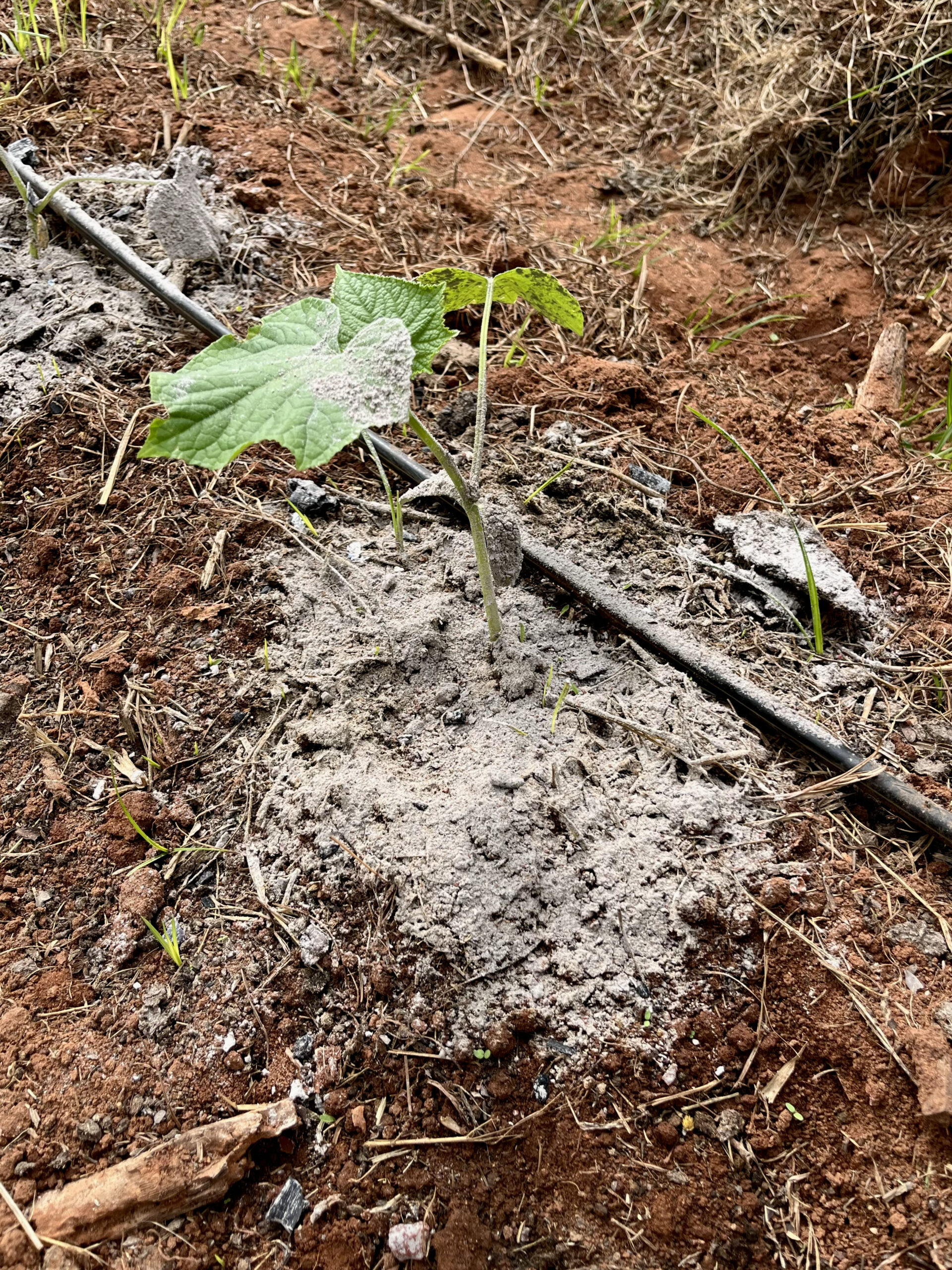
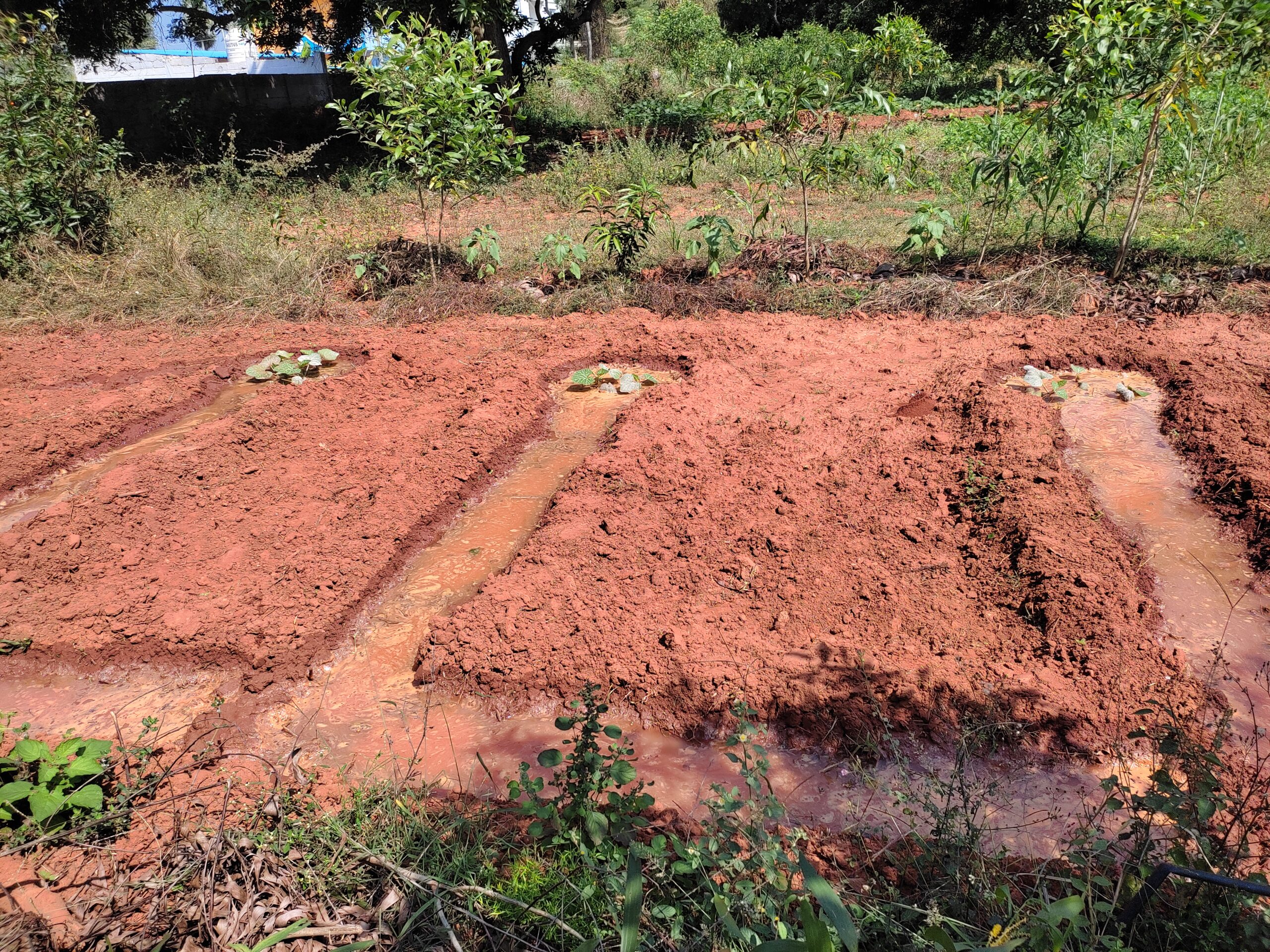
Recycling biomass is at the heart of our soil practice. We intentionally increase the density and diversity of plant life on the farm. Deep mulching, composting, and green manuring nurture organic matter and microbial life. Rainwater is slowed and absorbed through contour channels and percolation pits. We experiment with both no-till and conscious tillage approaches, guided by the soil’s texture, season, and moisture — always seeking balance between disturbance and regeneration.
1. Diversity and Synergy
We cultivate diversity through multilayered orchards — mango, banana, papaya, avocado, citrus, and jackfruit interplanted with legumes, herbs, and root crops. The vegetable beds are surrounded by a wide variety of trees that supply biomass and attract pollinators. These mixed canopies hold a delicate balance between the wilderness of a forest and the openness of cultivated fields. Synergy arises when species support one another through biomass production, soil cover, root interactions, shade, and other ecosystem functions.
2. Soil Health and Nutrient Cycling
Recycling biomass is at the heart of our soil practice. We intentionally increase the density and diversity of plant life on the farm. Deep mulching, composting, and green manuring nurture organic matter and microbial life. Rainwater is slowed and absorbed through contour channels and percolation pits. We experiment with both no-till and conscious tillage approaches, guided by the soil’s texture, season, and moisture — always seeking balance between disturbance and regeneration.
3. Resilience and Efficiency
Our diverse orchards and vegetable gardens have shown resilience in the face of climate variation, pest pressures, and wildlife presence. Papayas shield young avocados from heat; deep-rooted trees lift moisture from the subsoil; edge trees attract pollinators in the flowering season and later return as biomass to the soil. Efficiency here is not about extraction but about relationship and circularity — where every output becomes input for another form of life.
3. Resilience and Efficiency
Our diverse orchards and vegetable gardens have shown resilience in the face of climate variation, pest pressures, and wildlife presence. Papayas shield young avocados from heat; deep-rooted trees lift moisture from the subsoil; edge trees attract pollinators in the flowering season and later return as biomass to the soil. Efficiency here is not about extraction but about relationship and circularity — where every output becomes input for another form of life.
4. Co-creation of Knowledge and Human Values
We learn continuously through observation and participation — with both nature and people. Farmers, volunteers, and researchers co-create knowledge by experimenting with planting combinations, irrigation rhythms, and organic pest control. This collaboration nurtures inner qualities as much as outer skills: cooperation, humility, patience, and attention — essential values for a culture growing in harmony with the land.
Ecology at AuroOrchard is not only about producing food but about awakening a more conscious relationship with the Earth. To farm is to collaborate in the evolution of life itself — what Sri Aurobindo called “the Divine in evolution.” Through each season of planting and decay, the farm becomes both a classroom and a sanctuary — a place where we practice the principles of agroecology as part of the larger journey toward integral living.
4. Co-creation of Knowledge and Human Values
We learn continuously through observation and participation — with both nature and people. Farmers, volunteers, and researchers co-create knowledge by experimenting with planting combinations, irrigation rhythms, and organic pest control. This collaboration nurtures inner qualities as much as outer skills: cooperation, humility, patience, and attention — essential values for a culture growing in harmony with the land.
Ecology at AuroOrchard is not only about producing food but about awakening a more conscious relationship with the Earth. To farm is to collaborate in the evolution of life itself — what Sri Aurobindo called “the Divine in evolution.” Through each season of planting and decay, the farm becomes both a classroom and a sanctuary — a place where we practice the principles of agroecology as part of the larger journey toward integral living.