There are many assumptions around organic food, ethical food, farm eggs and free-range eggs. It is generally believed that these labels must also⠀⠀⠀⠀⠀⠀⠀⠀⠀⠀⠀⠀⠀⠀⠀⠀⠀⠀⠀⠀⠀⠀⠀⠀⠀
There are many assumptions around organic food, ethical food, farm eggs and free-range eggs. It is generally believed that these labels must also indicate better nutritional quality. The converse is also common- if the nutrition is the same across different kinds of produce, why pay more for organic food or free-range eggs?
We have been actively participating in these conversations for the last few years. We feel that one useful way to understand this is through nutritional testing and comparison.
While a one-off test cannot serve as an absolute reference, individual tests can begin to show us a pattern and add more information to the discussion. Food composition varies according to the season, feed, age of the birds and other conditions. Any meaningful comparison would require regular and repeated testing. We also hope that sharing these results will create greater understanding and support for this work, and perhaps help us continue testing periodically, since comprehensive nutritional testing is expensive.
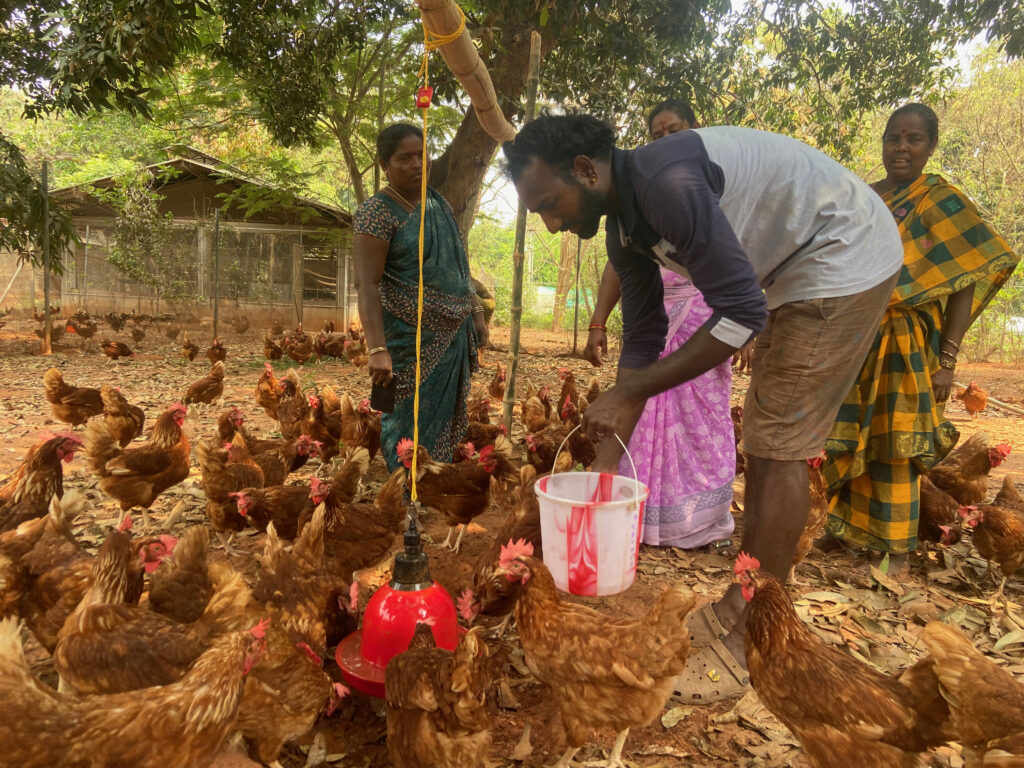
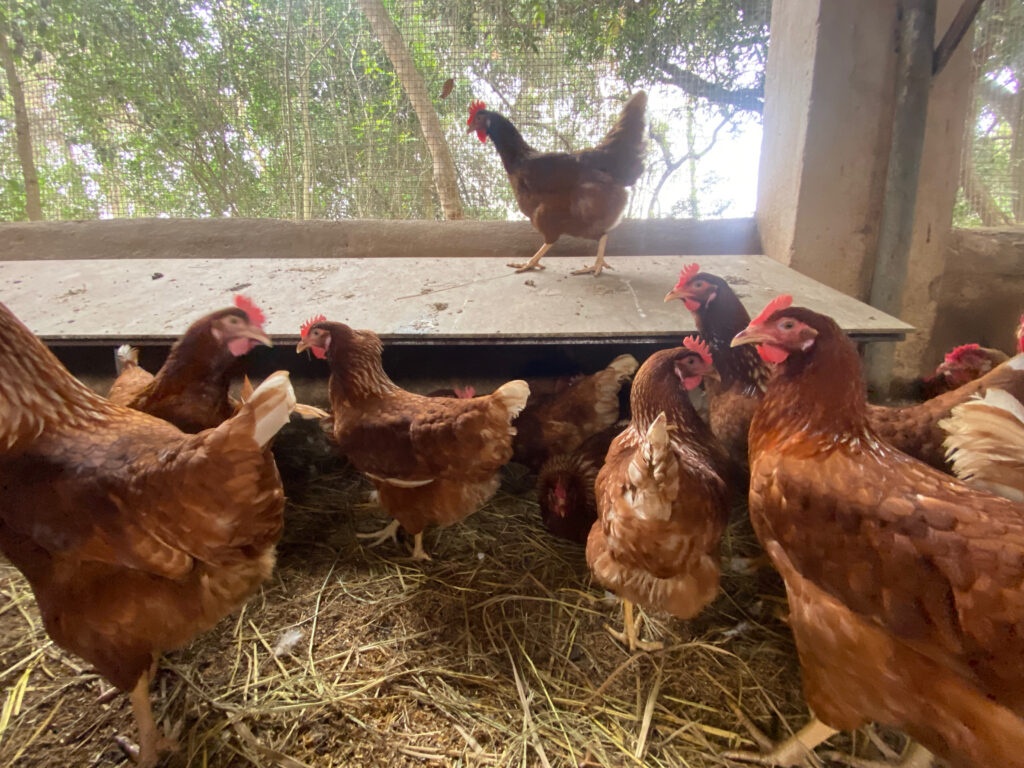
After the work undertaken for our animal-welfare certification, and the many improvements made in our poultry system, we wanted to see how AuroOrchard eggs compared with the eggs that Aurovilians otherwise have access to.
We sent three samples to Chennai Mettex Lab for comparative nutritional testing:
The full test report can be found here.
The following is a comparative summary of the results.
All values are given per 100 g of edible egg, excluding the shell.
Nutrient per 100 g |
Pondy White |
Pondy Brown |
AuroOrchard |
|---|---|---|---|
Energy
|
150.89 kcal
|
152.59 kcal
|
154 kcal
|
Protein
|
13.04 g
|
13.13 g
|
13.74 g
|
Total fat
|
10.61 g
|
10.71 g
|
10.62 g
|
Saturated fat
|
3.96 g
|
3.96 g
|
3.87 g
|
Carbohydrates
|
0.81 g
|
0.92 g
|
0.81 g
|
Cholesterol
|
316 mg
|
273.3 mg
|
265.8 mg
|
Sodium
|
120 mg
|
131 mg
|
115 mg
|
Omega-3 fatty acids
|
158 mg
|
179 mg
|
196 mg
|
Omega-6 fatty acids
|
1,183 mg
|
1,297 mg
|
1,151 mg
|
Omega-6:omega-3 ratio
|
7.49:1
|
7.25:1
|
5.87:1
|
The differences in calories, carbohydrates and total fat are very small. All three eggs have broadly similar amounts of these nutrients. The clearer differences are in protein, omega-3, cholesterol and sodium. Among the samples tested, the AuroOrchard egg recorded:
The AuroOrchard sample contained around 5% more protein than the two Pondy eggs. Its omega-3 content was approximately 10% higher than the Pondy brown egg and 24% higher than the Pondy white egg. Its cholesterol was approximately 3% lower than the Pondy brown egg and 16% lower than the Pondy white egg.
The laboratory results are reported per 100 g, while an egg normally contains around 50 g of edible material. Egg sizes vary, so the following figures use 50 g as a simple illustration.
For daily comparisons, we have used FSSAI’s reference values for an average adult diet: 2,000 kcal, 67 g total fat, 22 g saturated fat and 2,000 mg sodium. WHO describes approximately 50–75 g of protein as generally sufficient for an adult of healthy body weight consuming around 2,000 kcal. These are broad population references; an individual’s requirements depend on body size, activity, age and physiological condition.
Nutrient per 100 g |
Daily recommendation (FSSAI & WHO) |
Pondy White |
Pondy Brown |
AuroOrchard |
|---|---|---|---|---|
Energy
|
2,000 kcal/day
|
3.8%
|
3.8%
|
3.9%
|
Protein
|
50–75 g/day
|
8.7–13.0%
|
8.8–13.1%
|
9.2–13.7%
|
Total fat
|
Up to 67 g/day
|
7.9%
|
8.0%
|
7.9%
|
Saturated fat
|
Up to 22 g/day
|
9.0%
|
9.0%
|
8.8%
|
Sodium
|
Less than 2,000 mg/day
|
3.0%
|
3.3%
|
2.9%
|
The mid to late June showers bring some relief from the heat and life to the parched soil. During this time, we can start growing crops the same as Pin-Pani but also some other crops like cluster beans, flat beans etc.- its still a bit early for these crops but we can still do it. Of course, within this period falls the Aadi masam (mid-July) with heavy winds, when Papayas break and we have an abundance of green papayas in Auroville. Post-Aadi masam is really good for planting a diversity of crops. This is an interesting season because it is post-summer rain but it is not as cool as the post-monsoon season. So, it is in some ways similar to Pre-Summer and that is reflected in the kind of crops we can plant. We can start to grow some arugula in the shade, some greens, and prepare for planting yams and sweet potatoes.
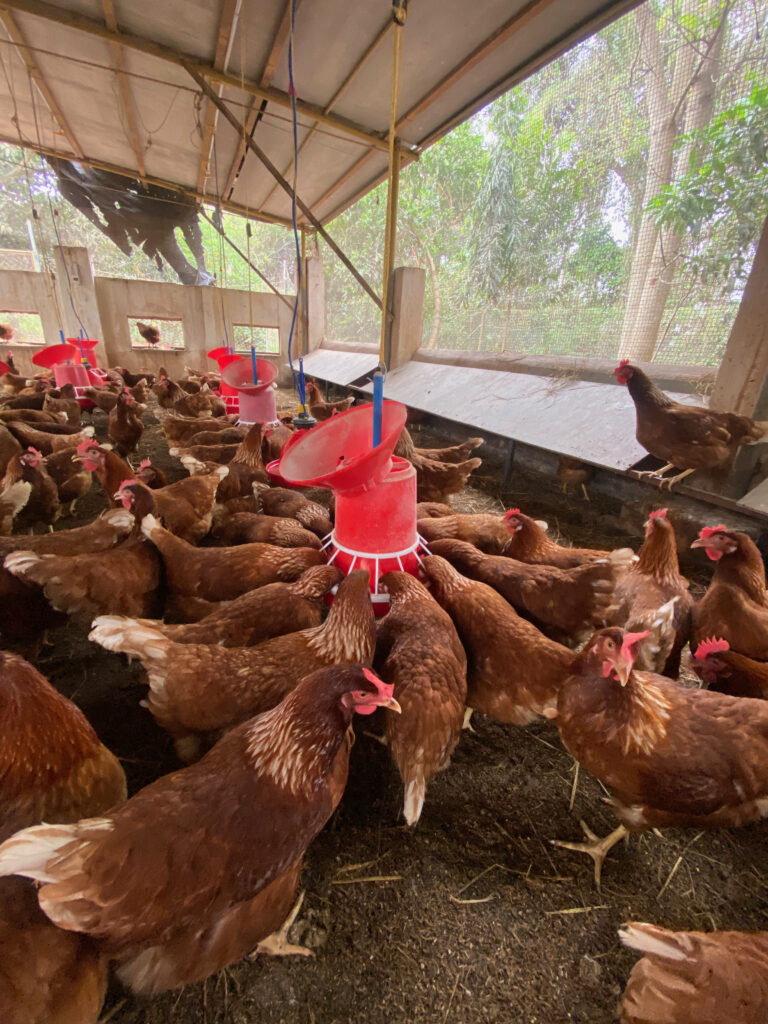

Among the three samples tested, AuroOrchard eggs showed the strongest overall nutritional profile. It combined the highest protein and omega-3 results with the lowest cholesterol and sodium values. It also has a healthier omega-6 to omega-3 ratio. The test does give us some evidence towards how our attention to the birds, their outdoor access, fresh greens and the quality of their food is accompanied by a strong nutritional result in nutritional enhancement. We hope to repeat this testing periodically, across different seasons and flocks, so that we can understand how consistent these results are and how our farming practices influence the food we produce.
Join our newsletter for exclusive updates!
AuroOrchard is certified organic by the Tamil Nadu Organic Certification (ORG/SC/1906/001683) Department accredited by APEDA (Agricultural and Processed Food Products Exports Development Authority), New Delhi, Ministry of Commerce and Industry, Government of India.
AuroOrchard Poultry is recognised under the Certified Humane Program, a globally recognised, independent, international auditing body dedicated to creating a more humane world for farm animals.