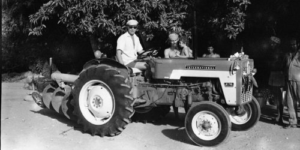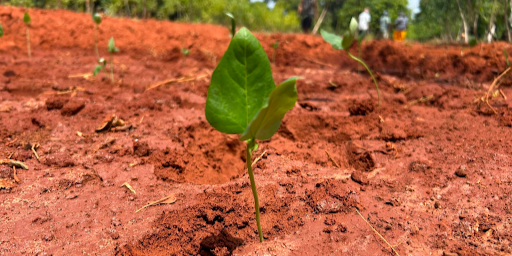
In this report, I share about the soil testing researches and experiments I made while I was volunteering at the farm. I wanted to know more about its components and how it allowed food to grow.
In this report, I share about the soil testing researches and experiments I made while I was volunteering at the farm. I wanted to know more about its components and how it allowed food to grow.
Some of the resources I used to understand soil and soil testing :
1.“Agriculture in Victoria, Australia” sampling video
2.“Soil testing at home” by the University of Arkansas Division of Agriculture
3. https://indianfarmer.net/uploads/6_5_2021.pdfhttps://agritech.tnau.ac.in/agriculture/agri_soil_sampling.html
4th June, 2026– 1st sample with Anshul :
He took a clean glass jar and he went to a field, in the vegetable garden, recently ploughed to take the soil. He dug a little bit with a mumty and put some soil in the jar with his hand. He took the right amount according to him, just enough to fill half of the jar.
While doing that, we observed life in the soil like a worm and tiny centipedes. The soil was humid.
Then, Anshul added water in the jar and some natural soap in order to make the soil fully wet. In fact, he told me that adding soap would help spread the water to every part of the soil and create different layers in the jar. I wondered if the soap disturbs the soil properties or not.
5th June, 2026
After 1 day, we can see a change in the jar. The layers are more obvious. Anshul explained to me how to analyze the different layers and depict their meaning.
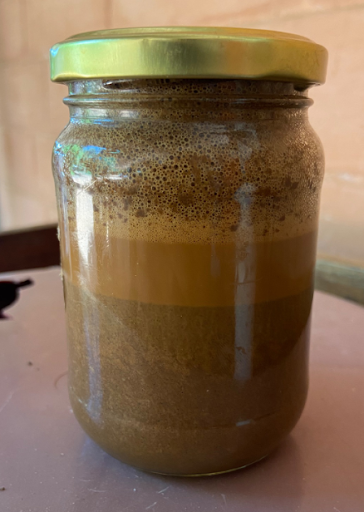
Jar after 1 day of mixing representing different layers
There are different goals to soil sampling, we can either be interested in acknowledging the physical, biological or chemical elements of the soil. So, we can ask ourselves questions depending on what we want to analyze :
For the physical part, we want to get to know the components of the soil. The soil is coming from stones or all the rocks that are on the surface of this planet that got eroded by the action of wind and water, they start chipping. So the soil starts taking a little bit of these stones and all the sediments. Because the particles from the rocks for example start dissolving in the water and then they deposit somewhere so it becomes soil.
The main components of soil include mineral particles, organic matter, water, and air. The balance between these components determines how well the soil can support plant life and retain nutrients. According to that, mineral particles that come from the weathering (altération) of rocks form the largest portion of the soil.
These particles vary in size. The biggest particle that we can find in the soil is sand. Then we have silt and then clay which is the smallest particle. Different combinations of these particles create different soil types.
In the first sample:
Also, sand being the biggest particle, makes it more heavy and gives water and air more space to spread in the soil. In a soil with big particles, the watering will be faster but can easily be out of control if not done properly. Meanwhile, with smaller particles like clay, it will be more difficult and slower for the water to spread through the tiny spaces among the particles. That is why, the watering of the soil must be adapted depending on its composition to not overflood the plants or using a lot of water without it staying at all in the soil.
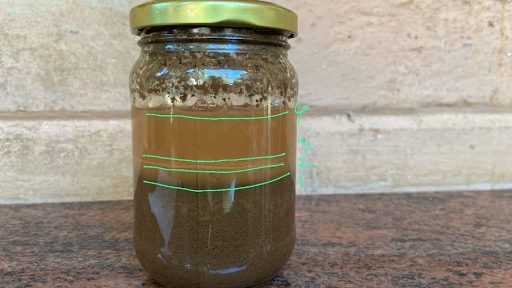
What do the layers mean?
About proportions :
Example :
TOTAL JAR is 10cm > 100%
CALCULATIONS :
Total = x + y
Organic matter = y > y / (x+y) x100 = % of organic matter
Clay = z > z / (x+y) x100 = % of clay
Silt = a > a / (x+y) x100 = % of silt
Sand = b > b / (x+y) x100 = % of sand
16/06/26
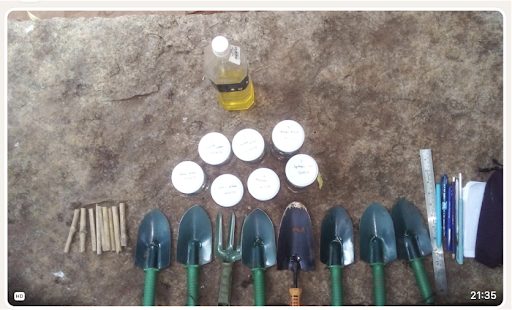
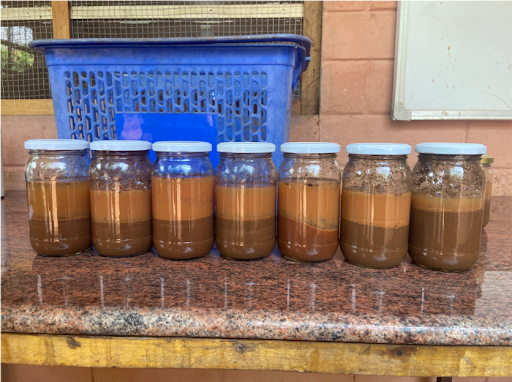
Mapping different soils from the farm
I then repeated this experiment in different locations of the farm with a group of botany students from Bharathidasan Girl’s College, Puducherry.
Sample Records |
LOCATION |
OBSERVATIONS |
RESULTS (following the calculations) |
|---|---|---|---|
TEAM 1: ⠀⠀⠀⠀⠀⠀⠀⠀⠀
Sandhiya &
Rosarina
|
Vegetable garden
(near eggplant bed)
|
Sampling : red soil, presence of eggplant
|
TOTAL SOIL ⠀⠀⠀⠀⠀⠀⠀⠀⠀⠀⠀⠀
CLAY z≃ 6% ⠀⠀⠀⠀⠀⠀⠀⠀⠀⠀⠀⠀
SILT a≃ 14%⠀⠀⠀⠀⠀⠀⠀⠀⠀
SAND b≃ 80%⠀⠀⠀⠀⠀⠀⠀⠀⠀TOTAL JAR⠀⠀⠀⠀⠀⠀⠀⠀⠀
⠀⠀⠀SOIL x≃ 35%⠀⠀⠀⠀⠀⠀
⠀⠀⠀OM+ H2O y≃ 65%
|
TEAM 1: ⠀⠀⠀⠀⠀⠀⠀⠀⠀
Vishnu &
Priya
|
Banana orchard
|
Sampling : wet soil, red colour, presence of roots
Analyzing : not much clay, little organic matter
|
TOTAL SOIL⠀⠀⠀⠀⠀⠀⠀⠀⠀
⠀⠀⠀z≃ 6% ⠀⠀⠀⠀⠀⠀⠀⠀⠀⠀⠀⠀
⠀⠀⠀a≃ 19%⠀⠀⠀⠀⠀⠀⠀⠀
⠀⠀⠀⠀⠀⠀⠀⠀b≃ 75%⠀⠀⠀⠀⠀⠀⠀⠀⠀⠀⠀⠀TOTAL JAR⠀⠀⠀⠀⠀⠀⠀⠀
⠀⠀⠀⠀⠀x≃ 35%⠀⠀⠀⠀⠀
⠀⠀⠀⠀⠀⠀⠀⠀⠀⠀y≃ 65%
|
TEAM 3: ⠀⠀⠀⠀⠀⠀⠀⠀⠀
Lavanya &
Boomika
|
Mango orchard
|
Sampling : dry red soil, mango tree leaves and mango waste on the soil
|
TOTAL SOIL⠀⠀⠀⠀⠀⠀⠀⠀⠀
⠀⠀⠀z≃ 5% ⠀⠀⠀⠀⠀⠀⠀⠀⠀⠀⠀⠀
⠀⠀⠀a≃ 21%⠀⠀⠀⠀⠀⠀⠀⠀
⠀⠀⠀⠀⠀⠀⠀⠀b≃ 74%⠀⠀⠀⠀⠀⠀⠀⠀⠀⠀⠀⠀TOTAL JAR⠀⠀⠀⠀⠀⠀⠀⠀
⠀⠀⠀⠀⠀x≃ 42%⠀⠀⠀⠀⠀
⠀⠀⠀⠀⠀⠀⠀⠀⠀⠀y≃ 58%
|
TEAM 4: ⠀⠀⠀⠀⠀⠀⠀⠀⠀
Fhiloshiya &
Priya
|
Lemon orchard
|
Sampling : presence of small weeds, roots insects and dry leaves while digging the soil
|
TOTAL SOIL⠀⠀⠀⠀⠀⠀⠀⠀⠀
⠀⠀⠀z≃ 9% ⠀⠀⠀⠀⠀⠀⠀⠀⠀⠀⠀⠀
⠀⠀⠀a≃ 16%⠀⠀⠀⠀⠀⠀⠀⠀
⠀⠀⠀⠀⠀⠀⠀⠀b≃ 75%⠀⠀⠀⠀⠀⠀⠀⠀⠀⠀⠀⠀TOTAL JAR⠀⠀⠀⠀⠀⠀⠀⠀
⠀⠀⠀⠀⠀x≃ 40%⠀⠀⠀⠀⠀
⠀⠀⠀⠀⠀⠀⠀⠀⠀⠀y≃ 60%
|
TEAM 5: ⠀⠀⠀⠀⠀⠀⠀⠀⠀
Susithra &
Vaishnavi
|
Coconut orchard
|
Sampling : red dry soil, coconut roots, dry leaves mixed with soil, small green plants around the tree
Analyzing : lot of organic matter/ red soil
|
TOTAL SOIL⠀⠀⠀⠀⠀⠀⠀⠀⠀
⠀⠀⠀z≃ 6% ⠀⠀⠀⠀⠀⠀⠀⠀⠀⠀⠀⠀
⠀⠀⠀a≃ 34%⠀⠀⠀⠀⠀⠀⠀⠀
⠀⠀⠀⠀⠀⠀⠀⠀b≃ 60%⠀⠀⠀⠀⠀⠀⠀⠀⠀⠀⠀⠀TOTAL JAR⠀⠀⠀⠀⠀⠀⠀⠀
⠀⠀⠀⠀⠀x≃ 35%⠀⠀⠀⠀⠀
⠀⠀⠀⠀⠀⠀⠀⠀⠀⠀y≃ 65%
|
TEAM 6: ⠀⠀⠀⠀⠀⠀⠀⠀⠀
Deepashree &
Vaishnavi
|
Avocados
|
Sampling : brown colour soil, dry, presence of mulch and compost, presence of red leaves plant (pulicha keerai=rosella) near the avocado plant
Analyzing : the soil was grey and dark, not so red like other jars
|
TOTAL SOIL⠀⠀⠀⠀⠀⠀⠀⠀⠀
⠀⠀⠀z≃ 5% ⠀⠀⠀⠀⠀⠀⠀⠀⠀⠀⠀⠀
⠀⠀⠀a≃ 15%⠀⠀⠀⠀⠀⠀⠀⠀
⠀⠀⠀⠀⠀⠀⠀⠀b≃ 80%⠀⠀⠀⠀⠀⠀⠀⠀⠀⠀⠀⠀TOTAL JAR⠀⠀⠀⠀⠀⠀⠀⠀
⠀⠀⠀⠀⠀x≃ 46%⠀⠀⠀⠀⠀
⠀⠀⠀⠀⠀⠀⠀⠀⠀⠀y≃ 54%
|
TEAM 7: ⠀⠀⠀⠀⠀⠀⠀⠀⠀
Nandhitha &
Nwetha
|
Syntrophic Area
|
Sampling : wet soil, insects, presence of small roots
|
TOTAL SOIL⠀⠀⠀⠀⠀⠀⠀⠀⠀
⠀⠀⠀z≃ 5% ⠀⠀⠀⠀⠀⠀⠀⠀⠀⠀⠀⠀
⠀⠀⠀a≃ 8%⠀⠀⠀⠀⠀⠀⠀⠀
⠀⠀⠀⠀⠀⠀⠀⠀b≃ 87%⠀⠀⠀⠀⠀⠀⠀⠀⠀⠀⠀⠀TOTAL JAR⠀⠀⠀⠀⠀⠀⠀⠀
⠀⠀⠀⠀⠀x≃ 53%⠀⠀⠀⠀⠀
⠀⠀⠀⠀⠀⠀⠀⠀⠀⠀y≃ 47%
|
This soil testing experiment, made in different places of the farm, shows that the sand silt and clay proportions are similar throughout the farm.
In terms of physical soil structure analysis, the results are quite similar after sampling and show that AuroOrchard soil could be considered as
sandy soil :
Clay soils tend to be defined as soils with smaller particles and tiny pores that facilitate water retention but are vulnerable to waterlogging. They have a compact arrangement that restricts air permeability and can make it difficult for some plants to grow, although they are rich in minerals and plant nutrients can be easily held in the soil. Working with these soils can be a challenge concerning the watering, as the plants can’t grow properly in a too sticky nor too dry soil.
Silt is good for fresh produce cropping, as long as it doesn’t face capping and compaction.
Capping occurs when heavy rain falls on a very fine seedbed *fine, firm and moist area prepared for sowing crops to ensure quick plant establishment*. Silt and clay particles go into suspension in a surface slurry and, as this dries out, it forms an impenetrable harder layer on the surface of the soil. It is particularly damaging if seeds have been sown, but have not yet germinated and emerged. Leaving a rougher seedbed and increasing surface organic matter (mulch) can decrease the risk of capping.
Compaction occurs when there is a lack of water in the soil and displacement of air in between the soil particles. It can be the result of heavy machinery compressing the soil or the passage of animal feet. Plants have difficulty growing in a compacted soil as the minerals grains are pressed together, leaving very less space for air and water which are essential for the plant to grow.
Sand has large particles and pore spaces that lead to rapid drainage, low water retention and poor nutrient holding capacities, which can cause water stress, nutrient deficiencies and erosion. But here, as it is mixed with good nutrient holding capacities and smaller particles which are silt and clay.
The combination of these 3 components makes the soil porous and fertile for growing plants, and rather easy to work with, especially with the natural farming methods used at AuroOrchard, like weeding, mulching, pruning…
I have been at the farm in Auroville for 8 months now. I have learnt a lot and got familiar with farming day after day. My relationship with the soil has changed significantly considering the fact that I never spent so much time in my life with bare hands and feet in nature.
The first months, while doing some weeding throughout different beds, I noticed life in the soil. That’s when I started wondering about what was happening under my feet. I saw many different aspects of the soil, whether it was about the color, the texture, the moisture and how it welcomed a plant. I was amazed by the density of organic matter and the huge role and work done by insects. I encountered a large diversity of little beings for the first time and it triggered a lot of questioning about the soil itself.
That’s the reason why I started this project. I did some research about soil fertility, soil organic matter and soil testing. And doing a soil testing experiment at the farm was an opportunity to put words on the different components of the soil in Auroorchard. It allowed me to see it from another point of view : in a jar with different visible layers. And even if I didn’t focus on the chemical aspect of the soil, what a chance it was to be able to analyze an organic soil, without any pesticides or any damaging human-made product.
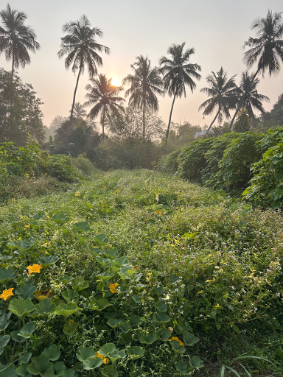
I am really glad I started this and I will certainly continue my research about soil in the future as it has become a true interest for me, especially the “growing food soils”. I wish to discover other types of soil and explore its diversity throughout the places I’ll have a chance to go and see in my life.
Join our newsletter for exclusive updates!
AuroOrchard is certified organic by the Tamil Nadu Organic Certification (ORG/SC/1906/001683) Department accredited by APEDA (Agricultural and Processed Food Products Exports Development Authority), New Delhi, Ministry of Commerce and Industry, Government of India.
AuroOrchard Poultry is recognised under the Certified Humane Program, a globally recognised, independent, international auditing body dedicated to creating a more humane world for farm animals.