In December last year, I wrote about the dilemmas of agriculture with animals.
In December last year, I wrote about the dilemmas of agriculture with animals. In this post, we would like to share a little more about how these dilemmas play out in the context of the farm, and what we have been doing with our chickens.
Inevitably, during any conversation about the activities of the farm, the question of chickens comes up. Do we need them on the farm? Aren’t Aurovilians supposed to avoid eating meat? Is this appropriate within a conscious community? Is it ethical to keep animals for food production? How is Auroville different if we also participate in animal farming, however well-managed it may be?
Our sincere answer involves the following points:
Surely, there are counterpoints to each of these arguments. Auroville has a substantial vegan community, as well as many vegetarians by birth or by choice. For many people, this issue is deeply sensitive. For some, the ethical objection is fundamental: animals should not be used or killed for food under any circumstances. We take these objections seriously, even when we arrive at a different practical position. Our position has emerged from the particular realities of food production and consumption within Auroville. We do not claim that better animal welfare resolves the ethical contradiction of using and killing animals. We do feel, however, that as long as animal foods continue to be consumed, there is value in producing them locally, transparently and with greater care.
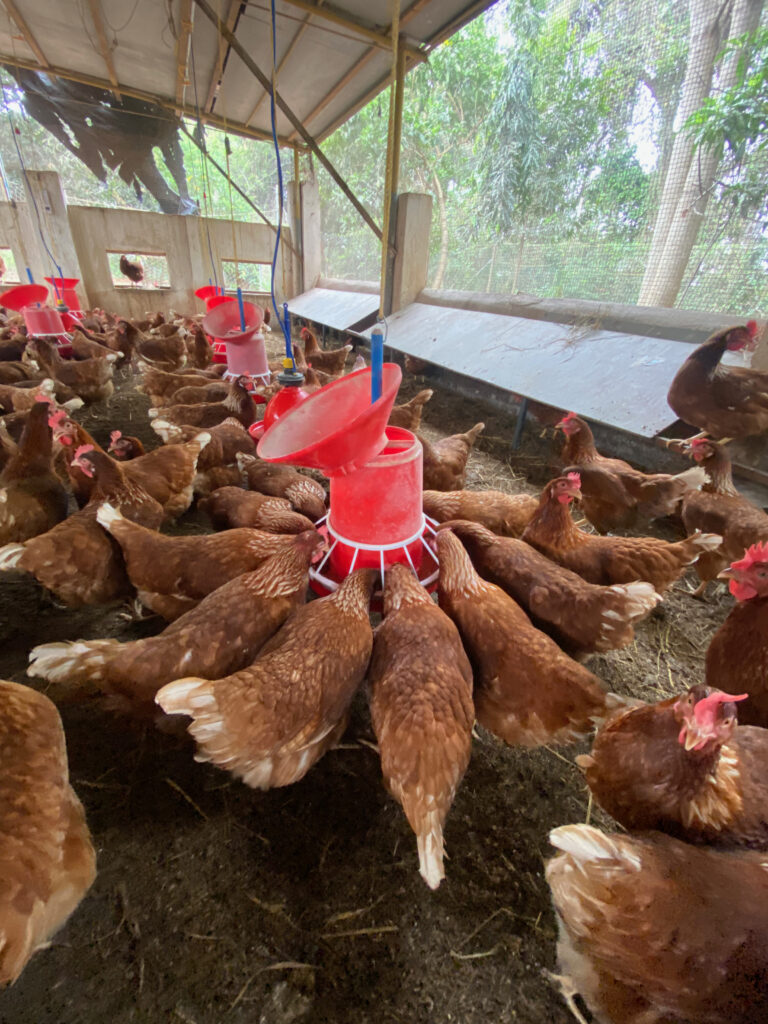
Poultry has been part of AuroOrchard for around 45 years. During this time, it has moved from cages to deep litter and eventually to free-range systems, with the standards improving continuously. Free-range is not the panacea of poultry farming. It is the most responsible system that we currently know how to operate at the required scale within our present conditions. Can it be improved? Of course. We are trying every year to first come up to the best international standards within free-range, and hopefully then surpass those standards. Standards are minimum requirements, not the highest goals. This brings us to the question of what the goal should be. We feel that farmers cannot answer this on their own. As a community, we need to ask- What do we want our food to be? How do we want it to be grown? What standards are we prepared to support, even when they require more labour, infrastructure and money?
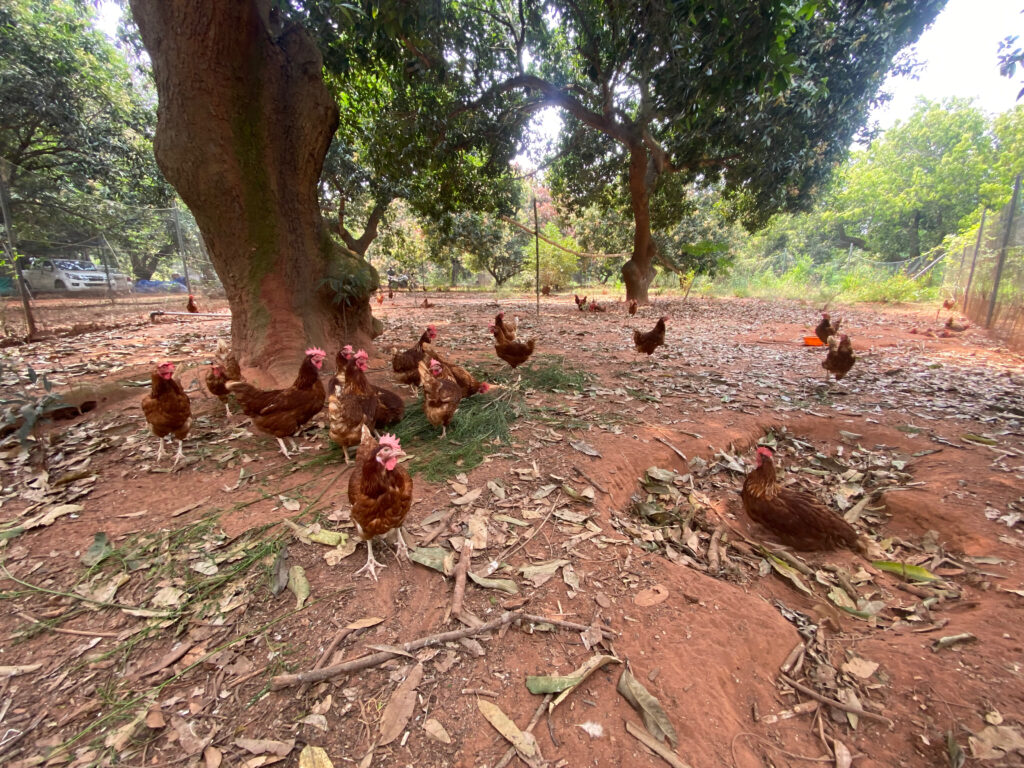
In the last few years, we have made good progress in understanding the global free-range poultry ecosystem and connecting with people who can help us improve our work. We buy one-day-old chicks from a large commercial hatchery. This itself raises many questions and remains an unresolved part of our system. We have limited influence over the breeding system, the parent flocks and the wider hatchery process before the chicks arrive at the farm. Once the chicks arrive, however, we care deeply for them. They have enough time and space to move, scratch, forage, dust-bathe and express many of their natural behaviours. They are protected from predators and provided with appropriate shelter, feed and care.
The difficult question arises when their egg production declines significantly, usually when they are around two years old. At this stage, we need to make space for a younger flock if the poultry activity is to continue. Until last year, we would announce that the older birds were available, and people from the neighbouring villages would come and take several birds at a time. Some would keep them for a while and receive the few eggs they continued to lay. Eventually, however, almost all the birds would be killed for food. It felt wrong to care for the birds for two years and then, once their role on the farm was over, hand them to someone else and distance ourselves from what happened next. We were outsourcing the killing while avoiding the consequences of our own farming decisions.
We felt that if we chose to keep birds for eggs, we also had to take responsibility for what happened when we decided to cull the flock. We also felt that if people in Auroville were going to eat chicken, meat from birds raised locally under known conditions could offer a more transparent and responsible option than meat from systems whose welfare conditions, feed and antibiotic use could not be verified. This had been our intention for quite some time, but we could not organise the logistics or find the right team to do the work properly. We eventually connected with Aurora, an Auroville unit managed by Egle that already produces artisan German-style sausages and smoked meats for the community. Our recent work has focused on understanding how the meat of older laying birds can be used well, without trying to imitate conventional broiler products.
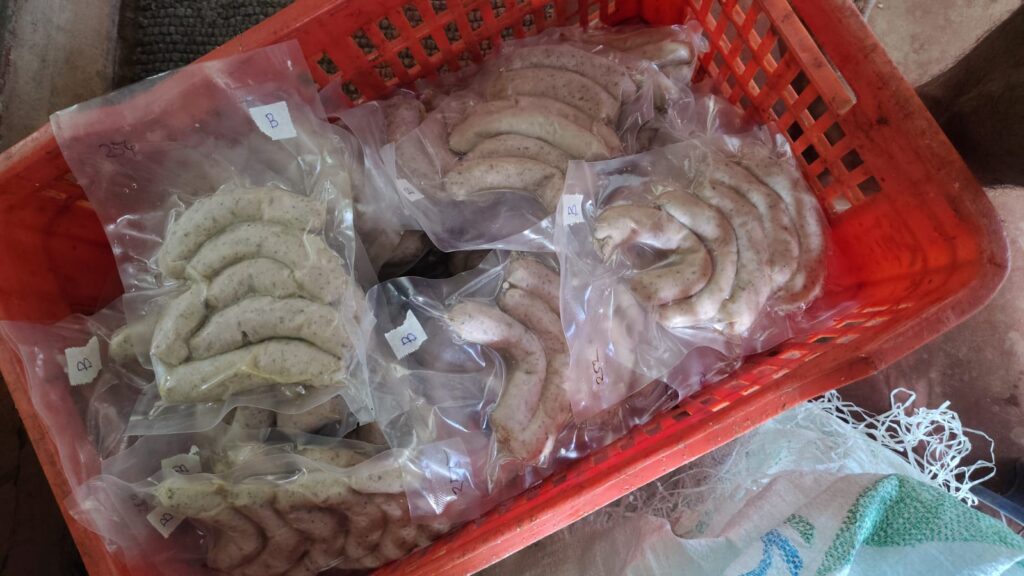
Our birds are Hy-Line Browns, a commercial hybrid developed primarily for egg production. They are not bred as meat birds. By the time they leave the laying flock, they are also considerably older than conventional broilers. Their genetics, age and active free-range life give the meat a firmer texture, leaner composition and deeper flavour. We initially tested simple smoked chicken. The flavour was appreciated and had some of the qualities people associate with country chicken. However, the meat-to-bone ratio was low, and even after twelve hours of brining, the texture remained tough. We then shifted towards using boneless meat for sausages, burger patties and mince. Grinding the meat allows us to work with its naturally firm texture while retaining its flavour.
Because these active free-range birds are naturally lean, and because we do not add external fat, the sausages can have a slightly firm or crumbly texture. We have taken inspiration from European sausage traditions in which the meat retains some texture and is not completely pulverised like a conventional hot dog. The sausage filling contains approximately 98 per cent chicken meat. Small quantities of soy protein flour and tapioca starch are used for binding, and the sausages are filled into sheep casings.
So far, we have produced:
We are also developing:
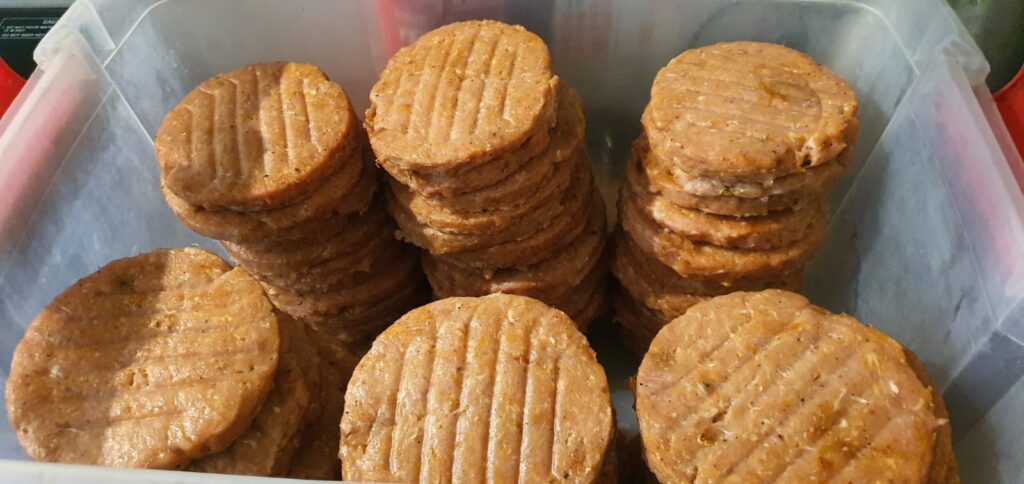
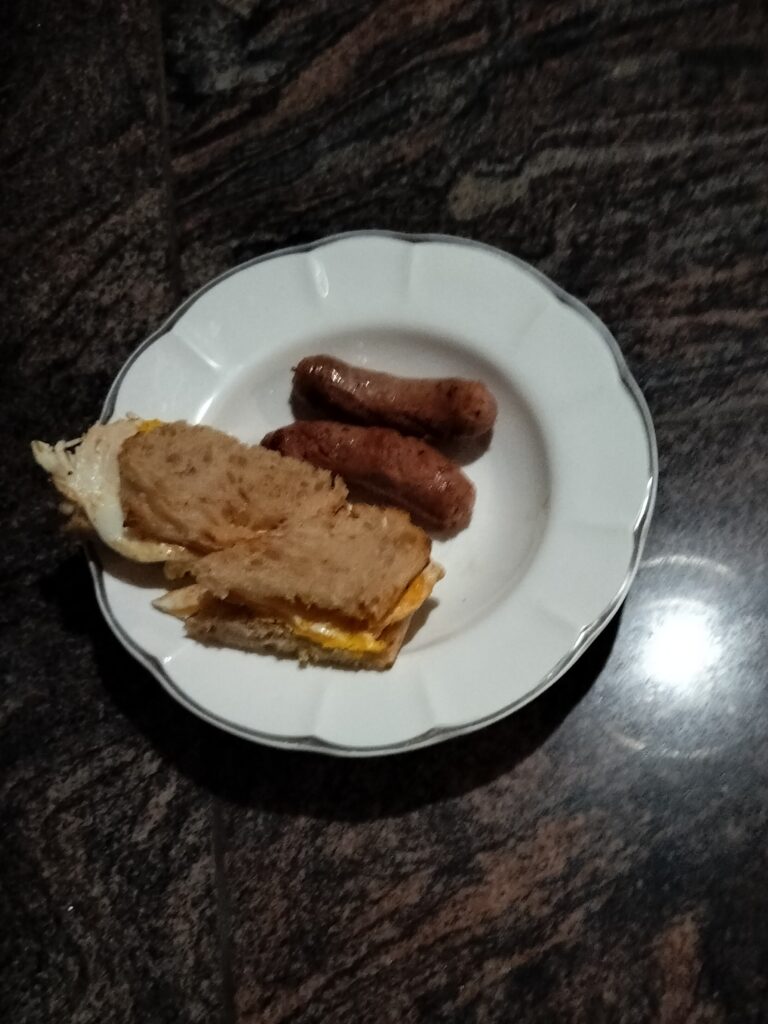
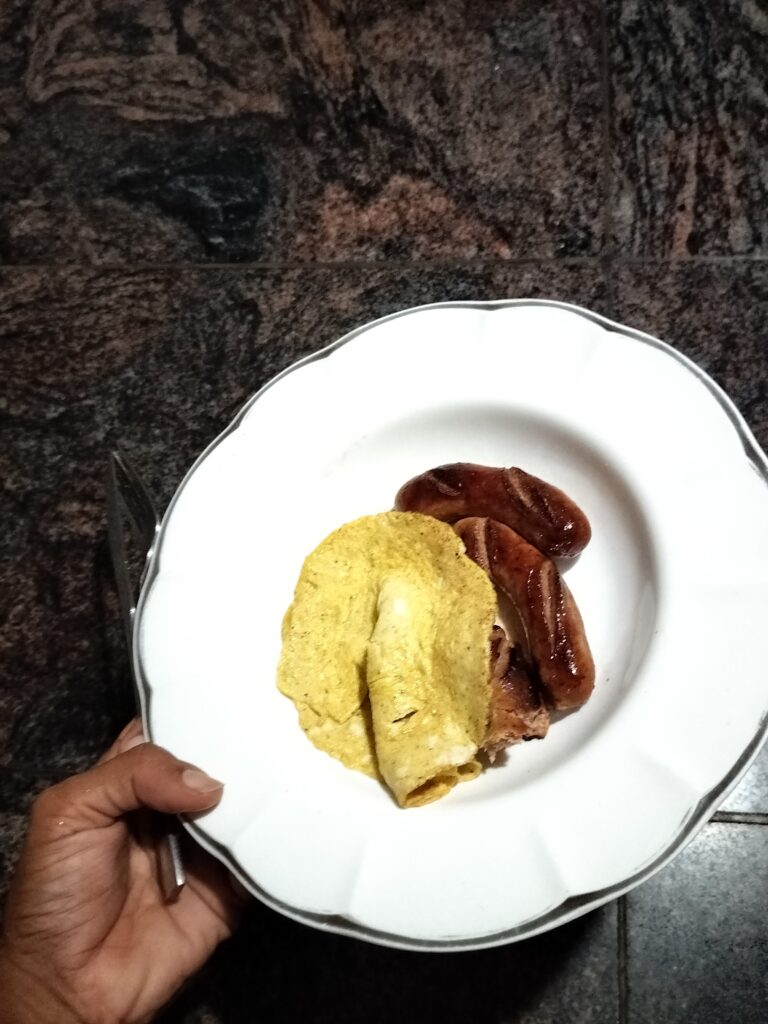
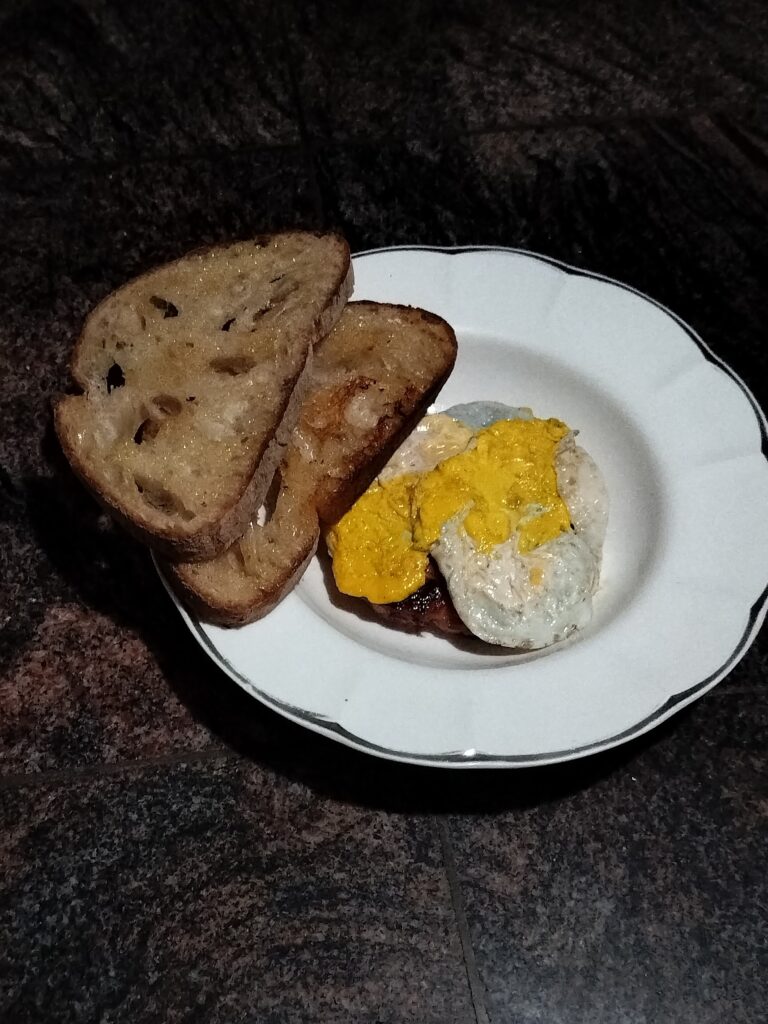
The response from the community has been positive. People appreciate having a local and traceable source of meat and knowing where the birds came from, how they lived, what they were fed and where the meat was processed. At the same time, the contradiction of buying, keeping and killing the birds remains. It is not resolved because the birds lived well or because we now take responsibility for their death. Replacing an ageing flock means that birds are killed when their egg production is no longer sufficient to sustain the system. Taking responsibility for this process does not make it ethically simple. It does, however, prevent us from separating egg production from its consequences. Eggs and meat are not two unrelated activities. They are part of the same system.
For people who believe that animals should never be used for food, this position will remain unacceptable. For people who choose to eat eggs and meat, we feel there is a responsibility to ask where that food comes from and what kind of system their consumption supports. Our present choice is to continue improving the lives of the birds, to make the whole process more transparent, to take responsibility for culling instead of outsourcing it, and to use the meat carefully and fully. We feel this is more honest than producing eggs locally while leaving the killing invisible, or continuing to depend entirely on animal products from unknown industrial systems. These questions still require wider conversations within the community. What standards should govern the raising, transport, culling and processing of animals in Auroville? What level of animal welfare is the community prepared to support financially? How can those who consume animal products participate more consciously in the realities behind their food?
We also feel that these conversations cannot be driven solely by emotions and need to include the realities of farmers, animals and people who choose to eat animal foods. If you would like to share your perspective, experience or concerns on this subject, please write to us.
Join our newsletter for exclusive updates!
AuroOrchard is certified organic by the Tamil Nadu Organic Certification (ORG/SC/1906/001683) Department accredited by APEDA (Agricultural and Processed Food Products Exports Development Authority), New Delhi, Ministry of Commerce and Industry, Government of India.
AuroOrchard Poultry is recognised under the Certified Humane Program, a globally recognised, independent, international auditing body dedicated to creating a more humane world for farm animals.