For the last many months, we have been organising learning sessions on the farm every week, opening up the space for people to share their ideas around ecology, agriculture, communication and life
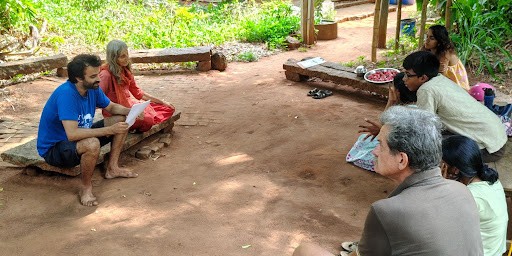
For the last many months, we have been organising learning sessions on the farm every week, opening up the space for people to share their ideas around ecology, agriculture, communication and life. Our intention is to create a welcome space for dialogue and collaborative action, which are fundamental to developing a conscious food system. The sessions are hosted on Friday or Saturday afternoons for a couple of hours. They are open for the entire community and bioregion, volunteers, guests and visitors. There is no charge for the sessions but people can contribute voluntarily. So far, around 350 people have participated in these sessions over the last six months.
Some of the recent sessions were:
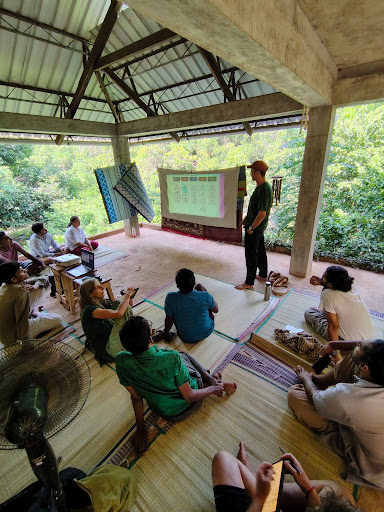
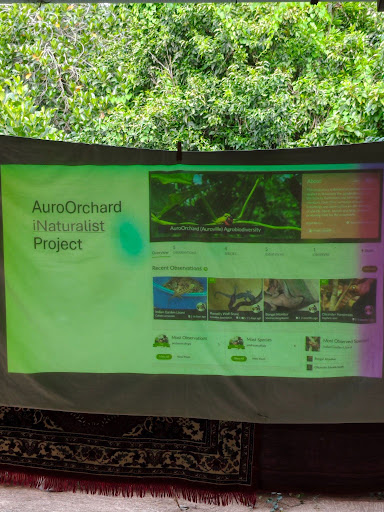
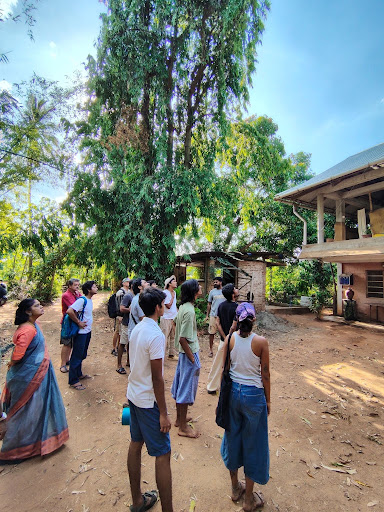
This was facilitated by Andres Acosta, bringing together citizen science, biodiversity observation, and climate resilience. Participants learned the basics of the iNaturalist app and explored the DPSIR framework to understand the relationships between human activity, environmental change, climate impacts, and possible responses. A guided walk around AuroOrchard provided an opportunity to observe and document the diverse plants, insects, birds, and other forms of life found across the farm. The workshop was a hands-on exploration of the biodiversity around us and a reminder of how everyday observations can contribute to a deeper understanding of our ecosystems. This workshop also marked the introduction to a larger study being conducted at AuroOrchard by Andres and Anshul, on the impacts of climate change on agriculture and how the farm practices respond/could respond to them.
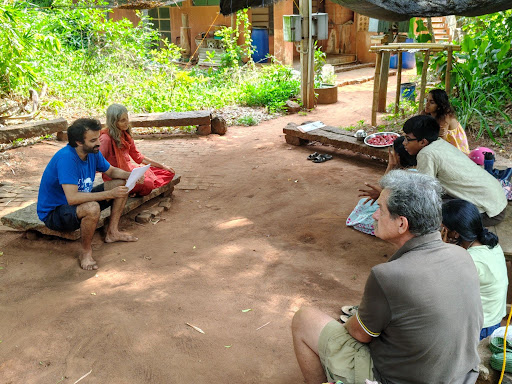
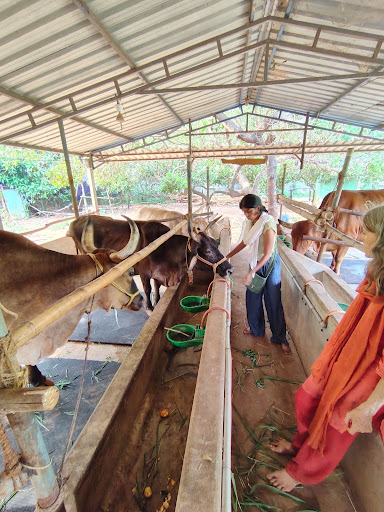
This session with Jasmine and Vivekan opened a conversation about our relationships with animals and the role they play in our lives. Drawing from their own journeys of living and working closely with animals, they shared observations from the farm, encounters with farmers, and experiences that have shaped their understanding of care, coexistence, and responsibility.
A recurring thread was how animals can become our teachers. Through being with them, observing them, and caring for them, we are invited to slow down, pay attention, and notice qualities that often go unseen in our daily lives. The conversation moved through farming, food, sanctuaries, animal welfare, and the many ways animals have traditionally been part of larger living systems connecting people, land, and community.
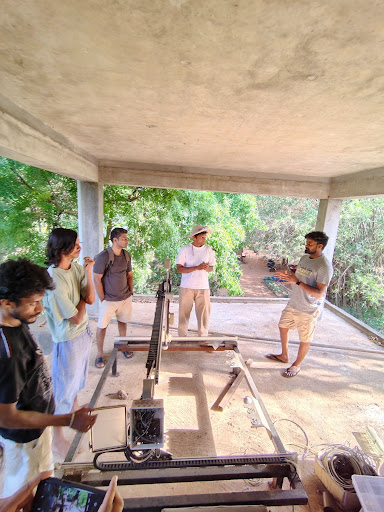
In this session by Azha, we explored if and how technology can support agriculture while remaining connected to nature? With Artificial Intelligence, the Internet of Things, sensors, automation, and data increasingly entering agriculture, the session explored how these tools can support farmers and ecological stewardship, alongside reflection on human consciousness.
At the Lab, we are experimenting with smart irrigation, automation, sensors, and data-driven farming practices to reduce water wastage. The session introduced this ongoing work and offered space to learn, question, and reflect on the relationship between technology, ecology, and the future of farming.
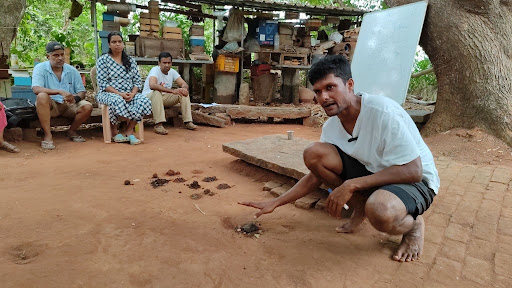
In this workshop with Ishan, participants explored simple, low-cost ways to grow mushrooms using locally available farm residues and household waste.
From understanding fungi and preparing substrates to making mushroom buckets, the workshop offered practical ways to bring fungi into farms, gardens, and backyards. We also explored how spent mushroom buckets can be transformed into fungal beds, helping improve soil health and close the nutrient cycle.
Each participant prepared a bucket for growing pink oyster mushrooms to take home and continue experimenting with this simple, replicable system.
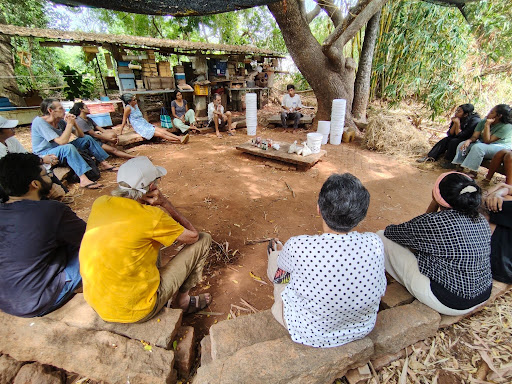
A two-hour workshop with Rahul Tola brought several threads together through whole systems thinking. The session explored the interconnected ecological, social, and economic challenges of our time. Drawing inspiration from nature and the principles of permaculture, Rahul invited us to think like an ecosystem: to notice relationships and patterns, and to consider how these shape resilience and regeneration. Through interactive discussions and reflection, participants explored how a systems perspective can help us understand complexity and inform the ways we design and work.
We are grateful to the facilitators and everyone who joined us, bringing their experiences, questions, and willingness to learn.
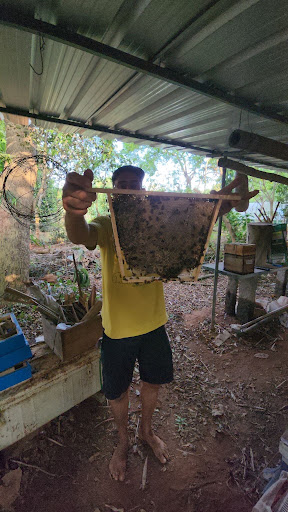
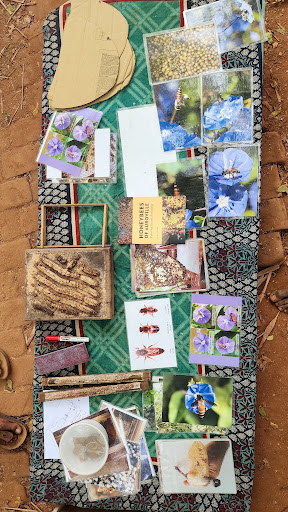
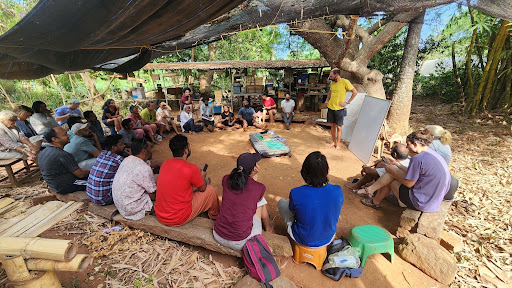
Erik Jansegers offered us an introduction to honeybees and natural beekeeping. Drawing on more than a decade of working with bees in France and India, he shared experiences of different species, habitats, and hive designs, and ways of keeping bees in greater harmony with their natural behaviour.
We explored four species found in our region: Apis dorsata, the giant rock bee; Apis florea, the dwarf honeybee; Apis cerana, the Asian honeybee; and Tetragonula iridipennis, a native stingless bee. Each has its own way of building nests, raising young, storing food, and adapting to its surroundings.
The session offered a glimpse into life within a colony, from the roles of queens and workers to swarming and the organisation of brood, pollen, and honey within the hive. Erik also shared practical experiences of hive design, swarm management, harvesting, and feeding, encouraging us to observe bees closely before deciding how to intervene.
A central theme was looking beyond honey as the main reason for keeping bees. For an orchard, pollination is an important contribution bees make. We reflected on the flowering plants, suitable habitats, and food resources they need through changing seasons, and how the farm can create conditions where bees and orchards thrive together.
Dr. Anurag offered an engaging session on Health, Nutrition & Lifestyle Medicine at Pebble Garden, Auroville.
The session explored how soil, food, movement, and our environment influence human health, and what it means to shift our focus from treating illness towards prevention. We looked at the modern health burden and the role of food and nutrition, with a deeper exploration of micronutrition and the human body, particularly the gut and gut health.
The conversation also touched on lifestyle medicine, understanding symptoms and blood markers, and the emerging idea of Medicine 3.0, which places greater emphasis on prevention and taking proactive steps towards long-term health.
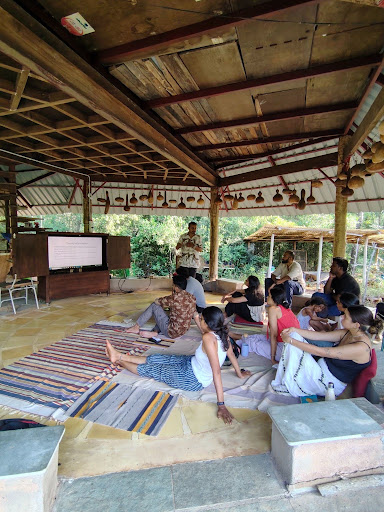
Bringing together perspectives from nutrition, human physiology, organic farming, and lifestyle medicine, the session invited participants to understand their bodies more deeply and reflect on how everyday choices can contribute to health and well-being.
The session was facilitated by Dr. Anurag, a medical doctor (MBBS) currently pursuing his MD in Physiology at JIPMER, Puducherry. Trained in functional nutrition, his work brings together preventive health, human physiology, lifestyle medicine, and evidence-based approaches to well-being. A thoughtful afternoon of learning, questions, and conversations around how we can move towards a more preventive and informed approach to health.
Join our newsletter for exclusive updates!
AuroOrchard is certified organic by the Tamil Nadu Organic Certification (ORG/SC/1906/001683) Department accredited by APEDA (Agricultural and Processed Food Products Exports Development Authority), New Delhi, Ministry of Commerce and Industry, Government of India.
AuroOrchard Poultry is recognised under the Certified Humane Program, a globally recognised, independent, international auditing body dedicated to creating a more humane world for farm animals.