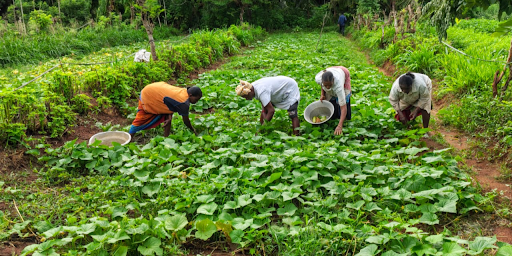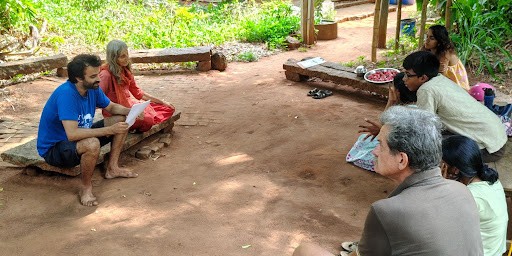
The conversation about what makes “good food” is evolving rapidly as we become aware of different aspects and relationships of agricultural systems. We of course know of the ecological impacts of farming (the industrial way of farming which is prevalent today)- loss of forest cover, loss of biodiversity, greenhouse gas emissions, pollution of soil, water, air and so on
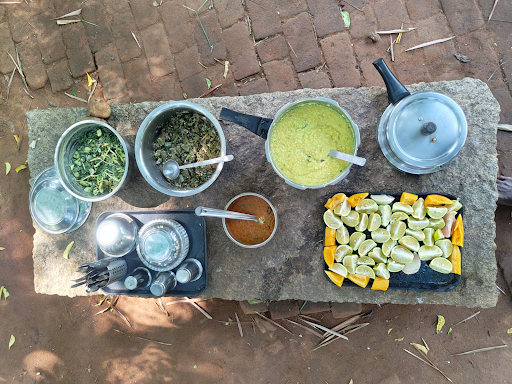
The conversation about what makes “good food” is evolving rapidly as we become aware of different aspects and relationships of agricultural systems. We of course know of the ecological impacts of farming (the industrial way of farming which is prevalent today)- loss of forest cover, loss of biodiversity, greenhouse gas emissions, pollution of soil, water, air and so on. To address these concerns metrics like food miles and carbon and water footprint of food have come up. There is an assumption here that “organic” or “regenerative” labels are intrinsically faring better on these metrics. But organic and regenerative too have become market labels and part of the large industrial agricultural system, and therefore not necessarily always good for ecology or people.
Then, there are social implications of agriculture–exploitation of communities and labour caused by large food conglomerates. The criticism of the ‘big food’ industry has led us to a better understanding of the global implications of trade in food systems. And that has given us the ideas of local, small-scale, fair trade etc. For animal agriculture, there are certifications and standards of pasture-raised, free-range, humane treatment and so on. If you are a farmer and somehow you are looking at all these aspects, you are probably doing the best that you can. But is that enough?
In Indian metaphysics, particularly in the Upanishadic tradition, food, body, mind and life-force are understood as intimately connected. A passage in the Chandogya Upanishad illustrates this relationship through the gross and subtle aspects of nourishment (Lokeswarananda, 1998).
That which is the subtlest part of curds rises when they are churned and becomes butter.
In the same manner, that which is the subtlest part of the food that is eaten rises and becomes mind.
The subtlest part of the water that is drunk, rises and becomes prana.
The subtlest part of the fire that is eaten rises and becomes speech. (6.5.1-4)
In the Vedic tradition, food is associated with matter. Annam is both food and matter. In fact, food is kind of a bridge between the material and spiritual worlds. The rituals of the Vedic tradition are rituals of consummation of these two worlds, mediated by offerings of food. The idea of food as energy continues into the Indian Upanishadic tradition as well. As Sri Aurobindo notes in the Life Divine (2005), “All Matter according to the Upanishads is food, and this is the formula of the material world that ‘the eater eating is himself eaten’” (p. 204). Therefore in the spiritual traditions, food has been not only an object of sustenance but also contemplation, a vehicle of energy- both gross and subtle. The relationship between matter and consciousness finds a very precise articulation in the Integral Yoga philosophy of Sri Aurobindo. For him, this relationship between matter and consciousness directly implies that evolution of matter is linked to evolution of consciousness. Thus, material reality changes, as consciousness evolves–material reality can be changed when consciousness evolves.
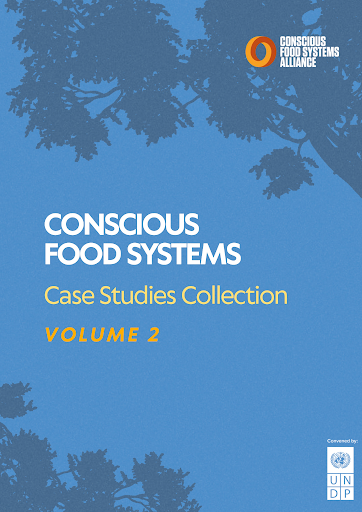
So, can food be made better by evolving consciousness? How? What is the implication of consciousness on the food that we grow and consume? And before all that, what is consciousness in food? What is consciousness at all? For me, these are the most exciting questions in agriculture today and many are waking up to a hidden dimension of our life, and our agricultural systems that lie at the foundation of who we are, and how we have created this world. Surprisingly (at least for me), some of these questions have been taken up by the United Nations Development Programme through their initiative– Conscious Food Systems Alliance (CoFSA). CoFSA describes consciousness as awareness of the inner and outer phenomena that shape how we relate to ourselves, to one another, to Nature and to future generations. Their focus is on how inner dimensions of people and the institutions they build impact agriculture, and vice versa. The Case Study Collection, Volume 2, published in 2026 by CoFSA brings together nineteen initiatives from different parts of the world. They range from farms and fishing communities to schools, universities, cooperatives, public institutions and global movements. Some use meditation or reflective dialogue explicitly. In others, consciousness is present through cultural memory, spiritual practice, deep listening, shared responsibility or a renewed
experience of interdependence. They all show that inner change is beginning to be understood as part of the practical work of transforming food systems and that there is greater acknowledgement for this missing dimension in our food systems. AuroOrchard in Auroville features as the opening case study of this volume.
You can access the full volume here.
Cultivating food and the person
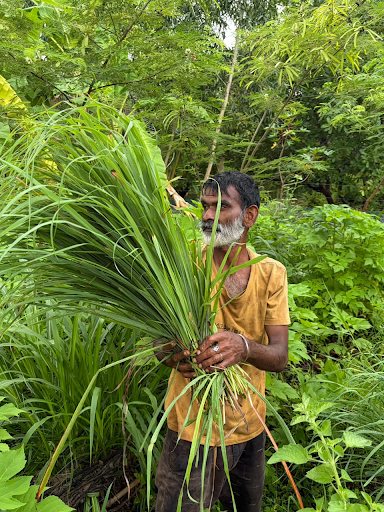
The first group of cases focuses on food production. I share my understanding of an integral view of agriculture which includes the dimensions of ecological, social, intellectual, spiritual and psychological practice. The framework invites attention to five interdependent dimensions of agricultural life – physical, vital, mental, spiritual and psychic – and to the tensions between them and how they are being explored at AuroOrchard in service to food production and a holistic community food system.
The Islamic Farming initiative of Global One 2015 works with Muslim farming communities in Kenya, Ethiopia and Nigeria. Conservation practices such as composting, crop rotation and minimum tillage are connected with Qur’anic principles of trust, stewardship, prayer and charity.
In Sri Lanka, Sarvodaya’s Awakening Through Natural Farming links chemical-free farming with mindful observation, self-reliance and community awakening. A farmer-to-farmer model helps people recover confidence in their own knowledge and in the biological processes of the farm. The rapid growth of the pilot also shows that inner transformation can accompany measurable changes in costs, income, soil health and local nutrition.
Communities and territories as living relationships
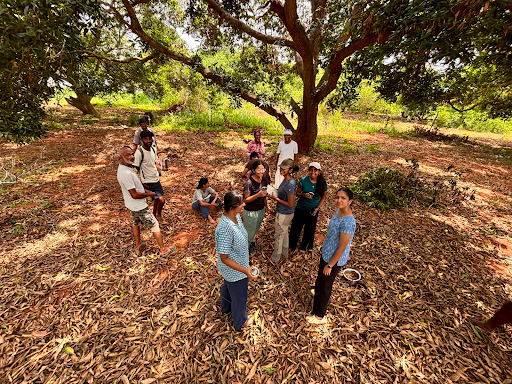
Several cases widen the lens from the farm to the territory. In the Sierra Nevada de Santa Marta, Colombia, Fondo Acción’s Transforming Territories from BEING combines agroecological learning with the cultivation of purpose, self-knowledge, critical thinking, communication and collective action. Its work with Arhuaco communities reconnects care for soil with the Ley de Origen, in which territory is a living being and caring for it is also a spiritual responsibility.
The One Home Journey of Home for Humanity connects more than 125 living places across 31 countries. Through community gardens, traditional foods, seed saving, hospitality and cultural exchange, it approaches food as memory, belonging, livelihood, ecology, spirituality and peace.
In Cebu, Philippines, IISLA Ventures explores how farmers, consumers, enterprises and investors can move towards stewardship, reciprocity and shared wellbeing. Dialogue, listening and relationship-building gradually change how capital and food are perceived, opening space for local agency before economic expansion.
The global Save Soil Movement works through public awareness, policy advocacy and farmer-centred regenerative agriculture. Its consciousness practices help participants experience the body as part of the soil and ecological care as an extension of self-care.
At Hawthorne Valley in the United States, agriculture, education, art and research come together within a bioregional vision of renewing soil, society and self. Attentiveness to place and shared purpose informs both daily practice and organisational decisions.
Communities and territories as living relationships
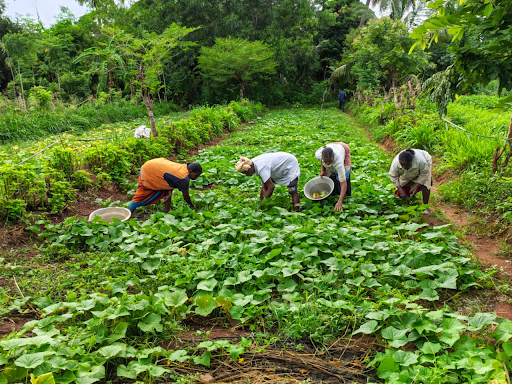
The collection gives particular importance to Indigenous and traditional food systems. Research by the Global Alliance for Territorial Communities documents food and forest practices across the Amazon, Mesoamerica, the Congo Basin and Indonesia. Systems such as the Amazonian chagra integrate production, governance, ecological regulation, spirituality and intergenerational knowledge. The case asks institutions to recognise Indigenous communities as living agents of food-system transformation.
In Kenya, Manyatta MetaMeta CBO creates intergenerational dialogues around Luo food traditions. Prayer, breathing, nature connection and deep listening accompany the revival of sorghum, indigenous vegetables and regenerative practices. The work also reveals a central challenge: words such as mindfulness and meditation cannot simply be imported; they need culturally grounded meanings.
The case on Mataw fishing in Batanes, Philippines, offers no new intervention to scale. It attends carefully to an existing Indigenous fishing practice. Seasonal ritual, collective regulation, ancestral places and relationships among fish, fishers, sea and spirits shape how the Ivatan community approaches the dorado season. The case invites a movement from seeing fish solely as stocks or biomass towards experiencing food procurement as participation in a field of relationships.
Communities and territories as living relationships
Consciousness also enters the structures through which food systems are taught and organised. Prescott College’s Master of Arts in Transformative Food Systems places critical reflection, lived experience, dialogue, complexity and inner development within food-systems education. Students examine their own values and roles while learning to work with uncertainty and systemic change.
The Sustainable Agriculture Network describes a seven-year organisational journey from an ego-system to an eco-system. Deep listening, shared inquiry, psychological safety and distributed leadership helped reshape governance across its global network. Here, culture is understood as a practical condition for collaboration, with questions of ego, control and trust treated as part of institutional work.
In Uganda, the Good Food Parliament brings vendors, consumers, women, young people, persons with disabilities and city authorities into participatory food governance. Accessible dialogue and collective deliberation strengthen citizen agency while influencing food-safety ordinances, nutrition planning and municipal decision-making. Conscious participation becomes visible as voice, dignity and the capacity to shape public systems.
Consumption as culture and relationship
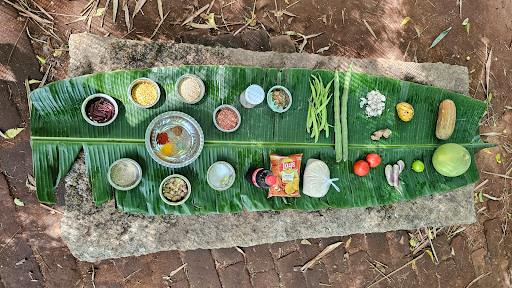
The final group turns towards markets, schools and everyday eating. South Korea’s Hansalim Cooperative connects more than one million consumer households with producer households through a life-centred philosophy. Its annual rice-price meeting is especially revealing: producers and consumers meet to seek a fair price through mutual concern. The image of “the universe in a bowl of rice” expresses food as a meeting of innumerable forms of life and labour.
Across Europe, Rikolto’s Whole School Food Approach integrates food into school policy, procurement, learning and community life. Gardens, cooking, culturally meaningful meals and inclusive food education have supported healthier eating, lower emissions, psychological safety and belonging across thousands of schools.
The Pacific Island Food Revolution uses television, storytelling and local role models to renew pride in Indigenous foods. By shifting traditional food from a sign of poverty to a source of health, identity and aspiration, it has helped change diets at remarkable scale. In Nepal, YogiBoost connects a locally sourced probiotic school drink with conscious kitchens, child nutrition, youth training and support for dairy farmers. Everyday food choice becomes an entry point into self-care and responsibility.
Thailand’s Food Spirit initiative brings together spiritual health, food literacy, food citizenship and food as a commons. Festivals, mindfulness, systems thinking, policy councils and joyful collective learning connect personal transformation with shared care for society and Nature.
An emerging field for Auroville
These cases show the plurality of conscious action through Buddhist, Islamic, Indigenous and integral worldviews; through meditation and ritual; through education, governance and organisational reflection; and through the everyday acts of growing, cooking, eating and meeting together. They explore how inner development shapes our practices and relationships. For Auroville, this opens further questions about the relationship between consciousness and food itself. What are the implications of food for the psyche, and of our inner states for the ways we grow, prepare and experience food? What kind of food should a community dedicated to the evolution of consciousness be cultivating and eating?
Recently, there was a WhatsApp message being circulated in an Auroville group by someone making fun of another person saying that the energy of the food they were eating was different. I am all for calling out the delusion of pseudo-spiritualism. I am all for consumer awareness and people not accepting anything coming from Auroville- assuming it is good, just because it’s “from Auroville”. But is energy in food really a hoax? Claims about a certain “energy” in food deserve careful questioning, including attention to where and how that food was produced. Experiences that do not fit our usual ways of understanding food also deserve a hearing. What do people mean when they describe such qualities, and how might we investigate them? Auroville has a responsibility to bring openness and rigour to this inquiry into the psycho-spiritual dimensions of growing, preparing and eating food. Can Auroville be at the forefront of this research in service to an agriculture that the world needs?
Join our newsletter for exclusive updates!
AuroOrchard is certified organic by the Tamil Nadu Organic Certification (ORG/SC/1906/001683) Department accredited by APEDA (Agricultural and Processed Food Products Exports Development Authority), New Delhi, Ministry of Commerce and Industry, Government of India.
AuroOrchard Poultry is recognised under the Certified Humane Program, a globally recognised, independent, international auditing body dedicated to creating a more humane world for farm animals.