Remembering the Beginnings…

This interview with Gérard from 2020 , by the Lands for Auroville Unified team, takes us back to the earliest beginnings of the farm. Gérard came to the Sri Aurobindo Ashram in 1955 at the age of 23. After working at the Ashram bakery and swimming pool, he spent Home » Blog » Remembering the Beginnings of AuroOrchard With Gerard Cruz (2020) Remembering the Beginnings of AuroOrchard With Gerard Cruz (2020) August 2026 · Anshul Aggarwal This interview with Gérard from 2020 , by the Lands for Auroville Unified team, takes us back to the earliest beginnings of the farm. Gérard came to the Sri Aurobindo Ashram in 1955 at the age of 23. After working at the Ashram bakery and swimming pool, he spent several years caring for an orchard-farm in Mountain Paradise in the Himalayas, growing apples and peaches. Looking back, he describes this period as his apprenticeship in horticulture. In 1967, the Mother asked him to visit a piece of land near Promesse and consider how it might be developed. She later asked whether he would take responsibility for the land and grow fruits and vegetables for the emerging community of Auroville. Gérard returned from the Himalayas towards the end of 1968 and began the gradual work of developing AuroOrchard. The story also carries some lesser-known parts of the farm’s history. The Ganesh temple was already present on the land, and its continued care was one of the conditions under which the Mother acquired the farm. While the temple’s physical connection with the farm was lost in the land exchange in 2023, the daily puja has continued uninterrupted even until today since the beginning, now under the care of Diwakar. What comes through most strongly in Gérard’s memories is his trust in the work he was given and his gratitude for the life that unfolded through it. More than fifty years later, AuroOrchard continues to grow food for Auroville, carrying forward the purpose with which it began. As Gérard reflects: “My heart remains filled with gratitude for this exceptional experience.” You can read the full interview here: https://land.auroville.org/gerard-development-auroorchard/ Previous Article Featured Articles Words of appreciation…ㅤㅤㅤㅤㅤ 27 Aug 2026 Monthly Updatesㅤㅤㅤㅤㅤㅤㅤㅤ 26 Aug 2026 Words of appreciation…ㅤㅤㅤㅤㅤ 27 Aug 2026 Words of appreciation…ㅤㅤㅤㅤㅤ 26 Aug 2026
Words of appreciation…ㅤㅤㅤㅤㅤ
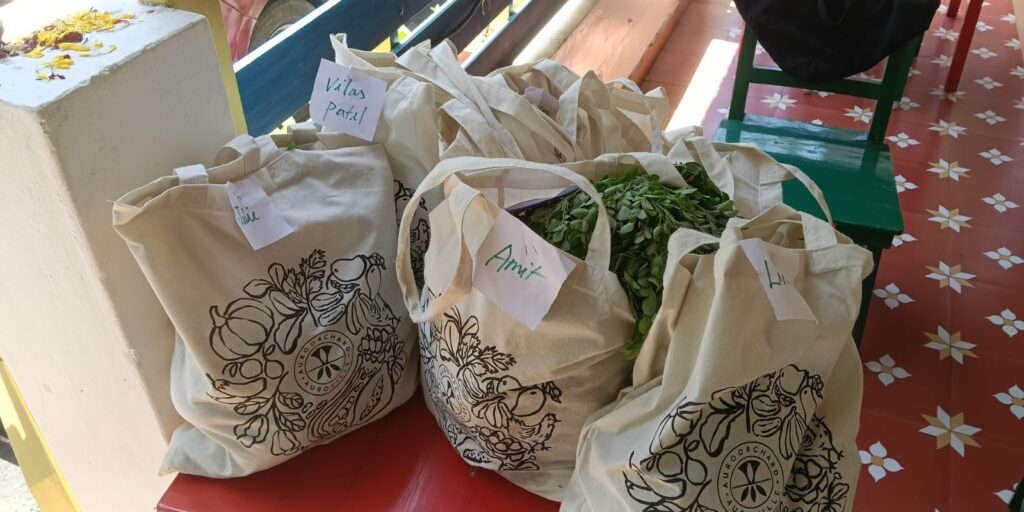
We’re deeply grateful for the encouragement and trust we receive from our community. There is still much to learn, improve, and do. We receive this feedback with humility and gratitude, as a reflection of the relationships and collective effort that make this work possible. Home » Blog » Words of appreciation from the community Words of appreciation from the community August 2026 · Anshul Aggarwal We’re deeply grateful for the encouragement and trust we receive from our community. There is still much to learn, improve, and do. We receive this feedback with humility and gratitude, as a reflection of the relationships and collective effort that make this work possible. A few words from our community on their experience of receiving baskets from the farm: A wonderful way to eat amazing food, enjoy top-notch products…and support Auroville’s farms. All are of exceptional quality- the super fresh fruits and veggies, and the processed foods: amazing taste, long preservation, well presented! Personally, it is a great luxury to receive a fresh vegetable from Auroville farm. I’m very grateful to the people working in the orchard to provide us this service. I’m super happy about your products! Seasonal and very fresh, it’s tasty and good. I tasted pesto, jam and ale, which are all very good! Good job. One of the best places to eat local, organic and seasonal food at AV. A wide selection available year-round, and a genuine effort on the part of the farm to produce fruits and vegetables of excellent quality. Produce we can trust to be organic. Every basket received is full of fresh produce and good will. We support organic farming and farmlands and forests in Auroville. A lot more support was needed. It’s wonderful work that AuroOrchard does and continues to keep bringing new produce. The basket service is a blessing for me as i don’t have any free mornings to go shopping at Ptdc. It’s also very consistent which keeps me assured. Response from Anshul and a few I have interacted with is prompt and addresses the query. The food is wonderful, always feels fresher, safer and more flavourful than any I can find in a store. I’ve been regularly purchasing produce from AuroOrchard organic farm, and the quality has been consistently outstanding. The fruits and vegetables are incredibly fresh, full of natural flavour, and you can truly taste the difference compared to regular market produce. What I appreciate most is the reliability—they maintain the same high standard every time. The produce feels clean, wholesome, and grown with care. This service is very valuable, and the fact that all produce is organic makes it even more valuable. I feel the difference in quality with AuroOrchard being a better quality. The rates of raw products are neither very high nor very low. The basket system is extremely helpful & is a hassle free experience. Amazing quality, very precise delivery, great service. Earlier I could never access AV farm produce, as nothing much is left at 1pm at PTDC. I guess that way neither ptdc nor av farms could really know the demand for their produce. Now it’s so easy! I keep sharing the link for the weekly order and the farm walk…we are blessed with fresh organic food directly from.the farm… prepared with so much care and farming expertise. I’m amazed by the way you responded to an intense situation and the outcome of it which shows more consciousness, adaptability, resilience and the work capacity. The work that AuroOrchard does is absolutely outstanding. Despite all the challenges, blockages, big injustice and even violence AuroOrchard has faced, you not only persevere but have improved tremendously over the last 2-3 years. I admire your strength, courage and endurance! I really appreciate your efforts to find new solutions for egg mass production. Somehow, it doesn’t feel right to me to keep animals to produce food for humans, but as long as we eat eggs at least lets find the most animal-friendly way to produce them. I’m happy to know that you try your best and that you will improve it even more! Your new ready made food production program is great, very creative and innovative! I always enjoy seeing your new products and love to try them out, especially your new syrups and drinks. My absolute favorite products are your turmeric powder, the various greens and the brown eggs. Amazing! Super efficient, top quality products. Such quality, creativity and abundance… cannot be better! A dream coming true for any organic food and farming lover. Thanks for all the efforts going into the direct sales! On top of the orders and my emails are always answered. Good quality products. Wonderful work, very useful Very positive vibrations. Products are good quality with reasonable price. Team mates are good, some are extraordinarily talented , simple and helpful. I wish AuroOchard all the best. Auro Orchard forms an excellent bridge for volunteers and newcomers in auroville. i often hear of people working in Auro orchard in a meaningful way, even if for a short period, and it makes me happy. I also appreciate immensely that the team is flexible and always experimenting and trying things – rare in this sector. Thank you AuroOrchard team and earth! Previous Article Featured Articles Words of appreciation from the communityㅤㅤㅤㅤㅤ 26 Aug 2026 Soil Test Experiments… 26 Aug 2026 Words of appreciation from the communityㅤㅤㅤㅤㅤ 26 Aug 2026 Soil Test Experiments… 26 Aug 2026
Sweet Potato & Pumpkin Gnocchi with Basil Pesto
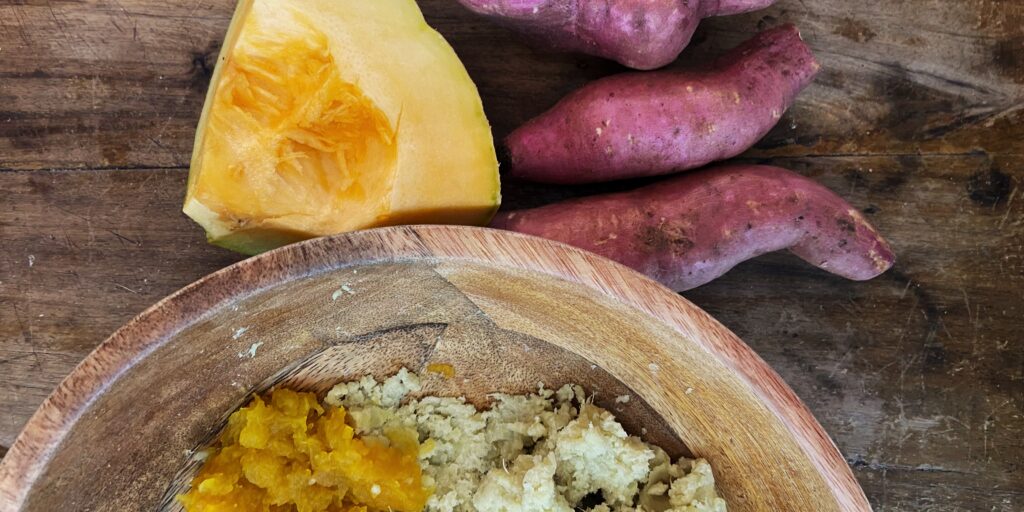
This summer, I’m trying to find more ways than the simple boil-and-eat way of consuming sweet potatoes from AuroOrchard. I love sweet potatoes and that’s the least I can do for this humble tuber! Home » Blog » Sweet Potato & Pumpkin Gnocchi with Basil Pesto Sweet Potato & Pumpkin Gnocchi with Basil Pesto April 2026 · Anuja Khokhani This summer, I’m trying to find more ways than the simple boil-and-eat way of consuming sweet potatoes from AuroOrchard. I love sweet potatoes and that’s the least I can do for this humble tuber! This is one of the quickest and easiest ways to use sweet potatoes – this dish came together in about 30 minutes and was gobbled up in 10! Here’s what you need to make the gnocchi – Ingredients 350g boiled sweet potato, mashed smooth 100g boiled pumpkin (with a pinch of turmeric), mashed 40g whole wheat flour Salt, to taste Butter 1 tbsp 40g basil pesto Grated cheese (Parmesan or any cheese you like) Sun-dried tomatoes (optional) Method In a bowl, combine the mashed sweet potato and pumpkin. Add salt and mix well. Add in the whole wheat flour and bring everything together into a soft dough. Avoid overworking or adding more flour to this. Divide this dough into portions and roll each into long ropes (about 1-2 cm thick) and then cut into small bite-sized pieces. You can leave them in this pillow shaped pieces or or lightly press with a fork to create ridges While you’re shaping the gnocchi, bring a pot of salted water to a gentle boil. Drop the gnocchi in batches into boiling water. Once they float to the surface, let them cook for another 30–60 seconds, then remove. In a pan, heat up the butter and saute the pesto slightly. Then add the cooked gnocchi and toss gently with the pesto until coated. Add some of the pasta water for a slightly creamy consistency and turn off the stove. Fold in the sun-dried tomato and serve in a bowl, garnished with some cheese. Previous ArticleNext Article Featured Articles Monthly Updatesㅤㅤㅤㅤㅤㅤㅤㅤ 29 Apr 2026 Sweet Potato & Pumpkin Gnocchi with Basil Pesto 28 Apr 2026 Salt: How a Tiny Crystal Took Over Our Meals 28 Apr 2026 The Six Seasons of Aurovilleㅤㅤㅤㅤ 28 Apr 2026
Salt: How a Tiny Crystal Took Over Our Meals
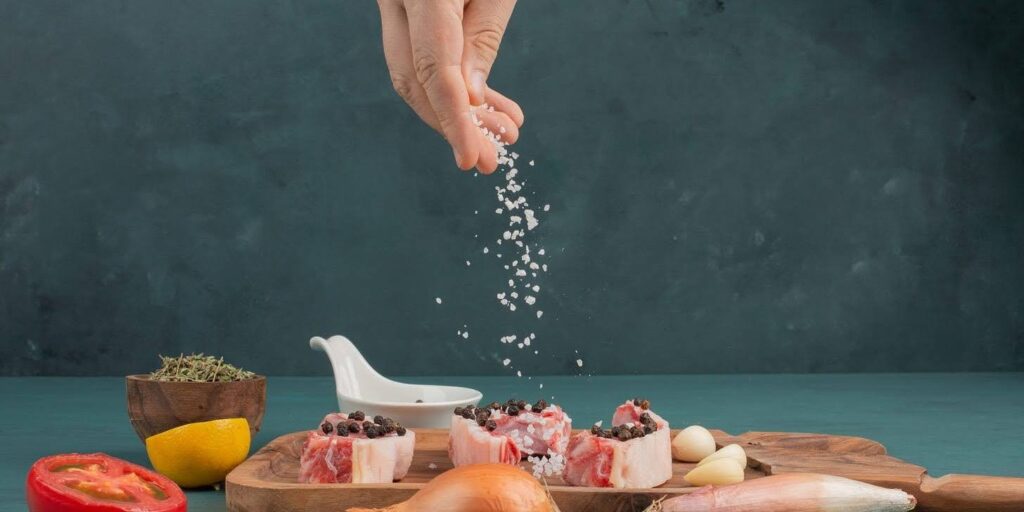
Have you ever wondered what foods you could actually eat without salt? How did this tiny crystal become such a central part of our meals? Home » Blog » Salt: How a Tiny Crystal Took Over Our Meals Salt: How a Tiny Crystal Took Over Our Meals April 2026 · Charan GP Have you ever wondered what foods you could actually eat without salt? How did this tiny crystal become such a central part of our meals? Over time, salt found its way into our kitchens and food outlets, quietly becoming an assumed necessity in many meals. We often think it is essential to our health, yet its presence is so familiar that few of us pause to question it. I have been salt-free for nearly four years, and during this time, my blood markers have consistently remained normal, without any sodium deficiency. My body naturally gets the sodium it requires from fruits and raw foods, without any added salt. Salt in History Salt has been valued by humans for thousands of years. Archaeological evidence shows that humans were mining and using salt at least 8,000 years ago during the early days of agriculture. As people began storing and preserving surplus crops and meat, salt became essential for preventing spoilage. It allowed food to survive long journeys, harsh seasons, and trade routes. This gave salt enormous economic and strategic value. Roman soldiers were sometimes paid in salt, giving rise to the word salary. Centuries later, salt became a symbol of control and resistance, most famously during Gandhi’s Salt March. Salt became deeply embedded in human culture because of food preservation, trade, and survival needs. In modern times, refrigeration and storage have replaced that role, but salt remains central to our meals, largely due to habit, taste, and the subtle addiction it creates. Humans and Salt: A Unique Relationship No other species seasons its food. Animals eat what nature provides, obtaining minerals naturally from plants, water, and soil. Humans are the only species that isolates, refines, and adds salt back into their meals. Salt stimulates appetite, encourages us to eat more than the body actually needs, and subtly keeps us returning to it meal after meal. My Experience Without Salt When I shifted fully into eating raw foods, my meals became simple: fruits in the morning, fruits in the evening, and salad in the afternoon. I never felt the need to add salt. Salt naturally left my diet without effort. In fruits, I simply did not add any. In salads, I knew that adding salt would draw out the liquid, so it was unnecessary. Over time, salt quietly lost its place. Today, I cannot eat food with added salt; it overwhelms my taste buds. Without salt, I can fully taste the vegetables, fruits, and raw foods I eat. Food that once felt bland now feels complete. Sodium and Salt: A Medical Perspective People consume salt mainly to provide sodium chloride, which is necessary in small amounts for nerve function, fluid balance, and other physiological processes. However, the sodium the body requires is already naturally present in whole foods, such as fruits, vegetables, and leafy greens, without needing added table salt. Recommended Limits versus Reality Health guidelines suggest no more than 5 grams of salt per day, roughly one flat teaspoon, including all sources. This is the combined amount from cooking, snacks, and processed foods. In reality, most people consume far more: Cheese: one-third to one-half teaspoon per two slices Packaged snacks or chips: half a teaspoon or more One restaurant meal: one to two teaspoons or more Salt inside the body pulls water toward itself. The body responds by holding extra water to dilute it. Over time, this water retention can strain arteries, thicken the blood, and burden the kidneys and heart. Salt preserves food, and inside the body, it acts in much the same way: storing water, affecting circulation, and stimulating appetite. Observing Salt Intake My invitation is simply to notice the amount of salt being taken in during a day. This includes not only what is added to food but also the salt already present in packaged foods, snacks, and meals prepared by others. It is also interesting to see what foods can be eaten without salt, quietly observing and exploring. Previous ArticleNext Article Featured Articles Monthly Updatesㅤㅤㅤㅤㅤㅤㅤㅤ 29 Apr 2026 Sweet Potato & Pumpkin Gnocchi with Basil Pesto 28 Apr 2026 Salt: How a Tiny Crystal Took Over Our Meals 28 Apr 2026 The Six Seasons of Aurovilleㅤㅤㅤㅤ 28 Apr 2026
Abundance Product of the Month

Have you tried our authentic sun-cured lemons preserved with Himalayan salt yet? They are bursting with flavours of lemons and are free from preservatives. Add them to your salads or curries to add a tangy depth. Home » Blog » Abundance Product of the Month Abundance Product of the Month December 2025 · AuroOrchard Salted & Sun-cured Lemon Have you tried our authentic sun-cured lemons preserved with Himalayan salt yet? They are bursting with flavours of lemons and are free from preservatives. Add them to your salads or curries to add a tangy depth. Order Here October 2025 Turmeric Flakes Our Turmeric roots have been sun-dried and turned into flakes that can be easily infused in some hot honey & lemon tea for the changing weather with a pinch of black pepper. Order Here September 2025 This cold pressed Coconut Oil has been made from coconuts picked from our Coconut poly-orchard with raised beds of bananas and several other plants to support the fertility of this orchard. With no preservatives added to this oil, it is a healthier alternative to the standard coconut oil available in the market. Order Here August 2025 Basil-Pesto Cashew Product Description: This pesto is rich with AuroOrchard Cashew and Basil both of which we have in abundance at the moment. We use very little oil (one-third) necessary for blending and preventing oxidation. Order Here June 01, 2025 · Anshul Aggarwal Over the last months, we have processed our fresh produce which is in abundance into a variety of products that are available directly from the farm. We hope to slowly expand this activity into a more consistent and significant part of the farm. As the consumption of Auroville produce continues to drop, we feel this is one way we can still offer Auroville grown produce to people within and outside of Auroville. Order Here Previous Article Featured Articles Abundance Product of the Month 05 Dec 2025 Monthly Updatesㅤㅤㅤㅤㅤㅤㅤㅤ 28 Nov 2025 Glimpses of a solar futureㅤㅤㅤㅤ 05 Dec 2025 Flow of fire and water on the farmㅤㅤ 03 Dec 2025
Recipe Alert!ㅤㅤㅤㅤㅤㅤㅤㅤㅤㅤㅤ
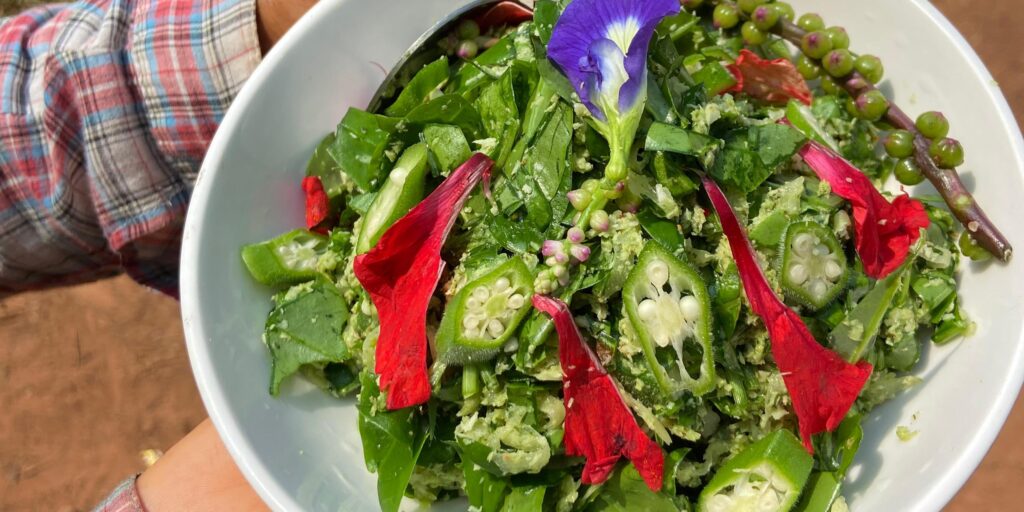
It’s been one week since I arrived at the farm.I’ve just been watching. Slowing down. Learning the rhythm of the farm.Mornings begin with greeting everyone. Today when I walked in, I saw Anshul and Reuben sitting together (a rare sight, because both of them are constantly moving around the farm). When I reached them, I realised they were discussing: which greens to include in the salad box that’s Home » Blog » Recipe Alert! Farm Seasonal Salad November 2025 · Astha Khandelwal Base Shredded raw papaya Ceylon spinach Greens (all tender) A handful spinach A handful arugula A handful tender moringa leaves A few Malabar spinach leaves + tender seeds A few fresh chives A handful tender baby okra (thinly sliced and yes, you can eat them raw!) Dressing Fresh grated coconut Fresh roselle (petals or calyx) Fresh basil Few curry leaf Bird’s eye chilli Lemon juice Salt, to taste Garnish Hibiscus flower Butterfly pea flower Method: Place shredded raw papaya and Ceylon spinach at the base of a bowl. Toss in all the tender green leaves + sliced tender okra. Blend together coconut, roselle, basil, bird’s eye chili, lemon juice and salt into a coarse, bright dressing. Fold dressing into salad just before serving. Finish with hibiscus & blue pea flower petals on top. BTS It’s been one week since I arrived at the farm.I’ve just been watching. Slowing down. Learning the rhythm of the farm.Mornings begin with greeting everyone. Today when I walked in, I saw Anshul and Reuben sitting together (a rare sight, because both of them are constantly moving around the farm). When I reached them, I realised they were discussing: which greens to include in the salad box that’s launching next week. Anshul noticed me and immediately joked, “Reuben ask her, she only eats salad.” So we started listing every edible green that is currently growing.Then Anshul asked me to go around the farm and harvest whatever we could use to make a sample salad today itself. I was excited, but I wasn’t sure if I remembered all the directions properly. Luckily, Reuben became my saviour. He took me around the entire farm, plant by plant.We harvested together. Both of us were genuinely so happy because it’s been so long since we actually harvested something with our hands. There is something extremely grounding about directly touching the soil and the plants again. But I was also feeling a lil guilty like I was taking his kitchen time… but in that exact moment he said: “Astha thank you – I’ve been so occupied in kitchen experiments that I haven’t visited the farm, the soil in so long. It feels so good to be back.” That sentence relieved every bit of guilt. Then the whole team (Charan, Reuben and Ram) gathered around to see the final salad we made. We photographed it. We ate it. We LOVED the flavours. The next day again, we tested a second version.This time the dressing was even better. We also measured the exact quantity and box size.Now, it feels real. WHY WE MADE THIS SALAD: (…and here is where the science comes in) to honour what the land is offeringplants produce more secondary metabolites when they grow in season + in their home climate + under their natural soil conditions. seasonal harvest → higher polyphenols → higher antioxidant potential. to eat greens in a way where nutrients are actually preservedvitamin C, folate and many carotenoids are heat-labile.raw + same-day harvest = maximum micronutrient retention (vs boiled sautéed steamed). raw papaya has digestive enzymesraw papaya contains papain + chymopapain (proteolytic enzymes) which assist protein breakdown and have shown benefit in clinical studies for reducing bloating and improving transit. greens contain chlorophyll — and chlorophyll is molecularly very similar to hemoglobinchlorophyll = tetrapyrrole ring → Mg in centerhemoglobin = same ring → Fe in centerthis structural kinship is why greens are studied for supporting hemoglobin status, antioxidant defense, and binding of dietary mutagens inside the gut. Previous Article Featured Articles Abundance Product of the Month 22 Oct 2025 Monthly Updatesㅤㅤㅤㅤㅤㅤㅤㅤ 22 Oct 2025 Recipe Alert!ㅤㅤㅤㅤㅤㅤㅤㅤㅤㅤㅤ 01 Dec 2025 The Flying House 01 Dec 2025
Recipe Alert!ㅤㅤㅤㅤㅤㅤㅤㅤㅤㅤㅤ

Stir Fried Sweet Potato leaves with Tofu One of my all time favourite meals that is extremely easy and quick to make is plain rice with some stir fried greens with an Asian style seasoning. Home » Blog » Recipe Alert! Stir Fried Sweet Potato leaves with Tofu September 2025 · Anuja Khokhani One of my all time favourite meals that is extremely easy and quick to make is plain rice with some stir fried greens with an Asian style seasoning. My universe of greens that one can consume expanded quite a bit when I moved to Auroville, but more so when I travelled to Thailand last year. I was mind-blown with the variety of greens I got to eat as a vegetarian in a country that predominantly enjoys non-vegetarian cuisine. Now, I grow Pumpkin, Pok Choy, Chinese Mustard Greens in an attempt to stir fry them, replicate the flavours and think of the good times I had on my travels. The newest addition to this list of greens are the Sweet Potato leaves that I recently got in my basket from AuroOrchard. Here’s my version of this Asian dish with a little protein added to it – because Protein!! 😀 Ingredients: 250g Sweet Potato Leaves 100g Smoked Tofu 3-4 cloves of big Garlic pods 1 chopped Green chilli / Red chilli ½ tbsp Mushroom sauce ½ tbsp Light Soy sauce ½ tsp Dark Soy sauce ½ tbsp Sugar ½ tsp Rice Wine Vinegar 1 tsp (Toasted) Sesame Oil for the sauce ¼ cup Water 1 tbsp Toasted Sesame Oil to stir fry Method: This step is very important to remove dirt – take a large bowl and fill it with water and salt. Submerge the leaves and wash them thoroughly. Wash again with clean water and remove the leaves and put them into a colander to drain off excess water. Now, chop these leaves and stems into 2 inch length, discarding the thicker and fibrous stems. Mince the garlic pods and chilli and keep them aside. Also cut the Smoked Tofu into similar 2 inch long pieces. You could use regular tofu instead, but I like the flavour smoked tofu lends to this dish. In a bowl add the sauces, sugar, vinegar, sesame oil and water and keep it ready for stir frying. To a wok, take ½ tbsp oil and on low to medium heat, stir fry the leaves till they wilt slightly. After which, remove them from the wok and keep them aside. Now to the same wok, add the rest of the oil, saute the tofu till it browns slightly, then add the garlic and chilli into it. Saute for about a minute. Now add the stir fried leaves and mix them well with the tofu and garlic-chilli so everything gets mixed evenly. After about 1-2 minutes the leaves will wilt even further. At this point push them on one side of the wok and pour in the sauce mix and stir fry everything thoroughly for another minute and then turn off the heat. Adjust the seasoning if required and serve it with some sweet chilli sauce if you’d like. Feel free to swap the oil to any neutral oil of your choice, the vinegar could also be plain vinegar and the mushroom sauce can also be replaced with some more soy sauce. Mushroom sauce adds a bit of umami so I like to add it. Previous Article Featured Articles Monthly Updatesㅤㅤㅤㅤㅤㅤㅤㅤ 19 Sep 2025 Abundance Product of the Month 18 Sep 2025 Recipe Alert – Stir Fried Sweet Potato leaves with Tofu 22 Sep 2025 Food and Agriculture in Auroville, India 18 Sep 2025
Lime Gojjuㅤㅤㅤㅤㅤㅤㅤㅤㅤㅤㅤ

Did you ever wonder about the origins of that idiom? It’s a little unthinkable that any self-respecting Indian would say something like “namma uurugai-la chenthutom!” or “hum aachaar me hain” and still be thought of as sane, Home » Blog » Recipe Alert! Lime Gojju September 2025 · Deepa Reddy Did you ever wonder about the origins of that idiom? It’s a little unthinkable that any self-respecting Indian would say something like “namma uurugai-la chenthutom!” or “hum aachaar me hain” and still be thought of as sane, right? An old Bon Appetit magazine article cites the venerable OED tracing origins to a strange poem from John Heywood’s 1562 Proverbs and Epigrams, which just needs to be quoted at length: Time is tickell [uncertain] Chaunce is Fickell [fickle] Man is Brickell [brittle] Freilties pickell [frailties preserve] Poudreth Mickell [≈ ‘crap piles up’] Seasonyng lickell [joy decreases]. “Frailties preserving” is interesting, possibly relates to the idea of perishables lasting longer in pickles, but being that being in a pickle is not a good thing like that. It’s the Dutch “in de pekel zitten” that produces the modern meaning of being stuck in brine that’s now pickling you! Thousands of saplings Lettuce bed To pickle the limes before you wind up in a pickle with too many limes, here’s a simple gojju recipe. Gojjus are the Kannada equivalents of thokkus: cooked pickles with a paste-like or finely-minced texture, spiced variously and sometimes thickened with masala powders. So: Lightly toast and powder: 2 teaspoons each chana & urad dal, dry coconut; 1 teaspoon each jeera & dhania; a small handful of dry red chillies Do a quick tempering with mustard, red chilli and curry leaves Fry a few minced onions until translucent, then add the powdered mixture. Follow with 2 cups of lime juice, a cup of jaggery (or to taste), and salt. Allow this to thicken slightly on the flame and then switch off, cool, bottle. This gojju is fantastic with hot rice and ghee or on sandwiches for that spicy-citrus kick! Make it while it’s still raining limes! Previous ArticleNext Article Featured Articles Monthly Updatesㅤㅤㅤㅤㅤㅤㅤㅤ 19 Sep 2025 Abundance Product of the Month 18 Sep 2025 Recipe Alert – Stir Fried Sweet Potato leaves with Tofu 22 Sep 2025 Food and Agriculture in Auroville, India 18 Sep 2025
Recipe Alert!ㅤㅤㅤㅤㅤㅤㅤㅤㅤㅤㅤ

We get asked this question quite a lot! As Permaculture becomes more and more popular and perhaps projected as a wonderful solution for diversity and abundance, it is a general perception that “being a Permaculture farm” is the next big innovation in farming. Home » Blog » Is AuroOrchard a Permaculture farm? Odia Poi Ghanta (Vegan) August 2025 · Deepa Reddy This is one of those classic mustard paste dishes so beloved in the Anga-Vanga-Kalinga region that is modern-day Bihar, Bengal, Odisha; its constitution changes across borders and becomes a virtual vocabulary of love in its various regional inflections. I’ve made it here following a recipe from Ritu (find the video on her page). Malabar spinach leaves and stems are the dish’s eponymous heroes, but I’ve also used Siru Kizhangu/Potato Yam/Dioscorea Esculenta and tender eggplants. The rest are “desi vegetables”: ridge gourd, red pumpkin, potato is beloved, raw banana wouldn’t be out of place. Roots, shoots, leaves and all besides. Badis (lentil dumplings) are customary in the absence of shrimp – but I didn’t have any, so went without and without complaint. How? Make a paste of 1T each black+yellow mustard seeds, 1T cumin, garlic; leave to bloom. Prep the vegetables, fry the spinach stems and eggplant separately, boil the root vegetables until half-done. Tempering is panch phoron (mustard oil of course), followed by chopped tomatoes. Then the mustard paste, a little water, jaggery, the half-cooked roots in relatively quick succession or mustard turns bitter, the gourds held in reserve. Once those are tender, add in the fried stems and eggplant+the spinach leaves. Mix, simmer, eat with rice! My thanks to Ritu Apa for inspiration+guidance and Lopa & Sheetal for connective details that brought it all together in my head and on my plate. Previous ArticleNext Article Featured Articles Monthly Updatesㅤㅤㅤㅤㅤㅤㅤㅤ 19 Sep 2025 Abundance Product of the Month 18 Sep 2025 Recipe Alert – Stir Fried Sweet Potato leaves with Tofu 22 Sep 2025 Food and Agriculture in Auroville, India 18 Sep 2025
Our experiments with food processing

At AuroOrchard, the rhythm of the seasons is not just something we observe—it’s something we taste, preserve, and share. And nature loves being abundantly oversharing. As the farm chef and someone deeply involved in food processing, I have the privilege of working at the convergence of fresh harvest and long-term preservation. My role is about transforming nature’s abundance into flavors that last, while compromising as little as possible on sustainability and nutrition. With mango season in full bloom, every morning I’m met with crates and crates of ripe produce. But as anyone who’s worked with fresh food knows, nature doesn’t wait. Nature loves being abundantly oversharing. That’s where food preservation comes in—drying, fermenting, pickling, and freezing are just a few of the methods we use to stretch the season’s generosity across time. Home » Blog » Our experiments with food processing Our experiments with food processing August 2025 · Reuben At AuroOrchard, the rhythm of the seasons is not just something we observe—it’s something we taste, preserve, and share. And nature loves being abundantly oversharing. As the farm chef and someone deeply involved in food processing, I have the privilege of working at the convergence of fresh harvest and long-term preservation. My role is about transforming nature’s abundance into flavors that last, while compromising as little as possible on sustainability and nutrition. With mango season in full bloom, every morning I’m met with crates and crates of ripe produce. But as anyone who’s worked with fresh food knows, nature doesn’t wait. Nature loves being abundantly oversharing. That’s where food preservation comes in—drying, fermenting, pickling, and freezing are just a few of the methods we use to stretch the season’s generosity across time. Each batch of preserved food is a quiet thank-you—to the land, the farmers, and the unseen hands in the cycle. We do our best to make sure nothing is lost and everything is shared. Whether it’s a jar of lacto-fermented beans, a bundle of dried flowers for tea, or salted pickles that brighten a cold, rainy day, these offerings carry a memory of the sun. Cooking with produce we’ve grown and preserved on-site allows for a deeper, slower relationship with the land. As the seasons turn, I’ll continue sharing small windows into the kitchen and the work behind it. There’s always more to learn—and like nature, I hope to keep being abundantly oversharing. Previous ArticleNext Article Featured Articles Monthly Updatesㅤㅤㅤㅤㅤㅤㅤㅤ 19 Sep 2025 Abundance Product of the Month 18 Sep 2025 Recipe Alert – Stir Fried Sweet Potato leaves with Tofu 22 Sep 2025 Food and Agriculture in Auroville, India 18 Sep 2025