Learning to Slow Down: My First Weeks at AuroOrchard
My first weeks at AuroOrchard have been a mix of discoveries, challenges, and moments of reflection. Coming to India to live and work on a farm has allowed me to experience a different rhythm of life and to start seeing everyday things Home » Blog » Learning to Slow Down: My First Weeks at AuroOrchard Learning to Slow Down: My First Weeks at AuroOrchard October 2026 · Louise Decq My first weeks at AuroOrchard have been a mix of discoveries, challenges, and moments of reflection. Coming to India to live and work on a farm has allowed me to experience a different rhythm of life and to start seeing everyday things from another perspective. Although my time working on the farm has been shorter than expected because of an ankle injury, I have already discovered things that have changed the way I look at certain aspects of daily life. I came here to learn about agriculture, but I am also discovering the pleasure of learning through experience, adapting to situations, and appreciating simple moments. For me, these first few weeks have been less about finding answers and more about learning to observe, trying new things, and understanding what this experience can bring me. Discovering the Work Behind Food One of the things that has most changed my perspective is becoming aware of all the work involved in producing food. Before coming here, I was used to eating whatever was prepared or given to me without really thinking about everything that happened before the food reached my plate. Food was simply part of everyday life. I did not necessarily stop to think about the time, energy, and care needed to grow it. Being on a farm is starting to change this perception. Through tasks such as bed weeding, collecting lemons, and working with compost, I have begun to discover some of the work involved in maintaining a farm. These activities may seem simple, but they are part of a much larger process that requires time, effort, and patience. It is making me realise that food does not simply appear by magic. Behind what we eat, there are people working, plants growing, and many small tasks that need to be completed over time. I am beginning to appreciate the work that often goes unnoticed when we simply sit down to eat. This experience has made me look differently at something I previously took for granted. I would like to become more aware of where my food comes from and develop a greater appreciation for everything that happens before it reaches my plate. Learning Beyond the Classroom Another aspect of this experience that I have particularly enjoyed is discovering that learning does not necessarily have to take place in a classroom. One example was learning about irrigation and how to repair a component of the system. I found it very satisfying to understand how something works and learn how to fix it. It was a different kind of learning from what I was used to at school: instead of studying information theoretically, I could discover something practical and see how this knowledge could be used in real life. It made me realise how much we can learn by doing things ourselves. Working on a farm means encountering practical problems, understanding how things work, and sometimes figuring out how to repair or improve them. Even small tasks can teach us useful skills and give us a sense of satisfaction. I like the idea that learning does not stop when we leave school. There are so many things we can discover simply by being curious, trying something new, and learning from the people around us. This is something I would like to continue exploring during my time in India: learning about agriculture while also developing practical skills that I might not otherwise have had the opportunity to acquire. One of the things that has most changed my perspective is becoming aware of all the work involved in producing food. Before coming here, I was used to eating whatever was prepared or given to me without really thinking about everything that happened before the food reached my plate. Food was simply part of everyday life. I did not necessarily stop to think about the time, energy, and care needed to grow it. Being on a farm is starting to change this perception. Through tasks such as bed weeding, collecting lemons, and working with compost, I have begun to discover some of the work involved in maintaining a farm. These activities may seem simple, but they are part of a much larger process that requires time, effort, and patience. It is making me realise that food does not simply appear by magic. Behind what we eat, there are people working, plants growing, and many small tasks that need to be completed over time. I am beginning to appreciate the work that often goes unnoticed when we simply sit down to eat. This experience has made me look differently at something I previously took for granted. I would like to become more aware of where my food comes from and develop a greater appreciation for everything that happens before it reaches my plate. Small Moments of Connection with Nature Not every meaningful moment on a farm is necessarily connected to a task or a lesson. Sometimes, it is simply about noticing something unexpected. One moment that made me happy was seeing a rabbit among the tall plants. It was a very simple encounter, but it stayed in my mind because it reminded me that a farm is not just a place where humans work to produce food. It is also a living environment where other creatures exist alongside us. Seeing the rabbit made me stop for a moment and appreciate what was happening around me. In the middle of everyday activities, it was a simple reminder to look up, pay attention, and notice the life around me. I think these small moments are important
Discovering Farm Work and Adapting to a New Environment
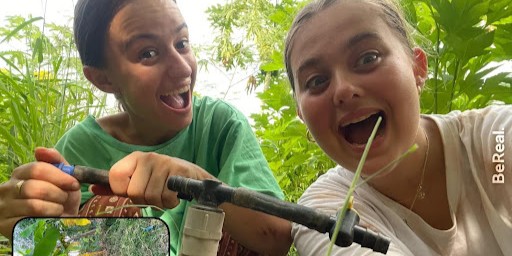
During my first few weeks at AuroOrchard, I discovered agricultural work through a variety of activities in the Vegetable Garden and the orchards. These first days allowed me to become familiar with the daily Home » Blog » Discovering Farm Work and Adapting to a New Environment Discovering Farm Work and Adapting to a New Environment November 2026 · Alexandra Gafilet During my first few weeks at AuroOrchard, I discovered agricultural work through a variety of activities in the Vegetable Garden and the orchards. These first days allowed me to become familiar with the daily life of the farm while gradually adjusting to the Indian climate and a different pace of life. I mainly took part in weeding around young eggplant plants and between rows of spinach. Once the rows had been weeded, I helped spread compost over the crops. As I had only just arrived in India, it took me some time to get used to the temperatures and working conditions. At times, it was difficult to manage a full day of work, but I knew my body needed time to gradually adapt to this change. I also learned how to care for eggplant plants by removing certain leaves to encourage their growth and cutting off those that showed signs of infection. These first tasks helped me understand that agricultural work is not just about planting and harvesting. It also requires observation, patience and regular maintenance to ensure that plants can grow in good conditions. I then joined the Orchard team, working in the jackfruit orchards and around the papaya trees. The activities there were different from those in the Vegetable Garden. I helped cut branches and clear certain areas around the trees. This variety allowed me to discover different aspects of agricultural work and better understand the specific needs of each area of the farm. I appreciate this diversity. Although some tasks, such as weeding, require time and repetition, I find it more motivating to be able to vary my activities, change my surroundings and learn new techniques. This helps me stay curious and gain a better understanding of how the farm operates as a whole. Discovering a Different Approach to Farming Working at AuroOrchard is also allowing me to discover agricultural practices that differ from those I am familiar with. Farming methods depend, in particular, on the climate, the environment and the choices made by each farm. At AuroOrchard, the organic approach places considerable importance on natural methods for maintaining crops and managing the problems that arise. This involves observing plants carefully, identifying signs that may indicate a problem and looking for suitable solutions without necessarily resorting to synthetic chemical products. I find it interesting to discover this different approach to agriculture. It encourages us to understand plants and their environment better rather than systematically looking for an immediate solution. I am still at the beginning of this learning process, but the explanations provided by the team are already helping me understand some of its basic principles. Learning by Doing and Finding Solutions One of the aspects I particularly appreciate about this experience is the opportunity to develop practical skills. I am discovering a field I knew very little about, where I need to learn how to observe, handle new tools and find solutions to the difficulties I encounter. I learned how the farm’s irrigation system works and took part in some repairs. This involved cutting pieces of pipe, finding the right connectors and understanding how to get the system working again. I learned by working alongside Nidin, which helped me better understand the different steps and how to carry them out. I enjoyed this very practical approach because it allows me to understand something by actually doing it. Rather than simply listening to an explanation, I get to handle equipment, test things out and work out how to solve a real problem. These experiences have shown me that it is possible to learn a great deal even when starting from scratch. You have to accept that you will not know everything straight away, take the time to understand and be willing to give things a try. As I take on different tasks, I am gradually becoming more confident and discovering that I can find my own way through certain situations. I have also come to understand that being independent does not necessarily mean doing everything alone. It also means knowing when to ask for help, listening to other people’s advice and looking for the information you need to move forward. It is a balance between what we learn from the people around us and what we are then able to put into practice ourselves. Beyond agricultural work, this experience is encouraging me to become more resourceful and approach unfamiliar situations with greater curiosity. Encounters and Conversations: Another Way of Learning Agricultural activities are not the only things that have shaped these first few weeks. Encounters and conversations also play an important role at AuroOrchard. I have had the opportunity to talk with people whose backgrounds, ideas and ways of seeing the world are sometimes very different from my own. Everyone has their own story and their own reasons for being here. I find it enriching to discover what has led these people to live or work in this environment. Our conversations sometimes go beyond everyday exchanges. We talk about our experiences, our choices, our relationship with work and what gives meaning to what we do. These discussions allow us to discover different perspectives and sometimes question ideas we had previously taken for granted. Some conversations lead me to reflect on the place of work in our lives, while others explore our motivations or the way we want to organise our daily lives. I have also noticed a particular spiritual dimension in this environment. I cannot quite explain it yet, but it is part of what I am discovering here, particularly through the people I meet, the intentions they bring to their work and the conversations
Nasa Tul: An indigenous perspective…
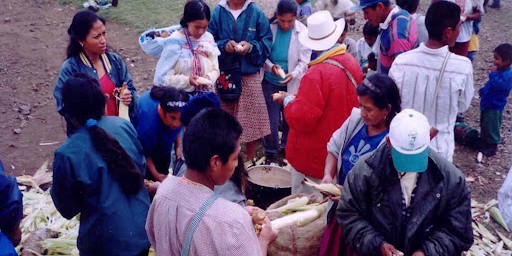
Recently, I had the opportunity to collaborate with Colombian biologist and researcher Lucía Vásquez Celis on a booklet about the Tul, or Nasa Tul, for Colombia’s Land Restitution Home » Blog » Nasa Tul: An indigenous perspective on agriculture from Colombia Open Learning Sessions at the farm Nasa Tul: An indigenous perspective on agriculture from Colombia September 2026 · Anshul Aggarwal Recently, I had the opportunity to collaborate with Colombian biologist and researcher Lucía Vásquez Celis on a booklet about the Tul, or Nasa Tul, for Colombia’s Land Restitution Unit. Lucía has many years of experience engaging with the Indigenous peoples of Colombia and their territorial processes. The Nasa are one of Colombia’s many Indigenous communities. Their ancestral territories are located primarily in Cauca, in southwestern Colombia. They have their own language, Nasa Yuwe, systems of community government, spiritual authorities and collective territories known as resguardos. The Nasa have endured colonisation, displacement, armed conflict and continued appropriation of their lands. In response, they have developed strong movements for cultural survival, territorial recovery and political autonomy. Their collective organisation is guided by four closely connected principles: unity, land, culture and autonomy. You can access the document here: Español (original) / English (translation) For the Nasa, territory is far more than the area of land they inhabit. It is a living space where community, nature, ancestors, spirituality and collective memory come together. Defending the territory therefore means defending a way of life. Agriculture forms an important part of this way of life through a system known as the Tul. The Tul is a space where food and medicinal plants are cultivated, seeds are conserved and knowledge is passed between generations. The booklet describes it as a weave (tejido) of the Earth, made with food, medicinal and spiritual plants. Trees, crops, animals, people, water and the other beings of the territory all participate in this weave. The land provides food, medicine, water and shelter, while people carry responsibilities towards the land. Foundations and Principles of the Tul The Nasa people of Cauca, Colombia The foundations of the Tul lie in the Nasa worldview and their collective life. The Nasa understand life through relationships among different worlds, beings and spiritual forces. At the centre of this worldview is Wét wét Fxi’ze nxi (pronounced Wet wet fyee-eh-zeh n-yee), which can be translated as living in harmony, closely related to the broader Latin American concept of Buen Vivir. Harmony here emphasises the continuous work of bringing the individual, community, territory and other beings of nature into a balanced relationship. Another important idea for the Nasa is sentipensar: feeling-thinking. It questions the separation of thought and feeling, recognising that knowledge arises through the body, land, memory, emotion and collective experience. This worldview takes collective form through the Nasa life plans. These are community processes through which people decide how they will live together, care for their territory and exercise autonomy. They are based on spirituality, respect for Mama Kiwe or Mother Earth, reciprocity and participation. And these foundations become a lived practice through the Tul. Forests, mountains, wild animals, rivers, lagoons and springs are recognised as sources of life that require care and respect. Water is sacred because life emerges from it. The Tul also expresses the Nasa relationship with Mother Earth. The Nasa understand themselves as her children: the Earth gives them life and food, and when they die, they return to her. Caring for the territory therefore includes allowing some areas to rest, protecting water sources and defending the land from activities that cause ecological and social harm. Nasa women play an important role in this work as caretakers of territory and weavers of life. The Nasa people of Cauca, Colombia Community is equally important to the Tul. Work is often carried out collectively through minga, a traditional form of community work among Indigenous peoples of the Andes. People come together to undertake work that benefits a family, the community or the territory, including planting, harvesting, building, repairing paths and caring for water sources. More than shared labour, minga is a space for exchanging knowledge, making collective decisions, sharing food and strengthening relationships. It is based on reciprocity: people offer their time and effort knowing that others will support them when needed. Through the Saakhelu ceremony, people give thanks to Mother Earth, honour the sun, moon and animals, and awaken conserved seeds through dance, music and medicinal plants. The Tul is also a place of education. Children learn through participation: by planting, harvesting, caring for seeds, sharing food, speaking their language and observing how their parents and elders relate to the Earth. In this way, the Tul carries Nasa knowledge and culture from one generation to the next. The Tul is therefore much more than farming. It is an entire system of life rooted in territory and shaped by the principles of unity, land, culture and autonomy. Tul as an ancestral medicine system integrates both forests and agriculture A dialogue with Integral Yoga In my contribution to this document, I brought the Tul into dialogue with ideas from Integral Yoga. Both hold unique worldviews, and yet both open important questions about the unity of life and the place of the human being within it. Sri Aurobindo, drawing from the Upanishads, writes that all matter is food and that the eater is, in turn, eaten. Food can therefore be understood as part of a continuous exchange of matter, energy and life. Every being is nourished by other beings and eventually becomes nourishment itself. Agriculture makes this relationship tangible. The farmer offers the labour and capacities of the body to the land. The land offers its body for the growth of food. Food offers itself to nourish another body. Agriculture connects land, farmer, food and community through an ongoing movement of giving and receiving. And from this point of view, the farmer does more than just grow food; the farmer also becomes food. Our attention, time, strength, knowledge and care enter the land and
Open Learning Sessions at the farm
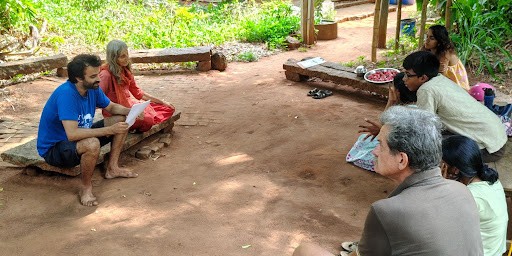
For the last many months, we have been organising learning sessions on the farm every week, opening up the space for people to share their ideas around ecology, agriculture, communication and life Home » Blog » Open Learning Sessions at the farm Open Learning Sessions at the farm September 2026 · Charan GP For the last many months, we have been organising learning sessions on the farm every week, opening up the space for people to share their ideas around ecology, agriculture, communication and life. Our intention is to create a welcome space for dialogue and collaborative action, which are fundamental to developing a conscious food system. The sessions are hosted on Friday or Saturday afternoons for a couple of hours. They are open for the entire community and bioregion, volunteers, guests and visitors. There is no charge for the sessions but people can contribute voluntarily. So far, around 350 people have participated in these sessions over the last six months. Some of the recent sessions were: Mapping Biodiversity This was facilitated by Andres Acosta, bringing together citizen science, biodiversity observation, and climate resilience. Participants learned the basics of the iNaturalist app and explored the DPSIR framework to understand the relationships between human activity, environmental change, climate impacts, and possible responses. A guided walk around AuroOrchard provided an opportunity to observe and document the diverse plants, insects, birds, and other forms of life found across the farm. The workshop was a hands-on exploration of the biodiversity around us and a reminder of how everyday observations can contribute to a deeper understanding of our ecosystems. This workshop also marked the introduction to a larger study being conducted at AuroOrchard by Andres and Anshul, on the impacts of climate change on agriculture and how the farm practices respond/could respond to them. Conscious Animals This session with Jasmine and Vivekan opened a conversation about our relationships with animals and the role they play in our lives. Drawing from their own journeys of living and working closely with animals, they shared observations from the farm, encounters with farmers, and experiences that have shaped their understanding of care, coexistence, and responsibility. A recurring thread was how animals can become our teachers. Through being with them, observing them, and caring for them, we are invited to slow down, pay attention, and notice qualities that often go unseen in our daily lives. The conversation moved through farming, food, sanctuaries, animal welfare, and the many ways animals have traditionally been part of larger living systems connecting people, land, and community. Conscious Technology and the Future of Farming In this session by Azha, we explored if and how technology can support agriculture while remaining connected to nature? With Artificial Intelligence, the Internet of Things, sensors, automation, and data increasingly entering agriculture, the session explored how these tools can support farmers and ecological stewardship, alongside reflection on human consciousness. At the Lab, we are experimenting with smart irrigation, automation, sensors, and data-driven farming practices to reduce water wastage. The session introduced this ongoing work and offered space to learn, question, and reflect on the relationship between technology, ecology, and the future of farming. Low-Tech Mushroom Cultivation In this workshop with Ishan, participants explored simple, low-cost ways to grow mushrooms using locally available farm residues and household waste. From understanding fungi and preparing substrates to making mushroom buckets, the workshop offered practical ways to bring fungi into farms, gardens, and backyards. We also explored how spent mushroom buckets can be transformed into fungal beds, helping improve soil health and close the nutrient cycle. Each participant prepared a bucket for growing pink oyster mushrooms to take home and continue experimenting with this simple, replicable system. Thinking Like an Ecosystem: From Metacrisis to Regeneration A two-hour workshop with Rahul Tola brought several threads together through whole systems thinking. The session explored the interconnected ecological, social, and economic challenges of our time. Drawing inspiration from nature and the principles of permaculture, Rahul invited us to think like an ecosystem: to notice relationships and patterns, and to consider how these shape resilience and regeneration. Through interactive discussions and reflection, participants explored how a systems perspective can help us understand complexity and inform the ways we design and work. Watch the recording We are grateful to the facilitators and everyone who joined us, bringing their experiences, questions, and willingness to learn. The Secret Life of Honeybees Erik Jansegers offered us an introduction to honeybees and natural beekeeping. Drawing on more than a decade of working with bees in France and India, he shared experiences of different species, habitats, and hive designs, and ways of keeping bees in greater harmony with their natural behaviour. We explored four species found in our region: Apis dorsata, the giant rock bee; Apis florea, the dwarf honeybee; Apis cerana, the Asian honeybee; and Tetragonula iridipennis, a native stingless bee. Each has its own way of building nests, raising young, storing food, and adapting to its surroundings. The session offered a glimpse into life within a colony, from the roles of queens and workers to swarming and the organisation of brood, pollen, and honey within the hive. Erik also shared practical experiences of hive design, swarm management, harvesting, and feeding, encouraging us to observe bees closely before deciding how to intervene. A central theme was looking beyond honey as the main reason for keeping bees. For an orchard, pollination is an important contribution bees make. We reflected on the flowering plants, suitable habitats, and food resources they need through changing seasons, and how the farm can create conditions where bees and orchards thrive together. Rooted in Health Dr. Anurag offered an engaging session on Health, Nutrition & Lifestyle Medicine at Pebble Garden, Auroville. The session explored how soil, food, movement, and our environment influence human health, and what it means to shift our focus from treating illness towards prevention. We looked at the modern health burden and the role of food and nutrition, with a deeper exploration of micronutrition and the
Puducherry Farmers Visit
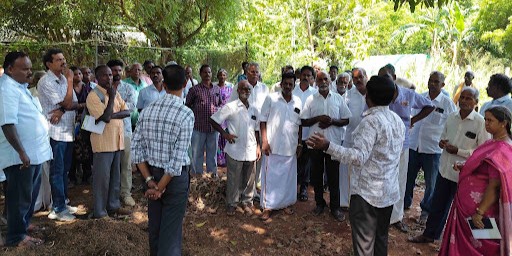
On 9 September 2026, AuroOrchard welcomed more than 80 farmers from the Puducherry region. The visit was organised by the Agricultural Technology Management Agency (ATMA), under the Department of Home » Blog » Puducherry Farmers Visit Puducherry Farmers Visit September 2026 · Anshul Aggarwal On 9 September 2026, AuroOrchard welcomed more than 80 farmers from the Puducherry region. The visit was organised by the Agricultural Technology Management Agency (ATMA), under the Department of Agriculture and Farmers Welfare, Government of Puducherry, through the Farmer Information and Advisory Centres of Kalapet and Thavalakuppam. The farmers were interested in how different activities like vegetable cultivation, fruit orchards, seed saving, nursery production, poultry, food processing, water management, research, education, and distribution are organised, how they support each other, and how the farm manages production across different crops and seasons. There was also interest in AuroOrchard’s experience of farming in red sandy soils and under conditions of intense heat, uncertain rainfall, water limitations, and increasing pressure from pests and other animals. We have always intended for the knowledge and practices developed on the farm to have relevance beyond its boundaries. Ecological farming cannot remain theoretical or be possible only under privileged conditions. It must engage with the realities of the millions of farmers across India and the world who cultivate under constraints of land, water, labour, rising costs, uncertain markets, and a changing climate. The visit was an affirmation of this intention and allowed us to share our struggles and challenges too, which only other farmers can understand fully. We are also excited about the future possibilities of such engagements. Farmers throughout the Puducherry and Auroville bioregion carry extensive knowledge developed through generations of working with local land, crops, and seasons. Their observations, questions, and practical experience can deepen and challenge our own understanding. Building closer relationships with neighbouring farmers is therefore as much an opportunity for AuroOrchard to learn and participate in building a stronger and more resilient regional agriculture. On 9 September 2026, AuroOrchard welcomed more than 80 farmers from the Puducherry region to learn and share. The visit was an affirmation of our intention for the knowledge and practices developed on the farm to have relevance beyond its boundaries and an opportunity to learn and participate in building a stronger regional agriculture. Previous ArticleNext Article Featured Articles Consciousness in Agricultural Systems 23 Sep 2026 Remembering the Beginnings… 27 Aug 2026 Consciousness in Agricultural Systems 23 Sep 2026 Open Learning Sessions at the farm 23 Sep 2026
Remembering the Beginnings…
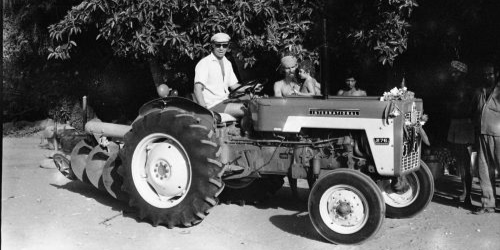
This interview with Gérard from 2020 , by the Lands for Auroville Unified team, takes us back to the earliest beginnings of the farm. Gérard came to the Sri Aurobindo Ashram in 1955 at the age of 23. After working at the Ashram bakery and swimming pool, he spent Home » Blog » Remembering the Beginnings of AuroOrchard With Gerard Cruz (2020) Remembering the Beginnings of AuroOrchard With Gerard Cruz (2020) August 2026 · Anshul Aggarwal This interview with Gérard from 2020 , by the Lands for Auroville Unified team, takes us back to the earliest beginnings of the farm. Gérard came to the Sri Aurobindo Ashram in 1955 at the age of 23. After working at the Ashram bakery and swimming pool, he spent several years caring for an orchard-farm in Mountain Paradise in the Himalayas, growing apples and peaches. Looking back, he describes this period as his apprenticeship in horticulture. In 1967, the Mother asked him to visit a piece of land near Promesse and consider how it might be developed. She later asked whether he would take responsibility for the land and grow fruits and vegetables for the emerging community of Auroville. Gérard returned from the Himalayas towards the end of 1968 and began the gradual work of developing AuroOrchard. The story also carries some lesser-known parts of the farm’s history. The Ganesh temple was already present on the land, and its continued care was one of the conditions under which the Mother acquired the farm. While the temple’s physical connection with the farm was lost in the land exchange in 2023, the daily puja has continued uninterrupted even until today since the beginning, now under the care of Diwakar. What comes through most strongly in Gérard’s memories is his trust in the work he was given and his gratitude for the life that unfolded through it. More than fifty years later, AuroOrchard continues to grow food for Auroville, carrying forward the purpose with which it began. As Gérard reflects: “My heart remains filled with gratitude for this exceptional experience.” You can read the full interview here: https://land.auroville.org/gerard-development-auroorchard/ Previous Article Featured Articles Words of appreciation…ㅤㅤㅤㅤㅤ 27 Aug 2026 Monthly Updatesㅤㅤㅤㅤㅤㅤㅤㅤ 26 Aug 2026 Words of appreciation…ㅤㅤㅤㅤㅤ 27 Aug 2026 Words of appreciation…ㅤㅤㅤㅤㅤ 26 Aug 2026
Words of appreciation…ㅤㅤㅤㅤㅤ
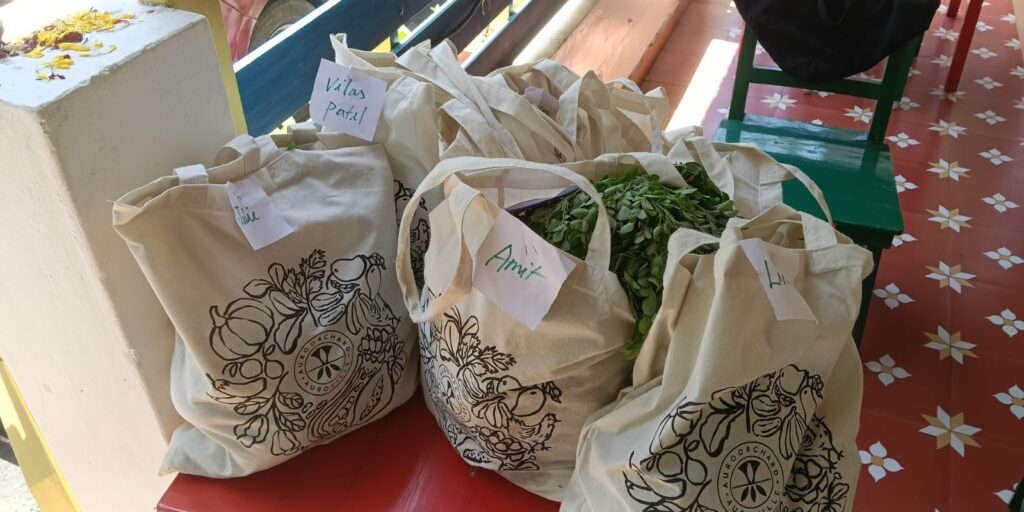
We’re deeply grateful for the encouragement and trust we receive from our community. There is still much to learn, improve, and do. We receive this feedback with humility and gratitude, as a reflection of the relationships and collective effort that make this work possible. Home » Blog » Words of appreciation from the community Words of appreciation from the community August 2026 · Anshul Aggarwal We’re deeply grateful for the encouragement and trust we receive from our community. There is still much to learn, improve, and do. We receive this feedback with humility and gratitude, as a reflection of the relationships and collective effort that make this work possible. A few words from our community on their experience of receiving baskets from the farm: A wonderful way to eat amazing food, enjoy top-notch products…and support Auroville’s farms. All are of exceptional quality- the super fresh fruits and veggies, and the processed foods: amazing taste, long preservation, well presented! Personally, it is a great luxury to receive a fresh vegetable from Auroville farm. I’m very grateful to the people working in the orchard to provide us this service. I’m super happy about your products! Seasonal and very fresh, it’s tasty and good. I tasted pesto, jam and ale, which are all very good! Good job. One of the best places to eat local, organic and seasonal food at AV. A wide selection available year-round, and a genuine effort on the part of the farm to produce fruits and vegetables of excellent quality. Produce we can trust to be organic. Every basket received is full of fresh produce and good will. We support organic farming and farmlands and forests in Auroville. A lot more support was needed. It’s wonderful work that AuroOrchard does and continues to keep bringing new produce. The basket service is a blessing for me as i don’t have any free mornings to go shopping at Ptdc. It’s also very consistent which keeps me assured. Response from Anshul and a few I have interacted with is prompt and addresses the query. The food is wonderful, always feels fresher, safer and more flavourful than any I can find in a store. I’ve been regularly purchasing produce from AuroOrchard organic farm, and the quality has been consistently outstanding. The fruits and vegetables are incredibly fresh, full of natural flavour, and you can truly taste the difference compared to regular market produce. What I appreciate most is the reliability—they maintain the same high standard every time. The produce feels clean, wholesome, and grown with care. This service is very valuable, and the fact that all produce is organic makes it even more valuable. I feel the difference in quality with AuroOrchard being a better quality. The rates of raw products are neither very high nor very low. The basket system is extremely helpful & is a hassle free experience. Amazing quality, very precise delivery, great service. Earlier I could never access AV farm produce, as nothing much is left at 1pm at PTDC. I guess that way neither ptdc nor av farms could really know the demand for their produce. Now it’s so easy! I keep sharing the link for the weekly order and the farm walk…we are blessed with fresh organic food directly from.the farm… prepared with so much care and farming expertise. I’m amazed by the way you responded to an intense situation and the outcome of it which shows more consciousness, adaptability, resilience and the work capacity. The work that AuroOrchard does is absolutely outstanding. Despite all the challenges, blockages, big injustice and even violence AuroOrchard has faced, you not only persevere but have improved tremendously over the last 2-3 years. I admire your strength, courage and endurance! I really appreciate your efforts to find new solutions for egg mass production. Somehow, it doesn’t feel right to me to keep animals to produce food for humans, but as long as we eat eggs at least lets find the most animal-friendly way to produce them. I’m happy to know that you try your best and that you will improve it even more! Your new ready made food production program is great, very creative and innovative! I always enjoy seeing your new products and love to try them out, especially your new syrups and drinks. My absolute favorite products are your turmeric powder, the various greens and the brown eggs. Amazing! Super efficient, top quality products. Such quality, creativity and abundance… cannot be better! A dream coming true for any organic food and farming lover. Thanks for all the efforts going into the direct sales! On top of the orders and my emails are always answered. Good quality products. Wonderful work, very useful Very positive vibrations. Products are good quality with reasonable price. Team mates are good, some are extraordinarily talented , simple and helpful. I wish AuroOchard all the best. Auro Orchard forms an excellent bridge for volunteers and newcomers in auroville. i often hear of people working in Auro orchard in a meaningful way, even if for a short period, and it makes me happy. I also appreciate immensely that the team is flexible and always experimenting and trying things – rare in this sector. Thank you AuroOrchard team and earth! Previous Article Featured Articles Words of appreciation from the communityㅤㅤㅤㅤㅤ 26 Aug 2026 Soil Test Experiments… 26 Aug 2026 Words of appreciation from the communityㅤㅤㅤㅤㅤ 26 Aug 2026 Soil Test Experiments… 26 Aug 2026
Soil Test Experimentsㅤㅤㅤㅤㅤㅤㅤㅤ
In this report, I share about the soil testing researches and experiments I made while I was volunteering at the farm. I wanted to know more about its components and how it allowed food to grow. Home » Blog » Soil Test Experiments Soil Test Experiments August 2026 · Célia Rouxel In this report, I share about the soil testing researches and experiments I made while I was volunteering at the farm. I wanted to know more about its components and how it allowed food to grow. Some of the resources I used to understand soil and soil testing : 1.“Agriculture in Victoria, Australia” sampling video Soil testing in fields requires a soil corer of 10cm. Soil cannot be sampled around water troughs, gateways, within 4 meters of fence lines, near gullies, stock camps… For a field, it is recommended to determine a soil transect and take a sample every given number of meters according to the size of the transect and the number of samples needed. After using the soil corer, the soil has to be mixed and the greens, rocks and pebbles can be removed to obtain a uniform size soil. Then samples can be put in boxes and analysed. 2.“Soil testing at home” by the University of Arkansas Division of Agriculture Use of soil corer/probe or spade but less accurate. The first step is to divide the landscape into sections based on the plants being grown and the visual performance of those plants. For example, if part of the home yard is growing more poorly than the other, these two areas should be sampled separately. Then, remove the organic matter from the soil surface and insert the soil probe. If using a spade, it is necessary to take a uniform depth and column shape. Soil nutrient concentrations are typically higher at the soil surface and decrease as you go down, so the use of the spade should be done very carefully. The ideal soil core depth will be dependent on what is growing in the soil. Collect the soil and repeat this 10 to 15 times in a zig-zag shape pattern across the landscape. For lawns and permanent landscaping, the soil sample core should be collected from the top 4 inches. For gardens and mature fruit trees, it would be 6 inches (15cm). Label the samples to not mix them up and to keep track of each area where they were collected. In the US, it is recommended to collect soil samples every 2 to 3 years, and taken at the same time each year. Always take samples before adding fertilizers or organic amendments. 3. https://indianfarmer.net/uploads/6_5_2021.pdfhttps://agritech.tnau.ac.in/agriculture/agri_soil_sampling.html What I did at the farm to sample soil : 4th June, 2026– 1st sample with Anshul : He took a clean glass jar and he went to a field, in the vegetable garden, recently ploughed to take the soil. He dug a little bit with a mumty and put some soil in the jar with his hand. He took the right amount according to him, just enough to fill half of the jar. While doing that, we observed life in the soil like a worm and tiny centipedes. The soil was humid. Then, Anshul added water in the jar and some natural soap in order to make the soil fully wet. In fact, he told me that adding soap would help spread the water to every part of the soil and create different layers in the jar. I wondered if the soap disturbs the soil properties or not. 5th June, 2026 After 1 day, we can see a change in the jar. The layers are more obvious. Anshul explained to me how to analyze the different layers and depict their meaning. Jar after 1 day of mixing representing different layers There are different goals to soil sampling, we can either be interested in acknowledging the physical, biological or chemical elements of the soil. So, we can ask ourselves questions depending on what we want to analyze : PHYSICAL PART : What is the structure ? What is the form of that ? (example of the tree : it has a trunk and leaves..) BIOLOGICAL : How will the tree evolve? What will it become? What is going on inside it ? CHEMICAL : some chemical processes going on (carbon is going down..) For the physical part, we want to get to know the components of the soil. The soil is coming from stones or all the rocks that are on the surface of this planet that got eroded by the action of wind and water, they start chipping. So the soil starts taking a little bit of these stones and all the sediments. Because the particles from the rocks for example start dissolving in the water and then they deposit somewhere so it becomes soil. The main components of soil include mineral particles, organic matter, water, and air. The balance between these components determines how well the soil can support plant life and retain nutrients. According to that, mineral particles that come from the weathering (altération) of rocks form the largest portion of the soil. These particles vary in size. The biggest particle that we can find in the soil is sand. Then we have silt and then clay which is the smallest particle. Different combinations of these particles create different soil types. In the first sample: Bottom layer : dark color that has settled down = SAND > it’s the biggest particle, it’s more heavy so it sinks to the bottom Lighter layer above it : it is SILT : a dust-like sediment that water, ice and wind transport and deposit, made up of rock and mineral particles that are larger than clay but smaller than sand. The very thin one above is CLAY What is floating on top is the organic matter : whatever gets mixed in the soil. Also, sand being the biggest particle, makes it
Nutrition comparison of AuroOrchard eggs with…
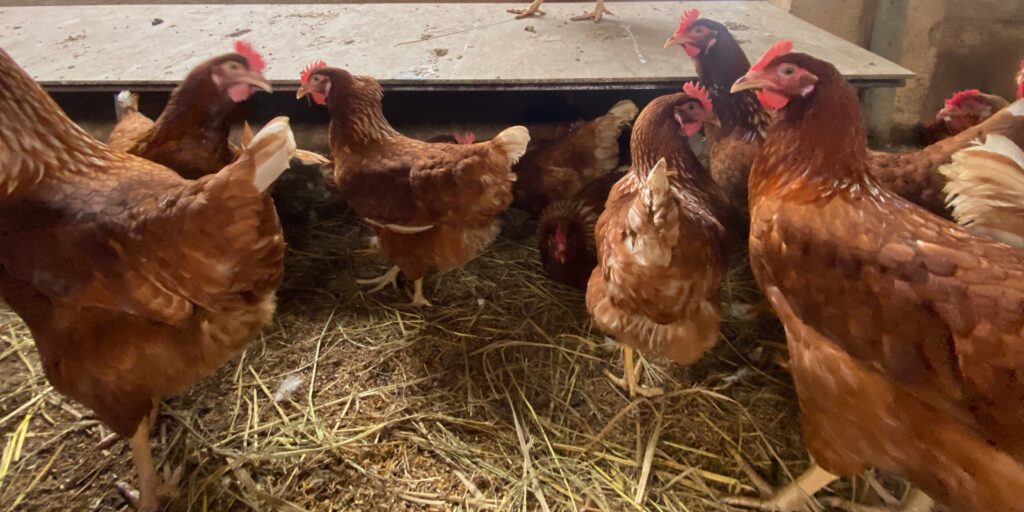
There are many assumptions around organic food, ethical food, farm eggs and free-range eggs. It is generally believed that these labels must also⠀⠀⠀⠀⠀⠀⠀⠀⠀⠀⠀⠀⠀⠀⠀⠀⠀⠀⠀⠀⠀⠀⠀⠀⠀ Home » Blog » Nutrition comparison of AuroOrchard eggs with other eggs in the marketㅤㅤㅤ Nutrition comparison of AuroOrchard eggs with other eggs in the marketㅤㅤㅤ July 2026 · Anshul Aggarwal There are many assumptions around organic food, ethical food, farm eggs and free-range eggs. It is generally believed that these labels must also indicate better nutritional quality. The converse is also common- if the nutrition is the same across different kinds of produce, why pay more for organic food or free-range eggs? We have been actively participating in these conversations for the last few years. We feel that one useful way to understand this is through nutritional testing and comparison. While a one-off test cannot serve as an absolute reference, individual tests can begin to show us a pattern and add more information to the discussion. Food composition varies according to the season, feed, age of the birds and other conditions. Any meaningful comparison would require regular and repeated testing. We also hope that sharing these results will create greater understanding and support for this work, and perhaps help us continue testing periodically, since comprehensive nutritional testing is expensive. After the work undertaken for our animal-welfare certification, and the many improvements made in our poultry system, we wanted to see how AuroOrchard eggs compared with the eggs that Aurovilians otherwise have access to. We sent three samples to Chennai Mettex Lab for comparative nutritional testing: white eggs purchased from Pour Tous Distribution Center; commercial brown eggs marketed as free-range, sold in packs of six and commonly available in stores in and around Auroville; AuroOrchard certified free-range eggs. The full test report can be found here.The following is a comparative summary of the results. All values are given per 100 g of edible egg, excluding the shell. Nutrient per 100 g Pondy White Pondy Brown AuroOrchard Energy 150.89 kcal 152.59 kcal 154 kcal Protein 13.04 g 13.13 g 13.74 g Total fat 10.61 g 10.71 g 10.62 g Saturated fat 3.96 g 3.96 g 3.87 g Carbohydrates 0.81 g 0.92 g 0.81 g Cholesterol 316 mg 273.3 mg 265.8 mg Sodium 120 mg 131 mg 115 mg Omega-3 fatty acids 158 mg 179 mg 196 mg Omega-6 fatty acids 1,183 mg 1,297 mg 1,151 mg Omega-6:omega-3 ratio 7.49:1 7.25:1 5.87:1 The differences in calories, carbohydrates and total fat are very small. All three eggs have broadly similar amounts of these nutrients. The clearer differences are in protein, omega-3, cholesterol and sodium. Among the samples tested, the AuroOrchard egg recorded: the highest protein; the highest omega-3; the lowest cholesterol; the lowest sodium; the lowest saturated fat; the lowest omega-6; the lowest omega-6-to-omega-3 ratio. The AuroOrchard sample contained around 5% more protein than the two Pondy eggs. Its omega-3 content was approximately 10% higher than the Pondy brown egg and 24% higher than the Pondy white egg. Its cholesterol was approximately 3% lower than the Pondy brown egg and 16% lower than the Pondy white egg. What does one egg contribute to our daily nutrition? The laboratory results are reported per 100 g, while an egg normally contains around 50 g of edible material. Egg sizes vary, so the following figures use 50 g as a simple illustration. For daily comparisons, we have used FSSAI’s reference values for an average adult diet: 2,000 kcal, 67 g total fat, 22 g saturated fat and 2,000 mg sodium. WHO describes approximately 50–75 g of protein as generally sufficient for an adult of healthy body weight consuming around 2,000 kcal. These are broad population references; an individual’s requirements depend on body size, activity, age and physiological condition. Approximate contribution from one 50 g egg Nutrient per 100 g Daily recommendation (FSSAI & WHO) Pondy White Pondy Brown AuroOrchard Energy 2,000 kcal/day 3.8% 3.8% 3.9% Protein 50–75 g/day 8.7–13.0% 8.8–13.1% 9.2–13.7% Total fat Up to 67 g/day 7.9% 8.0% 7.9% Saturated fat Up to 22 g/day 9.0% 9.0% 8.8% Sodium Less than 2,000 mg/day 3.0% 3.3% 2.9% The mid to late June showers bring some relief from the heat and life to the parched soil. During this time, we can start growing crops the same as Pin-Pani but also some other crops like cluster beans, flat beans etc.- its still a bit early for these crops but we can still do it. Of course, within this period falls the Aadi masam (mid-July) with heavy winds, when Papayas break and we have an abundance of green papayas in Auroville. Post-Aadi masam is really good for planting a diversity of crops. This is an interesting season because it is post-summer rain but it is not as cool as the post-monsoon season. So, it is in some ways similar to Pre-Summer and that is reflected in the kind of crops we can plant. We can start to grow some arugula in the shade, some greens, and prepare for planting yams and sweet potatoes. What can we conclude? Among the three samples tested, AuroOrchard eggs showed the strongest overall nutritional profile. It combined the highest protein and omega-3 results with the lowest cholesterol and sodium values. It also has a healthier omega-6 to omega-3 ratio. The test does give us some evidence towards how our attention to the birds, their outdoor access, fresh greens and the quality of their food is accompanied by a strong nutritional result in nutritional enhancement. We hope to repeat this testing periodically, across different seasons and flocks, so that we can understand how consistent these results are and how our farming practices influence the food we produce. Previous ArticleNext Article Featured Articles Words of appreciation…ㅤㅤㅤㅤㅤ 27 Aug 2026 Monthly Updatesㅤㅤㅤㅤㅤㅤㅤㅤ 26 Aug 2026 Words of appreciation…ㅤㅤㅤㅤㅤ 27 Aug 2026 Words of appreciation…ㅤㅤㅤㅤㅤ 26 Aug 2026
The Six Seasons of Aurovilleㅤㅤㅤㅤ
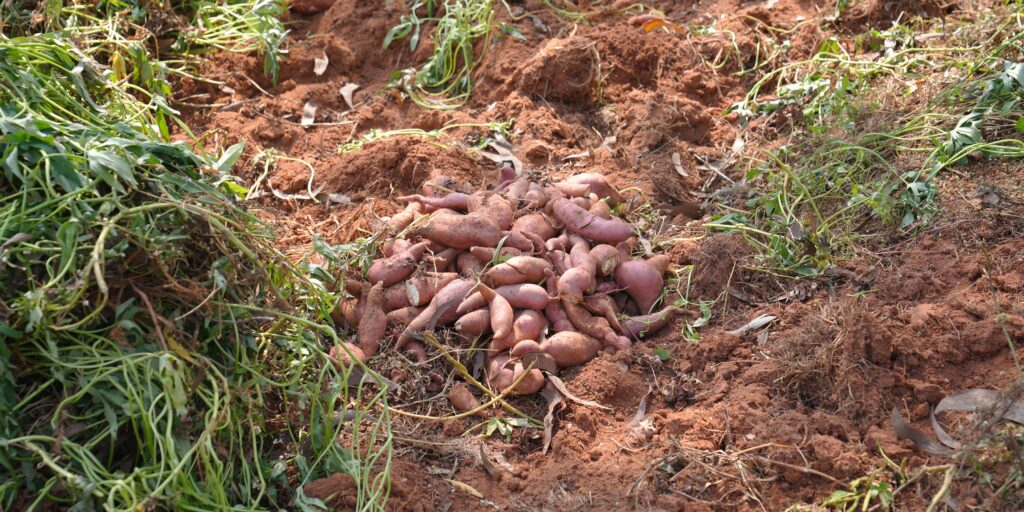
Does Auroville only have one long summer season? That is how it feels. But even the subtle differences make a lot of difference in farming. When I came to Auroville in 2019, I had only farmed in the mountains. I was used to four distinct Home » Blog » The Six Seasons of Auroville The Six Seasons of Auroville April 2026 · Anshul Aggarwal Does Auroville only have one long summer season? That is how it feels. But even the subtle differences make a lot of difference in farming. When I came to Auroville in 2019, I had only farmed in the mountains. I was used to four distinct seasons- of course with their own subtleties, but still the distinction between summer, autumn, winter, spring was quite pronounced. It took me about two years to understand that Auroville actually has six seasons! We have been planning our crops based on this understanding since 2022. Only much later, and recently, I found out that ancient Tamizh literature like Tolkaapiyam, also identifies six seasons for Tamil Nadu. This system of six seasons is called Paruvangal. Each season lasts exactly two Tamizh months, beginning with the Tamizh New Year in mid-April. Interestingly, my observations align perfectly with this age-old system. I will first describe how I observe seasons. The typical cycle of seasons is based on the position of the Earth in relationship to the Sun. The four main events in this yearly cycle with the Sun are- the two equinoxes, where the Earth is in perfect alignment with the Sun and the two solstices, where the Earth is tilted closest or farthest from the Sun. Since we are very close to the equator (12 degrees North) in Auroville, we don’t see the pronounced effects of these movements, and yet there are subtle changes. We can use the visual of breathing in and out- the most fundamental cycle that we experience. As the Earth moves in her cycle, it too breathes in and out. The beginning of the in-breath starts with the Autumn Equinox (September 21st)*. This is the period of going inwards, the year is winding down, we begin to reflect on the activity so far, some have the need to retreat into contemplation and silence, the land starts to cool down after summer and the rhythm of life becomes more relaxed. The peak of this in-breath comes at the Winter solstice (December 21st), the longest night of the year. In-breath, the period of inner activity continues until Spring Equinox (March 21st). We then move to the out-breath, where life starts to wake up from its slumber, flowers bloom, the land and air start to get warmer, microbes and insects multiply, and there is an impulse for external activity. The peak of this cycle is reached at the Summer solstice (June 21st) and this period itself continues until the Autumn Equinox (September 21st), after which it repeats itself. While these periods and patterns don’t apply as per dates and months in the same way to all locations on the Earth, the principles apply to all places and people. Even if not coordinated with seasons, we can easily observe these cycles in our own life. This is the template on which Auroville’s six seasons are based. The breathing cycle of the Earth * These descriptions apply to all of us in the Northern hemisphere of the planet. These patterns will be the exact opposite for people living in the Southern hemisphere. In the case of Auroville, or perhaps larger Tamil Nadu, the two extreme points are Summer and Monsoon, and, in my scheme, they become the reference for all the other seasons. And due to our location close to the equator as well as our proximity to the oceans, our seasons are not only influenced by solar cycles but also by oceanic and wind phenomena. The correlation of these seasons with the calendar months and the Tamizh Paruvangal is as follows: English calendar Solar event Breath cycle Paruvangal Tamizh calendar Pre-Summer Mid-Feb to Mid-April Spring Equinox Out-breath Pin-pani (Late dew) Masi & Panguni Summer Mid-April to Mid-June – Out-breath Ila-venil (Tender heat) Chittirai & Vaikasi Post-Summer Mid-June to Mid-Aug Summer Solstice Peak of out-breath Mudhu-venil (Mature heat) Ani & Adi Pre-Monsoon Mid-Aug to Mid-Oct Autumn Equinox In-breath Kar (Dark clouds) Avani & Purattasi Monsoon Mid-Oct to Mid-Dec – In-breath Kulir (Cold) Aippasi & Kartikai Post-monsoon Mid-Dec to Mid-Feb Winter Solstice Peak of in-breath Mun-pani (Early dew) Margali & Tai I will now describe what these seasons mean to us and how we organise our work based on them. Pre-Summer Paruvangal: Pin-pani (Late dew) | Tamizh calendar: Masi & Panguni | English calendar: Mid-Feb to Mid-April I will put this as the first as this is right after the Pongal festival in mid-January. The first season of a new cycle, and I will call this Pre-Summer. The days are still a bit short and the mornings and evenings are still cool. During this season, we continue planting summer crops like pumpkins, cucumbers, and gourds from the late previous season. We could continue planting some winter crops like spinach, lettuce etc. but the quality of those in this season is not that great due to hot days. The flavour is different and the texture is harder. During Pre-Summer, life is blooming, we can see a diversity of flowers on crops and trees. This is also the best time to save seeds. This season is closely associated with the Post-monsoon season, the last in the cycle (Mun-pani). Summer Paruvangal: Ila-venil (Tender heat) | Tamizh calendar: Chittirai & Vaikasi | English calendar: Mid-April to Mid-June Then, the sun starts to rise in the sky and the days as well as the nights are warmer. This is what I would call the real Summer. The production during this time starts to be limited to a few crops. It’s not so much due to heat but due to limitation of water and pressure from pests. Like many places