
Experiments with Syntropic Agriculture

In the last few years, we have observed that the consumption of Auroville vegetables is going down within Auroville. The five most consumed vegetables in Auroville- Potato, Tomato, Onion, Cauliflower and Carrot don’t grow here locally. The demand for locally grown vegetables is low in our international city and even then, we are competing with produce available in Pondicherry and around at very low prices. Considering all this, we have consciously decided to grow more fruits as there is a lot that we can grow and that is still is being bought from outside- Papaya, Banana, Pineapple, Chikoo, Guava, Citrus, Coconut, Jackfruit, Custard apple, Ramphal, Avocado, and so forth. Home » Blog » Experiments with Syntropic Agriculture Experiments with Syntropic Agriculture July 2025 · Anshul Aggarwal In the last few years, we have observed that the consumption of Auroville vegetables is going down within Auroville. The five most consumed vegetables in Auroville- Potato, Tomato, Onion, Cauliflower and Carrot don’t grow here locally. The demand for locally grown vegetables is low in our international city and even then, we are competing with produce available in Pondicherry and around at very low prices. Considering all this, we have consciously decided to grow more fruits as there is a lot that we can grow and that is still is being bought from outside- Papaya, Banana, Pineapple, Chikoo, Guava, Citrus, Coconut, Jackfruit, Custard apple, Ramphal, Avocado, and so forth. We are now either densifying the existing orchards or reorganizing some orchards towards more efficient and productive plantations. Main design objectives: Increase fruit production in the next 2-5 years. Employ syntropic methods to increase density and use biomass to feed the soil. Try new plants like Coffee and Cacao- create microclimate to support these species. Entropy, Negantropy and Syntropy The idea of entropy originated in the late 19th century in thermodynamic studies. Entropy is the measure of disorderness of a system, a measure of its chaos (Clausius, 1865). The conventional understanding suggests whenever a system goes through any transformation, the entropy of the system increases, giving us the famous axiom that the universe is increasingly moving towards chaos. While this may be true for theoretical models and isolated systems, we, in fact, observe a completely opposite phenomenon in living systems that are transforming all the time. Later scientists observed that what we see as chaos in living systems over time, is in fact, higher forms of natural order, spontaneous configurations that make the system more and more stable. A seed releases its energy to germinate, to grow as a plant, as a tree towards higher complexities of life and order. Human beings learn over time to develop a more and more complex consciousness. This leads us to the idea of a decreasing entropy of systems, a negative entropy, or negentropy (Schrödinger, 1944). While negentropy gives us a new perspective of what is happening in nature, it still doesn’t tell us why it is happening-why is disorder moving to more order. Syntropy fills this gap. It adds a teleological aspect to the transformation of systems. Syntropy suggests that we become what we become not only because of what we were, but also because of what we could be. A tree unfolds from a seed not only because of the nature of the seed, but the potential of becoming a tree that is inherent in it. This understanding highlights a goal, a pull from the future towards higher orders, as much as a push from the past foundations. We can also relate this idea to Yoga, a movement towards a complete union, a path of progress, development and unfolding of a harmony in greater complexities. What is Syntropic Farming? The concept of Syntropic farming method was developed by Swiss farmer and researcher Ernst Götsch, who settled in Brazil in the 1980s. Originally trained as a geneticist and plant breeder, Götsch became disillusioned with conventional agriculture and began experimenting with natural regeneration processes in tropical ecosystems. His approach, outlined in his influential paper “Breakthrough in Agriculture”, proposes that human cultivation can regenerate rather than deplete ecosystems. At its core, syntropic farming is based on ecological succession and stratification, mimicking the structure and dynamics of natural forests. Instead of combating nature, it works in harmony with it by planting a consortium of species—pioneer, secondary, and climax—across different light strata and life cycles. This method emphasizes high biodiversity, minimal external inputs, and a continuous process of pruning and biomass management to accelerate soil fertility and system evolution. How is it different from Permaculture’s Food Forest? It is important to make this distinction as a syntropic forest is significantly different from a food forest. Firstly, the goal of a syntropic forest is ecological restoration and not necessarily to provide food. It works on the principle of ecological succession and stratas which translates to light requirements and life cycles. In a food forest, however, the goal is to fit as many edible species into one consortium based on vertical spacing/layering as possible. There is emphasis on ‘support species’ in Syntropic farming to support soil fertility and main crop. In a food forest, edible crops are privileged over other crops. Also, syntropic systems are way more dynamic than a food forest. A syntropic system changes form with the completion of the life cycle of each plant. On the other hand, the idea in a food forest is to put together a system that will stay in the same consortium for as long as possible. In a syntropic system, Papaya may be grown as an initial species to use light and will be cut down after a couple of years to allow the main fruit crop under it to grow further. The goal in the food forest, on the other side, will be to preserve the Papaya and perhaps increase the spacing within the main fruit crop to allow for Papaya to continue growing. We will talk about the benefits of the syntropic approach over food forest in the following sections. Site Selection
Mambazha Morkootan or Pulissery

Choose good quality mangoes-they should be ripe, flavorful, and sweet. This dish relies heavily on the mango taste, so the better the mango, the better the pulisseri. Home » Blog » Mambazha Morkootan or Pulissery Mambazha Morkootan or Pulissery July 2025 · Deepa Reddy Ingredients 2 large and very ripe mangoes ½ coconut grated 1 cup of thick yogurt ¼ teaspoon turmeric powder Salt, to taste A little jaggery to balance the sourness of the mango, if necessary To roast 1 teaspoon raw rice ½ teaspoon fenugreek or methi seeds 1 red chilli (or 1 whole green chilli-add that to the ingredients to grind) To temper 1 tablespoon coconut oil 1 broken red chilli ½ teaspoon mustard seeds ½ teaspoon urad dal ½ teaspoon jeera or cumin seeds A pinch of hing A sprig of curry leaves paticheri_Mangopulisseri Method Choose good quality mangoes-they should be ripe, flavorful, and sweet. This dish relies heavily on the mango taste, so the better the mango, the better the pulisseri. [If your mangoes are on the raw-side-of-ripe, follow the cooked pulisseri method linked below] Peel and chop the flesh or extract pulp by hand. Set aside. Dry roast the rice, methi and red chilli (if you’re using the green, add it to the blended ingredients in the third step). Once the rice turns opaque, transfer to the jar of a blender and pulverise to a powder. Now add the green chilli and mango pieces/pulp to the rice-methi powder; pulse to combine. Add the coconut and pulse again. Add the turmeric, salt, and jaggery to taste, followed by the yogurt. You want the sweet of the mango to stand out, but with hints of chilli, the flavor of methi, and the tang of curd enhanced by salt. Transfer to a serving dish. To temper Heat the oil in a small tempering pan to almost smoking point, and then add the spices in quick succession: red chilli, mustard, urad dal, jeera, hing, curry leaves. Once the curry leaves are crisp, pour this over the pulisseri. Serve at room temperature or refrigerate and serve cold – but always with warm sevai or hot rice. Previous ArticleNext Article Featured Articles Monthly Updatesㅤㅤㅤㅤㅤㅤㅤㅤ 19 Sep 2025 Abundance Product of the Month 18 Sep 2025 Recipe Alert – Stir Fried Sweet Potato leaves with Tofu 22 Sep 2025 Food and Agriculture in Auroville, India 18 Sep 2025
Ayurveda Tips for rainy summer

Late summer, with its amount of rains, brings lots of humidity and dampness in the air that affect the body and its Dosha in many different ways: Pitta ferments and shows signs of Home » Blog » Ayurveda Tips for rainy summer Ayurveda Tips for rainy summer July 2025 · Dr. Be Late summer, with its amount of rains, brings lots of humidity and dampness in the air that affect the body and its Dosha in many different ways: Pitta ferments and shows signs of acidity, bloating, inflammation or strong body odour, lots of stagnation and retention felt in the digestive tract. Emotionally unhealthy Pitta becomes bitter, impatient and frustrated in the mind or the heart. Vata gets cold and makes the joints more painful with an irregular digestion and bowel movements and mind might be imbibed with anxious thoughts, worries or lack of concentration. We can help ourselves with the following recommendations: With the food Eat only when hungry and eat the appropriate amount (both hands joined together is the size of the stomach) Take a warm, cooked meal with any spices to improve the digestion (eg: ginger, turmeric, black pepper, cumin, coriander, cinnamon, ajwain, basil, garlic etc) Eat green leafy vegetables, take light dishes made of mung dal, vegetable soups… all pulses and dal are good when cooked with spices (all spices are good apart from red powder-chilli powder) For non-vegetarian, eat white meat or small fishes. Drink warm water all day long (especially when there’s a sore throat) Dinner should be light and taken 2 hours before going to bed Give energy to the body with cereals and grains such as: amaranth, barley, cooked oats, granola, rice Honey is the best sweetener Ghee used for cooking and Sesame and Olive oils for dressings Chew some neem or Tulsi leaves Some immunity enhancers: Giloy/Guduchi (Tinospora cordifolia), a very good immune regulator; 1tsp of powder morning and evening in warm water Amalaki (amla): full of vitamin C; consumed fresh if available or in powder Turmeric: Anti-inflammatory, can be used for gargling with warm water and a pinch of salt Tulsi (Ocimum tenuiflorum/sactum): for the lungs, fresh leaves in warm water Ashwagandha (Whitania somnifera): immune regulator and calming the nervous system; 1tsp morning and evening in milk or warm water Ginger – Turmeric – Black pepper powders (Be No1): improves digestion and energy, ½ tsp with warm water or lemon juice + honey once or twice a day Tulsi – Cinnamon – Amla – Ginger – Turmeric – Black pepper powders (Be No3): as prevention or in case of cold, cough, flu, feverish state, body ache, ½ tsp with a sip of warm water or lemon juice + honey once a day if it’s preventive, 3 times a day before food if there are symptoms Saffron, aloe vera, licorice herbal infusions Chyavanprash Avaleha: 1 tsp in the morning with breakfast Special treat for joint pain and inflammation: Shallaki Cream or Oil mixed with Castor Oil (Eranda Tailam): massage twice a day the painful joint, it’s a painkiller and anti-inflammatory Rosemary Essential Oil: 1 or 2 drops with the massaging oil and apply locally. It’s anti-inflammatory Shallaki Tablets: for arthritis, muscular pain, joint inflammation Triphala Guggulu Tabs: to reduce bloating, swelling, inflammatory conditions, 1 or 2 tabs per day before meals (use for short period) In the activities, help Pitta and Vata to be centred and grounded: Be grounded in the heart or abdomen with Yoga, Pranayama, Meditation, observing the breathing movements in the abdomen, Yoga Nidra, Body Awareness, Qi-Gong, Tai Chi… Regular exercise, 30 minutes daily Gardening, cultivating, weeding, cooking Keep warm, take warm showers, cover your neck from chilled breeze Gargling with salty water if sore throat Oil pulling with 1 Tbsp of sesame or coconut oil, keep in the mouth for some time, spit it out and rinse the mouth with warm water (can be done early morning or at bedtime after brushing the teeth) Nasya: pour 2 drops of sesame oil or Anu Tailam in each nostril once a day 4-5 drops of Castor Oil in the belly button followed by slight massage around the umbilicus at bed time Fragrances: sandalwood, rose, jasmine Let’s be all well, happy and healthy.Be at Santé Clinic Previous ArticleNext Article Featured Articles Monthly Updatesㅤㅤㅤㅤㅤㅤㅤㅤ 19 Sep 2025 Abundance Product of the Month 18 Sep 2025 Recipe Alert!ㅤㅤㅤㅤㅤㅤㅤㅤ 22 Sep 2025 Food and Agriculture in Auroville, India 18 Sep 2025
COMPOST TEA: A Natural Probiotic for Soil and Plants
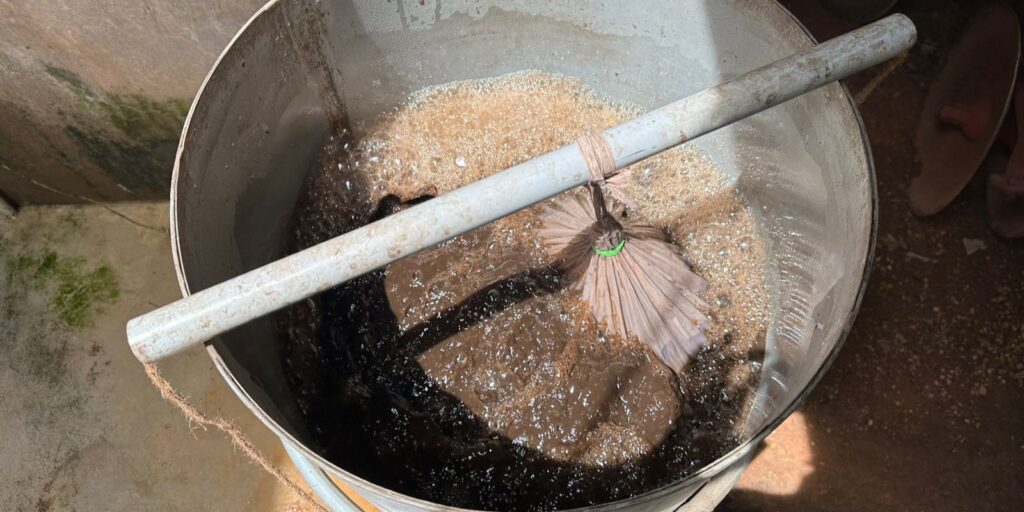
As Dr. Elaine Ingham said, “there is no soil on this planet lacking nutrients to grow plants”, in other words there is intrinsically food (organic matter) in the soil, that we actually just enrich with mulch and compost in farming, according to the needs of our crops. However, sometimes there is not enough microbes to eat that food and release nutrients for the plants. Excess of food can turn into excessive oxidation and there is no conversion back to nutrients. Then compost becomes interesting because it contains a diverse amount of beneficial microbial population which contributes to the decomposition of the organic matter. In that sense spreading solid mature compost can be a solution, but it can be hard to do on a large cultivated area (heavy physical efforts, time consuming process). Turn it into a liquid form seems to be an easier way to do it on an agricultural scale. Dr. Elaine Ingham is the one who helped create the modern version of it : a compost tea using aerobic reaction. Home » Blog » COMPOST TEA: A Natural Probiotic for Soil and Plants COMPOST TEA: A Natural Probiotic for Soil and Plants July 2025 · Lucile As Dr. Elaine Ingham said, “there is no soil on this planet lacking nutrients to grow plants”, in other words there is intrinsically food (organic matter) in the soil, that we actually just enrich with mulch and compost in farming, according to the needs of our crops. However, sometimes there is not enough microbes to eat that food and release nutrients for the plants. Excess of food can turn into excessive oxidation and there is no conversion back to nutrients. Then compost becomes interesting because it contains a diverse amount of beneficial microbial population which contributes to the decomposition of the organic matter. In that sense spreading solid mature compost can be a solution, but it can be hard to do on a large cultivated area (heavy physical efforts, time consuming process). Turn it into a liquid form seems to be an easier way to do it on an agricultural scale. Dr. Elaine Ingham is the one who helped create the modern version of it : a compost tea using aerobic reaction. Compost tea is an organic liquid fertilizer made by brewing mature compost in water with the aim to extract and multiply the beneficial microorganisms present in this compost, through aerobic processes, and introduce it to either directly to the roots or plants to rebalance and enrich the microbiome life. Using compost tea is a permaculture practice that respects the life in the soil, understands how important it is, helps it grow without harming it while still allowing farming to continue. The main intention is important : to make all systems more efficient, in other words an healthy system which works on its own and not with the aim of exploiting the soil. Compost tea can be poured to the roots of the plant to enrich microbial life of the soil as we just explained or it can be applied as a foliar spray by sprinkling it on the leaves to strengthen and protect them. More precisely, compost tea protects the pores on the leaves (called stomata). Because they are open areas, bacteria can deposit there. In general, good bacteria in the compost tea can live on the stomata protecting them from bad bacteria. To make compost tea we first need to start with good cultured mature compost (6 month to 1 year in age). Mature compost means material that only grows beneficial organisms. It is important because we must be sure that nasty elements like pathogens and parasites in the compost have been killed by the composting process, which requires high enough temperature for a long enough time. As a reminder, compost should be made of green and wood materials that help bacteria and fungi grow, and their growth causes the temperature to rise in the compost pile. Of course compost must be made based on what our soil needs. If we need more bacteria, we add more green materials. If we need more fungi, we add wood materials. It depends on what the soil is missing and what biology we want to bring back. Then, to permit our starting culture to grow we need a specific favorable environment who provides space, medium, food and a process to make our compost tea : it’s our machine. In this machine we have : Contents : The tea tank : who should be round shape, with no sharp corners to helps water and air move freely, avoid collect and bacteria from growing and be easy to clean. A tea bag : used to hold the compost during brewing, who will be able to block solid particles and allows microorganisms to pass through. Perfect mesh size is 400-800 microns. The bag should be placed where water and air can flow through it easily and be partially filled to do not block water flow. The medium : Water to extract the beneficial organisms off the solid surface of compost. Water have to be free of chlorine and chloramine which might effect the organisms in the compost extract. For that purpose we use humic acid which is adequate to kill any toxic chemicals that are present in the water. Humic acid also causes the dark brown color in the compost. By chlorine, chloramine, sulfates it decolonizes the humic acid so it is therefore its easier to notice their presence and adapt the concentration of humic acid. Water we brew have to be at room temperature so that the microbial growth is flourishing. The food : The type of food we add to compost tea will influence which kinds of microorganisms grow. It all depends on what we want to achieve. If we want to develop bacteria, we use foods that promote fast bacterial growth. If we want to grow fungi, we need to feed the fungi directly with more complex foods. Here are some good options : Jaggery (unrefined sugar) who helps develop bacteria, promoting rapid microbial growth during brewing.
What Did AuroOrchard Produce & Where It Went

This is an overview of the distribution of food from AuroOrchard during April 2024 to March 2025 and its comparison to the previous years. Despite multiple challenges, the farm continues to grow and progress on its vision to provide food for the community. Home » Blog » What Did Auroorchard Produce & Where It Went What Did Auroorchard Produce & Where It Went An analysis from April 2024 to March 2025 · AuroOrchard This is an overview of the distribution of food from AuroOrchard during April 2024 to March 2025 and its comparison to the previous years. Despite multiple challenges, the farm continues to grow and progress on its vision to provide food for the community. The financial year 2024-25 was particularly challenging as the farm lost 16 acres of cultivated land out of which 14 acres were orchards- Avocado, Soursop, Ramphal, Jackfruit, Lime, Banana, Papaya, Pomelo, Coconuts, Cashews and 2 acres were intensively cultivated vegetable gardens. We also lost a lot of Bananas and Papayas during Cyclone Fengal in December 2024. We are grateful to have received some financial support from Auroville International USA, France and Germany which allowed us to invest in expanding our cultivation during last year which helped in dealing with these losses in production. Over the last seven years, the farm production is rising significantly (see charts below) and despite the shocks of 2024-25, the overall production has risen for both vegetables and fruits. The following analysis outlines our major production and distribution trends. Vegetables, Fruits & Nuts The vegetable, fruit and nut production has been increasing on the farm on average since 2017. Every year, we are adding more land under more dense and diverse cultivation. At the moment, we are not considering adding more areas under vegetable cultivation and will only be more focussed on orchards. Even then, there is a huge scope to increase vegetable production through better management of existing gardens. The largest potential for AuroOrchard lies in fruit production. With around 18 acres of already existing fruit orchards, the production is still quite low. By careful pruning of some older trees, adding new trees and making the orchards more dense, we can grow a lot of fruit for the community, for which there is also a growing demand. Eggs In the last few years, we have been consistently experimenting with the poultry to find what is the best solution for highest ethical standards, quality as well as viable economics in providing eggs consistently to the community. In these years, we tried starting birds of di`erent ages, reorganised the free range area and finally replaced all the white birds for a variety of birds called ‘hyline-brown’. The dips in production between 2018 and 2020 were perhaps due to bad planning and a long gap between flocks. The dip in production in 2024-25 is due to health issues of the white birds and the complete transition to brown birds. With 1500 birds, we are expecting an average of around 900-1000 eggs per day this year. This would perhaps be the highest that we can imagine to distribute given the limited market in Auroville for free-range eggs that cost more. The cost of these eggs in outside markets are even more so we do not have a solution where these eggs are being sold at much less. Eventually, the cost of these eggs can be brought down significantly if Auroville has its own feed milling activity. It will also ensure better, rich and diverse food for the chickens. For the farm, the focus for the coming year is to continue developing the poultry practice and enhance the quality of the lives of the chickens and that of the eggs even more. Distribution The majority of the food produced went to PTDC followed by Foodlink and Aurovilians, Newcomers and volunteers. 99% of the food produced is distributed within Auroville. The remaining 1% is distributed around Auroville in the Bioregion and in Pondicherry to individuals and mainly Grinde store. With the share from some Auroville units going down and the farm expanding its cultivation, we will need more distribution options within and outside of Auroville. Financial sustainability Currently, more than half of the farm income comes from the eggs. Vegetables, fruits and nute despite their share of almost three quarters in production weight cover less than half of income. Within vegetable and fruits, vegetables are even less financially rewarding and the income from the eggs subsidises the cost of vegetable production. As our fruits cultivation expands, we are hoping to increase the income share from the fruits. The farm has also started selling seeds, saplings, and simple processed goods within Auroville, which has also created a new, though small for now, income stream. Previous ArticleNext Article Featured Articles Monthly Updatesㅤㅤㅤㅤㅤㅤㅤㅤ 19 Sep 2025 Abundance Product of the Month 18 Sep 2025 Recipe Alert!ㅤㅤㅤㅤㅤㅤㅤㅤ 22 Sep 2025 Food and Agriculture in Auroville, India 18 Sep 2025
Recipe Alert!ㅤㅤㅤㅤㅤㅤㅤㅤㅤㅤㅤ
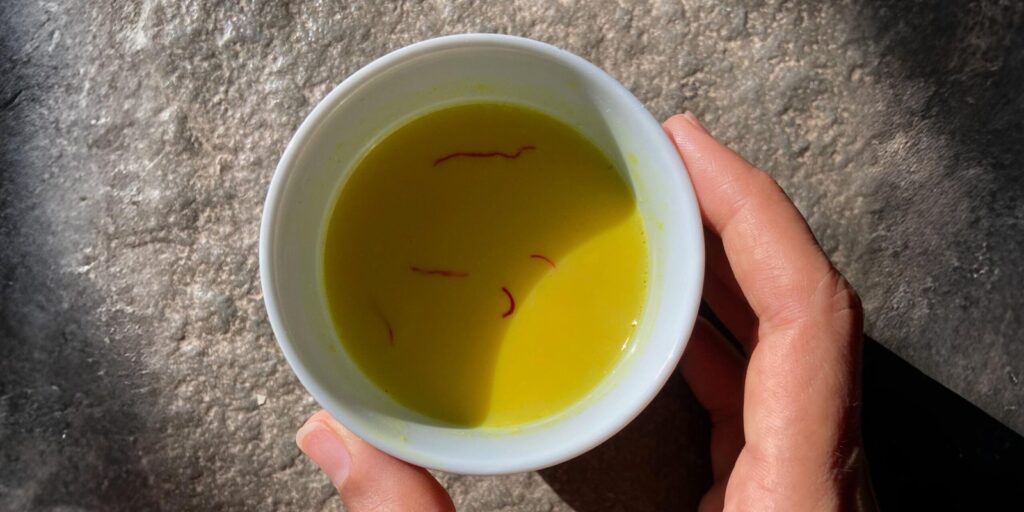
Golden milk is a good start in the morning. It’s good for gut bacteria and has a lot of benefits. Home » Blog » Recipe Alert Golden milk (turmeric milk) June 01, 2025 · Natalia Why Golden milk? Golden milk is a good start in the morning. It’s good for gut bacteria and has a lot of benefits. Golden milk is a traditional Indian drink that people make with turmeric, which gives it a yellow or gold hue. Golden milk may have several health benefit Boosting the immune system Preventing cell damage Improving mood supporting brain function and improving memo Preventing heart disease Possibly reducing the risk of cancer Lowering blood sugar levels Lowering blood sugar levels Boosting the immune system Improving bone health Aiding digestion How to make it? To make golden milk, a person will need: ½ cup non dairy milk, such as coconut or almond milk 1 tsp turmeric 1 tbsp grated fresh ginger or 1/2 tsp ginger powder 1/2 tsp ground cinnamon 1 pinch ground black pepper (optional) 1 tsp honey Star anise cinemon 1 tsp moringa powder I just add moringa and star anise because I have access to it and it’s healthy – you can add what you feel for. Combine all the ingredients in a pot. Next, bring the mixture to the boil, then reduce to a simmer. Let the mixture simmer for about 10 minutes or until it is fragrant. To serve, strain the mixture through a fine strainer to remove the spices. Golden milk will keep in the refrigerator for around 5 days.https://www.medicalnewstoday.com/ Previous ArticleNext Article Featured Articles Abundance Product of the Month 22 Oct 2025 Monthly Updatesㅤㅤㅤㅤㅤㅤㅤㅤ 22 Oct 2025 Lessons from Auroville Farm Assessment 2023 22 Oct 2025 Recipe Alert!ㅤㅤㅤㅤㅤㅤㅤㅤㅤㅤㅤ 22 Sep 2025
FARMACYㅤㅤㅤㅤㅤㅤㅤㅤ
According to Ayurveda, the qualities of summer are hot, sharp, and penetrating. That’s why our Home » Blog » Farmacy FARMACY June 01, 2025 · Dr. Be TIME TO SUMMERNATE Ayurveda healthy tips According to Ayurveda, the qualities of summer are hot, sharp, and penetrating. That’s why our pitta dosha – the subtle fire that controls metabolism and transformation – can cause us to overheat. The sun saps the energy from the body, from the plants and the earth, increasing heat and dryness. Pitta needs to be looked after to maintain a good energy, mental clarity, joyfulness, good digestion and blood circulation, a beautiful glow of the skin and a sound sleep. When Pitta is out of balance it will give skin problems, hot flashes, exhaustion, indigestion or loose stool. Emotionally, excess Pitta manifests through irritation, short-temper, impatience, judgement/criticism, perfectionism… Before Pitta reaches uncontrollable heights, remain cool, calm and pamper the liver: With the food: As Agni (digestive fire) weakens, it is better to eat light, unctuous (slightly oily), cooling food such as salads and juices. Favorable taste: Bitter taste, Sweet taste (to take moderately in case of diabetes and high triglycerides). Salty taste should be taken reasonably Drink water stored in earthen pot Raw food/salads are taken at lunch mainly Proteins: mungdal, chickpeas, beans, sprouts, nuts and seeds, non-veg: white meat, fish, seashell, dairies for breakfast or lunch, eggs Cereals for energy: jasmine rice, barley, red rice, millet (fermented ragi) Vegetables: pumpkin, bittergourd, bottlegourd, snakegourd, ashgourd, cucumber (taken separately), salads, green leafy vegetables, broccoli, cabbage, celery, carrots, drumstick (moringa), zucchini, plantain Fruits: amla, pomegranate, banana, ramphala, chiku, papaya, apple, grape, date, watermelon and melon (to be taken separately), coconut Beverages: buttermilk, sweet lassi, coconut water, mint, lemongrass, cardamom, chamomile, nannari (sarsaparilla), amla juice, watermelon juice, vegetable juice, cucumber milk (blend ½ cup of peeled cucumber in 1 cup of milk – cow or other veg milk- with a pinch of sugar), electrolyte (1 lemon juice + 1tsp of sugar + 1 pinch salt in a glass of water), Lipids: ghee, olive or sunflower or coconut oil Spices: cumin, coriander, black pepper, turmeric, fennel seeds, fresh aromatic herbs (dill, coriander, fennel, mint, parsley, saffron) Avoid: Pungent and sour tastes (especially for people who are Pitta dominant) Pitta increasing items: chillies, fermented food (apart from idli and dosai), deep-fried, sour buttermilk or curd, red meat, alcohol (strong liquor, red wine), coffee … Drinking beverages coming from the fridge or freezer during meals Ice-cream at the end of a meal (best to be taken when the digestion is finished, around 4pm) Routine to favour: Avoid direct sun contact specially between 11am and 4pm, and protect from the heat by keeping a humid towel/cap on the head A nap of half an hour after lunch is allowed Body massage with coconut oil – if there’s no time every day to apply oil on the body, then massage ears, hands and feet + pour 4-5 drops of coconut oil on the fontanelle Bath with cool water and apply a paste of sandalwood on the face, heart and lower abdomen (these are the 3 main parts that should remain fresh to maintain the coolness in the whole body); foot bath in the evening with vetiver roots, rose water or hibiscus flowers Swimming, aquagym, any water activities. Qi-Gong, Tai Chi, light running: max 30 minutes early morning or late evening; walks in green environment, forest Soft yoga, pranayama (Sheetali, Sheetakari, ida nadi inhalation-left nostril inhalation), meditation with Gayatri mantra Walk under the moonlight, full moon bath Wear loose and comfortable cotton or linen clothes (white, blue, green, gray colours) Cooling jewellery: sandalwood beads, jade, pearl, amethyst crystals, moonstone, silver, aquamarine To refresh the ambiance use lemon or orange peel, jasmine flowers, lavender, wet cloth hanging at the open window, vetiver curtains Cooling plants for the summer: Amalaki – Amla: refrigerant and full of Vitamin C, rejuvenative fruit Aloe vera: rejuvenates blood and tissues Aegle Marmelos – Bael fruit: make juice from the pulp and decoction with leaves, it calms body and mind. It is slightly laxative, do not take during pregnancy Coriander: seeds soaked in water for urinary infections, kidney weakness Red Hibiscus: leaves and flowers for shampoo and conditioner; flowers for herbal tea Manduka parni – Centella asiatica leaves: rejuvenative and tonic for brain and nerves Pudina – Mint leaves: herbal tea or dishes Radha consciousness – Clitoria Terneata flowers: herbal tea or juice Sarsaparilla – Nannari syrup: soothing and cooling Shataavari – Asparagus racemosus: cooling, calming Pitta, very good for Vata women to harmonize hormones Vetiver roots: for bathing Yashtimadhu – Licorice: to refresh the body and to calm irritation, inflammation or ulcer in the digestive tract Let’s be all well, happy and healthy.Be at Santé Clinic Previous ArticleNext Article Featured Articles Monthly Updatesㅤㅤㅤㅤㅤㅤㅤㅤ 19 Sep 2025 Abundance Product of the Month 18 Sep 2025 Recipe Alert!ㅤㅤㅤㅤㅤㅤㅤㅤ 22 Sep 2025 Food and Agriculture in Auroville, India 18 Sep 2025
Exploring a natural way of farming

For two weeks in February, life at AuroOrchard has been documented by Taisiia Latypova, a volunteer from Russia. Being a biologist major and a photography enthusiast, Taisiia took a snapshot of the farm’s life and summarized the main techniques used at AuroOrchard. Such work can be helpful for future volunteers and brings a new perspective of the farm for those who have worked or are working here. — AuroOrchard is the oldest farm of Auroville, established back in 1968, and the second-largest farm, currently occupying 25 acres of land. It supplies Auroville with vegetables, fruits and poultry, being a year-long supplier for the Auroville community, participating in the evolution of consciousness. The latter began with the work of Sri Aurobindo and The Mother. Home » Blog » Exploring a natural way of farming Exploring a natural way of farming Mar 20, 2025 · Taisiia Latypova For two weeks in February, life at AuroOrchard has been documented by Taisiia Latypova, a volunteer from Russia. Being a biologist major and a photography enthusiast, Taisiia took a snapshot of the farm’s life and summarized the main techniques used at AuroOrchard. Such work can be helpful for future volunteers and brings a new perspective of the farm for those who have worked or are working here. — AuroOrchard is the oldest farm of Auroville, established back in 1968, and the second-largest farm, currently occupying 25 acres of land. It supplies Auroville with vegetables, fruits and poultry, being a year-long supplier for the Auroville community, participating in the evolution of consciousness. The latter began with the work of Sri Aurobindo and The Mother. From the perspective of The Mother: “work, even manual work, is something indispensable for inner discovery. If we do not work, if we do not put our consciousness into matter, matter will never develop. To allow the consciousness to organize a little matter by means of one’s body is very good. To create order around us helps to create order within us” (“To be a true Aurovillian”, The Mother, 1970). In this sense, coming to Auroville even for a short period of time, one should consider volunteering or participating in workshops to introduce consciousness into matter. Being a biologist and sincerely enjoying putting my hand to planting, farming experience was the best option for me to support the spiritual experience with manual work. In line with sustainable farming, at AuroOrchard farmers are constantly experimenting with farming techniques and finding new ways for optimization of vegetables, fruits and chicken eggs production, at the same time maintaining a balance between natural processes and manmade agriculture. Methods of plant farming, which are used at the farm, can roughly be broken down to composting, soil preparation, planting, irrigation, pests’ managing, harvesting and pruning. Some of these techniques will be briefly discussed below. The life of a plant starts with a seed. Most vegetables’ and fruits’ seeds (about 90%) at AuroOrchard are saved. Only a few plant species’ seeds, which haven’t yet been grown on the farm, are bought outside, such as cacao recently. Some of the seeds are being saved at the farm continuously for over 40 years! Any seed is needed to be planted in a soil rich in nutrients. Soil composition may vary greatly, depending on a desired crop. At AuroOrchard, the nursery soil is made “from scratch” and is composed of garden soil, compost and coco-peat. The compost is made on the farm itself near the cows and it has to be rich in nitrogen and carbon in different proportions. The soil at AuroOrchard is bronze in color and quite soft to touch. Working with such soil, which hasn’t been simply put into a package and shipped from another region, or even country, is a true pleasure. The main source of nitrogen is organic matter. Atmospheric nitrogen is fixed either by free-living bacteria in a soil or by symbiotic bacteria (Rhizobium), which live in root nodules of legumes and exchange nitrogen with carbohydrates from plants. When a plant dies, it is decomposed by bacteria and fungi, which release nitrogen in the form of ammonium into the soil, enriching it. Ammonium is then sequentially transformed into nitrite and nitrate, and the latter can readily be reabsorbed by plants. The other source of nitrogen is cow dung and urine. The main sources of carbon are dry leaves, chipped wood and wood from regularly done pruning, as well as green manure. Green manure is a fast-growing crop which is grown to be incorporated back into the soil for adding organic matter to it. It is a good source of both nitrogen and carbon, whose proportions may vary depending on which green manure is being used. Old forests have soil high in carbon and its microbiota are fungi dominated, however grassfields are nitrogen-enriched with a bacteria-dominated microbiota. To prepare the soil, green manure is grown in a desired place to be then plowed into the soil just before it starts blooming. The latter is crucial, as flowers, being reproductive organs of plants, tend to accumulate all the nutrients. Such cycle is repeated 2-3 times, till the soil is ready for fruits and vegetables planti At AuroOrchard, the method of soil enrichment was optimized by using a tractor with a disc harrow, which goes through green manure and digs up the soil at a shallow depth, so the plants fall down to be further decomposed. The same method can be used for seeds planting. Such an approach can be included in no-till farming, which is aimed to minimize soil disturbance. Conventional plowing leads to oxidation of soil nutrients and disturbance of soil structure, e.g. micro-, meso- and macropores, bacterial colonies, fungal hyphae and soil aggregates. Even though using the tractor might not seem natural, it is about a balance between benefiting from technological progress and being organic and sustainable. To my belief, achievements of science and engineering might benefit organic farming in a way of making it even more sustainable. By using modern technologies mindfully farmers can
Volunteer reflectionㅤㅤㅤㅤㅤㅤㅤㅤ

For two weeks in February, life at AuroOrchard has been documented by Taisiia Latypova, a volunteer from Russia. Being a biologist major and a photography enthusiast, Taisiia took a snapshot of the farm’s life and summarized the main techniques used at AuroOrchard. Such work can be helpful for future volunteers and brings a new perspective of the farm for those who have worked or are working here. — AuroOrchard is the oldest farm of Auroville, established back in 1968, and the second-largest farm, currently occupying 25 acres of land. It supplies Auroville with vegetables, fruits and poultry, being a year-long supplier for the Auroville community, participating in the evolution of consciousness. The latter began with the work of Sri Aurobindo and The Mother. Home » Blog » Volunteer reflection Volunteer reflection Mar 14, 2025 · Abhijeet · Maharashtra, India “Extremely grateful for the opportunity I received for staying here over a month, brainstorming as well as hands-on learning. I am literally living my dream life while I am here. It is more than wonderful to be at the farm, being woken up by the chirping of a variety of birds, and getting to see the beauty of nature and volunteering at the farm in the morning! The best sunset spot on the farm! I saw many insects, spiders, pink lady beetle, paradise flycatcher, rufous treepie, black drongo, koyal bird, and heard many other beards which I have not spotted yet. Experience of watching the sunset & sunrise from the rooftop, and especially gazing at the sky almost everyday brought more slowness to living life!! Loved being here & learning with you all. Also, how can I miss mentioning the scrumptious & healthy breakfast at the farm. My special thanks to the akka for the same! I will always fall short of words to describe the experience. Super shoutout to Anshul for his guidance. This time in my life will always be special. Being here has taught me enjoying the little moments in life even more. Interacting with other volunteers & travellers was a cherry on the top. Taking inspiration from a volunteer I too have limited my smartphone use to just 10 minutes a day” Previous ArticleNext Article Featured Articles Monthly Updatesㅤㅤㅤㅤㅤㅤㅤㅤ 19 Sep 2025 Abundance Product of the Month 18 Sep 2025 Recipe Alert – Stir Fried Sweet Potato leaves with Tofu 22 Sep 2025 Food and Agriculture in Auroville, India 18 Sep 2025
DIY Self-Care Workshop at AuroOrchard
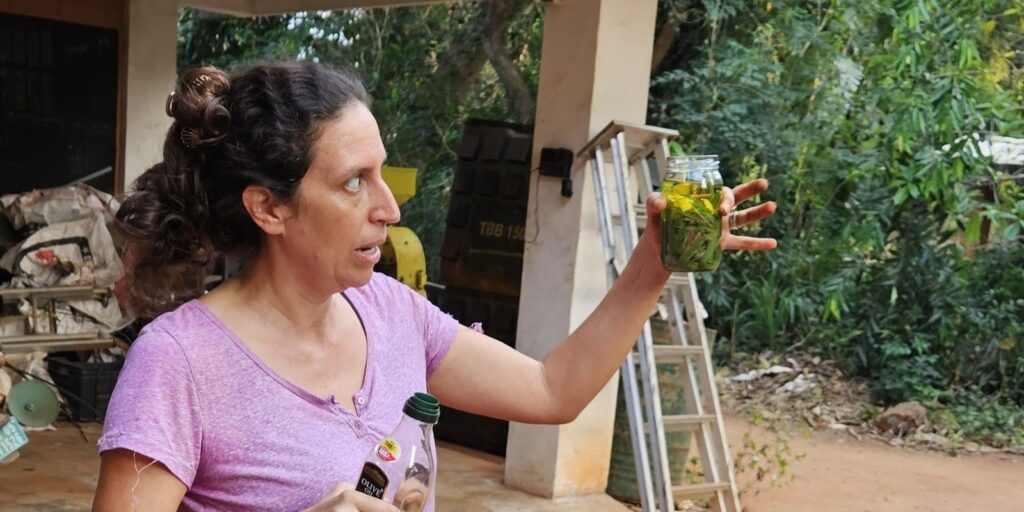
This month at AuroOrchard, we hosted a hands-on DIY self-care workshop exploring ways to create natural, eco-friendly products that benefit both our bodies and the environment. Participants learned how to make everyday essentials like creams, deodorants, bug repellents, soaps, and chapsticks using simple, natural ingredients. Home » Blog » DIY Self-Care Workshop at AuroOrchard: Learning to Care for Ourselves and the Planet DIY Self-Care Workshop at AuroOrchard: Learning to Care for Ourselves and the Planet Mar 14, 2025 · Amber Hill & Natalie Rodriguez This month at AuroOrchard, we hosted a hands-on DIY self-care workshop, exploring ways to create natural, eco-friendly products that benefit both our bodies and the environment. Participants learned how to make everyday essentials like creams, deodorants, bug repellents, soaps, and chapsticks using simple, natural ingredients. We delved into the world of essential oils, discussing their benefits and how they can be used for skincare and wellness. From lavender for soothing skin to tea tree for its antibacterial properties, each oil brought its own unique healing touch. We also explored various extraction methods, including oil infusions, alcohol tinctures, grinding/maceration, and distillation, to unlock the medicinal properties of plants. A highlight of the workshop was a farm walk, where we identified local plants that could be used in our homemade products. Inspired by nature, we returned to our workspace and got creative, crafting herbal-infused creams and natural deodorants. The hands-on experience was both empowering and fun, sparking enthusiasm among participants who were eager to continue their self-care journey. The workshop was a great success, fostering a sense of community and a deeper connection to the natural world. Many participants expressed interest in staying in touch to share recipes, ideas, and inspiration. We look forward to hosting more sessions like this in the future! Previous ArticleNext Article Featured Articles Monthly Updatesㅤㅤㅤㅤㅤㅤㅤㅤ 19 Sep 2025 Abundance Product of the Month 18 Sep 2025 Recipe Alert – Stir Fried Sweet Potato leaves with Tofu 22 Sep 2025 Food and Agriculture in Auroville, India 18 Sep 2025