The World of Bananasㅤㅤㅤㅤㅤㅤ
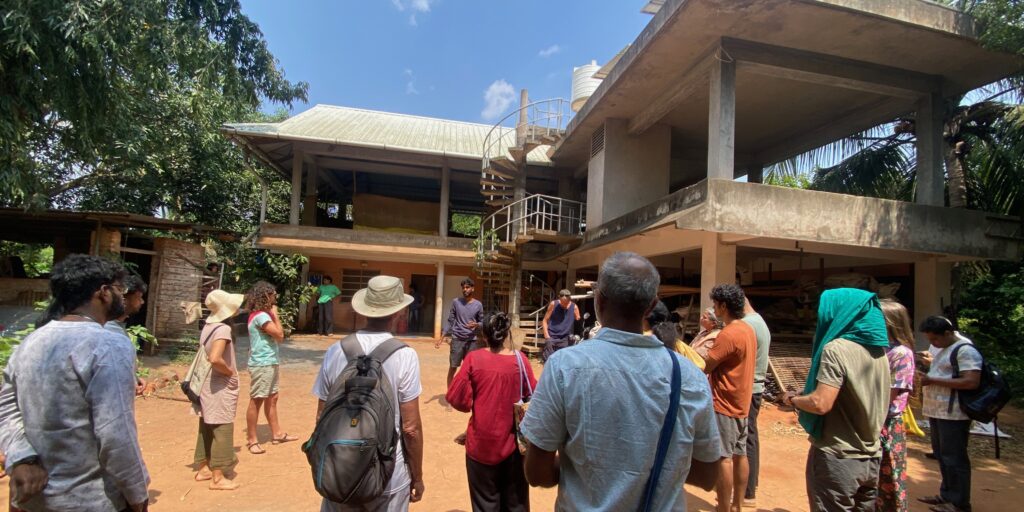
We recently hosted a beautiful knowledge sharing session on bananas with Vinod Sahadevan Nair, whose ㅤ ㅤ Home » Blog » The World of Bananas The World of Bananas Febuary 2026 · Charan GP We recently hosted a beautiful knowledge-sharing session on bananas with Vinod Sahadevan Nair, whose deep passion and lifelong work with banana diversity inspired everyone present. He shared his journey, cultural associations of bananas across regions, and practical insights into cultivation, propagation, and managing diverse varieties in a sustainable way. The session explored the many dimensions of bananas, from their nutritional value and health relevance to the wide range of uses from fruit, stem, flower, and leaves. Farmers and growers from Auroville actively participated, asking thoughtful questions on cultivation practices, disease management, and varietal selection, making it a rich and interactive exchange. The gathering concluded with a visit to the banana plantation at Auro Orchard, where participants could observe the diversity and growing systems more closely. Watch the entire session here We recently hosted a beautiful knowledge-sharing session on bananas with Vinod Sahadevan Nair, whose deep passion and lifelong work with banana diversity inspired everyone present. He shared his journey, cultural associations of bananas across regions, and practical insights into cultivation, propagation, and managing diverse varieties in a sustainable way. The session explored the many dimensions of bananas, from their nutritional value and health relevance to the wide range of uses from fruit, stem, flower, and leaves. Farmers and growers from Auroville actively participated, asking thoughtful questions on cultivation practices, disease management, and varietal selection, making it a rich and interactive exchange. The gathering concluded with a visit to the banana plantation at Auro Orchard, where participants could observe the diversity and growing systems more closely. Watch the entire session here Key Learnings from the session for the current and future AuroOrchard plantations 1. Variety-Specific Needs Matter One of the most important learnings is that each banana variety has different requirements in terms of water, nutrients, spacing, and care. For instance, red banana varieties require comparatively higher water and manure, especially during the initial establishment stage. Treating all varieties the same can affect their growth and overall health. 2. Sprouting and Establishment Differ by Variety We observed that different banana varieties sprout at different rates and show varied early growth patterns. This highlights the importance of patient observation during the first few weeks rather than assuming uniform growth across all planted suckers. 3. Soil and Climate Suitability is Crucial Planting multiple banana varieties also became a living experiment to understand how each variety responds to the local soil and climate conditions. Not every variety adapts equally, and observing their response helps identify which ones are best suited for the specific microclimate of the orchard. 4. Spacing Requirements Vary Across Varieties Certain varieties, especially larger ones like red banana, require wider spacing for healthy growth, while some smaller or compact varieties can thrive with relatively less spacing. Proper spacing ensures better sunlight exposure, airflow, and root development. 5. Importance of Sunlight Banana plants require good sunlight for healthy growth. Adequate exposure supports stronger vegetative development and overall plant vigor, especially in the early stages after planting. 6. Handling and Transport of Suckers A practical learning was that banana suckers are quite resilient and can be transported and stored under shade for about one to two weeks without major issues, provided they are handled properly and not exposed to harsh sun or waterlogging. 7. Diversity in Taste, Texture, and Cultural Value Each banana variety differs in aroma, texture, taste, and cultural relevance. This diversity reflects not only agricultural richness but also the cultural and traditional significance associated with different banana types. 8. Water Management During Early Growth Due to excessive water accumulation in some planted areas, we had to cut the top portion of certain sprouts that were submerged. This reinforced how sensitive young banana plants are to waterlogging and the need for proper drainage management. 9. Bed Management and Animal Disturbance After clearing the beds, chickens and ducks from neighboring land frequently entered and dug into the soil in search of food, especially because the beds were bare and weed-free. This created a new challenge in protecting early sprouts, leading to the consideration of netting and protective measures. 10. Intercropping Observations Pumpkins were planted alongside the banana plants as a companion crop. While bananas are expected to take around 9 to 12 months for harvest, pumpkins are establishing well and are likely to be harvested earlier, around May. This supports better land use and short-term productivity. 11. Previous Crop Influence (Papaya) Before bananas, the beds had papaya plants that showed signs of viral infection and gradual decline. Many affected plants had to be removed, and this raised the need to assess soil health, identify possible root causes, and take corrective steps for long-term resilience of the plantation. 12. Early Growth Monitoring Phase Encouragingly, almost all planted banana suckers have sprouted. The next one to one and a half months will be critical for observing shoot health, vigor, and overall establishment to ensure strong future growth. 13. Adaptive Learning Through Observation Overall, the plantation is evolving as a dynamic learning space, where continuous observation of plant response, soil condition, water management, biodiversity, and protection methods is guiding more informed and context-specific cultivation decisions. Key Learnings from the session for the current and future AuroOrchard plantations 1. Variety-Specific Needs Matter One of the most important learnings is that each banana variety has different requirements in terms of water, nutrients, spacing, and care. For instance, red banana varieties require comparatively higher water and manure, especially during the initial establishment stage. Treating all varieties the same can affect their growth and overall health. 2. Sprouting and Establishment Differ by Variety We observed that different banana varieties sprout at different rates and show varied early growth patterns. This highlights the importance of patient observation during the first few weeks rather than assuming uniform growth across all planted suckers. 3. Soil and Climate
Our Brewery for Plant Health
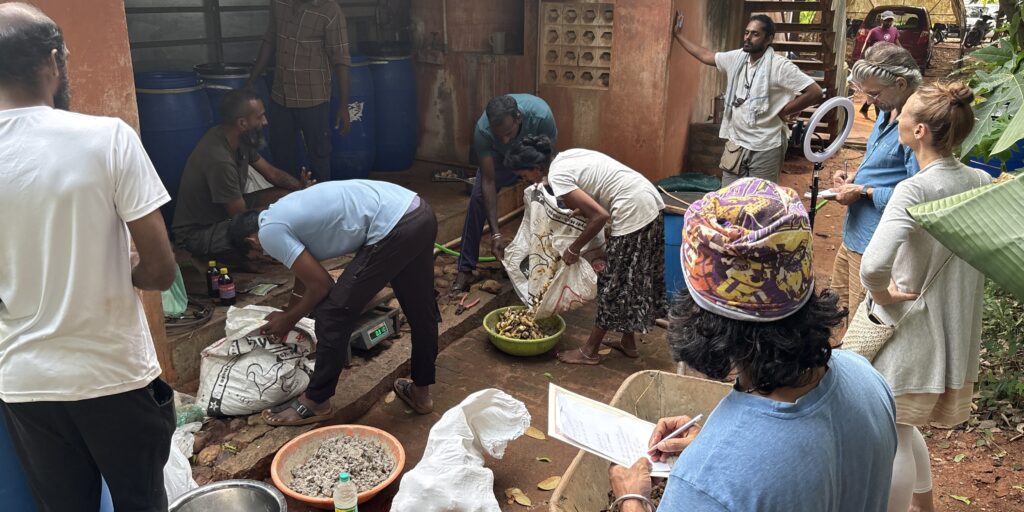
There is a common myth that imbalances in insect populations will disappear if agricultural systems are brought “back into balance.” This assumption rests on the idea that agriculture itself is a balanced ecosystem, which is fundamentally incorrect. Agricultural systems—even in their most natural forms—are human-designed systems, shaped by human needs, diets, and production goals. Home » Blog » Our Brewery for Plant Health Our Brewery for Plant Health December 2025 · Anshul Aggarwal There is a common myth that imbalances in insect populations will disappear if agricultural systems are brought “back into balance.” This assumption rests on the idea that agriculture itself is a balanced ecosystem, which is fundamentally incorrect. Agricultural systems—even in their most natural forms—are human-designed systems, shaped by human needs, diets, and production goals. While diversification and ecological practices can reduce the severity of pest outbreaks, they cannot eliminate them. Modern agriculture, which serves diets limited to a relatively small range of vegetables and fruits, necessarily restricts the diversity that can be accommodated on the farm. In this sense, persistent insect pressure is an inherent feature of agriculture. It cannot be completely resolved, only moderated through careful and continuous management (Oerke, 2005). Moreover, pest pressure today is shaped not only by on-farm diversity, but by the biology of the larger landscape and by changing climatic conditions. Research in agroecology and landscape ecology helps explain why pest pressure can remain high even in diversified farms. Studies show that while ecological practices like crop diversification and habitat enhancement can increase populations of natural enemies, they do not always translate into consistent pest suppression in every field because pest regulation depends strongly on landscape context and habitat structure beyond the farm boundary. For example, natural pest control tends to be stronger in complex, patchy landscapes, with abundant non-crop habitats that support predators and parasitoids, but this effect varies and is not guaranteed (Bianchi et al., 2006; Poveda et al., 2025). Another important limitation of ecological pest regulation lies in the difference between ecological and agricultural time scales. Predator–prey relationships, soil food webs, and habitat-based regulation often require many years to stabilise, whereas farms operate on seasonal cycles that demand immediate outcomes. Farmers must harvest crops within weeks or months, not decades. This temporal mismatch means that even ecologically well-designed farms often need active interventions to bridge the gap between long-term ecological recovery and short-term production needs. In our own production analyses, we found that we lose around 30% of certain crops due to insect damage. These include borers, mealybugs, hoppers, and beetles on brinjal; aphids on long beans; blister beetles on lady fingers and beans; and red gourd beetles on pumpkins, cucumbers, and other gourds—despite years of intercropping, flowering hedges, and multi-layered cropping systems. To prevent severe losses, we have so far relied on neem oil sprays and commercially available biopesticides such as Beauveria bassiana (a fungus) and Bacillus thuringiensis (a bacterium). While effective to a degree, these are purchased inputs. We have therefore been exploring more diverse, farm-made preparations such as Themmor Karaisal, Panchagavya, and fermented leaf extracts using plants like Calotropis, Adhatoda, castor, and moonflower—though not yet with full consistency. Our goal has never been a complete elimination of insects, but the cultivation of systems capable of tolerating a certain level of damage without catastrophic crop loss. So far, we have accepted around 30% as the fair share, our contribution to the ecology, the tax the farmer pays to the land for setting up agriculture. However, given the precarious financial situation on the farm as well as the pressure to deliver more food for the community, we are forced to re-assess if some of these losses can be avoided without damaging the ecosystem. Recently, we met the Aarka team (Elen and Shankar), who have developed formulations aimed at rebuilding functional ecological relationships that were historically embedded in farming systems, though under very different population, climatic, and landscape conditions. Their herbal preparation, Aarka, can be applied in dilution and combined with other ferments—such as oil mixes, fish amino acids, and Themmor Karaisal—for foliar sprays to reduce fungal, bacterial, and insect pressure. These bioferments not only prevent “pests” but also deliver essential herb compounds and micronutrients to the plants, strengthening them and building their own capacity to deal with biological pressures. We organised an afternoon of preparing these different formulations together with our team and developed a plan to use them more consistently, as part of an ongoing effort to reduce crop losses while working within the ecological limits of contemporary agriculture. Our brewery now consists of the following ferments: Aarka solution fermented with sugars and proteins Jeevamrit (fermented mix of cow dung and urine) Panchagavya (fermented mix of the five gifts from the cow–dung, urine, milk, curd, ghee) Themmor Karaisal (fermented mix of curd and coconut milk) Oil concoction (Castor, Mahua, Pongam and Neem oils) Fish amino acids (fish waste fermented with banana) Biopotash solution (ash in rainwater) In the coming days, weeks and months, we aim to consistently inoculate our soil and plant ecology with these ferments and observe the response in terms of plant health and productivity. There is a common myth that imbalances in insect populations will disappear if agricultural systems are brought “back into balance.” This assumption rests on the idea that agriculture itself is a balanced ecosystem, which is fundamentally incorrect. Agricultural systems—even in their most natural forms—are human-designed systems, shaped by human needs, diets, and production goals. While diversification and ecological practices can reduce the severity of pest outbreaks, they cannot eliminate them. Modern agriculture, which serves diets limited to a relatively small range of vegetables and fruits, necessarily restricts the diversity that can be accommodated on the farm. In this sense, persistent insect pressure is an inherent feature of agriculture. It cannot be completely resolved, only moderated through careful and continuous management (Oerke, 2005). Moreover, pest pressure today is shaped not only by on-farm diversity, but by the biology of the larger landscape and by changing climatic conditions. Research in agroecology
Flow of fire and water on the farmㅤㅤ
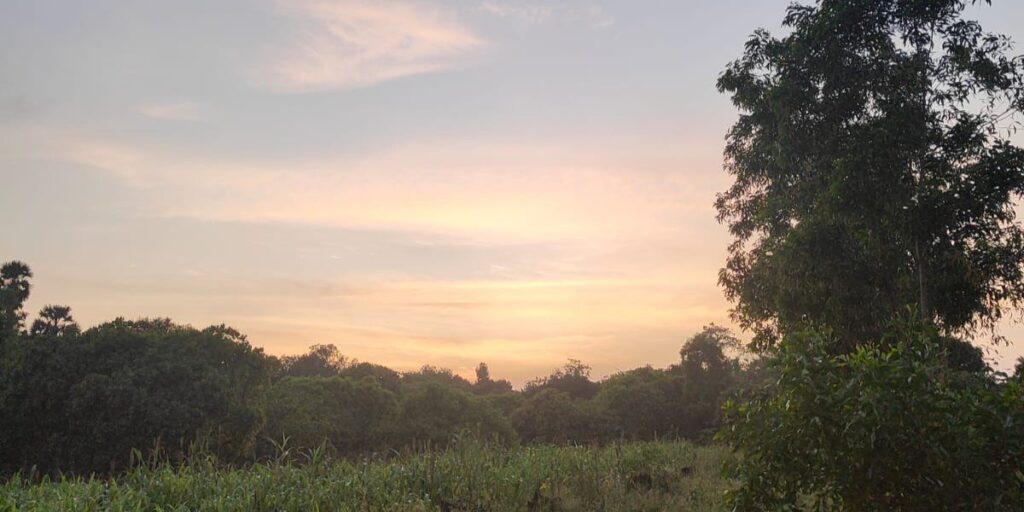
In the Sāṃkhya school of Indian philosophy, the unfolding of matter from spirit gives rise to the senses and to the five elemental manifestations of the material world. From space, emerges air, the principle of movement, and fire, the principle of transformation. Then comes water, carrying flow, continuity, and the subtle pulsations of energy through matter. From the settling of this movement is born earth, the solid ground where life takes form and rests in its full potential. Home » Blog » Flow of fire and water on the farm Flow of fire and water on the farm December 2025 · Anshul Aggarwal In the Sāṃkhya school of Indian philosophy, the unfolding of matter from spirit gives rise to the senses and to the five elemental manifestations of the material world. From space, emerges air, the principle of movement, and fire, the principle of transformation. Then comes water, carrying flow, continuity, and the subtle pulsations of energy through matter. From the settling of this movement is born earth, the solid ground where life takes form and rests in its full potential. Farming is an interaction of all these elements—an ongoing exchange between soil, water, light, air, and the consciousness of the one who tends them. While the Sun remains the primary fire and source of energy, we now also work with another form of fire: electricity, which powers pumps, motors, vehicles, tools, and the quiet machines woven into daily life on the farm. Similarly, rain brings water in its natural rhythm, but we have also learnt to draw from the rainwater stored underground. The farm has three borewells, each serving a specific area and purpose. In this way, the ancient flows of fire and water manifest today as the flows of electricity and irrigation lines across the land. These flows move together; they remain the source of energy for all work on the farm. Over the last fifty-eight years, these flows have gradually expanded to cover a large part of the farm. But further extension is needed to serve areas still cultivated sub-optimally. One might ask: why expand this infrastructure at all? Shouldn’t some parts remain free of artificial flows? Aren’t the Sun and the rain enough? Isn’t natural vegetation sufficient? These questions are part of an enduring dilemma in human life. Our footprint on the planet is large; the footprint of farming especially so. Agriculture is the world’s largest consumer of water, a driver of deforestation and biodiversity loss, a source of carbon emissions, and—in its industrial form—the cause of immense ecological, animal, and human suffering. In such a scenario, it is natural to think that the solution lies in withdrawal: if only humans stepped back, perhaps the earth would regain its balance. We witnessed glimpses of this during the Covid pandemic, when air grew cleaner and wildlife briefly reclaimed spaces near cities. But this brings us to a deeper question: what then is the role of humanity at all? It cannot be inaction. And as our experience shows, even the smallest human action today has ecological and social consequences. Integral Yoga would tell us that our role is not domination but participation—a conscious collaboration with the creative force of nature for mutual growth and progress. Agriculture is one of the clearest expressions of this human–nature participation. Thus, expanding human activity on the farm can arise from two very different impulses–domination, colonisation, and control, or service to the land and to the community—enhancing the ecosystem, the soil, the earth, and producing food for the people we serve. We strive (with successes and failures) toward the latter. In the coming year, we aim to expand our micro-irrigation network as we establish new orchard blocks and diversify existing fruit areas. This year we have learned how communities of crops support one another and reduce the overall water footprint of the farm—simply because the soil remains densely covered with vegetation: some plants grown as food for the farm, others as food for the soil, insects, bees, and birds. Our primary focus will be the mango and cashew orchards, the oldest sections of the farm, which at present are monocultures. Our experiments with cultivating pineapple, ginger, turmeric, yam, and taro within existing orchards have given remarkable results, and we hope to continue this diversification. And water needs energy to flow. As our irrigation network expands, so does the need for energy—whether through electrical connections, lines, or solar-powered pumps. Meanwhile, some of the existing infrastructure, built over many decades, now needs repair and renewal. These are our goals for the coming year—to tend to the flows of fire and water on the farm, the two essential elements for movement and transformation without which both the earth and human consciousness remain sterile. And given the changes the farm (and Auroville) has witnessed in the last few years, it is evident that the psyche of the farm too needs a movement and transformation, as it goes through a radical transition socially, politically and economically. Previous Article Featured Articles Monthly Updatesㅤㅤㅤㅤㅤㅤㅤㅤ 28 Nov 2025 Abundance Product of the Month 22 Oct 2025 Flow of fire and water on the farmㅤㅤ 03 Dec 2025 Hands-On Approachㅤㅤㅤㅤㅤㅤㅤㅤㅤ 29 Nov 2025
Hands-On Approachㅤㅤㅤㅤㅤㅤㅤㅤㅤ
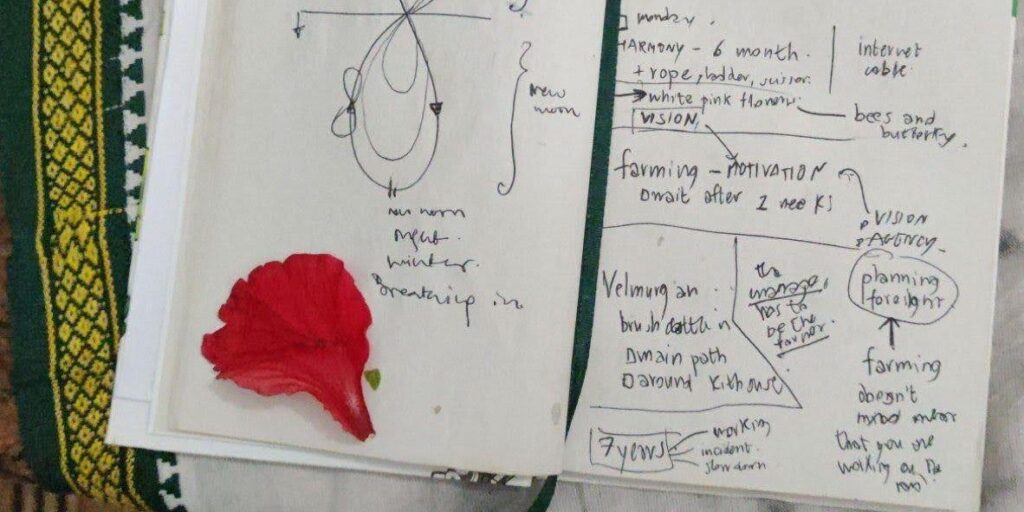
But you can truly learn when your feet and hands are on the field. The greatest knowledge is that which is applied to daily life. Home » Blog » Hands-On Approach Hands-On Approach 25 November 2025 · Fabio Karlino “Nowadays everyone could become (intellectually) a farmer.We have books, schools, courses, youtube videos …”But you can truly learn when your feet and hands are on the field.The greatest knowledge is that which is applied to daily life. And this happens in AuroOrchard.Ideas are welcome, brainstorming is magnificent, vision is encouraged.But let’s start from the ground, let’s start talking with naturebecause farming is a conversation with nature and with ourselves. First, as humans, we should grow discipline in the orchard of our good habits.The discipline to be constant, be patient and wait for the seedsthat we’ve planted with love, welcome them by preparing their bedswhere they’re gonna sleep, breathe and live. Why farming?What does it mean to be a farmer?How could human artificial activity be called ‘natural farming’?The mind is hungry for answers. Be patient, the answers will come through experience.You don’t need to rush to search on the artificial web,look inside you, wait for the universe to provide you the keysnot encapsulated in words and concepts but feelings, experiences. Then a good talk with another human,especially if it is an experienced one like Anshul,could really help to recalibrate and transfer learning. The core of farming is food.This is the basic but fundamental starting point.Around this first principlehumans create families, communities, organizations. To be a farmer is not just being on the land with dirty hands,Farming means planning, forecasting, researching, experimenting.It’s an equilibrium, a balance between physical and intellectual activity,between materialism and spirituality for the parallel evolution of both. Natural farming does not exist. Have you ever seen a farm naturally grow somewhere with no human intervention?What we define natural farming are all techniques and practices used in agriculturein order to mimic the natural processes. Just like in a forest the leaves naturally cover the soil making it humid and fertilein the same way we are mulching by putting branches and leaves from the pruning.The bio inputs of the animals and microorganisms that live in the forestare replicated with a layer of compost and biomass. Is there room for improvement? Of course.What will the future of farming look like? We are creating it.What’s the best way to learn? Hands-on approach. Previous ArticleNext Article Featured Articles Monthly Updatesㅤㅤㅤㅤㅤㅤㅤㅤ 28 Nov 2025 Abundance Product of the Month 22 Oct 2025 Flow of fire and water on the farmㅤㅤ 03 Dec 2025 Hands-On Approachㅤㅤㅤㅤㅤㅤㅤㅤㅤ 29 Nov 2025
The Flying Houseㅤㅤㅤㅤㅤㅤㅤㅤㅤㅤㅤ
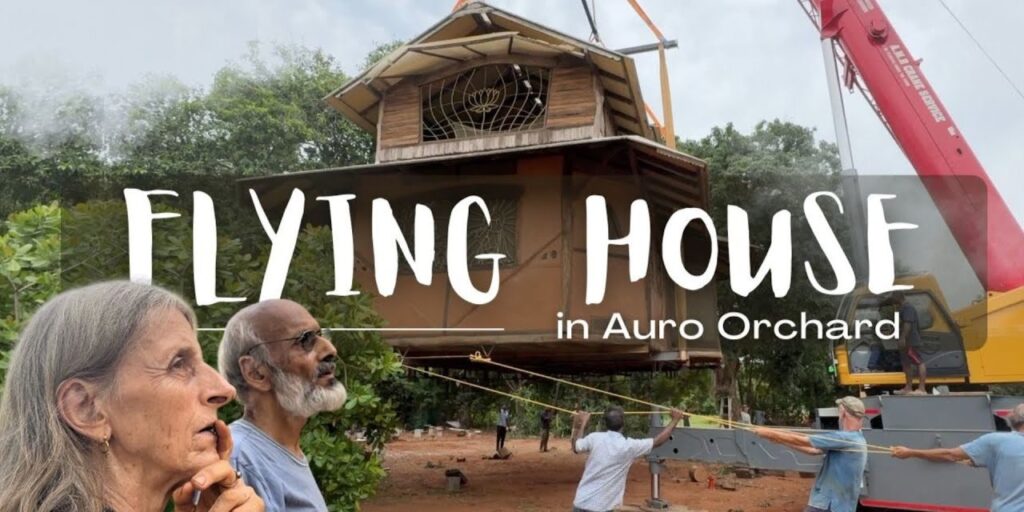
Here we are sharing a ’story within the story’, of the house of two Aurovilians that was discovered to be ‘on the wrong side’ of the new boundary, and was saved and air-lifted thanks to the efforts of a whole community that came together in solidarity. Watch the adventure of Auro Orchard’s Flying House’ in its epic journey of … 35 metres, back onto the soil of Auroville! Home » Blog » The Flying House The Flying House November 2025 · Jasmin Maheshwari https://www.youtube.com/watch?v=Hqe1SwP3qJA Auro Orchard has survived the loss of more than a third of its land and vital infrastructure in the ‘land exchanges’ two years ago. How the farm recovered and today has started to shine with new light, is a story of resilience and grace that is yet to be told. Here we are sharing a ’story within the story’, of the house of two Aurovilians that was discovered to be ‘on the wrong side’ of the new boundary, and was saved and air-lifted thanks to the efforts of a whole community that came together in solidarity. Watch the adventure of Auro Orchard’s Flying House’ in its epic journey of … 35 metres, back onto the soil of Auroville! Previous ArticleNext Article Featured Articles Abundance Product of the Month 22 Oct 2025 Monthly Updatesㅤㅤㅤㅤㅤㅤㅤㅤ 22 Oct 2025 Recipe Alert!ㅤㅤㅤㅤㅤㅤㅤㅤㅤㅤㅤ 01 Dec 2025 The Flying Houseㅤㅤㅤㅤㅤㅤㅤㅤㅤㅤㅤ 01 Dec 2025
Discovering the Golden Eggfruit…
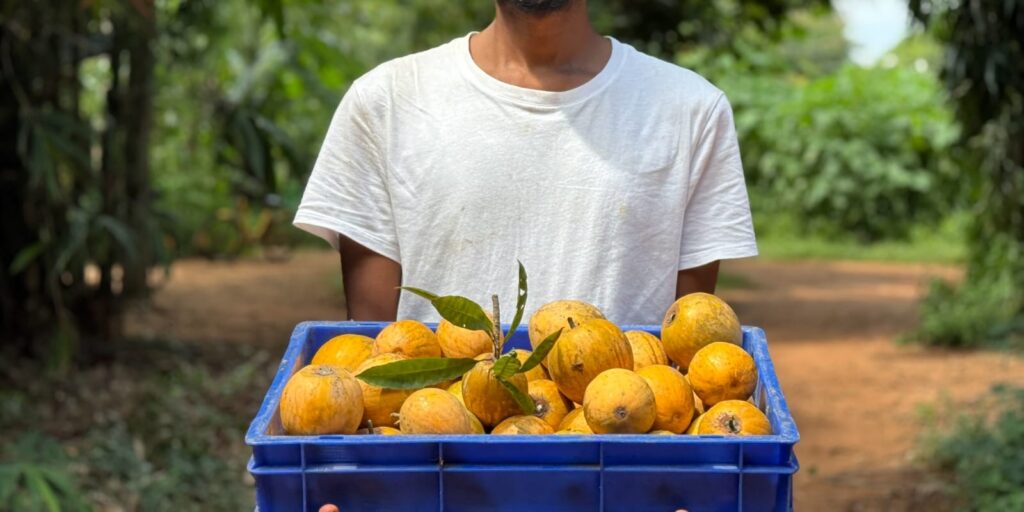
Over the last few weeks at Auro Orchard, I’ve been spending most of my days around the fruit trees, observing, tasting, and doing small bits of research on the fruits growing here. Since I mostly eat fruits throughout the day, this kind of work feels very natural to me it’s both nourishment and exploration at the same time. During these walks, I came across our eggfruit trees, and noticing the bright yellow fruits hanging from the branches felt almost like spotting little suns tucked among the leaves. Harvesting them was a fun experience on its own, and a couple of ripe ones had even fallen perfectly to the ground, soft and ready to eat. The moment I opened one, the texture really stood out: dense, creamy, and yolk-like, almost like scooping out a rich egg yolk but in a sweet, custardy form. The flavor is unlike any other fruit I’ve tried, intensely sweet and extremely satisfying, the kind of fruit you can have only half or one at a time because it fills you up so quickly. Home » Blog » Discovering the Golden Eggfruit: A Sweet Journey at AuroOrchard Discovering the Golden Eggfruit: A Sweet Journey at AuroOrchard November 2025 · Charan Over the last few weeks at Auro Orchard, I’ve been spending most of my days around the fruit trees, observing, tasting, and doing small bits of research on the fruits growing here. Since I mostly eat fruits throughout the day, this kind of work feels very natural to me it’s both nourishment and exploration at the same time. During these walks, I came across our eggfruit trees, and noticing the bright yellow fruits hanging from the branches felt almost like spotting little suns tucked among the leaves. Harvesting them was a fun experience on its own, and a couple of ripe ones had even fallen perfectly to the ground, soft and ready to eat. The moment I opened one, the texture really stood out: dense, creamy, and yolk-like, almost like scooping out a rich egg yolk but in a sweet, custardy form. The flavor is unlike any other fruit I’ve tried, intensely sweet and extremely satisfying, the kind of fruit you can have only half or one at a time because it fills you up so quickly. Eggfruit, also known as canistel, originally comes from Mexico and Central America and later spread to countries in the Caribbean and other tropical regions. Even though it has been around for centuries, it’s still not widely known in India. The tree itself is slow to mature and typically takes around eight years before it begins to produce fruit, which makes the harvest feel even more meaningful. Here at the orchard, as we continue enjoying these unique fruits, we’re also exploring different ways to process them, especially turning them into ice creams and simple frozen desserts to see how their natural creaminess transforms when chilled. It’s been a lovely discovery and definitely one of the more fascinating fruits I’ve spent time with recently. Have you tasted this fruit before? We would love to hear your experience. Over the last few weeks at Auro Orchard, I’ve been spending most of my days around the fruit trees, observing, tasting, and doing small bits of research on the fruits growing here. Since I mostly eat fruits throughout the day, this kind of work feels very natural to me it’s both nourishment and exploration at the same time. During these walks, I came across our eggfruit trees, and noticing the bright yellow fruits hanging from the branches felt almost like spotting little suns tucked among the leaves. Harvesting them was a fun experience on its own, and a couple of ripe ones had even fallen perfectly to the ground, soft and ready to eat. The moment I opened one, the texture really stood out: dense, creamy, and yolk-like, almost like scooping out a rich egg yolk but in a sweet, custardy form. The flavor is unlike any other fruit I’ve tried, intensely sweet and extremely satisfying, the kind of fruit you can have only half or one at a time because it fills you up so quickly. Eggfruit, also known as canistel, originally comes from Mexico and Central America and later spread to countries in the Caribbean and other tropical regions. Even though it has been around for centuries, it’s still not widely known in India. The tree itself is slow to mature and typically takes around eight years before it begins to produce fruit, which makes the harvest feel even more meaningful. Here at the orchard, as we continue enjoying these unique fruits, we’re also exploring different ways to process them, especially turning them into ice creams and simple frozen desserts to see how their natural creaminess transforms when chilled. It’s been a lovely discovery and definitely one of the more fascinating fruits I’ve spent time with recently. Have you tasted this fruit before? We would love to hear your experience. Previous ArticleNext Article Featured Articles Abundance Product of the Month 22 Oct 2025 Monthly Updatesㅤㅤㅤㅤㅤㅤㅤㅤ 22 Oct 2025 The Unstructured Calling: Finding My Rhythmㅤㅤ 30 Nov 2025 Hands-On Approach 29 Nov 2025
Experiments with Syntropic Agriculture

In the last few years, we have observed that the consumption of Auroville vegetables is going down within Auroville. The five most consumed vegetables in Auroville- Potato, Tomato, Onion, Cauliflower and Carrot don’t grow here locally. The demand for locally grown vegetables is low in our international city and even then, we are competing with produce available in Pondicherry and around at very low prices. Considering all this, we have consciously decided to grow more fruits as there is a lot that we can grow and that is still is being bought from outside- Papaya, Banana, Pineapple, Chikoo, Guava, Citrus, Coconut, Jackfruit, Custard apple, Ramphal, Avocado, and so forth. Home » Blog » Experiments with Syntropic Agriculture Experiments with Syntropic Agriculture July 2025 · Anshul Aggarwal In the last few years, we have observed that the consumption of Auroville vegetables is going down within Auroville. The five most consumed vegetables in Auroville- Potato, Tomato, Onion, Cauliflower and Carrot don’t grow here locally. The demand for locally grown vegetables is low in our international city and even then, we are competing with produce available in Pondicherry and around at very low prices. Considering all this, we have consciously decided to grow more fruits as there is a lot that we can grow and that is still is being bought from outside- Papaya, Banana, Pineapple, Chikoo, Guava, Citrus, Coconut, Jackfruit, Custard apple, Ramphal, Avocado, and so forth. We are now either densifying the existing orchards or reorganizing some orchards towards more efficient and productive plantations. Main design objectives: Increase fruit production in the next 2-5 years. Employ syntropic methods to increase density and use biomass to feed the soil. Try new plants like Coffee and Cacao- create microclimate to support these species. Entropy, Negantropy and Syntropy The idea of entropy originated in the late 19th century in thermodynamic studies. Entropy is the measure of disorderness of a system, a measure of its chaos (Clausius, 1865). The conventional understanding suggests whenever a system goes through any transformation, the entropy of the system increases, giving us the famous axiom that the universe is increasingly moving towards chaos. While this may be true for theoretical models and isolated systems, we, in fact, observe a completely opposite phenomenon in living systems that are transforming all the time. Later scientists observed that what we see as chaos in living systems over time, is in fact, higher forms of natural order, spontaneous configurations that make the system more and more stable. A seed releases its energy to germinate, to grow as a plant, as a tree towards higher complexities of life and order. Human beings learn over time to develop a more and more complex consciousness. This leads us to the idea of a decreasing entropy of systems, a negative entropy, or negentropy (Schrödinger, 1944). While negentropy gives us a new perspective of what is happening in nature, it still doesn’t tell us why it is happening-why is disorder moving to more order. Syntropy fills this gap. It adds a teleological aspect to the transformation of systems. Syntropy suggests that we become what we become not only because of what we were, but also because of what we could be. A tree unfolds from a seed not only because of the nature of the seed, but the potential of becoming a tree that is inherent in it. This understanding highlights a goal, a pull from the future towards higher orders, as much as a push from the past foundations. We can also relate this idea to Yoga, a movement towards a complete union, a path of progress, development and unfolding of a harmony in greater complexities. What is Syntropic Farming? The concept of Syntropic farming method was developed by Swiss farmer and researcher Ernst Götsch, who settled in Brazil in the 1980s. Originally trained as a geneticist and plant breeder, Götsch became disillusioned with conventional agriculture and began experimenting with natural regeneration processes in tropical ecosystems. His approach, outlined in his influential paper “Breakthrough in Agriculture”, proposes that human cultivation can regenerate rather than deplete ecosystems. At its core, syntropic farming is based on ecological succession and stratification, mimicking the structure and dynamics of natural forests. Instead of combating nature, it works in harmony with it by planting a consortium of species—pioneer, secondary, and climax—across different light strata and life cycles. This method emphasizes high biodiversity, minimal external inputs, and a continuous process of pruning and biomass management to accelerate soil fertility and system evolution. How is it different from Permaculture’s Food Forest? It is important to make this distinction as a syntropic forest is significantly different from a food forest. Firstly, the goal of a syntropic forest is ecological restoration and not necessarily to provide food. It works on the principle of ecological succession and stratas which translates to light requirements and life cycles. In a food forest, however, the goal is to fit as many edible species into one consortium based on vertical spacing/layering as possible. There is emphasis on ‘support species’ in Syntropic farming to support soil fertility and main crop. In a food forest, edible crops are privileged over other crops. Also, syntropic systems are way more dynamic than a food forest. A syntropic system changes form with the completion of the life cycle of each plant. On the other hand, the idea in a food forest is to put together a system that will stay in the same consortium for as long as possible. In a syntropic system, Papaya may be grown as an initial species to use light and will be cut down after a couple of years to allow the main fruit crop under it to grow further. The goal in the food forest, on the other side, will be to preserve the Papaya and perhaps increase the spacing within the main fruit crop to allow for Papaya to continue growing. We will talk about the benefits of the syntropic approach over food forest in the following sections. Site Selection
Experiments in the Mango orchard
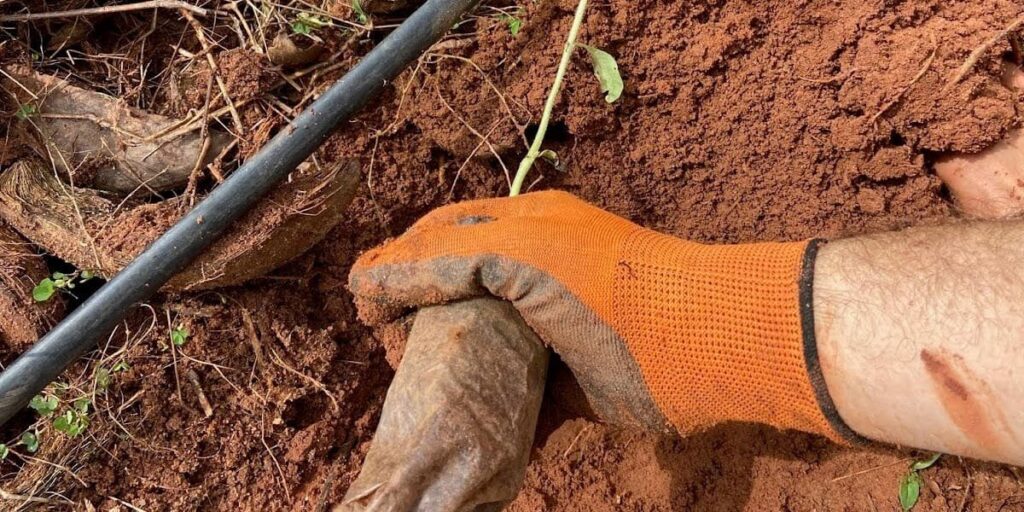
During the last month, our birds contracted a virus and fell terribly sick. The egg production came down drastically with almost no eggs. The little eggs that we got from the sick birds were discarded. With intensive care and help from the entire team, the birds are now doing well. The fourth batch of birds (one-day old chicks) will arrive in two weeks! This will replace the oldest flock which will complete two years at the end of the year. Home » Blog » Experiments in the Mango Orchard Experiments in the Mango Orchard Jan 31, 2025 · Pictures by Ami Grossman For over two years, we have been trying different crops in the Mango orchard to address the gaps of diversity and optimum land utilisation in this more than 80 year old orchard of over 400 mango trees. In 2023, we pruned the mangoes in one section heavily to rejuvenate them. As the space in between was now open to the Sun, we started planting turmeric, pumpkin and brinjal. Ash and Neem leaves are added around the young Pumpkin plants to protect them from Red-gourd-beetle. Sunflowers are being planted in the hedges for diversity and for more food for the bees. Turmeric planted in between the mango trees in May 2024 is now ready for harvest. Pumpkin seeds saved from the farm being sown Channels being irrigated in preparation for Pumpkin planting Next Article Featured Articles Monthly Updatesㅤㅤㅤㅤㅤㅤㅤㅤ 19 Sep 2025 Abundance Product of the Month 18 Sep 2025 Recipe Alert!ㅤㅤㅤㅤㅤㅤㅤㅤ 22 Sep 2025 Food and Agriculture in Auroville, India 18 Sep 2025