
Ayurvedic Recommendations

The dishes that can be consumed during this season are meat soup topped with ghee, meat of healthy animals, beverages prepared with molasses and rice flour, pastries prepared using wheat, rice flour, black gram, sugarcane juice and milk products which are delicious and nourishing, fresh rice, gingelly oil and bone marrow Home » Blog » Ayurvedic Recommendations for Winter Ayurvedic Recommendations for Winter December 2025 · Dr. Be We are now at the peak of Visarga Kala, when the moon has more influence in the Northern Hemisphere and provides calming, soothing energy. The cold outside urges us to turn inwards, and this prevents the doshas from being over-stimulated by external factors and situations. In this “cocooning” atmosphere, Kapha and Agni contribute to protecting us from the cold. Through a digestive fire (Agni) that becomes stronger and asks for more nourishing food and bigger portions, we are strengthening and reinforcing our immunity, nourishing well the body tissues for the year to come. The three constitutions (prakruti) experience their Kapha increasing with the adipose tissue to protect from the cold: less for Vata people, moderate for Pitta people and more for Kapha people. In the energy, there’s a feeling of coming back to the warmth of our inner place. If this energy is imbalanced, it may give a sense of emptiness in the heart, dullness in the mind or feeling depressed or lonely (these are Vata or Kapha imbalances). During winter, we are going to assist the body to regenerate by keeping a strong digestive fire (Agni) – in the abdomen for an optimum nutrient assimilation, in the mind for clarity and in the heart for joy and kindness. GENERAL GUIDELINES IN THE FOOD: “The dishes that can be consumed during this season are meat soup topped with ghee, meat of healthy animals, beverages prepared with molasses and rice flour, pastries prepared using wheat, rice flour, black gram, sugarcane juice and milk products which are delicious and nourishing, fresh rice, gingelly oil and bone marrow” — from the book Ashtanga Hrdaya, Sutrasthana, Chapter 3 Rtucharya, Sloka 11–14 Sweet, sour and salty tastes are best for this season Eat warm, cooked food spiced up with: ginger, pepper, turmeric, cumin, clove, asafoetida, mustard seed, ajwain, cinnamon, fennel seed, fenugreek seed, onion, garlic Proteins: Mungdal, black gram (Maasha) beans, chickpeas, lentils, white meat, egg, mutton (meat soup), nuts and seeds, spirulina, hemp seeds Vegetables: green leaves, carrot, beet, eggplant, cauliflower, broccoli, bitter-snake-bottlegourd, moringa (drumstick), chow-chow Sweet = Cereals: millets, wheat, barley, rice, oats Sweet = fruits: apple, banana, chiku, papaya, passion fruit, pomegranate, grape, guava, pear, rosella, all citrus preferably sweet Ghee or sesame oil, olive, sunflower, apple cider vinegar Beverages: herbal masala teas, hot water, with honey or jaggery, sugarcane juice, golden milk with turmeric TO AVOID: cheese, yogurt, curd, lassi at dinner (they should be eaten at breakfast or lunch) Cold beverages, ice-cream Raw vegetables and food that is heavy and difficult to digest (deep fried, etc.) HEALTHY ROUTINE FOR WINTER: Main principle: stabilize, centre, nurture and recharge Sleep longer Keep a regular rhythm (with meals and bedtime) Massage with sesame oil + apply heat to let the oil penetrate Hot shower or bath, Foot bath with warm salty water Keep the body warm with cotton, wool, silk, leather Physical exercise: 30 minutes daily of stimulating Yoga, Pranayama, Meditation-concentration, Qi-Gong, Toning… Nasya: put 1 drop of Anu Tailam in each nostril at bedtime or in the morning if the nose is congested TO AVOID: Prolonged fasting Humid and cold air, wind, fan Long hours at the computer Stay awake late at night HEALTHY ROUTINE FOR WINTER: For a better digestion: ginger, cinnamon, pippali (long pepper), Be No1 (ginger, turmeric, black pepper) or Trikatu (for Kapha), Hingwashtak churna (for Vata), Avipatikar churna (for Pitta), taken after a meal with a little bit of honey For cold, cough and respiratory infections: tulsi, karpuravalli (Coleus amboinicus), Be No3 (ginger, turmeric, black pepper, tulsi, amla, cinnamon), Sitopaladi churna, Talispatradi churna For inflammation, joint pain: turmeric, Be No4 (ginger, turmeric, fenugreek), Dashamoolarishtam For energy and vitality: Chyavanprash Wishing you a nurturing and loving winterBe @ Sante Previous ArticleNext Article Featured Articles Year-end updatesㅤㅤㅤㅤㅤㅤㅤㅤ 20 Dec 2025 Abundance Product of the Month 05 Dec 2025 Ayurvedic Recommendations 19 Dec 2025 Our Brewery for Plant Health 19 Dec 2025
Hands-On Approachㅤㅤㅤㅤㅤㅤㅤㅤㅤ
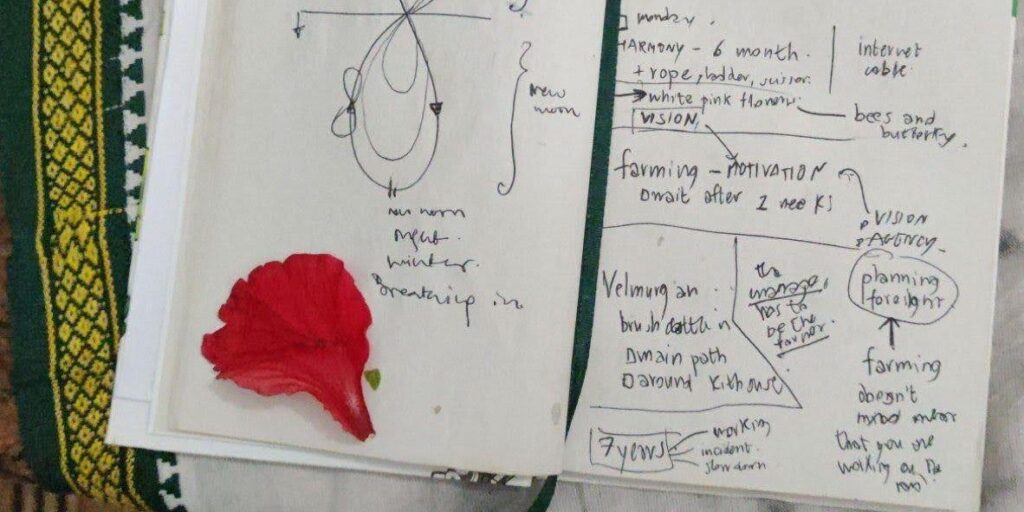
But you can truly learn when your feet and hands are on the field. The greatest knowledge is that which is applied to daily life. Home » Blog » Hands-On Approach Hands-On Approach 25 November 2025 · Fabio Karlino “Nowadays everyone could become (intellectually) a farmer.We have books, schools, courses, youtube videos …”But you can truly learn when your feet and hands are on the field.The greatest knowledge is that which is applied to daily life. And this happens in AuroOrchard.Ideas are welcome, brainstorming is magnificent, vision is encouraged.But let’s start from the ground, let’s start talking with naturebecause farming is a conversation with nature and with ourselves. First, as humans, we should grow discipline in the orchard of our good habits.The discipline to be constant, be patient and wait for the seedsthat we’ve planted with love, welcome them by preparing their bedswhere they’re gonna sleep, breathe and live. Why farming?What does it mean to be a farmer?How could human artificial activity be called ‘natural farming’?The mind is hungry for answers. Be patient, the answers will come through experience.You don’t need to rush to search on the artificial web,look inside you, wait for the universe to provide you the keysnot encapsulated in words and concepts but feelings, experiences. Then a good talk with another human,especially if it is an experienced one like Anshul,could really help to recalibrate and transfer learning. The core of farming is food.This is the basic but fundamental starting point.Around this first principlehumans create families, communities, organizations. To be a farmer is not just being on the land with dirty hands,Farming means planning, forecasting, researching, experimenting.It’s an equilibrium, a balance between physical and intellectual activity,between materialism and spirituality for the parallel evolution of both. Natural farming does not exist. Have you ever seen a farm naturally grow somewhere with no human intervention?What we define natural farming are all techniques and practices used in agriculturein order to mimic the natural processes. Just like in a forest the leaves naturally cover the soil making it humid and fertilein the same way we are mulching by putting branches and leaves from the pruning.The bio inputs of the animals and microorganisms that live in the forestare replicated with a layer of compost and biomass. Is there room for improvement? Of course.What will the future of farming look like? We are creating it.What’s the best way to learn? Hands-on approach. Previous ArticleNext Article Featured Articles Monthly Updatesㅤㅤㅤㅤㅤㅤㅤㅤ 28 Nov 2025 Abundance Product of the Month 22 Oct 2025 Flow of fire and water on the farmㅤㅤ 03 Dec 2025 Hands-On Approachㅤㅤㅤㅤㅤㅤㅤㅤㅤ 29 Nov 2025
Discovering the Golden Eggfruit…
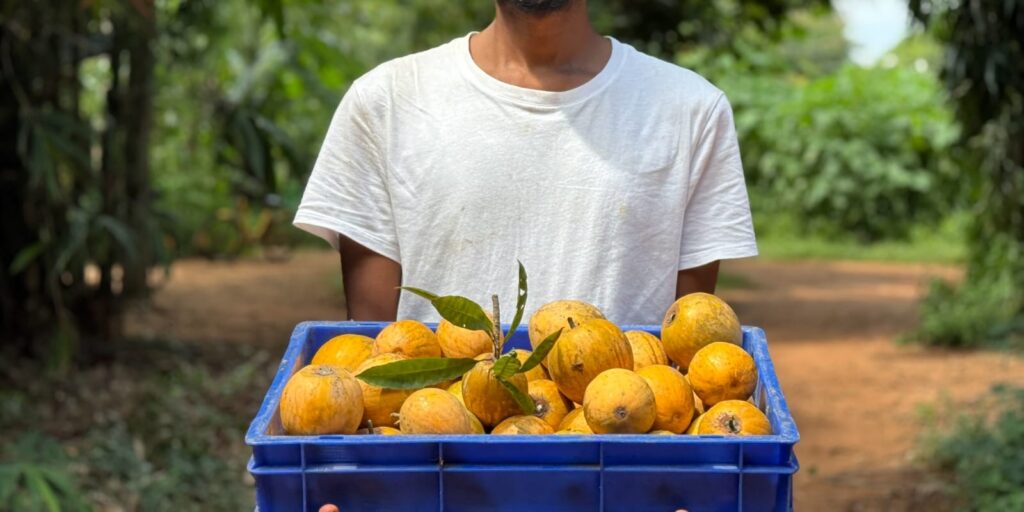
Over the last few weeks at Auro Orchard, I’ve been spending most of my days around the fruit trees, observing, tasting, and doing small bits of research on the fruits growing here. Since I mostly eat fruits throughout the day, this kind of work feels very natural to me it’s both nourishment and exploration at the same time. During these walks, I came across our eggfruit trees, and noticing the bright yellow fruits hanging from the branches felt almost like spotting little suns tucked among the leaves. Harvesting them was a fun experience on its own, and a couple of ripe ones had even fallen perfectly to the ground, soft and ready to eat. The moment I opened one, the texture really stood out: dense, creamy, and yolk-like, almost like scooping out a rich egg yolk but in a sweet, custardy form. The flavor is unlike any other fruit I’ve tried, intensely sweet and extremely satisfying, the kind of fruit you can have only half or one at a time because it fills you up so quickly. Home » Blog » Discovering the Golden Eggfruit: A Sweet Journey at AuroOrchard Discovering the Golden Eggfruit: A Sweet Journey at AuroOrchard November 2025 · Charan Over the last few weeks at Auro Orchard, I’ve been spending most of my days around the fruit trees, observing, tasting, and doing small bits of research on the fruits growing here. Since I mostly eat fruits throughout the day, this kind of work feels very natural to me it’s both nourishment and exploration at the same time. During these walks, I came across our eggfruit trees, and noticing the bright yellow fruits hanging from the branches felt almost like spotting little suns tucked among the leaves. Harvesting them was a fun experience on its own, and a couple of ripe ones had even fallen perfectly to the ground, soft and ready to eat. The moment I opened one, the texture really stood out: dense, creamy, and yolk-like, almost like scooping out a rich egg yolk but in a sweet, custardy form. The flavor is unlike any other fruit I’ve tried, intensely sweet and extremely satisfying, the kind of fruit you can have only half or one at a time because it fills you up so quickly. Eggfruit, also known as canistel, originally comes from Mexico and Central America and later spread to countries in the Caribbean and other tropical regions. Even though it has been around for centuries, it’s still not widely known in India. The tree itself is slow to mature and typically takes around eight years before it begins to produce fruit, which makes the harvest feel even more meaningful. Here at the orchard, as we continue enjoying these unique fruits, we’re also exploring different ways to process them, especially turning them into ice creams and simple frozen desserts to see how their natural creaminess transforms when chilled. It’s been a lovely discovery and definitely one of the more fascinating fruits I’ve spent time with recently. Have you tasted this fruit before? We would love to hear your experience. Over the last few weeks at Auro Orchard, I’ve been spending most of my days around the fruit trees, observing, tasting, and doing small bits of research on the fruits growing here. Since I mostly eat fruits throughout the day, this kind of work feels very natural to me it’s both nourishment and exploration at the same time. During these walks, I came across our eggfruit trees, and noticing the bright yellow fruits hanging from the branches felt almost like spotting little suns tucked among the leaves. Harvesting them was a fun experience on its own, and a couple of ripe ones had even fallen perfectly to the ground, soft and ready to eat. The moment I opened one, the texture really stood out: dense, creamy, and yolk-like, almost like scooping out a rich egg yolk but in a sweet, custardy form. The flavor is unlike any other fruit I’ve tried, intensely sweet and extremely satisfying, the kind of fruit you can have only half or one at a time because it fills you up so quickly. Eggfruit, also known as canistel, originally comes from Mexico and Central America and later spread to countries in the Caribbean and other tropical regions. Even though it has been around for centuries, it’s still not widely known in India. The tree itself is slow to mature and typically takes around eight years before it begins to produce fruit, which makes the harvest feel even more meaningful. Here at the orchard, as we continue enjoying these unique fruits, we’re also exploring different ways to process them, especially turning them into ice creams and simple frozen desserts to see how their natural creaminess transforms when chilled. It’s been a lovely discovery and definitely one of the more fascinating fruits I’ve spent time with recently. Have you tasted this fruit before? We would love to hear your experience. Previous ArticleNext Article Featured Articles Abundance Product of the Month 22 Oct 2025 Monthly Updatesㅤㅤㅤㅤㅤㅤㅤㅤ 22 Oct 2025 The Unstructured Calling: Finding My Rhythmㅤㅤ 30 Nov 2025 Hands-On Approach 29 Nov 2025
The Unstructured Calling: Finding My Rhythmㅤㅤ

Five months ago, I dedicated myself to a period of deep self-experimentation focused on health. Having spent years consuming raw, plant-based foods, I already understood the immense power of food. Yet, the true revelation, refined after a year spent back in the accelerated pace and sterility of city life following my earlier farm volunteering experiences, was the profound importance of a daily, tangible reconnection with nature, the sun, and, crucially, the soil. That time away crystallized what was missing: the rich, microbial life of a natural farm/forest. Home » Blog » The Unstructured Calling: Finding My Rhythm and Resilience in AuroOrchard’s Soil The Unstructured Calling: Finding My Rhythm and Resilience in AuroOrchard’s Soil November 2025 · Astha Khandelwal Five months ago, I dedicated myself to a period of deep self-experimentation focused on health. Having spent years consuming raw, plant-based foods, I already understood the immense power of food. Yet, the true revelation, refined after a year spent back in the accelerated pace and sterility of city life following my earlier farm volunteering experiences, was the profound importance of a daily, tangible reconnection with nature, the sun, and, crucially, the soil. That time away crystallized what was missing: the rich, microbial life of a natural farm/forest. I wasn’t just looking for just physical work; my purpose was to reconnect with the land to enhance my personal growth. Having volunteered at farms with rigid schedules before, this time I sought something different: a place that would honor my slow pace and allow me to explore without a structured plan, enabling me to truly understand where I could contribute. That search led me, quite naturally, to AuroOrchard, the source of my weekly basket. When I shared my interests: working with the soil, embracing food, and developing recipes to preserve nutritional integrity. Anshul’s response was one of profound trust: “Just come to the farm and explore for a week. Engage in whatever you feel like.” That openness made me feel I had truly found my place. I began simply by observing the farm’s daily rhythm: the conversations, the mulching, the sowing, the weeding, and the processing. I was just watching, slowing down, capturing little observations, feeling that magnetic pull to return every morning. The Science of Feeling “Called” This daily, effortless call back to the earth aligns beautifully with the science of the Gut-Immune-Brain Axis. The sense of peace and belonging is not abstract; it’s rooted in measurable biological mechanisms. Working near and engaging with the soil exposes us to environmental microorganisms, notably the “feel-good” bacteria Mycobacterium vaccae. This exposure through inhalation of bioaerosols released during farming can stimulate serotonin production in the brain, inducing states of greater happiness and relaxation, and providing a powerful buffer against stress and anxiety. It is, in essence, the body’s co-evolved response to the presence of these “Old Friends” from the natural world, which our immune systems rely on for proper calibration and resilience. The Grounding Moment and the Salad’s Genesis I’ve spent my initial days just watching… observing the harvesting, mulching, and sowing. (Visit my Instagram profile @dhanyawadearth and check the ‘November Notes’ highlight to see all my observations so far) After a week of gentle observation, my role became concrete. I walked in one morning to find Anshul and Ruben discussing the launch of a new seasonal salad box. “Ruben ask her, she only eats salad” Anshul joked, Soon, I was tasked with walking the farm with Ruben, harvesting every edible green we could use for a sample salad. As we harvested together, Ruben mentioned, “Astha, thank you. I’ve been so occupied in kitchen experiments that I haven’t visited the farm, the soil in so long. It feels so good to be back.” That spontaneous moment was a powerful demonstration of Earthing or Grounding. The human body is electrically conductive, and direct physical contact with the Earth’s surface, like placing bare hands on the soil, allows it to absorb a continuous supply of free electrons. These electrons function as systemic antioxidants, neutralizing the unstable molecules that drive inflammation. The sense of relief and calm Ruben and I both felt was not just emotional; it was a physical electrical reset, reducing our inflammatory load and enhancing our overall well-being. This biophysical connection is a vital, yet often overlooked, part of preventative health. The Nutritional Mandate: Preserving Life Force The subsequent creation of the Farm Seasonal Salad box, which is now happily finding its way into weekly baskets, was guided by principles that bridge soil health and human physiology: Honoring the Seasonal Offering: We prioritize plants that grow robustly in their home climate. This practice ensures plants produce maximum secondary metabolites, yielding higher polyphenols and, consequently, superior antioxidant potential. This is the critical, indirect link to the human gut microbiome: plants grown in microbially rich soils yield nutrient-dense food which, when consumed, provides the best substrate for a diverse and healthy gut ecosystem. Maximizing Micronutrient Retention: We serve the produce raw because essential compounds like Vitamin C, folate, and many carotenoids are heat-labile. By offering a raw, same-day harvest, we ensure maximum micronutrient retention. Digestive & Antioxidant Support: Raw Papaya contains powerful proteolytic enzymes (papain and chymopapain) that assist protein breakdown and improve gut transit. The Chlorophyll in the greens, molecularly similar to hemoglobin, is studied for its ability to support hemoglobin status and act as an antioxidant defense. The successful launch of the Farm Seasonal Salad box is a true testament to the team’s dedicated work and our collective commitment to nutritional integrity. Since the launch, Janani, Raghu, and Ruben have been actively involved in every meticulous step of production: harvesting, cleaning, sorting, drying, chopping, grating, mixing, and packaging. I am particularly proud of how this initiative operates in a closed-loop system, allowing us to receive immediate feedback from customers and act upon it, be it perfecting a dressing or actively seeking sustainable alternatives to plastic packaging, such as our experiments with banana leaves. My time here – from figuring out kitchen revamps to harvesting the
Lessons from Auroville Farm Assessment 2023

Across the red soils of Tamil Nadu’s southeast coast, Auroville’s farms continue to hold space for one of the most enduring experiments in community-scale organic farming and agroecology. Home » Blog » Lessons from Auroville Farm Assessment 2023 Lessons from Auroville Farm Assessment 2023 October 2025 · Anshul Aggarwal Across the red soils of Tamil Nadu’s southeast coast, Auroville’s farms continue to hold space for one of the most enduring experiments in community-scale organic farming and agroecology. With the rising ecological, social, and economic pressures on agriculture, it is important to review Auroville farming and put it in perspective with the ongoing global discourse on food and agriculture. As a first step towards this, in 2023, a sector-wide assessment brought together five-year data from sixteen of Auroville’s twenty-six farms to understand the state of farming in Auroville. The study examined land and water use, production, labour, and finance. What emerged is a picture of both resilience and fragility — a network of farms that have weathered shocks, diversified their outputs, and upheld ecological integrity, yet remain challenged by issues of labour, finance, and generational renewal. The full assessment methodology and results can be found here: https://www.avfarmassessment.in/ The assessment team comprised four Aurovilians: Anshul, Avinash, Madhuri, Nidhin. A summary of the main insights gleaned from the assessment with recommendations from the assessment team are given below. 1. A Network of Commons-Based Farms The sixteen farms together span 306 acres, of which 84% are actively used. About 60% of the cultivable land is irrigated through borewells, ponds, and rainwater harvesting systems, reflecting adaptation to Auroville’s dry plateau ecology. All the farms practice organic management, relying on compost, green manures, and traditional bio-ferments such as jeevamruth and panchagavya. Dairy-holding farms close the nutrient cycle internally, producing manure and fertility inputs in-house. These are not industrial operations but diverse agroecosystems that integrate fruits, vegetables, grains, dairy, and poultry. 2. Resilience Through Diversity Production data show clear patterns of resilience. Vegetable output declined sharply—by 34%—in 2020–21 due to COVID-19 and extreme rainfall, but recovered by 2022–23. Fruits remained steady around 42 tonnes annually, while dairy production more than doubled and egg output nearly tripled. This diversity has been key to recovery. Perennial crops and livestock buffered the shocks faced by annual vegetables, demonstrating that integration across crops and animals increases resilience. The findings reaffirm a core agroecological principle: diversity and cooperation, not specialisation, sustain farming systems in the long run. 3. Labour: The Strength and the Strain Auroville’s farms employ about 150 people, including 49 Aurovilians, 65 regular Tamil workers, and 30–70 seasonal workers. They remain a stable source of employment in the region, yet labour conditions reveal deep strains. Daily wages in 2022–23 ranged from ₹200–565 for women and ₹365–800 for men, exposing a persistent gender gap. Wages rise 5–10% each year, often faster than farm income, and the workforce is ageing with few young Aurovilians entering the field. Auroville’s community agriculture cannot thrive without labour justice. Equity in pay (gender and Aurovilian v/s non-Aurovilian), social benefits, and apprenticeship pathways for youth must become collective priorities if Auroville’s farms are to remain viable into the next generation. Additionally, the costs of justice must not be passed on solely to consumers or absorbed by individual farms, but held collectively within the community economy. 4. Finance and the Fragility of the Shared Economy Between 2018 and 2023, the assessed farms collectively borrowed about ₹1.05 crore—43% from Auroville’s Farm Group and 57% through personal investment by farmers themselves. Only one-third has been repaid. This reliance on private funding highlights a contradiction within Auroville’s shared economy: collective food security often depends on individual financial risk. Even farms with positive farming surpluses remain vulnerable without structured capital support or budget-linked planning. To secure the future, the community must adopt shared financial frameworks—coordinated budgeting, transparent reporting, and collective investment—to replace ad-hoc dependence on personal loans and goodwill. 5. Ecological and Operational Constraints Wildlife intrusion—from boars, deer, and porcupines to peacocks and stray cattle—is among the most cited causes of crop loss. Periodic water scarcity and monsoon flooding further disrupt operations. Limited cold storage and processing facilities lead to wastage of perishable produce, especially fruits.Larger farms with machinery and infrastructure weather these challenges more easily, while smaller vegetable farms remain exposed. Conscious and significant investment in capital for shared tractors, boundary fencing, and expanded rainwater harvesting could greatly improve sector-wide resilience. 6. Aligning Production and Consumption The assessment reveals a mismatch between what Auroville’s farms produce and what its residents eat. While farms grow tropical fruits, greens, and grains, many community kitchens and eateries rely on temperate vegetables and external supplies. Bridging this gap requires closer coordination between farms and consumers. Seasonal menu planning, CSA-style prepayments, and small-scale processing of surplus fruits into dried or preserved products could stabilise farm income and reduce waste. In doing so, the community also reclaims its connection to seasonal, local food. 7. Education, Youth, and Food Sovereignty The long-term sustainability of Auroville’s agriculture depends on generational renewal. The study recommends a young-farmer pathway combining practical training, housing support, and education in agroecology and cooperative management. Farming education must be seen not just as vocational training but as an integral practice of consciousness—a way to unite ecological awareness, skill, and inner growth. Re-rooting farming within Auroville’s educational ethos can ensure that agriculture remains both livelihood and spiritual discipline. Beyond food security, Auroville’s guiding principle must be food sovereignty — the community’s ability to shape its own food system in alignment with ecological limits and social justice. This means shared governance among farmers, distributors, kitchens, and consumers; transparent budgeting; and participatory planning. Overall the assessment presents a mixed but hopeful picture: a sector that holds the resilience to recover from crisis, has diversified its base, and maintained organic integrity, yet faces structural fragilities in labour and finance, remaining limited in utilising its full potential. In doing so, Auroville’s living experiment in community farming continues to offer a quiet but vital contribution to the search for
Food and Agriculture in Auroville, India
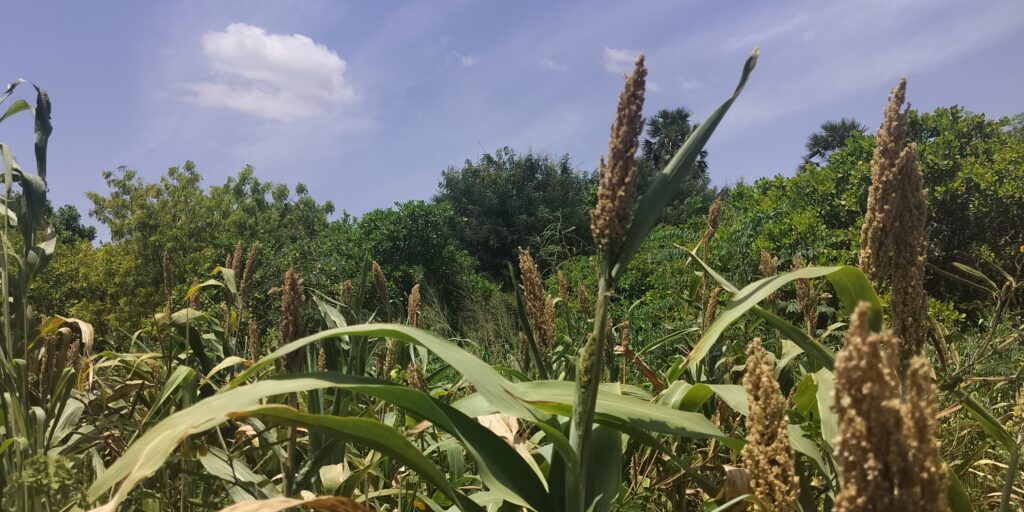
We are being called to view agriculture not as a ‘business’ or a transaction with nature, but a participatory ‘joyous sacrifice of interchange’, a way of mutual action and growth. Home » Blog » Food and Agriculture in Auroville, India Food and Agriculture in Auroville, India September 2025 · Anshul Aggarwal As consciousness advances, Sri Aurobindo (1939) envisioned that the desire for food would, “progress from the type of a mutually devouring hunger to the type of a mutual giving, of an increasingly joyous sacrifice of interchange…Thus the law of Hunger must give place progressively to the law of Love, the law of Division to the law of Unity, the law of Death to the law of Immortality” (pp. 207-208). We are being called to view agriculture not as a ‘business’ or a transaction with nature, but a participatory ‘joyous sacrifice of interchange’, a way of mutual action and growth. Can agriculture be more than growing food? Can it be a path toward human unity and the evolution of consciousness? Over the last five decades, Auroville has undertaken remarkable ecological restoration work—today, much of the township is now under a forest canopy. Alongside this, a network of community farms has taken root, supplying fruits, vegetables, grains, milk, and eggs to the kitchens of Auroville. Yet, like farms everywhere, Auroville’s food system is not without challenges. Farmers face the same global pressures: commodification of food, labour shortages, climate shocks, wildlife pressures, and financial strain. At the same time, Auroville’s farms hold the potential to be something more—collective experiments in the advancement of human consciousness. But we need a new language to address the often overlooked potential of agriculture, and of Auroville farms in particular. Looking at agriculture through the lens of Sri Aurobindo and Mother’s Integral Yoga allows us to discover its multiple dimensions, which could all be integrated into what we can call- Integral Agriculture. The Dimensions of Integral Agriculture 1. The Physical (Ecological) Dimension Farming is becoming increasingly complex due to the changing climate, the presence of wildlife on farms, and sudden attacks by insects and microbes on crops, among other factors. Being a farmer means bearing these challenges and risks while still trying to put food on the table. At the same time, agriculture itself has a massive impact on the land, and especially modern agriculture has caused large-scale biodiversity loss. Through agroecology and ethical stewardship, farms in Auroville are attempting to restore the balance between wilderness and cultivation and turn agriculture from colonisation of land into a conscious partnership with it. Auroville farms have an interesting history of regenerating land in different ways, and the diversity of soil profiles, diets and farming techniques in this community presents an incredible opportunity to experiment with different approaches toward this goal. 2. The Vital (Social-Economic-Political) Dimension Every farm is as much a self-contained community as it is a part of the wider socioeconomic and political network. A healthy farm cannot just be healthy ecologically but needs to address issues of financial sustainability, people’s welfare and the sovereignty of food production. The Mother and Sri Aurobindo envisioned self-sufficiency in food as essential for a gnostic community. In Auroville, this is both practical and symbolic: a way of lessening dependence on fragile global food systems and cultivating responsibility at a local level. An assessment of Auroville’s farms (2024) showed that the shortfall in community-grown food is not only about production—it is also about distribution and consumption patterns. Interestingly, 70% of the farmers themselves come from outside Auroville, reflecting the community’s openness and the challenge of embedding farming into its core culture. Community farming in Auroville is thus a rare, living laboratory: small enough to manage, yet complex enough to mirror the dilemmas of global food systems. 3. The Mental (Scientific) Dimension of Agriculture Technology, particularly Artificial Intelligence, is making inroads into all aspects of our lives, and agriculture is no exception. Today we have automated irrigation systems managed remotely at the touch of a phone, drones sowing seeds and spraying fertilisers and pesticides, drone bees facilitating pollination, satellite imagery being used to predict soil moisture, plant health and so on, multi-purpose tractors and combines that can manage a large monoculture farm almost independently. There are many who believe that ‘smart farming’ with technology will replace human farmers. But this will come at the cost of diversity and traditional human knowledge and experience, which has developed and sustained agriculture for at least over ten millennia. We need solutions that do not seek to replace farmers, but become their allies and partners in supporting a new future of agriculture, which is technology-driven and yet remains at a human scale. With its interest in the evolution of consciousness, Auroville is poised to become a pioneer in discovering frameworks of conscious technology, particularly in fields like agriculture. 4. The Spiritual (Community) Dimension of Agriculture Agriculture teaches us the need for expanding our notion of community from only humanity to the non-human beings on this planet. It requires us to re-establish our lost connection with nature and locate ourselves as participants in the larger flow of energy. As Sri Aurobindo (2005) notes, “All Matter according to the Upanishads is food, and this is the formula of the material world that ‘the eater eating is himself eaten’ (p. 204). Thus, food must be considered not only as an object of sustenance of the material life but also as an object of contemplation for a spiritual life. It is a reminder of our separation, our desire to complete ourselves through each morsel. Auroville’s commitment to realising human unity, a unity not only within the human community, but unity of human with the Divine, adds a spiritual dimension to the agriculture practised here. 5. The Psychic (Educational) Dimension of Agriculture Finally, we are in a time in the world when everything has stopped making sense. The solutions of the physical, vital, mental, and even spiritual are hard to grasp and are not
Photo Storyㅤㅤㅤㅤㅤㅤㅤㅤㅤㅤㅤ

A collection of pictures of small and big fauna of the farm.ㅤㅤ ㅤ ㅤ ㅤ ㅤㅤㅤㅤ ㅤ ㅤㅤㅤㅤ Home » Blog » Photo Story Photo Story August 2025 July 2025 · Karthick Mariappan Flora & Fauna of the farm https://auroorchard.auroville.org/wp-content/uploads/2025/08/PXL_20220707_044605599.TS_.mp4 Previous ArticleNext Article Featured Articles Monthly Updatesㅤㅤㅤㅤㅤㅤㅤㅤ 19 Sep 2025 Abundance Product of the Month 18 Sep 2025 Recipe Alert – Stir Fried Sweet Potato leaves with Tofu 22 Sep 2025 Food and Agriculture in Auroville, India 18 Sep 2025
Is AuroOrchard a Permaculture farm?

We get asked this question quite a lot! As Permaculture becomes more and more popular and perhaps projected as a wonderful solution for diversity and abundance, it is a general perception that “being a Permaculture farm” is the next big innovation in farming. Home » Blog » Is AuroOrchard a Permaculture farm? Is AuroOrchard a Permaculture farm? August 2025 · Anshul Aggarwal We get asked this question quite a lot! As Permaculture becomes more and more popular and perhaps projected as a wonderful solution for diversity and abundance, it is a general perception that “being a Permaculture farm” is the next big innovation in farming. My first answer is ‘NO!’, and my second, in classic permaculture style, is ‘it depends.’ We employ Permaculture design principles where needed and possible, but that does not define the farm. I have had the privilege of studying and working with some exceptional Permaculture teachers and practitioners from India and across the world. I took the Permaculture Design Certificate course in 2014 and the Permaculture Teacher Training Course in 2016. So this explanation comes from an informed place, a place of deep gratitude for Permaculture but also a place of recognition of its limitations. How did it all start? Permaculture was conceptualised by Bill Mollison and David Holmgren in the 1970s in Australia, in response to the crises of industrialised agriculture that intensified with the Green Revolution of the 1960s. They drew on the Aboriginal worldview, a philosophy of life that has sustained people for millennia without degrading the land, and on systems thinking, a then-emerging approach that studies the whole rather than just the parts. Combining these perspectives, they proposed a regenerative landscape design through which humans could practise sustainable, permanent agriculture, giving it the name “Permaculture.” Permaculture is a ‘design system’ Essentially, Permaculture is a design system. Design has long been a vital tool for human beings, enabling us to imagine and create. We are all designers in some way, using it moment to moment — thinking, planning, visualising, and adjusting with feedback. Over time, design as a discipline became more elaborate, shaping professions that relied on visualisation, spatial planning, architecture, product development, technology, and the power of imagination. Yet in the last couple of centuries, the means and tools of design have evolved so rapidly that the almost godly power it confers can sometimes turn the designer against the designed, and even against life itself. Ethics What makes Permaculture unique is that its design process is founded on three key ethics: Care for Earth Care for People Fair Share By placing these at the core, Permaculture calls on the designer to weigh every decision by its impact on the land, its people, and all forms of life. Echoes of these ethics run through ancient traditions and modern ecological thought, and Permaculture weaves them into a coherent, practical framework for action. Design principles and strategies Click to enlarge The principles of Permaculture are the guidelines for turning its three ethics into practice. They can be applied to systems of any scale, in ecology, communities, or even in one’s personal life. While many practitioners adapt or reinterpret the principles to suit their context, they all rest on natural patterns of circularity, interconnectedness, diversity, flexibility, and cooperation. From these principles emerge strategies such as earthworks, water and soil conservation, and community-based work. Bill Mollison outlined many of these in Permaculture One and Permaculture: A Designer’s Manual in the 1980s, and since then they have been applied and expanded upon by practitioners around the world. Permaculture in India Permaculture is a rapidly growing movement in India, attracting people dissatisfied with the status quo and seeking to reconnect with nature, learn integrated design, or grow their own food. Permaculture offers a strong foundation for working on the land, cultivating a sense of design, and developing an integrated approach to planning — skills especially valuable for those moving from cities to smaller towns and villages in search of a simpler, more meaningful life. Across the country, the number of groups and professionals offering design consultations and courses keeps growing and the community continues to share their challenges, successes, and conclusions here. However, many courses are urban-centric, catering to newcomers without deep farming experience; imported temperate-climate techniques sometimes need significant adaptation for tropical conditions; and short-term enthusiasm can fade if not grounded in daily practice and community support. The challenge of a mass movement Today, Permaculture extends far beyond agriculture. Within a few decades of its inception, the founders recognised that a permanent agriculture solution alone was not enough; creating such systems also required rethinking how people live and work together. This gave rise to social permaculture — an expansion from permanent agriculture to permanent culture. Over the years, it has captured the imagination of many, especially urban dwellers seeking a new language to imagine different possibilities. Yet such growth also brings dilution: Permaculture has come to mean many things, from crop diversity and organic farming to food forests and local food, and sometimes, as a result, it risks meaning nothing at all. It is certainly all of these, but not only these, and it resists absolutes, always seeking to understand the context and build from there. In my observation this enthusiasm for Permaculture can also sometimes overshadow the purpose of the work and a deeper, long-term relationship with land and community. The absence of spirit There is a concept in Permaculture called invisible structures, the subtle relationships that hold physical reality together. On a farm, for example, visible structures include the soil, water, plants, and infrastructure; the invisible ones are the relationships among the people working the land, their ties to the wider community, and the economic exchanges that sustain them. While the visible is rooted in the physical landscape, the invisible is grounded in the landscape of the mind. Permaculture recognises the need to design and cultivate this inner landscape as much as the outer, yet it avoids explicit conversation
Ayurveda Tips for rainy summer
Late summer, with its amount of rains, brings lots of humidity and dampness in the air that affect the body and its Dosha in many different ways: Pitta ferments and shows signs of Home » Blog » Ayurveda Tips for rainy summer Ayurveda Tips for rainy summer July 2025 · Dr. Be Late summer, with its amount of rains, brings lots of humidity and dampness in the air that affect the body and its Dosha in many different ways: Pitta ferments and shows signs of acidity, bloating, inflammation or strong body odour, lots of stagnation and retention felt in the digestive tract. Emotionally unhealthy Pitta becomes bitter, impatient and frustrated in the mind or the heart. Vata gets cold and makes the joints more painful with an irregular digestion and bowel movements and mind might be imbibed with anxious thoughts, worries or lack of concentration. We can help ourselves with the following recommendations: With the food Eat only when hungry and eat the appropriate amount (both hands joined together is the size of the stomach) Take a warm, cooked meal with any spices to improve the digestion (eg: ginger, turmeric, black pepper, cumin, coriander, cinnamon, ajwain, basil, garlic etc) Eat green leafy vegetables, take light dishes made of mung dal, vegetable soups… all pulses and dal are good when cooked with spices (all spices are good apart from red powder-chilli powder) For non-vegetarian, eat white meat or small fishes. Drink warm water all day long (especially when there’s a sore throat) Dinner should be light and taken 2 hours before going to bed Give energy to the body with cereals and grains such as: amaranth, barley, cooked oats, granola, rice Honey is the best sweetener Ghee used for cooking and Sesame and Olive oils for dressings Chew some neem or Tulsi leaves Some immunity enhancers: Giloy/Guduchi (Tinospora cordifolia), a very good immune regulator; 1tsp of powder morning and evening in warm water Amalaki (amla): full of vitamin C; consumed fresh if available or in powder Turmeric: Anti-inflammatory, can be used for gargling with warm water and a pinch of salt Tulsi (Ocimum tenuiflorum/sactum): for the lungs, fresh leaves in warm water Ashwagandha (Whitania somnifera): immune regulator and calming the nervous system; 1tsp morning and evening in milk or warm water Ginger – Turmeric – Black pepper powders (Be No1): improves digestion and energy, ½ tsp with warm water or lemon juice + honey once or twice a day Tulsi – Cinnamon – Amla – Ginger – Turmeric – Black pepper powders (Be No3): as prevention or in case of cold, cough, flu, feverish state, body ache, ½ tsp with a sip of warm water or lemon juice + honey once a day if it’s preventive, 3 times a day before food if there are symptoms Saffron, aloe vera, licorice herbal infusions Chyavanprash Avaleha: 1 tsp in the morning with breakfast Special treat for joint pain and inflammation: Shallaki Cream or Oil mixed with Castor Oil (Eranda Tailam): massage twice a day the painful joint, it’s a painkiller and anti-inflammatory Rosemary Essential Oil: 1 or 2 drops with the massaging oil and apply locally. It’s anti-inflammatory Shallaki Tablets: for arthritis, muscular pain, joint inflammation Triphala Guggulu Tabs: to reduce bloating, swelling, inflammatory conditions, 1 or 2 tabs per day before meals (use for short period) In the activities, help Pitta and Vata to be centred and grounded: Be grounded in the heart or abdomen with Yoga, Pranayama, Meditation, observing the breathing movements in the abdomen, Yoga Nidra, Body Awareness, Qi-Gong, Tai Chi… Regular exercise, 30 minutes daily Gardening, cultivating, weeding, cooking Keep warm, take warm showers, cover your neck from chilled breeze Gargling with salty water if sore throat Oil pulling with 1 Tbsp of sesame or coconut oil, keep in the mouth for some time, spit it out and rinse the mouth with warm water (can be done early morning or at bedtime after brushing the teeth) Nasya: pour 2 drops of sesame oil or Anu Tailam in each nostril once a day 4-5 drops of Castor Oil in the belly button followed by slight massage around the umbilicus at bed time Fragrances: sandalwood, rose, jasmine Let’s be all well, happy and healthy.Be at Santé Clinic Previous ArticleNext Article Featured Articles Monthly Updatesㅤㅤㅤㅤㅤㅤㅤㅤ 19 Sep 2025 Abundance Product of the Month 18 Sep 2025 Recipe Alert!ㅤㅤㅤㅤㅤㅤㅤㅤ 22 Sep 2025 Food and Agriculture in Auroville, India 18 Sep 2025
What Did Auroorchard Produce & Where It Went

This is an overview of the distribution of food from AuroOrchard during April 2024 to March 2025 and its comparison to the previous years. Despite multiple challenges, the farm continues to grow and progress on its vision to provide food for the community. Home » Blog » What Did Auroorchard Produce & Where It Went What Did Auroorchard Produce & Where It Went An analysis from April 2024 to March 2025 · AuroOrchard This is an overview of the distribution of food from AuroOrchard during April 2024 to March 2025 and its comparison to the previous years. Despite multiple challenges, the farm continues to grow and progress on its vision to provide food for the community. The financial year 2024-25 was particularly challenging as the farm lost 16 acres of cultivated land out of which 14 acres were orchards- Avocado, Soursop, Ramphal, Jackfruit, Lime, Banana, Papaya, Pomelo, Coconuts, Cashews and 2 acres were intensively cultivated vegetable gardens. We also lost a lot of Bananas and Papayas during Cyclone Fengal in December 2024. We are grateful to have received some financial support from Auroville International USA, France and Germany which allowed us to invest in expanding our cultivation during last year which helped in dealing with these losses in production. Over the last seven years, the farm production is rising significantly (see charts below) and despite the shocks of 2024-25, the overall production has risen for both vegetables and fruits. The following analysis outlines our major production and distribution trends. Vegetables, Fruits & Nuts The vegetable, fruit and nut production has been increasing on the farm on average since 2017. Every year, we are adding more land under more dense and diverse cultivation. At the moment, we are not considering adding more areas under vegetable cultivation and will only be more focussed on orchards. Even then, there is a huge scope to increase vegetable production through better management of existing gardens. The largest potential for AuroOrchard lies in fruit production. With around 18 acres of already existing fruit orchards, the production is still quite low. By careful pruning of some older trees, adding new trees and making the orchards more dense, we can grow a lot of fruit for the community, for which there is also a growing demand. Eggs In the last few years, we have been consistently experimenting with the poultry to find what is the best solution for highest ethical standards, quality as well as viable economics in providing eggs consistently to the community. In these years, we tried starting birds of di`erent ages, reorganised the free range area and finally replaced all the white birds for a variety of birds called ‘hyline-brown’. The dips in production between 2018 and 2020 were perhaps due to bad planning and a long gap between flocks. The dip in production in 2024-25 is due to health issues of the white birds and the complete transition to brown birds. With 1500 birds, we are expecting an average of around 900-1000 eggs per day this year. This would perhaps be the highest that we can imagine to distribute given the limited market in Auroville for free-range eggs that cost more. The cost of these eggs in outside markets are even more so we do not have a solution where these eggs are being sold at much less. Eventually, the cost of these eggs can be brought down significantly if Auroville has its own feed milling activity. It will also ensure better, rich and diverse food for the chickens. For the farm, the focus for the coming year is to continue developing the poultry practice and enhance the quality of the lives of the chickens and that of the eggs even more. Distribution The majority of the food produced went to PTDC followed by Foodlink and Aurovilians, Newcomers and volunteers. 99% of the food produced is distributed within Auroville. The remaining 1% is distributed around Auroville in the Bioregion and in Pondicherry to individuals and mainly Grinde store. With the share from some Auroville units going down and the farm expanding its cultivation, we will need more distribution options within and outside of Auroville. Financial sustainability Currently, more than half of the farm income comes from the eggs. Vegetables, fruits and nute despite their share of almost three quarters in production weight cover less than half of income. Within vegetable and fruits, vegetables are even less financially rewarding and the income from the eggs subsidises the cost of vegetable production. As our fruits cultivation expands, we are hoping to increase the income share from the fruits. The farm has also started selling seeds, saplings, and simple processed goods within Auroville, which has also created a new, though small for now, income stream. Previous ArticleNext Article Featured Articles Monthly Updatesㅤㅤㅤㅤㅤㅤㅤㅤ 19 Sep 2025 Abundance Product of the Month 18 Sep 2025 Recipe Alert!ㅤㅤㅤㅤㅤㅤㅤㅤ 22 Sep 2025 Food and Agriculture in Auroville, India 18 Sep 2025