
Glimpses of a solar futureㅤㅤㅤㅤ
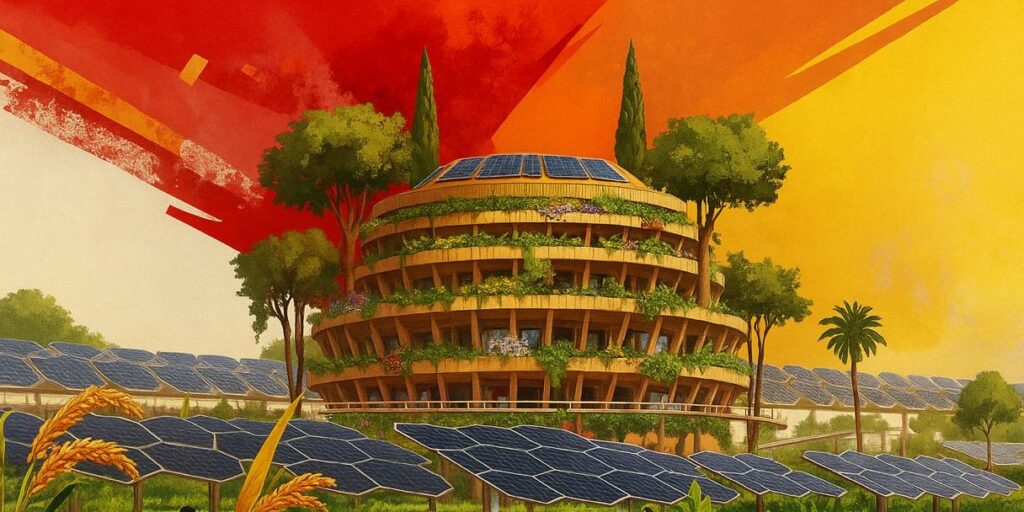
In the Sāṃkhya school of Indian philosophy, the unfolding of matter from spirit gives rise to the senses and to the five elemental manifestations of the material world. From space, emerges air, the principle of movement, and fire, the principle of transformation. Then comes water, carrying flow, continuity, and the subtle pulsations of energy through matter. From the settling of this movement is born earth, the solid ground where life takes form and rests in its full potential. Home » Blog » Glimpses of a solar future Glimpses of a solar future December 2025 · Fabius It all started with 0.1 acres of solar panels. We knew that energy demand would rise and become more and more important.The whole world was trying to find alternative sources of energy and society was slowly changing old systems in order to welcome a new era of electrical abundance. The main source? Sun.All forms of energy come from the Sun. Petrol, coal, wind, water, humans, all dependent and born from the stars. Technology has been trying to mimic the nuclear fusion process of our nearest star but why not just rely on the main source? The Sun delivers radiation of light and we were just converting a tiny fraction of it. It was upon these reflections that a small group of farmers and pioneers started to put into practice the theory by using the land of a farm called “AuroOrchard”, in Auroville, Tamil Nadu, India. It was 2026 when 0.1 acres were smartly covered by solar panels.Solar panels were installed to a height that made agriculture possible under them, the technique was called “agrivoltaics”.The same soil was not only used to embrace the radiations of the Sun and convert them into electricity, it was also hosting the seeds of different plants who were enjoying the shadow, especially during the increasingly hot summers. The 0.1-acre pilot included salt batteries, accumulators that provided eco-friendly and safe alternatives to traditional lithium batteries. Salt, sodium chloride were easily accessible from the nearby ocean. After one year of positive testing and calculations, in 2027, different refrigerators were installed in order to preserve the food, reduce the waste and increase the quality. Encouraged by bountiful harvests and energy surplus, AuroOrchard expanded its vision. Indoor vertical farms emerged in small geodesic domes, employing advanced hydroponic and aeroponic systems under carefully tuned LED lights, sound frequencies lullabied the emerging sprouts. A year-round cultivation of fruits and vegetables, resilient even to extreme weather, became reality. In 2030 AuroOrchard was becoming a beautiful model where technology, nature and spirituality started to harmoniously blend together. Traditional Tamil farming wisdom blended effortlessly with cutting-edge science, inspiring visitors worldwide. Farming started to become more than survival. It was the art to survive, research and thrive especially in hostile conditions. Some aeroengineers started to visit the farm in order to be inspired for their space travels, communities from all over the world were able to access the open sourced projects and implement them in their own land, a new hub was silently growing like the seeds under the crystalline silicon-perovskite cells of the solar panels. Plants began serving new functions beyond nourishment. Researchers developed bio-computing methods using plant neurobiology, harnessing their natural electrical signaling to perform computational tasks and data storage within living systems. In 2040, AuroOrchard’s research deepened into plant consciousness and healing powers. Experiments revealed how plants’ subtle energetic fields could positively influence human well-being, offering complementary pathways toward health through presence and interaction. A whole community was thriving thanks to the farm, which, like a generous mother, provided food, energy, protection, inspiration and unconditional love. It just started with 0.1 acres of solar panels. Previous Article Featured Articles Monthly Updatesㅤㅤㅤㅤㅤㅤㅤㅤ 28 Nov 2025 Abundance Product of the Month 22 Oct 2025 Glimpses of a solar futureㅤㅤㅤㅤ 05 Dec 2025 Flow of fire and water on the farmㅤㅤ 03 Dec 2025
Hands-On Approachㅤㅤㅤㅤㅤㅤㅤㅤㅤ
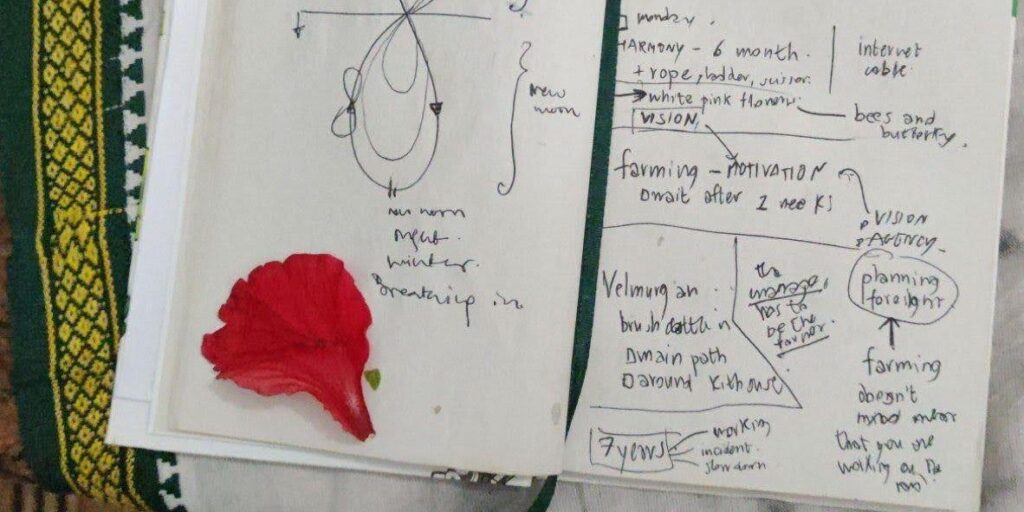
But you can truly learn when your feet and hands are on the field. The greatest knowledge is that which is applied to daily life. Home » Blog » Hands-On Approach Hands-On Approach 25 November 2025 · Fabio Karlino “Nowadays everyone could become (intellectually) a farmer.We have books, schools, courses, youtube videos …”But you can truly learn when your feet and hands are on the field.The greatest knowledge is that which is applied to daily life. And this happens in AuroOrchard.Ideas are welcome, brainstorming is magnificent, vision is encouraged.But let’s start from the ground, let’s start talking with naturebecause farming is a conversation with nature and with ourselves. First, as humans, we should grow discipline in the orchard of our good habits.The discipline to be constant, be patient and wait for the seedsthat we’ve planted with love, welcome them by preparing their bedswhere they’re gonna sleep, breathe and live. Why farming?What does it mean to be a farmer?How could human artificial activity be called ‘natural farming’?The mind is hungry for answers. Be patient, the answers will come through experience.You don’t need to rush to search on the artificial web,look inside you, wait for the universe to provide you the keysnot encapsulated in words and concepts but feelings, experiences. Then a good talk with another human,especially if it is an experienced one like Anshul,could really help to recalibrate and transfer learning. The core of farming is food.This is the basic but fundamental starting point.Around this first principlehumans create families, communities, organizations. To be a farmer is not just being on the land with dirty hands,Farming means planning, forecasting, researching, experimenting.It’s an equilibrium, a balance between physical and intellectual activity,between materialism and spirituality for the parallel evolution of both. Natural farming does not exist. Have you ever seen a farm naturally grow somewhere with no human intervention?What we define natural farming are all techniques and practices used in agriculturein order to mimic the natural processes. Just like in a forest the leaves naturally cover the soil making it humid and fertilein the same way we are mulching by putting branches and leaves from the pruning.The bio inputs of the animals and microorganisms that live in the forestare replicated with a layer of compost and biomass. Is there room for improvement? Of course.What will the future of farming look like? We are creating it.What’s the best way to learn? Hands-on approach. Previous ArticleNext Article Featured Articles Monthly Updatesㅤㅤㅤㅤㅤㅤㅤㅤ 28 Nov 2025 Abundance Product of the Month 22 Oct 2025 Flow of fire and water on the farmㅤㅤ 03 Dec 2025 Hands-On Approachㅤㅤㅤㅤㅤㅤㅤㅤㅤ 29 Nov 2025
Lessons from Auroville Farm Assessment 2023

Across the red soils of Tamil Nadu’s southeast coast, Auroville’s farms continue to hold space for one of the most enduring experiments in community-scale organic farming and agroecology. Home » Blog » Lessons from Auroville Farm Assessment 2023 Lessons from Auroville Farm Assessment 2023 October 2025 · Anshul Aggarwal Across the red soils of Tamil Nadu’s southeast coast, Auroville’s farms continue to hold space for one of the most enduring experiments in community-scale organic farming and agroecology. With the rising ecological, social, and economic pressures on agriculture, it is important to review Auroville farming and put it in perspective with the ongoing global discourse on food and agriculture. As a first step towards this, in 2023, a sector-wide assessment brought together five-year data from sixteen of Auroville’s twenty-six farms to understand the state of farming in Auroville. The study examined land and water use, production, labour, and finance. What emerged is a picture of both resilience and fragility — a network of farms that have weathered shocks, diversified their outputs, and upheld ecological integrity, yet remain challenged by issues of labour, finance, and generational renewal. The full assessment methodology and results can be found here: https://www.avfarmassessment.in/ The assessment team comprised four Aurovilians: Anshul, Avinash, Madhuri, Nidhin. A summary of the main insights gleaned from the assessment with recommendations from the assessment team are given below. 1. A Network of Commons-Based Farms The sixteen farms together span 306 acres, of which 84% are actively used. About 60% of the cultivable land is irrigated through borewells, ponds, and rainwater harvesting systems, reflecting adaptation to Auroville’s dry plateau ecology. All the farms practice organic management, relying on compost, green manures, and traditional bio-ferments such as jeevamruth and panchagavya. Dairy-holding farms close the nutrient cycle internally, producing manure and fertility inputs in-house. These are not industrial operations but diverse agroecosystems that integrate fruits, vegetables, grains, dairy, and poultry. 2. Resilience Through Diversity Production data show clear patterns of resilience. Vegetable output declined sharply—by 34%—in 2020–21 due to COVID-19 and extreme rainfall, but recovered by 2022–23. Fruits remained steady around 42 tonnes annually, while dairy production more than doubled and egg output nearly tripled. This diversity has been key to recovery. Perennial crops and livestock buffered the shocks faced by annual vegetables, demonstrating that integration across crops and animals increases resilience. The findings reaffirm a core agroecological principle: diversity and cooperation, not specialisation, sustain farming systems in the long run. 3. Labour: The Strength and the Strain Auroville’s farms employ about 150 people, including 49 Aurovilians, 65 regular Tamil workers, and 30–70 seasonal workers. They remain a stable source of employment in the region, yet labour conditions reveal deep strains. Daily wages in 2022–23 ranged from ₹200–565 for women and ₹365–800 for men, exposing a persistent gender gap. Wages rise 5–10% each year, often faster than farm income, and the workforce is ageing with few young Aurovilians entering the field. Auroville’s community agriculture cannot thrive without labour justice. Equity in pay (gender and Aurovilian v/s non-Aurovilian), social benefits, and apprenticeship pathways for youth must become collective priorities if Auroville’s farms are to remain viable into the next generation. Additionally, the costs of justice must not be passed on solely to consumers or absorbed by individual farms, but held collectively within the community economy. 4. Finance and the Fragility of the Shared Economy Between 2018 and 2023, the assessed farms collectively borrowed about ₹1.05 crore—43% from Auroville’s Farm Group and 57% through personal investment by farmers themselves. Only one-third has been repaid. This reliance on private funding highlights a contradiction within Auroville’s shared economy: collective food security often depends on individual financial risk. Even farms with positive farming surpluses remain vulnerable without structured capital support or budget-linked planning. To secure the future, the community must adopt shared financial frameworks—coordinated budgeting, transparent reporting, and collective investment—to replace ad-hoc dependence on personal loans and goodwill. 5. Ecological and Operational Constraints Wildlife intrusion—from boars, deer, and porcupines to peacocks and stray cattle—is among the most cited causes of crop loss. Periodic water scarcity and monsoon flooding further disrupt operations. Limited cold storage and processing facilities lead to wastage of perishable produce, especially fruits.Larger farms with machinery and infrastructure weather these challenges more easily, while smaller vegetable farms remain exposed. Conscious and significant investment in capital for shared tractors, boundary fencing, and expanded rainwater harvesting could greatly improve sector-wide resilience. 6. Aligning Production and Consumption The assessment reveals a mismatch between what Auroville’s farms produce and what its residents eat. While farms grow tropical fruits, greens, and grains, many community kitchens and eateries rely on temperate vegetables and external supplies. Bridging this gap requires closer coordination between farms and consumers. Seasonal menu planning, CSA-style prepayments, and small-scale processing of surplus fruits into dried or preserved products could stabilise farm income and reduce waste. In doing so, the community also reclaims its connection to seasonal, local food. 7. Education, Youth, and Food Sovereignty The long-term sustainability of Auroville’s agriculture depends on generational renewal. The study recommends a young-farmer pathway combining practical training, housing support, and education in agroecology and cooperative management. Farming education must be seen not just as vocational training but as an integral practice of consciousness—a way to unite ecological awareness, skill, and inner growth. Re-rooting farming within Auroville’s educational ethos can ensure that agriculture remains both livelihood and spiritual discipline. Beyond food security, Auroville’s guiding principle must be food sovereignty — the community’s ability to shape its own food system in alignment with ecological limits and social justice. This means shared governance among farmers, distributors, kitchens, and consumers; transparent budgeting; and participatory planning. Overall the assessment presents a mixed but hopeful picture: a sector that holds the resilience to recover from crisis, has diversified its base, and maintained organic integrity, yet faces structural fragilities in labour and finance, remaining limited in utilising its full potential. In doing so, Auroville’s living experiment in community farming continues to offer a quiet but vital contribution to the search for
Food and Agriculture in Auroville, India
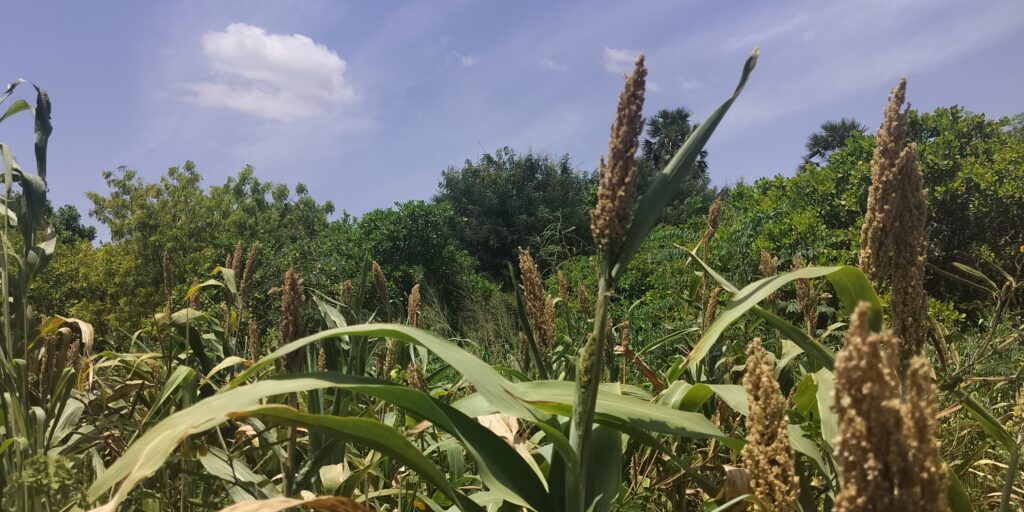
We are being called to view agriculture not as a ‘business’ or a transaction with nature, but a participatory ‘joyous sacrifice of interchange’, a way of mutual action and growth. Home » Blog » Food and Agriculture in Auroville, India Food and Agriculture in Auroville, India September 2025 · Anshul Aggarwal As consciousness advances, Sri Aurobindo (1939) envisioned that the desire for food would, “progress from the type of a mutually devouring hunger to the type of a mutual giving, of an increasingly joyous sacrifice of interchange…Thus the law of Hunger must give place progressively to the law of Love, the law of Division to the law of Unity, the law of Death to the law of Immortality” (pp. 207-208). We are being called to view agriculture not as a ‘business’ or a transaction with nature, but a participatory ‘joyous sacrifice of interchange’, a way of mutual action and growth. Can agriculture be more than growing food? Can it be a path toward human unity and the evolution of consciousness? Over the last five decades, Auroville has undertaken remarkable ecological restoration work—today, much of the township is now under a forest canopy. Alongside this, a network of community farms has taken root, supplying fruits, vegetables, grains, milk, and eggs to the kitchens of Auroville. Yet, like farms everywhere, Auroville’s food system is not without challenges. Farmers face the same global pressures: commodification of food, labour shortages, climate shocks, wildlife pressures, and financial strain. At the same time, Auroville’s farms hold the potential to be something more—collective experiments in the advancement of human consciousness. But we need a new language to address the often overlooked potential of agriculture, and of Auroville farms in particular. Looking at agriculture through the lens of Sri Aurobindo and Mother’s Integral Yoga allows us to discover its multiple dimensions, which could all be integrated into what we can call- Integral Agriculture. The Dimensions of Integral Agriculture 1. The Physical (Ecological) Dimension Farming is becoming increasingly complex due to the changing climate, the presence of wildlife on farms, and sudden attacks by insects and microbes on crops, among other factors. Being a farmer means bearing these challenges and risks while still trying to put food on the table. At the same time, agriculture itself has a massive impact on the land, and especially modern agriculture has caused large-scale biodiversity loss. Through agroecology and ethical stewardship, farms in Auroville are attempting to restore the balance between wilderness and cultivation and turn agriculture from colonisation of land into a conscious partnership with it. Auroville farms have an interesting history of regenerating land in different ways, and the diversity of soil profiles, diets and farming techniques in this community presents an incredible opportunity to experiment with different approaches toward this goal. 2. The Vital (Social-Economic-Political) Dimension Every farm is as much a self-contained community as it is a part of the wider socioeconomic and political network. A healthy farm cannot just be healthy ecologically but needs to address issues of financial sustainability, people’s welfare and the sovereignty of food production. The Mother and Sri Aurobindo envisioned self-sufficiency in food as essential for a gnostic community. In Auroville, this is both practical and symbolic: a way of lessening dependence on fragile global food systems and cultivating responsibility at a local level. An assessment of Auroville’s farms (2024) showed that the shortfall in community-grown food is not only about production—it is also about distribution and consumption patterns. Interestingly, 70% of the farmers themselves come from outside Auroville, reflecting the community’s openness and the challenge of embedding farming into its core culture. Community farming in Auroville is thus a rare, living laboratory: small enough to manage, yet complex enough to mirror the dilemmas of global food systems. 3. The Mental (Scientific) Dimension of Agriculture Technology, particularly Artificial Intelligence, is making inroads into all aspects of our lives, and agriculture is no exception. Today we have automated irrigation systems managed remotely at the touch of a phone, drones sowing seeds and spraying fertilisers and pesticides, drone bees facilitating pollination, satellite imagery being used to predict soil moisture, plant health and so on, multi-purpose tractors and combines that can manage a large monoculture farm almost independently. There are many who believe that ‘smart farming’ with technology will replace human farmers. But this will come at the cost of diversity and traditional human knowledge and experience, which has developed and sustained agriculture for at least over ten millennia. We need solutions that do not seek to replace farmers, but become their allies and partners in supporting a new future of agriculture, which is technology-driven and yet remains at a human scale. With its interest in the evolution of consciousness, Auroville is poised to become a pioneer in discovering frameworks of conscious technology, particularly in fields like agriculture. 4. The Spiritual (Community) Dimension of Agriculture Agriculture teaches us the need for expanding our notion of community from only humanity to the non-human beings on this planet. It requires us to re-establish our lost connection with nature and locate ourselves as participants in the larger flow of energy. As Sri Aurobindo (2005) notes, “All Matter according to the Upanishads is food, and this is the formula of the material world that ‘the eater eating is himself eaten’ (p. 204). Thus, food must be considered not only as an object of sustenance of the material life but also as an object of contemplation for a spiritual life. It is a reminder of our separation, our desire to complete ourselves through each morsel. Auroville’s commitment to realising human unity, a unity not only within the human community, but unity of human with the Divine, adds a spiritual dimension to the agriculture practised here. 5. The Psychic (Educational) Dimension of Agriculture Finally, we are in a time in the world when everything has stopped making sense. The solutions of the physical, vital, mental, and even spiritual are hard to grasp and are not
Photo Storyㅤㅤㅤㅤㅤㅤㅤㅤㅤㅤㅤ

A collection of pictures of small and big fauna of the farm.ㅤㅤ ㅤ ㅤ ㅤ ㅤㅤㅤㅤ ㅤ ㅤㅤㅤㅤ Home » Blog » Photo Story Photo Story August 2025 July 2025 · Karthick Mariappan Flora & Fauna of the farm https://auroorchard.auroville.org/wp-content/uploads/2025/08/PXL_20220707_044605599.TS_.mp4 Previous ArticleNext Article Featured Articles Monthly Updatesㅤㅤㅤㅤㅤㅤㅤㅤ 19 Sep 2025 Abundance Product of the Month 18 Sep 2025 Recipe Alert – Stir Fried Sweet Potato leaves with Tofu 22 Sep 2025 Food and Agriculture in Auroville, India 18 Sep 2025
Is AuroOrchard a Permaculture farm?

We get asked this question quite a lot! As Permaculture becomes more and more popular and perhaps projected as a wonderful solution for diversity and abundance, it is a general perception that “being a Permaculture farm” is the next big innovation in farming. Home » Blog » Is AuroOrchard a Permaculture farm? Is AuroOrchard a Permaculture farm? August 2025 · Anshul Aggarwal We get asked this question quite a lot! As Permaculture becomes more and more popular and perhaps projected as a wonderful solution for diversity and abundance, it is a general perception that “being a Permaculture farm” is the next big innovation in farming. My first answer is ‘NO!’, and my second, in classic permaculture style, is ‘it depends.’ We employ Permaculture design principles where needed and possible, but that does not define the farm. I have had the privilege of studying and working with some exceptional Permaculture teachers and practitioners from India and across the world. I took the Permaculture Design Certificate course in 2014 and the Permaculture Teacher Training Course in 2016. So this explanation comes from an informed place, a place of deep gratitude for Permaculture but also a place of recognition of its limitations. How did it all start? Permaculture was conceptualised by Bill Mollison and David Holmgren in the 1970s in Australia, in response to the crises of industrialised agriculture that intensified with the Green Revolution of the 1960s. They drew on the Aboriginal worldview, a philosophy of life that has sustained people for millennia without degrading the land, and on systems thinking, a then-emerging approach that studies the whole rather than just the parts. Combining these perspectives, they proposed a regenerative landscape design through which humans could practise sustainable, permanent agriculture, giving it the name “Permaculture.” Permaculture is a ‘design system’ Essentially, Permaculture is a design system. Design has long been a vital tool for human beings, enabling us to imagine and create. We are all designers in some way, using it moment to moment — thinking, planning, visualising, and adjusting with feedback. Over time, design as a discipline became more elaborate, shaping professions that relied on visualisation, spatial planning, architecture, product development, technology, and the power of imagination. Yet in the last couple of centuries, the means and tools of design have evolved so rapidly that the almost godly power it confers can sometimes turn the designer against the designed, and even against life itself. Ethics What makes Permaculture unique is that its design process is founded on three key ethics: Care for Earth Care for People Fair Share By placing these at the core, Permaculture calls on the designer to weigh every decision by its impact on the land, its people, and all forms of life. Echoes of these ethics run through ancient traditions and modern ecological thought, and Permaculture weaves them into a coherent, practical framework for action. Design principles and strategies Click to enlarge The principles of Permaculture are the guidelines for turning its three ethics into practice. They can be applied to systems of any scale, in ecology, communities, or even in one’s personal life. While many practitioners adapt or reinterpret the principles to suit their context, they all rest on natural patterns of circularity, interconnectedness, diversity, flexibility, and cooperation. From these principles emerge strategies such as earthworks, water and soil conservation, and community-based work. Bill Mollison outlined many of these in Permaculture One and Permaculture: A Designer’s Manual in the 1980s, and since then they have been applied and expanded upon by practitioners around the world. Permaculture in India Permaculture is a rapidly growing movement in India, attracting people dissatisfied with the status quo and seeking to reconnect with nature, learn integrated design, or grow their own food. Permaculture offers a strong foundation for working on the land, cultivating a sense of design, and developing an integrated approach to planning — skills especially valuable for those moving from cities to smaller towns and villages in search of a simpler, more meaningful life. Across the country, the number of groups and professionals offering design consultations and courses keeps growing and the community continues to share their challenges, successes, and conclusions here. However, many courses are urban-centric, catering to newcomers without deep farming experience; imported temperate-climate techniques sometimes need significant adaptation for tropical conditions; and short-term enthusiasm can fade if not grounded in daily practice and community support. The challenge of a mass movement Today, Permaculture extends far beyond agriculture. Within a few decades of its inception, the founders recognised that a permanent agriculture solution alone was not enough; creating such systems also required rethinking how people live and work together. This gave rise to social permaculture — an expansion from permanent agriculture to permanent culture. Over the years, it has captured the imagination of many, especially urban dwellers seeking a new language to imagine different possibilities. Yet such growth also brings dilution: Permaculture has come to mean many things, from crop diversity and organic farming to food forests and local food, and sometimes, as a result, it risks meaning nothing at all. It is certainly all of these, but not only these, and it resists absolutes, always seeking to understand the context and build from there. In my observation this enthusiasm for Permaculture can also sometimes overshadow the purpose of the work and a deeper, long-term relationship with land and community. The absence of spirit There is a concept in Permaculture called invisible structures, the subtle relationships that hold physical reality together. On a farm, for example, visible structures include the soil, water, plants, and infrastructure; the invisible ones are the relationships among the people working the land, their ties to the wider community, and the economic exchanges that sustain them. While the visible is rooted in the physical landscape, the invisible is grounded in the landscape of the mind. Permaculture recognises the need to design and cultivate this inner landscape as much as the outer, yet it avoids explicit conversation
Ayurveda Tips for rainy summer

Late summer, with its amount of rains, brings lots of humidity and dampness in the air that affect the body and its Dosha in many different ways: Pitta ferments and shows signs of Home » Blog » Ayurveda Tips for rainy summer Ayurveda Tips for rainy summer July 2025 · Dr. Be Late summer, with its amount of rains, brings lots of humidity and dampness in the air that affect the body and its Dosha in many different ways: Pitta ferments and shows signs of acidity, bloating, inflammation or strong body odour, lots of stagnation and retention felt in the digestive tract. Emotionally unhealthy Pitta becomes bitter, impatient and frustrated in the mind or the heart. Vata gets cold and makes the joints more painful with an irregular digestion and bowel movements and mind might be imbibed with anxious thoughts, worries or lack of concentration. We can help ourselves with the following recommendations: With the food Eat only when hungry and eat the appropriate amount (both hands joined together is the size of the stomach) Take a warm, cooked meal with any spices to improve the digestion (eg: ginger, turmeric, black pepper, cumin, coriander, cinnamon, ajwain, basil, garlic etc) Eat green leafy vegetables, take light dishes made of mung dal, vegetable soups… all pulses and dal are good when cooked with spices (all spices are good apart from red powder-chilli powder) For non-vegetarian, eat white meat or small fishes. Drink warm water all day long (especially when there’s a sore throat) Dinner should be light and taken 2 hours before going to bed Give energy to the body with cereals and grains such as: amaranth, barley, cooked oats, granola, rice Honey is the best sweetener Ghee used for cooking and Sesame and Olive oils for dressings Chew some neem or Tulsi leaves Some immunity enhancers: Giloy/Guduchi (Tinospora cordifolia), a very good immune regulator; 1tsp of powder morning and evening in warm water Amalaki (amla): full of vitamin C; consumed fresh if available or in powder Turmeric: Anti-inflammatory, can be used for gargling with warm water and a pinch of salt Tulsi (Ocimum tenuiflorum/sactum): for the lungs, fresh leaves in warm water Ashwagandha (Whitania somnifera): immune regulator and calming the nervous system; 1tsp morning and evening in milk or warm water Ginger – Turmeric – Black pepper powders (Be No1): improves digestion and energy, ½ tsp with warm water or lemon juice + honey once or twice a day Tulsi – Cinnamon – Amla – Ginger – Turmeric – Black pepper powders (Be No3): as prevention or in case of cold, cough, flu, feverish state, body ache, ½ tsp with a sip of warm water or lemon juice + honey once a day if it’s preventive, 3 times a day before food if there are symptoms Saffron, aloe vera, licorice herbal infusions Chyavanprash Avaleha: 1 tsp in the morning with breakfast Special treat for joint pain and inflammation: Shallaki Cream or Oil mixed with Castor Oil (Eranda Tailam): massage twice a day the painful joint, it’s a painkiller and anti-inflammatory Rosemary Essential Oil: 1 or 2 drops with the massaging oil and apply locally. It’s anti-inflammatory Shallaki Tablets: for arthritis, muscular pain, joint inflammation Triphala Guggulu Tabs: to reduce bloating, swelling, inflammatory conditions, 1 or 2 tabs per day before meals (use for short period) In the activities, help Pitta and Vata to be centred and grounded: Be grounded in the heart or abdomen with Yoga, Pranayama, Meditation, observing the breathing movements in the abdomen, Yoga Nidra, Body Awareness, Qi-Gong, Tai Chi… Regular exercise, 30 minutes daily Gardening, cultivating, weeding, cooking Keep warm, take warm showers, cover your neck from chilled breeze Gargling with salty water if sore throat Oil pulling with 1 Tbsp of sesame or coconut oil, keep in the mouth for some time, spit it out and rinse the mouth with warm water (can be done early morning or at bedtime after brushing the teeth) Nasya: pour 2 drops of sesame oil or Anu Tailam in each nostril once a day 4-5 drops of Castor Oil in the belly button followed by slight massage around the umbilicus at bed time Fragrances: sandalwood, rose, jasmine Let’s be all well, happy and healthy.Be at Santé Clinic Previous ArticleNext Article Featured Articles Monthly Updatesㅤㅤㅤㅤㅤㅤㅤㅤ 19 Sep 2025 Abundance Product of the Month 18 Sep 2025 Recipe Alert!ㅤㅤㅤㅤㅤㅤㅤㅤ 22 Sep 2025 Food and Agriculture in Auroville, India 18 Sep 2025
What Did AuroOrchard Produce & Where It Went

This is an overview of the distribution of food from AuroOrchard during April 2024 to March 2025 and its comparison to the previous years. Despite multiple challenges, the farm continues to grow and progress on its vision to provide food for the community. Home » Blog » What Did Auroorchard Produce & Where It Went What Did Auroorchard Produce & Where It Went An analysis from April 2024 to March 2025 · AuroOrchard This is an overview of the distribution of food from AuroOrchard during April 2024 to March 2025 and its comparison to the previous years. Despite multiple challenges, the farm continues to grow and progress on its vision to provide food for the community. The financial year 2024-25 was particularly challenging as the farm lost 16 acres of cultivated land out of which 14 acres were orchards- Avocado, Soursop, Ramphal, Jackfruit, Lime, Banana, Papaya, Pomelo, Coconuts, Cashews and 2 acres were intensively cultivated vegetable gardens. We also lost a lot of Bananas and Papayas during Cyclone Fengal in December 2024. We are grateful to have received some financial support from Auroville International USA, France and Germany which allowed us to invest in expanding our cultivation during last year which helped in dealing with these losses in production. Over the last seven years, the farm production is rising significantly (see charts below) and despite the shocks of 2024-25, the overall production has risen for both vegetables and fruits. The following analysis outlines our major production and distribution trends. Vegetables, Fruits & Nuts The vegetable, fruit and nut production has been increasing on the farm on average since 2017. Every year, we are adding more land under more dense and diverse cultivation. At the moment, we are not considering adding more areas under vegetable cultivation and will only be more focussed on orchards. Even then, there is a huge scope to increase vegetable production through better management of existing gardens. The largest potential for AuroOrchard lies in fruit production. With around 18 acres of already existing fruit orchards, the production is still quite low. By careful pruning of some older trees, adding new trees and making the orchards more dense, we can grow a lot of fruit for the community, for which there is also a growing demand. Eggs In the last few years, we have been consistently experimenting with the poultry to find what is the best solution for highest ethical standards, quality as well as viable economics in providing eggs consistently to the community. In these years, we tried starting birds of di`erent ages, reorganised the free range area and finally replaced all the white birds for a variety of birds called ‘hyline-brown’. The dips in production between 2018 and 2020 were perhaps due to bad planning and a long gap between flocks. The dip in production in 2024-25 is due to health issues of the white birds and the complete transition to brown birds. With 1500 birds, we are expecting an average of around 900-1000 eggs per day this year. This would perhaps be the highest that we can imagine to distribute given the limited market in Auroville for free-range eggs that cost more. The cost of these eggs in outside markets are even more so we do not have a solution where these eggs are being sold at much less. Eventually, the cost of these eggs can be brought down significantly if Auroville has its own feed milling activity. It will also ensure better, rich and diverse food for the chickens. For the farm, the focus for the coming year is to continue developing the poultry practice and enhance the quality of the lives of the chickens and that of the eggs even more. Distribution The majority of the food produced went to PTDC followed by Foodlink and Aurovilians, Newcomers and volunteers. 99% of the food produced is distributed within Auroville. The remaining 1% is distributed around Auroville in the Bioregion and in Pondicherry to individuals and mainly Grinde store. With the share from some Auroville units going down and the farm expanding its cultivation, we will need more distribution options within and outside of Auroville. Financial sustainability Currently, more than half of the farm income comes from the eggs. Vegetables, fruits and nute despite their share of almost three quarters in production weight cover less than half of income. Within vegetable and fruits, vegetables are even less financially rewarding and the income from the eggs subsidises the cost of vegetable production. As our fruits cultivation expands, we are hoping to increase the income share from the fruits. The farm has also started selling seeds, saplings, and simple processed goods within Auroville, which has also created a new, though small for now, income stream. Previous ArticleNext Article Featured Articles Monthly Updatesㅤㅤㅤㅤㅤㅤㅤㅤ 19 Sep 2025 Abundance Product of the Month 18 Sep 2025 Recipe Alert!ㅤㅤㅤㅤㅤㅤㅤㅤ 22 Sep 2025 Food and Agriculture in Auroville, India 18 Sep 2025
FARMACYㅤㅤㅤㅤㅤㅤㅤㅤ
According to Ayurveda, the qualities of summer are hot, sharp, and penetrating. That’s why our Home » Blog » Farmacy FARMACY June 01, 2025 · Dr. Be TIME TO SUMMERNATE Ayurveda healthy tips According to Ayurveda, the qualities of summer are hot, sharp, and penetrating. That’s why our pitta dosha – the subtle fire that controls metabolism and transformation – can cause us to overheat. The sun saps the energy from the body, from the plants and the earth, increasing heat and dryness. Pitta needs to be looked after to maintain a good energy, mental clarity, joyfulness, good digestion and blood circulation, a beautiful glow of the skin and a sound sleep. When Pitta is out of balance it will give skin problems, hot flashes, exhaustion, indigestion or loose stool. Emotionally, excess Pitta manifests through irritation, short-temper, impatience, judgement/criticism, perfectionism… Before Pitta reaches uncontrollable heights, remain cool, calm and pamper the liver: With the food: As Agni (digestive fire) weakens, it is better to eat light, unctuous (slightly oily), cooling food such as salads and juices. Favorable taste: Bitter taste, Sweet taste (to take moderately in case of diabetes and high triglycerides). Salty taste should be taken reasonably Drink water stored in earthen pot Raw food/salads are taken at lunch mainly Proteins: mungdal, chickpeas, beans, sprouts, nuts and seeds, non-veg: white meat, fish, seashell, dairies for breakfast or lunch, eggs Cereals for energy: jasmine rice, barley, red rice, millet (fermented ragi) Vegetables: pumpkin, bittergourd, bottlegourd, snakegourd, ashgourd, cucumber (taken separately), salads, green leafy vegetables, broccoli, cabbage, celery, carrots, drumstick (moringa), zucchini, plantain Fruits: amla, pomegranate, banana, ramphala, chiku, papaya, apple, grape, date, watermelon and melon (to be taken separately), coconut Beverages: buttermilk, sweet lassi, coconut water, mint, lemongrass, cardamom, chamomile, nannari (sarsaparilla), amla juice, watermelon juice, vegetable juice, cucumber milk (blend ½ cup of peeled cucumber in 1 cup of milk – cow or other veg milk- with a pinch of sugar), electrolyte (1 lemon juice + 1tsp of sugar + 1 pinch salt in a glass of water), Lipids: ghee, olive or sunflower or coconut oil Spices: cumin, coriander, black pepper, turmeric, fennel seeds, fresh aromatic herbs (dill, coriander, fennel, mint, parsley, saffron) Avoid: Pungent and sour tastes (especially for people who are Pitta dominant) Pitta increasing items: chillies, fermented food (apart from idli and dosai), deep-fried, sour buttermilk or curd, red meat, alcohol (strong liquor, red wine), coffee … Drinking beverages coming from the fridge or freezer during meals Ice-cream at the end of a meal (best to be taken when the digestion is finished, around 4pm) Routine to favour: Avoid direct sun contact specially between 11am and 4pm, and protect from the heat by keeping a humid towel/cap on the head A nap of half an hour after lunch is allowed Body massage with coconut oil – if there’s no time every day to apply oil on the body, then massage ears, hands and feet + pour 4-5 drops of coconut oil on the fontanelle Bath with cool water and apply a paste of sandalwood on the face, heart and lower abdomen (these are the 3 main parts that should remain fresh to maintain the coolness in the whole body); foot bath in the evening with vetiver roots, rose water or hibiscus flowers Swimming, aquagym, any water activities. Qi-Gong, Tai Chi, light running: max 30 minutes early morning or late evening; walks in green environment, forest Soft yoga, pranayama (Sheetali, Sheetakari, ida nadi inhalation-left nostril inhalation), meditation with Gayatri mantra Walk under the moonlight, full moon bath Wear loose and comfortable cotton or linen clothes (white, blue, green, gray colours) Cooling jewellery: sandalwood beads, jade, pearl, amethyst crystals, moonstone, silver, aquamarine To refresh the ambiance use lemon or orange peel, jasmine flowers, lavender, wet cloth hanging at the open window, vetiver curtains Cooling plants for the summer: Amalaki – Amla: refrigerant and full of Vitamin C, rejuvenative fruit Aloe vera: rejuvenates blood and tissues Aegle Marmelos – Bael fruit: make juice from the pulp and decoction with leaves, it calms body and mind. It is slightly laxative, do not take during pregnancy Coriander: seeds soaked in water for urinary infections, kidney weakness Red Hibiscus: leaves and flowers for shampoo and conditioner; flowers for herbal tea Manduka parni – Centella asiatica leaves: rejuvenative and tonic for brain and nerves Pudina – Mint leaves: herbal tea or dishes Radha consciousness – Clitoria Terneata flowers: herbal tea or juice Sarsaparilla – Nannari syrup: soothing and cooling Shataavari – Asparagus racemosus: cooling, calming Pitta, very good for Vata women to harmonize hormones Vetiver roots: for bathing Yashtimadhu – Licorice: to refresh the body and to calm irritation, inflammation or ulcer in the digestive tract Let’s be all well, happy and healthy.Be at Santé Clinic Previous ArticleNext Article Featured Articles Monthly Updatesㅤㅤㅤㅤㅤㅤㅤㅤ 19 Sep 2025 Abundance Product of the Month 18 Sep 2025 Recipe Alert!ㅤㅤㅤㅤㅤㅤㅤㅤ 22 Sep 2025 Food and Agriculture in Auroville, India 18 Sep 2025
Exploring a natural way of farming

For two weeks in February, life at AuroOrchard has been documented by Taisiia Latypova, a volunteer from Russia. Being a biologist major and a photography enthusiast, Taisiia took a snapshot of the farm’s life and summarized the main techniques used at AuroOrchard. Such work can be helpful for future volunteers and brings a new perspective of the farm for those who have worked or are working here. — AuroOrchard is the oldest farm of Auroville, established back in 1968, and the second-largest farm, currently occupying 25 acres of land. It supplies Auroville with vegetables, fruits and poultry, being a year-long supplier for the Auroville community, participating in the evolution of consciousness. The latter began with the work of Sri Aurobindo and The Mother. Home » Blog » Exploring a natural way of farming Exploring a natural way of farming Mar 20, 2025 · Taisiia Latypova For two weeks in February, life at AuroOrchard has been documented by Taisiia Latypova, a volunteer from Russia. Being a biologist major and a photography enthusiast, Taisiia took a snapshot of the farm’s life and summarized the main techniques used at AuroOrchard. Such work can be helpful for future volunteers and brings a new perspective of the farm for those who have worked or are working here. — AuroOrchard is the oldest farm of Auroville, established back in 1968, and the second-largest farm, currently occupying 25 acres of land. It supplies Auroville with vegetables, fruits and poultry, being a year-long supplier for the Auroville community, participating in the evolution of consciousness. The latter began with the work of Sri Aurobindo and The Mother. From the perspective of The Mother: “work, even manual work, is something indispensable for inner discovery. If we do not work, if we do not put our consciousness into matter, matter will never develop. To allow the consciousness to organize a little matter by means of one’s body is very good. To create order around us helps to create order within us” (“To be a true Aurovillian”, The Mother, 1970). In this sense, coming to Auroville even for a short period of time, one should consider volunteering or participating in workshops to introduce consciousness into matter. Being a biologist and sincerely enjoying putting my hand to planting, farming experience was the best option for me to support the spiritual experience with manual work. In line with sustainable farming, at AuroOrchard farmers are constantly experimenting with farming techniques and finding new ways for optimization of vegetables, fruits and chicken eggs production, at the same time maintaining a balance between natural processes and manmade agriculture. Methods of plant farming, which are used at the farm, can roughly be broken down to composting, soil preparation, planting, irrigation, pests’ managing, harvesting and pruning. Some of these techniques will be briefly discussed below. The life of a plant starts with a seed. Most vegetables’ and fruits’ seeds (about 90%) at AuroOrchard are saved. Only a few plant species’ seeds, which haven’t yet been grown on the farm, are bought outside, such as cacao recently. Some of the seeds are being saved at the farm continuously for over 40 years! Any seed is needed to be planted in a soil rich in nutrients. Soil composition may vary greatly, depending on a desired crop. At AuroOrchard, the nursery soil is made “from scratch” and is composed of garden soil, compost and coco-peat. The compost is made on the farm itself near the cows and it has to be rich in nitrogen and carbon in different proportions. The soil at AuroOrchard is bronze in color and quite soft to touch. Working with such soil, which hasn’t been simply put into a package and shipped from another region, or even country, is a true pleasure. The main source of nitrogen is organic matter. Atmospheric nitrogen is fixed either by free-living bacteria in a soil or by symbiotic bacteria (Rhizobium), which live in root nodules of legumes and exchange nitrogen with carbohydrates from plants. When a plant dies, it is decomposed by bacteria and fungi, which release nitrogen in the form of ammonium into the soil, enriching it. Ammonium is then sequentially transformed into nitrite and nitrate, and the latter can readily be reabsorbed by plants. The other source of nitrogen is cow dung and urine. The main sources of carbon are dry leaves, chipped wood and wood from regularly done pruning, as well as green manure. Green manure is a fast-growing crop which is grown to be incorporated back into the soil for adding organic matter to it. It is a good source of both nitrogen and carbon, whose proportions may vary depending on which green manure is being used. Old forests have soil high in carbon and its microbiota are fungi dominated, however grassfields are nitrogen-enriched with a bacteria-dominated microbiota. To prepare the soil, green manure is grown in a desired place to be then plowed into the soil just before it starts blooming. The latter is crucial, as flowers, being reproductive organs of plants, tend to accumulate all the nutrients. Such cycle is repeated 2-3 times, till the soil is ready for fruits and vegetables planti At AuroOrchard, the method of soil enrichment was optimized by using a tractor with a disc harrow, which goes through green manure and digs up the soil at a shallow depth, so the plants fall down to be further decomposed. The same method can be used for seeds planting. Such an approach can be included in no-till farming, which is aimed to minimize soil disturbance. Conventional plowing leads to oxidation of soil nutrients and disturbance of soil structure, e.g. micro-, meso- and macropores, bacterial colonies, fungal hyphae and soil aggregates. Even though using the tractor might not seem natural, it is about a balance between benefiting from technological progress and being organic and sustainable. To my belief, achievements of science and engineering might benefit organic farming in a way of making it even more sustainable. By using modern technologies mindfully farmers can