Discovering the Golden Eggfruit…
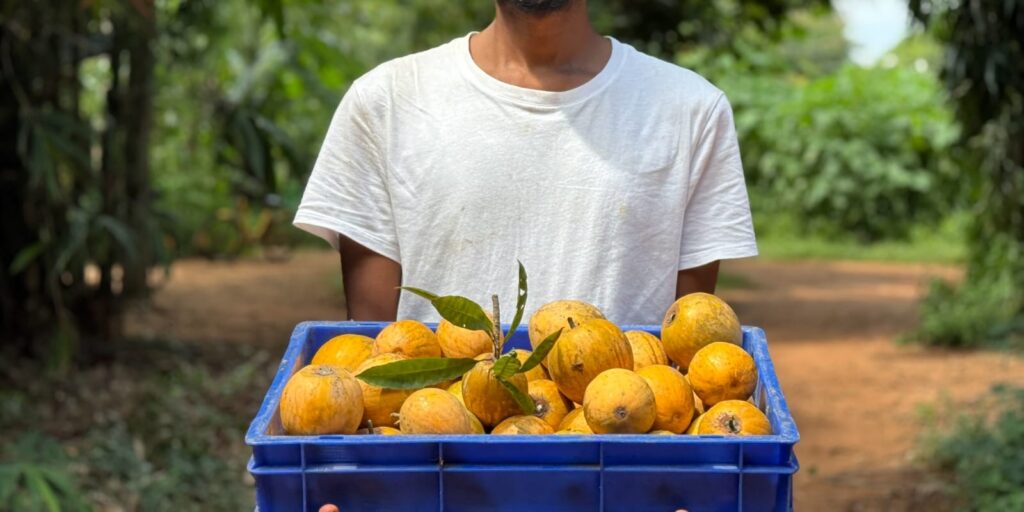
Over the last few weeks at Auro Orchard, I’ve been spending most of my days around the fruit trees, observing, tasting, and doing small bits of research on the fruits growing here. Since I mostly eat fruits throughout the day, this kind of work feels very natural to me it’s both nourishment and exploration at the same time. During these walks, I came across our eggfruit trees, and noticing the bright yellow fruits hanging from the branches felt almost like spotting little suns tucked among the leaves. Harvesting them was a fun experience on its own, and a couple of ripe ones had even fallen perfectly to the ground, soft and ready to eat. The moment I opened one, the texture really stood out: dense, creamy, and yolk-like, almost like scooping out a rich egg yolk but in a sweet, custardy form. The flavor is unlike any other fruit I’ve tried, intensely sweet and extremely satisfying, the kind of fruit you can have only half or one at a time because it fills you up so quickly. Home » Blog » Discovering the Golden Eggfruit: A Sweet Journey at AuroOrchard Discovering the Golden Eggfruit: A Sweet Journey at AuroOrchard November 2025 · Charan Over the last few weeks at Auro Orchard, I’ve been spending most of my days around the fruit trees, observing, tasting, and doing small bits of research on the fruits growing here. Since I mostly eat fruits throughout the day, this kind of work feels very natural to me it’s both nourishment and exploration at the same time. During these walks, I came across our eggfruit trees, and noticing the bright yellow fruits hanging from the branches felt almost like spotting little suns tucked among the leaves. Harvesting them was a fun experience on its own, and a couple of ripe ones had even fallen perfectly to the ground, soft and ready to eat. The moment I opened one, the texture really stood out: dense, creamy, and yolk-like, almost like scooping out a rich egg yolk but in a sweet, custardy form. The flavor is unlike any other fruit I’ve tried, intensely sweet and extremely satisfying, the kind of fruit you can have only half or one at a time because it fills you up so quickly. Eggfruit, also known as canistel, originally comes from Mexico and Central America and later spread to countries in the Caribbean and other tropical regions. Even though it has been around for centuries, it’s still not widely known in India. The tree itself is slow to mature and typically takes around eight years before it begins to produce fruit, which makes the harvest feel even more meaningful. Here at the orchard, as we continue enjoying these unique fruits, we’re also exploring different ways to process them, especially turning them into ice creams and simple frozen desserts to see how their natural creaminess transforms when chilled. It’s been a lovely discovery and definitely one of the more fascinating fruits I’ve spent time with recently. Have you tasted this fruit before? We would love to hear your experience. Over the last few weeks at Auro Orchard, I’ve been spending most of my days around the fruit trees, observing, tasting, and doing small bits of research on the fruits growing here. Since I mostly eat fruits throughout the day, this kind of work feels very natural to me it’s both nourishment and exploration at the same time. During these walks, I came across our eggfruit trees, and noticing the bright yellow fruits hanging from the branches felt almost like spotting little suns tucked among the leaves. Harvesting them was a fun experience on its own, and a couple of ripe ones had even fallen perfectly to the ground, soft and ready to eat. The moment I opened one, the texture really stood out: dense, creamy, and yolk-like, almost like scooping out a rich egg yolk but in a sweet, custardy form. The flavor is unlike any other fruit I’ve tried, intensely sweet and extremely satisfying, the kind of fruit you can have only half or one at a time because it fills you up so quickly. Eggfruit, also known as canistel, originally comes from Mexico and Central America and later spread to countries in the Caribbean and other tropical regions. Even though it has been around for centuries, it’s still not widely known in India. The tree itself is slow to mature and typically takes around eight years before it begins to produce fruit, which makes the harvest feel even more meaningful. Here at the orchard, as we continue enjoying these unique fruits, we’re also exploring different ways to process them, especially turning them into ice creams and simple frozen desserts to see how their natural creaminess transforms when chilled. It’s been a lovely discovery and definitely one of the more fascinating fruits I’ve spent time with recently. Have you tasted this fruit before? We would love to hear your experience. Previous ArticleNext Article Featured Articles Abundance Product of the Month 22 Oct 2025 Monthly Updatesㅤㅤㅤㅤㅤㅤㅤㅤ 22 Oct 2025 The Unstructured Calling: Finding My Rhythmㅤㅤ 30 Nov 2025 Hands-On Approach 29 Nov 2025
The Unstructured Calling: Finding My Rhythmㅤㅤ
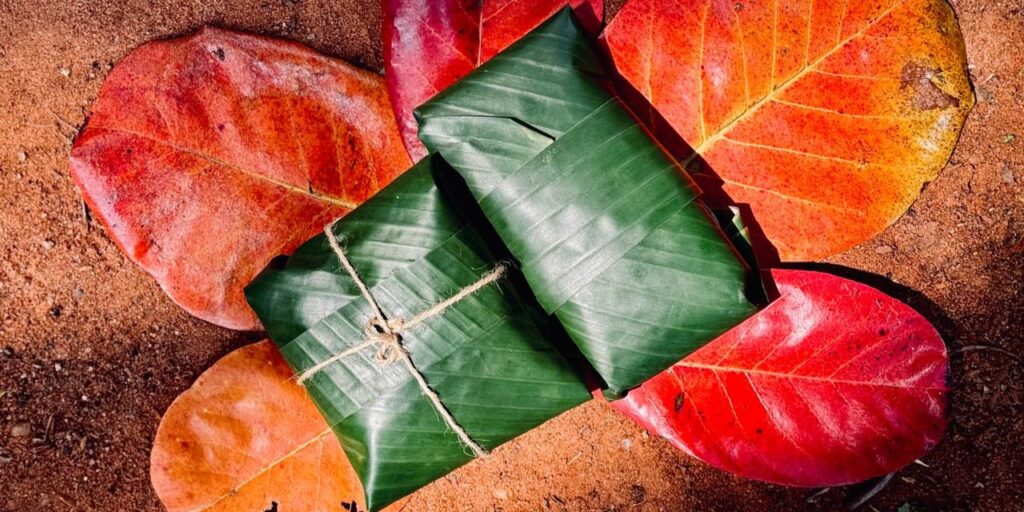
Five months ago, I dedicated myself to a period of deep self-experimentation focused on health. Having spent years consuming raw, plant-based foods, I already understood the immense power of food. Yet, the true revelation, refined after a year spent back in the accelerated pace and sterility of city life following my earlier farm volunteering experiences, was the profound importance of a daily, tangible reconnection with nature, the sun, and, crucially, the soil. That time away crystallized what was missing: the rich, microbial life of a natural farm/forest. Home » Blog » The Unstructured Calling: Finding My Rhythm and Resilience in AuroOrchard’s Soil The Unstructured Calling: Finding My Rhythm and Resilience in AuroOrchard’s Soil November 2025 · Astha Khandelwal Five months ago, I dedicated myself to a period of deep self-experimentation focused on health. Having spent years consuming raw, plant-based foods, I already understood the immense power of food. Yet, the true revelation, refined after a year spent back in the accelerated pace and sterility of city life following my earlier farm volunteering experiences, was the profound importance of a daily, tangible reconnection with nature, the sun, and, crucially, the soil. That time away crystallized what was missing: the rich, microbial life of a natural farm/forest. I wasn’t just looking for just physical work; my purpose was to reconnect with the land to enhance my personal growth. Having volunteered at farms with rigid schedules before, this time I sought something different: a place that would honor my slow pace and allow me to explore without a structured plan, enabling me to truly understand where I could contribute. That search led me, quite naturally, to AuroOrchard, the source of my weekly basket. When I shared my interests: working with the soil, embracing food, and developing recipes to preserve nutritional integrity. Anshul’s response was one of profound trust: “Just come to the farm and explore for a week. Engage in whatever you feel like.” That openness made me feel I had truly found my place. I began simply by observing the farm’s daily rhythm: the conversations, the mulching, the sowing, the weeding, and the processing. I was just watching, slowing down, capturing little observations, feeling that magnetic pull to return every morning. The Science of Feeling “Called” This daily, effortless call back to the earth aligns beautifully with the science of the Gut-Immune-Brain Axis. The sense of peace and belonging is not abstract; it’s rooted in measurable biological mechanisms. Working near and engaging with the soil exposes us to environmental microorganisms, notably the “feel-good” bacteria Mycobacterium vaccae. This exposure through inhalation of bioaerosols released during farming can stimulate serotonin production in the brain, inducing states of greater happiness and relaxation, and providing a powerful buffer against stress and anxiety. It is, in essence, the body’s co-evolved response to the presence of these “Old Friends” from the natural world, which our immune systems rely on for proper calibration and resilience. The Grounding Moment and the Salad’s Genesis I’ve spent my initial days just watching… observing the harvesting, mulching, and sowing. (Visit my Instagram profile @dhanyawadearth and check the ‘November Notes’ highlight to see all my observations so far) After a week of gentle observation, my role became concrete. I walked in one morning to find Anshul and Ruben discussing the launch of a new seasonal salad box. “Ruben ask her, she only eats salad” Anshul joked, Soon, I was tasked with walking the farm with Ruben, harvesting every edible green we could use for a sample salad. As we harvested together, Ruben mentioned, “Astha, thank you. I’ve been so occupied in kitchen experiments that I haven’t visited the farm, the soil in so long. It feels so good to be back.” That spontaneous moment was a powerful demonstration of Earthing or Grounding. The human body is electrically conductive, and direct physical contact with the Earth’s surface, like placing bare hands on the soil, allows it to absorb a continuous supply of free electrons. These electrons function as systemic antioxidants, neutralizing the unstable molecules that drive inflammation. The sense of relief and calm Ruben and I both felt was not just emotional; it was a physical electrical reset, reducing our inflammatory load and enhancing our overall well-being. This biophysical connection is a vital, yet often overlooked, part of preventative health. The Nutritional Mandate: Preserving Life Force The subsequent creation of the Farm Seasonal Salad box, which is now happily finding its way into weekly baskets, was guided by principles that bridge soil health and human physiology: Honoring the Seasonal Offering: We prioritize plants that grow robustly in their home climate. This practice ensures plants produce maximum secondary metabolites, yielding higher polyphenols and, consequently, superior antioxidant potential. This is the critical, indirect link to the human gut microbiome: plants grown in microbially rich soils yield nutrient-dense food which, when consumed, provides the best substrate for a diverse and healthy gut ecosystem. Maximizing Micronutrient Retention: We serve the produce raw because essential compounds like Vitamin C, folate, and many carotenoids are heat-labile. By offering a raw, same-day harvest, we ensure maximum micronutrient retention. Digestive & Antioxidant Support: Raw Papaya contains powerful proteolytic enzymes (papain and chymopapain) that assist protein breakdown and improve gut transit. The Chlorophyll in the greens, molecularly similar to hemoglobin, is studied for its ability to support hemoglobin status and act as an antioxidant defense. The successful launch of the Farm Seasonal Salad box is a true testament to the team’s dedicated work and our collective commitment to nutritional integrity. Since the launch, Janani, Raghu, and Ruben have been actively involved in every meticulous step of production: harvesting, cleaning, sorting, drying, chopping, grating, mixing, and packaging. I am particularly proud of how this initiative operates in a closed-loop system, allowing us to receive immediate feedback from customers and act upon it, be it perfecting a dressing or actively seeking sustainable alternatives to plastic packaging, such as our experiments with banana leaves. My time here – from figuring out kitchen revamps to harvesting the
Exploring a natural way of farming

For two weeks in February, life at AuroOrchard has been documented by Taisiia Latypova, a volunteer from Russia. Being a biologist major and a photography enthusiast, Taisiia took a snapshot of the farm’s life and summarized the main techniques used at AuroOrchard. Such work can be helpful for future volunteers and brings a new perspective of the farm for those who have worked or are working here. — AuroOrchard is the oldest farm of Auroville, established back in 1968, and the second-largest farm, currently occupying 25 acres of land. It supplies Auroville with vegetables, fruits and poultry, being a year-long supplier for the Auroville community, participating in the evolution of consciousness. The latter began with the work of Sri Aurobindo and The Mother. Home » Blog » Exploring a natural way of farming Exploring a natural way of farming Mar 20, 2025 · Taisiia Latypova For two weeks in February, life at AuroOrchard has been documented by Taisiia Latypova, a volunteer from Russia. Being a biologist major and a photography enthusiast, Taisiia took a snapshot of the farm’s life and summarized the main techniques used at AuroOrchard. Such work can be helpful for future volunteers and brings a new perspective of the farm for those who have worked or are working here. — AuroOrchard is the oldest farm of Auroville, established back in 1968, and the second-largest farm, currently occupying 25 acres of land. It supplies Auroville with vegetables, fruits and poultry, being a year-long supplier for the Auroville community, participating in the evolution of consciousness. The latter began with the work of Sri Aurobindo and The Mother. From the perspective of The Mother: “work, even manual work, is something indispensable for inner discovery. If we do not work, if we do not put our consciousness into matter, matter will never develop. To allow the consciousness to organize a little matter by means of one’s body is very good. To create order around us helps to create order within us” (“To be a true Aurovillian”, The Mother, 1970). In this sense, coming to Auroville even for a short period of time, one should consider volunteering or participating in workshops to introduce consciousness into matter. Being a biologist and sincerely enjoying putting my hand to planting, farming experience was the best option for me to support the spiritual experience with manual work. In line with sustainable farming, at AuroOrchard farmers are constantly experimenting with farming techniques and finding new ways for optimization of vegetables, fruits and chicken eggs production, at the same time maintaining a balance between natural processes and manmade agriculture. Methods of plant farming, which are used at the farm, can roughly be broken down to composting, soil preparation, planting, irrigation, pests’ managing, harvesting and pruning. Some of these techniques will be briefly discussed below. The life of a plant starts with a seed. Most vegetables’ and fruits’ seeds (about 90%) at AuroOrchard are saved. Only a few plant species’ seeds, which haven’t yet been grown on the farm, are bought outside, such as cacao recently. Some of the seeds are being saved at the farm continuously for over 40 years! Any seed is needed to be planted in a soil rich in nutrients. Soil composition may vary greatly, depending on a desired crop. At AuroOrchard, the nursery soil is made “from scratch” and is composed of garden soil, compost and coco-peat. The compost is made on the farm itself near the cows and it has to be rich in nitrogen and carbon in different proportions. The soil at AuroOrchard is bronze in color and quite soft to touch. Working with such soil, which hasn’t been simply put into a package and shipped from another region, or even country, is a true pleasure. The main source of nitrogen is organic matter. Atmospheric nitrogen is fixed either by free-living bacteria in a soil or by symbiotic bacteria (Rhizobium), which live in root nodules of legumes and exchange nitrogen with carbohydrates from plants. When a plant dies, it is decomposed by bacteria and fungi, which release nitrogen in the form of ammonium into the soil, enriching it. Ammonium is then sequentially transformed into nitrite and nitrate, and the latter can readily be reabsorbed by plants. The other source of nitrogen is cow dung and urine. The main sources of carbon are dry leaves, chipped wood and wood from regularly done pruning, as well as green manure. Green manure is a fast-growing crop which is grown to be incorporated back into the soil for adding organic matter to it. It is a good source of both nitrogen and carbon, whose proportions may vary depending on which green manure is being used. Old forests have soil high in carbon and its microbiota are fungi dominated, however grassfields are nitrogen-enriched with a bacteria-dominated microbiota. To prepare the soil, green manure is grown in a desired place to be then plowed into the soil just before it starts blooming. The latter is crucial, as flowers, being reproductive organs of plants, tend to accumulate all the nutrients. Such cycle is repeated 2-3 times, till the soil is ready for fruits and vegetables planti At AuroOrchard, the method of soil enrichment was optimized by using a tractor with a disc harrow, which goes through green manure and digs up the soil at a shallow depth, so the plants fall down to be further decomposed. The same method can be used for seeds planting. Such an approach can be included in no-till farming, which is aimed to minimize soil disturbance. Conventional plowing leads to oxidation of soil nutrients and disturbance of soil structure, e.g. micro-, meso- and macropores, bacterial colonies, fungal hyphae and soil aggregates. Even though using the tractor might not seem natural, it is about a balance between benefiting from technological progress and being organic and sustainable. To my belief, achievements of science and engineering might benefit organic farming in a way of making it even more sustainable. By using modern technologies mindfully farmers can
Volunteer reflectionㅤㅤㅤㅤㅤㅤㅤㅤ
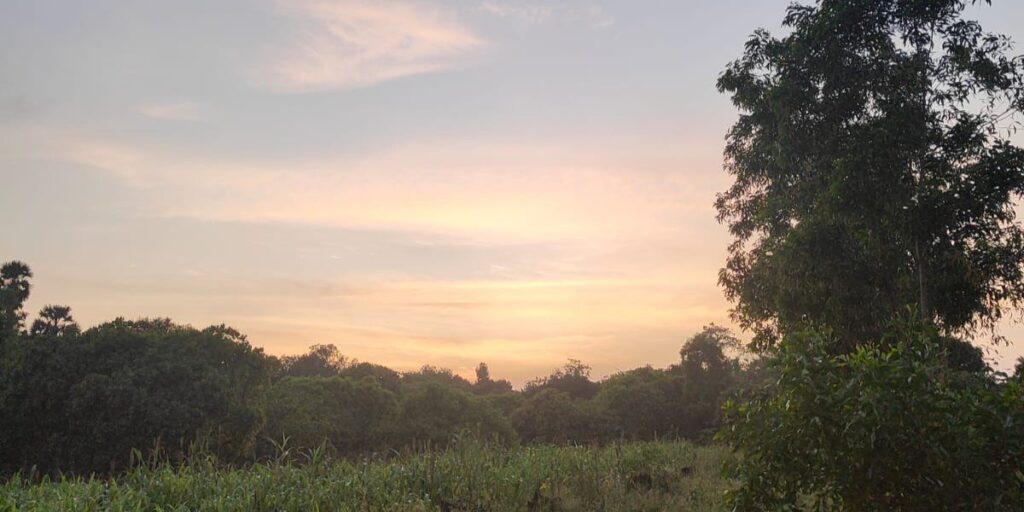
For two weeks in February, life at AuroOrchard has been documented by Taisiia Latypova, a volunteer from Russia. Being a biologist major and a photography enthusiast, Taisiia took a snapshot of the farm’s life and summarized the main techniques used at AuroOrchard. Such work can be helpful for future volunteers and brings a new perspective of the farm for those who have worked or are working here. — AuroOrchard is the oldest farm of Auroville, established back in 1968, and the second-largest farm, currently occupying 25 acres of land. It supplies Auroville with vegetables, fruits and poultry, being a year-long supplier for the Auroville community, participating in the evolution of consciousness. The latter began with the work of Sri Aurobindo and The Mother. Home » Blog » Volunteer reflection Volunteer reflection Mar 14, 2025 · Abhijeet · Maharashtra, India “Extremely grateful for the opportunity I received for staying here over a month, brainstorming as well as hands-on learning. I am literally living my dream life while I am here. It is more than wonderful to be at the farm, being woken up by the chirping of a variety of birds, and getting to see the beauty of nature and volunteering at the farm in the morning! The best sunset spot on the farm! I saw many insects, spiders, pink lady beetle, paradise flycatcher, rufous treepie, black drongo, koyal bird, and heard many other beards which I have not spotted yet. Experience of watching the sunset & sunrise from the rooftop, and especially gazing at the sky almost everyday brought more slowness to living life!! Loved being here & learning with you all. Also, how can I miss mentioning the scrumptious & healthy breakfast at the farm. My special thanks to the akka for the same! I will always fall short of words to describe the experience. Super shoutout to Anshul for his guidance. This time in my life will always be special. Being here has taught me enjoying the little moments in life even more. Interacting with other volunteers & travellers was a cherry on the top. Taking inspiration from a volunteer I too have limited my smartphone use to just 10 minutes a day” Previous ArticleNext Article Featured Articles Monthly Updatesㅤㅤㅤㅤㅤㅤㅤㅤ 19 Sep 2025 Abundance Product of the Month 18 Sep 2025 Recipe Alert – Stir Fried Sweet Potato leaves with Tofu 22 Sep 2025 Food and Agriculture in Auroville, India 18 Sep 2025
Unravelling Auroville’s food system
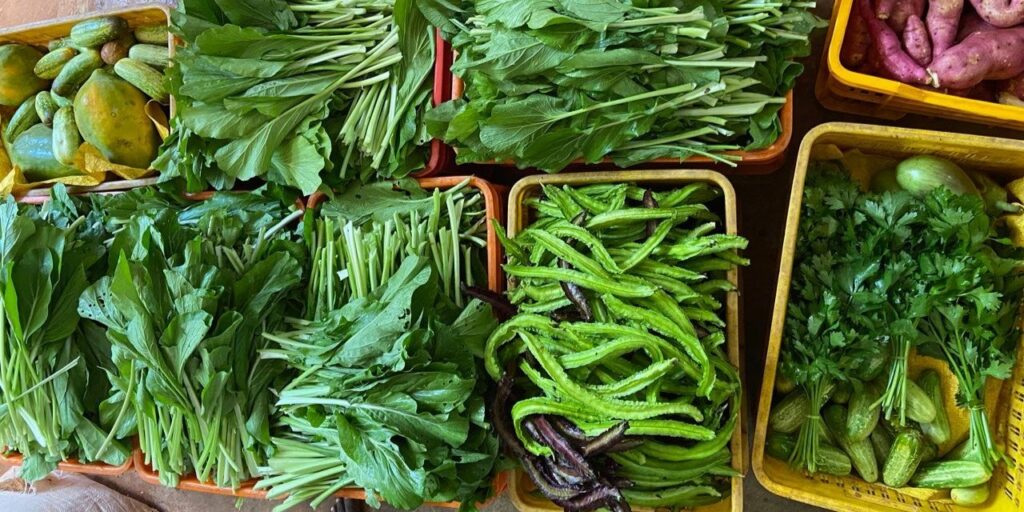
I arrived at AuroOrchard in the summer of 2023, intending to help farms produce more food for Auroville. Mostly I wanted to be closer with people passionate about the same. Home » Blog » Unravelling Auroville’s food system Unravelling Auroville’s food system Jan 31, 2025 · Nidhin Anand I arrived at AuroOrchard in the summer of 2023, intending to help farms produce more food for Auroville. Mostly I wanted to be closer with people passionate about the same. By this time I had already spent a few years working on 2 other farms and supported farm-group-related coordination work. Over the years of interacting with farmers, distributors, and consumers, I realized that the Auroville system is complex and that there isn’t a community-mandated framework and policy to create a conscious food system. Most farms were on their own to support themselves and lacked vision. Production increments in large established farms were hindered by challenges relating to the organizational model of distribution, human resources, accountability structures, and lack of capital funded through the BCC budget. Despite this, I noticed that Aurovillians deeply appreciate Auroville-grown food and that much work could be done within the current system. While I don’t see Auroville farms producing most of Aurovile’s needs due to ecological constraints and dietary habits, I see that there is scope for setting up farming systems to produce many valuable crops and create a fair economy around them. I soon realized that this would require a concerted effort from farmers, distributors, working groups, and other food actors in Auroville toward a common vision. The ‘coming together’ remains an aspiration and a work in progress. This month, I joined Foodlink, the main distribution center of Auroville, after seeing that current frameworks regarding standards of production, pricing, and production planning needed reforms AuroOrchard has helped me see what ecological and social possibilities lie within a 25-acre farming system within Auroville’s geographical context. It helps me ask and answer important questions such as ‘Can we grow all the food we need in Auroville?” and “What is stopping Auroville farms from producing more? The answers I found were complex and included a large share of human behavioral challenges alongside organizational blockages. However, I now see that the tropics offer enormous ecological dynamism and we have the possibility to cultivate a lot more than today’s capacities. This invitation largely remains unresponded. Next Article Featured Articles Monthly Updatesㅤㅤㅤㅤㅤㅤㅤㅤ 19 Sep 2025 Abundance Product of the Month 18 Sep 2025 Recipe Alert!ㅤㅤㅤㅤㅤㅤㅤㅤ 22 Sep 2025 Food and Agriculture in Auroville, India 18 Sep 2025
Learning Journey at AuroOrchard
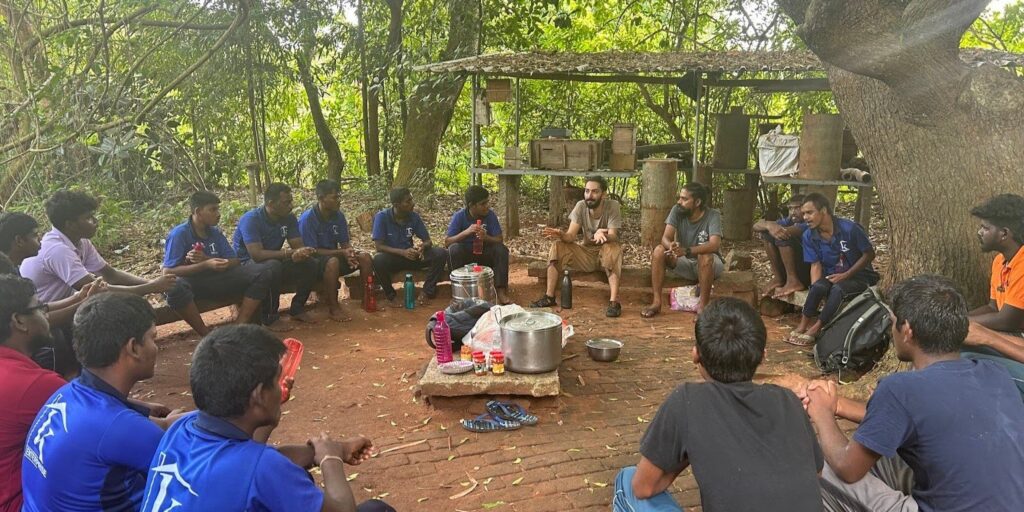
Over the past four months, volunteering at AuroOrchard has been an incredible learning experience. As the founder of Sristi Foundation, where we use farming to empower children and youth with intellectual disabilities, acquiring proper farming skills is essential for me. Home » Blog » Learning Journey at AuroOrchard Learning Journey at AuroOrchard Jan 31, 2025 · Karthikeyan Ganesan Over the past four months, volunteering at AuroOrchard has been an incredible learning experience. As the founder of Sristi Foundation, where we use farming to empower children and youth with intellectual disabilities, acquiring proper farming skills is essential for me. AuroOrchard has provided invaluable lessons that I am implementing in Sristi Village, transforming our farm into a more efficient and productive space. Key learnings include building soil fertility through mulching sun hemp, compost-making with cow dung and dry leaves, effective mulching practices, and numbering beds for better farm management. These practices are making a tangible impact on our work. Last month, we bought 15 youth with intellectual disabilities to Auroorchard for an exposure visit. Elias, a volunteer, guided them through hands-on farming activities, creating a memorable experience for all. I am deeply grateful to Anshul and the AuroOrchard team for this opportunity to learn and grow, as well as for the chance to meet wonderful people from around the world. This journey of learning continues to inspire me. (Karthik is the Founder of Sristi Foundation) Next Article Featured Articles Monthly Updatesㅤㅤㅤㅤㅤㅤㅤㅤ 19 Sep 2025 Abundance Product of the Month 18 Sep 2025 Recipe Alert!ㅤㅤㅤㅤㅤㅤㅤㅤ 22 Sep 2025 Food and Agriculture in Auroville, India 18 Sep 2025