Polyorchards

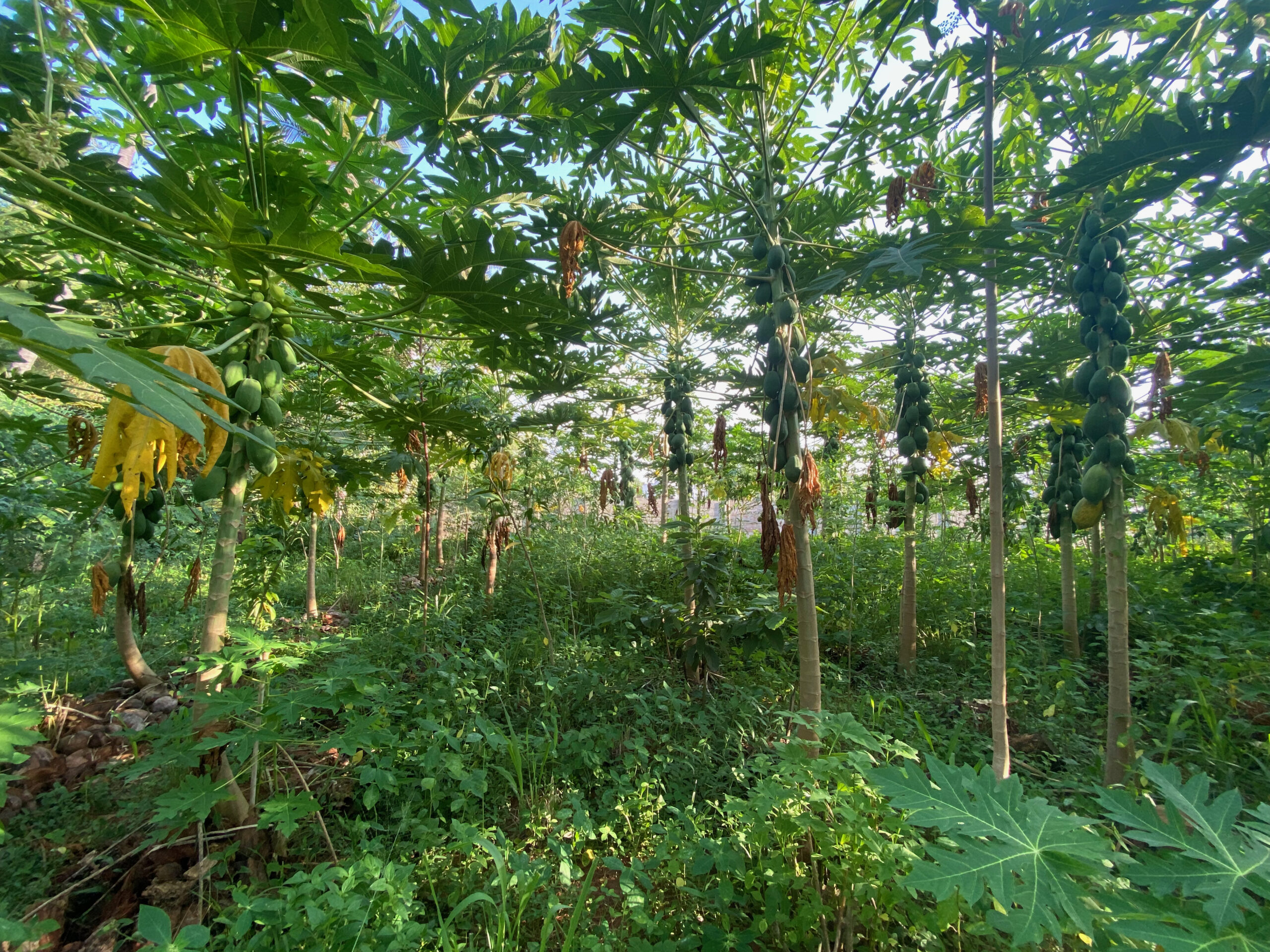
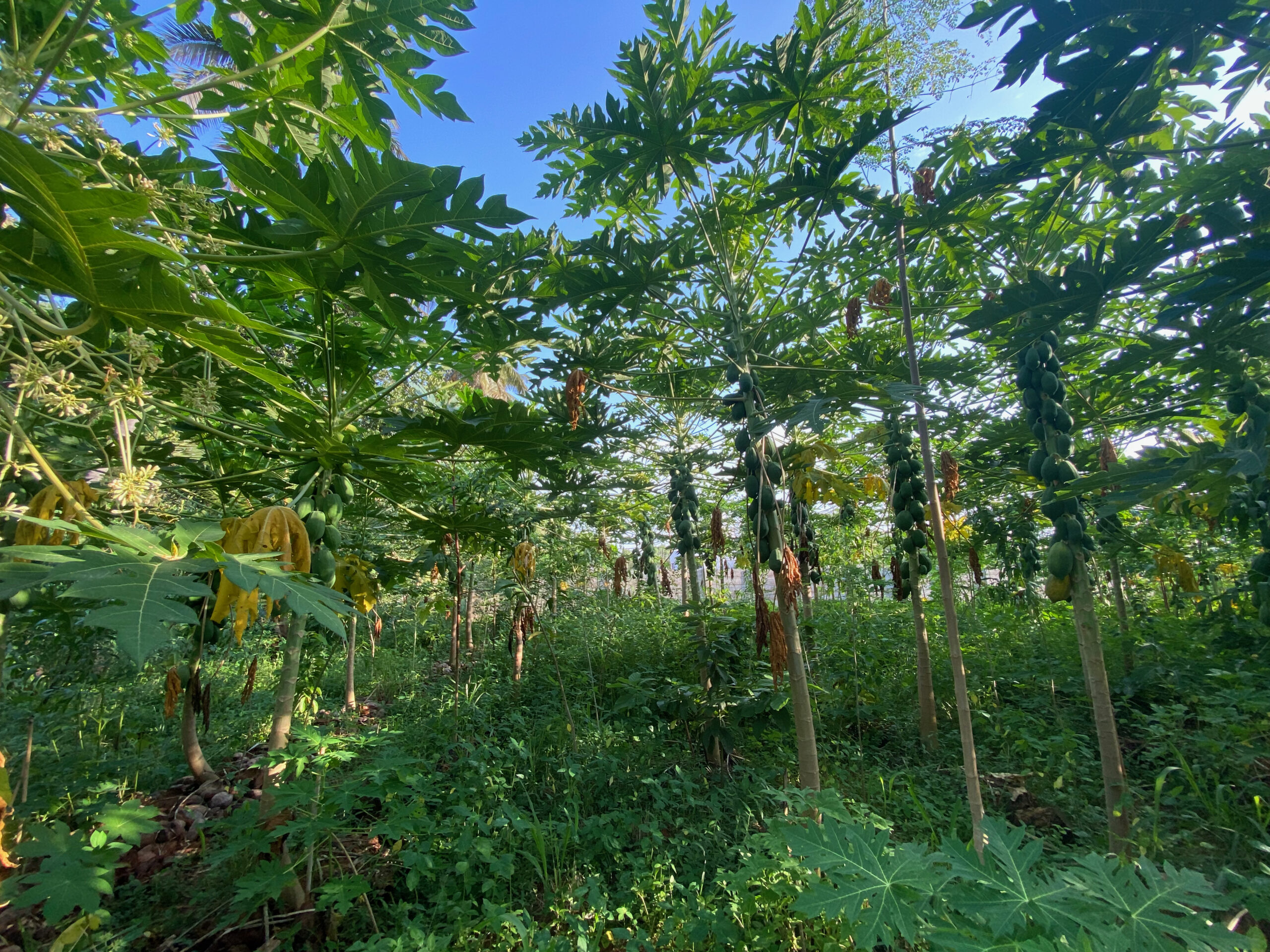
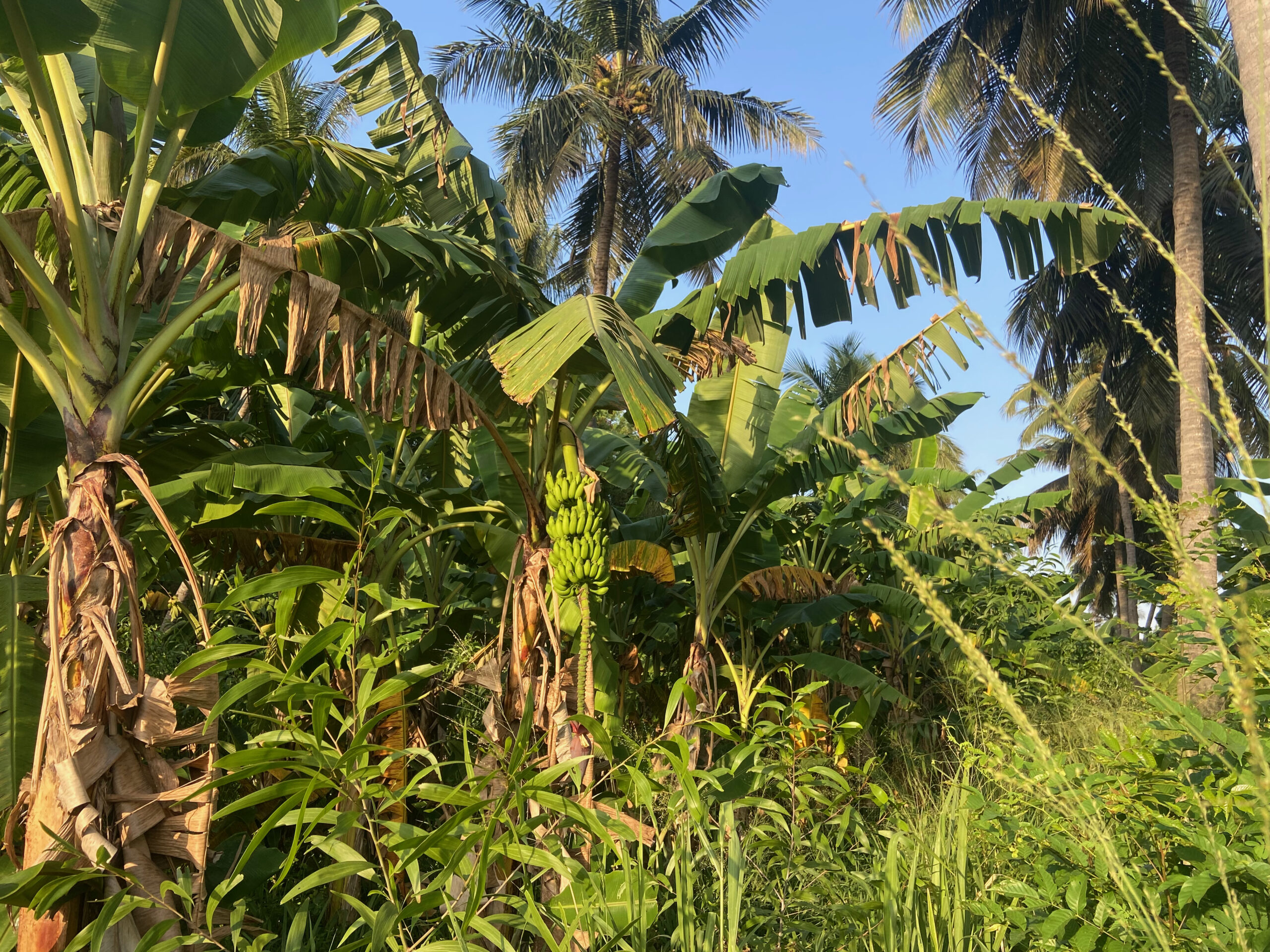
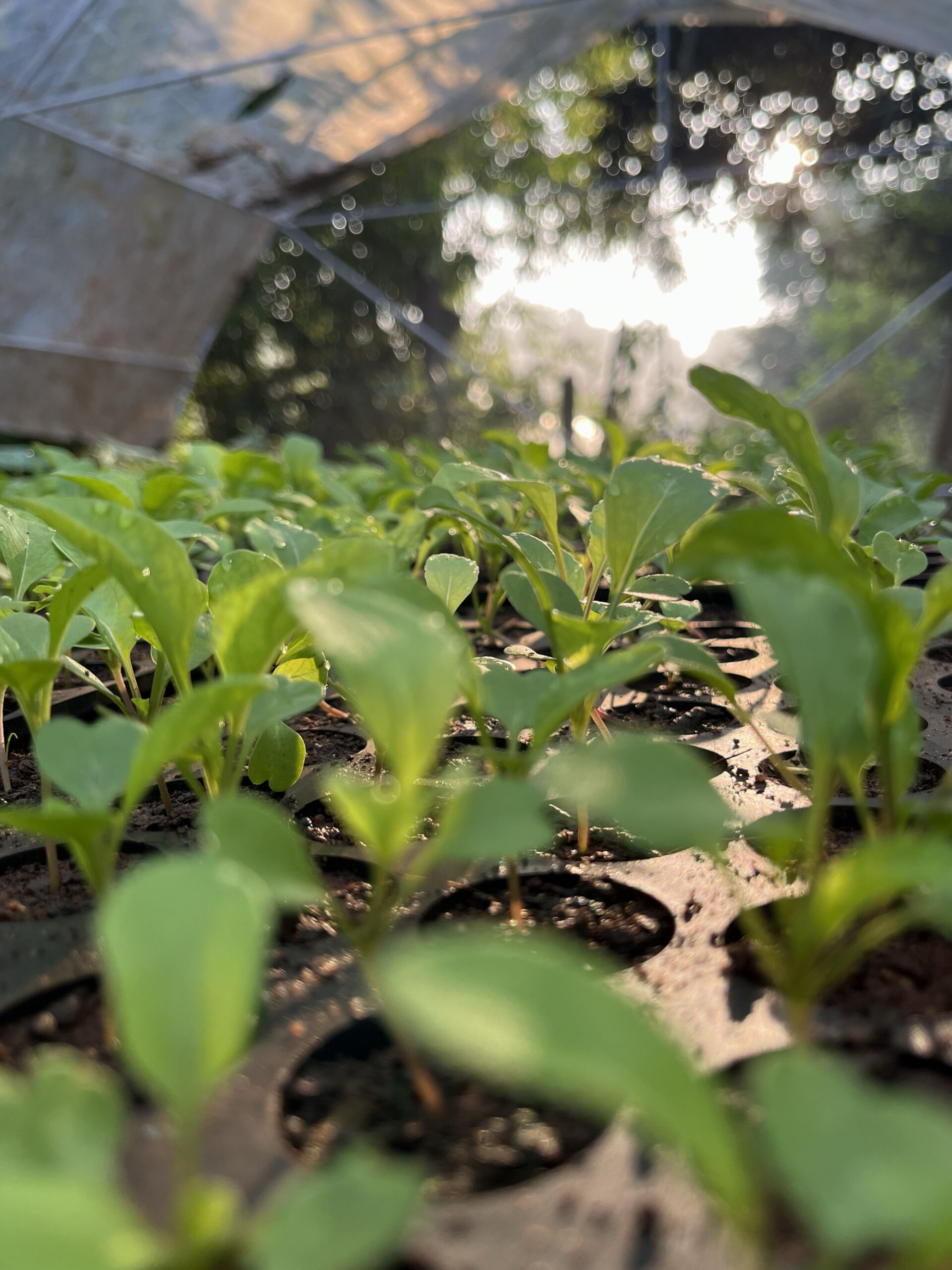
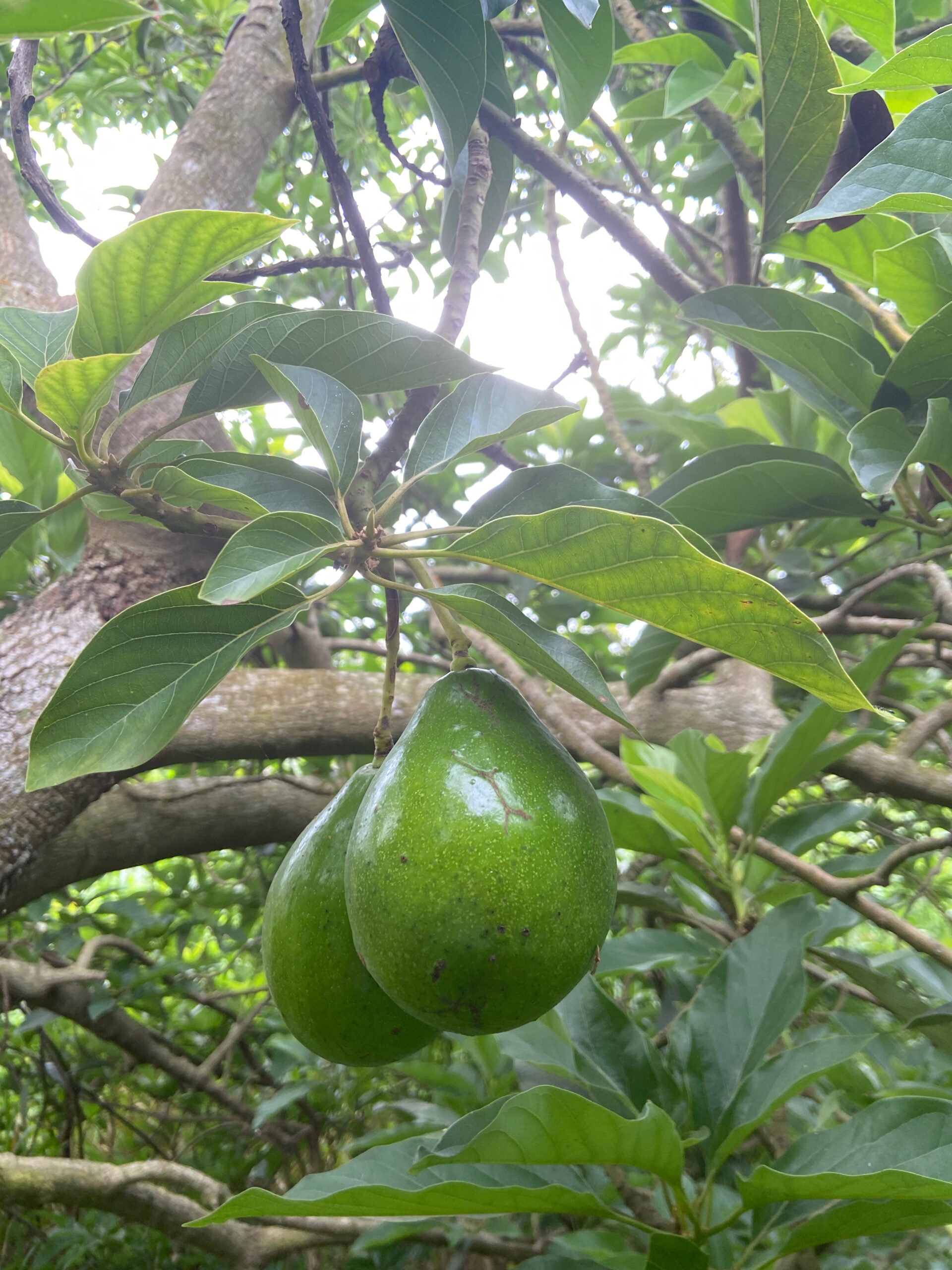
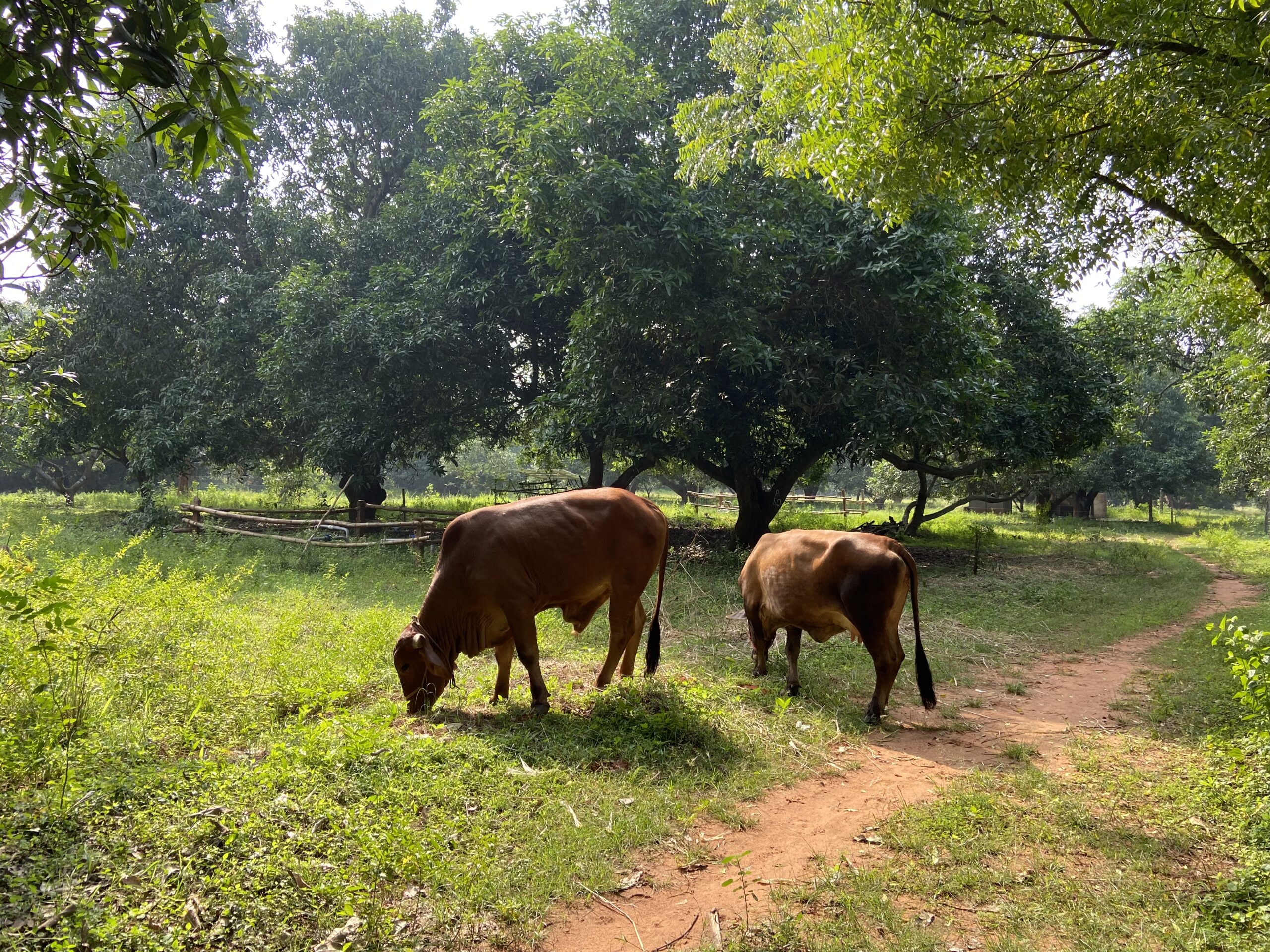
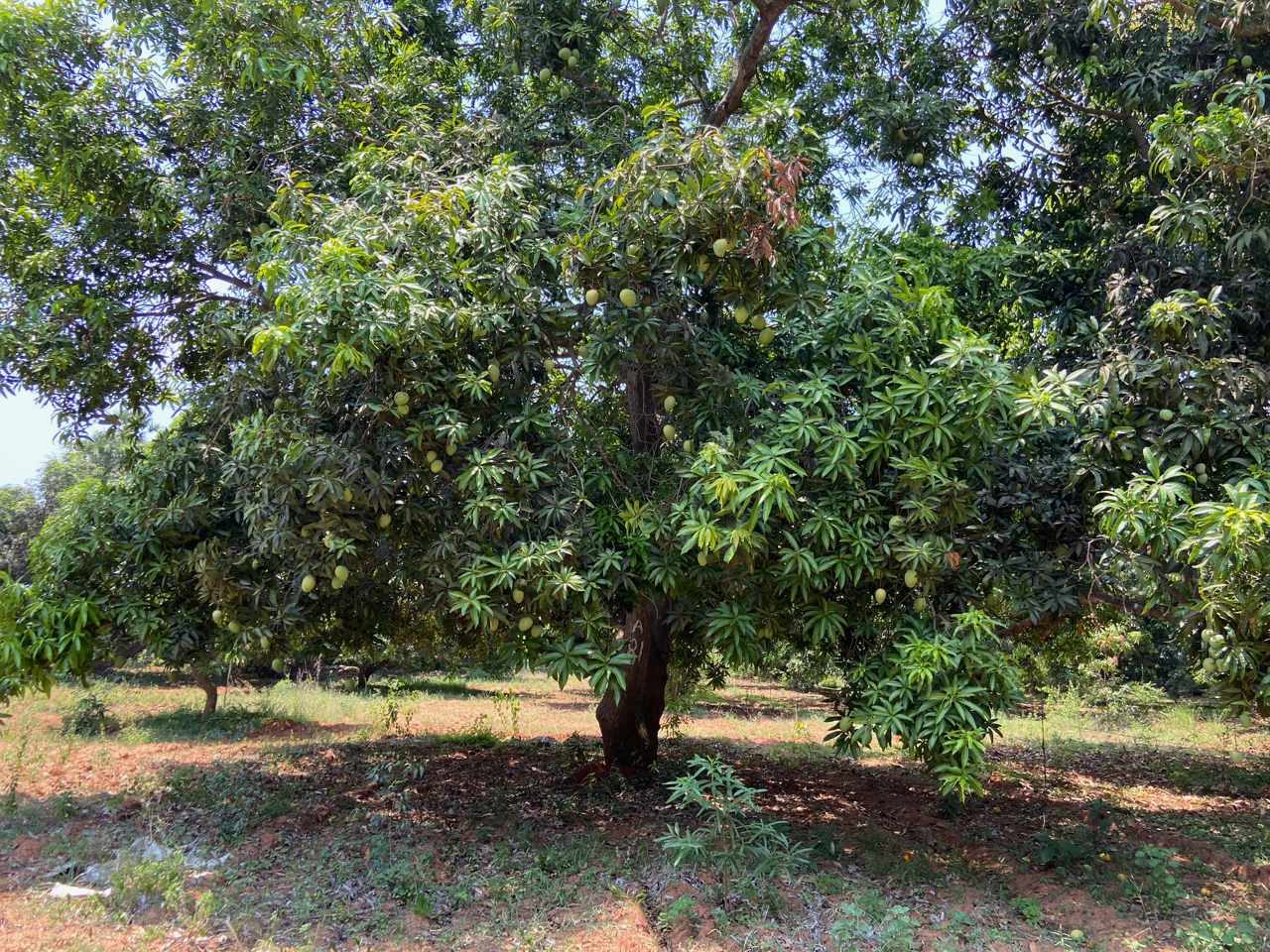
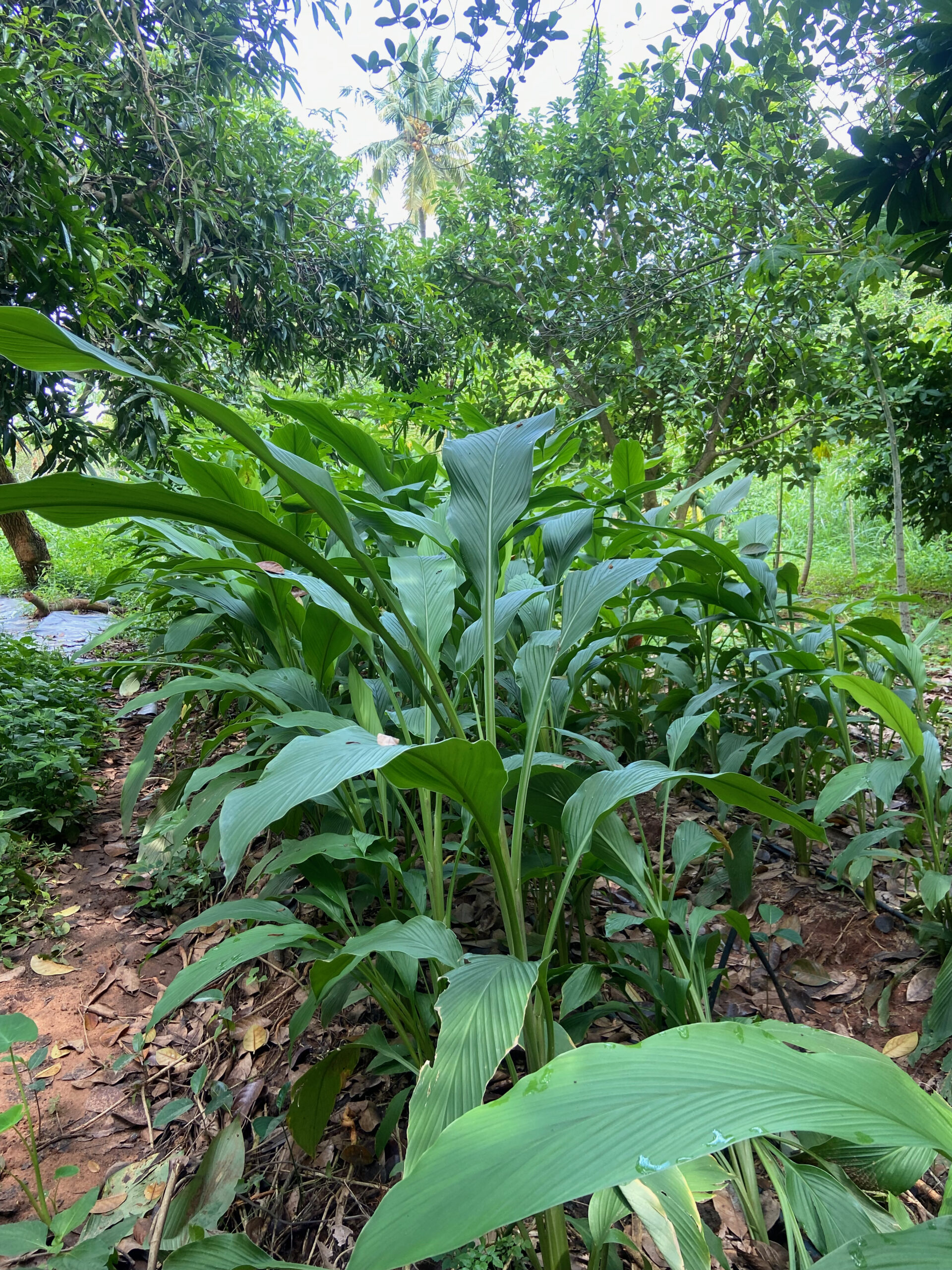
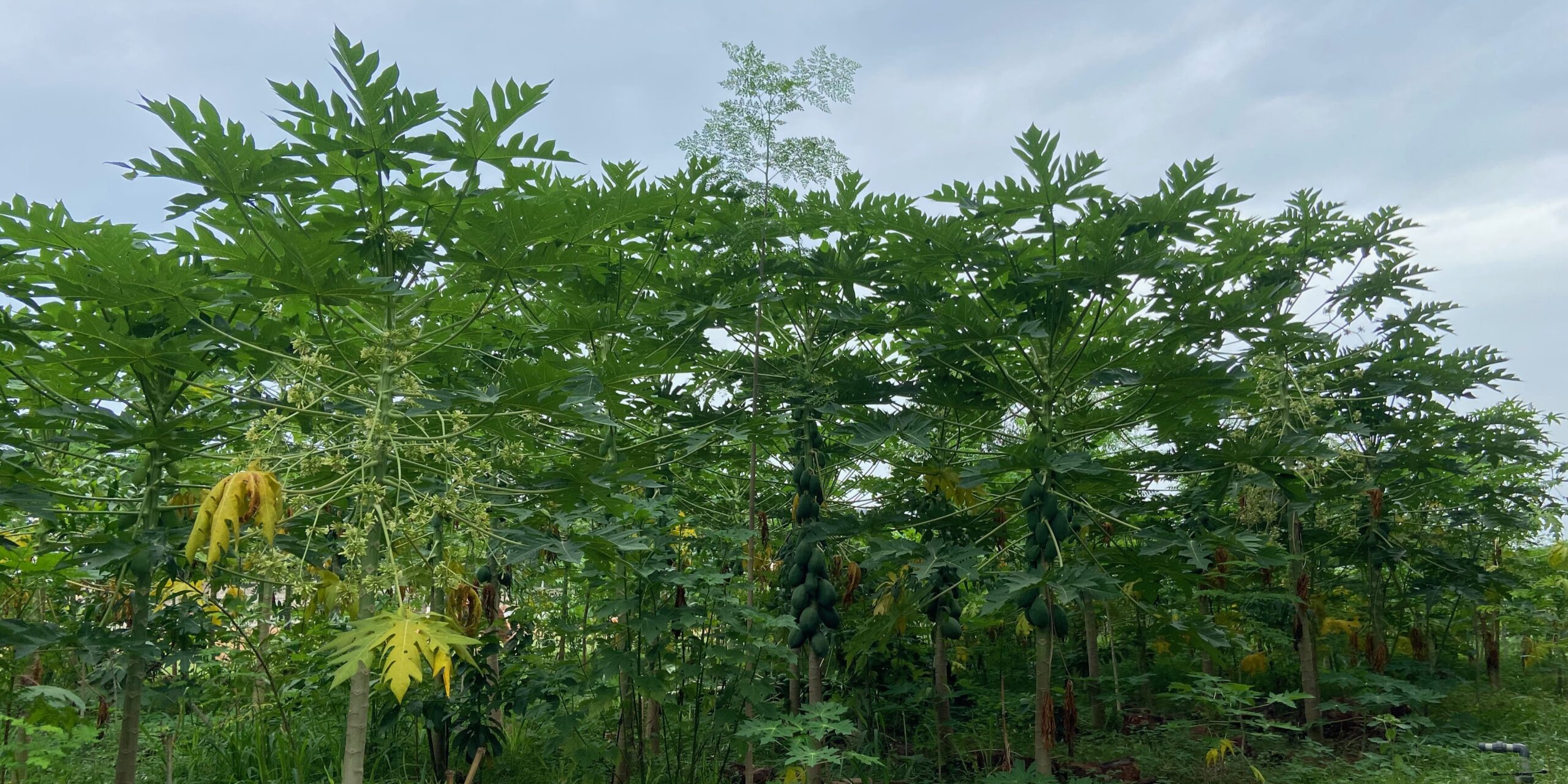
We now cultivate about ten acres of mango, four acres of cashew, one acre of coconut interplanted with banana, one acre of lemon with root crops, half an acre of avocado with papaya and lemongrass, and smaller patches of jackfruit, ramphal, pineapple, and other tropical trees. These are not isolated orchards but interconnected plant communities, each designed for cooperation and succession. Nitrogen-fixing trees like gliricidia, moringa, and sesbania feed the soil; papaya and banana create shade and biomass; while turmeric, ginger, cowpea, lemongrass, and other herbs and shrubs form a living mulch that conserves moisture and deters weeds.

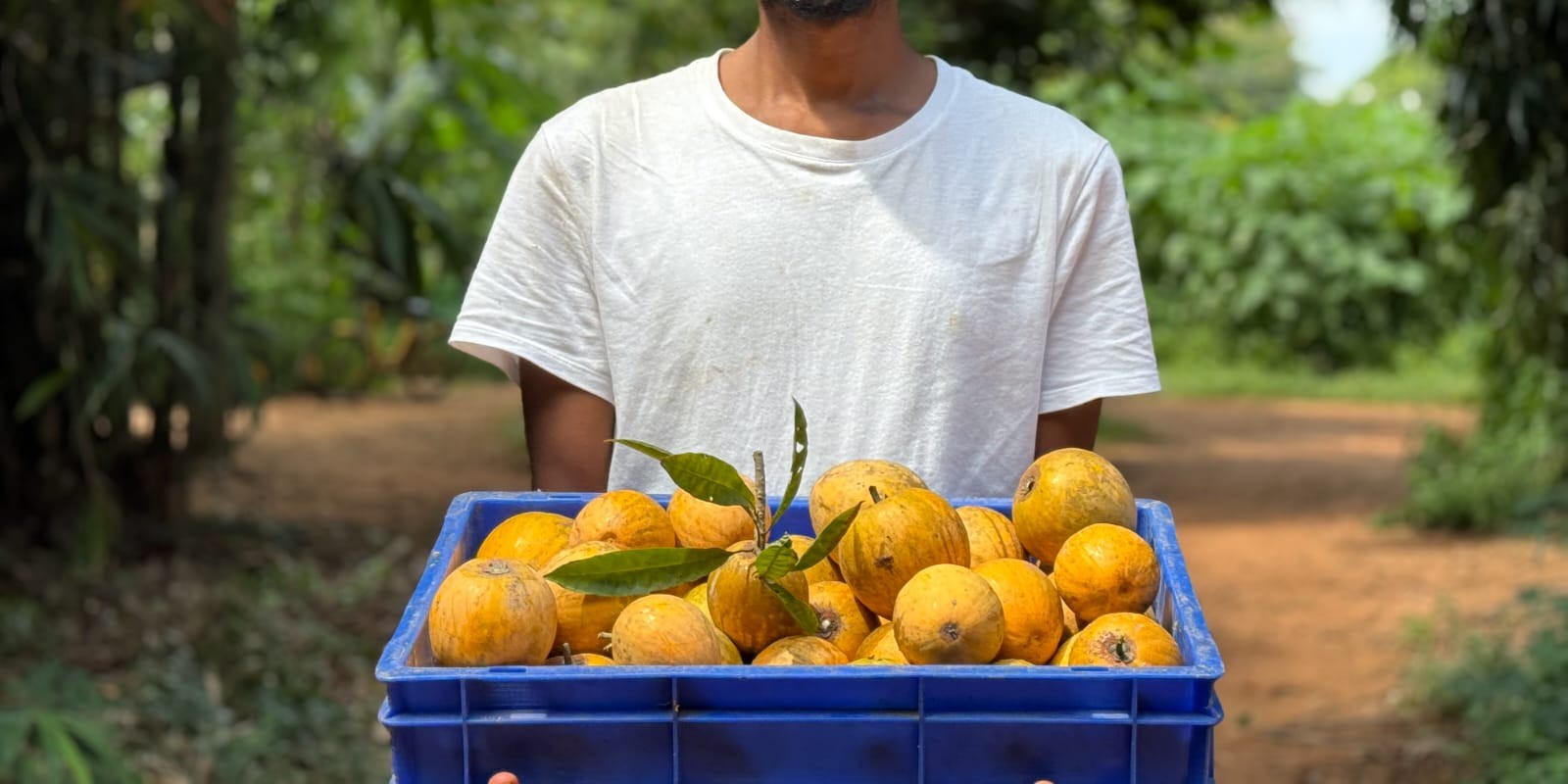
In recent years, we have noticed that Auroville’s vegetable consumption has declined, while most of the commonly eaten vegetables — potatoes, tomatoes, onions, cauliflower, and carrots — are sourced from outside the bioregion. Locally grown vegetables compete with low-priced produce from Pondicherry, making them difficult to sustain. At the same time, fruits such as papaya, banana, pineapple, chikoo, guava, citrus, coconut, jackfruit, custard apple, ramphal, and avocado have a strong local demand but insufficient production. There is both ecological sense and community need in growing these fruits on the farm, diversifying the landscape, and creating potential for local fruit processing within Auroville.


We now cultivate about ten acres of mango, four acres of cashew, one acre of coconut interplanted with banana, one acre of lemon with root crops, half an acre of avocado with papaya and lemongrass, and smaller patches of jackfruit, ramphal, pineapple, and other tropical trees. These are not isolated orchards but interconnected plant communities, each designed for cooperation and succession. Nitrogen-fixing trees like gliricidia, moringa, and sesbania feed the soil; papaya and banana create shade and biomass; while turmeric, ginger, cowpea, lemongrass, and other herbs and shrubs form a living mulch that conserves moisture and deters weeds.

In recent years, we have noticed that Auroville’s vegetable consumption has declined, while most of the commonly eaten vegetables — potatoes, tomatoes, onions, cauliflower, and carrots — are sourced from outside the bioregion. Locally grown vegetables compete with low-priced produce from Pondicherry, making them difficult to sustain. At the same time, fruits such as papaya, banana, pineapple, chikoo, guava, citrus, coconut, jackfruit, custard apple, ramphal, and avocado have a strong local demand but insufficient production. There is both ecological sense and community need in growing these fruits on the farm, diversifying the landscape, and creating potential for local fruit processing within Auroville.

Our recent work with syntropic agroforestry, inspired by Ernst Götsch, has provided a powerful framework for designing orchards in layers rather than rows, in time rather than space — planting pioneer, secondary, and climax species together to form the long-term orchard. In our first syntropic block, avocados planted under papaya shade showed over eighty percent survival compared to less than twenty percent in full sun. Since then, we have designed new orchards of jackfruit, avocado, and lemon, and plan to further extend our papaya and banana cultivation.

The polyorchards are both ecological and social experiments — balancing the realities of climate and labor with the deeper intention of regeneration. They reduce daily maintenance, stabilize water needs, and gradually build resilience against both drought and flood. At the same time, they create work that is rhythmic and meaningful rather than extractive, bringing together farmers, workers, and volunteers in long-term care for the land. In this evolving mosaic of fruit trees and companions, AuroOrchard rediscovers its original name and purpose: to be an orchard of life — diverse, resilient, and ever-renewing.

Our recent work with syntropic agroforestry, inspired by Ernst Götsch, has provided a powerful framework for designing orchards in layers rather than rows, in time rather than space — planting pioneer, secondary, and climax species together to form the long-term orchard. In our first syntropic block, avocados planted under papaya shade showed over eighty percent survival compared to less than twenty percent in full sun. Since then, we have designed new orchards of jackfruit, avocado, and lemon, and plan to further extend our papaya and banana cultivation.

The polyorchards are both ecological and social experiments — balancing the realities of climate and labor with the deeper intention of regeneration. They reduce daily maintenance, stabilize water needs, and gradually build resilience against both drought and flood. At the same time, they create work that is rhythmic and meaningful rather than extractive, bringing together farmers, workers, and volunteers in long-term care for the land. In this evolving mosaic of fruit trees and companions, AuroOrchard rediscovers its original name and purpose: to be an orchard of life — diverse, resilient, and ever-renewing.

Related Blogs

Related Blogs

Support AuroOrchard

For 2026, we seek to upgrade our systems and raise funds to support our young team.