Food and Agriculture in Auroville, India
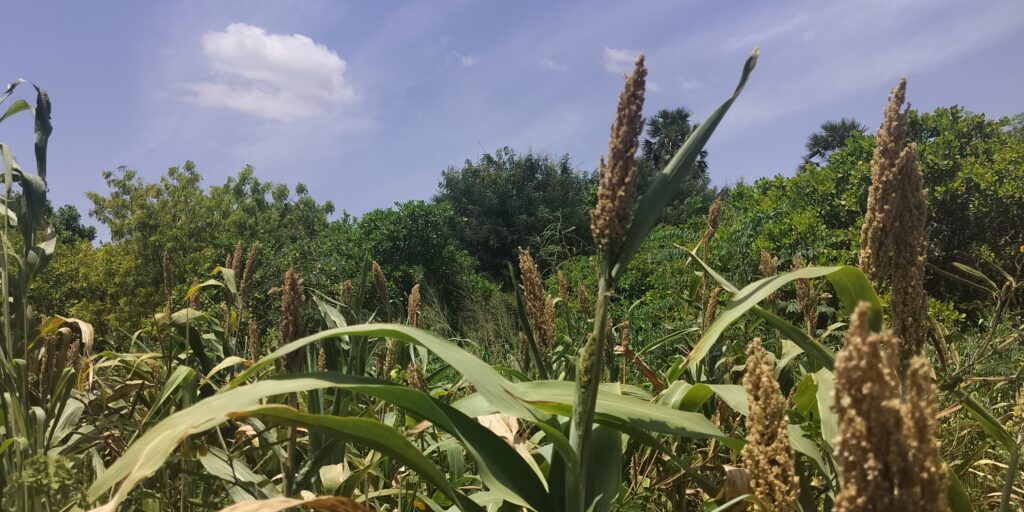
We are being called to view agriculture not as a ‘business’ or a transaction with nature, but a participatory ‘joyous sacrifice of interchange’, a way of mutual action and growth. Home » Blog » Food and Agriculture in Auroville, India Food and Agriculture in Auroville, India September 2025 · Anshul Aggarwal As consciousness advances, Sri Aurobindo (1939) envisioned that the desire for food would, “progress from the type of a mutually devouring hunger to the type of a mutual giving, of an increasingly joyous sacrifice of interchange…Thus the law of Hunger must give place progressively to the law of Love, the law of Division to the law of Unity, the law of Death to the law of Immortality” (pp. 207-208). We are being called to view agriculture not as a ‘business’ or a transaction with nature, but a participatory ‘joyous sacrifice of interchange’, a way of mutual action and growth. Can agriculture be more than growing food? Can it be a path toward human unity and the evolution of consciousness? Over the last five decades, Auroville has undertaken remarkable ecological restoration work—today, much of the township is now under a forest canopy. Alongside this, a network of community farms has taken root, supplying fruits, vegetables, grains, milk, and eggs to the kitchens of Auroville. Yet, like farms everywhere, Auroville’s food system is not without challenges. Farmers face the same global pressures: commodification of food, labour shortages, climate shocks, wildlife pressures, and financial strain. At the same time, Auroville’s farms hold the potential to be something more—collective experiments in the advancement of human consciousness. But we need a new language to address the often overlooked potential of agriculture, and of Auroville farms in particular. Looking at agriculture through the lens of Sri Aurobindo and Mother’s Integral Yoga allows us to discover its multiple dimensions, which could all be integrated into what we can call- Integral Agriculture. The Dimensions of Integral Agriculture 1. The Physical (Ecological) Dimension Farming is becoming increasingly complex due to the changing climate, the presence of wildlife on farms, and sudden attacks by insects and microbes on crops, among other factors. Being a farmer means bearing these challenges and risks while still trying to put food on the table. At the same time, agriculture itself has a massive impact on the land, and especially modern agriculture has caused large-scale biodiversity loss. Through agroecology and ethical stewardship, farms in Auroville are attempting to restore the balance between wilderness and cultivation and turn agriculture from colonisation of land into a conscious partnership with it. Auroville farms have an interesting history of regenerating land in different ways, and the diversity of soil profiles, diets and farming techniques in this community presents an incredible opportunity to experiment with different approaches toward this goal. 2. The Vital (Social-Economic-Political) Dimension Every farm is as much a self-contained community as it is a part of the wider socioeconomic and political network. A healthy farm cannot just be healthy ecologically but needs to address issues of financial sustainability, people’s welfare and the sovereignty of food production. The Mother and Sri Aurobindo envisioned self-sufficiency in food as essential for a gnostic community. In Auroville, this is both practical and symbolic: a way of lessening dependence on fragile global food systems and cultivating responsibility at a local level. An assessment of Auroville’s farms (2024) showed that the shortfall in community-grown food is not only about production—it is also about distribution and consumption patterns. Interestingly, 70% of the farmers themselves come from outside Auroville, reflecting the community’s openness and the challenge of embedding farming into its core culture. Community farming in Auroville is thus a rare, living laboratory: small enough to manage, yet complex enough to mirror the dilemmas of global food systems. 3. The Mental (Scientific) Dimension of Agriculture Technology, particularly Artificial Intelligence, is making inroads into all aspects of our lives, and agriculture is no exception. Today we have automated irrigation systems managed remotely at the touch of a phone, drones sowing seeds and spraying fertilisers and pesticides, drone bees facilitating pollination, satellite imagery being used to predict soil moisture, plant health and so on, multi-purpose tractors and combines that can manage a large monoculture farm almost independently. There are many who believe that ‘smart farming’ with technology will replace human farmers. But this will come at the cost of diversity and traditional human knowledge and experience, which has developed and sustained agriculture for at least over ten millennia. We need solutions that do not seek to replace farmers, but become their allies and partners in supporting a new future of agriculture, which is technology-driven and yet remains at a human scale. With its interest in the evolution of consciousness, Auroville is poised to become a pioneer in discovering frameworks of conscious technology, particularly in fields like agriculture. 4. The Spiritual (Community) Dimension of Agriculture Agriculture teaches us the need for expanding our notion of community from only humanity to the non-human beings on this planet. It requires us to re-establish our lost connection with nature and locate ourselves as participants in the larger flow of energy. As Sri Aurobindo (2005) notes, “All Matter according to the Upanishads is food, and this is the formula of the material world that ‘the eater eating is himself eaten’ (p. 204). Thus, food must be considered not only as an object of sustenance of the material life but also as an object of contemplation for a spiritual life. It is a reminder of our separation, our desire to complete ourselves through each morsel. Auroville’s commitment to realising human unity, a unity not only within the human community, but unity of human with the Divine, adds a spiritual dimension to the agriculture practised here. 5. The Psychic (Educational) Dimension of Agriculture Finally, we are in a time in the world when everything has stopped making sense. The solutions of the physical, vital, mental, and even spiritual are hard to grasp and are not
Is AuroOrchard a Permaculture farm?
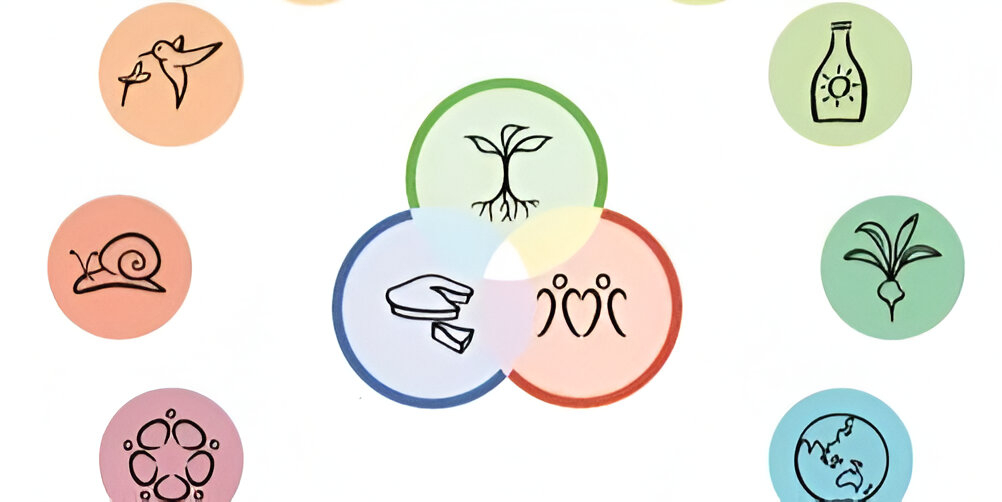
We get asked this question quite a lot! As Permaculture becomes more and more popular and perhaps projected as a wonderful solution for diversity and abundance, it is a general perception that “being a Permaculture farm” is the next big innovation in farming. Home » Blog » Is AuroOrchard a Permaculture farm? Is AuroOrchard a Permaculture farm? August 2025 · Anshul Aggarwal We get asked this question quite a lot! As Permaculture becomes more and more popular and perhaps projected as a wonderful solution for diversity and abundance, it is a general perception that “being a Permaculture farm” is the next big innovation in farming. My first answer is ‘NO!’, and my second, in classic permaculture style, is ‘it depends.’ We employ Permaculture design principles where needed and possible, but that does not define the farm. I have had the privilege of studying and working with some exceptional Permaculture teachers and practitioners from India and across the world. I took the Permaculture Design Certificate course in 2014 and the Permaculture Teacher Training Course in 2016. So this explanation comes from an informed place, a place of deep gratitude for Permaculture but also a place of recognition of its limitations. How did it all start? Permaculture was conceptualised by Bill Mollison and David Holmgren in the 1970s in Australia, in response to the crises of industrialised agriculture that intensified with the Green Revolution of the 1960s. They drew on the Aboriginal worldview, a philosophy of life that has sustained people for millennia without degrading the land, and on systems thinking, a then-emerging approach that studies the whole rather than just the parts. Combining these perspectives, they proposed a regenerative landscape design through which humans could practise sustainable, permanent agriculture, giving it the name “Permaculture.” Permaculture is a ‘design system’ Essentially, Permaculture is a design system. Design has long been a vital tool for human beings, enabling us to imagine and create. We are all designers in some way, using it moment to moment — thinking, planning, visualising, and adjusting with feedback. Over time, design as a discipline became more elaborate, shaping professions that relied on visualisation, spatial planning, architecture, product development, technology, and the power of imagination. Yet in the last couple of centuries, the means and tools of design have evolved so rapidly that the almost godly power it confers can sometimes turn the designer against the designed, and even against life itself. Ethics What makes Permaculture unique is that its design process is founded on three key ethics: Care for Earth Care for People Fair Share By placing these at the core, Permaculture calls on the designer to weigh every decision by its impact on the land, its people, and all forms of life. Echoes of these ethics run through ancient traditions and modern ecological thought, and Permaculture weaves them into a coherent, practical framework for action. Design principles and strategies Click to enlarge The principles of Permaculture are the guidelines for turning its three ethics into practice. They can be applied to systems of any scale, in ecology, communities, or even in one’s personal life. While many practitioners adapt or reinterpret the principles to suit their context, they all rest on natural patterns of circularity, interconnectedness, diversity, flexibility, and cooperation. From these principles emerge strategies such as earthworks, water and soil conservation, and community-based work. Bill Mollison outlined many of these in Permaculture One and Permaculture: A Designer’s Manual in the 1980s, and since then they have been applied and expanded upon by practitioners around the world. Permaculture in India Permaculture is a rapidly growing movement in India, attracting people dissatisfied with the status quo and seeking to reconnect with nature, learn integrated design, or grow their own food. Permaculture offers a strong foundation for working on the land, cultivating a sense of design, and developing an integrated approach to planning — skills especially valuable for those moving from cities to smaller towns and villages in search of a simpler, more meaningful life. Across the country, the number of groups and professionals offering design consultations and courses keeps growing and the community continues to share their challenges, successes, and conclusions here. However, many courses are urban-centric, catering to newcomers without deep farming experience; imported temperate-climate techniques sometimes need significant adaptation for tropical conditions; and short-term enthusiasm can fade if not grounded in daily practice and community support. The challenge of a mass movement Today, Permaculture extends far beyond agriculture. Within a few decades of its inception, the founders recognised that a permanent agriculture solution alone was not enough; creating such systems also required rethinking how people live and work together. This gave rise to social permaculture — an expansion from permanent agriculture to permanent culture. Over the years, it has captured the imagination of many, especially urban dwellers seeking a new language to imagine different possibilities. Yet such growth also brings dilution: Permaculture has come to mean many things, from crop diversity and organic farming to food forests and local food, and sometimes, as a result, it risks meaning nothing at all. It is certainly all of these, but not only these, and it resists absolutes, always seeking to understand the context and build from there. In my observation this enthusiasm for Permaculture can also sometimes overshadow the purpose of the work and a deeper, long-term relationship with land and community. The absence of spirit There is a concept in Permaculture called invisible structures, the subtle relationships that hold physical reality together. On a farm, for example, visible structures include the soil, water, plants, and infrastructure; the invisible ones are the relationships among the people working the land, their ties to the wider community, and the economic exchanges that sustain them. While the visible is rooted in the physical landscape, the invisible is grounded in the landscape of the mind. Permaculture recognises the need to design and cultivate this inner landscape as much as the outer, yet it avoids explicit conversation
Experiments with Syntropic Agriculture

In the last few years, we have observed that the consumption of Auroville vegetables is going down within Auroville. The five most consumed vegetables in Auroville- Potato, Tomato, Onion, Cauliflower and Carrot don’t grow here locally. The demand for locally grown vegetables is low in our international city and even then, we are competing with produce available in Pondicherry and around at very low prices. Considering all this, we have consciously decided to grow more fruits as there is a lot that we can grow and that is still is being bought from outside- Papaya, Banana, Pineapple, Chikoo, Guava, Citrus, Coconut, Jackfruit, Custard apple, Ramphal, Avocado, and so forth. Home » Blog » Experiments with Syntropic Agriculture Experiments with Syntropic Agriculture July 2025 · Anshul Aggarwal In the last few years, we have observed that the consumption of Auroville vegetables is going down within Auroville. The five most consumed vegetables in Auroville- Potato, Tomato, Onion, Cauliflower and Carrot don’t grow here locally. The demand for locally grown vegetables is low in our international city and even then, we are competing with produce available in Pondicherry and around at very low prices. Considering all this, we have consciously decided to grow more fruits as there is a lot that we can grow and that is still is being bought from outside- Papaya, Banana, Pineapple, Chikoo, Guava, Citrus, Coconut, Jackfruit, Custard apple, Ramphal, Avocado, and so forth. We are now either densifying the existing orchards or reorganizing some orchards towards more efficient and productive plantations. Main design objectives: Increase fruit production in the next 2-5 years. Employ syntropic methods to increase density and use biomass to feed the soil. Try new plants like Coffee and Cacao- create microclimate to support these species. Entropy, Negantropy and Syntropy The idea of entropy originated in the late 19th century in thermodynamic studies. Entropy is the measure of disorderness of a system, a measure of its chaos (Clausius, 1865). The conventional understanding suggests whenever a system goes through any transformation, the entropy of the system increases, giving us the famous axiom that the universe is increasingly moving towards chaos. While this may be true for theoretical models and isolated systems, we, in fact, observe a completely opposite phenomenon in living systems that are transforming all the time. Later scientists observed that what we see as chaos in living systems over time, is in fact, higher forms of natural order, spontaneous configurations that make the system more and more stable. A seed releases its energy to germinate, to grow as a plant, as a tree towards higher complexities of life and order. Human beings learn over time to develop a more and more complex consciousness. This leads us to the idea of a decreasing entropy of systems, a negative entropy, or negentropy (Schrödinger, 1944). While negentropy gives us a new perspective of what is happening in nature, it still doesn’t tell us why it is happening-why is disorder moving to more order. Syntropy fills this gap. It adds a teleological aspect to the transformation of systems. Syntropy suggests that we become what we become not only because of what we were, but also because of what we could be. A tree unfolds from a seed not only because of the nature of the seed, but the potential of becoming a tree that is inherent in it. This understanding highlights a goal, a pull from the future towards higher orders, as much as a push from the past foundations. We can also relate this idea to Yoga, a movement towards a complete union, a path of progress, development and unfolding of a harmony in greater complexities. What is Syntropic Farming? The concept of Syntropic farming method was developed by Swiss farmer and researcher Ernst Götsch, who settled in Brazil in the 1980s. Originally trained as a geneticist and plant breeder, Götsch became disillusioned with conventional agriculture and began experimenting with natural regeneration processes in tropical ecosystems. His approach, outlined in his influential paper “Breakthrough in Agriculture”, proposes that human cultivation can regenerate rather than deplete ecosystems. At its core, syntropic farming is based on ecological succession and stratification, mimicking the structure and dynamics of natural forests. Instead of combating nature, it works in harmony with it by planting a consortium of species—pioneer, secondary, and climax—across different light strata and life cycles. This method emphasizes high biodiversity, minimal external inputs, and a continuous process of pruning and biomass management to accelerate soil fertility and system evolution. How is it different from Permaculture’s Food Forest? It is important to make this distinction as a syntropic forest is significantly different from a food forest. Firstly, the goal of a syntropic forest is ecological restoration and not necessarily to provide food. It works on the principle of ecological succession and stratas which translates to light requirements and life cycles. In a food forest, however, the goal is to fit as many edible species into one consortium based on vertical spacing/layering as possible. There is emphasis on ‘support species’ in Syntropic farming to support soil fertility and main crop. In a food forest, edible crops are privileged over other crops. Also, syntropic systems are way more dynamic than a food forest. A syntropic system changes form with the completion of the life cycle of each plant. On the other hand, the idea in a food forest is to put together a system that will stay in the same consortium for as long as possible. In a syntropic system, Papaya may be grown as an initial species to use light and will be cut down after a couple of years to allow the main fruit crop under it to grow further. The goal in the food forest, on the other side, will be to preserve the Papaya and perhaps increase the spacing within the main fruit crop to allow for Papaya to continue growing. We will talk about the benefits of the syntropic approach over food forest in the following sections. Site Selection
The hydrological cost of growing our food
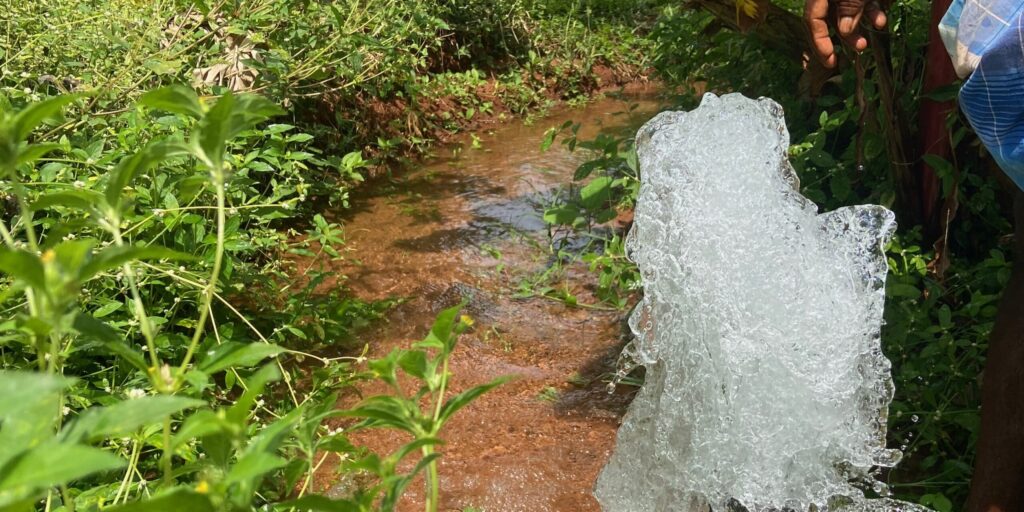
In my last note, I shared about the economic paradigm that is taking us towards a ‘world without agriculture.’ I would like to explore this economic paradigm a little more by isolating the costs of the food that we grow. Let’s take water as the first one. As per several studies, agriculture accounts for about 70% of all freshwater use globally. This number is more than 80% in a country like India where over 50% of the population is still engaged in agriculture. Within Auroville, farms (perhaps along with Matrimandir) are the biggest users of freshwater. The challenges of groundwater depletion, rampant use of free electricity borewells in the bioregion for non-edible crops like casuarina and other fast-growing timber, the beginnings of salination of groundwater and so on offer an opportunity to us to reflect on the hydrological cost of growing food and how can we not only reduce our water consumption but, perhaps what I think is more important to focus on, optimize the use of water in agriculture. Home » Blog » The hydrological cost of growing our food The hydrological cost of growing our food Mar 11, 2025 · Anshul Aggarwal In my last note, I shared about the economic paradigm that is taking us towards a ‘world without agriculture.’ I would like to explore this economic paradigm a little more by isolating the costs of the food that we grow. Let’s take water as the first one. As per several studies, agriculture accounts for about 70% of all freshwater use globally. This number is more than 80% in a country like India where over 50% of the population is still engaged in agriculture. Within Auroville, farms (perhaps along with Matrimandir) are the biggest users of freshwater. The challenges of groundwater depletion, rampant use of free electricity borewells in the bioregion for non-edible crops like casuarina and other fast-growing timber, the beginnings of salination of groundwater and so on offer an opportunity to us to reflect on the hydrological cost of growing food and how can we not only reduce our water consumption but, perhaps what I think is more important to focus on, optimize the use of water in agriculture. There are different ways of thinking about what we should grow and what we can grow depending on people’s preference and the weightage we can give to the ecological and social costs of growing food. Should something be grown only because it’s easier to grow, or because it is more water efficient, or because people really ask for it, or it is less labour intensive and so on. The answer to these questions is never black and white and they change from situation to situation and from time to time. For instance, farmers cannot impose water efficiency over people’s preference for a certain kind of food. At the same time farmers cannot simply chase what the market demands, prioritizing it over its ecological costs. Flood irrigation Flowering Avocado tree A classic case for this is Avocado. It is common knowledge that Avocado is a water guzzling crop. AuroOrchard received its first Avocado seeds from the Mother herself in the early 70s. These we now call the Mother trees. From these trees, many more trees have been planted at AuroOrchard as well as outside. These Avocados are some of the best that we can find in the region, some would say anywhere. There is a huge demand for these Avocados in Auroville and also the Ashram community. Should we be planting more Avocado knowing that we can grow them well? Or should we turn our heads and let people buy Avocados from Pondy market which are nowhere near as good and definitely have a higher ecological cost. Again, the answer is not straightforward and we need to find a balance. We have planted more Avocado trees in the last year but we are exploring how Avocados can be grown with other fruit crops so that water can be used optimally. In such a scenario, the hydrological cost of Avocado gets distributed to many other crops that are growing with it. However, such a solution would then add to the management costs of the system and perhaps the management is even more costly since water for the moment is free. Therefore, if farmers are delegated with the responsibility of conserving our natural resources while farming, there are costs associated with conservation as well and these are to be borne collectively. The hydrological costs of water must not be seen only as the cost of water used to grow food but also the cost to the farmer to be water-wise, to protect the water-source, to optimise farming within the water resource they are entrusted with. Avocados growing with Papayas Previous ArticleNext Article Featured Articles Abundance Product of the Month 22 Oct 2025 Monthly Updatesㅤㅤㅤㅤㅤㅤㅤㅤ 22 Oct 2025 Lessons from Auroville Farm Assessment 2023 22 Oct 2025 Recipe Alert!ㅤㅤㅤㅤㅤㅤㅤㅤㅤㅤㅤ 22 Sep 2025
A World Without Agriculture
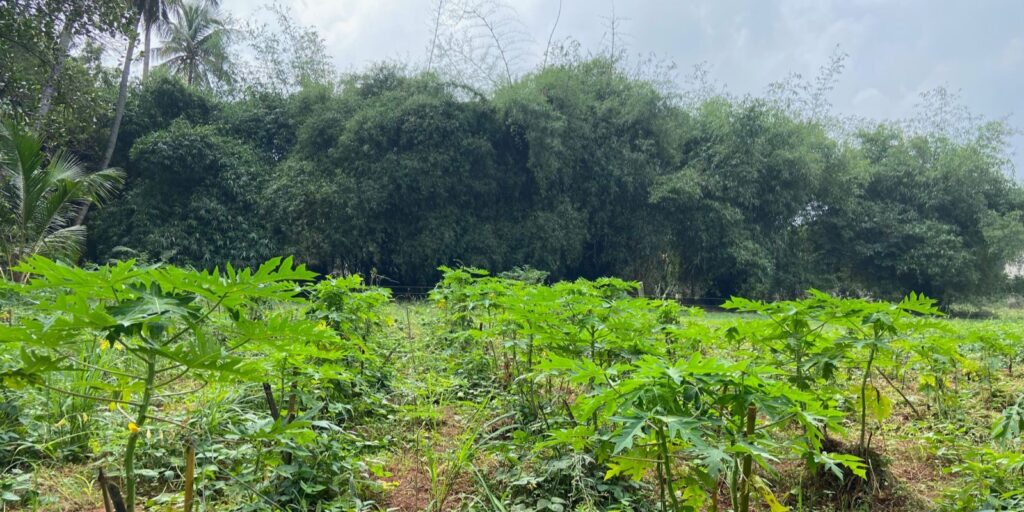
I arrived at AuroOrchard in the summer of 2023, intending to help farms produce more food for Auroville. Mostly I wanted to be closer with people passionate about the same. Home » Blog » A World Without Agriculture A World Without Agriculture Jan 31, 2025 · Anshul Aggarwal AuroOrchard saw some great shifts in 2024 with the land exchange, the massive loss of productive orchards and infrastructure, the financial difficulties due to the orchard being leased and finally the cyclone as the year came to a close. Through the commitment of the team and encouragement and support from friends within and outside Auroville, the farm managed to (is managing to) get through these difficulties. These moments of crises have also been moments of reflection, self-assessment, even self-criticism. Mother said to Gerard, “Grow food for Auroville”. It is a simple statement but its context has changed radically. Auroville has changed, the ecosystem has changed, farming has changed, the farmers have changed. As we move towards a new chapter in AuroOrchard’s journey, we are confronted with the same simple question, ‘What does it mean to grow food for Auroville?’. Is growing 8 tonnes of Mango enough? Is growing enough for all the kitchens enough? What does agriculture of the future look like when we are hardly able to manage on the farms? When nature is pictured as abundant and generous, why are our farms always in scarcity? Farms are now being pushed to be financially sustainable. This, in my opinion, is not a bad thing. A healthy farm is not just healthy ecologically. It creates value also socially and economically. Especially if we want young people to join farming, we need agriculture solutions that can support their livelihood and can show that farming is not a profession of poverty. To address this, AuroOrchard is experimenting with new ways of diverse perennial plantations taking inspiration from Syntropic Farming (a technique developed in Brazil by Ernst Gotsch, a swiss farmer and researcher)(Gotsch, 1995). We have also been changing our poultry practices and have introduced a new breed of birds since last year which is more resistant to diseases and well-suited for free range. We continue to push the boundaries of successive planting and harvesting in our vegetable garden, always having something to offer to the community throughout the year (we consistently harvest 6 days a week from Feb-Nov and 3 days a week for Dec-Jan) . All this good work must translate into not just higher quantities of food, but better quality of food (nutrition and consciousness). All this work must translate into better incomes for the farm workers. The world population engaged in agriculture has dropped from 70% to 25% in the last 100 years. In India, the number was 75% a hundred years ago and is now down to just about 45%. Researchers conclude that our goals of development are taking us towards a ‘world without agriculture’ (Timmer, 2009) as the agricultural workforce gradually moves out from the rural landscapes towards more developed sectors of the economy. As Auroville ‘develops’, are we also moving towards an Auroville without agriculture? Who will farm here in 20 years, 40 years? Where is the new generation of farmers of Auroville? Why would anyone join farming if it cannot pay for their sustenance? This is a question in front of all the farmers. Mother said to Gerard, “Grow food for Auroville.” Our work at AuroOrchard is not limited to growing tonnage of food. We need to find solutions to be able to continue serving the land and the community by cultivating food of the highest quality, by cultivating farmers of the highest consciousness. These solutions will not only be ecological, but will also address the social, economic, and even personal and spiritual dimensions of agriculture. We welcome all Aurovilians, newcomers, and volunteers to join us in this exploration. Next Article Featured Articles Monthly Updatesㅤㅤㅤㅤㅤㅤㅤㅤ 19 Sep 2025 Abundance Product of the Month 18 Sep 2025 Recipe Alert!ㅤㅤㅤㅤㅤㅤㅤㅤ 22 Sep 2025 Food and Agriculture in Auroville, India 18 Sep 2025