Remembering the Beginnings…
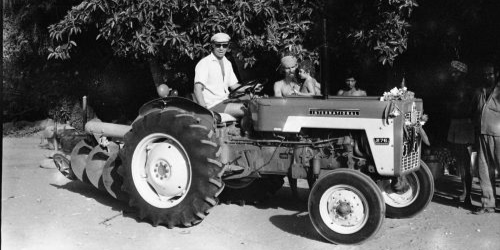
This interview with Gérard from 2020 , by the Lands for Auroville Unified team, takes us back to the earliest beginnings of the farm. Gérard came to the Sri Aurobindo Ashram in 1955 at the age of 23. After working at the Ashram bakery and swimming pool, he spent Home » Blog » Remembering the Beginnings of AuroOrchard With Gerard Cruz (2020) Remembering the Beginnings of AuroOrchard With Gerard Cruz (2020) August 2026 · Anshul Aggarwal This interview with Gérard from 2020 , by the Lands for Auroville Unified team, takes us back to the earliest beginnings of the farm. Gérard came to the Sri Aurobindo Ashram in 1955 at the age of 23. After working at the Ashram bakery and swimming pool, he spent several years caring for an orchard-farm in Mountain Paradise in the Himalayas, growing apples and peaches. Looking back, he describes this period as his apprenticeship in horticulture. In 1967, the Mother asked him to visit a piece of land near Promesse and consider how it might be developed. She later asked whether he would take responsibility for the land and grow fruits and vegetables for the emerging community of Auroville. Gérard returned from the Himalayas towards the end of 1968 and began the gradual work of developing AuroOrchard. The story also carries some lesser-known parts of the farm’s history. The Ganesh temple was already present on the land, and its continued care was one of the conditions under which the Mother acquired the farm. While the temple’s physical connection with the farm was lost in the land exchange in 2023, the daily puja has continued uninterrupted even until today since the beginning, now under the care of Diwakar. What comes through most strongly in Gérard’s memories is his trust in the work he was given and his gratitude for the life that unfolded through it. More than fifty years later, AuroOrchard continues to grow food for Auroville, carrying forward the purpose with which it began. As Gérard reflects: “My heart remains filled with gratitude for this exceptional experience.” You can read the full interview here: https://land.auroville.org/gerard-development-auroorchard/ Previous Article Featured Articles Words of appreciation…ㅤㅤㅤㅤㅤ 27 Aug 2026 Monthly Updatesㅤㅤㅤㅤㅤㅤㅤㅤ 26 Aug 2026 Words of appreciation…ㅤㅤㅤㅤㅤ 27 Aug 2026 Words of appreciation…ㅤㅤㅤㅤㅤ 26 Aug 2026
Monthly Updatesㅤㅤㅤㅤㅤㅤㅤㅤ
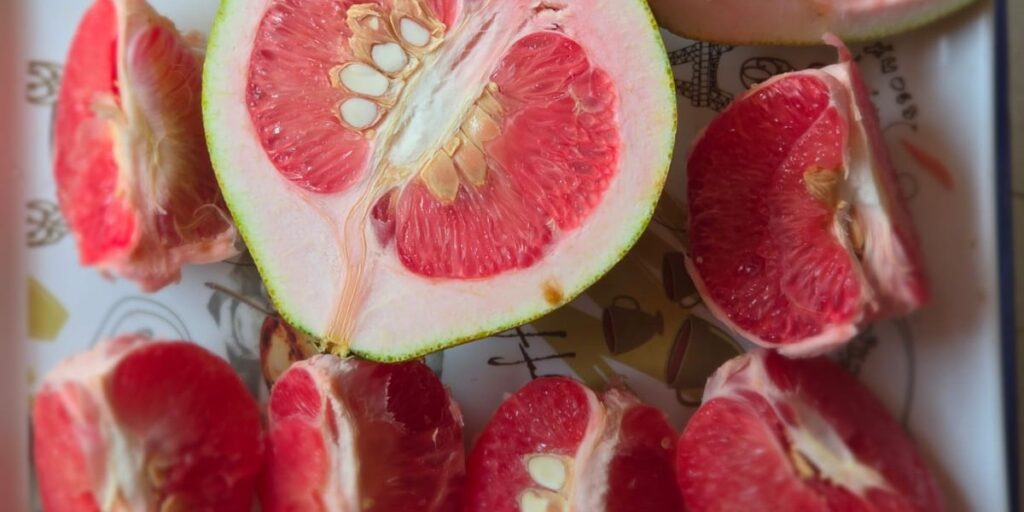
They are now drinking lemon juice from the farm and occasionally some buttermilk to keep cool. The Humane Home » Blog » Monthly Updates Monthly Updates August 2026 · AuroOrchard Poultry Our seventh flock has arrived, and the sixth flock has moved to the laying coop. Only two flocks are currently producing eggs, and we are facing a significant shortage. The sixth flock should begin laying soon, so we are looking forward to an improvement in about a month. Planning these transitions around changes in egg consumption remains a challenge, as the limited availability of chicks makes it difficult to bring in new flocks exactly when needed. We are also exploring additional feed options, including leftover vegetables and fruit, cereal grasses grown in hydroponic systems, and black soldier fly larvae. Vegetable garden Most of the sunnhemp has been cut down, and new brinjal and ladies’ fingers have been planted. We have also planted groundnut for the first time in eight years and are looking forward to seeing how it turns out! We are expanding our sweet potato planting, while the long beans and rosella are doing well. Quite a bit of pumpkin has gone into the ground too, and we hope to get a good crop before the monsoon Orchards There has been plenty of pruning, composting and mulching this month. The syntropic jackfruit and avocado orchards are coming along well. It is wonderful to see the diversity of plants growing together and the changes already visible in the soil. After pruning many mango trees last month, we have now organised the branches and are preparing to plant new mango trees next month as part of the mango conservation project. After losing all our papayas to a virus earlier this year, we have finally planted a new crop. We are hoping for a good harvest in April-May, and that there are no major cyclones. Seeds & Nursery Things are looking better in the nursery now, with everything under cages and mosquito nets! We are considering expanding the nursery to accommodate the growing need for plants for the farm and the community. We have started winged beans, palak and more basil, while taking a break from sowing long beans, cucumber and pumpkin until December. Abundance We continue to maintain stocks of our regular products—summer blend, pesto, turmeric lemon syrup, kombucha and herbal powders. We are also harvesting red chillies for drying. Every Monday afternoon, we work with the YouthLink team to develop new recipes and replenish stocks of some products. These afternoons are open to volunteers and Aurovilians interested in exploring how best to use and preserve Auroville-grown food. We are grateful to Solar Kitchen and Pour Tous DC for proactively prioritising vegetables and fruits grown on Auroville’s farms. Our thanks also to Taste of Korea for a large batch of delicious long bean kimchi! Research & Education September was busy with learning sessions, visits and tours, including a visit by more than 80 farmers from Puducherry. We have a three-day natural beekeeping workshop coming up this weekend and are exploring further learning opportunities around bees and biodiversity on the farm. We harvested the first compost pile from EcoPro’s sludge compost experiment-it is black gold! The first harvests of beans and ladies’ fingers from the Shumei Natural Farming experiment plots are also encouraging. We will continue these experiments after the monsoon, with more planning and over a larger area. We are grateful for the growing community of people interested in agriculture and AuroOrchard’s work. Poultry Egg consumption has again increased in Auroville after the summer. However, our production is now less as we say goodbye to our oldest flock and prepare to shift the youngest flock to the laying coop. Birds in general are doing much better due to better weather and more greens in the free-range after the rains. We will soon be welcoming day-old chicks in our nursery coop. Vegetable garden Happy to receive the rains after a lot of anticipation. Due to extreme heat, vegetable production was not good this season. Many things that were planted simply died due to heat, and lack of moisture in the soil and air. Since the rains, we have planted more beans, brinjal, pumpkin, ladies fingers, sweet potatoes and groundnut! We are planting groundnuts after 8 years on the farm. Herbs continue to be planted in the greenhouse, and we are also starting winter beans like winged beans. Now we begin to reduce vegetable planting in anticipation of the winter monsoon starting in two months. Orchards Finally, we managed to plant lime, papaya, rosella, pineapple- all of which were pending due to the absence of rains. We have established these new clusters in the mango orchard. Our current lime trees are about 40 years old and will reduce/stop producing in the next 3 to 5 years. By then these new trees should start producing. After the massive loss of Papaya trees due to the viral infection last year, we are hoping to have good harvests post-monsoon next year. Our team continues to prune and mulch the existing orchards and we are preparing to plant some native mango varieties in the mango orchard soon. Seeds & Nursery The nursery work is much better now with cages and mosquito nets. The pressure from squirrels and rats is intense and even a single box left unprotected is damaged overnight. Meanwhile, we managed to plant a lot of things from the nursery post-rains, and our wonderful team completed around 30 large nursery orders from our community! We continue to sow, transplant and start tree saplings now in preparation for winter monsoon. Abundance As we have crossed the busy fruit season, we now have more time to organise our stock, focus on abundant vegetables, herbs and greens. At the moment, we are busy processing Pomelos, Lime, Avocados, and leaves of Rosella and Moringa. There has been a growing demand for farm products from other locations in Tamil Nadu, especially Thiruvanamalai, Chennai and even Bangalore. We are
Words of appreciation…ㅤㅤㅤㅤㅤ
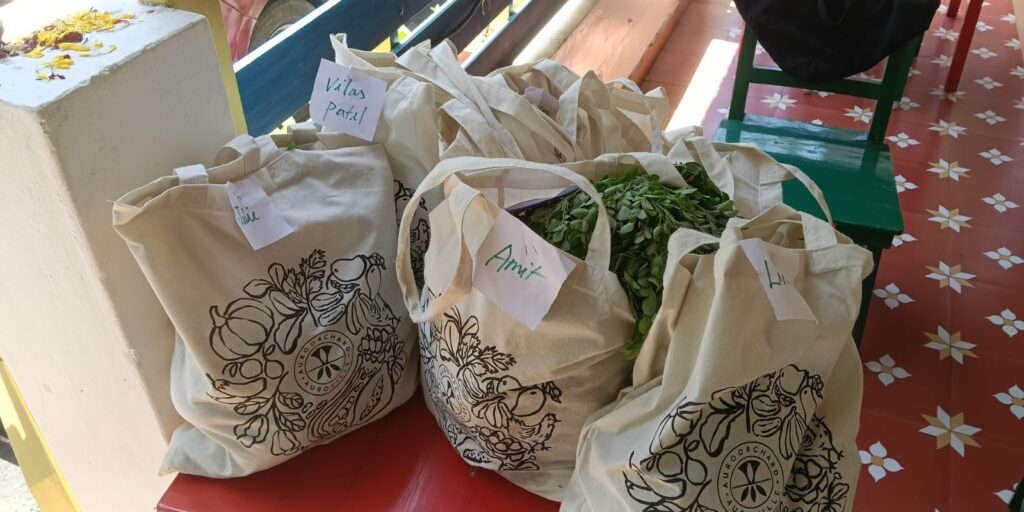
We’re deeply grateful for the encouragement and trust we receive from our community. There is still much to learn, improve, and do. We receive this feedback with humility and gratitude, as a reflection of the relationships and collective effort that make this work possible. Home » Blog » Words of appreciation from the community Words of appreciation from the community August 2026 · Anshul Aggarwal We’re deeply grateful for the encouragement and trust we receive from our community. There is still much to learn, improve, and do. We receive this feedback with humility and gratitude, as a reflection of the relationships and collective effort that make this work possible. A few words from our community on their experience of receiving baskets from the farm: A wonderful way to eat amazing food, enjoy top-notch products…and support Auroville’s farms. All are of exceptional quality- the super fresh fruits and veggies, and the processed foods: amazing taste, long preservation, well presented! Personally, it is a great luxury to receive a fresh vegetable from Auroville farm. I’m very grateful to the people working in the orchard to provide us this service. I’m super happy about your products! Seasonal and very fresh, it’s tasty and good. I tasted pesto, jam and ale, which are all very good! Good job. One of the best places to eat local, organic and seasonal food at AV. A wide selection available year-round, and a genuine effort on the part of the farm to produce fruits and vegetables of excellent quality. Produce we can trust to be organic. Every basket received is full of fresh produce and good will. We support organic farming and farmlands and forests in Auroville. A lot more support was needed. It’s wonderful work that AuroOrchard does and continues to keep bringing new produce. The basket service is a blessing for me as i don’t have any free mornings to go shopping at Ptdc. It’s also very consistent which keeps me assured. Response from Anshul and a few I have interacted with is prompt and addresses the query. The food is wonderful, always feels fresher, safer and more flavourful than any I can find in a store. I’ve been regularly purchasing produce from AuroOrchard organic farm, and the quality has been consistently outstanding. The fruits and vegetables are incredibly fresh, full of natural flavour, and you can truly taste the difference compared to regular market produce. What I appreciate most is the reliability—they maintain the same high standard every time. The produce feels clean, wholesome, and grown with care. This service is very valuable, and the fact that all produce is organic makes it even more valuable. I feel the difference in quality with AuroOrchard being a better quality. The rates of raw products are neither very high nor very low. The basket system is extremely helpful & is a hassle free experience. Amazing quality, very precise delivery, great service. Earlier I could never access AV farm produce, as nothing much is left at 1pm at PTDC. I guess that way neither ptdc nor av farms could really know the demand for their produce. Now it’s so easy! I keep sharing the link for the weekly order and the farm walk…we are blessed with fresh organic food directly from.the farm… prepared with so much care and farming expertise. I’m amazed by the way you responded to an intense situation and the outcome of it which shows more consciousness, adaptability, resilience and the work capacity. The work that AuroOrchard does is absolutely outstanding. Despite all the challenges, blockages, big injustice and even violence AuroOrchard has faced, you not only persevere but have improved tremendously over the last 2-3 years. I admire your strength, courage and endurance! I really appreciate your efforts to find new solutions for egg mass production. Somehow, it doesn’t feel right to me to keep animals to produce food for humans, but as long as we eat eggs at least lets find the most animal-friendly way to produce them. I’m happy to know that you try your best and that you will improve it even more! Your new ready made food production program is great, very creative and innovative! I always enjoy seeing your new products and love to try them out, especially your new syrups and drinks. My absolute favorite products are your turmeric powder, the various greens and the brown eggs. Amazing! Super efficient, top quality products. Such quality, creativity and abundance… cannot be better! A dream coming true for any organic food and farming lover. Thanks for all the efforts going into the direct sales! On top of the orders and my emails are always answered. Good quality products. Wonderful work, very useful Very positive vibrations. Products are good quality with reasonable price. Team mates are good, some are extraordinarily talented , simple and helpful. I wish AuroOchard all the best. Auro Orchard forms an excellent bridge for volunteers and newcomers in auroville. i often hear of people working in Auro orchard in a meaningful way, even if for a short period, and it makes me happy. I also appreciate immensely that the team is flexible and always experimenting and trying things – rare in this sector. Thank you AuroOrchard team and earth! Previous Article Featured Articles Words of appreciation from the communityㅤㅤㅤㅤㅤ 26 Aug 2026 Soil Test Experiments… 26 Aug 2026 Words of appreciation from the communityㅤㅤㅤㅤㅤ 26 Aug 2026 Soil Test Experiments… 26 Aug 2026
Grateful for Abundance of Mangoes | 2026
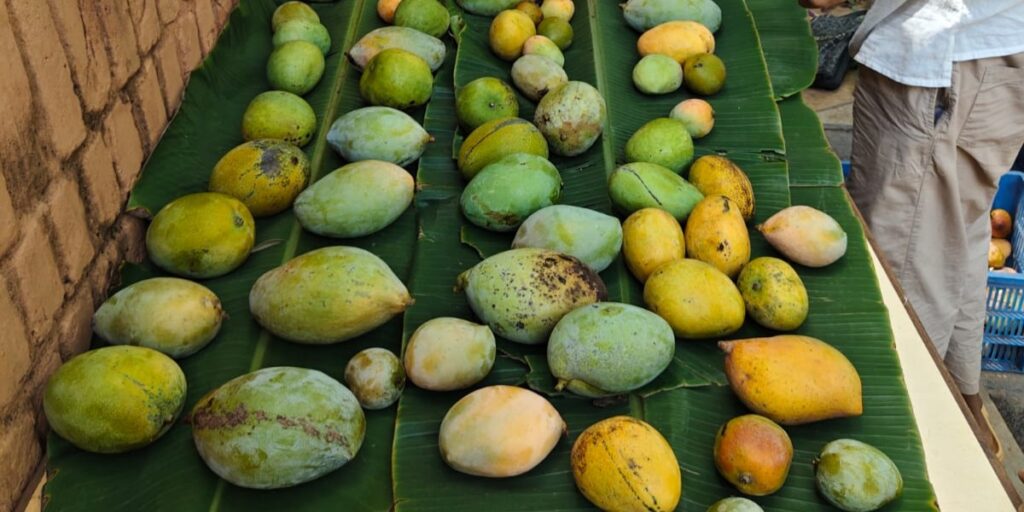
This year, the mango orchard offered us one of its most abundant harvests in recent memory. Over the course of the season, we harvested and distributed approximately 12 tonnes of mangoes. Home » Blog » Grateful for Abundance of Mangoes Grateful for Abundance of Mangoes July 2026· Anshul Aggarwal This year, the mango orchard offered us one of its most abundant harvests in recent memory. Over the course of the season, we harvested and distributed approximately 12 tonnes of mangoes. The orchard contains more than 15 known varieties, each arriving at a slightly different time and with its own particular shape, colour, aroma, flavour and texture. Among them are Banganapalli, Sindhoora, Neelam, ImamPasand, Totapuri, Rajapuri, Malgova, Dilpasand, Kalapadi, Redigola, Kader along with several old and distinctive trees whose varieties are still being identified. A likely part of this year’s abundance could be just the right sequence of the weather. Good rains before the flowering period followed by a relatively drier period allowed appropriate moisture at the right time for flower and fruit setting. However, it seems that several conditions would have come together, and the orchard responded with extraordinary generosity. Of the total harvest, 11.6 tonnes, nearly 97%, were distributed within Auroville! Together with the fruit supplied to the Ashram, practically the entire harvest remained within Auroville and its neighbouring community. This season also renewed our appreciation of the diversity already present at AuroOrchard and strengthened our intention to document, conserve and care for these trees for the years ahead. We want to thank the entire community for helping in distributing these mangoes, for using as much as they could, for their understanding feedback when the mangoes were not good, and for enjoying this abundance with us. Previous ArticleNext Article Featured Articles Dry Tropical Syntropic Agroforestry 30 Jul 2026 Initiating the Centre for Mango Conservation… 29 Jul 2026 Dry Tropical Syntropic Agroforestry 30 Jul 2026 Initiating the Centre for Mango Conservation… 29 Jul 2026
Monthly Updatesㅤㅤㅤㅤㅤㅤㅤㅤ
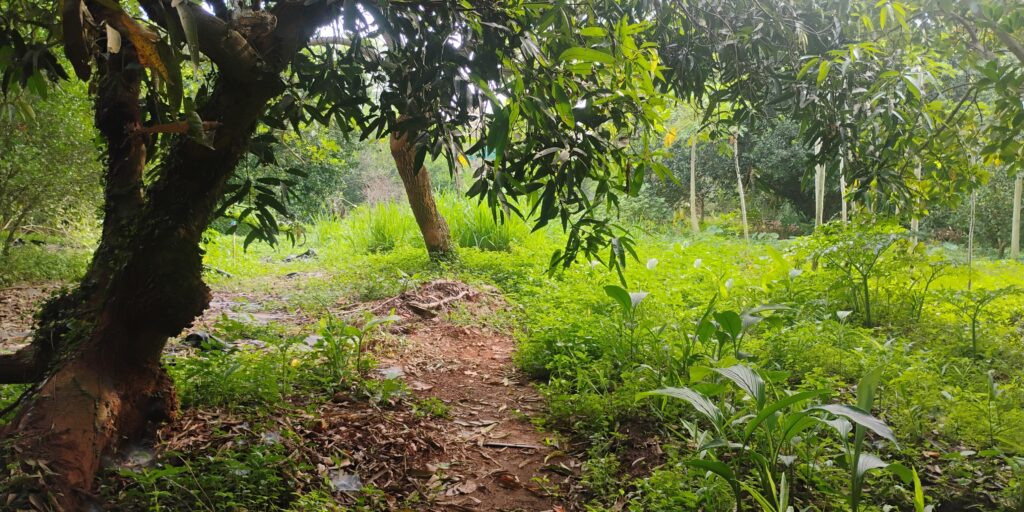
They are now drinking lemon juice from the farm and occasionally some buttermilk to keep cool. The Humane Home » Blog » Monthly Updates Monthly Updates August 2026 · AuroOrchard Poultry Egg consumption has again increased in Auroville after the summer. However, our production is now less as we say goodbye to our oldest flock and prepare to shift the youngest flock to the laying coop. Birds in general are doing much better due to better weather and more greens in the free-range after the rains. We will soon be welcoming day-old chicks in our nursery coop. Vegetable garden Happy to receive the rains after a lot of anticipation. Due to extreme heat, vegetable production was not good this season. Many things that were planted simply died due to heat, and lack of moisture in the soil and air. Since the rains, we have planted more beans, brinjal, pumpkin, ladies fingers, sweet potatoes and groundnut! We are planting groundnuts after 8 years on the farm. Herbs continue to be planted in the greenhouse, and we are also starting winter beans like winged beans. Now we begin to reduce vegetable planting in anticipation of the winter monsoon starting in two months. Orchards Finally, we managed to plant lime, papaya, rosella, pineapple- all of which were pending due to the absence of rains. We have established these new clusters in the mango orchard. Our current lime trees are about 40 years old and will reduce/stop producing in the next 3 to 5 years. By then these new trees should start producing. After the massive loss of Papaya trees due to the viral infection last year, we are hoping to have good harvests post-monsoon next year. Our team continues to prune and mulch the existing orchards and we are preparing to plant some native mango varieties in the mango orchard soon. Seeds & Nursery The nursery work is much better now with cages and mosquito nets. The pressure from squirrels and rats is intense and even a single box left unprotected is damaged overnight. Meanwhile, we managed to plant a lot of things from the nursery post-rains, and our wonderful team completed around 30 large nursery orders from our community! We continue to sow, transplant and start tree saplings now in preparation for winter monsoon. Abundance As we have crossed the busy fruit season, we now have more time to organise our stock, focus on abundant vegetables, herbs and greens. At the moment, we are busy processing Pomelos, Lime, Avocados, and leaves of Rosella and Moringa. There has been a growing demand for farm products from other locations in Tamil Nadu, especially Thiruvanamalai, Chennai and even Bangalore. We are soon launching our new labels that will allow us to distribute these products beyond Auroville. Research & Education This month we hosted a 3 day course on learning from the land in collaboration with Deepika and Bernard from Pebble Garden. The course was attended by 13 people of different ages and backgrounds. It was heartening to see the interest and curiosity of the participants affirming the need for sharing more of what we do. Weekly open sessions have also been regularly conducted, the last one being on mapping biodiversity at the farm launching a new research project on the farm to assess the impacts of climate change on agriculture in Auroville region and how the practices at AuroOrchard could respond to these challenge Poultry The summer has been tough on the birds. We somehow managed with lime water and buttermilk but clearly the heat was a big stress for the birds. We are now installing large exhaust fans in the coops, to help with ventilation and some temperature regulation. In the last months, we also started working with Egle at Aurora to process the chicken meat into forms that are easily usable by people since the meat from older free-range chickens is tougher and cannot be used like the tender broiler meat that is available in the market. Also grateful to the Auroville Bakery for receiving AuroOrchard eggs during summer when the consumption in Auroville was very low. Vegetable garden Through the summer, we have been harvesting Brinjal, Lady’s fingers, Cucumber, Cluster beans, some pumpkin, Drumsticks, spinach of different kinds. Most beds are under Sunnhemp which is now being cut and left on the bed. As we enter the Aadi Maasam, planting has intensified. Soon, we will be planting Sweet Potato, Tapioca, Peanut among the usual vegetable crops. Grateful to all the long term and day volunteers who have helped tend the garden even under the scorching sun Orchards The last months have been overwhelmingly busy with the mango harvests, collecting, storing, sorting, and distributing. This season has also been exceptionally good for Jackfruit and we distributed about 6 tonnes of Jackfruit within the community. We have also had good Pomelo and Lime harvests. The much anticipated Avocados harvests have also started and we are expecting a good season. For the young orchards, we have been pruning, composting, and mulching. We have a wonderful new team which is paying more attention to the details, and helping in developing our new orchards for the years to come. Seeds & Nursery We have extended some parts of the nursery to accommodate the growing number of saplings that we make now. As we bring newer areas under cultivation, and add more diversity, the nursery is becoming more busy and dynamic than before. We also have a new team member, Usha, who brings a lot of dedication to this work. Despite our best efforts, we are still losing a lot of our saplings to rodents, squirrels, rabbits, etc. There is almost 50% loss every morning. We have managed to prevent some of it with meshes and mosquito nets. However, it does bring up the question of the increasing conflict between human and nature in our agricultural systems. Abundance This has been the busiest time for our Abundance team since last year. The team has been completely occupied
Interview with Christian Tarpin, 2019
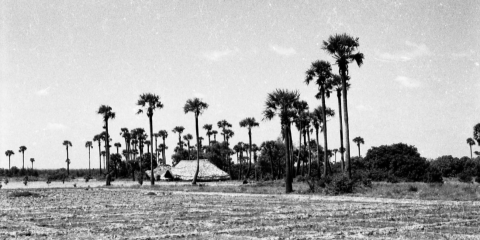
Following is an English translation of the French interview with Christian conducted by Emilie Ponceaud Goreau and Anthony Goreau Ponceaud and published in Open Edition of Journals, a French platform for the humanities and social sciences. Christian worked on the farm from 2012-2019, and was the key driver in Home » Blog » Interview with Christian Tarpin, 2019 Interview with Christian Tarpin, 2019 May 2026 · Anshul Aggarwal Following is an English translation of the French interview with Christian conducted by Emilie Ponceaud-Goreau and Anthony Goreau-Ponceaud and published in Open Edition of Journals, a French platform for the humanities and social sciences. Christian worked on the farm from 2012-2019, and was the key driver in transitioning the farm to fully organic. In this interview, he describes how he began his work at AuroOrchard and reflects on his ideas about agriculture, consumption, and creating a new relationship with the soil. Reference: Emilie Ponceaud-Goreau and Anthony Goreau-Ponceaud, “Entretien avec Christian Tarpin. Ferme AuroOrchard, 12 décembre 2019,” Les Cahiers d’Outre-Mer [online], 281 | January–June, published online January 1, 2022. URL : http://journals.openedition.org/com/11323 DOI : https://doi.org/10.4000/com.11323 Photograph 1: Christian Tarpin, originally trained as a civil engineer and urban planner specializing in mobility systems, is now a farmer at AuroOrchard, the historic farm of the Auroville community, founded by Gérard and Bithi in 1969. Photograph 2: The “Groundnut Field” and the First Cowshed of AuroOrchard What were your impressions upon arriving here? I discovered the farm on February 15, 2012, shortly after Cyclone Thane had passed through (December 31, 2011). It was devastated, yet I fell in love with it. Forty years of conventional agriculture had damaged it; the cultivation practices, maintaining the soil bare and clean, ready to receive new crops, had destroyed its fertility. This is true in general, but even more so in this climate. On top of that, the cyclone had passed through and caused major damage. I still remember Gérard1 standing in front of the four hectares where there are 300 large mango trees, extending his hand and saying: “and there, the mango orchard”… and I could see nothing, the trees were so entangled, broken… The road entering it was not even visible anymore! But I also saw that Gérard had done incredible work. To what extent does the farm at AuroOrchard fit into the evolution of the local landscape? Hmm… To understand that, we will have to take quite a few detours… In fact, the climax ecosystem of this region is the Tropical Dry Evergreen Forest (TDEF)2. This country experiences intense sun and intense rains; only trees are strong enough to withstand and protect the soil from these aggressions. The region is also described as arid because evaporation exceeds precipitation. In reality, it is bistable: either one strips and damages the land and moves toward desert, or one protects and cares for it and moves toward forest. Agroforestry is therefore unavoidable… agriculture must navigate, oscillate between these two “temptations”: desert or forest. The history of this place is linked to that of Pondicherry. The city was built mainly out of wood, which explains the deforestation. It was also burned and rebuilt several times because of the quarrels between the English and the French. In the eighteenth century, the inhabitants also cleared a ten-kilometre “buffer zone” around the city to protect themselves from leopards and elephants. Auroville was established in this place, intentionally desertified by humans. The landscape evolved toward desertification, especially because cattle are left free to roam here; it is a local tradition. At the beginning of Auroville in the 1970s, the plateau was desert-like, though it nevertheless became green during the rainy season… The inhabitants had developed a rainfed agricultural system consisting of enclosing the fields at the end of spring in order to protect them from cows; they sowed as soon as the first rains of the small monsoon arrived in June, and harvested one or two crops. Afterwards, they opened the fields again, the animals ate the stalks, trampled the soil, deposited their excrement… This ecosystem was fragile; the older Aurovilians experienced sandstorms. Today only 2% of the original forest that once covered the eastern coastal strip of the Indian subcontinent remains. Most often, only the sacred groves around temples survive; when entering them, the presence of these old trees is striking, one can breathe there… It would take centuries to recreate this forest! The history of the landscape here has been deeply marked by human beings. It was once an extremely rich, wooded landscape, but today we continue moving toward the desert. When I arrived at AuroOrchard eight years ago, I had difficulty outlining the farm on Google Maps because the surroundings were still green. Today the green form of AuroOrchard emerges like an island of resistance, green amidst the red of exposed earth! We are still pushing the cursor toward desertification because this is an “economic development” zone, highly coveted along the highway… How did you come to take responsibility for the farm? I always had gardens; I was self-sufficient in vegetables, cultivating more than 1,000 square meters of land to feed my family. It was part of my life, but I had no training as a farmer, even less in tropical agriculture. At first, I considered myself an apprentice; I listened to Gérard, conducted small experiments, and continued the BRF3 approach that he had started in 2011. It was a very good direction, which I developed extensively. Bernard and Deepika4, the founders of Pebble Garden, the seed-conservation vegetable garden where I volunteered, encouraged me. I began here in February 2012, initially one day per week. I observed what was being done, learned their methods, and gradually became more and more involved. By October 2012 I was full-time, responsible for the vegetables… One day, because of an excess of potassium, a field bloomed with green, slimy, foul-smelling algae, like the green tides in Brittany, and I really became angry: “either we switch to organic farming or I leave.” Gérard received this very
What Did Auroorchard Produce & Where It…
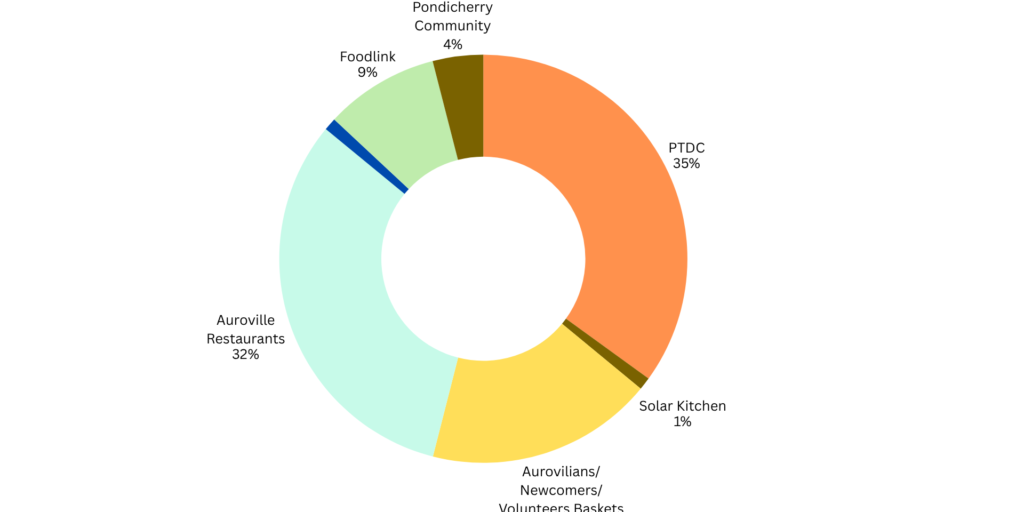
This is an overview of the distribution of food from AuroOrchard during April 2025 to March 2026 and its comparison to the previous years. Home » Blog » What Did Auroorchard Produce & Where It Went | 2025-26 What Did Auroorchard Produce & Where It Went | 2025-26 May 2026 · Anshul Aggarwal This is an overview of the distribution of food from AuroOrchard during April 2025 to March 2026 and its comparison to the previous years. This year, our production focus was on fruits and bringing the poultry to a certifiable standard. The work in poultry also shows the increase in production of eggs this year. Similarly, fruit production was higher comparatively. The work with the orchards has certainly diverted some space, energy and attention from the vegetables and we can see a small drop in production for some vegetables, greens and herbs. This is in line with our long term strategy of strengthening the fruit orchards more and more and maintaining the vegetables at a significant yet limited production level. The choice of keeping the vegetables limited is due to lack of demand for local vegetables within Auroville, the distribution challenges that it brings with it as well as the high amount of labour and energy required to consistently produce vegetables in large quantities. Overall, over the last eight years, farm production is rising significantly (see charts below). The following analysis outlines our major production and distribution trends. Overall production trend 2017-2026 Fruits, Nuts & Vegetables The drop in the nut production (cashews) reflects the loss of trees due to land exchange. Last year, we were able to collect some fruit from the lost trees. However, in 2025-2026, we only collected fruit from trees still left at AuroOrchard. The drop in vegetable production, as explained above, is a sign of shifting attention to fruits, and the increase in production of fruits is encouraging. Trend for Vegetables, Fruits and Nuts Six most produced vegetables (figures in Kg) Six most produced fruits (figures in Kg) Eggs In terms of our infrastructural capacity, this is the peak egg production that we can expect. With around 1500 laying birds around the year, we get around 800-1100 eggs per day. While this is still much lower than the daily egg needs of Auroville, expanding this system further has multiple challenges. Therefore we will maintain this scale for the years to come and bring more innovation, better practice within this system progressively. Though the figure of 2025(-2026) looks only a bit higher than 2017(-2018), the quality of the eggs and poultry practices has significantly improved since then. Food preservation/ Abundance This year our food preservation work gained some momentum. We were able to develop multiple recipes and distribute certain products consistently. Distribution The majority of the food produced went to PTDC followed by Auroville restaurants and units like Auroville Bakery, Taste of Korea, La Terrace, Coffee Ideas, Naturellement, Nowana, PTPS, The Right Path Café and The Sprout. Roughly one-fifth went directly in baskets to Aurovilians, Newcomers and volunteers. 96% of the food produced is distributed within Auroville. The remaining 4% is distributed mainly in Pondicherry with the Sri Aurobindo Ashram community through baskets. Solar kitchen remained the lowest consumer (only 1%) and Foodlink’s share has dropped significantly over the last year. Financial sustainability Our main source of income continues to be the eggs. The proportion of income from fruits and vegetables is more or less the same compared to the previous year(s). We had some small income from the preserves distributed through ‘Abundance’ as well as a very small income from sapling sales. The current situation remains concerning as it is not sustainable to depend heavily on only one income source-and that too on the poultry. We are hoping to gradually expand the income shares of fruits and abundance products. You can access the data from 2024-25 here. Previous Article Featured Articles What Did Auroorchard Produce & Where It… 28 May 2026 Monthly Updatesㅤㅤㅤㅤㅤㅤㅤㅤ 29 Apr 2026 What Did Auroorchard Produce & Where It… 28 May 2026 Salt: How a Tiny Crystal Took Over Our Meals 28 Apr 2026
Gratitude for all the love through the AVI USA Fundraising Campaign, December 2025

In November last year, we put out a call for fundraising towards infrastructure development and repair, investment in food preservation, and creating accommodation for long term volunteers. We were heartened to receive 4230 USD in donations and 2500 from AVI USA to match the funds, totalling to 6730 USD. More than the money, we really appreciated the messages of encouragement and support pouring in from across the world. Home » Blog » Gratitude for all the love through the AVI USA Fundraising Campaign, December 2025 Gratitude for all the love through the AVI USA Fundraising Campaign, December 2025 January 2026 · Anshul Aggarwal In November last year, we put out a call for fundraising towards infrastructure development and repair, investment in food preservation, and creating accommodation for long term volunteers. We were heartened to receive 4230 USD in donations and 2500 from AVI USA to match the funds, totalling to 6730 USD. More than the money, we really appreciated the messages of encouragement and support pouring in from across the world. We thank all of you who donated generously towards the work of the farm and who helped during this campaign. Thanks to AVI USA team for organising this. Our call for fundraising:https://auroorchard.auroville.org/help-us-raise-funds-for-2026/ Report on utilisation of funds in 2025:https://auroorchard.auroville.org/report-on-fund-utilisation-from-avi-usa-matching-campaign-2024/ Previous ArticleNext Article Featured Articles Monthly Updatesㅤㅤㅤㅤㅤㅤㅤㅤ 29 Jan 2026 Year-end updatesㅤㅤㅤㅤㅤㅤㅤㅤ 20 Dec 2025 Conscious Technology Lab Update 30 Jan 2026 Eating for Nourishment or Habit: A personal … 30 Jan 2026
Year-end updatesㅤㅤㅤㅤㅤㅤㅤㅤ
This year has been a year of transformation for the poultry. We completed the full transition from white to brown birds and strengthened our free-range systems, experimenting with new grazing rotations, fodder crops, and improved water and feeding systems. Despite periods of illness and market dips, bird health improved steadily, and we joined the Cage-Free & Free-Range Poultry Producers Association. As we advance on our application for the Humane Farm Animal Care certification, we remain even more committed to building ethical poultry as a core part of the farm. Home » Blog » Year-end updates Year-end updates December 2025 · AuroOrchard Poultry This year has been a year of transformation for the poultry. We completed the full transition from white to brown birds and strengthened our free-range systems, experimenting with new grazing rotations, fodder crops, and improved water and feeding systems. Despite periods of illness and market dips, bird health improved steadily, and we joined the Cage-Free & Free-Range Poultry Producers Association. As we advance on our application for the Humane Farm Animal Care certification, we remain even more committed to building ethical poultry as a core part of the farm. Vegetable garden The vegetable garden has had abundant cool-season harvests, successful turmeric and sweet-potato yields, and expansions into wild edible greens and ginger trials. Monsoon months challenged sun-loving crops, but green manure, mulching, and raised-bed drainage helped maintain soil fertility. Burlap tarp experiment was a failure but it taught us something valuable about soil drainage during the monsoon. Throughout the year, we grew a steady diversity—from lettuces, greens, brinjal, ladies fingers, herbs, pumpkins, legumes, and root crops—while working to conserve moisture, add biomass, and refine weed management. Orchards This was our most intensive orchard years, with seven new syntropic and intercropped fruit blocks planted (Papaya-Citrus, Avocado-Papaya, Coconut-Banana, Ramphal-Pineapple, Jackfruit-Papaya, Mango-Citrus, and Hope Jackfruit/Avocado blocks). Despite challenges with Mango and Avocado yields due to rains, the intercropping trials performed well—especially turmeric, pineapple, and pumpkin. We also expanded biomass species, refined pruning cycles, introduced new citrus, and continued cyclone recovery work for Papaya and Banana. Syntropic blocks showed vigorous, synergistic growth and promise as our most efficient orchard-establishment strategy. This work is exceptionally important in guiding our orchard work for the coming year. Seeds & Nursery The nursery was vibrant and dynamic throughout the year, producing a wide range of vegetables, herbs, biomass plants, and fruit saplings. We propagated Jackfruit, Soursop, Papaya, Avocado, Mexican Sunflower, Moringa, Agathi, Subabool, Lemongrass, mint varieties, and other herbs. Community support helped expand our Avocado seedling collection and new Avocado plantations. The nursery played a central role in both orchard expansion and vegetable season planning. Abundance We emphasised the shift from “processing” to food preservation in using what the farm grows in ways that honour nutrition, flavour, and seasonality. This year, we offered a wide range of products—mango conserves, lemon marmalade, basil pesto, cashew items, herbs, brinjal spread, seasonal vegetable recipes, salad mix and so on. A new renovated workspace and a growing team allowed us to experiment more, receive valuable community feedback, and explore natural packaging for the future. We are entering the new year with the aspiration to extend as well as deepen this work. Research & Education We organised all our research projects on our website and prepared a series of courses on vegetable gardening, orchards, animals, and integral food philosophy. Research expanded across natural beekeeping (supported by a seed grant from SDZ, Netherlands), aquaponics, technology integration for irrigation, biofermentation for soil and plant applications, species identification of fruits, and production-data analysis. Most importantly, we continue to deepen our work on natural beekeeping, hive multiplication, and exploring medicinal stingless-bee honey. Previous Article Featured Articles Year-end updatesㅤㅤㅤㅤㅤㅤㅤㅤ 20 Dec 2025 Abundance Product of the Month 05 Dec 2025 Ayurvedic Recommendations for Winter 19 Dec 2025 Our Brewery for Plant Health 19 Dec 2025
Flow of fire and water on the farmㅤㅤ
In the Sāṃkhya school of Indian philosophy, the unfolding of matter from spirit gives rise to the senses and to the five elemental manifestations of the material world. From space, emerges air, the principle of movement, and fire, the principle of transformation. Then comes water, carrying flow, continuity, and the subtle pulsations of energy through matter. From the settling of this movement is born earth, the solid ground where life takes form and rests in its full potential. Home » Blog » Flow of fire and water on the farm Flow of fire and water on the farm December 2025 · Anshul Aggarwal In the Sāṃkhya school of Indian philosophy, the unfolding of matter from spirit gives rise to the senses and to the five elemental manifestations of the material world. From space, emerges air, the principle of movement, and fire, the principle of transformation. Then comes water, carrying flow, continuity, and the subtle pulsations of energy through matter. From the settling of this movement is born earth, the solid ground where life takes form and rests in its full potential. Farming is an interaction of all these elements—an ongoing exchange between soil, water, light, air, and the consciousness of the one who tends them. While the Sun remains the primary fire and source of energy, we now also work with another form of fire: electricity, which powers pumps, motors, vehicles, tools, and the quiet machines woven into daily life on the farm. Similarly, rain brings water in its natural rhythm, but we have also learnt to draw from the rainwater stored underground. The farm has three borewells, each serving a specific area and purpose. In this way, the ancient flows of fire and water manifest today as the flows of electricity and irrigation lines across the land. These flows move together; they remain the source of energy for all work on the farm. Over the last fifty-eight years, these flows have gradually expanded to cover a large part of the farm. But further extension is needed to serve areas still cultivated sub-optimally. One might ask: why expand this infrastructure at all? Shouldn’t some parts remain free of artificial flows? Aren’t the Sun and the rain enough? Isn’t natural vegetation sufficient? These questions are part of an enduring dilemma in human life. Our footprint on the planet is large; the footprint of farming especially so. Agriculture is the world’s largest consumer of water, a driver of deforestation and biodiversity loss, a source of carbon emissions, and—in its industrial form—the cause of immense ecological, animal, and human suffering. In such a scenario, it is natural to think that the solution lies in withdrawal: if only humans stepped back, perhaps the earth would regain its balance. We witnessed glimpses of this during the Covid pandemic, when air grew cleaner and wildlife briefly reclaimed spaces near cities. But this brings us to a deeper question: what then is the role of humanity at all? It cannot be inaction. And as our experience shows, even the smallest human action today has ecological and social consequences. Integral Yoga would tell us that our role is not domination but participation—a conscious collaboration with the creative force of nature for mutual growth and progress. Agriculture is one of the clearest expressions of this human–nature participation. Thus, expanding human activity on the farm can arise from two very different impulses–domination, colonisation, and control, or service to the land and to the community—enhancing the ecosystem, the soil, the earth, and producing food for the people we serve. We strive (with successes and failures) toward the latter. In the coming year, we aim to expand our micro-irrigation network as we establish new orchard blocks and diversify existing fruit areas. This year we have learned how communities of crops support one another and reduce the overall water footprint of the farm—simply because the soil remains densely covered with vegetation: some plants grown as food for the farm, others as food for the soil, insects, bees, and birds. Our primary focus will be the mango and cashew orchards, the oldest sections of the farm, which at present are monocultures. Our experiments with cultivating pineapple, ginger, turmeric, yam, and taro within existing orchards have given remarkable results, and we hope to continue this diversification. And water needs energy to flow. As our irrigation network expands, so does the need for energy—whether through electrical connections, lines, or solar-powered pumps. Meanwhile, some of the existing infrastructure, built over many decades, now needs repair and renewal. These are our goals for the coming year—to tend to the flows of fire and water on the farm, the two essential elements for movement and transformation without which both the earth and human consciousness remain sterile. And given the changes the farm (and Auroville) has witnessed in the last few years, it is evident that the psyche of the farm too needs a movement and transformation, as it goes through a radical transition socially, politically and economically. Previous Article Featured Articles Monthly Updatesㅤㅤㅤㅤㅤㅤㅤㅤ 28 Nov 2025 Abundance Product of the Month 22 Oct 2025 Flow of fire and water on the farmㅤㅤ 03 Dec 2025 Hands-On Approachㅤㅤㅤㅤㅤㅤㅤㅤㅤ 29 Nov 2025