We would not need to go hunting for our connection to our food and the web of life that produces it. We would no longer need any reminding that we eat by the grace of nature, not industry, and that what we’re eating is never anything more or less than the body of
“We would not need to go hunting for our connection to our food and the web of life that produces it. We would no longer need any reminding that we eat by the grace of nature, not industry, and that what we’re eating is never anything more or less than the body of the world. I don’t want to have to forage every meal.”
— Pollan, M., The omnivore’s dilemma: A natural history of four meals (2006), p. 378
According to analyses by the Sentience Institute (USA), over 90% of farmed animals globally are living in inhumane facilities known as “factory farms” at present. The intensive confinement of animals on these farms leads to a range of psychological and physical health problems, and many of these animals endure painful deaths on account of health complications caused by their breeding or environment. Some animals are debeaked, castrated, or mutilated in other ways without anesthesia. The stunning methods used to knock some animals unconscious before slaughter fail regularly, and errors on industrial slaughter lines result in atrocities such as nearly one million birds being boiled alive every year. Nearly all fish die by being painfully suffocated and crushed by other fish in nets that pull them out of the water. Of all land animals in factory farms, over 60% are chickens raised for meat, about 30% are chickens raised for eggs and about 10% are cattle, sheep and pigs.
Large international surveys indicate that the vast majority of the global population— approximately 86–92% — consumes meat or other animal-based foods with only a small share identifying as vegetarian or vegan (Statista (2023); Ipsos (2018)). Global meat production has more than doubled since 1961 (OWD) and animal based protein makes up about 20% of the global diet (OWD). In a world where global demand for animal protein seems to be rising (OECD-FAO, (2025)), how can we reconcile the massive impact that animal farming has on animals as well as on our ecology and environment?
Scientific evidence shows that humans started settling down as agricultural civilisations over ten thousand years ago. This move represents an important change for humanity from the wilderness of nature to an intentional participation with nature. It marks a separation of humanity from the forests, pointing to a self-discovery within the collective context of a polis. And animals like chickens, sheep, goats, cows and horses followed the humans into this agricultural polis–they became domesticated. What emerged was not merely a technical shift in food production, but a deep transformation in the human–animal relationship. For instance, the horse and the cow, especially in the Indian culture, represent power and knowledge respectively, the symbols of human evolution from the unconscious vital towards a great consciousness of self-reflexivity. They become important symbols of vedic rituals as well as metaphors of self-transcendence. Humans and animals have, therefore, shared a long domestic relationship of mutual interchange in the form of care and food, as well as a deep spiritual kinship. However, as agriculture becomes industrialised, this relationship of care has turned into a relationship of extraction–beings have turned into resources– only to be exploited for human consumption. Today, amidst multiple schools of farming and food possibilities, the farmers face the following challenges:
“We would not need to go hunting for our connection to our food and the web of life that produces it. We would no longer need any reminding that we eat by the grace of nature, not industry, and that what we’re eating is never anything more or less than the body of the world. I don’t want to have to forage every meal.”
— Pollan, M., The omnivore’s dilemma: A natural history of four meals (2006), p. 378
According to analyses by the Sentience Institute (USA), over 90% of farmed animals globally are living in inhumane facilities known as “factory farms” at present. The intensive confinement of animals on these farms leads to a range of psychological and physical health problems, and many of these animals endure painful deaths on account of health complications caused by their breeding or environment. Some animals are debeaked, castrated, or mutilated in other ways without anesthesia. The stunning methods used to knock some animals unconscious before slaughter fail regularly, and errors on industrial slaughter lines result in atrocities such as nearly one million birds being boiled alive every year. Nearly all fish die by being painfully suffocated and crushed by other fish in nets that pull them out of the water. Of all land animals in factory farms, over 60% are chickens raised for meat, about 30% are chickens raised for eggs and about 10% are cattle, sheep and pigs.
Large international surveys indicate that the vast majority of the global population— approximately 86–92% — consumes meat or other animal-based foods with only a small share identifying as vegetarian or vegan (Statista (2023); Ipsos (2018)). Global meat production has more than doubled since 1961 (OWD) and animal based protein makes up about 20% of the global diet (OWD). In a world where global demand for animal protein seems to be rising (OECD-FAO, (2025)), how can we reconcile the massive impact that animal farming has on animals as well as on our ecology and environment?
Scientific evidence shows that humans started settling down as agricultural civilisations over ten thousand years ago. This move represents an important change for humanity from the wilderness of nature to an intentional participation with nature. It marks a separation of humanity from the forests, pointing to a self-discovery within the collective context of a polis. And animals like chickens, sheep, goats, cows and horses followed the humans into this agricultural polis–they became domesticated. What emerged was not merely a technical shift in food production, but a deep transformation in the human–animal relationship. For instance, the horse and the cow, especially in the Indian culture, represent power and knowledge respectively, the symbols of human evolution from the unconscious vital towards a great consciousness of self-reflexivity. They become important symbols of vedic rituals as well as metaphors of self-transcendence. Humans and animals have, therefore, shared a long domestic relationship of mutual interchange in the form of care and food, as well as a deep spiritual kinship. However, as agriculture becomes industrialised, this relationship of care has turned into a relationship of extraction–beings have turned into resources– only to be exploited for human consumption. Today, amidst multiple schools of farming and food possibilities, the farmers face the following challenges:
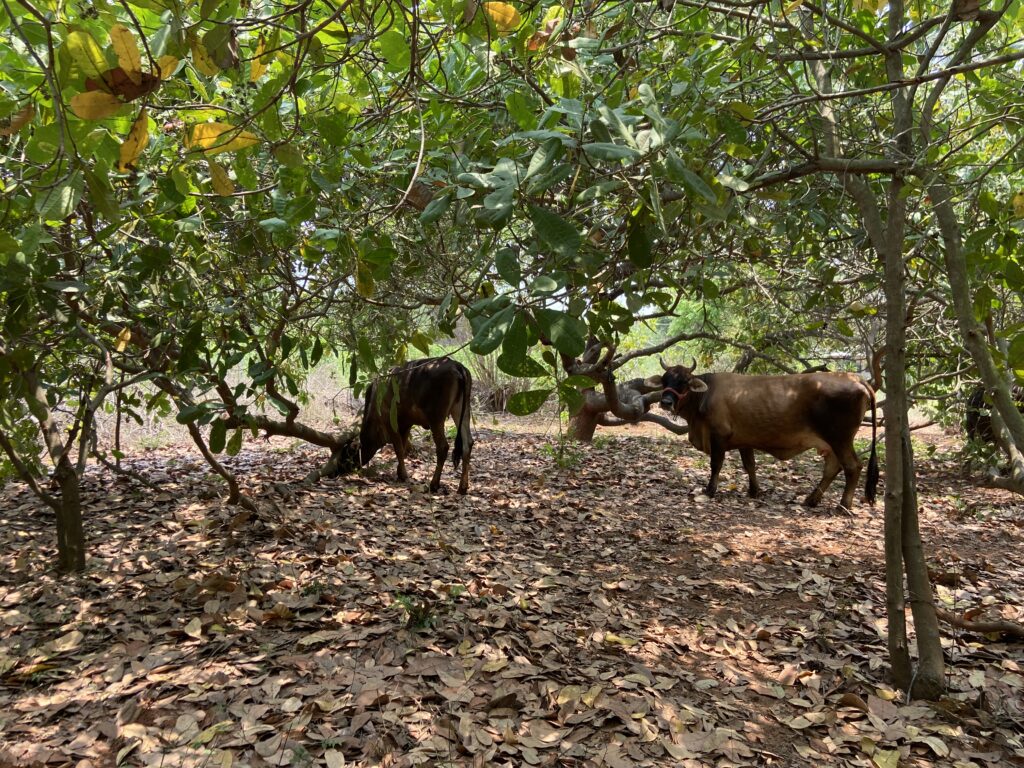
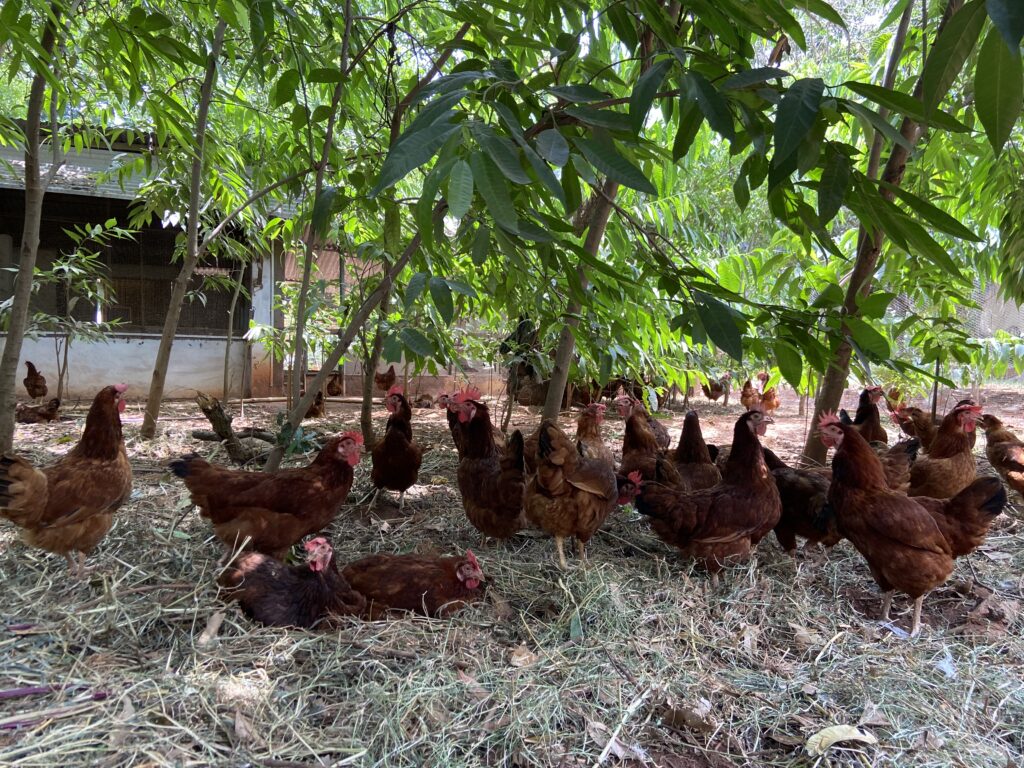
If we were to abandon all the farm animals because we don’t want to propagate the cycle of animal farming, where would they go? These animals do not belong in the wild. They have evolved over thousands of years in close companionship with humans. If we were to keep them on the farms and not use their gifts as food, what role can they play in the ecological web? How can energy continue to flow through them? Animals have long been partners in ecological processes—grazing, fertilising, cycling nutrients through the land. Sanctuary approaches honour their sentience but raise questions about how these ecological functions might persist. The dilemma lies between protecting animals as beings and recognising their irreplaceable roles within living systems.
For many cultures, animals are not just a source of sustenance, they are an integral part of their farming activity. The animals are treated like family members but at some point also sacrificed for food to feed the family and the community. In the face of industrial farming, how can these cultures be allowed to practice their traditional ways of agriculture? Can we impose morality from outside on cultures that we may understand very little of? The ethical frameworks of traditional, small-scale husbandry differ fundamentally from those of industrial production, yet both are now judged under the same moral lens.
Animals in farming also support the expense of their care through the gifts they provide as food. For many small farmers, animals are not just companions or workers; they are essential to household economics and farm viability. If animal based food were to be completely rejected, how can modern agriculture, especially in the case of small farmers which are already struggling financially, reconcile the effort and financial expense involved in keeping animals on the farm?
If we continue to practice animal farming, what is the justification of killing another being for the sustenance of another? How do humans get to decide the value of life and which life is disposable? Scientific consensus today recognises that farmed animals—from chickens to cows to fish—possess complex emotional and cognitive capacities. This makes the suffering inherent in animal agriculture, not only a question of scale, but also of ethics.
Humans too have evolved with animal based food for a long time. Considering the quality of industrially farmed animals and their products, they can hardly be called food. At the same time, most of this rise in consumption of meat is driven not by need, but by economic development, population growth, and the globalisation of industrial food systems. In such a scenario, what choices do people have to shift to a more conscious diet–which may or may not involve animal products? Can all human beings irrespective of where they live, what body constitution they have, and their biological needs, completely let go of animal based food? While many people can thrive on plant-based diets, this is not universally feasible due to geography, income, or individual health conditions.
Many farmers and institutions around the world are actively seeking these answers and there are glimpses of what solutions for some of these questions. However, how can it all be integrated into an agricultural practice that is ecologically, socially, financially, spiritually and nutritionally sustainable remains a big challenge.
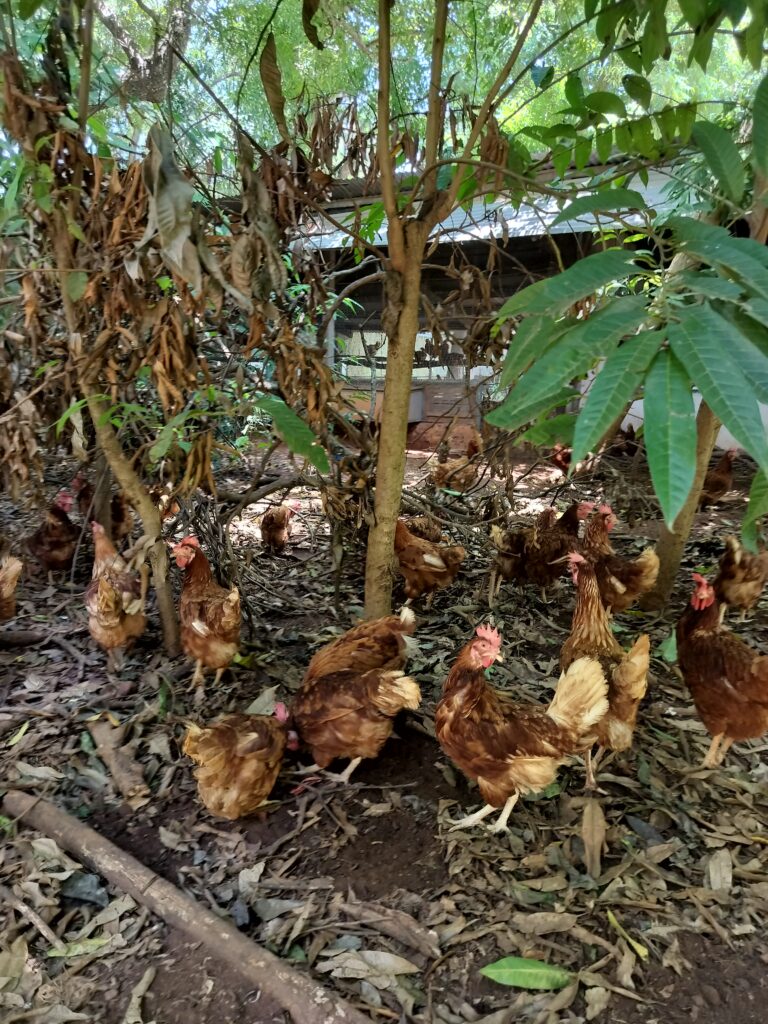
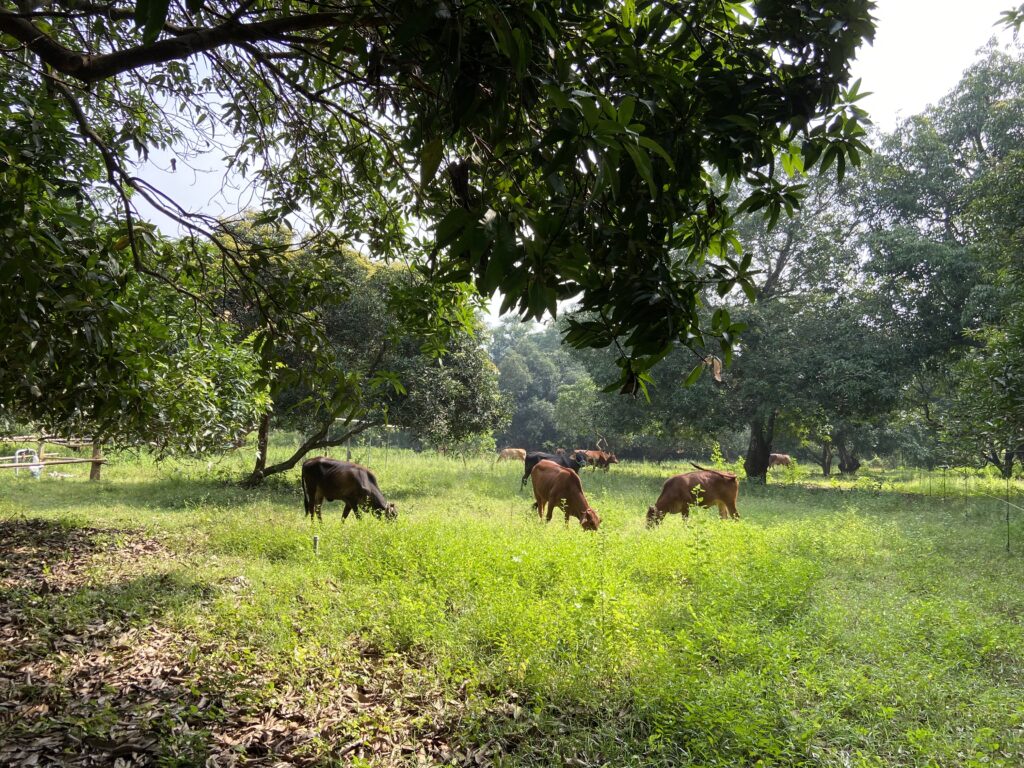
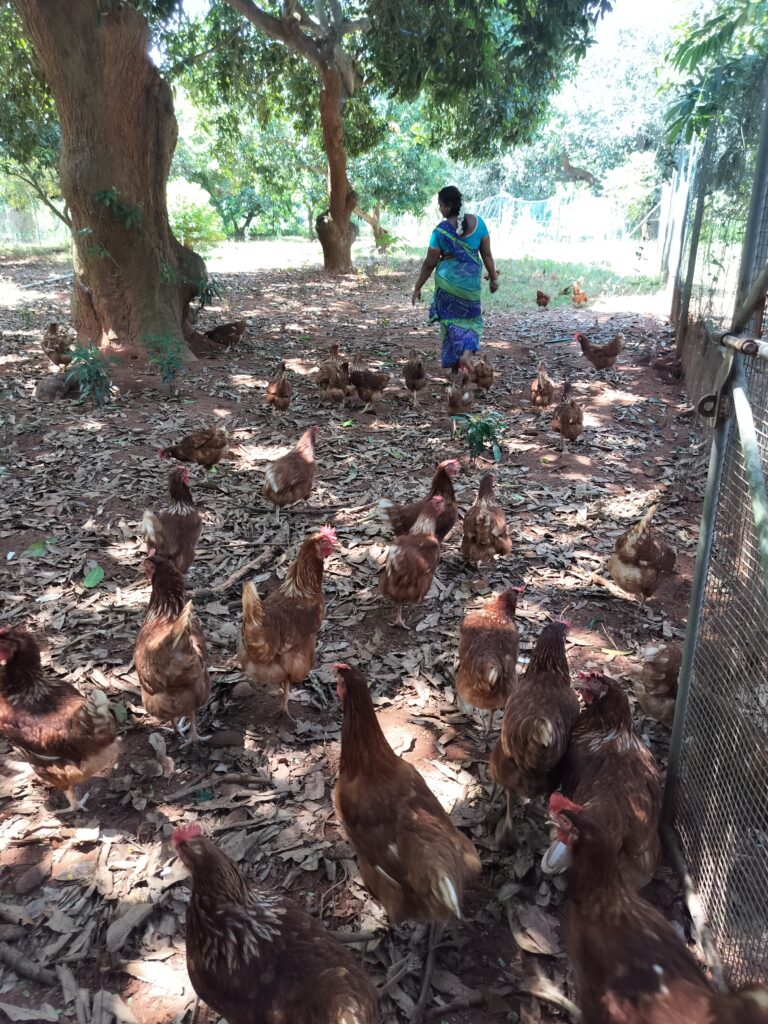
At AuroOrchard, we are grappling with the same questions–with our cows and chickens. While the cows graze in the orchards and give us their dung and urine to fertilise our fields, they are financially supported through a fund. For the chickens, who produce an abundance of eggs for the community, we strive to give them the best life possible on the farm, and continue to explore what better we can do to create natural conditions for life, as much as possible. We do have to sell these chickens after about two years. Once they are sold, they are butchered and become food. Is this ideal? Certainly not. And this is the dilemma of every farmer who is tasked with the responsibility of feeding the community. In our experience, the way forward may be in discovering a renewed relationship of interdependence, a new language of mutuality which does not treat animals as units of production, but where there is a greater acknowledgement and gratitude for the sacrifice of the bodies of the farmer, the animals and the land in feeding the world towards greater consciousness.
Join our newsletter for exclusive updates!
AuroOrchard is certified organic by the Tamil Nadu Organic Certification (ORG/SC/1906/001683) Department accredited by APEDA (Agricultural and Processed Food Products Exports Development Authority), New Delhi, Ministry of Commerce and Industry, Government of India.