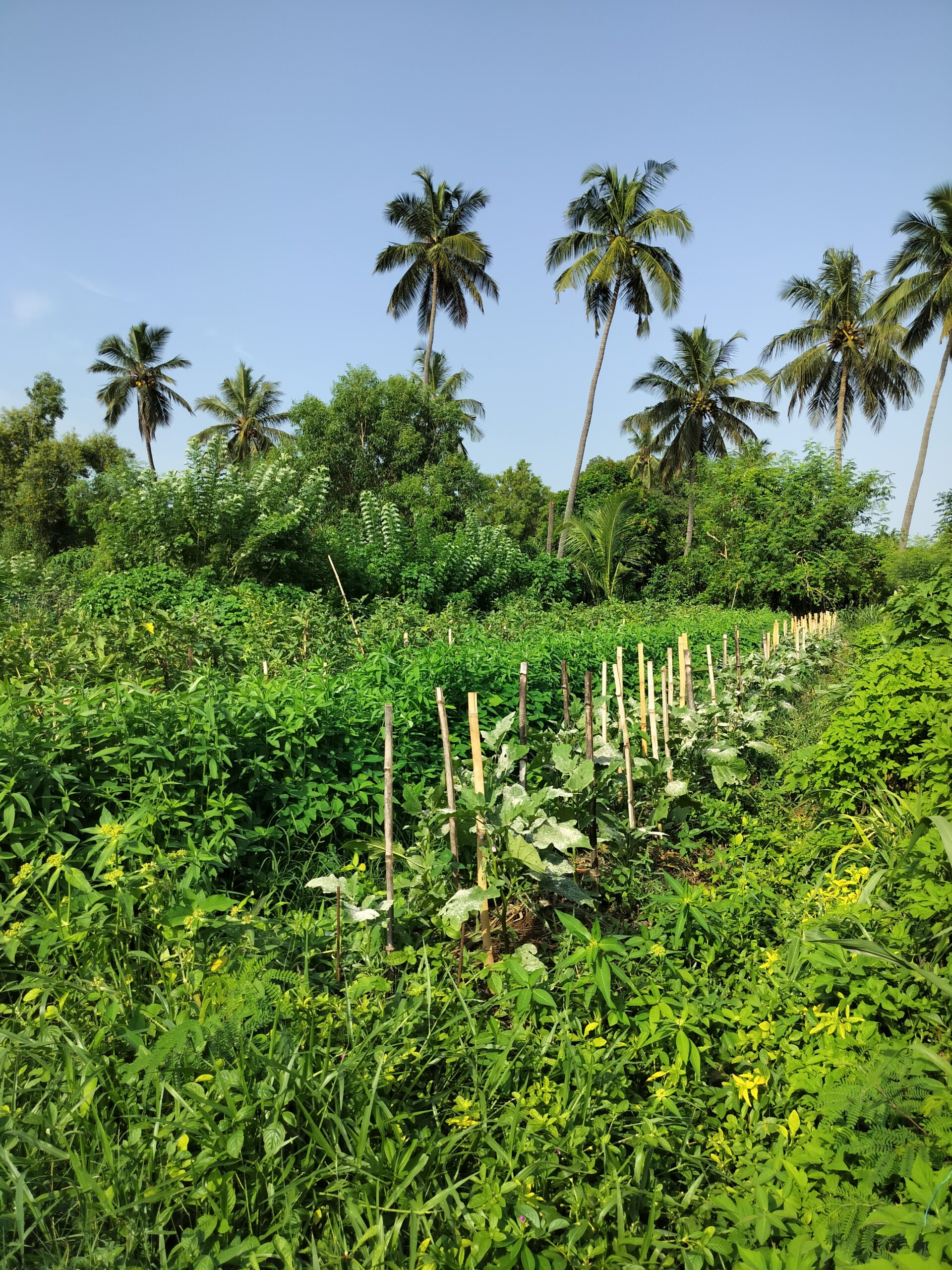
Vegetable growing has always been at the heart of AuroOrchard. Even with the challenges of heat, erratic rainfall, and variable soil fertility, we continue to grow food for the community throughout the year — one of the few farms in Auroville to do so. This continuity has taught us to look more closely at the land’s rhythms and discover that the year is not divided into four but into six subtle farming seasons, each with its own mood, crops, and light. Over time, we’ve learned to plan our plantings through this rhythm, adapting to the local climate and aligning with traditional calendars.
Vegetable growing has always been at the heart of AuroOrchard. Even with the challenges of heat, erratic rainfall, and variable soil fertility, we continue to grow food for the community throughout the year — one of the few farms in Auroville to do so. This continuity has taught us to look more closely at the land’s rhythms and discover that the year is not divided into four but into six subtle farming seasons, each with its own mood, crops, and light. Over time, we’ve learned to plan our plantings through this rhythm, adapting to the local climate and aligning with traditional calendars.
The Six Seasons of Cultivation
1. Pre-summer (Mid Feb – Mid Apr)
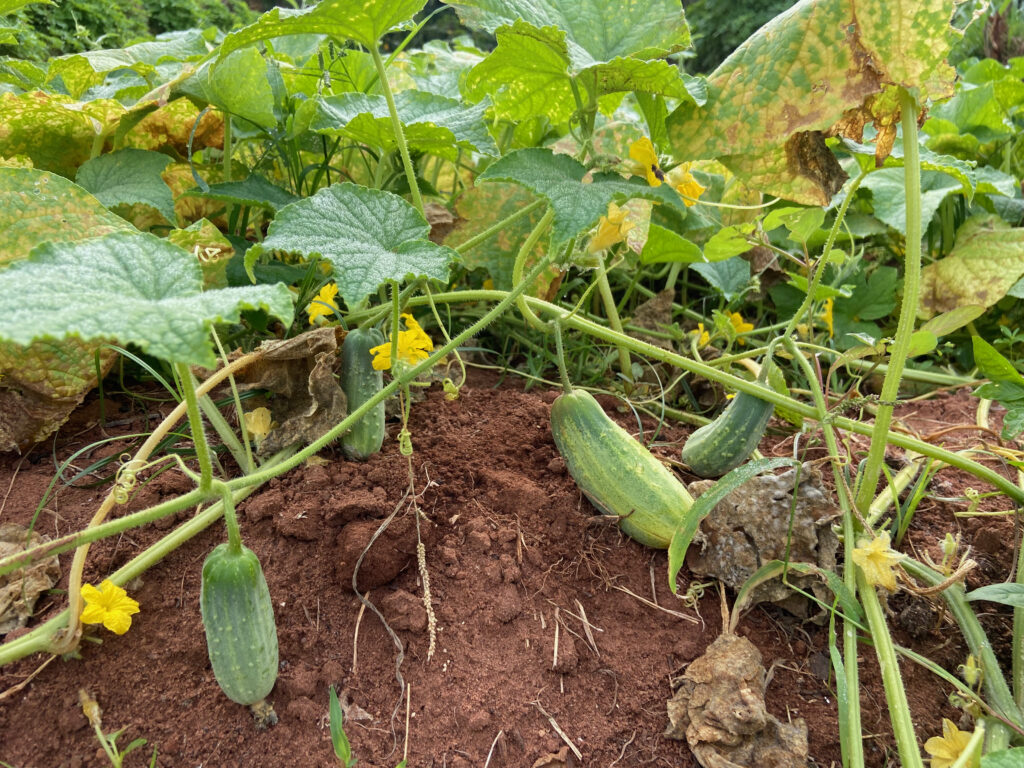
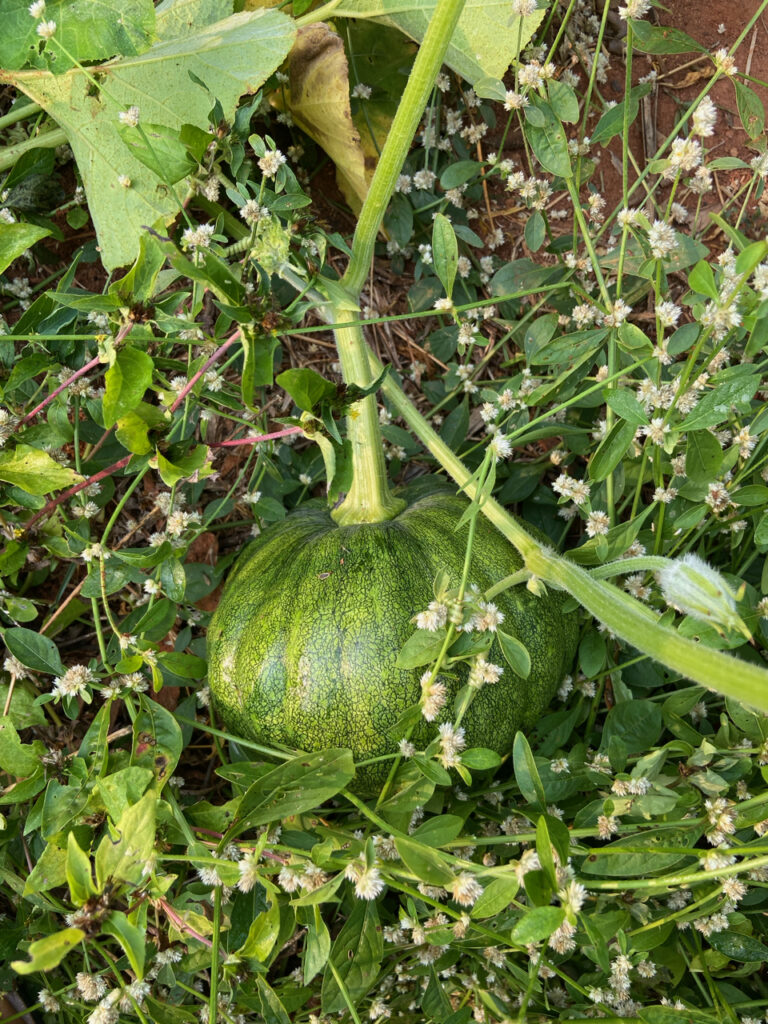
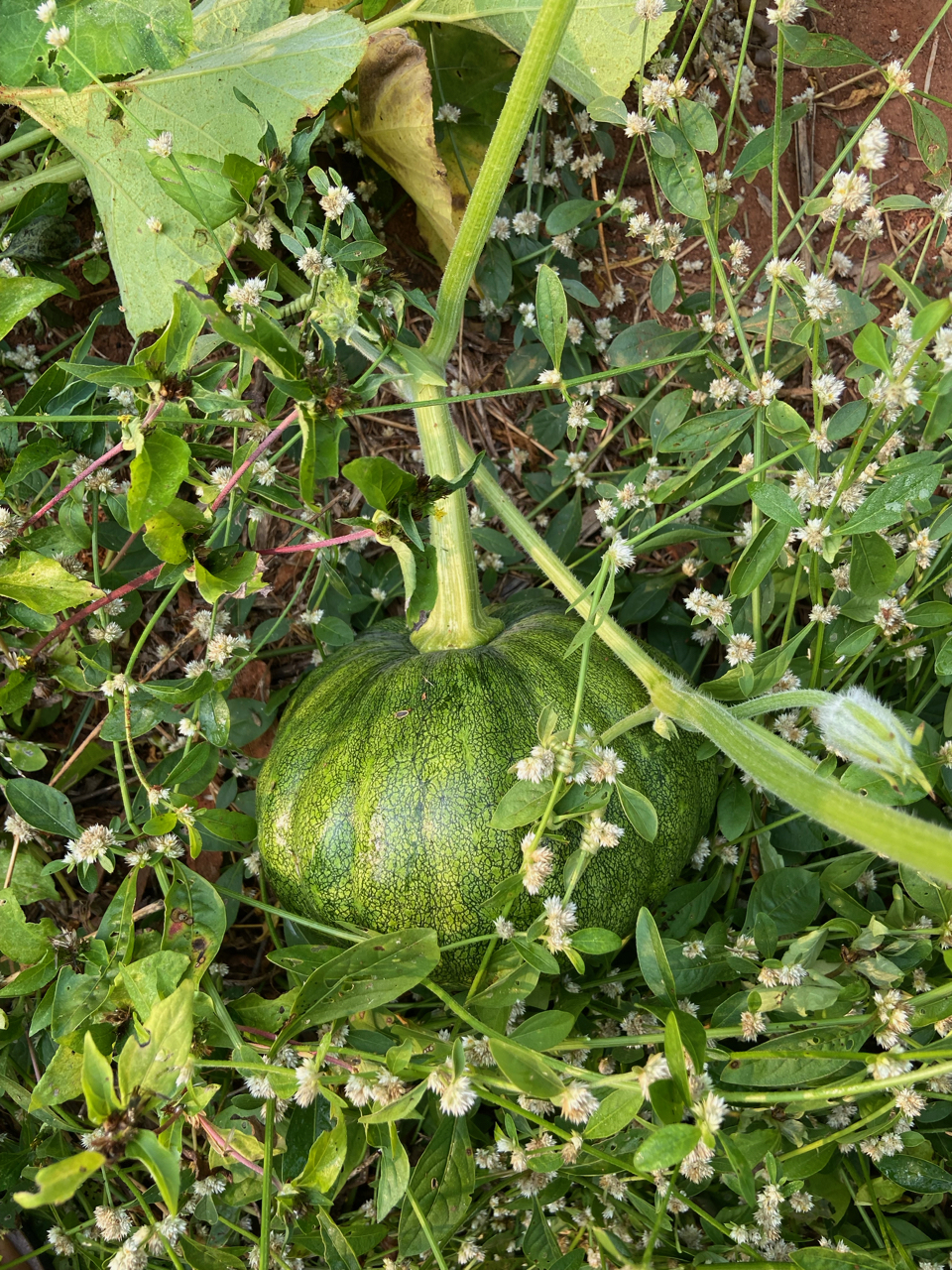
Right after the festival of Pongal (around mid-January), as the days lengthen but mornings still carry dew, we begin a new planting cycle. Summer crops like pumpkin, cucumber, and gourds take root. The spring crops before this season — lettuce, arugula, spinach, celery, coriander, and others — start to change in flavour and texture with the rising heat.
Vegetable growing has always been at the heart of AuroOrchard. Even with the challenges of heat, erratic rainfall, and variable soil fertility, we continue to grow food for the community throughout the year — one of the few farms in Auroville to do so. This continuity has taught us to look more closely at the land’s rhythms and discover that the year is not divided into four but into six subtle farming seasons, each with its own mood, crops, and light. Over time, we’ve learned to plan our plantings through this rhythm, adapting to the local climate and aligning with traditional calendars.
The Six Seasons of Cultivation
The Six Seasons of Cultivation
1. Pre-summer (Mid Feb – Mid Apr)
Right after the festival of Pongal (around mid-January), as the days lengthen but mornings still carry dew, we begin a new planting cycle. Summer crops like pumpkin, cucumber, and gourds take root. The spring crops before this season — lettuce, arugula, spinach, celery, coriander, and others — start to change in flavour and texture with the rising heat.
1. Pre-summer (Mid Feb – Mid Apr)
Right after the festival of Pongal (around mid-January), as the days lengthen but mornings still carry dew, we begin a new planting cycle. Summer crops like pumpkin, cucumber, and gourds take root. The spring crops before this season — lettuce, arugula, spinach, celery, coriander, and others — start to change in flavour and texture with the rising heat.
2. Summer (Mid Apr – Mid Jun)
Production narrows in this season. With care and irrigation, we grow brinjal, ladies’ finger, beans, pumpkins, and gourds. The soil asks for rest, and we shift focus to green manure and cover crops to restore vitality.
3. Post-summer (Mid Jun – Mid Aug)
As the heat softens and early rains arrive, the fields awaken again. Most crops — brinjal, beans, okra, and gourds — do well in this period. This season echoes the pre-summer rhythm, preparing the soil for abundance.
4. Autumn (Mid Aug – Mid Oct)
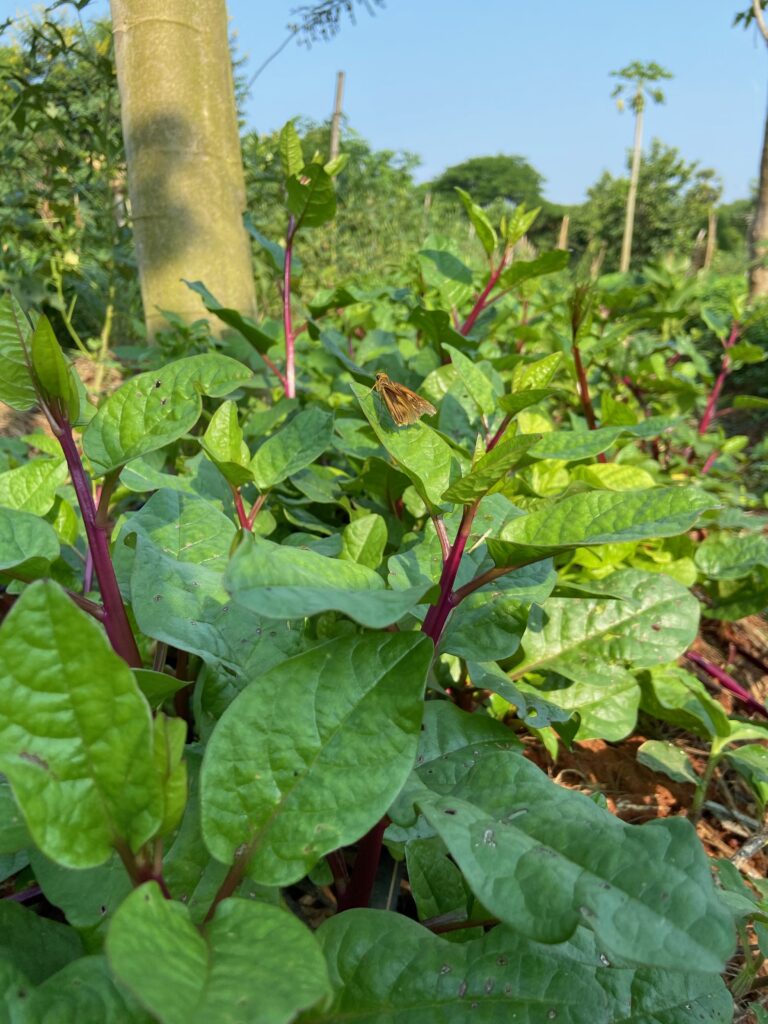
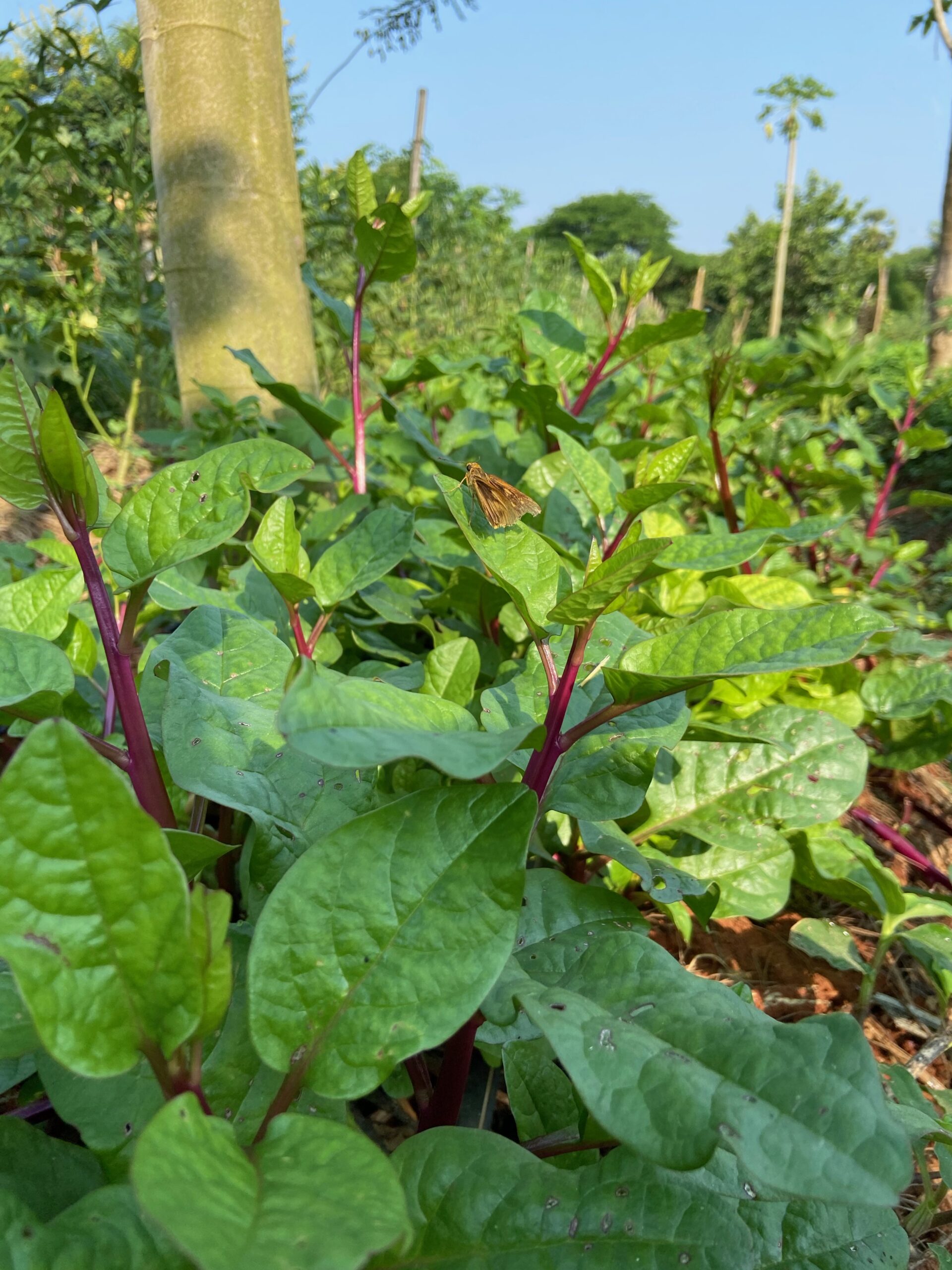
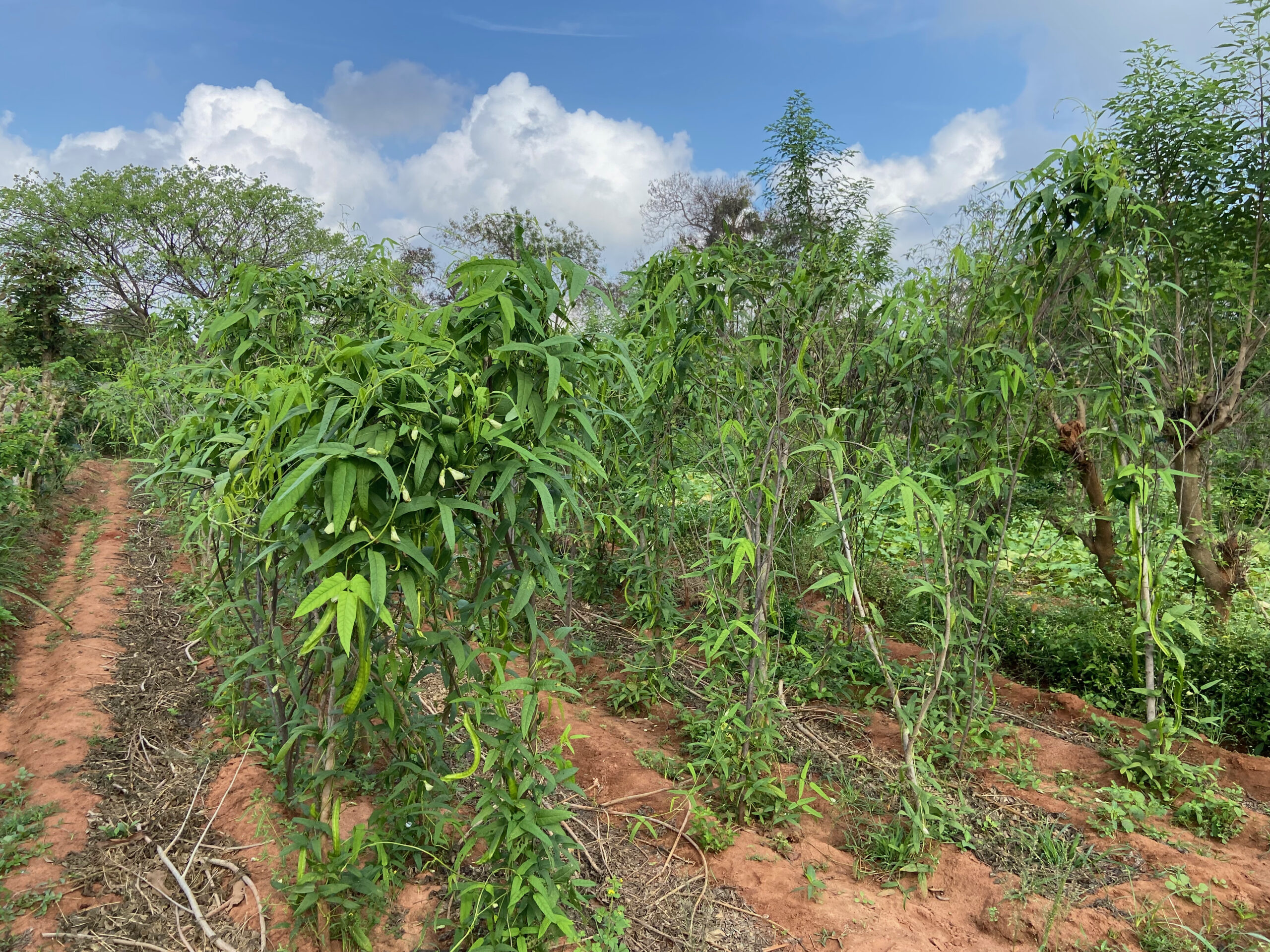
Dark clouds gather. The soil is alive, and days shorten. It’s the time for wing beans, yams, sweet potatoes, basella, and other crops that love moisture and shade.
5. Monsoon (Mid Oct – Mid Dec)
Heavy rains and limited sunlight slow production. Brinjal and okra still hold steady, but most gourds and greens rest. We use this period to plant cover crops and green manures, rebuilding fertility for the next cycle.
6. Spring (Mid Dec – Mid Feb)
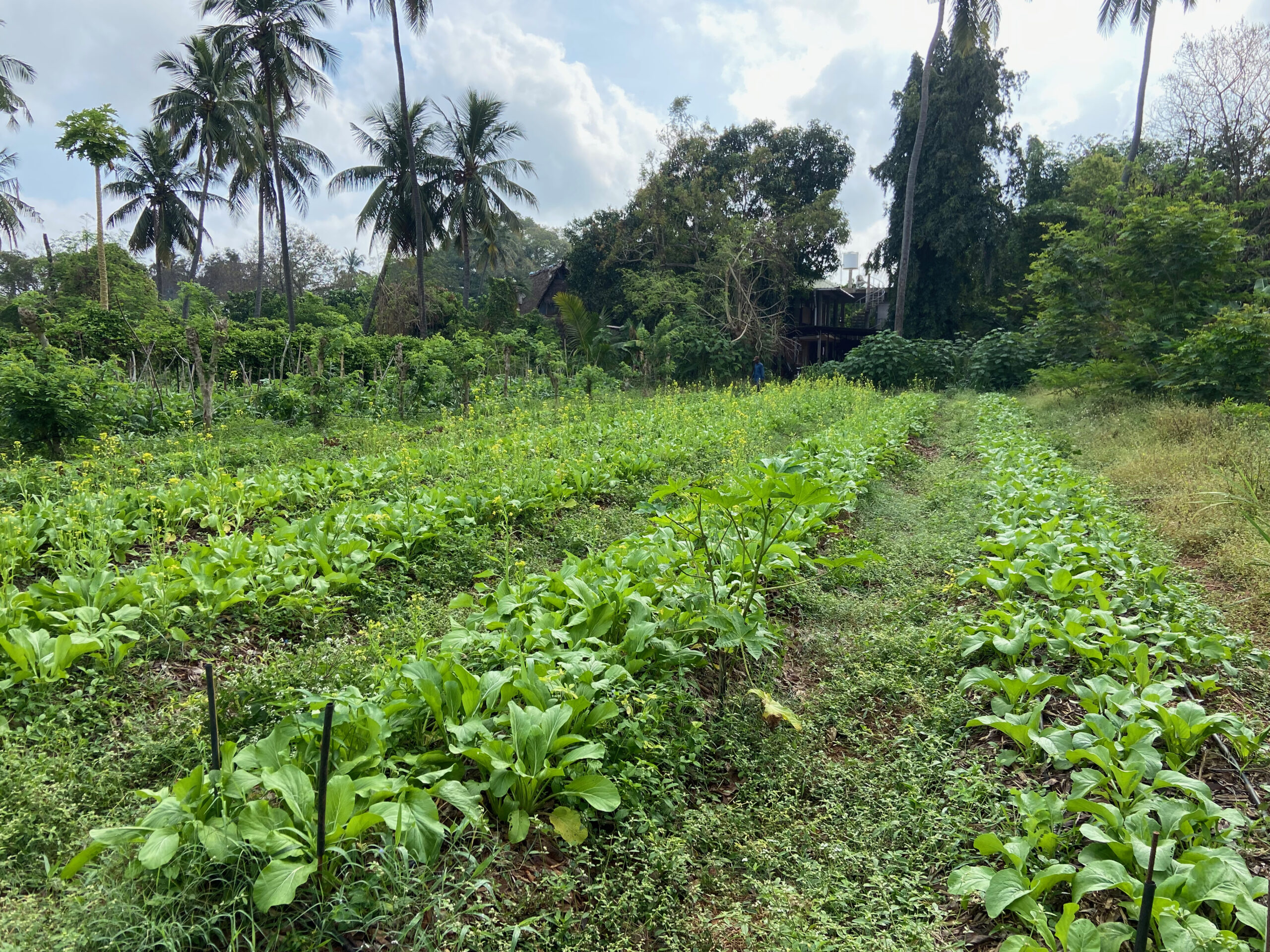
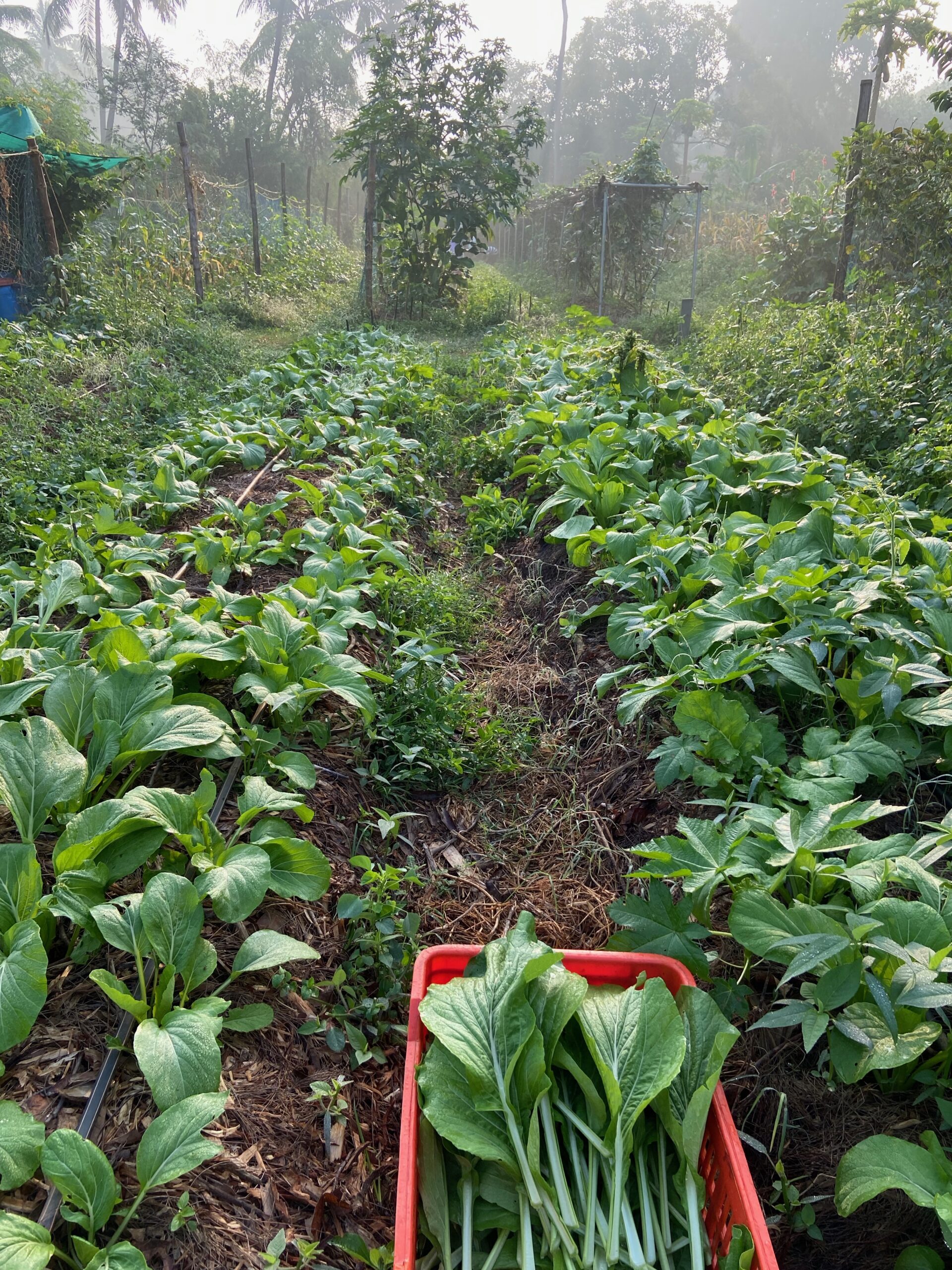
Cool mornings and golden light — perhaps the most generous season in Auroville. We can grow a diversity of crops rarely possible otherwise: greens, roots, beans, herbs, and salads. This is not quite “winter,” but what would be “post-winter” elsewhere — a true spring of renewal and variety.
Each season teaches us to work with the soil’s changing temperament — shifting the rhythm, diversity, and intensity of production and labour.
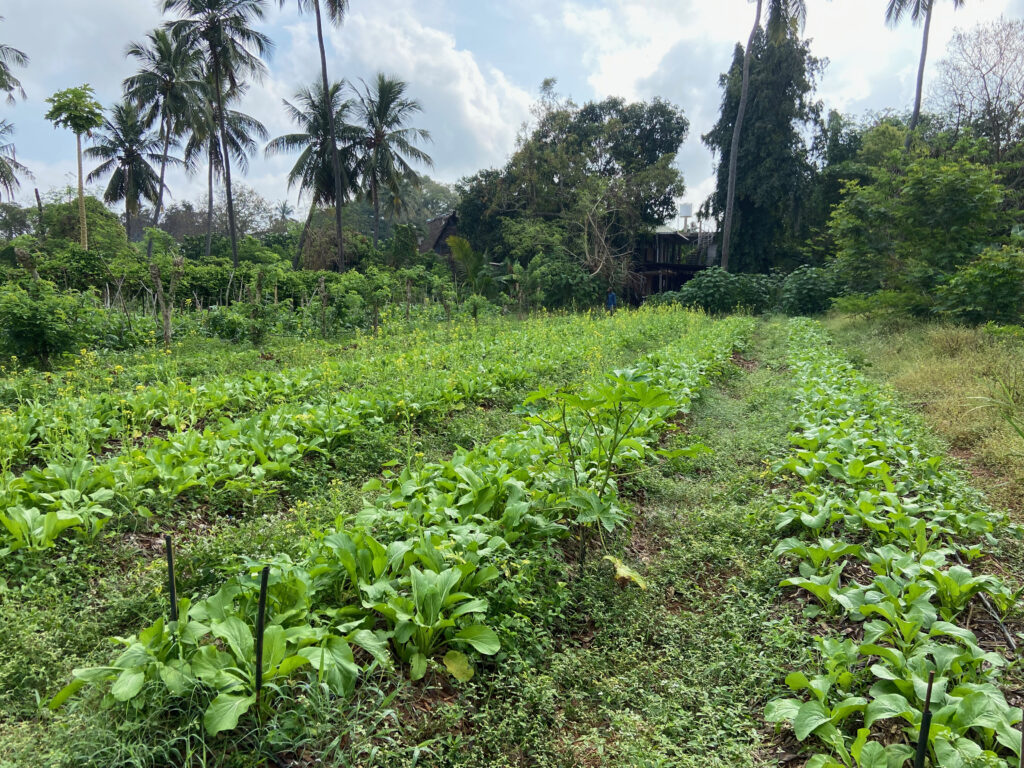
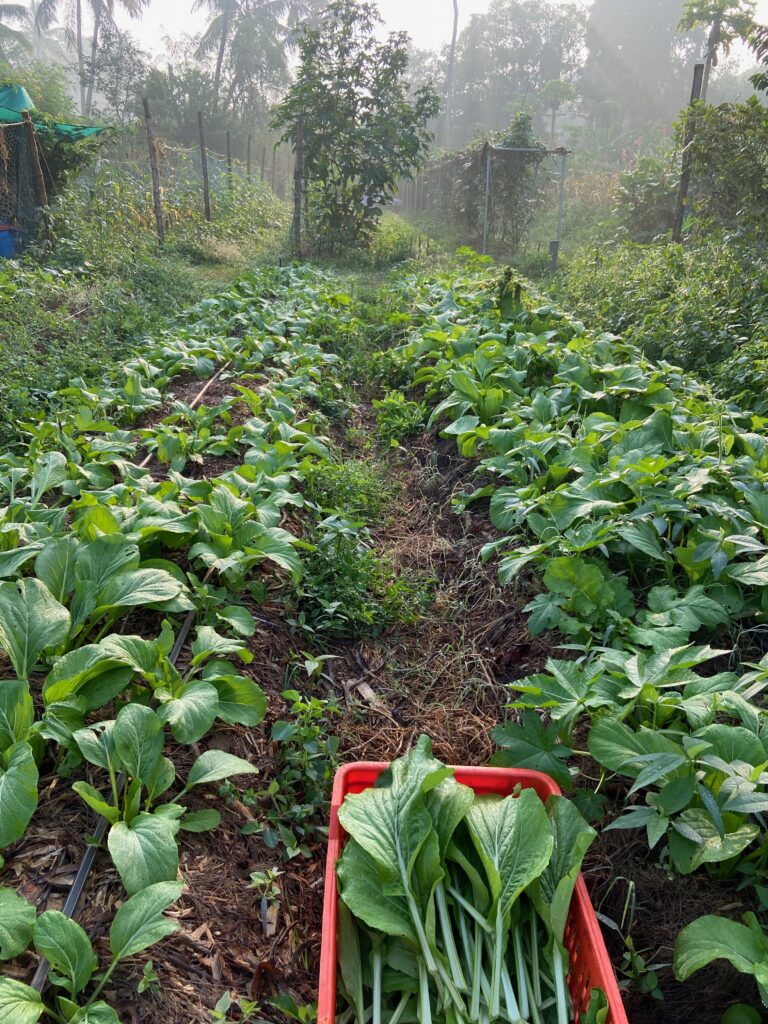
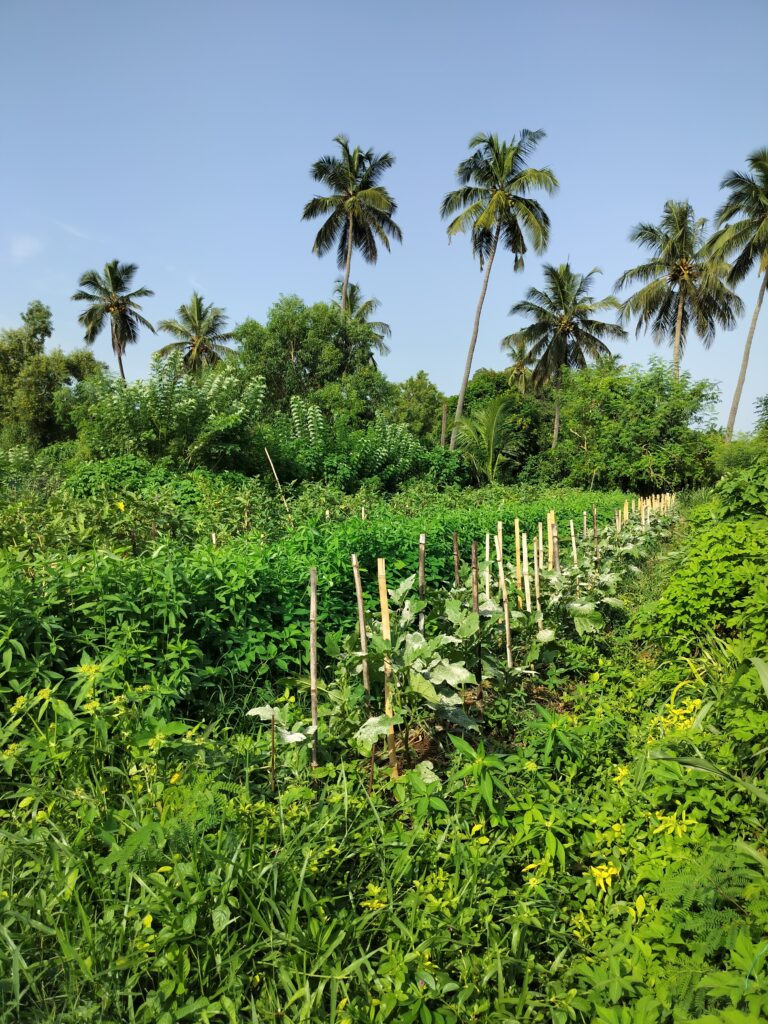
Our vegetable gardens consist of raised beds and rotating field plots, where we grow a wide diversity of crops. Compost, mulch, and cover crops nurture the soil, and each planting becomes part of a continuous conversation with the land. Our production research and crop calendars help us align sowing and harvesting with these six seasons. Some patterns are planned; others reveal themselves only through patient observation.
Even as demand fluctuates, we remain committed to growing a diversity of vegetables for the community. Across the world, there is a growing recognition that the future of food lies in smaller, community-based farms that reweave relationships between growers and eaters. Our exploration of market gardening follows this vision — working with natural cycles, designing for diversity, and expanding our reach to community members through baskets delivered three times a week throughout the year.