Previously, I wrote about the dilemmas of working with animals in agriculture, emphasising that the question is not so much whether to work with animals, but how to do so responsibly. Our poultry raises many of these questions, and none of them have simple or fixed answers. We are discovering what is possible today, while also reflecting on what the ideal might be for animals in agriculture in Auroville.
Previously, I wrote about the dilemmas of working with animals in agriculture, emphasising that the question is not so much whether to work with animals, but how to do so responsibly. Our poultry raises many of these questions, and none of them have simple or fixed answers. We are discovering what is possible today, while also reflecting on what the ideal might be for animals in agriculture in Auroville.
This post responds to questions we have received over time from community members and visitors about our poultry and eggs. If you have further questions, please write to us at auroorchard@auroville.org.in, and we will include them here.
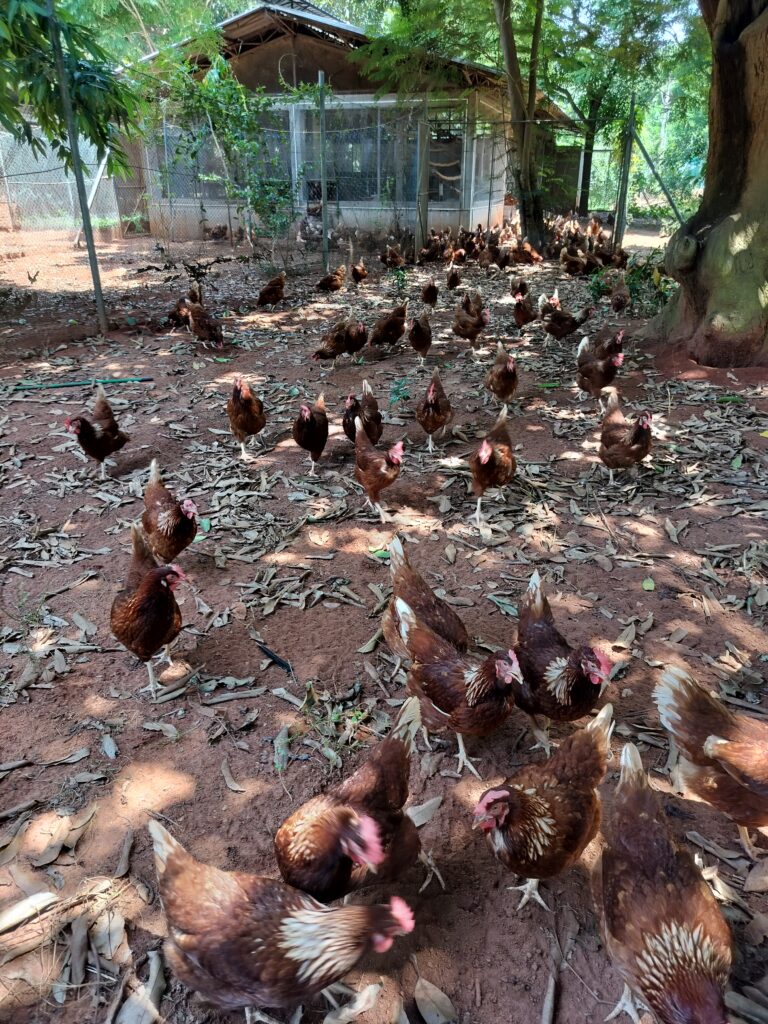
These terms describe how birds live:
Each system reflects different priorities— efficiency, space, labour, and care.
Free-range describes how birds live (access to outdoor space, ability to forage and express natural behaviours). Organic describes what goes into the system, especially feed and inputs. In most organic standards, birds must also have outdoor access, but “free-range” eggs are not necessarily organic unless the feed and inputs meet organic requirements.
AuroOrchard follows a free-range, pasture-based approach integrated with the orchard. Birds live outdoors for much of the day and are rotated through designated areas. Poultry is part of the farm ecology, contributing to nutrient cycling, composting, and soil health, and is not treated as a standalone “production unit”.
Traditional agricultural communities naturally followed the free-range poultry system where chickens ran around the yards around the house. This changed drastically across the world as agricultural production became more organised, mechanised, and industrialised. The modern concept of “free-range” arose in the mid-20th century after the Second World War, particularly in the United States and Europe, as poultry farming became industrialised and egg and meat production shifted toward:
These systems prioritised efficiency over natural behaviour. “Free-range” developed as a counter-term, meant to distinguish birds that were not permanently confined indoors or in cages, for regulatory and marketing distinction.
As a regulatory and market label, “free-range” generally means:
Free-range systems promote:
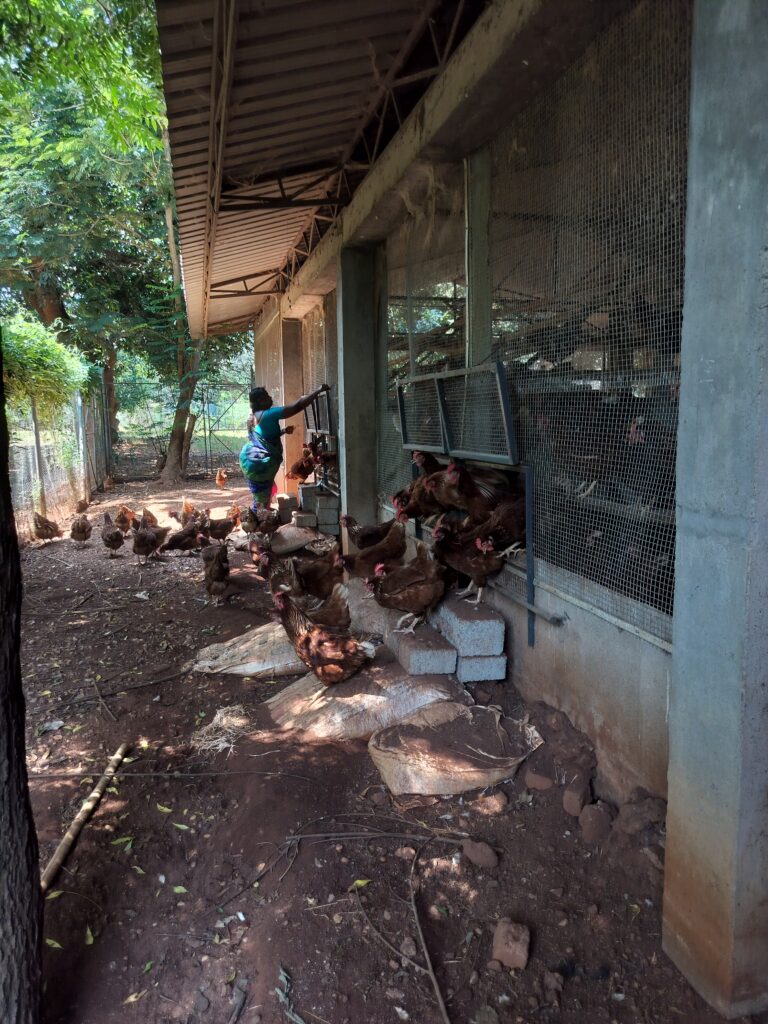
We follow Certified Humane standards, which are among the most comprehensive and widely-recognised animal welfare standards for laying hens globally, and we undergo annual audits.
AuroOrchard (per 100 birds) |
Certified Humane Standard (per 100 birds) | |
|---|---|---|
Indoor Space
|
15 sq. m.
|
14 sq. m.
|
Outdoor Space
|
200 sq, m.
|
19 sq. m.
|
Outdoor time
|
6 hours (10 am to 4 pm)
|
6 hours
|
Indoor Perching Space
|
17 m
|
15 m
|
Nesting area
|
2 sq. m.
|
0.8 sq. m.
|
Feeder space
|
4 m
|
4 m
|
Drinker space
|
2 m
|
2 m
|
Other specific details about lighting, daily care, biosecurity, record maintenance for better follow up, egg collection and sorting standards etc. can be found here.
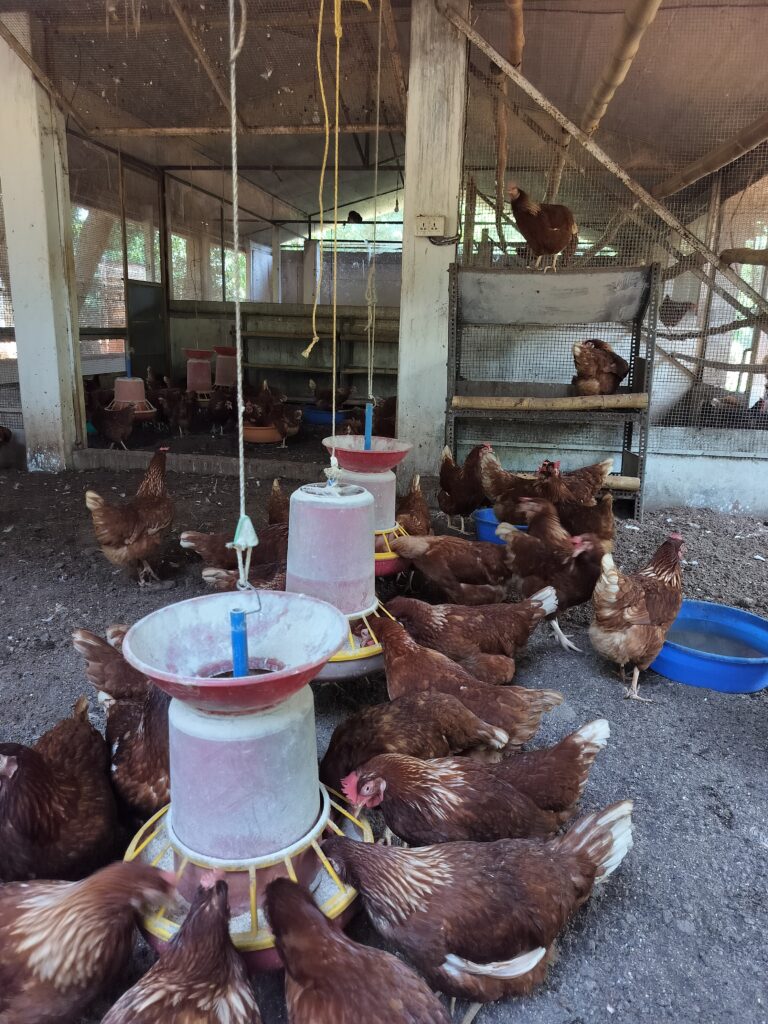
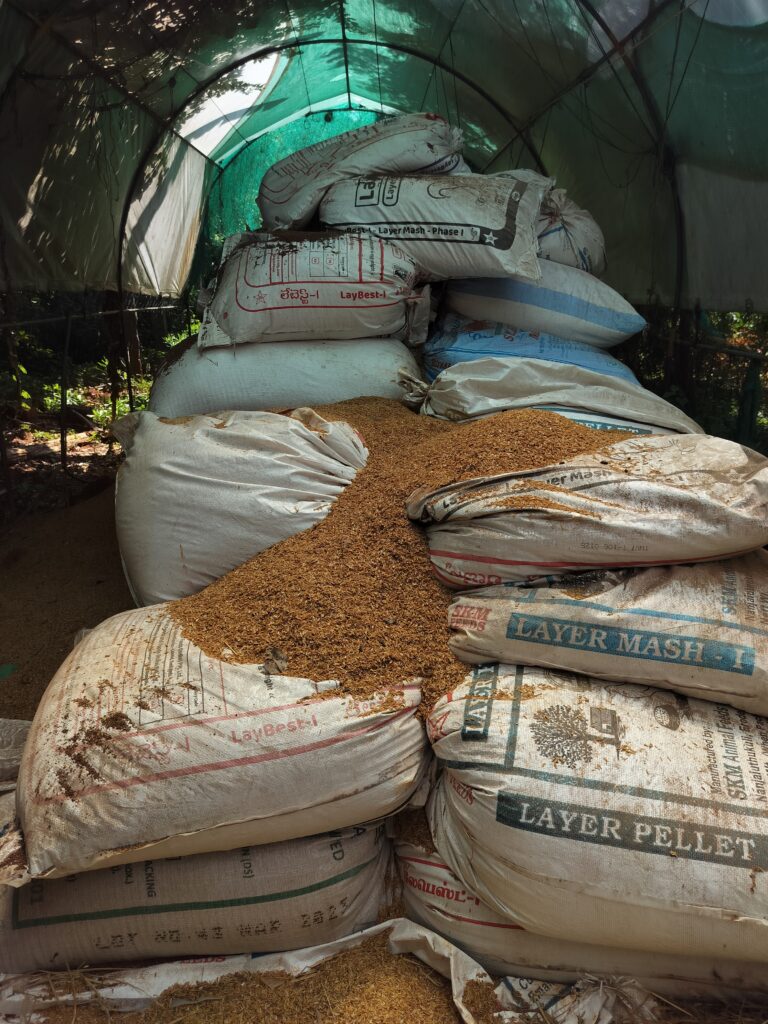
The birds have access to a feeder where they can eat anytime during the day. The feeder is refilled twice a day in the morning and the afternoon. This feed is bought from commercial feed suppliers. We have tried to get the exact composition of the feed but none of the feed suppliers give this information. Instead, they have given us a general nutritional profile:
Crude Protein: 16–18%
Crude Fat: 2.5–5%
Crude Fibre: 4–7%
Metabolizable Energy: 2,600–2,800 kcal/kg
Calcium: 3.5–4.5%
Available Phosphorus: 0.35–0.50
The supplier has also assured us that the feed is free from any avian- or mammalian-derived protein, and any growth promoters and sub-therapeutic antibiotics.
In addition, the birds are also fed daily with a diversity of green leaves (Moringa, Papaya, Wild Tamarind etc.). The birds also eat wild grasses, worms and everything else that they forage in the free range.
While this would be ideal, AuroOrchard doesn’t grow grains and does not have the right soil conditions and is set up to do so. If we buy grains from other farms, the feed cost will be very high and will immediately affect the price of the egg. We have been exploring (without much success though) if we can get someone to make the feed for us so that we can ensure what exactly goes into the feed.
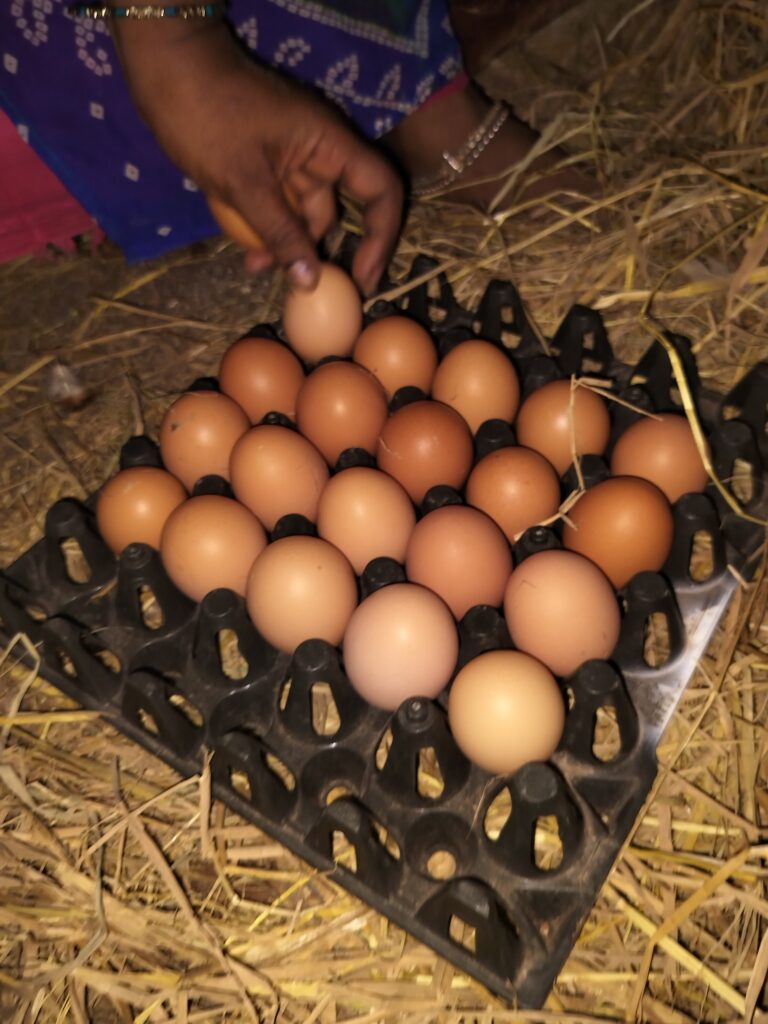
No. We do not claim that the eggs are organic. Since the feed is bought from outside and we have no way to say with 100% certainty that this feed is organic, we cannot say that the eggs are organic. Most likely, the grains used by commercial feed suppliers are grown in the so-called conventional manner.
We do not use any growth hormones in the feed or otherwise. Antibiotics are avoided and only used when absolutely necessary for animal welfare. Our focus is on prevention through good housing, movement, clean water, diverse feed, and close observation. We also give regular doses of farm grown turmeric to build the immunity of the birds and prevent any diseases. Every two months, we administer areca nut powder as a traditional deworming practice. In summer, the birds are fed with buttermilk and/or lemon juice to support hydration.
Yes. Birds are housed safely at night to protect them from predators and weather. The coops are designed for rest, perching, and nesting — not confinement for production.
No. We do not have any male birds. All the eggs produced at AuroOrchard are unfertilised.
These are natural and harmless. They occur sometimes due to small blood vessel ruptures during egg formation. In small-scale natural systems, this can happen.
Yes. Free-range birds expend more energy moving, foraging, and regulating body temperature. They are not pushed for maximum output. Thus, they may produce a bit less than the industrially managed poultry systems. Fewer eggs per bird is a trade-off for higher welfare and ecological integration.
Variation is natural. Egg characteristics change with bird age, season, diet, and weather. Industrial systems reduce variation by tightly controlling light, feed, and movement. Also, we have birds of three different ages (about 6 months apart), so there is natural variation between the eggs they produce, reflecting the diversity of living systems.
Not necessarily. Yolk colour is influenced mainly by diet and pigments. It does not directly indicate nutritional value. Industrial poultries usually add pigments in the feed to make the yolk colour darker.
Store eggs in a cool, dry place, away from the sun. The pointed end should be facing downward. Avoid washing the eggs as the natural bloom protects the shell.
Free-range systems allow more movement and natural behaviour, but outdoor access can increase exposure to predators, parasites, and some infections, so good management matters.
As per our estimates, Auroville consumes around 5000-7000 eggs every day. Most of this demand is met by cheap eggs from Pondicherry. Our intention is to offer a healthier, cleaner, ethically produced and transparently managed alternative to the industrial eggs being consumed in the community. The birds are also an integral part of the soil fertility of the farm. The poultry also financially supports the vegetable production of the farm which is labour intensive and has high losses from wildlife.
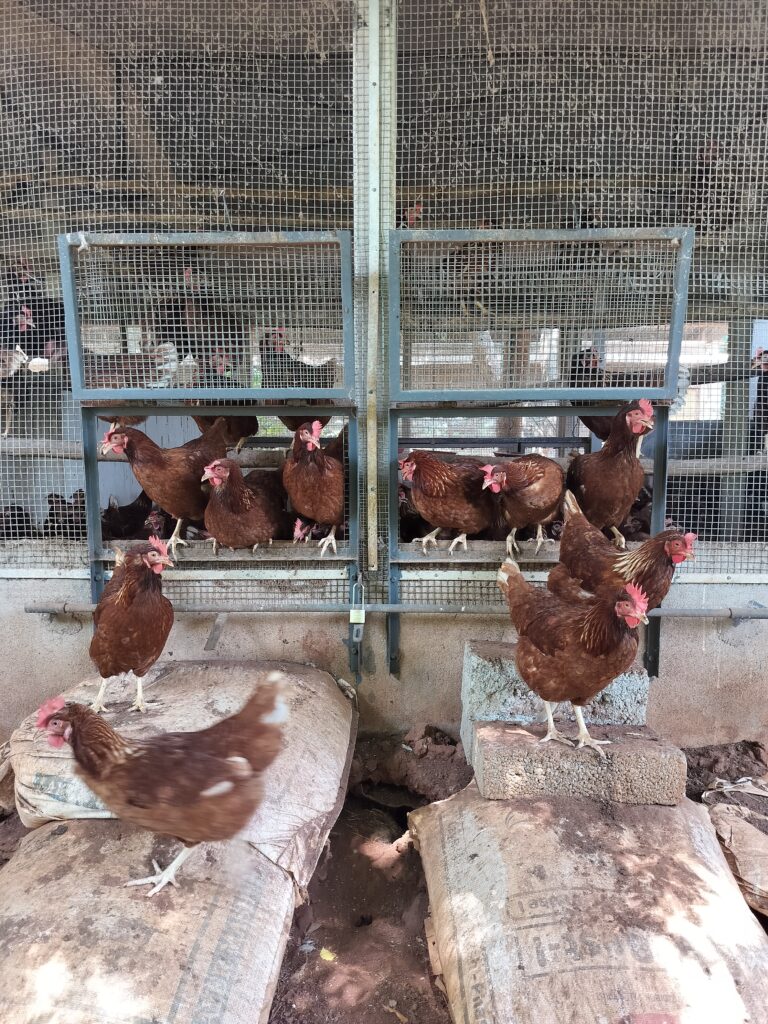
Our expenses for the egg production include infrastructure management and repair, worker salaries, feed costs and packaging and transport costs. Due to our small-scale operation some of these costs are much higher than those in industrial systems which keep 10,000-100,000 birds. The price also reflects the real cost of ethical care rather than hidden costs borne by animals, ecosystems, or workers and eventually the consumers.
We are part of a handful of poultry growers in India under the Cage-Free and Free Range Poultry Producers Association of India. We are also part of an extremely small number of farmers in India under the International Certified Humane Program. Through these networks, we have also been able to interact with international professionals and leading practitioners in the space of ethics of animals in agriculture like Humane World and Global Food Partners.
Certified Humane International standards for laying hens. https://certifiedhumane.org/wp-content/uploads/Standard_LayingHens-2023.pdf
Hartcher, K. M., & Jones, B. (2017). The welfare of layer hens in cage and cage-free housing systems. World’s Poultry Science Journal, 73(4), 767–782. https://doi.org/10.1017/S0043933917000812
Nutritional test results (2023) comparing AuroOrchard egg to egg from Pondicherry available at PTDC. https://drive.google.com/drive/u/1/folders/1F5MaZpe5kUOmhqjgThJvMDeqGq2XBJTT
Join our newsletter for exclusive updates!
AuroOrchard is certified organic by the Tamil Nadu Organic Certification (ORG/SC/1906/001683) Department accredited by APEDA (Agricultural and Processed Food Products Exports Development Authority), New Delhi, Ministry of Commerce and Industry, Government of India.
AuroOrchard Poultry is recognised under the Certified Humane Program, a globally recognised, independent, international auditing body dedicated to creating a more humane world for farm animals.