This is an overview of the distribution of food from AuroOrchard during April 2025 to March 2026 and its comparison to the previous years.
This is an overview of the distribution of food from AuroOrchard during April 2025 to March 2026 and its comparison to the previous years.
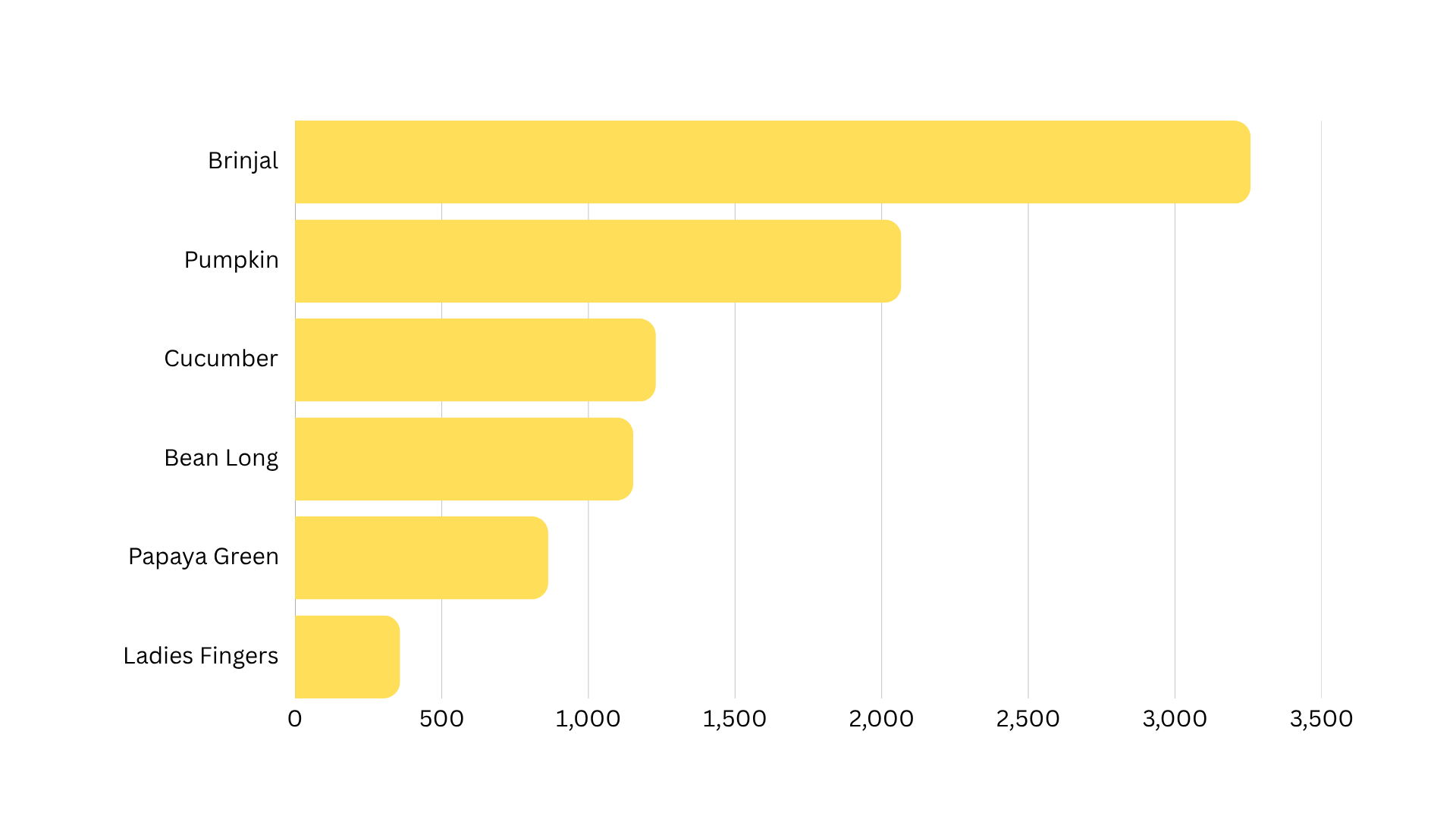
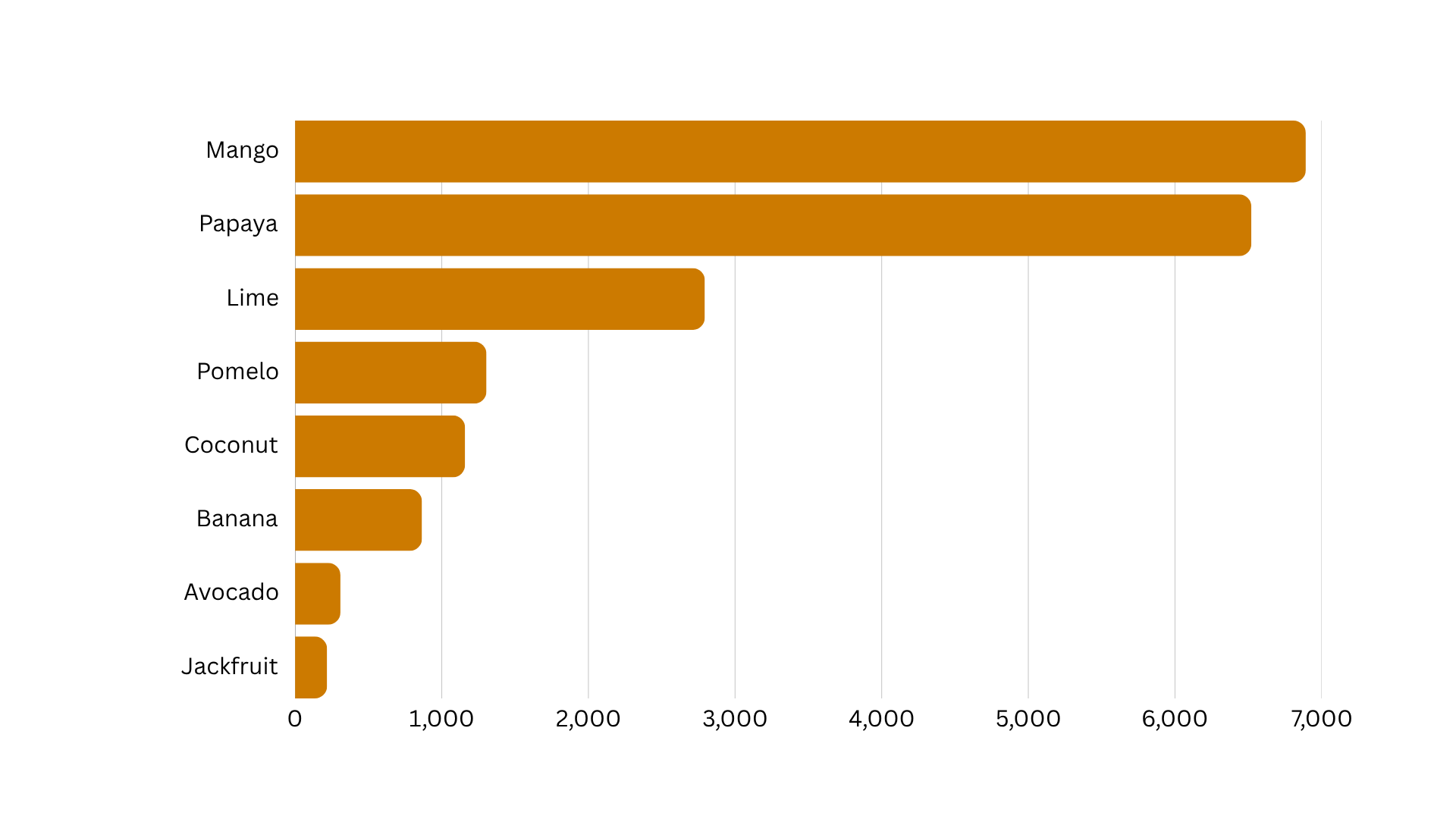
This year, our production focus was on fruits and bringing the poultry to a certifiable standard. The work in poultry also shows the increase in production of eggs this year. Similarly, fruit production was higher comparatively. The work with the orchards has certainly diverted some space, energy and attention from the vegetables and we can see a small drop in production for some vegetables, greens and herbs. This is in line with our long term strategy of strengthening the fruit orchards more and more and maintaining the vegetables at a significant yet limited production level. The choice of keeping the vegetables limited is due to lack of demand for local vegetables within Auroville, the distribution challenges that it brings with it as well as the high amount of labour and energy required to consistently produce vegetables in large quantities.
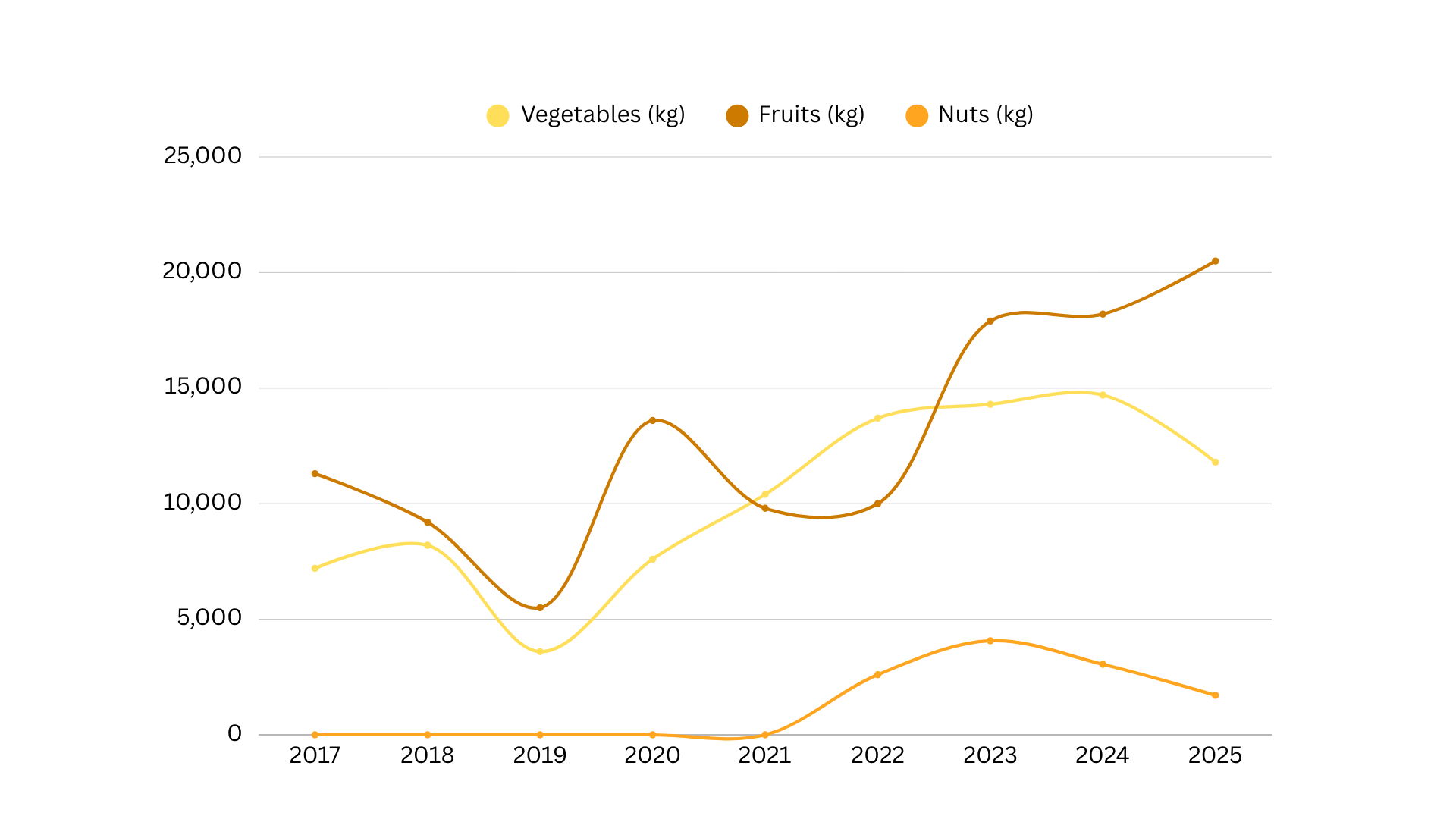
Overall, over the last eight years, farm production is rising significantly (see charts below). The following analysis outlines our major production and distribution trends.
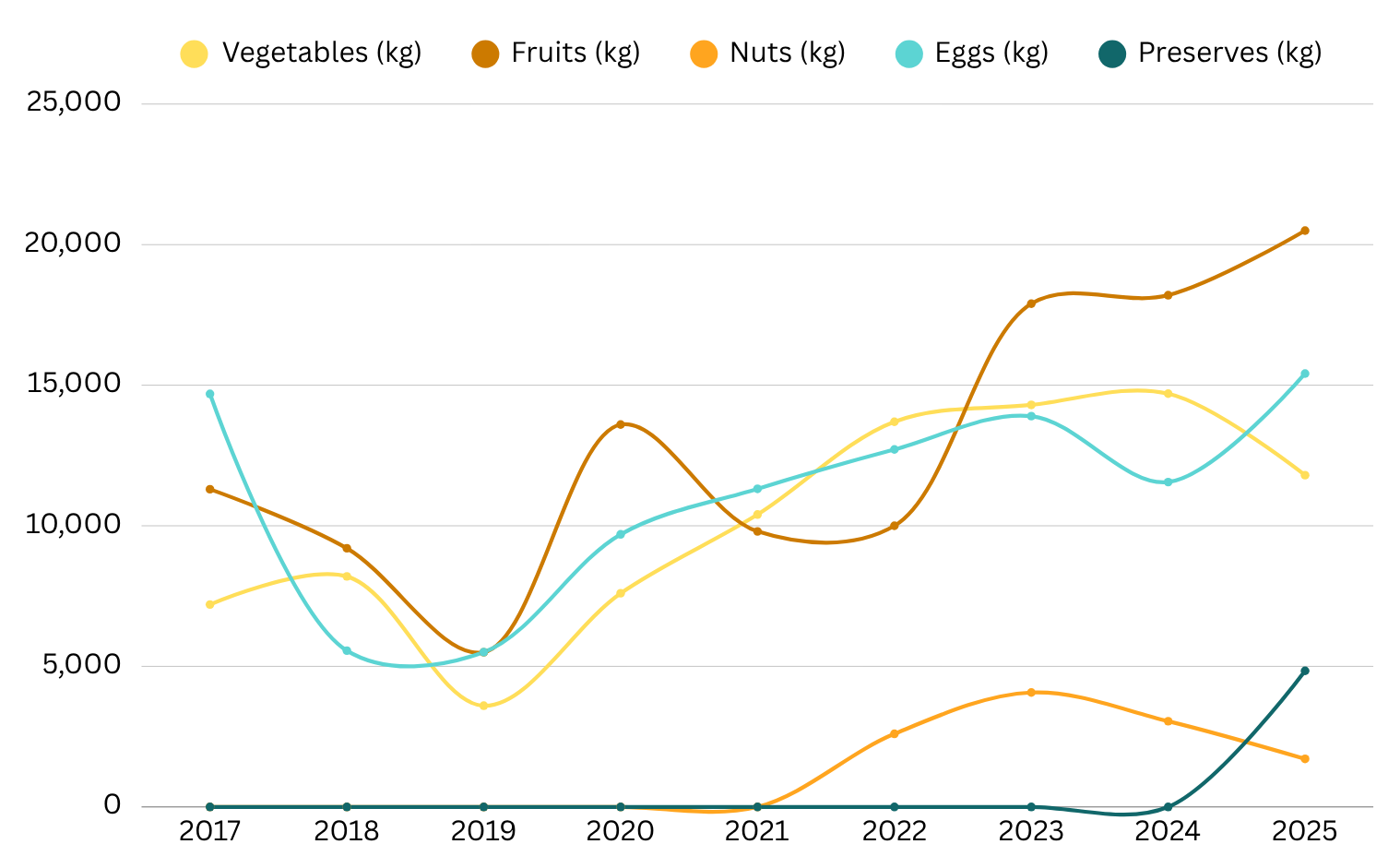
The drop in the nut production (cashews) reflects the loss of trees due to land exchange. Last year, we were able to collect some fruit from the lost trees. However, in 2025-2026, we only collected fruit from trees still left at AuroOrchard. The drop in vegetable production, as explained above, is a sign of shifting attention to fruits, and the increase in production of fruits is encouraging.
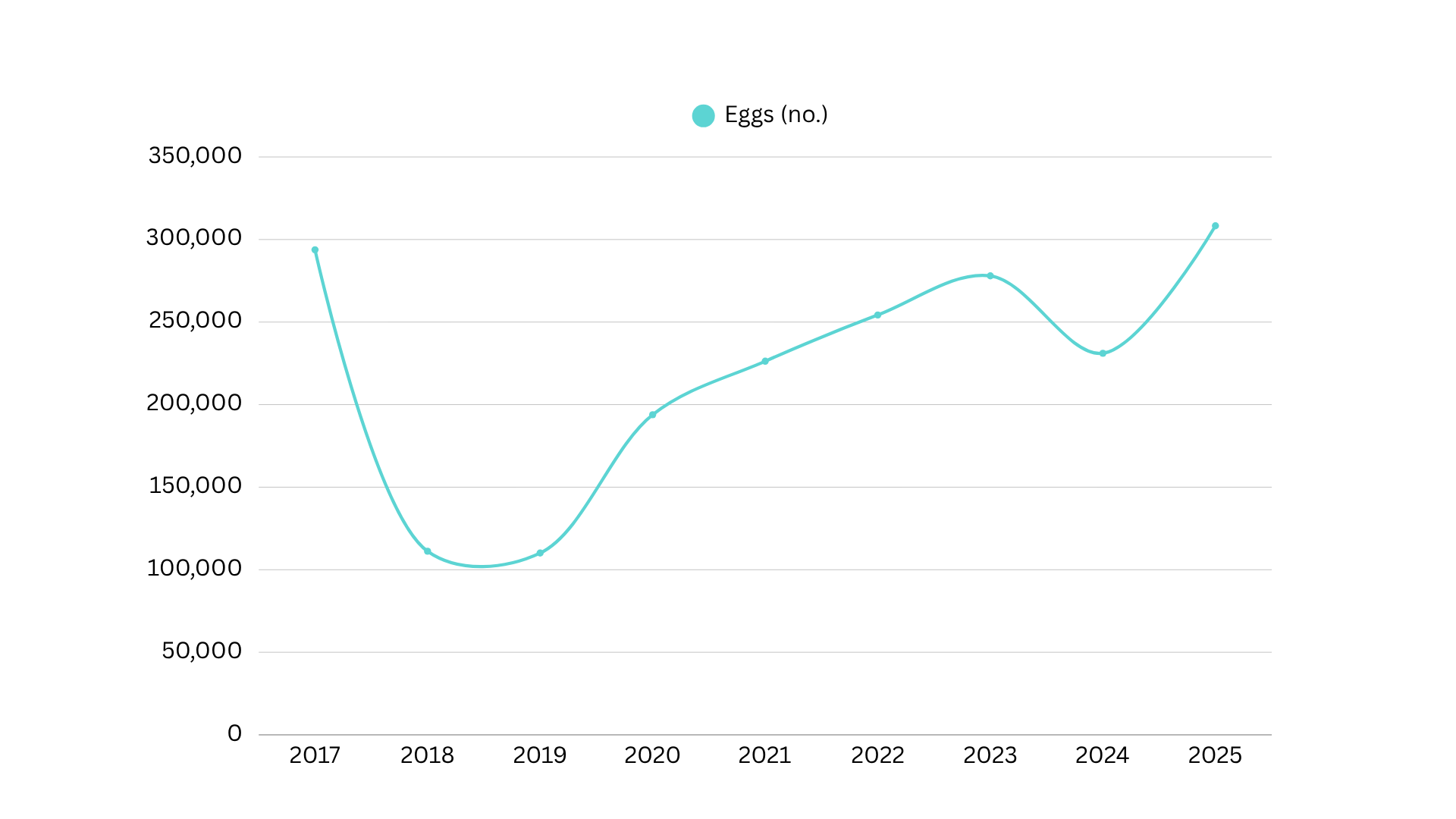
In terms of our infrastructural capacity, this is the peak egg production that we can expect. With around 1500 laying birds around the year, we get around 800-1100 eggs per day. While this is still much lower than the daily egg needs of Auroville, expanding this system further has multiple challenges. Therefore we will maintain this scale for the years to come and bring more innovation, better practice within this system progressively.
Though the figure of 2025(-2026) looks only a bit higher than 2017(-2018), the quality of the eggs and poultry practices has significantly improved since then.
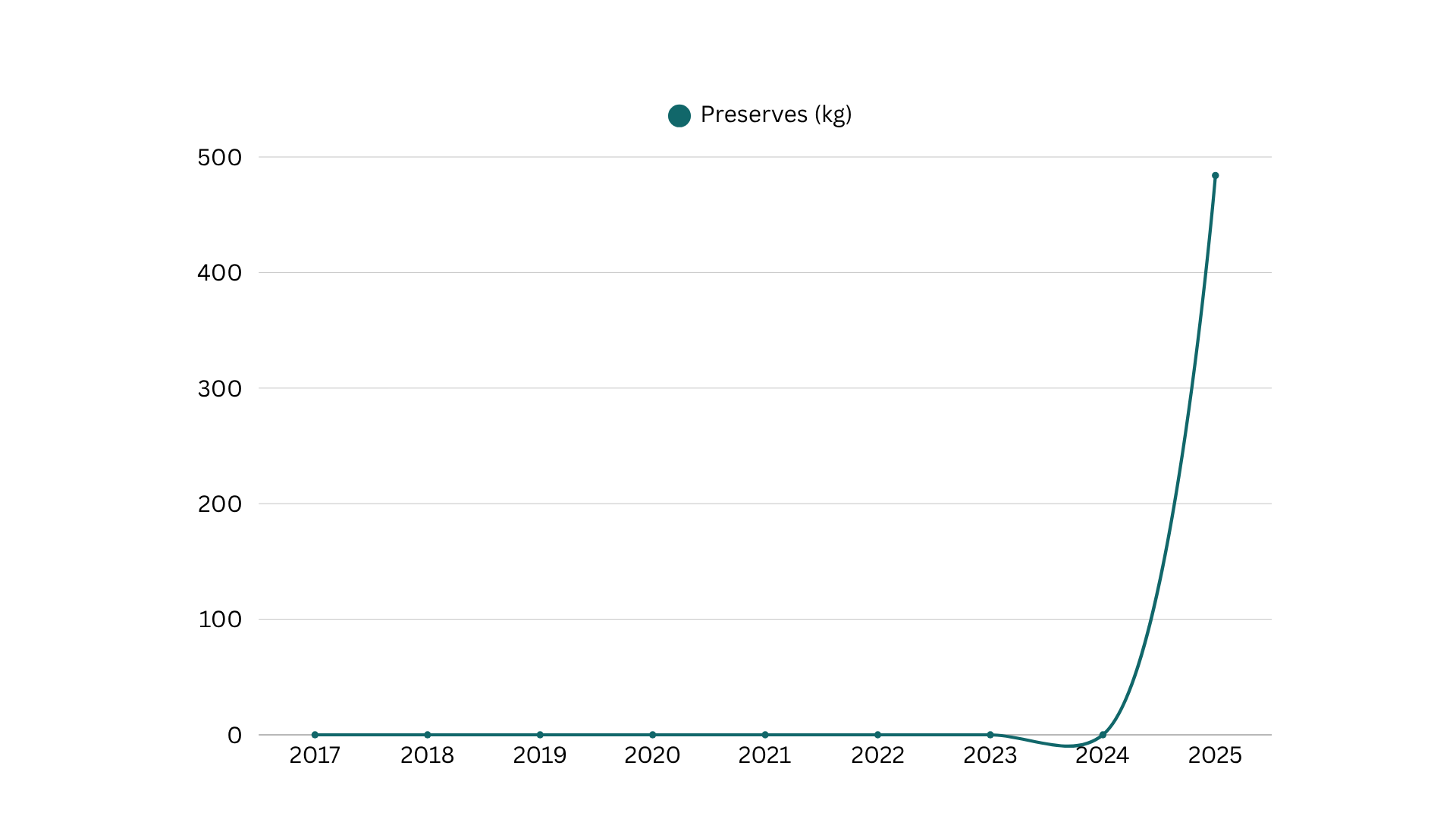
This year our food preservation work gained some momentum. We were able to develop multiple recipes and distribute certain products consistently.
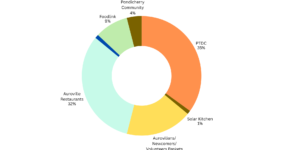
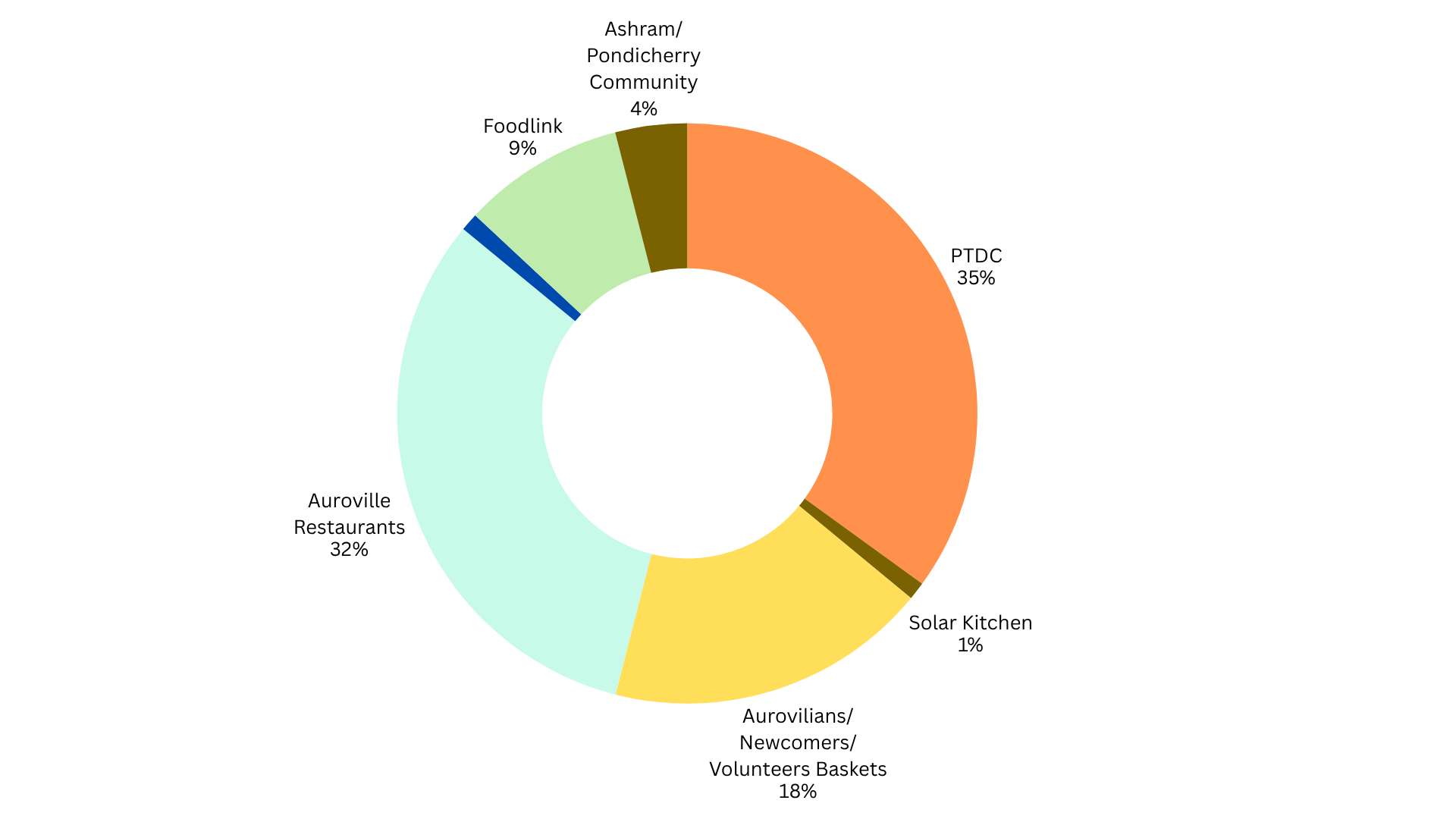
The majority of the food produced went to PTDC followed by Auroville restaurants and units like Auroville Bakery, Taste of Korea, La Terrace, Coffee Ideas, Naturellement, Nowana, PTPS, The Right Path Café and The Sprout. Roughly one-fifth went directly in baskets to Aurovilians, Newcomers and volunteers. 96% of the food produced is distributed within Auroville. The remaining 4% is distributed mainly in Pondicherry with the Sri Aurobindo Ashram community through baskets. Solar kitchen remained the lowest consumer (only 1%) and Foodlink’s share has dropped significantly over the last year.
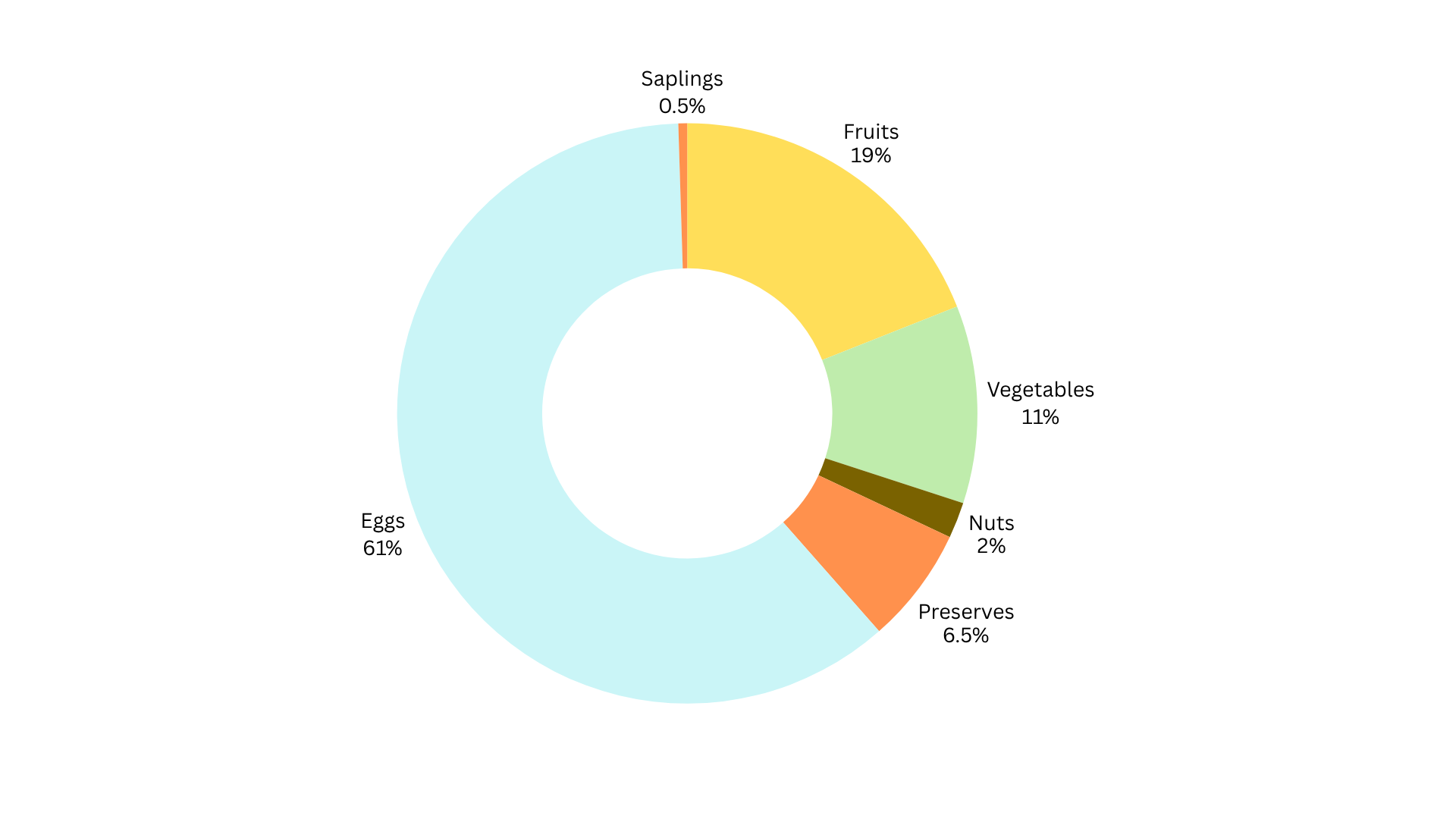
Our main source of income continues to be the eggs. The proportion of income from fruits and vegetables is more or less the same compared to the previous year(s). We had some small income from the preserves distributed through ‘Abundance’ as well as a very small income from sapling sales. The current situation remains concerning as it is not sustainable to depend heavily on only one income source-and that too on the poultry. We are hoping to gradually expand the income shares of fruits and abundance products.
Join our newsletter for exclusive updates!
AuroOrchard is certified organic by the Tamil Nadu Organic Certification (ORG/SC/1906/001683) Department accredited by APEDA (Agricultural and Processed Food Products Exports Development Authority), New Delhi, Ministry of Commerce and Industry, Government of India.
AuroOrchard Poultry is recognised under the Certified Humane Program, a globally recognised, independent, international auditing body dedicated to creating a more humane world for farm animals.