We recently hosted a beautiful knowledge sharing session on bananas with Vinod Sahadevan Nair, whose ㅤ ㅤ
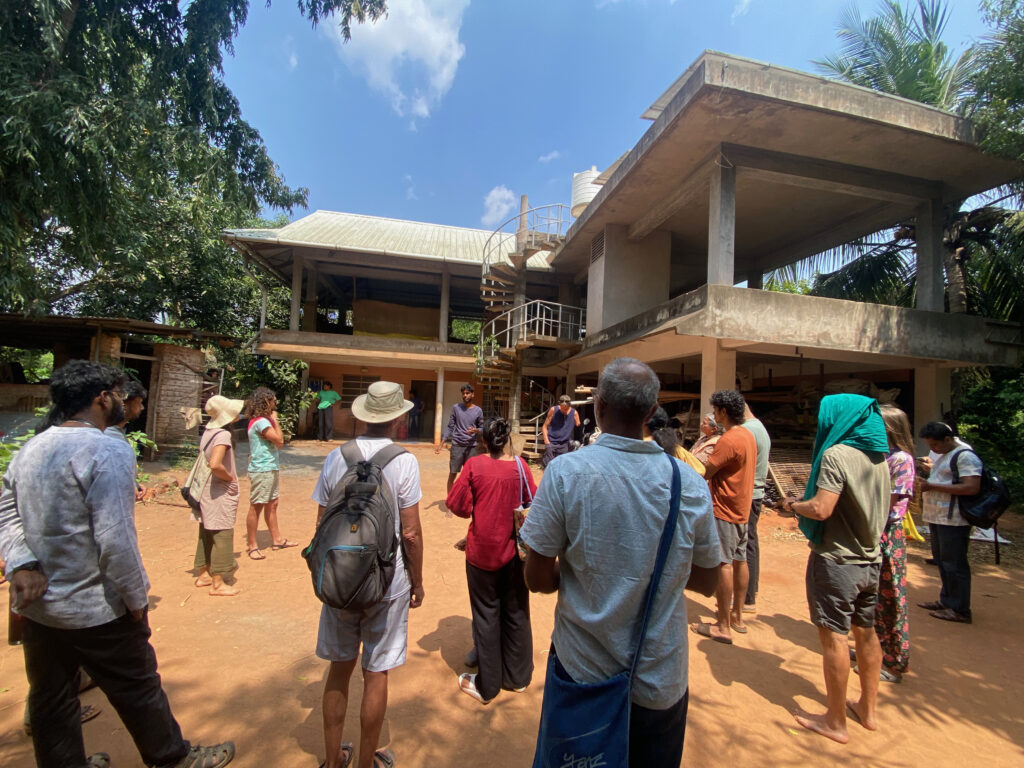
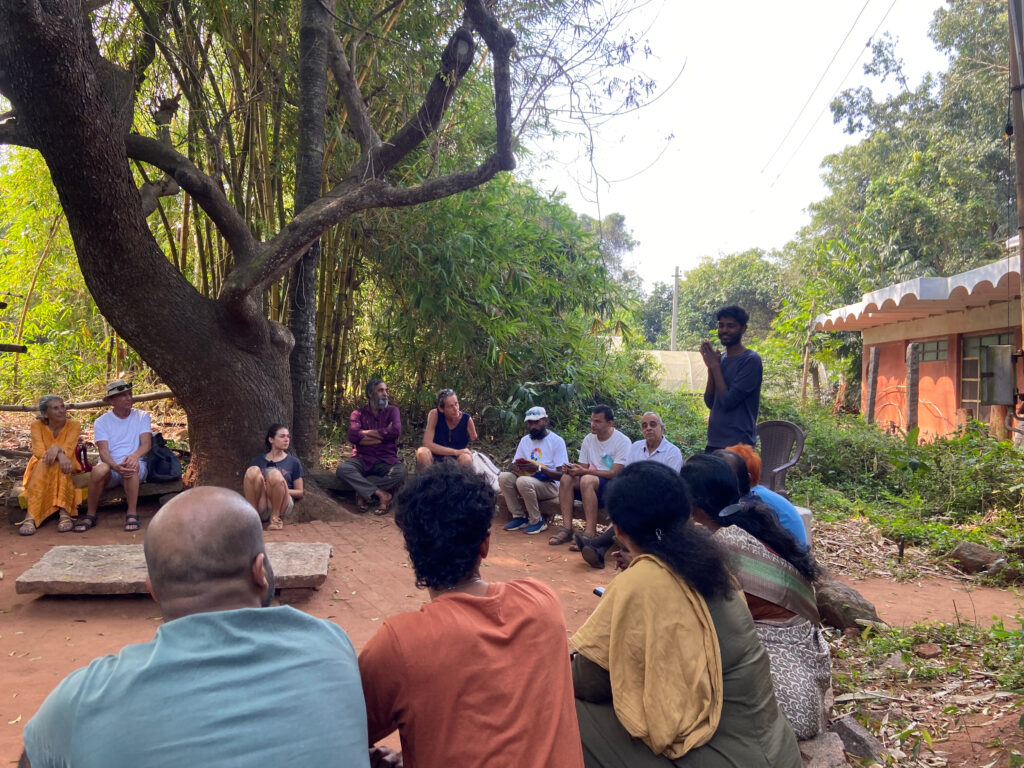
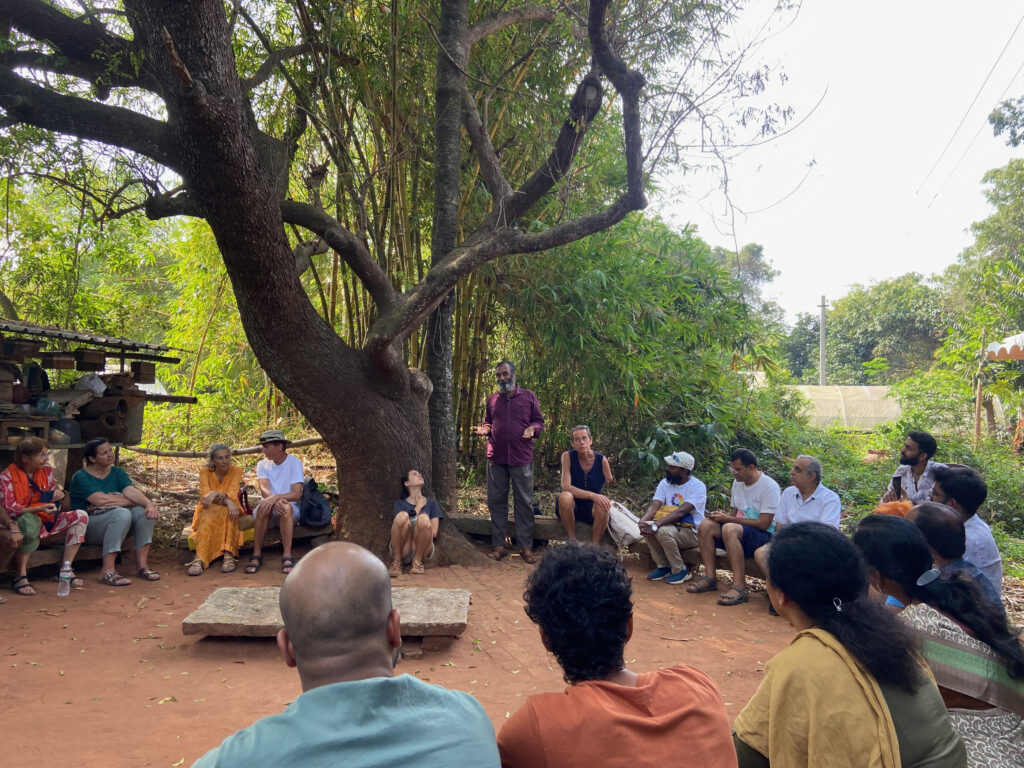
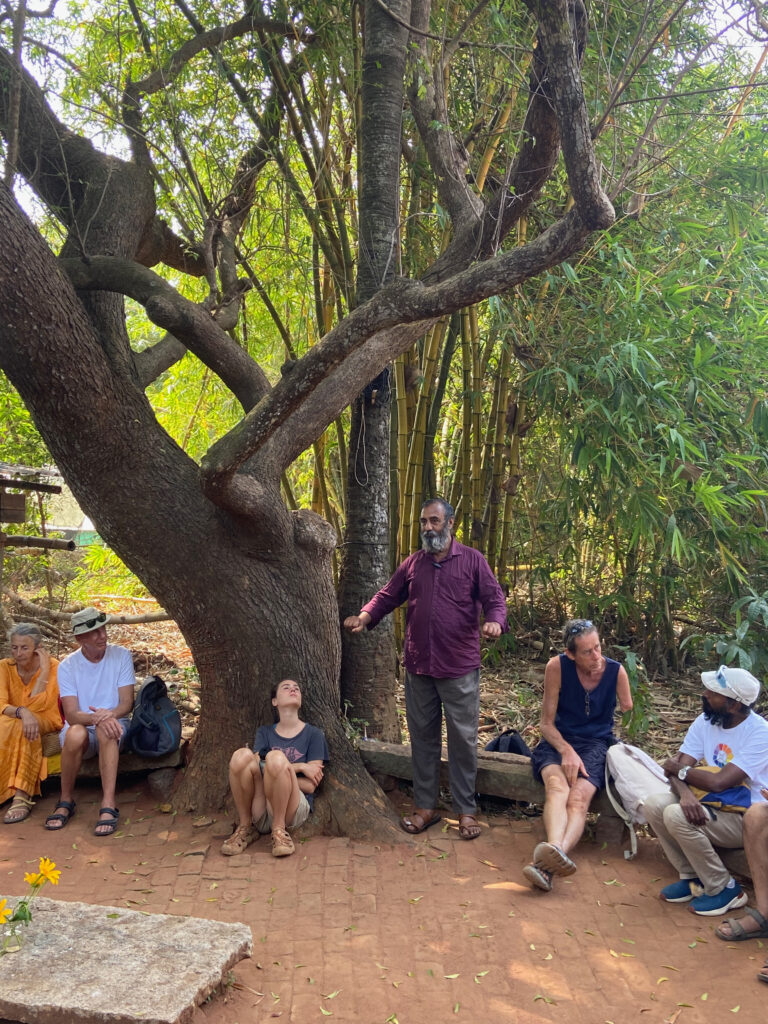
We recently hosted a beautiful knowledge-sharing session on bananas with Vinod Sahadevan Nair, whose deep passion and lifelong work with banana diversity inspired everyone present. He shared his journey, cultural associations of bananas across regions, and practical insights into cultivation, propagation, and managing diverse varieties in a sustainable way.
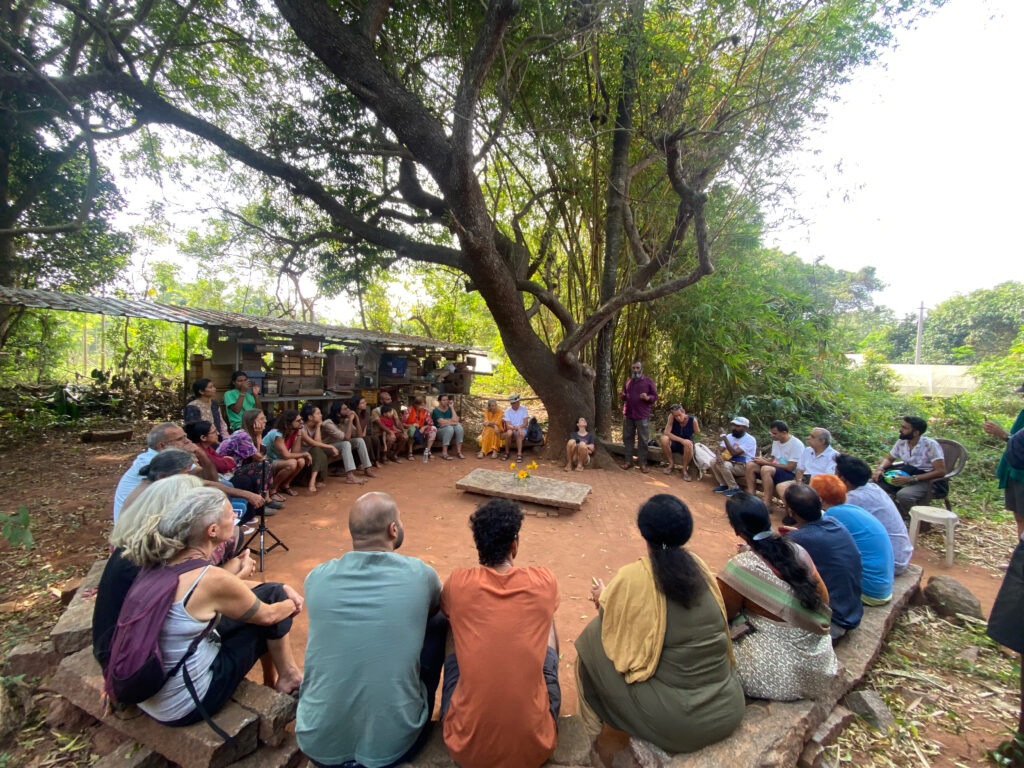
The session explored the many dimensions of bananas, from their nutritional value and health relevance to the wide range of uses from fruit, stem, flower, and leaves. Farmers and growers from Auroville actively participated, asking thoughtful questions on cultivation practices, disease management, and varietal selection, making it a rich and interactive exchange. The gathering concluded with a visit to the banana plantation at Auro Orchard, where participants could observe the diversity and growing systems more closely.
Watch the entire session here
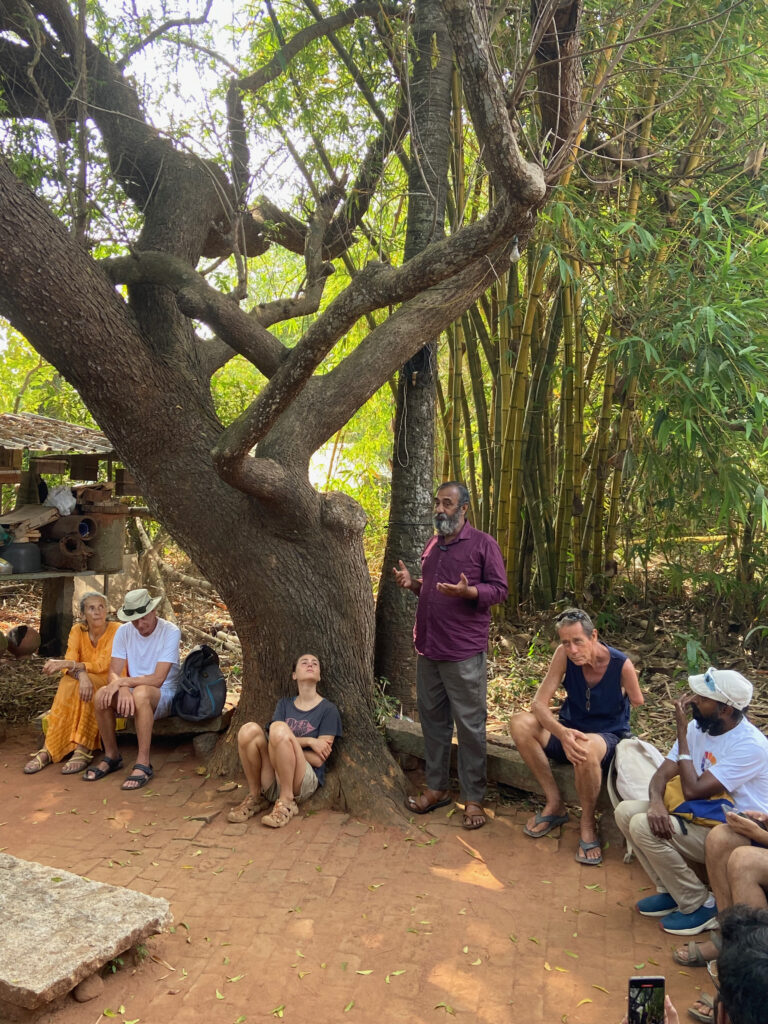
We recently hosted a beautiful knowledge-sharing session on bananas with Vinod Sahadevan Nair, whose deep passion and lifelong work with banana diversity inspired everyone present. He shared his journey, cultural associations of bananas across regions, and practical insights into cultivation, propagation, and managing diverse varieties in a sustainable way.
The session explored the many dimensions of bananas, from their nutritional value and health relevance to the wide range of uses from fruit, stem, flower, and leaves. Farmers and growers from Auroville actively participated, asking thoughtful questions on cultivation practices, disease management, and varietal selection, making it a rich and interactive exchange. The gathering concluded with a visit to the banana plantation at Auro Orchard, where participants could observe the diversity and growing systems more closely.
Watch the entire session here
One of the most important learnings is that each banana variety has different requirements in terms of water, nutrients, spacing, and care. For instance, red banana varieties require comparatively higher water and manure, especially during the initial establishment stage. Treating all varieties the same can affect their growth and overall health.
We observed that different banana varieties sprout at different rates and show varied early growth patterns. This highlights the importance of patient observation during the first few weeks rather than assuming uniform growth across all planted suckers.
Planting multiple banana varieties also became a living experiment to understand how each variety responds to the local soil and climate conditions. Not every variety adapts equally, and observing their response helps identify which ones are best suited for the specific microclimate of the orchard.
Certain varieties, especially larger ones like red banana, require wider spacing for healthy growth, while some smaller or compact varieties can thrive with relatively less spacing. Proper spacing ensures better sunlight exposure, airflow, and root development.
Banana plants require good sunlight for healthy growth. Adequate exposure supports stronger vegetative development and overall plant vigor, especially in the early stages after planting.
A practical learning was that banana suckers are quite resilient and can be transported and stored under shade for about one to two weeks without major issues, provided they are handled properly and not exposed to harsh sun or waterlogging.
Each banana variety differs in aroma, texture, taste, and cultural relevance. This diversity reflects not only agricultural richness but also the cultural and traditional significance associated with different banana types.
Due to excessive water accumulation in some planted areas, we had to cut the top portion of certain sprouts that were submerged. This reinforced how sensitive young banana plants are to waterlogging and the need for proper drainage management.
After clearing the beds, chickens and ducks from neighboring land frequently entered and dug into the soil in search of food, especially because the beds were bare and weed-free. This created a new challenge in protecting early sprouts, leading to the consideration of netting and protective measures.
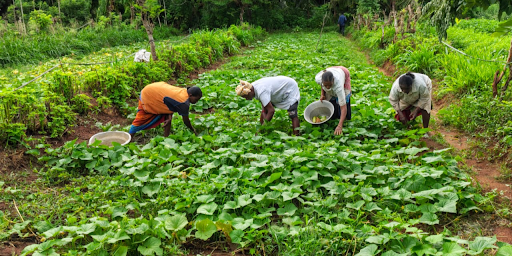
Pumpkins were planted alongside the banana plants as a companion crop. While bananas are expected to take around 9 to 12 months for harvest, pumpkins are establishing well and are likely to be harvested earlier, around May. This supports better land use and short-term productivity.
Before bananas, the beds had papaya plants that showed signs of viral infection and gradual decline. Many affected plants had to be removed, and this raised the need to assess soil health, identify possible root causes, and take corrective steps for long-term resilience of the plantation.
Encouragingly, almost all planted banana suckers have sprouted. The next one to one and a half months will be critical for observing shoot health, vigor, and overall establishment to ensure strong future growth.
Overall, the plantation is evolving as a dynamic learning space, where continuous observation of plant response, soil condition, water management, biodiversity, and protection methods is guiding more informed and context-specific cultivation decisions.
One of the most important learnings is that each banana variety has different requirements in terms of water, nutrients, spacing, and care. For instance, red banana varieties require comparatively higher water and manure, especially during the initial establishment stage. Treating all varieties the same can affect their growth and overall health.
We observed that different banana varieties sprout at different rates and show varied early growth patterns. This highlights the importance of patient observation during the first few weeks rather than assuming uniform growth across all planted suckers.
Planting multiple banana varieties also became a living experiment to understand how each variety responds to the local soil and climate conditions. Not every variety adapts equally, and observing their response helps identify which ones are best suited for the specific microclimate of the orchard.
Certain varieties, especially larger ones like red banana, require wider spacing for healthy growth, while some smaller or compact varieties can thrive with relatively less spacing. Proper spacing ensures better sunlight exposure, airflow, and root development.
Banana plants require good sunlight for healthy growth. Adequate exposure supports stronger vegetative development and overall plant vigor, especially in the early stages after planting.
A practical learning was that banana suckers are quite resilient and can be transported and stored under shade for about one to two weeks without major issues, provided they are handled properly and not exposed to harsh sun or waterlogging.
Each banana variety differs in aroma, texture, taste, and cultural relevance. This diversity reflects not only agricultural richness but also the cultural and traditional significance associated with different banana types.
Due to excessive water accumulation in some planted areas, we had to cut the top portion of certain sprouts that were submerged. This reinforced how sensitive young banana plants are to waterlogging and the need for proper drainage management.
After clearing the beds, chickens and ducks from neighboring land frequently entered and dug into the soil in search of food, especially because the beds were bare and weed-free. This created a new challenge in protecting early sprouts, leading to the consideration of netting and protective measures.
Pumpkins were planted alongside the banana plants as a companion crop. While bananas are expected to take around 9 to 12 months for harvest, pumpkins are establishing well and are likely to be harvested earlier, around May. This supports better land use and short-term productivity.
Before bananas, the beds had papaya plants that showed signs of viral infection and gradual decline. Many affected plants had to be removed, and this raised the need to assess soil health, identify possible root causes, and take corrective steps for long-term resilience of the plantation.
Encouragingly, almost all planted banana suckers have sprouted. The next one to one and a half months will be critical for observing shoot health, vigor, and overall establishment to ensure strong future growth.
Overall, the plantation is evolving as a dynamic learning space, where continuous observation of plant response, soil condition, water management, biodiversity, and protection methods is guiding more informed and context-specific cultivation decisions.
Join our newsletter for exclusive updates!
AuroOrchard is certified organic by the Tamil Nadu Organic Certification (ORG/SC/1906/001683) Department accredited by APEDA (Agricultural and Processed Food Products Exports Development Authority), New Delhi, Ministry of Commerce and Industry, Government of India.
AuroOrchard Poultry is recognised under the Certified Humane Program, a globally recognised, independent, international auditing body dedicated to creating a more humane world for farm animals.