Since the Second World War, the agriculture paradigm has shifted dramatically to keep pace with the evolving industrial and economic paradigms. The culture of mono-cropping has grown on some ill-found assumptions and hard realities of the changing social structures in farming communities. As much as monoculture is believed to be the only way to produce high-yields, and a dominant solution to feeding the world, it is also easier for farmers who have no option than to resort to mechanization due to lack of hands working on the fields. The farmers who lack the resources to buy machines or employ family members on the farm suffer the most. However, despite the illusory success of turning large acres of land into monocrop systems, the inequity in food distribution couldn’t have been higher than ever. As per studies done in recent times, collectively we grow food already for about 10 billion people (calorie equivalence) but over a third of this food is wasted while harvesting, storing, shipping and so forth (Holt-Giménez et al., 2012).
Since the Second World War, the agriculture paradigm has shifted dramatically to keep pace with the evolving industrial and economic paradigms. The culture of mono-cropping has grown on some ill-found assumptions and hard realities of the changing social structures in farming communities. As much as monoculture is believed to be the only way to produce high-yields, and a dominant solution to feeding the world, it is also easier for farmers who have no option than to resort to mechanization due to lack of hands working on the fields. The farmers who lack the resources to buy machines or employ family members on the farm suffer the most. However, despite the illusory success of turning large acres of land into monocrop systems, the inequity in food distribution couldn’t have been higher than ever. As per studies done in recent times, collectively we grow food already for about 10 billion people (calorie equivalence) but over a third of this food is wasted while harvesting, storing, shipping and so forth (Holt-Giménez et al., 2012).
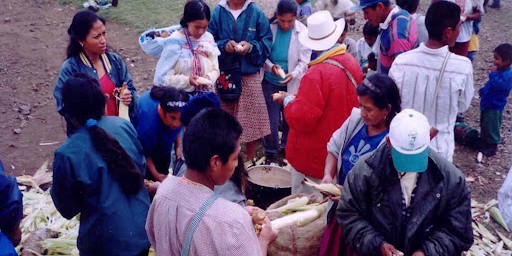
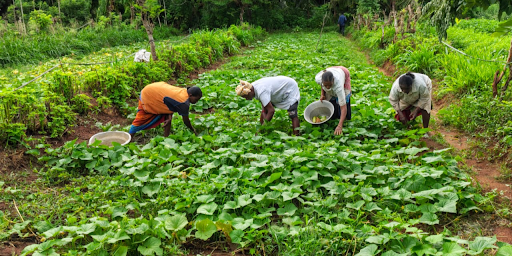
Interestingly, over 70% of the food that we end up eating, still comes from small-farms (25 acres or less) managed by communities and families for subsistence, and not from large mechanized monocrop systems as we are made to believe. Also small farms have been found to be 4-5 times more productive than large farms because of their intensive diverse cropping integrated with animal rearing(Lerman & Sutton, 2008; Small farmers feed the world, Grain, 2014). We do have enough food to feed the planet and almost three quarters of it comes from small farms. So where does large scale industrial agriculture fit in this story and how can it help if production is not really the primary challenge? The industrialization of agriculture has led to large scale disempowerment of small farmers, degraded rural lands and culture and polluted our soil, water and air and the poor stay hungry no matter how much more food is produced on this planet. Our overwhelming stress on strategies and policies to feed the world are focused only on producing more food. But we forget that this also means more food of a certain quality.
As the world wakes up to appreciate the subtle nuances of relationships of humans with nature, other humans and themselves, the subtle qualities of food and their relationship with human health must also be considered. Cheap food does not mean good food and as a global collective, feeding the world population is rather an insufficient objective. That all on this planet should have access to clean and wholesome food is an idea worth living and fighting for, and large scale industrial agriculture has very little to offer in this regard. The solution of lack of access could lie in decentralization and localization of production and distribution. But the road ahead is difficult, especially for small farmers. Changing climatic patterns and a demand from consumers of non-seasonal, non-local produce due to changes in diet preferences, loss of knowledge of using traditional and local foods along with loss of traditional seed varieties due to lack of skill and subsidies on hybrid seeds has led to a loss in agricultural biodiversity and a degradation of local food systems. As a result farmers have had to grow food based on the lopsided market demands and economic incentives. This trend is, of course, changing slowly and research and experimentation in rediscovering a balance of natural farming in the current ecological and social paradigms is emerging both on the fields and within the new food distribution enterprises.
One of the aspects of re-discovering this balance and re-establishing the lost relationship with the land is letting go of our conceptions of order and monocultures towards revitalising the biodiversity in our ecosystems. Since human impact has surpassed that of all others, we have been shaping the evolutionary process of biodiversification, consciously and unconsciously. Our very existence has a definite impact and our role in the ecosystem implores us to walk, work, eat and modify our environment for survival. Yet, in the last few centuries or even since agriculture began thousands of years ago, our impact on our environment has been steadily increasing as we slowly seem to be losing track of what is important and are moving from modification to exploitation. Communities based on land and in forests have evolved with their ecosystems since millennia. They themselves have been a part of the biodiversity of the land. Not only have humans evolved within the ecosystems, they have also contributed in protecting and furthering the evolution of these systems. The Amazon forests, which are now being referred to as the oldest food forests, are the perfect example of how human culture can support and enhance biodiversity and create a synthesis of wild and humanized ecosystems (Panko, 2023; Ross, 2017).
The work for humans to participate in betterment of life, not just human life, but social and ecological life, must become the central focus of education in cities and rural areas alike. The farmer is a bridge between these realms of human and nature, selecting carefully the food (and plants of other use) for today and preserving intelligently the seeds for tomorrow. The farmer has the responsibility of deciding the extent of modification of the environment for human needs of food, shelter, clothing etc. , assessing the impact of this modification on the environment and other beings and possibly offsetting this impact by positively enhancing the environment through this change. The awe inspiring diversity we can see in our food crops across the world is a result of careful selection by farmers over thousands of years and reticulate evolution within the crop species (Linder & Rieseberg, 2004; Swithers et al., 2012).
The green revolution practices since the 1960s have tried to direct this evolutionary mechanism solely based on human consumption without considering long term ecological and social impacts. With the pretext of creating “desired” varieties of crops, we have abandoned the natural varieties that have evolved since thousands of years with the practices of farming in different parts of the world. These hybrid and now the genetically engineered seeds not only influence the agricultural practices but also dictate what kind of food will be available and consumed. They put the control of the culture of food in the hands of a few specialists who decide what can be grown and how based solely on economics devoid of nutritional and cultural considerations and make the farmers dependent on buying these seeds every season rather than using their own traditional varieties. Along with the loss of wild biodiversity, the world is facing a massive loss of agriculture biodiversity, which links directly to the future of food for human species.
The culture of hybrid seeds and industrial production of standardised varieties has also reduced farming to a product based activity (as opposed to a process based lifestyle). Other factors that have contributed to this genetic erosion of food crops globally are the gradual depletion of skills of saving seeds and cooking which changes food preferences and how a community values local foods. Seeds are the currency of the farmer and loss of seed sovereignty is loss of economic and cultural independence. Besides being better adapted to local conditions of soil, water and weather, traditional varieties have a natural genetic diversity which makes them capable of evolving with the changing climate. Seeds saved by a farmer or a community are living heritage of a culture and promise of good food for its future generations.
Food crops have travelled across the world through natural and human agents since millennia. Since the advent of international human trade, this exchange has accelerated with more and more intentional introduction of foreign plant species in ecosystems for food, timber, aesthetics etc. In some cases, this has resulted in increased biodiversity of an ecosystem and in some cases, the foreign species have invaded aggressively dominating and eventually suppressing the native plant species. Nicolai Vavilov, a maverick Russian plant geneticist, was among the pioneers in launching expeditions in the early 1900s to different continents to discover the origins of the crops of the world and find their wild varieties in an attempt to build a diverse crop system for Russia. His work of course went beyond Russia and inspired many people around the world to pay attention to genetic development of plants and their origins. But some would question the work of Vavilov and others in bringing foreign plant species into an ecosystem. The debate on invasion biology is as ethical as technical. In my view, globalization of food is an inevitable reality and will happen, whether humans contribute to it or not. Humans can consciously participate in this process while valuing both new and the old, the possible and the traditional. It is in the spirit of human unity, another inevitable reality that the food and food crops continue to diversify across the world.
Introduction of the new varieties and species could only be meaningful if it is to enhance an ecosystem function and not replace a traditionally native variety or species. Thus, the diversity of seeds and the role of farmers in maintaining and augmenting this diversity are the cornerstones of food security for a village, town and the world. This globalization of food and food crops must not be confused with the current globalization of the food production and distribution system where something produced in India is exported to Europe for better prices while people in India suffer from hunger. Food production and distribution can only be sustainable at a scale which is local and small with these small scale systems connected to each other to share surplus and knowledge. Only in such a local system, both the farmer and the consumer will have a voice on what kind of food they would like to grow and consume, and both will have the information on the sources and processes involved in the production and propagation of seeds and food.
Auroville provides an interesting context for a local, small- scale system that has the potential, not only to re-vitalise community work for seed sovereignty but also use its international and global character to cultivate new crop varieties that may find home in its expanding ecological and social tapestry. The pioneering work done by many Auroville farmers in saving rice seed varieties (Bernard from Annapurna/Pebble Garden and Tomas from Annapurna) and many vegetable and fruit seeds varieties (of which Deepika from Pebble Garden is a rich practitioner and resource) lay an inspiring foundation for future work in this area.
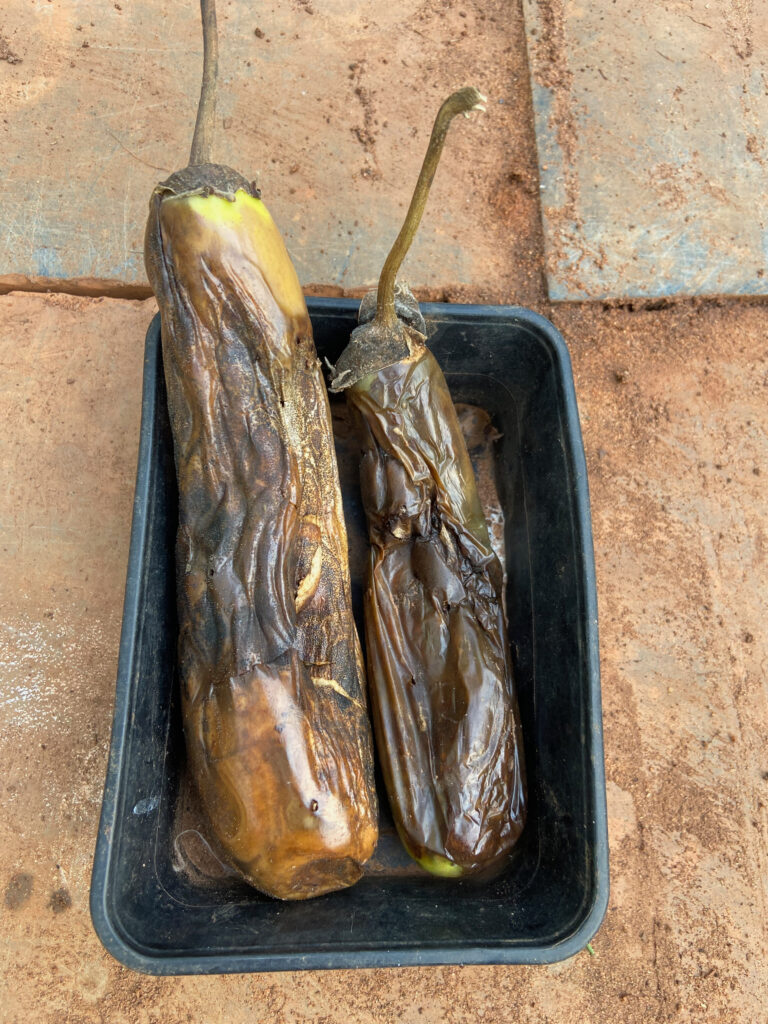
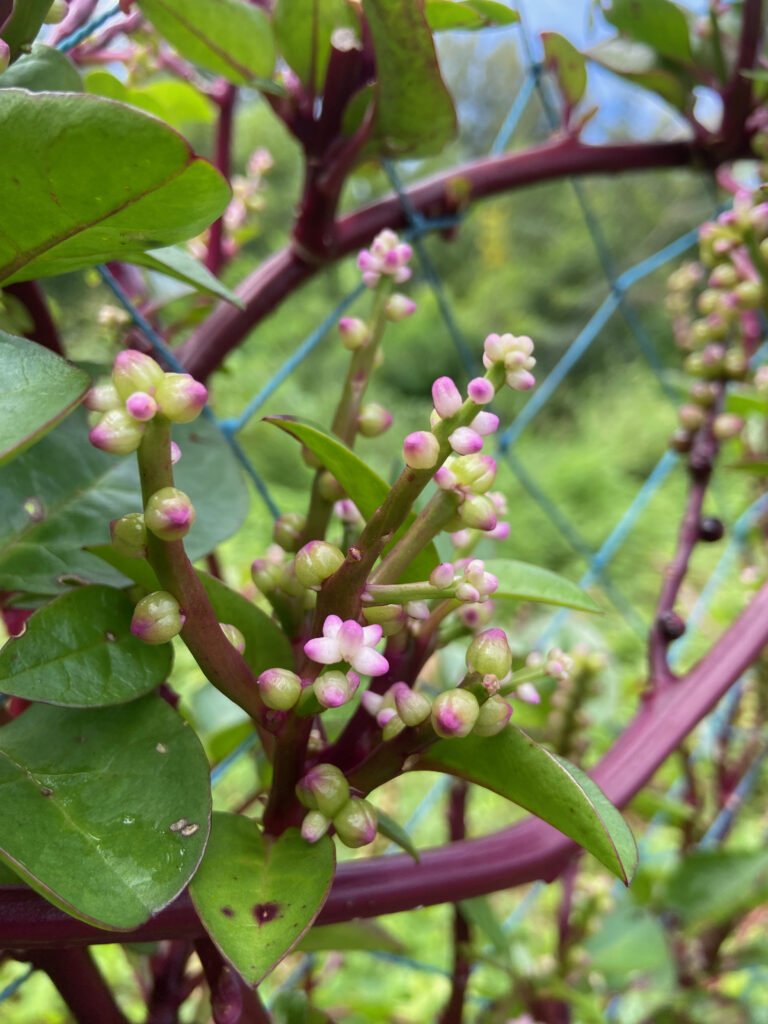
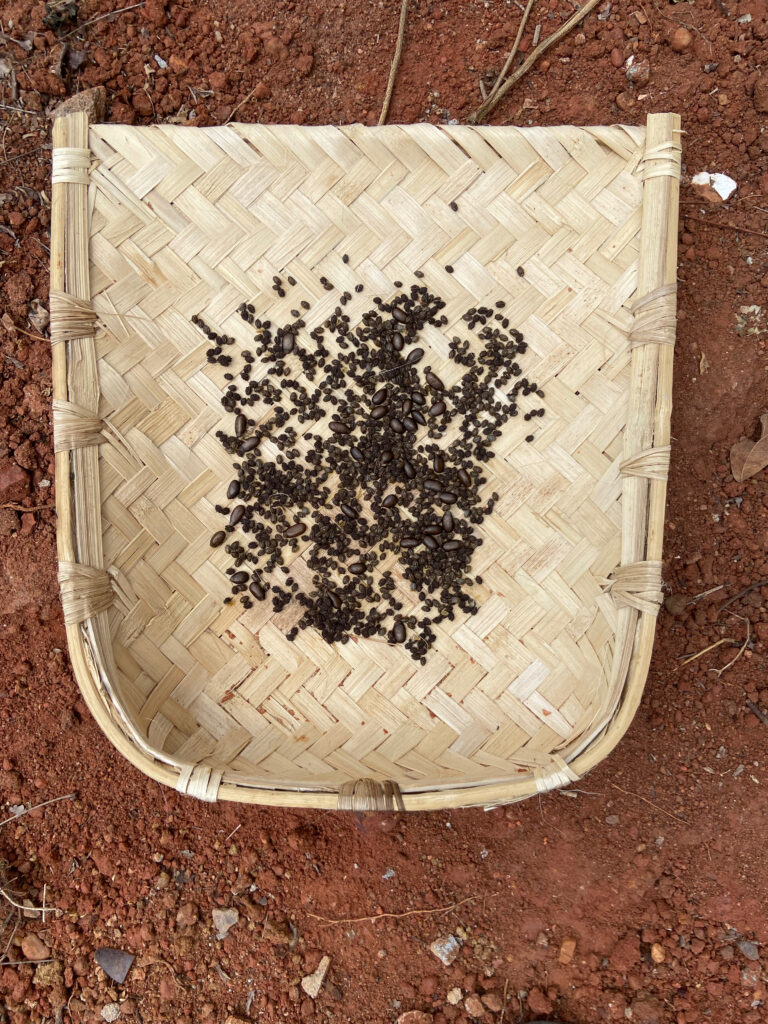
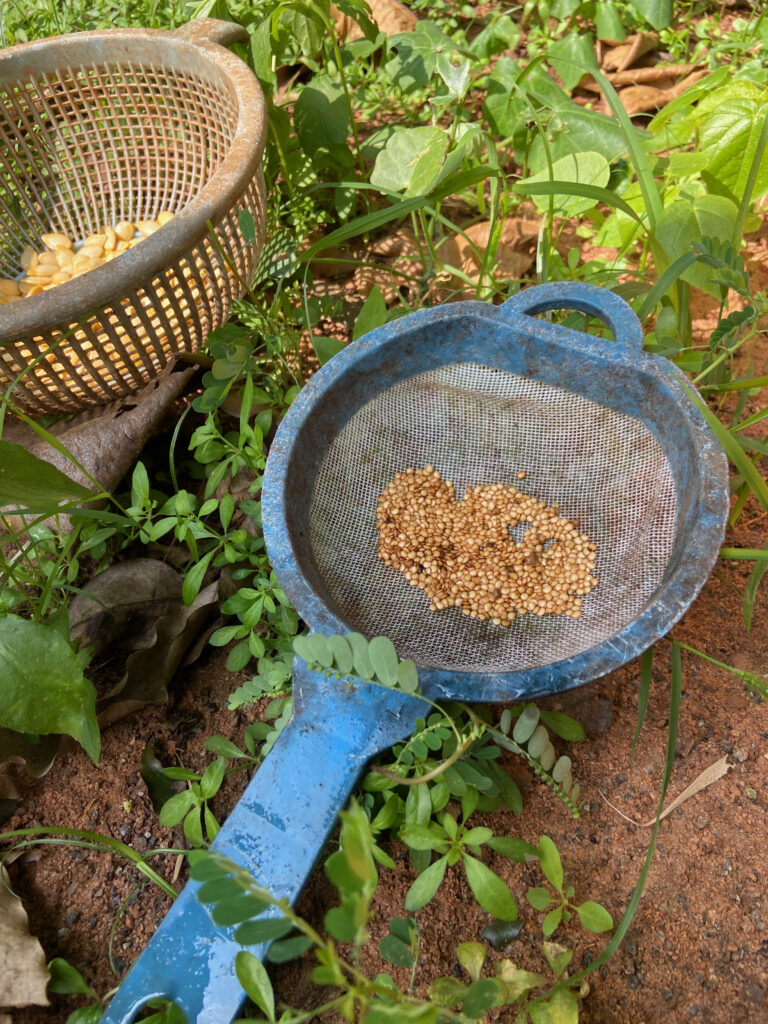
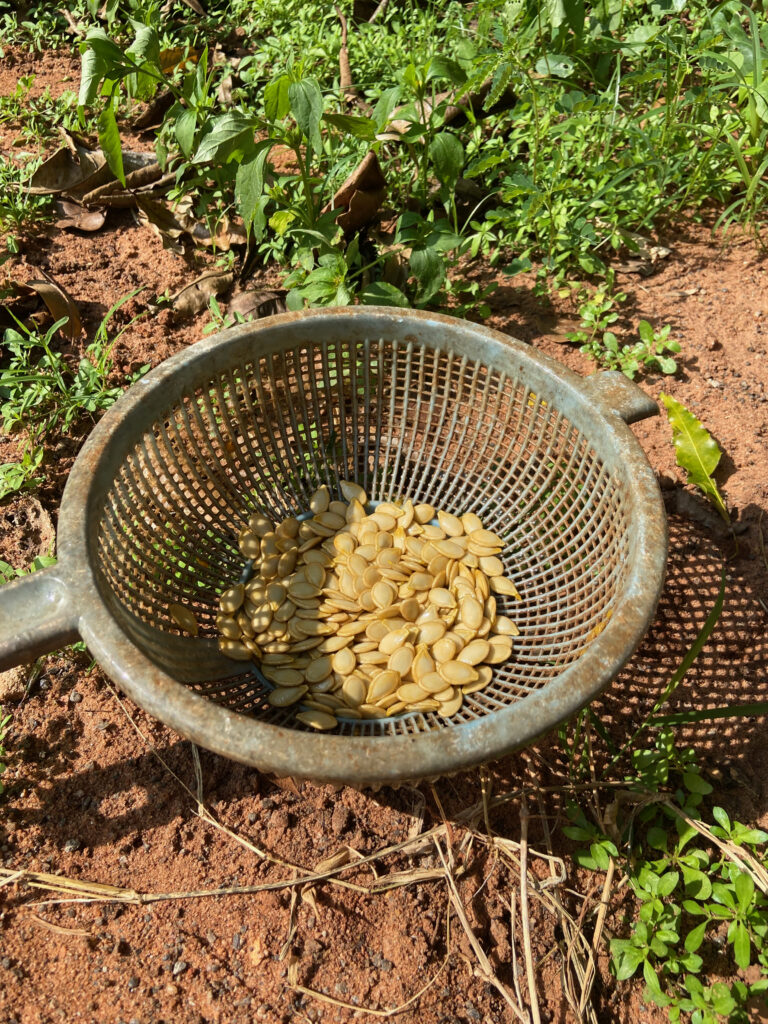
AuroOrchard, for instance, saves seeds from about 90% of the crops it grows. The remaining 10% are exotic crops like lettuce, arugula, spinach, and some herbs which do not seed well in this climate. The seeds at the farm are saved every summer. Our current seed bank includes our own seeds of long beans (that arrived on the farm from northern India in the 1970s), brinjal (that arrived from central India in 1980s), okra (green and the red ones that we got from Charlie from AuroGreen that he has been saving since the 1980s), pumpkin (being saved from a recent batch since 2022), bottle gourd, cucumber (arriving at the farm in 1980s from northern India), some recent arrivals like bitter gourd, ridge gourd, watermelon, some decade old seeds like basil, basella (which we got from Priya and Rajan from Buddha Garden, a few years back) and rosella (which we received from Annapurna farm in 2025), new batches of turmeric, ginger, thai ginger, which hold promise of a long term cultivation, fruits with multiple mixed varieties of papaya (cross between the variety from AuroOrchard and the variety we received from Charlie and Shanmugam from AuroGreen farm in 2020), ramphal, soursop, jackfruit, avocado, biomass plants that get planted in hundreds on the farm every year like agathi, subabool, moringa, gliricidia and castor. These seeds bear a deep imprint of the ecological and social history of the soil, the farm and the community. They hold the stories of the struggles and successes of the land and of the farmers. And while the farm can keep growing these seeds and continue their evolution, there is a need from within the community to recognise the value of these seeds and the food they produce. The uniqueness of these seeds lies in their natural adaptability of the changing ecological conditions and the diversity of nutrition and flavour they provide throughout the year to the community. While it’s tempting to let go of these varieties for “better” varieties that may produce consistent crops, superior yields, sizes that many eateries would prefer, colour that many restaurants may desire, texture that our palates may be used to from eating food from industrial farms, such a transition would be short sighted and will ultimately lead to a loss of our seed diversity, our seed and food sovereignty. The seeds of our community are the agricultural heritage of Auroville, and the farmers need the strength and support of the community to select carefully the food for today and preserve intelligently the seeds for tomorrow.
Join our newsletter for exclusive updates!
AuroOrchard is certified organic by the Tamil Nadu Organic Certification (ORG/SC/1906/001683) Department accredited by APEDA (Agricultural and Processed Food Products Exports Development Authority), New Delhi, Ministry of Commerce and Industry, Government of India.
AuroOrchard Poultry is recognised under the Certified Humane Program, a globally recognised, independent, international auditing body dedicated to creating a more humane world for farm animals.