In January 2026, Erik spent six days at MadhuSree Honeybee Farm in Kerala. The farm has over 45 years of experience and manages more than 2,000⠀⠀⠀⠀⠀⠀⠀⠀⠀⠀⠀⠀⠀⠀⠀⠀⠀⠀⠀⠀⠀⠀⠀⠀⠀ ⠀⠀⠀⠀⠀⠀⠀⠀⠀⠀⠀⠀⠀⠀⠀⠀⠀⠀⠀⠀⠀⠀⠀⠀⠀
Between August 2025 and April 2026, AuroOrchard’s natural beekeeping project made significant progress towards developing a larger, resilient apiary and creating opportunities for learning about bees and small-scale honey harvesting.
The project began in August 2025 with two main aims: to gradually expand the farm’s apiary to 100 hives, with the possibility of eventually reaching 200, and to offer workshops for farmers, students and people interested in natural beekeeping.
In January 2026, Erik spent six days at MadhuSree Honeybee Farm in Kerala. The farm has over 45 years of experience and manages more than 2,000 colonies of the Indian hive bee, Apis cerana, and the stingless bee, Tetragonula iridipennis. The visit offered valuable practical learning in hive design, colony management, honey production, multiplication of colonies and the organisation of a professional beekeeping operation. It also helped inform the next stage of hive development at AuroOrchard.
Almost 30 new hives have been made using three designs developed and adapted by Erik:
These designs build on research and experimentation at AuroOrchard since 2015, together with Erik’s earlier beekeeping experience in France. The dimensions, ventilation, entrances and internal organisation of the hives are designed around the needs of the bees and the conditions of our region.
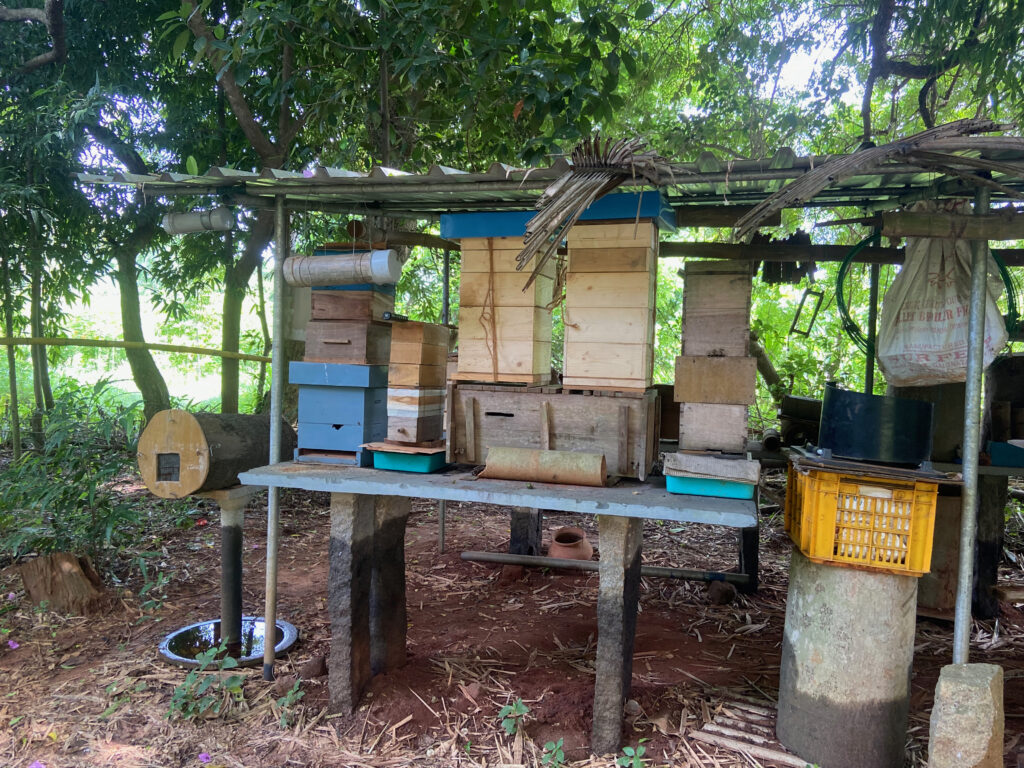
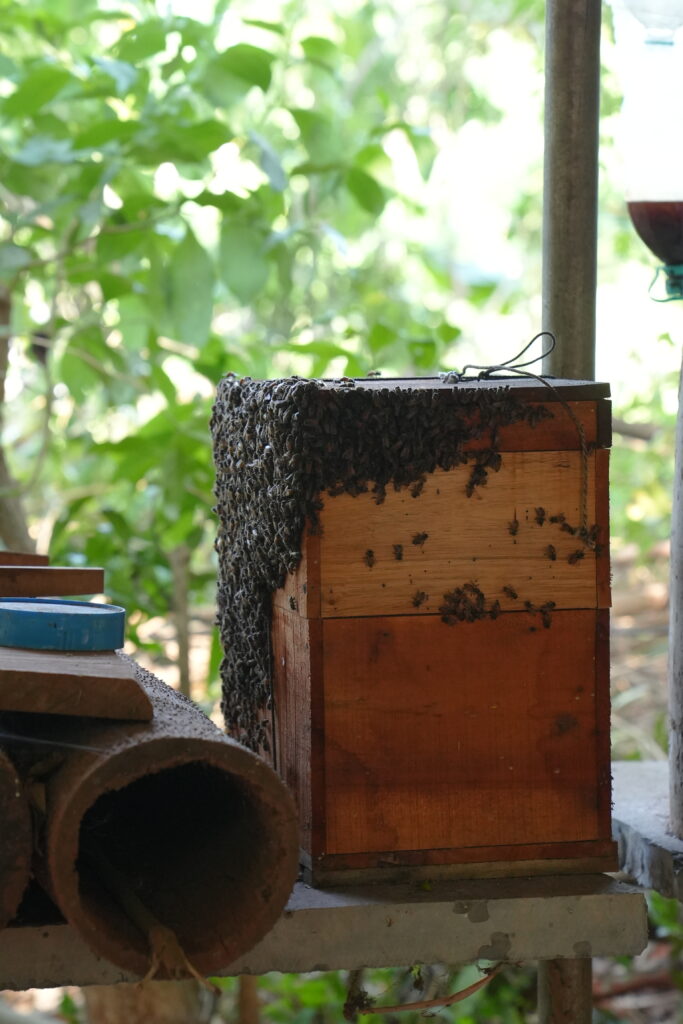
The stingless bee boxes include a separate honey chamber, allowing honey to be collected with minimal disturbance to the brood area. The number of Apis cerana colonies at the farm has increased from three in 2025 to seven. The number of stingless bee colonies has grown from around fifteen to more than forty. The colonies are healthy and developing well. We are currently placing particular emphasis on stingless bees, which have shown themselves to be highly resilient in our local conditions.
In February, the existing roofed apiary structure was extended and an old shed was repaired. Together, these spaces can eventually shelter between 100 and 200 stingless bee colonies. Honey harvesting is expected to begin in January 2027, during the main flowering season from December to March. The coming months will continue to focus on strengthening the colonies, observing the new hive designs and improving them through experience.
On 18 April 2026, AuroOrchard hosted a new three-and-a-half-hour workshop titled “The Secret Life of Honeybees: An Introduction to Natural Beekeeping.” Twenty-five people participated in the workshop, which introduced the lives of honeybees, the differences between bee species, hive design and the principles of working with bees in a respectful and attentive way. The response was very positive and encouraging. Natural beekeeping has been an area of exploration at AuroOrchard for more than ten years. This project is helping us deepen that work, create a strong home for bees at the farm and share what we are learning with a wider community.
Join our newsletter for exclusive updates!
AuroOrchard is certified organic by the Tamil Nadu Organic Certification (ORG/SC/1906/001683) Department accredited by APEDA (Agricultural and Processed Food Products Exports Development Authority), New Delhi, Ministry of Commerce and Industry, Government of India.
AuroOrchard Poultry is recognised under the Certified Humane Program, a globally recognised, independent, international auditing body dedicated to creating a more humane world for farm animals.