Year-end updatesㅤㅤㅤㅤㅤㅤㅤㅤ
This year has been a year of transformation for the poultry. We completed the full transition from white to brown birds and strengthened our free-range systems, experimenting with new grazing rotations, fodder crops, and improved water and feeding systems. Despite periods of illness and market dips, bird health improved steadily, and we joined the Cage-Free & Free-Range Poultry Producers Association. As we advance on our application for the Humane Farm Animal Care certification, we remain even more committed to building ethical poultry as a core part of the farm. Home » Blog » Year-end updates Year-end updates December 2025 · AuroOrchard Poultry This year has been a year of transformation for the poultry. We completed the full transition from white to brown birds and strengthened our free-range systems, experimenting with new grazing rotations, fodder crops, and improved water and feeding systems. Despite periods of illness and market dips, bird health improved steadily, and we joined the Cage-Free & Free-Range Poultry Producers Association. As we advance on our application for the Humane Farm Animal Care certification, we remain even more committed to building ethical poultry as a core part of the farm. Vegetable garden The vegetable garden has had abundant cool-season harvests, successful turmeric and sweet-potato yields, and expansions into wild edible greens and ginger trials. Monsoon months challenged sun-loving crops, but green manure, mulching, and raised-bed drainage helped maintain soil fertility. Burlap tarp experiment was a failure but it taught us something valuable about soil drainage during the monsoon. Throughout the year, we grew a steady diversity—from lettuces, greens, brinjal, ladies fingers, herbs, pumpkins, legumes, and root crops—while working to conserve moisture, add biomass, and refine weed management. Orchards This was our most intensive orchard years, with seven new syntropic and intercropped fruit blocks planted (Papaya-Citrus, Avocado-Papaya, Coconut-Banana, Ramphal-Pineapple, Jackfruit-Papaya, Mango-Citrus, and Hope Jackfruit/Avocado blocks). Despite challenges with Mango and Avocado yields due to rains, the intercropping trials performed well—especially turmeric, pineapple, and pumpkin. We also expanded biomass species, refined pruning cycles, introduced new citrus, and continued cyclone recovery work for Papaya and Banana. Syntropic blocks showed vigorous, synergistic growth and promise as our most efficient orchard-establishment strategy. This work is exceptionally important in guiding our orchard work for the coming year. Seeds & Nursery The nursery was vibrant and dynamic throughout the year, producing a wide range of vegetables, herbs, biomass plants, and fruit saplings. We propagated Jackfruit, Soursop, Papaya, Avocado, Mexican Sunflower, Moringa, Agathi, Subabool, Lemongrass, mint varieties, and other herbs. Community support helped expand our Avocado seedling collection and new Avocado plantations. The nursery played a central role in both orchard expansion and vegetable season planning. Abundance We emphasised the shift from “processing” to food preservation in using what the farm grows in ways that honour nutrition, flavour, and seasonality. This year, we offered a wide range of products—mango conserves, lemon marmalade, basil pesto, cashew items, herbs, brinjal spread, seasonal vegetable recipes, salad mix and so on. A new renovated workspace and a growing team allowed us to experiment more, receive valuable community feedback, and explore natural packaging for the future. We are entering the new year with the aspiration to extend as well as deepen this work. Research & Education We organised all our research projects on our website and prepared a series of courses on vegetable gardening, orchards, animals, and integral food philosophy. Research expanded across natural beekeeping (supported by a seed grant from SDZ, Netherlands), aquaponics, technology integration for irrigation, biofermentation for soil and plant applications, species identification of fruits, and production-data analysis. Most importantly, we continue to deepen our work on natural beekeeping, hive multiplication, and exploring medicinal stingless-bee honey. Previous Article Featured Articles Year-end updatesㅤㅤㅤㅤㅤㅤㅤㅤ 20 Dec 2025 Abundance Product of the Month 05 Dec 2025 Ayurvedic Recommendations for Winter 19 Dec 2025 Our Brewery for Plant Health 19 Dec 2025
Flow of fire and water on the farmㅤㅤ
In the Sāṃkhya school of Indian philosophy, the unfolding of matter from spirit gives rise to the senses and to the five elemental manifestations of the material world. From space, emerges air, the principle of movement, and fire, the principle of transformation. Then comes water, carrying flow, continuity, and the subtle pulsations of energy through matter. From the settling of this movement is born earth, the solid ground where life takes form and rests in its full potential. Home » Blog » Flow of fire and water on the farm Flow of fire and water on the farm December 2025 · Anshul Aggarwal In the Sāṃkhya school of Indian philosophy, the unfolding of matter from spirit gives rise to the senses and to the five elemental manifestations of the material world. From space, emerges air, the principle of movement, and fire, the principle of transformation. Then comes water, carrying flow, continuity, and the subtle pulsations of energy through matter. From the settling of this movement is born earth, the solid ground where life takes form and rests in its full potential. Farming is an interaction of all these elements—an ongoing exchange between soil, water, light, air, and the consciousness of the one who tends them. While the Sun remains the primary fire and source of energy, we now also work with another form of fire: electricity, which powers pumps, motors, vehicles, tools, and the quiet machines woven into daily life on the farm. Similarly, rain brings water in its natural rhythm, but we have also learnt to draw from the rainwater stored underground. The farm has three borewells, each serving a specific area and purpose. In this way, the ancient flows of fire and water manifest today as the flows of electricity and irrigation lines across the land. These flows move together; they remain the source of energy for all work on the farm. Over the last fifty-eight years, these flows have gradually expanded to cover a large part of the farm. But further extension is needed to serve areas still cultivated sub-optimally. One might ask: why expand this infrastructure at all? Shouldn’t some parts remain free of artificial flows? Aren’t the Sun and the rain enough? Isn’t natural vegetation sufficient? These questions are part of an enduring dilemma in human life. Our footprint on the planet is large; the footprint of farming especially so. Agriculture is the world’s largest consumer of water, a driver of deforestation and biodiversity loss, a source of carbon emissions, and—in its industrial form—the cause of immense ecological, animal, and human suffering. In such a scenario, it is natural to think that the solution lies in withdrawal: if only humans stepped back, perhaps the earth would regain its balance. We witnessed glimpses of this during the Covid pandemic, when air grew cleaner and wildlife briefly reclaimed spaces near cities. But this brings us to a deeper question: what then is the role of humanity at all? It cannot be inaction. And as our experience shows, even the smallest human action today has ecological and social consequences. Integral Yoga would tell us that our role is not domination but participation—a conscious collaboration with the creative force of nature for mutual growth and progress. Agriculture is one of the clearest expressions of this human–nature participation. Thus, expanding human activity on the farm can arise from two very different impulses–domination, colonisation, and control, or service to the land and to the community—enhancing the ecosystem, the soil, the earth, and producing food for the people we serve. We strive (with successes and failures) toward the latter. In the coming year, we aim to expand our micro-irrigation network as we establish new orchard blocks and diversify existing fruit areas. This year we have learned how communities of crops support one another and reduce the overall water footprint of the farm—simply because the soil remains densely covered with vegetation: some plants grown as food for the farm, others as food for the soil, insects, bees, and birds. Our primary focus will be the mango and cashew orchards, the oldest sections of the farm, which at present are monocultures. Our experiments with cultivating pineapple, ginger, turmeric, yam, and taro within existing orchards have given remarkable results, and we hope to continue this diversification. And water needs energy to flow. As our irrigation network expands, so does the need for energy—whether through electrical connections, lines, or solar-powered pumps. Meanwhile, some of the existing infrastructure, built over many decades, now needs repair and renewal. These are our goals for the coming year—to tend to the flows of fire and water on the farm, the two essential elements for movement and transformation without which both the earth and human consciousness remain sterile. And given the changes the farm (and Auroville) has witnessed in the last few years, it is evident that the psyche of the farm too needs a movement and transformation, as it goes through a radical transition socially, politically and economically. Previous Article Featured Articles Monthly Updatesㅤㅤㅤㅤㅤㅤㅤㅤ 28 Nov 2025 Abundance Product of the Month 22 Oct 2025 Flow of fire and water on the farmㅤㅤ 03 Dec 2025 Hands-On Approachㅤㅤㅤㅤㅤㅤㅤㅤㅤ 29 Nov 2025
Help us raise funds for 2026!ㅤㅤㅤㅤ
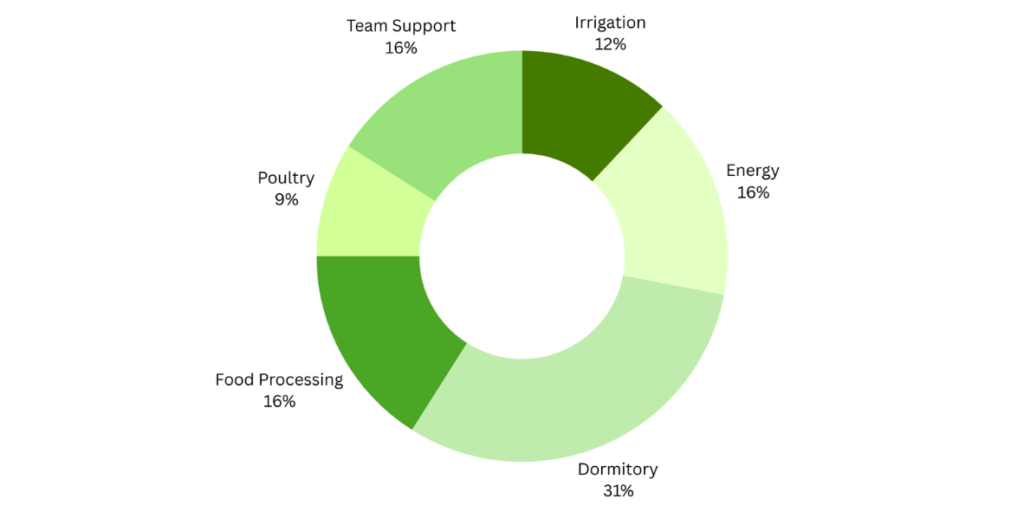
Until last year, we managed to support our team mainly from the farm income. For the coming year, we are seeking some funds to be able to support the newcomers who have just joined the farm, a communication team that helps us share our work with the community and basic support like food and transport for our volunteers. Our goal is to become financially sufficient in the next year to be able to support all our team expenses from the farm itself. Home » Blog » Help us raise funds for 2026! Help us raise funds for 2026! November 2025 · Anshul Aggarwal AuroOrchard is Auroville’s oldest farm, founded in 1968-69 under the guidance of the Mother with the vision of “growing food for Auroville.” Spread over 25 acres of red earth on the eastern coast of Tamil Nadu, it has been a cornerstone of Auroville’s food system for more than five decades. Today, it produces over 50% of the fruits and vegetables and 90% of the eggs from Auroville farms. The farm grows a diversity of crops—mangoes, papayas, bananas, guavas, citrus, roots and tubers, leafy greens, vegetables, and herbs—alongside a small poultry that provides eggs. Each year, these fields and orchards yield several tonnes of fresh food, much of it flowing directly to Auroville’s kitchens and residents. These numbers are never the measure of the work, but rather quiet signs of the farm’s steady rhythm of care and abundance. An overview of AuroOrchard’s production in 2024-25 In the last five decades, the farm has dealt with many challenges and transitions—ecological, physical, social, cultural, financial, and personal. Despite this, and despite the growing uncertainties of the world, it continues to hold to its purpose: growing food for Auroville and tending to the fragile web that binds land, community, and spirit together. For us, growing food for Auroville also means discovering what agriculture can be for a community and for future humanity. We are deeply grateful for the trust placed in us by our donors and AVI USA. We are committed to working sincerely, carefully, and with a deep sense of responsibility to the land and the community.To continue developing the farm in 2026, we are seeking 36,000 USD. Budget allocation for 2026 Irrigation Infrastructure We are expanding our micro-irrigation network as we establish new orchard blocks and diversify existing fruit areas. The expense covers the cost of pipes, plumbing fixtures, and labour for installation and maintenance. Energy: Solar & Electrical Infrastructure Our electricity infrastructure needs upgrading as the farm is expanding both in intensity of the existing activities as well as addition of new work . In the coming year, we need to reorganise domestic loads across the farm, install a new agricultural electricity connection, purchase and install larger batteries to make better use of solar power. This is a major step toward long-term energy independence and reducing operational costs. Poultry: Upgrading existing infrastructure In the coming year, we would like to continue upgrading our poultry- with free-range expansion, coop renovation (roof, flooring, nesting spaces), improvements aligned with humane poultry certification standards. This work directly improves bird welfare and egg quality while restoring an ageing system. Food Processing – New Machines, Tools, Systems A new food-processing team has emerged, and we have begun developing a wider range of value-added products that help reduce post-harvest losses and add economic resilience.The goal for the coming year is to purchase small and mid-scale machines, tools for dehydration, bottling, and processing, storage improvements. This work will directly help in supplementing farm income towards long term financial sustainability. Dormitory This is the major project for 2026. We would like to improve the existing dormitory and build a new one to address the housing needs for long term volunteers and newcomers on the farm. The current set up can accommodate at most 6 people. We would like to build a new, mobile structure that can accommodate an additional 10 people (at least). This will help us invite young people into agriculture education and practice. Team Support Until last year, we managed to support our team mainly from the farm income. For the coming year, we are seeking some funds to be able to support the newcomers who have just joined the farm, a communication team that helps us share our work with the community and basic support like food and transport for our volunteers. Our goal is to become financially sufficient in the next year to be able to support all our team expenses from the farm itself. To donate, please visit: https://give.aviusa.org/page/AuroOrchard?fundraiser=NGNGZJAM&member=SYPDDLKJ Previous ArticleNext Article Featured Articles Abundance Product of the Month 22 Oct 2025 Monthly Updatesㅤㅤㅤㅤㅤㅤㅤㅤ 22 Oct 2025 Recipe Alert!ㅤㅤㅤㅤㅤㅤㅤㅤㅤㅤㅤ 01 Dec 2025 The Flying Houseㅤㅤㅤㅤㅤㅤㅤㅤㅤㅤㅤ 01 Dec 2025
Report on fund utilisation from AVI USA Matching Campaign 2024
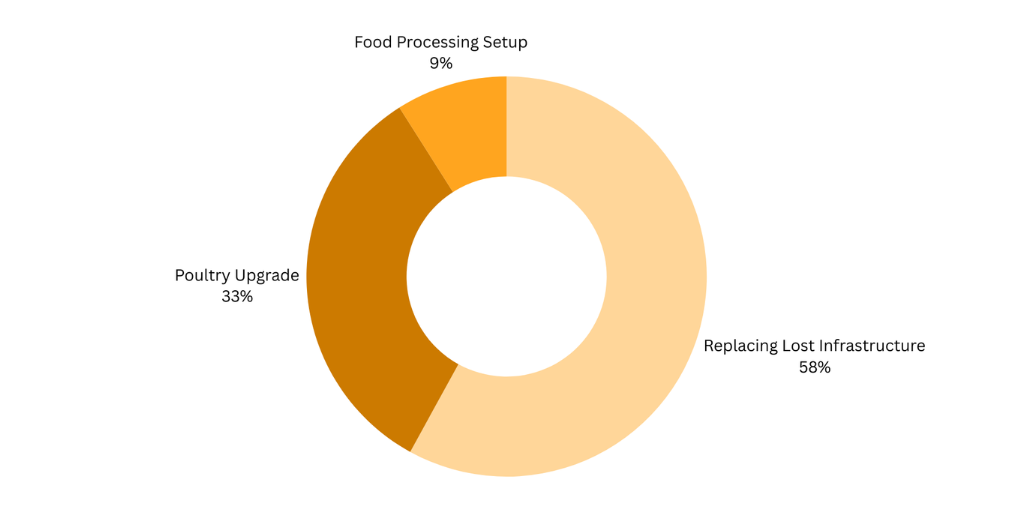
Our Turmeric roots have been sun-dried and turned into flakes that can be easily infused in some hot honey & lemon tea for the changing weather with a pinch of black pepper. Home » Blog » Report on fund utilisation from AVI USA Matching Campaign 2024 Report on fund utilisation from AVI USA Matching Campaign 2024 November 2025 · Anshul Aggarwal During 2024 and 2025, AuroOrchard was fortunate to have been supported with donations raised through AVI USA, AVI Germany, AVI France, AVI Spain and the Abundance Project Coordination Group which coordinates with Stichting de Zaaier in the Netherlands. This support came at a crucial time after the land exchange at the farm helping us rebuild and replace some critical infrastructure as well as invest in expanding our team and diversifying farm activities. This report summarises how the funds were used in 2025, and our plans and aspirations for 2026. Funds raised through AVI USA matching campaign 2024 We were able to raise a total of 8500 USD from December 2024 until November 2025. Break-up for expenses of funds raised through AVI USA from Dec 2024 until Nov 2025 Infrastructure More than half of these funds were utilised to replace crucial infrastructure on the farm that was lost in the land exchange of 2023. This includes: a new electrical connection, entrance cowgate, stabilising new paths, water infrastructure for irrigation and domestic use on the farm. Poultry The next big part of this fund was used to renovate and upgrade our poultry. Over the last three years we have made significant changes to our poultry practice- like changing the breed of the birds and adding maintenance protocols. We have now started upgrading the feeding and drinking systems for the birds. This is a significant expense for all the four coops (around 2000 birds). We were able to make a good start in 2025, but much remains to be done in 2026. Food Processing To diversify farm income and find ways of using abundant produce when it cannot be distributed in Auroville, we started a small food processing activity with a new team on the farm. This needed significant improvement in our community kitchen set up and purchasing some basic equipment and tools. Some of the funds were useful in starting this work. Area Description Elements Money spent in 2025 from AVI USA Campaign Total Donation Money spent in 2025 Budget for AVI USA 2026 Water We continue to expand our micro-irrigation infrastructure as we create new orchards and diversify existing ones. Replace & repair two major water sumps, purchase Irrigation pipes, plumbing fixtures, labour for installation & maintenance ₹ – ₹ 1,02,242.00 ₹ 4,00,000.00 Energy As the farm expands, its electrical infrastructure needs expansion. We are are carefully assessing how we can supplement as much of our need through solar energy. Re-organising existing domestic connections to distributed load, new agriculture connection to replace the one lost in land exchange, better and bigger batteries to use solar energy effectively. ₹ 3,14,013.00 ₹ 3,12,775.00 ₹ 5,00,000.00 Volunteer Dormitory To involve more people in our work, we need spaces where volunteers & newcomers can stay. Dormitory structure, common showers, toilet, kitchen area, plumbing and electricity facilities. ₹ – ₹ – ₹ 10,00,000.00 Food Processing During this year, we significantly expanded our food processing systems. We have a new team looking after this work and we need to buy some new machines and tools to improve and do more. Dehydrator, ₹ 66,146.00 ₹ 3,42,087.00 ₹ 5,00,000.00 Storage shed. Poultry Our poultry activity is over 40 years old. Some of the structures need significant repairs and installation of better systems and technology. As we move forward with an international certification of humane poultry keeping, we need to make some investments in upgrading our systems Free range expansion, Coop renovation-roof, flooring nesting spaces. ₹ 2,54,352.00 ₹ 4,44,539.00 ₹ 3,00,000.00 Team In the past year, we have made a significant attempt in reaching out to our community through stories and updates about the farm. We have also received a few newcomers who are now dedicated to working at the farm. The massive infrastructure replacement and renovation means we need secured funds to support young people who wish to engage with the farm and dedicate their work in Auroville to grow food. Majority of this support came from the farm income from sales of produce. Only a very small part of the donations were used for this. Communication team, volunteer & newcomer support ₹ – ₹ 82,745.00 ₹ 5,00,000.00 Infrastructure ₹ 1,21,981.00 ₹ 3,95,323.00 ₹ – Plantations ₹ – ₹ 4,03,214.00 ₹ – Tools & Machines ₹ – ₹ 34,932.00 ₹ – ㅤ ㅤ TOTAL ₹ 7,56,492.00 ₹ 21,17,857.00 ₹ 32,00,000.00 $ 8,519.05 $ 23,849.74 $ 36,036.04 Expenses from January 1, 2025 until November 15, 2025 To know about our plans for 2026 and help us raise funds, please visit our donation portal here. Previous Article Featured Articles Abundance Product of the Month 22 Oct 2025 Monthly Updatesㅤㅤㅤㅤㅤㅤㅤㅤ 22 Oct 2025 Report on fund utilisation from AVI USA Matching Campaign 2024 17 Nov 2025 Lessons from Auroville Farm Assessment 2023 22 Oct 2025
Is AuroOrchard a Permaculture farm?
We get asked this question quite a lot! As Permaculture becomes more and more popular and perhaps projected as a wonderful solution for diversity and abundance, it is a general perception that “being a Permaculture farm” is the next big innovation in farming. Home » Blog » Is AuroOrchard a Permaculture farm? Is AuroOrchard a Permaculture farm? August 2025 · Anshul Aggarwal We get asked this question quite a lot! As Permaculture becomes more and more popular and perhaps projected as a wonderful solution for diversity and abundance, it is a general perception that “being a Permaculture farm” is the next big innovation in farming. My first answer is ‘NO!’, and my second, in classic permaculture style, is ‘it depends.’ We employ Permaculture design principles where needed and possible, but that does not define the farm. I have had the privilege of studying and working with some exceptional Permaculture teachers and practitioners from India and across the world. I took the Permaculture Design Certificate course in 2014 and the Permaculture Teacher Training Course in 2016. So this explanation comes from an informed place, a place of deep gratitude for Permaculture but also a place of recognition of its limitations. How did it all start? Permaculture was conceptualised by Bill Mollison and David Holmgren in the 1970s in Australia, in response to the crises of industrialised agriculture that intensified with the Green Revolution of the 1960s. They drew on the Aboriginal worldview, a philosophy of life that has sustained people for millennia without degrading the land, and on systems thinking, a then-emerging approach that studies the whole rather than just the parts. Combining these perspectives, they proposed a regenerative landscape design through which humans could practise sustainable, permanent agriculture, giving it the name “Permaculture.” Permaculture is a ‘design system’ Essentially, Permaculture is a design system. Design has long been a vital tool for human beings, enabling us to imagine and create. We are all designers in some way, using it moment to moment — thinking, planning, visualising, and adjusting with feedback. Over time, design as a discipline became more elaborate, shaping professions that relied on visualisation, spatial planning, architecture, product development, technology, and the power of imagination. Yet in the last couple of centuries, the means and tools of design have evolved so rapidly that the almost godly power it confers can sometimes turn the designer against the designed, and even against life itself. Ethics What makes Permaculture unique is that its design process is founded on three key ethics: Care for Earth Care for People Fair Share By placing these at the core, Permaculture calls on the designer to weigh every decision by its impact on the land, its people, and all forms of life. Echoes of these ethics run through ancient traditions and modern ecological thought, and Permaculture weaves them into a coherent, practical framework for action. Design principles and strategies Click to enlarge The principles of Permaculture are the guidelines for turning its three ethics into practice. They can be applied to systems of any scale, in ecology, communities, or even in one’s personal life. While many practitioners adapt or reinterpret the principles to suit their context, they all rest on natural patterns of circularity, interconnectedness, diversity, flexibility, and cooperation. From these principles emerge strategies such as earthworks, water and soil conservation, and community-based work. Bill Mollison outlined many of these in Permaculture One and Permaculture: A Designer’s Manual in the 1980s, and since then they have been applied and expanded upon by practitioners around the world. Permaculture in India Permaculture is a rapidly growing movement in India, attracting people dissatisfied with the status quo and seeking to reconnect with nature, learn integrated design, or grow their own food. Permaculture offers a strong foundation for working on the land, cultivating a sense of design, and developing an integrated approach to planning — skills especially valuable for those moving from cities to smaller towns and villages in search of a simpler, more meaningful life. Across the country, the number of groups and professionals offering design consultations and courses keeps growing and the community continues to share their challenges, successes, and conclusions here. However, many courses are urban-centric, catering to newcomers without deep farming experience; imported temperate-climate techniques sometimes need significant adaptation for tropical conditions; and short-term enthusiasm can fade if not grounded in daily practice and community support. The challenge of a mass movement Today, Permaculture extends far beyond agriculture. Within a few decades of its inception, the founders recognised that a permanent agriculture solution alone was not enough; creating such systems also required rethinking how people live and work together. This gave rise to social permaculture — an expansion from permanent agriculture to permanent culture. Over the years, it has captured the imagination of many, especially urban dwellers seeking a new language to imagine different possibilities. Yet such growth also brings dilution: Permaculture has come to mean many things, from crop diversity and organic farming to food forests and local food, and sometimes, as a result, it risks meaning nothing at all. It is certainly all of these, but not only these, and it resists absolutes, always seeking to understand the context and build from there. In my observation this enthusiasm for Permaculture can also sometimes overshadow the purpose of the work and a deeper, long-term relationship with land and community. The absence of spirit There is a concept in Permaculture called invisible structures, the subtle relationships that hold physical reality together. On a farm, for example, visible structures include the soil, water, plants, and infrastructure; the invisible ones are the relationships among the people working the land, their ties to the wider community, and the economic exchanges that sustain them. While the visible is rooted in the physical landscape, the invisible is grounded in the landscape of the mind. Permaculture recognises the need to design and cultivate this inner landscape as much as the outer, yet it avoids explicit conversation
Updates from the Nurseryㅤㅤㅤㅤㅤ

We have been starting a lot of fruit trees from seeds gathered during this season. We are also actively propagating more biomass plants for the farm as well as for other gardeners. Home » Blog » Updates from the Nursery Updates from the Nursery July 2025 We have been starting a lot of fruit trees from seeds gathered during this season. We are also actively propagating more biomass plants for the farm as well as for other gardeners. You can see a list of available saplings here: Saplings order June 2025 Our nursery continues to grow. We have distributed hundreds of different kinds of plants over the last couple of months to individuals and units. We now have a dedicated team working solely on propagation of flowering and edible plants. February 2025 The first two months of 2025 have been incredibly productive at our nursery. With the purpose of maximising on the cold and dewy weather, we had been focusing on a variety of greens and herbs, sowing them in big numbers, here’s what the numbers look so far – Lettuce: 4,000 seeds Pok Choy: 6,000 seeds Rugula: 2,500 seeds Basil: 2,000 seeds Thousands of saplings Lettuce bed Each of these seeds have been carefully sown, ensuring better germination and strong and healthy saplings that will thrive in the weeks ahead. In addition to planting these and the usual vegetables and greens, we’ve also begun sowing seeds for sapling that you have ordered! If you’re interested in placing an order, you can do so here. Special Mention One of the most exciting developments in these two months has been the sowing of cacao seeds, sourced from a trusted farm near Mangalore. This marks a new step in our journey, and we’re looking forward to seeing the first of the seedlings germinate and flourish! Cacao pods First of the cacao germination! With plenty more to come, we’re excited for what the rest of the season holds. Stay tuned for more updates as our nursery continues to grow! January 2025 As January rolls in, our nursery is busier than ever. The recent cyclone set us back briefly, but with teamwork and determination, we quickly got things back on track to make the most of this productive season. The damage to the nursery after cyclone Fengal (left) and the partial reconstruction (right) to help us continue in this crucial planting season. Each winter, we focus on cultivating a variety of salad greens such as Arugula, Lettuce, and Celery, along with our staple vegetables. This year, we are pleased to introduce a new addition to our crops – Palak Keerai, also known as Spinach; a much-loved favourite! We’re also experimenting with a few different types of greens and hope to expand our offerings soon. Stay tuned! Previous ArticleNext Article Featured Articles Monthly Updatesㅤㅤㅤㅤㅤㅤㅤㅤ 19 Sep 2025 Abundance Product of the Month 18 Sep 2025 Recipe Alert – Stir Fried Sweet Potato leaves with Tofu 22 Sep 2025 Food and Agriculture in Auroville, India 18 Sep 2025
What Did AuroOrchard Produce & Where It Went

This is an overview of the distribution of food from AuroOrchard during April 2024 to March 2025 and its comparison to the previous years. Despite multiple challenges, the farm continues to grow and progress on its vision to provide food for the community. Home » Blog » What Did Auroorchard Produce & Where It Went What Did Auroorchard Produce & Where It Went An analysis from April 2024 to March 2025 · AuroOrchard This is an overview of the distribution of food from AuroOrchard during April 2024 to March 2025 and its comparison to the previous years. Despite multiple challenges, the farm continues to grow and progress on its vision to provide food for the community. The financial year 2024-25 was particularly challenging as the farm lost 16 acres of cultivated land out of which 14 acres were orchards- Avocado, Soursop, Ramphal, Jackfruit, Lime, Banana, Papaya, Pomelo, Coconuts, Cashews and 2 acres were intensively cultivated vegetable gardens. We also lost a lot of Bananas and Papayas during Cyclone Fengal in December 2024. We are grateful to have received some financial support from Auroville International USA, France and Germany which allowed us to invest in expanding our cultivation during last year which helped in dealing with these losses in production. Over the last seven years, the farm production is rising significantly (see charts below) and despite the shocks of 2024-25, the overall production has risen for both vegetables and fruits. The following analysis outlines our major production and distribution trends. Vegetables, Fruits & Nuts The vegetable, fruit and nut production has been increasing on the farm on average since 2017. Every year, we are adding more land under more dense and diverse cultivation. At the moment, we are not considering adding more areas under vegetable cultivation and will only be more focussed on orchards. Even then, there is a huge scope to increase vegetable production through better management of existing gardens. The largest potential for AuroOrchard lies in fruit production. With around 18 acres of already existing fruit orchards, the production is still quite low. By careful pruning of some older trees, adding new trees and making the orchards more dense, we can grow a lot of fruit for the community, for which there is also a growing demand. Eggs In the last few years, we have been consistently experimenting with the poultry to find what is the best solution for highest ethical standards, quality as well as viable economics in providing eggs consistently to the community. In these years, we tried starting birds of di`erent ages, reorganised the free range area and finally replaced all the white birds for a variety of birds called ‘hyline-brown’. The dips in production between 2018 and 2020 were perhaps due to bad planning and a long gap between flocks. The dip in production in 2024-25 is due to health issues of the white birds and the complete transition to brown birds. With 1500 birds, we are expecting an average of around 900-1000 eggs per day this year. This would perhaps be the highest that we can imagine to distribute given the limited market in Auroville for free-range eggs that cost more. The cost of these eggs in outside markets are even more so we do not have a solution where these eggs are being sold at much less. Eventually, the cost of these eggs can be brought down significantly if Auroville has its own feed milling activity. It will also ensure better, rich and diverse food for the chickens. For the farm, the focus for the coming year is to continue developing the poultry practice and enhance the quality of the lives of the chickens and that of the eggs even more. Distribution The majority of the food produced went to PTDC followed by Foodlink and Aurovilians, Newcomers and volunteers. 99% of the food produced is distributed within Auroville. The remaining 1% is distributed around Auroville in the Bioregion and in Pondicherry to individuals and mainly Grinde store. With the share from some Auroville units going down and the farm expanding its cultivation, we will need more distribution options within and outside of Auroville. Financial sustainability Currently, more than half of the farm income comes from the eggs. Vegetables, fruits and nute despite their share of almost three quarters in production weight cover less than half of income. Within vegetable and fruits, vegetables are even less financially rewarding and the income from the eggs subsidises the cost of vegetable production. As our fruits cultivation expands, we are hoping to increase the income share from the fruits. The farm has also started selling seeds, saplings, and simple processed goods within Auroville, which has also created a new, though small for now, income stream. Previous ArticleNext Article Featured Articles Monthly Updatesㅤㅤㅤㅤㅤㅤㅤㅤ 19 Sep 2025 Abundance Product of the Month 18 Sep 2025 Recipe Alert!ㅤㅤㅤㅤㅤㅤㅤㅤ 22 Sep 2025 Food and Agriculture in Auroville, India 18 Sep 2025
The hydrological cost of growing our food
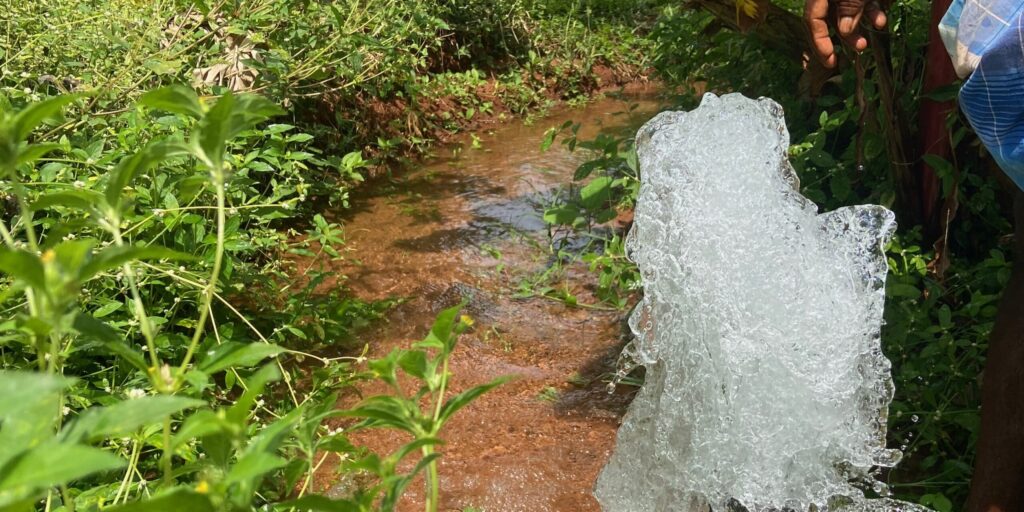
In my last note, I shared about the economic paradigm that is taking us towards a ‘world without agriculture.’ I would like to explore this economic paradigm a little more by isolating the costs of the food that we grow. Let’s take water as the first one. As per several studies, agriculture accounts for about 70% of all freshwater use globally. This number is more than 80% in a country like India where over 50% of the population is still engaged in agriculture. Within Auroville, farms (perhaps along with Matrimandir) are the biggest users of freshwater. The challenges of groundwater depletion, rampant use of free electricity borewells in the bioregion for non-edible crops like casuarina and other fast-growing timber, the beginnings of salination of groundwater and so on offer an opportunity to us to reflect on the hydrological cost of growing food and how can we not only reduce our water consumption but, perhaps what I think is more important to focus on, optimize the use of water in agriculture. Home » Blog » The hydrological cost of growing our food The hydrological cost of growing our food Mar 11, 2025 · Anshul Aggarwal In my last note, I shared about the economic paradigm that is taking us towards a ‘world without agriculture.’ I would like to explore this economic paradigm a little more by isolating the costs of the food that we grow. Let’s take water as the first one. As per several studies, agriculture accounts for about 70% of all freshwater use globally. This number is more than 80% in a country like India where over 50% of the population is still engaged in agriculture. Within Auroville, farms (perhaps along with Matrimandir) are the biggest users of freshwater. The challenges of groundwater depletion, rampant use of free electricity borewells in the bioregion for non-edible crops like casuarina and other fast-growing timber, the beginnings of salination of groundwater and so on offer an opportunity to us to reflect on the hydrological cost of growing food and how can we not only reduce our water consumption but, perhaps what I think is more important to focus on, optimize the use of water in agriculture. There are different ways of thinking about what we should grow and what we can grow depending on people’s preference and the weightage we can give to the ecological and social costs of growing food. Should something be grown only because it’s easier to grow, or because it is more water efficient, or because people really ask for it, or it is less labour intensive and so on. The answer to these questions is never black and white and they change from situation to situation and from time to time. For instance, farmers cannot impose water efficiency over people’s preference for a certain kind of food. At the same time farmers cannot simply chase what the market demands, prioritizing it over its ecological costs. Flood irrigation Flowering Avocado tree A classic case for this is Avocado. It is common knowledge that Avocado is a water guzzling crop. AuroOrchard received its first Avocado seeds from the Mother herself in the early 70s. These we now call the Mother trees. From these trees, many more trees have been planted at AuroOrchard as well as outside. These Avocados are some of the best that we can find in the region, some would say anywhere. There is a huge demand for these Avocados in Auroville and also the Ashram community. Should we be planting more Avocado knowing that we can grow them well? Or should we turn our heads and let people buy Avocados from Pondy market which are nowhere near as good and definitely have a higher ecological cost. Again, the answer is not straightforward and we need to find a balance. We have planted more Avocado trees in the last year but we are exploring how Avocados can be grown with other fruit crops so that water can be used optimally. In such a scenario, the hydrological cost of Avocado gets distributed to many other crops that are growing with it. However, such a solution would then add to the management costs of the system and perhaps the management is even more costly since water for the moment is free. Therefore, if farmers are delegated with the responsibility of conserving our natural resources while farming, there are costs associated with conservation as well and these are to be borne collectively. The hydrological costs of water must not be seen only as the cost of water used to grow food but also the cost to the farmer to be water-wise, to protect the water-source, to optimise farming within the water resource they are entrusted with. Avocados growing with Papayas Previous ArticleNext Article Featured Articles Abundance Product of the Month 22 Oct 2025 Monthly Updatesㅤㅤㅤㅤㅤㅤㅤㅤ 22 Oct 2025 Lessons from Auroville Farm Assessment 2023 22 Oct 2025 Recipe Alert!ㅤㅤㅤㅤㅤㅤㅤㅤㅤㅤㅤ 22 Sep 2025
Experiments in the Mango orchard
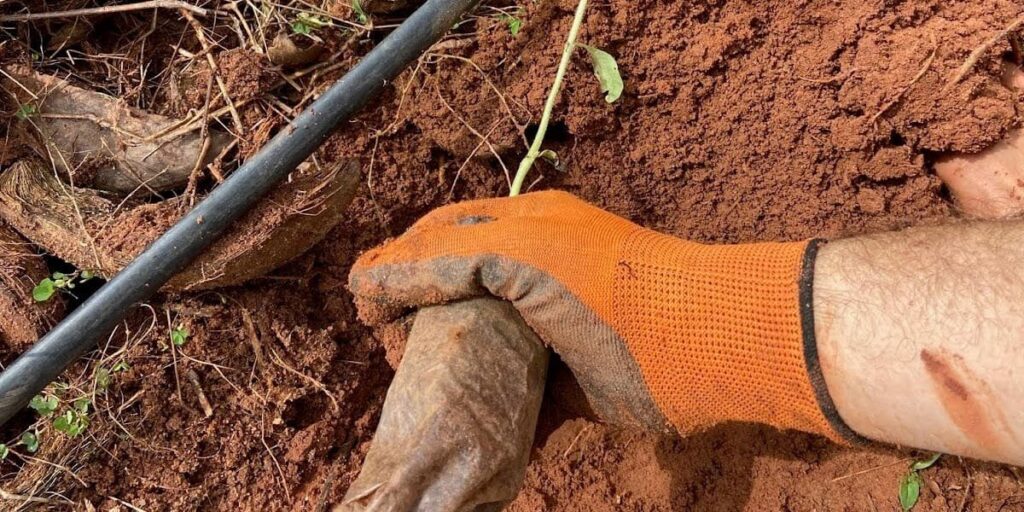
During the last month, our birds contracted a virus and fell terribly sick. The egg production came down drastically with almost no eggs. The little eggs that we got from the sick birds were discarded. With intensive care and help from the entire team, the birds are now doing well. The fourth batch of birds (one-day old chicks) will arrive in two weeks! This will replace the oldest flock which will complete two years at the end of the year. Home » Blog » Experiments in the Mango Orchard Experiments in the Mango Orchard Jan 31, 2025 · Pictures by Ami Grossman For over two years, we have been trying different crops in the Mango orchard to address the gaps of diversity and optimum land utilisation in this more than 80 year old orchard of over 400 mango trees. In 2023, we pruned the mangoes in one section heavily to rejuvenate them. As the space in between was now open to the Sun, we started planting turmeric, pumpkin and brinjal. Ash and Neem leaves are added around the young Pumpkin plants to protect them from Red-gourd-beetle. Sunflowers are being planted in the hedges for diversity and for more food for the bees. Turmeric planted in between the mango trees in May 2024 is now ready for harvest. Pumpkin seeds saved from the farm being sown Channels being irrigated in preparation for Pumpkin planting Next Article Featured Articles Monthly Updatesㅤㅤㅤㅤㅤㅤㅤㅤ 19 Sep 2025 Abundance Product of the Month 18 Sep 2025 Recipe Alert!ㅤㅤㅤㅤㅤㅤㅤㅤ 22 Sep 2025 Food and Agriculture in Auroville, India 18 Sep 2025