
FARMACYㅤㅤㅤㅤㅤㅤㅤㅤ

According to Ayurveda, the qualities of summer are hot, sharp, and penetrating. That’s why our Home » Blog » Farmacy FARMACY June 01, 2025 · Dr. Be TIME TO SUMMERNATE Ayurveda healthy tips According to Ayurveda, the qualities of summer are hot, sharp, and penetrating. That’s why our pitta dosha – the subtle fire that controls metabolism and transformation – can cause us to overheat. The sun saps the energy from the body, from the plants and the earth, increasing heat and dryness. Pitta needs to be looked after to maintain a good energy, mental clarity, joyfulness, good digestion and blood circulation, a beautiful glow of the skin and a sound sleep. When Pitta is out of balance it will give skin problems, hot flashes, exhaustion, indigestion or loose stool. Emotionally, excess Pitta manifests through irritation, short-temper, impatience, judgement/criticism, perfectionism… Before Pitta reaches uncontrollable heights, remain cool, calm and pamper the liver: With the food: As Agni (digestive fire) weakens, it is better to eat light, unctuous (slightly oily), cooling food such as salads and juices. Favorable taste: Bitter taste, Sweet taste (to take moderately in case of diabetes and high triglycerides). Salty taste should be taken reasonably Drink water stored in earthen pot Raw food/salads are taken at lunch mainly Proteins: mungdal, chickpeas, beans, sprouts, nuts and seeds, non-veg: white meat, fish, seashell, dairies for breakfast or lunch, eggs Cereals for energy: jasmine rice, barley, red rice, millet (fermented ragi) Vegetables: pumpkin, bittergourd, bottlegourd, snakegourd, ashgourd, cucumber (taken separately), salads, green leafy vegetables, broccoli, cabbage, celery, carrots, drumstick (moringa), zucchini, plantain Fruits: amla, pomegranate, banana, ramphala, chiku, papaya, apple, grape, date, watermelon and melon (to be taken separately), coconut Beverages: buttermilk, sweet lassi, coconut water, mint, lemongrass, cardamom, chamomile, nannari (sarsaparilla), amla juice, watermelon juice, vegetable juice, cucumber milk (blend ½ cup of peeled cucumber in 1 cup of milk – cow or other veg milk- with a pinch of sugar), electrolyte (1 lemon juice + 1tsp of sugar + 1 pinch salt in a glass of water), Lipids: ghee, olive or sunflower or coconut oil Spices: cumin, coriander, black pepper, turmeric, fennel seeds, fresh aromatic herbs (dill, coriander, fennel, mint, parsley, saffron) Avoid: Pungent and sour tastes (especially for people who are Pitta dominant) Pitta increasing items: chillies, fermented food (apart from idli and dosai), deep-fried, sour buttermilk or curd, red meat, alcohol (strong liquor, red wine), coffee … Drinking beverages coming from the fridge or freezer during meals Ice-cream at the end of a meal (best to be taken when the digestion is finished, around 4pm) Routine to favour: Avoid direct sun contact specially between 11am and 4pm, and protect from the heat by keeping a humid towel/cap on the head A nap of half an hour after lunch is allowed Body massage with coconut oil – if there’s no time every day to apply oil on the body, then massage ears, hands and feet + pour 4-5 drops of coconut oil on the fontanelle Bath with cool water and apply a paste of sandalwood on the face, heart and lower abdomen (these are the 3 main parts that should remain fresh to maintain the coolness in the whole body); foot bath in the evening with vetiver roots, rose water or hibiscus flowers Swimming, aquagym, any water activities. Qi-Gong, Tai Chi, light running: max 30 minutes early morning or late evening; walks in green environment, forest Soft yoga, pranayama (Sheetali, Sheetakari, ida nadi inhalation-left nostril inhalation), meditation with Gayatri mantra Walk under the moonlight, full moon bath Wear loose and comfortable cotton or linen clothes (white, blue, green, gray colours) Cooling jewellery: sandalwood beads, jade, pearl, amethyst crystals, moonstone, silver, aquamarine To refresh the ambiance use lemon or orange peel, jasmine flowers, lavender, wet cloth hanging at the open window, vetiver curtains Cooling plants for the summer: Amalaki – Amla: refrigerant and full of Vitamin C, rejuvenative fruit Aloe vera: rejuvenates blood and tissues Aegle Marmelos – Bael fruit: make juice from the pulp and decoction with leaves, it calms body and mind. It is slightly laxative, do not take during pregnancy Coriander: seeds soaked in water for urinary infections, kidney weakness Red Hibiscus: leaves and flowers for shampoo and conditioner; flowers for herbal tea Manduka parni – Centella asiatica leaves: rejuvenative and tonic for brain and nerves Pudina – Mint leaves: herbal tea or dishes Radha consciousness – Clitoria Terneata flowers: herbal tea or juice Sarsaparilla – Nannari syrup: soothing and cooling Shataavari – Asparagus racemosus: cooling, calming Pitta, very good for Vata women to harmonize hormones Vetiver roots: for bathing Yashtimadhu – Licorice: to refresh the body and to calm irritation, inflammation or ulcer in the digestive tract Let’s be all well, happy and healthy.Be at Santé Clinic Previous ArticleNext Article Featured Articles Monthly Updatesㅤㅤㅤㅤㅤㅤㅤㅤ 19 Sep 2025 Abundance Product of the Month 18 Sep 2025 Recipe Alert!ㅤㅤㅤㅤㅤㅤㅤㅤ 22 Sep 2025 Food and Agriculture in Auroville, India 18 Sep 2025
Exploring a natural way of farming

For two weeks in February, life at AuroOrchard has been documented by Taisiia Latypova, a volunteer from Russia. Being a biologist major and a photography enthusiast, Taisiia took a snapshot of the farm’s life and summarized the main techniques used at AuroOrchard. Such work can be helpful for future volunteers and brings a new perspective of the farm for those who have worked or are working here. — AuroOrchard is the oldest farm of Auroville, established back in 1968, and the second-largest farm, currently occupying 25 acres of land. It supplies Auroville with vegetables, fruits and poultry, being a year-long supplier for the Auroville community, participating in the evolution of consciousness. The latter began with the work of Sri Aurobindo and The Mother. Home » Blog » Exploring a natural way of farming Exploring a natural way of farming Mar 20, 2025 · Taisiia Latypova For two weeks in February, life at AuroOrchard has been documented by Taisiia Latypova, a volunteer from Russia. Being a biologist major and a photography enthusiast, Taisiia took a snapshot of the farm’s life and summarized the main techniques used at AuroOrchard. Such work can be helpful for future volunteers and brings a new perspective of the farm for those who have worked or are working here. — AuroOrchard is the oldest farm of Auroville, established back in 1968, and the second-largest farm, currently occupying 25 acres of land. It supplies Auroville with vegetables, fruits and poultry, being a year-long supplier for the Auroville community, participating in the evolution of consciousness. The latter began with the work of Sri Aurobindo and The Mother. From the perspective of The Mother: “work, even manual work, is something indispensable for inner discovery. If we do not work, if we do not put our consciousness into matter, matter will never develop. To allow the consciousness to organize a little matter by means of one’s body is very good. To create order around us helps to create order within us” (“To be a true Aurovillian”, The Mother, 1970). In this sense, coming to Auroville even for a short period of time, one should consider volunteering or participating in workshops to introduce consciousness into matter. Being a biologist and sincerely enjoying putting my hand to planting, farming experience was the best option for me to support the spiritual experience with manual work. In line with sustainable farming, at AuroOrchard farmers are constantly experimenting with farming techniques and finding new ways for optimization of vegetables, fruits and chicken eggs production, at the same time maintaining a balance between natural processes and manmade agriculture. Methods of plant farming, which are used at the farm, can roughly be broken down to composting, soil preparation, planting, irrigation, pests’ managing, harvesting and pruning. Some of these techniques will be briefly discussed below. The life of a plant starts with a seed. Most vegetables’ and fruits’ seeds (about 90%) at AuroOrchard are saved. Only a few plant species’ seeds, which haven’t yet been grown on the farm, are bought outside, such as cacao recently. Some of the seeds are being saved at the farm continuously for over 40 years! Any seed is needed to be planted in a soil rich in nutrients. Soil composition may vary greatly, depending on a desired crop. At AuroOrchard, the nursery soil is made “from scratch” and is composed of garden soil, compost and coco-peat. The compost is made on the farm itself near the cows and it has to be rich in nitrogen and carbon in different proportions. The soil at AuroOrchard is bronze in color and quite soft to touch. Working with such soil, which hasn’t been simply put into a package and shipped from another region, or even country, is a true pleasure. The main source of nitrogen is organic matter. Atmospheric nitrogen is fixed either by free-living bacteria in a soil or by symbiotic bacteria (Rhizobium), which live in root nodules of legumes and exchange nitrogen with carbohydrates from plants. When a plant dies, it is decomposed by bacteria and fungi, which release nitrogen in the form of ammonium into the soil, enriching it. Ammonium is then sequentially transformed into nitrite and nitrate, and the latter can readily be reabsorbed by plants. The other source of nitrogen is cow dung and urine. The main sources of carbon are dry leaves, chipped wood and wood from regularly done pruning, as well as green manure. Green manure is a fast-growing crop which is grown to be incorporated back into the soil for adding organic matter to it. It is a good source of both nitrogen and carbon, whose proportions may vary depending on which green manure is being used. Old forests have soil high in carbon and its microbiota are fungi dominated, however grassfields are nitrogen-enriched with a bacteria-dominated microbiota. To prepare the soil, green manure is grown in a desired place to be then plowed into the soil just before it starts blooming. The latter is crucial, as flowers, being reproductive organs of plants, tend to accumulate all the nutrients. Such cycle is repeated 2-3 times, till the soil is ready for fruits and vegetables planti At AuroOrchard, the method of soil enrichment was optimized by using a tractor with a disc harrow, which goes through green manure and digs up the soil at a shallow depth, so the plants fall down to be further decomposed. The same method can be used for seeds planting. Such an approach can be included in no-till farming, which is aimed to minimize soil disturbance. Conventional plowing leads to oxidation of soil nutrients and disturbance of soil structure, e.g. micro-, meso- and macropores, bacterial colonies, fungal hyphae and soil aggregates. Even though using the tractor might not seem natural, it is about a balance between benefiting from technological progress and being organic and sustainable. To my belief, achievements of science and engineering might benefit organic farming in a way of making it even more sustainable. By using modern technologies mindfully farmers can
Volunteer reflectionㅤㅤㅤㅤㅤㅤㅤㅤ

For two weeks in February, life at AuroOrchard has been documented by Taisiia Latypova, a volunteer from Russia. Being a biologist major and a photography enthusiast, Taisiia took a snapshot of the farm’s life and summarized the main techniques used at AuroOrchard. Such work can be helpful for future volunteers and brings a new perspective of the farm for those who have worked or are working here. — AuroOrchard is the oldest farm of Auroville, established back in 1968, and the second-largest farm, currently occupying 25 acres of land. It supplies Auroville with vegetables, fruits and poultry, being a year-long supplier for the Auroville community, participating in the evolution of consciousness. The latter began with the work of Sri Aurobindo and The Mother. Home » Blog » Volunteer reflection Volunteer reflection Mar 14, 2025 · Abhijeet · Maharashtra, India “Extremely grateful for the opportunity I received for staying here over a month, brainstorming as well as hands-on learning. I am literally living my dream life while I am here. It is more than wonderful to be at the farm, being woken up by the chirping of a variety of birds, and getting to see the beauty of nature and volunteering at the farm in the morning! The best sunset spot on the farm! I saw many insects, spiders, pink lady beetle, paradise flycatcher, rufous treepie, black drongo, koyal bird, and heard many other beards which I have not spotted yet. Experience of watching the sunset & sunrise from the rooftop, and especially gazing at the sky almost everyday brought more slowness to living life!! Loved being here & learning with you all. Also, how can I miss mentioning the scrumptious & healthy breakfast at the farm. My special thanks to the akka for the same! I will always fall short of words to describe the experience. Super shoutout to Anshul for his guidance. This time in my life will always be special. Being here has taught me enjoying the little moments in life even more. Interacting with other volunteers & travellers was a cherry on the top. Taking inspiration from a volunteer I too have limited my smartphone use to just 10 minutes a day” Previous ArticleNext Article Featured Articles Monthly Updatesㅤㅤㅤㅤㅤㅤㅤㅤ 19 Sep 2025 Abundance Product of the Month 18 Sep 2025 Recipe Alert – Stir Fried Sweet Potato leaves with Tofu 22 Sep 2025 Food and Agriculture in Auroville, India 18 Sep 2025
DIY Self-Care Workshop at AuroOrchard
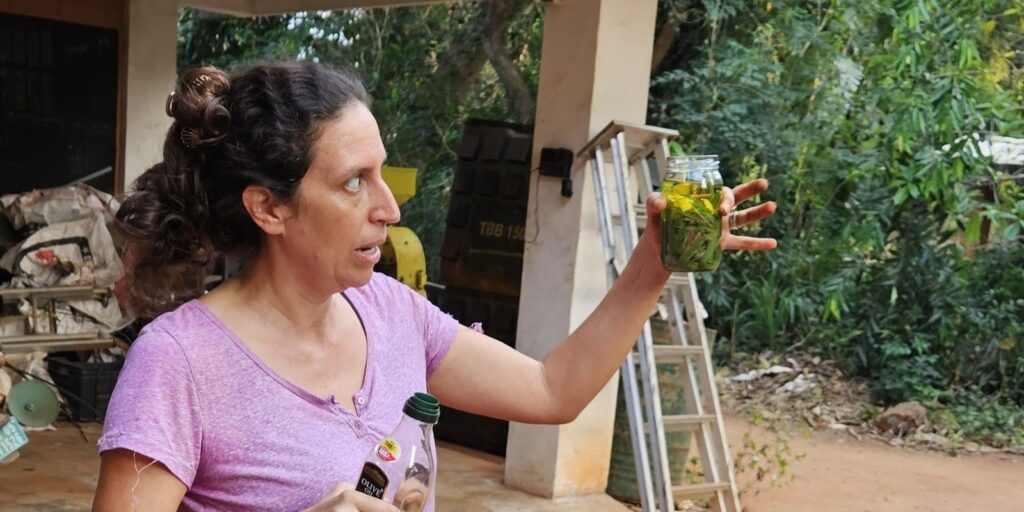
This month at AuroOrchard, we hosted a hands-on DIY self-care workshop exploring ways to create natural, eco-friendly products that benefit both our bodies and the environment. Participants learned how to make everyday essentials like creams, deodorants, bug repellents, soaps, and chapsticks using simple, natural ingredients. Home » Blog » DIY Self-Care Workshop at AuroOrchard: Learning to Care for Ourselves and the Planet DIY Self-Care Workshop at AuroOrchard: Learning to Care for Ourselves and the Planet Mar 14, 2025 · Amber Hill & Natalie Rodriguez This month at AuroOrchard, we hosted a hands-on DIY self-care workshop, exploring ways to create natural, eco-friendly products that benefit both our bodies and the environment. Participants learned how to make everyday essentials like creams, deodorants, bug repellents, soaps, and chapsticks using simple, natural ingredients. We delved into the world of essential oils, discussing their benefits and how they can be used for skincare and wellness. From lavender for soothing skin to tea tree for its antibacterial properties, each oil brought its own unique healing touch. We also explored various extraction methods, including oil infusions, alcohol tinctures, grinding/maceration, and distillation, to unlock the medicinal properties of plants. A highlight of the workshop was a farm walk, where we identified local plants that could be used in our homemade products. Inspired by nature, we returned to our workspace and got creative, crafting herbal-infused creams and natural deodorants. The hands-on experience was both empowering and fun, sparking enthusiasm among participants who were eager to continue their self-care journey. The workshop was a great success, fostering a sense of community and a deeper connection to the natural world. Many participants expressed interest in staying in touch to share recipes, ideas, and inspiration. We look forward to hosting more sessions like this in the future! Previous ArticleNext Article Featured Articles Monthly Updatesㅤㅤㅤㅤㅤㅤㅤㅤ 19 Sep 2025 Abundance Product of the Month 18 Sep 2025 Recipe Alert – Stir Fried Sweet Potato leaves with Tofu 22 Sep 2025 Food and Agriculture in Auroville, India 18 Sep 2025
FARMACY: Ayurveda and the use of TURMERIC
Late summer, with its amount of rains, brings lots of humidity and dampness in the air that affect the body and its Dosha in many different ways: Pitta ferments and shows signs of Home » Blog » Farmacy: Ayurveda and the use of TURMERIC FARMACY: Ayurveda and the use of TURMERIC Anti-inflammatory and anti-oxydant Mar 13, 2025 · Be@Sante Clinic The harvest season of Turmeric is slowly coming to an end. The fresh plant comes at the right time to support our health during Spring when Kapha toxins (cold, heavy, sticky, slimy, viscous, stagnant) need to be expelled from the body otherwise they create a state of fermentation (bloating in the belly), stagnation (swelling in some parts of the body), inflammations (in body tissues and joints), leading to hayfever, allergies, cold, cough with mucus, mild fever. Healthy Kapha in our body is felt in our immunity and helps to resist any external factors, viruses or unhealthy bacteria, it keeps our respiratory system clean and clear and brings strength, endurance and perseverance in the energy, it is warm and generous at heart, soft and kind in its words. Turmeric is a great plant that helps Kapha to maintain its best potential. Here some uses: Early morning, to boost energy and immunity (at Kapha time – between 6am and 10am): drink hot water with some fresh turmeric, fresh ginger and a lemon juice As appetizer for lunch, to stimulate the gastric enzymes for a better digestion: one tsp of fresh turmeric grinded with fresh ginger, lemon juice and a pinch of salt (the mix can be kept in the fridge for some weeks) As digestive, to stimulate the digestion or get rid of heaviness, bloating or indigestion: mix of ginger powder, turmeric powder and black pepper powder (= Be No1), take ½ tsp in a sip of warm water after a meal or anytime when feeling heavy or stuck in the digestion In case of hayfever, allergies, cold and cough with mucus: ½ tsp of turmeric powder or 1 tsp of turmeric flakes with lemon juice and honey, before any meals. An ayurvedic preparation for Kapha allergies (hives, dermatitis, rhinitis, itching, fungal infection) is called Haridrakhanda (it contains turmeric as main ingredient) – 1 tsp twice a day before meals. For sore throat and mucus in sinuses or throat: gargle with hot water, salt and a pinch of turmeric As anti-inflammatory for joints: take 1 Tbsp of sesame or olive or coconut oil + 1 flat tsp of turmeric powder + 1 pinch of black pepper – once or twice daily before meals and apply daily a mix of castor oil and shallaki oil on the painful jointAnti-inflammatory in general: a mix turmeric powder, ginger powder and fenugreek powder (= Be No4), take ½ tsp in warm water early morning To purify the blood and clear the skin of ailments, rashes, prickly heat: mix of turmeric powder or flakes with neem powder and black pepper powder (= Be No2): ½ tsp in warm water twice a day before meals for 2 to 3 months. This great plant (fresh, sun-dried or powdered) is available at AuroOrchard and some other places in Auroville. Nature’s gift to end spring and start summer in the most harmonious way.Take good care and be well Previous ArticleNext Article Featured Articles Monthly Updatesㅤㅤㅤㅤㅤㅤㅤㅤ 19 Sep 2025 Abundance Product of the Month 18 Sep 2025 Recipe Alert – Stir Fried Sweet Potato leaves with Tofu 22 Sep 2025 Food and Agriculture in Auroville, India 18 Sep 2025
The hydrological cost of growing our food
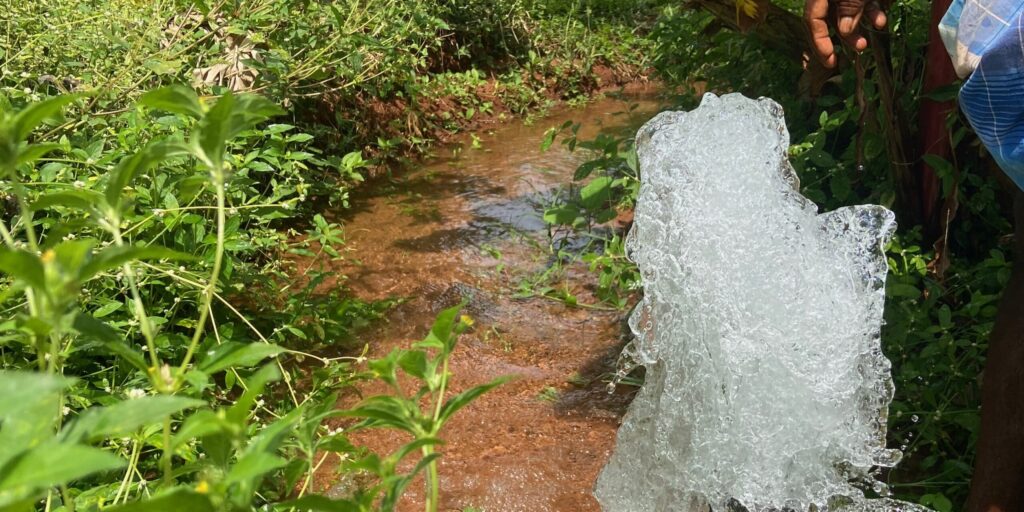
In my last note, I shared about the economic paradigm that is taking us towards a ‘world without agriculture.’ I would like to explore this economic paradigm a little more by isolating the costs of the food that we grow. Let’s take water as the first one. As per several studies, agriculture accounts for about 70% of all freshwater use globally. This number is more than 80% in a country like India where over 50% of the population is still engaged in agriculture. Within Auroville, farms (perhaps along with Matrimandir) are the biggest users of freshwater. The challenges of groundwater depletion, rampant use of free electricity borewells in the bioregion for non-edible crops like casuarina and other fast-growing timber, the beginnings of salination of groundwater and so on offer an opportunity to us to reflect on the hydrological cost of growing food and how can we not only reduce our water consumption but, perhaps what I think is more important to focus on, optimize the use of water in agriculture. Home » Blog » The hydrological cost of growing our food The hydrological cost of growing our food Mar 11, 2025 · Anshul Aggarwal In my last note, I shared about the economic paradigm that is taking us towards a ‘world without agriculture.’ I would like to explore this economic paradigm a little more by isolating the costs of the food that we grow. Let’s take water as the first one. As per several studies, agriculture accounts for about 70% of all freshwater use globally. This number is more than 80% in a country like India where over 50% of the population is still engaged in agriculture. Within Auroville, farms (perhaps along with Matrimandir) are the biggest users of freshwater. The challenges of groundwater depletion, rampant use of free electricity borewells in the bioregion for non-edible crops like casuarina and other fast-growing timber, the beginnings of salination of groundwater and so on offer an opportunity to us to reflect on the hydrological cost of growing food and how can we not only reduce our water consumption but, perhaps what I think is more important to focus on, optimize the use of water in agriculture. There are different ways of thinking about what we should grow and what we can grow depending on people’s preference and the weightage we can give to the ecological and social costs of growing food. Should something be grown only because it’s easier to grow, or because it is more water efficient, or because people really ask for it, or it is less labour intensive and so on. The answer to these questions is never black and white and they change from situation to situation and from time to time. For instance, farmers cannot impose water efficiency over people’s preference for a certain kind of food. At the same time farmers cannot simply chase what the market demands, prioritizing it over its ecological costs. Flood irrigation Flowering Avocado tree A classic case for this is Avocado. It is common knowledge that Avocado is a water guzzling crop. AuroOrchard received its first Avocado seeds from the Mother herself in the early 70s. These we now call the Mother trees. From these trees, many more trees have been planted at AuroOrchard as well as outside. These Avocados are some of the best that we can find in the region, some would say anywhere. There is a huge demand for these Avocados in Auroville and also the Ashram community. Should we be planting more Avocado knowing that we can grow them well? Or should we turn our heads and let people buy Avocados from Pondy market which are nowhere near as good and definitely have a higher ecological cost. Again, the answer is not straightforward and we need to find a balance. We have planted more Avocado trees in the last year but we are exploring how Avocados can be grown with other fruit crops so that water can be used optimally. In such a scenario, the hydrological cost of Avocado gets distributed to many other crops that are growing with it. However, such a solution would then add to the management costs of the system and perhaps the management is even more costly since water for the moment is free. Therefore, if farmers are delegated with the responsibility of conserving our natural resources while farming, there are costs associated with conservation as well and these are to be borne collectively. The hydrological costs of water must not be seen only as the cost of water used to grow food but also the cost to the farmer to be water-wise, to protect the water-source, to optimise farming within the water resource they are entrusted with. Avocados growing with Papayas Previous ArticleNext Article Featured Articles Abundance Product of the Month 22 Oct 2025 Monthly Updatesㅤㅤㅤㅤㅤㅤㅤㅤ 22 Oct 2025 Lessons from Auroville Farm Assessment 2023 22 Oct 2025 Recipe Alert!ㅤㅤㅤㅤㅤㅤㅤㅤㅤㅤㅤ 22 Sep 2025
Unravelling Auroville’s food system
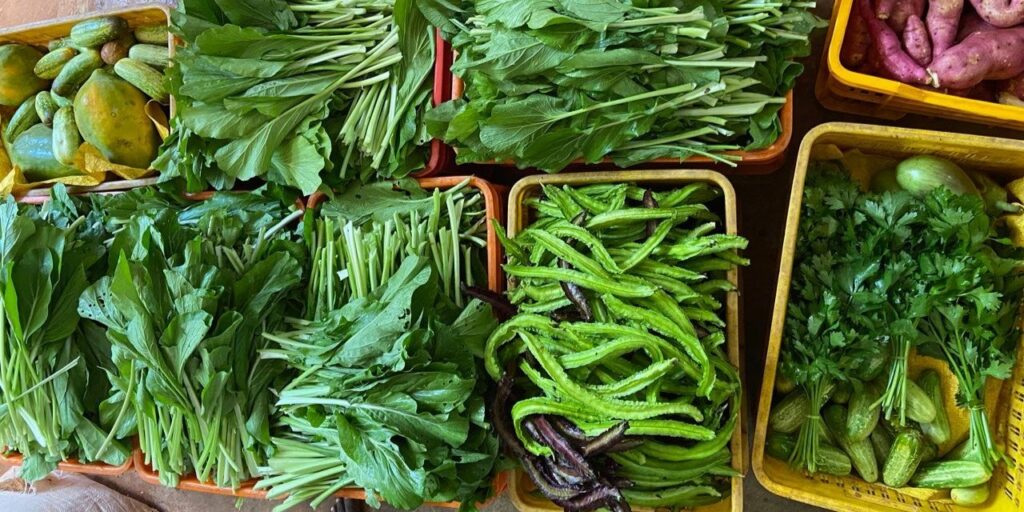
I arrived at AuroOrchard in the summer of 2023, intending to help farms produce more food for Auroville. Mostly I wanted to be closer with people passionate about the same. Home » Blog » Unravelling Auroville’s food system Unravelling Auroville’s food system Jan 31, 2025 · Nidhin Anand I arrived at AuroOrchard in the summer of 2023, intending to help farms produce more food for Auroville. Mostly I wanted to be closer with people passionate about the same. By this time I had already spent a few years working on 2 other farms and supported farm-group-related coordination work. Over the years of interacting with farmers, distributors, and consumers, I realized that the Auroville system is complex and that there isn’t a community-mandated framework and policy to create a conscious food system. Most farms were on their own to support themselves and lacked vision. Production increments in large established farms were hindered by challenges relating to the organizational model of distribution, human resources, accountability structures, and lack of capital funded through the BCC budget. Despite this, I noticed that Aurovillians deeply appreciate Auroville-grown food and that much work could be done within the current system. While I don’t see Auroville farms producing most of Aurovile’s needs due to ecological constraints and dietary habits, I see that there is scope for setting up farming systems to produce many valuable crops and create a fair economy around them. I soon realized that this would require a concerted effort from farmers, distributors, working groups, and other food actors in Auroville toward a common vision. The ‘coming together’ remains an aspiration and a work in progress. This month, I joined Foodlink, the main distribution center of Auroville, after seeing that current frameworks regarding standards of production, pricing, and production planning needed reforms AuroOrchard has helped me see what ecological and social possibilities lie within a 25-acre farming system within Auroville’s geographical context. It helps me ask and answer important questions such as ‘Can we grow all the food we need in Auroville?” and “What is stopping Auroville farms from producing more? The answers I found were complex and included a large share of human behavioral challenges alongside organizational blockages. However, I now see that the tropics offer enormous ecological dynamism and we have the possibility to cultivate a lot more than today’s capacities. This invitation largely remains unresponded. Next Article Featured Articles Monthly Updatesㅤㅤㅤㅤㅤㅤㅤㅤ 19 Sep 2025 Abundance Product of the Month 18 Sep 2025 Recipe Alert!ㅤㅤㅤㅤㅤㅤㅤㅤ 22 Sep 2025 Food and Agriculture in Auroville, India 18 Sep 2025
Learning Journey at AuroOrchard
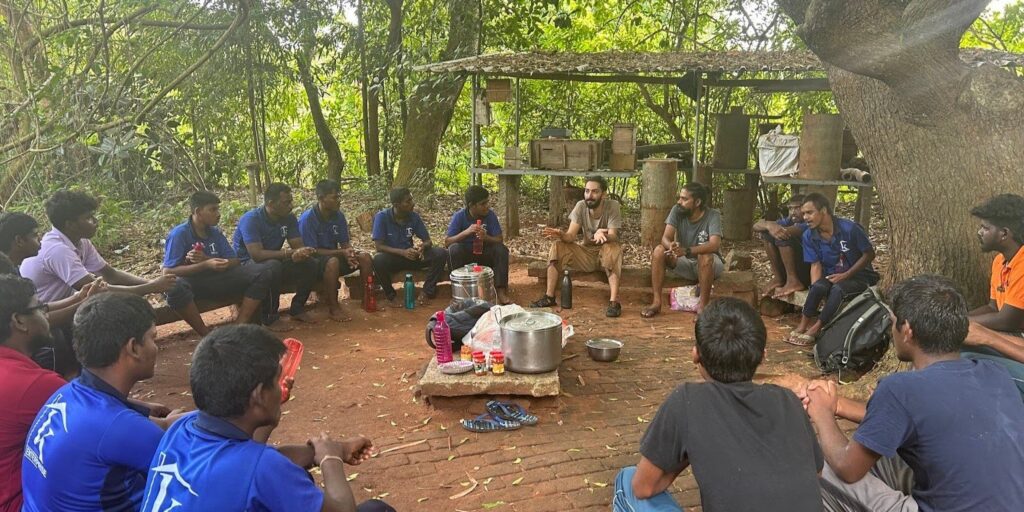
Over the past four months, volunteering at AuroOrchard has been an incredible learning experience. As the founder of Sristi Foundation, where we use farming to empower children and youth with intellectual disabilities, acquiring proper farming skills is essential for me. Home » Blog » Learning Journey at AuroOrchard Learning Journey at AuroOrchard Jan 31, 2025 · Karthikeyan Ganesan Over the past four months, volunteering at AuroOrchard has been an incredible learning experience. As the founder of Sristi Foundation, where we use farming to empower children and youth with intellectual disabilities, acquiring proper farming skills is essential for me. AuroOrchard has provided invaluable lessons that I am implementing in Sristi Village, transforming our farm into a more efficient and productive space. Key learnings include building soil fertility through mulching sun hemp, compost-making with cow dung and dry leaves, effective mulching practices, and numbering beds for better farm management. These practices are making a tangible impact on our work. Last month, we bought 15 youth with intellectual disabilities to Auroorchard for an exposure visit. Elias, a volunteer, guided them through hands-on farming activities, creating a memorable experience for all. I am deeply grateful to Anshul and the AuroOrchard team for this opportunity to learn and grow, as well as for the chance to meet wonderful people from around the world. This journey of learning continues to inspire me. (Karthik is the Founder of Sristi Foundation) Next Article Featured Articles Monthly Updatesㅤㅤㅤㅤㅤㅤㅤㅤ 19 Sep 2025 Abundance Product of the Month 18 Sep 2025 Recipe Alert!ㅤㅤㅤㅤㅤㅤㅤㅤ 22 Sep 2025 Food and Agriculture in Auroville, India 18 Sep 2025
Demystifying Avocados with Bala
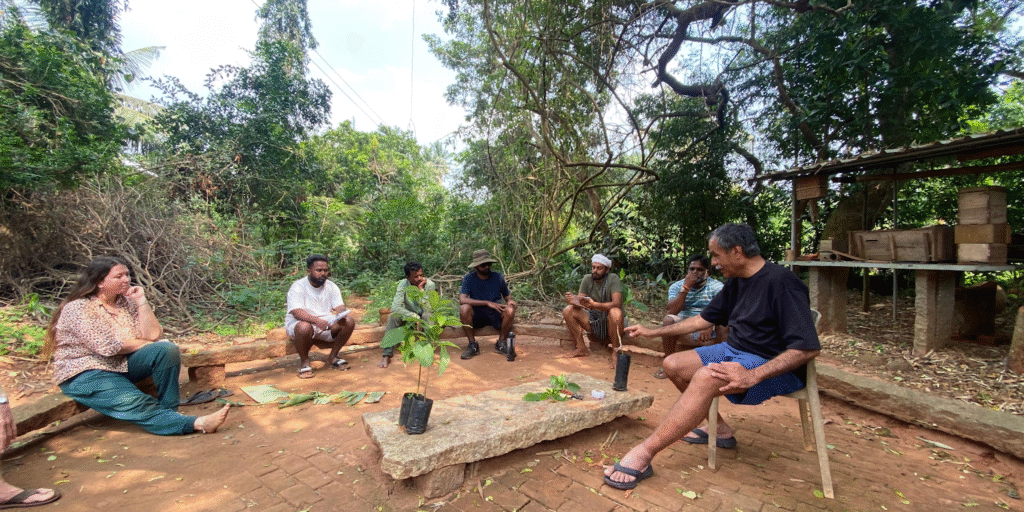
Over the past four months, volunteering at AuroOrchard has been an incredible learning experience. As the founder of Sristi Foundation, where we use farming to empower children and youth with intellectual disabilities, acquiring proper farming skills is essential for me. Home » Blog » Demystifying Avocados with Bala Demystifying Avocados with Bala Jan 31, 2025 · Anuja Khokhani & Chintan Jadwani We recently hosted an insightful workshop with Bala, a passionate Avocado farmer from the picturesque hills of Kodaikanal. Participants were taken on an enlightening journey through the history of Avocados in India, exploring their diverse types and subspecies. Bala shared his wealth of knowledge on the intricacies of Avocado farming, including expert tips on pruning techniques, strategies for cultivating high-density plantations, and the art of grafting for improved yields. Attendees left with a deeper understanding of sustainable practices and practical insights to enhance Avocado cultivation. The session offered a rare blend of inspiration and practical expertise, enabling participants to take their Avocado-growing endeavours to the next level. For a closer look at the grafting technique, check out the videos here and here. Next Article Featured Articles Monthly Updatesㅤㅤㅤㅤㅤㅤㅤㅤ 19 Sep 2025 Abundance Product of the Month 18 Sep 2025 Recipe Alert!ㅤㅤㅤㅤㅤㅤㅤㅤ 22 Sep 2025 Food and Agriculture in Auroville, India 18 Sep 2025
Connecting Through Permaculture
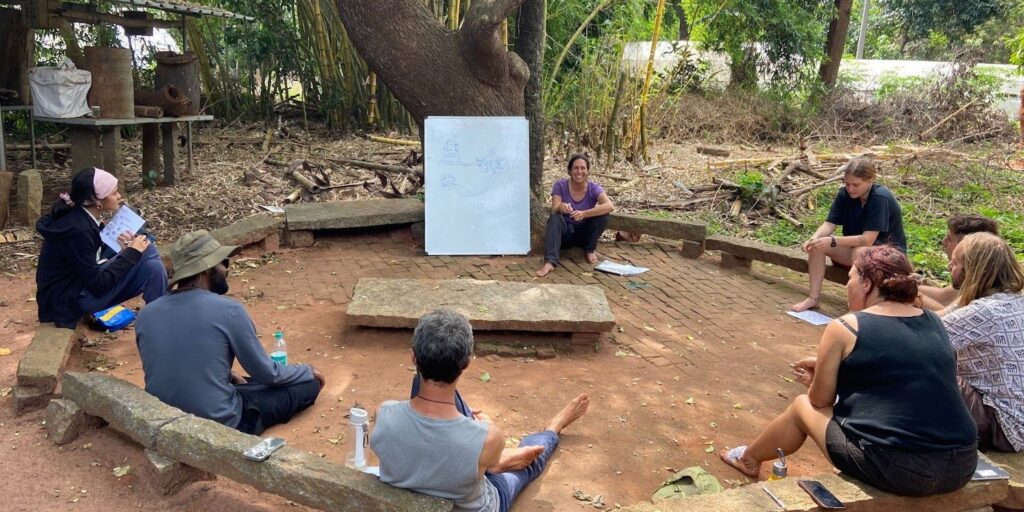
Over the past four months, volunteering at AuroOrchard has been an incredible learning experience. As the founder of Sristi Foundation, where we use farming to empower children and youth with intellectual disabilities, acquiring proper farming skills is essential for me. Home » Blog » Connecting Through Permaculture Connecting Through Permaculture Jan 31, 2025 · Amber Hill This past month, we had the opportunity to come together for a three-day intensive introduction to permaculture. Most of the participants were volunteers already working on the farm, making it a fantastic way to strengthen our sense of community while deepening our understanding of sustainable design. Through this course, we not only learned practical skills but also built stronger connections with each other and the land we nurture. Permaculture teaches us to see our environment through a designer’s eyes, considering the relationships between plants, soil, water, and all the elements that create a thriving ecosystem. By applying these principles, we can assess our farm in a new light—understanding which plants grow best together, where to plant them for maximum benefit, and how to close resource loops within the property. A great example of this is our banana circle: an efficient system where surplus water is redirected to nourish water-loving banana plants, creating a win-win situation for both sustainability and productivity. Beyond these foundational lessons, we also explored future projects that could enrich the farm and involve a wider community. Ideas ranged from hands-on workshops—such as making herbal creams and essential oils from farm-grown plants—to learning about soil health, pollinators, and botany. There’s a lot of enthusiasm for expanding these opportunities, and now we need to determine the best format to make them accessible and engaging for everyone. The energy and excitement from this course have been truly inspiring, and we look forward to seeing how these ideas take root and flourish. If you’re interested in contributing or participating in future initiatives, we’d love to hear your thoughts! Let’s continue growing together—sustainably, creatively, and in harmony with nature. Next Article Featured Articles Monthly Updatesㅤㅤㅤㅤㅤㅤㅤㅤ 19 Sep 2025 Abundance Product of the Month 18 Sep 2025 Recipe Alert!ㅤㅤㅤㅤㅤㅤㅤㅤ 22 Sep 2025 Food and Agriculture in Auroville, India 18 Sep 2025