Nutrition comparison of AuroOrchard eggs with…
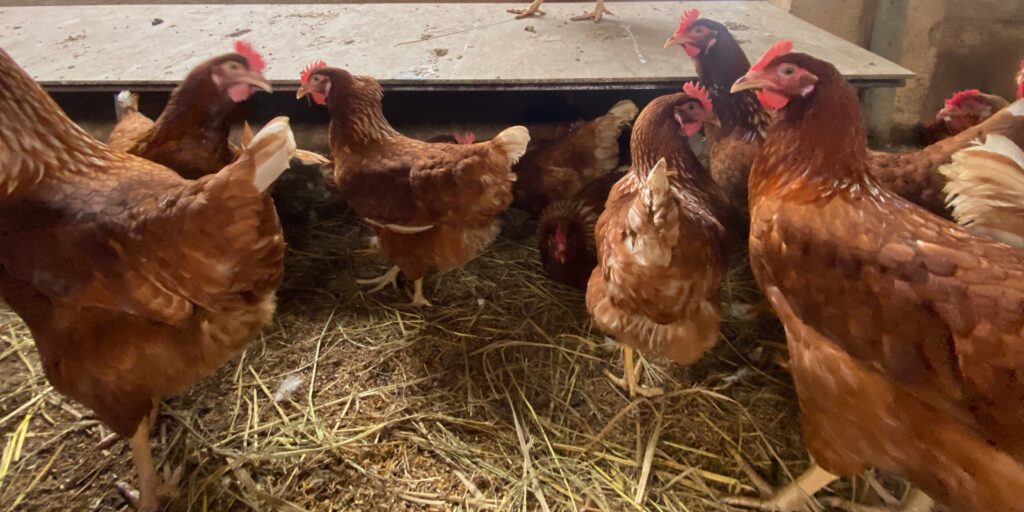
There are many assumptions around organic food, ethical food, farm eggs and free-range eggs. It is generally believed that these labels must also⠀⠀⠀⠀⠀⠀⠀⠀⠀⠀⠀⠀⠀⠀⠀⠀⠀⠀⠀⠀⠀⠀⠀⠀⠀ Home » Blog » Nutrition comparison of AuroOrchard eggs with other eggs in the marketㅤㅤㅤ Nutrition comparison of AuroOrchard eggs with other eggs in the marketㅤㅤㅤ July 2026 · Anshul Aggarwal There are many assumptions around organic food, ethical food, farm eggs and free-range eggs. It is generally believed that these labels must also indicate better nutritional quality. The converse is also common- if the nutrition is the same across different kinds of produce, why pay more for organic food or free-range eggs? We have been actively participating in these conversations for the last few years. We feel that one useful way to understand this is through nutritional testing and comparison. While a one-off test cannot serve as an absolute reference, individual tests can begin to show us a pattern and add more information to the discussion. Food composition varies according to the season, feed, age of the birds and other conditions. Any meaningful comparison would require regular and repeated testing. We also hope that sharing these results will create greater understanding and support for this work, and perhaps help us continue testing periodically, since comprehensive nutritional testing is expensive. After the work undertaken for our animal-welfare certification, and the many improvements made in our poultry system, we wanted to see how AuroOrchard eggs compared with the eggs that Aurovilians otherwise have access to. We sent three samples to Chennai Mettex Lab for comparative nutritional testing: white eggs purchased from Pour Tous Distribution Center; commercial brown eggs marketed as free-range, sold in packs of six and commonly available in stores in and around Auroville; AuroOrchard certified free-range eggs. The full test report can be found here.The following is a comparative summary of the results. All values are given per 100 g of edible egg, excluding the shell. Nutrient per 100 g Pondy White Pondy Brown AuroOrchard Energy 150.89 kcal 152.59 kcal 154 kcal Protein 13.04 g 13.13 g 13.74 g Total fat 10.61 g 10.71 g 10.62 g Saturated fat 3.96 g 3.96 g 3.87 g Carbohydrates 0.81 g 0.92 g 0.81 g Cholesterol 316 mg 273.3 mg 265.8 mg Sodium 120 mg 131 mg 115 mg Omega-3 fatty acids 158 mg 179 mg 196 mg Omega-6 fatty acids 1,183 mg 1,297 mg 1,151 mg Omega-6:omega-3 ratio 7.49:1 7.25:1 5.87:1 The differences in calories, carbohydrates and total fat are very small. All three eggs have broadly similar amounts of these nutrients. The clearer differences are in protein, omega-3, cholesterol and sodium. Among the samples tested, the AuroOrchard egg recorded: the highest protein; the highest omega-3; the lowest cholesterol; the lowest sodium; the lowest saturated fat; the lowest omega-6; the lowest omega-6-to-omega-3 ratio. The AuroOrchard sample contained around 5% more protein than the two Pondy eggs. Its omega-3 content was approximately 10% higher than the Pondy brown egg and 24% higher than the Pondy white egg. Its cholesterol was approximately 3% lower than the Pondy brown egg and 16% lower than the Pondy white egg. What does one egg contribute to our daily nutrition? The laboratory results are reported per 100 g, while an egg normally contains around 50 g of edible material. Egg sizes vary, so the following figures use 50 g as a simple illustration. For daily comparisons, we have used FSSAI’s reference values for an average adult diet: 2,000 kcal, 67 g total fat, 22 g saturated fat and 2,000 mg sodium. WHO describes approximately 50–75 g of protein as generally sufficient for an adult of healthy body weight consuming around 2,000 kcal. These are broad population references; an individual’s requirements depend on body size, activity, age and physiological condition. Approximate contribution from one 50 g egg Nutrient per 100 g Daily recommendation (FSSAI & WHO) Pondy White Pondy Brown AuroOrchard Energy 2,000 kcal/day 3.8% 3.8% 3.9% Protein 50–75 g/day 8.7–13.0% 8.8–13.1% 9.2–13.7% Total fat Up to 67 g/day 7.9% 8.0% 7.9% Saturated fat Up to 22 g/day 9.0% 9.0% 8.8% Sodium Less than 2,000 mg/day 3.0% 3.3% 2.9% The mid to late June showers bring some relief from the heat and life to the parched soil. During this time, we can start growing crops the same as Pin-Pani but also some other crops like cluster beans, flat beans etc.- its still a bit early for these crops but we can still do it. Of course, within this period falls the Aadi masam (mid-July) with heavy winds, when Papayas break and we have an abundance of green papayas in Auroville. Post-Aadi masam is really good for planting a diversity of crops. This is an interesting season because it is post-summer rain but it is not as cool as the post-monsoon season. So, it is in some ways similar to Pre-Summer and that is reflected in the kind of crops we can plant. We can start to grow some arugula in the shade, some greens, and prepare for planting yams and sweet potatoes. What can we conclude? Among the three samples tested, AuroOrchard eggs showed the strongest overall nutritional profile. It combined the highest protein and omega-3 results with the lowest cholesterol and sodium values. It also has a healthier omega-6 to omega-3 ratio. The test does give us some evidence towards how our attention to the birds, their outdoor access, fresh greens and the quality of their food is accompanied by a strong nutritional result in nutritional enhancement. We hope to repeat this testing periodically, across different seasons and flocks, so that we can understand how consistent these results are and how our farming practices influence the food we produce. Previous ArticleNext Article Featured Articles Words of appreciation…ㅤㅤㅤㅤㅤ 27 Aug 2026 Monthly Updatesㅤㅤㅤㅤㅤㅤㅤㅤ 26 Aug 2026 Words of appreciation…ㅤㅤㅤㅤㅤ 27 Aug 2026 Words of appreciation…ㅤㅤㅤㅤㅤ 26 Aug 2026
The Six Seasons of Aurovilleㅤㅤㅤㅤ
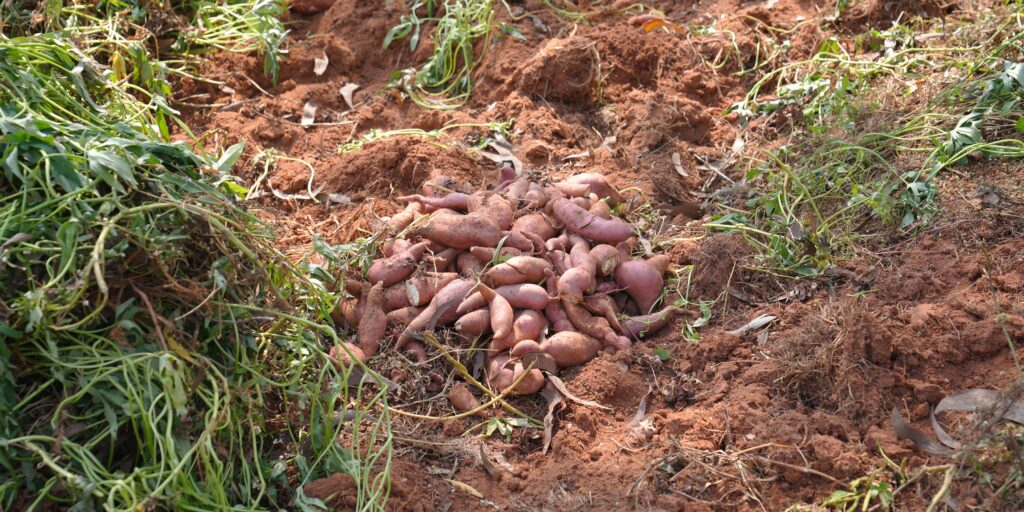
Does Auroville only have one long summer season? That is how it feels. But even the subtle differences make a lot of difference in farming. When I came to Auroville in 2019, I had only farmed in the mountains. I was used to four distinct Home » Blog » The Six Seasons of Auroville The Six Seasons of Auroville April 2026 · Anshul Aggarwal Does Auroville only have one long summer season? That is how it feels. But even the subtle differences make a lot of difference in farming. When I came to Auroville in 2019, I had only farmed in the mountains. I was used to four distinct seasons- of course with their own subtleties, but still the distinction between summer, autumn, winter, spring was quite pronounced. It took me about two years to understand that Auroville actually has six seasons! We have been planning our crops based on this understanding since 2022. Only much later, and recently, I found out that ancient Tamizh literature like Tolkaapiyam, also identifies six seasons for Tamil Nadu. This system of six seasons is called Paruvangal. Each season lasts exactly two Tamizh months, beginning with the Tamizh New Year in mid-April. Interestingly, my observations align perfectly with this age-old system. I will first describe how I observe seasons. The typical cycle of seasons is based on the position of the Earth in relationship to the Sun. The four main events in this yearly cycle with the Sun are- the two equinoxes, where the Earth is in perfect alignment with the Sun and the two solstices, where the Earth is tilted closest or farthest from the Sun. Since we are very close to the equator (12 degrees North) in Auroville, we don’t see the pronounced effects of these movements, and yet there are subtle changes. We can use the visual of breathing in and out- the most fundamental cycle that we experience. As the Earth moves in her cycle, it too breathes in and out. The beginning of the in-breath starts with the Autumn Equinox (September 21st)*. This is the period of going inwards, the year is winding down, we begin to reflect on the activity so far, some have the need to retreat into contemplation and silence, the land starts to cool down after summer and the rhythm of life becomes more relaxed. The peak of this in-breath comes at the Winter solstice (December 21st), the longest night of the year. In-breath, the period of inner activity continues until Spring Equinox (March 21st). We then move to the out-breath, where life starts to wake up from its slumber, flowers bloom, the land and air start to get warmer, microbes and insects multiply, and there is an impulse for external activity. The peak of this cycle is reached at the Summer solstice (June 21st) and this period itself continues until the Autumn Equinox (September 21st), after which it repeats itself. While these periods and patterns don’t apply as per dates and months in the same way to all locations on the Earth, the principles apply to all places and people. Even if not coordinated with seasons, we can easily observe these cycles in our own life. This is the template on which Auroville’s six seasons are based. The breathing cycle of the Earth * These descriptions apply to all of us in the Northern hemisphere of the planet. These patterns will be the exact opposite for people living in the Southern hemisphere. In the case of Auroville, or perhaps larger Tamil Nadu, the two extreme points are Summer and Monsoon, and, in my scheme, they become the reference for all the other seasons. And due to our location close to the equator as well as our proximity to the oceans, our seasons are not only influenced by solar cycles but also by oceanic and wind phenomena. The correlation of these seasons with the calendar months and the Tamizh Paruvangal is as follows: English calendar Solar event Breath cycle Paruvangal Tamizh calendar Pre-Summer Mid-Feb to Mid-April Spring Equinox Out-breath Pin-pani (Late dew) Masi & Panguni Summer Mid-April to Mid-June – Out-breath Ila-venil (Tender heat) Chittirai & Vaikasi Post-Summer Mid-June to Mid-Aug Summer Solstice Peak of out-breath Mudhu-venil (Mature heat) Ani & Adi Pre-Monsoon Mid-Aug to Mid-Oct Autumn Equinox In-breath Kar (Dark clouds) Avani & Purattasi Monsoon Mid-Oct to Mid-Dec – In-breath Kulir (Cold) Aippasi & Kartikai Post-monsoon Mid-Dec to Mid-Feb Winter Solstice Peak of in-breath Mun-pani (Early dew) Margali & Tai I will now describe what these seasons mean to us and how we organise our work based on them. Pre-Summer Paruvangal: Pin-pani (Late dew) | Tamizh calendar: Masi & Panguni | English calendar: Mid-Feb to Mid-April I will put this as the first as this is right after the Pongal festival in mid-January. The first season of a new cycle, and I will call this Pre-Summer. The days are still a bit short and the mornings and evenings are still cool. During this season, we continue planting summer crops like pumpkins, cucumbers, and gourds from the late previous season. We could continue planting some winter crops like spinach, lettuce etc. but the quality of those in this season is not that great due to hot days. The flavour is different and the texture is harder. During Pre-Summer, life is blooming, we can see a diversity of flowers on crops and trees. This is also the best time to save seeds. This season is closely associated with the Post-monsoon season, the last in the cycle (Mun-pani). Summer Paruvangal: Ila-venil (Tender heat) | Tamizh calendar: Chittirai & Vaikasi | English calendar: Mid-April to Mid-June Then, the sun starts to rise in the sky and the days as well as the nights are warmer. This is what I would call the real Summer. The production during this time starts to be limited to a few crops. It’s not so much due to heat but due to limitation of water and pressure from pests. Like many places
Food Sovereignty and Seeds of AuroOrchard
Since the Second World War, the agriculture paradigm has shifted dramatically to keep pace with the evolving industrial and economic paradigms. The culture of mono-cropping has grown on some ill-found assumptions and hard realities of the changing social structures in farming communities. As much as monoculture is believed to be the only way to produce high-yields, and a dominant solution to feeding the world, it is also easier for farmers who have no option than to resort to mechanization due to lack of hands working on the fields. The farmers who lack the resources to buy machines or employ family members on the farm suffer the most. However, despite the illusory success of turning large acres of land into monocrop systems, the inequity in food distribution couldn’t have been higher than ever. As per studies done in recent times, collectively we grow food already for about 10 billion people (calorie equivalence) but over a third of this food is wasted while harvesting, storing, shipping and so forth (Holt-Giménez et al., 2012). Home » Blog » Food Sovereignty and Seeds of AuroOrchard Food Sovereignty and Seeds of AuroOrchard March 2026 · Anshul Aggarwal Since the Second World War, the agriculture paradigm has shifted dramatically to keep pace with the evolving industrial and economic paradigms. The culture of mono-cropping has grown on some ill-found assumptions and hard realities of the changing social structures in farming communities. As much as monoculture is believed to be the only way to produce high-yields, and a dominant solution to feeding the world, it is also easier for farmers who have no option than to resort to mechanization due to lack of hands working on the fields. The farmers who lack the resources to buy machines or employ family members on the farm suffer the most. However, despite the illusory success of turning large acres of land into monocrop systems, the inequity in food distribution couldn’t have been higher than ever. As per studies done in recent times, collectively we grow food already for about 10 billion people (calorie equivalence) but over a third of this food is wasted while harvesting, storing, shipping and so forth (Holt-Giménez et al., 2012). Small farms feed the world Interestingly, over 70% of the food that we end up eating, still comes from small-farms (25 acres or less) managed by communities and families for subsistence, and not from large mechanized monocrop systems as we are made to believe. Also small farms have been found to be 4-5 times more productive than large farms because of their intensive diverse cropping integrated with animal rearing(Lerman & Sutton, 2008; Small farmers feed the world, Grain, 2014). We do have enough food to feed the planet and almost three quarters of it comes from small farms. So where does large scale industrial agriculture fit in this story and how can it help if production is not really the primary challenge? The industrialization of agriculture has led to large scale disempowerment of small farmers, degraded rural lands and culture and polluted our soil, water and air and the poor stay hungry no matter how much more food is produced on this planet. Our overwhelming stress on strategies and policies to feed the world are focused only on producing more food. But we forget that this also means more food of a certain quality. As the world wakes up to appreciate the subtle nuances of relationships of humans with nature, other humans and themselves, the subtle qualities of food and their relationship with human health must also be considered. Cheap food does not mean good food and as a global collective, feeding the world population is rather an insufficient objective. That all on this planet should have access to clean and wholesome food is an idea worth living and fighting for, and large scale industrial agriculture has very little to offer in this regard. The solution of lack of access could lie in decentralization and localization of production and distribution. But the road ahead is difficult, especially for small farmers. Changing climatic patterns and a demand from consumers of non-seasonal, non-local produce due to changes in diet preferences, loss of knowledge of using traditional and local foods along with loss of traditional seed varieties due to lack of skill and subsidies on hybrid seeds has led to a loss in agricultural biodiversity and a degradation of local food systems. As a result farmers have had to grow food based on the lopsided market demands and economic incentives. This trend is, of course, changing slowly and research and experimentation in rediscovering a balance of natural farming in the current ecological and social paradigms is emerging both on the fields and within the new food distribution enterprises. Human role in agro-bio-diversity One of the aspects of re-discovering this balance and re-establishing the lost relationship with the land is letting go of our conceptions of order and monocultures towards revitalising the biodiversity in our ecosystems. Since human impact has surpassed that of all others, we have been shaping the evolutionary process of biodiversification, consciously and unconsciously. Our very existence has a definite impact and our role in the ecosystem implores us to walk, work, eat and modify our environment for survival. Yet, in the last few centuries or even since agriculture began thousands of years ago, our impact on our environment has been steadily increasing as we slowly seem to be losing track of what is important and are moving from modification to exploitation. Communities based on land and in forests have evolved with their ecosystems since millennia. They themselves have been a part of the biodiversity of the land. Not only have humans evolved within the ecosystems, they have also contributed in protecting and furthering the evolution of these systems. The Amazon forests, which are now being referred to as the oldest food forests, are the perfect example of how human culture can support and enhance biodiversity and create a synthesis of wild and humanized ecosystems (Panko, 2023;
Updates from the Nurseryㅤㅤㅤㅤㅤ

We have been starting a lot of fruit trees from seeds gathered during this season. We are also actively propagating more biomass plants for the farm as well as for other gardeners. Home » Blog » Updates from the Nursery Updates from the Nursery July 2025 We have been starting a lot of fruit trees from seeds gathered during this season. We are also actively propagating more biomass plants for the farm as well as for other gardeners. You can see a list of available saplings here: Saplings order June 2025 Our nursery continues to grow. We have distributed hundreds of different kinds of plants over the last couple of months to individuals and units. We now have a dedicated team working solely on propagation of flowering and edible plants. February 2025 The first two months of 2025 have been incredibly productive at our nursery. With the purpose of maximising on the cold and dewy weather, we had been focusing on a variety of greens and herbs, sowing them in big numbers, here’s what the numbers look so far – Lettuce: 4,000 seeds Pok Choy: 6,000 seeds Rugula: 2,500 seeds Basil: 2,000 seeds Thousands of saplings Lettuce bed Each of these seeds have been carefully sown, ensuring better germination and strong and healthy saplings that will thrive in the weeks ahead. In addition to planting these and the usual vegetables and greens, we’ve also begun sowing seeds for sapling that you have ordered! If you’re interested in placing an order, you can do so here. Special Mention One of the most exciting developments in these two months has been the sowing of cacao seeds, sourced from a trusted farm near Mangalore. This marks a new step in our journey, and we’re looking forward to seeing the first of the seedlings germinate and flourish! Cacao pods First of the cacao germination! With plenty more to come, we’re excited for what the rest of the season holds. Stay tuned for more updates as our nursery continues to grow! January 2025 As January rolls in, our nursery is busier than ever. The recent cyclone set us back briefly, but with teamwork and determination, we quickly got things back on track to make the most of this productive season. The damage to the nursery after cyclone Fengal (left) and the partial reconstruction (right) to help us continue in this crucial planting season. Each winter, we focus on cultivating a variety of salad greens such as Arugula, Lettuce, and Celery, along with our staple vegetables. This year, we are pleased to introduce a new addition to our crops – Palak Keerai, also known as Spinach; a much-loved favourite! We’re also experimenting with a few different types of greens and hope to expand our offerings soon. Stay tuned! Previous ArticleNext Article Featured Articles Monthly Updatesㅤㅤㅤㅤㅤㅤㅤㅤ 19 Sep 2025 Abundance Product of the Month 18 Sep 2025 Recipe Alert – Stir Fried Sweet Potato leaves with Tofu 22 Sep 2025 Food and Agriculture in Auroville, India 18 Sep 2025