The World of Bananasㅤㅤㅤㅤㅤㅤ
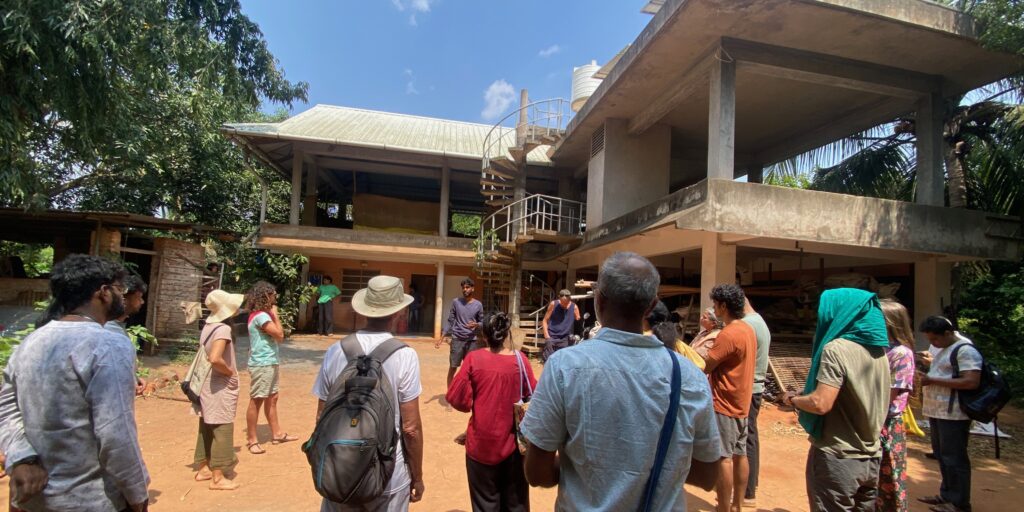
We recently hosted a beautiful knowledge sharing session on bananas with Vinod Sahadevan Nair, whose ㅤ ㅤ Home » Blog » The World of Bananas The World of Bananas Febuary 2026 · Charan GP We recently hosted a beautiful knowledge-sharing session on bananas with Vinod Sahadevan Nair, whose deep passion and lifelong work with banana diversity inspired everyone present. He shared his journey, cultural associations of bananas across regions, and practical insights into cultivation, propagation, and managing diverse varieties in a sustainable way. The session explored the many dimensions of bananas, from their nutritional value and health relevance to the wide range of uses from fruit, stem, flower, and leaves. Farmers and growers from Auroville actively participated, asking thoughtful questions on cultivation practices, disease management, and varietal selection, making it a rich and interactive exchange. The gathering concluded with a visit to the banana plantation at Auro Orchard, where participants could observe the diversity and growing systems more closely. Watch the entire session here We recently hosted a beautiful knowledge-sharing session on bananas with Vinod Sahadevan Nair, whose deep passion and lifelong work with banana diversity inspired everyone present. He shared his journey, cultural associations of bananas across regions, and practical insights into cultivation, propagation, and managing diverse varieties in a sustainable way. The session explored the many dimensions of bananas, from their nutritional value and health relevance to the wide range of uses from fruit, stem, flower, and leaves. Farmers and growers from Auroville actively participated, asking thoughtful questions on cultivation practices, disease management, and varietal selection, making it a rich and interactive exchange. The gathering concluded with a visit to the banana plantation at Auro Orchard, where participants could observe the diversity and growing systems more closely. Watch the entire session here Key Learnings from the session for the current and future AuroOrchard plantations 1. Variety-Specific Needs Matter One of the most important learnings is that each banana variety has different requirements in terms of water, nutrients, spacing, and care. For instance, red banana varieties require comparatively higher water and manure, especially during the initial establishment stage. Treating all varieties the same can affect their growth and overall health. 2. Sprouting and Establishment Differ by Variety We observed that different banana varieties sprout at different rates and show varied early growth patterns. This highlights the importance of patient observation during the first few weeks rather than assuming uniform growth across all planted suckers. 3. Soil and Climate Suitability is Crucial Planting multiple banana varieties also became a living experiment to understand how each variety responds to the local soil and climate conditions. Not every variety adapts equally, and observing their response helps identify which ones are best suited for the specific microclimate of the orchard. 4. Spacing Requirements Vary Across Varieties Certain varieties, especially larger ones like red banana, require wider spacing for healthy growth, while some smaller or compact varieties can thrive with relatively less spacing. Proper spacing ensures better sunlight exposure, airflow, and root development. 5. Importance of Sunlight Banana plants require good sunlight for healthy growth. Adequate exposure supports stronger vegetative development and overall plant vigor, especially in the early stages after planting. 6. Handling and Transport of Suckers A practical learning was that banana suckers are quite resilient and can be transported and stored under shade for about one to two weeks without major issues, provided they are handled properly and not exposed to harsh sun or waterlogging. 7. Diversity in Taste, Texture, and Cultural Value Each banana variety differs in aroma, texture, taste, and cultural relevance. This diversity reflects not only agricultural richness but also the cultural and traditional significance associated with different banana types. 8. Water Management During Early Growth Due to excessive water accumulation in some planted areas, we had to cut the top portion of certain sprouts that were submerged. This reinforced how sensitive young banana plants are to waterlogging and the need for proper drainage management. 9. Bed Management and Animal Disturbance After clearing the beds, chickens and ducks from neighboring land frequently entered and dug into the soil in search of food, especially because the beds were bare and weed-free. This created a new challenge in protecting early sprouts, leading to the consideration of netting and protective measures. 10. Intercropping Observations Pumpkins were planted alongside the banana plants as a companion crop. While bananas are expected to take around 9 to 12 months for harvest, pumpkins are establishing well and are likely to be harvested earlier, around May. This supports better land use and short-term productivity. 11. Previous Crop Influence (Papaya) Before bananas, the beds had papaya plants that showed signs of viral infection and gradual decline. Many affected plants had to be removed, and this raised the need to assess soil health, identify possible root causes, and take corrective steps for long-term resilience of the plantation. 12. Early Growth Monitoring Phase Encouragingly, almost all planted banana suckers have sprouted. The next one to one and a half months will be critical for observing shoot health, vigor, and overall establishment to ensure strong future growth. 13. Adaptive Learning Through Observation Overall, the plantation is evolving as a dynamic learning space, where continuous observation of plant response, soil condition, water management, biodiversity, and protection methods is guiding more informed and context-specific cultivation decisions. Key Learnings from the session for the current and future AuroOrchard plantations 1. Variety-Specific Needs Matter One of the most important learnings is that each banana variety has different requirements in terms of water, nutrients, spacing, and care. For instance, red banana varieties require comparatively higher water and manure, especially during the initial establishment stage. Treating all varieties the same can affect their growth and overall health. 2. Sprouting and Establishment Differ by Variety We observed that different banana varieties sprout at different rates and show varied early growth patterns. This highlights the importance of patient observation during the first few weeks rather than assuming uniform growth across all planted suckers. 3. Soil and Climate
DIY Self-Care Workshop at AuroOrchard
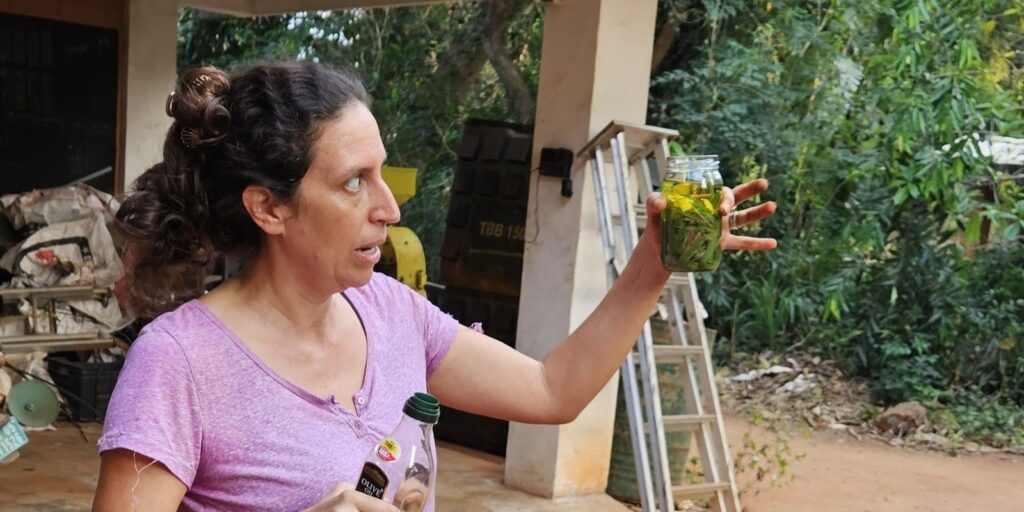
This month at AuroOrchard, we hosted a hands-on DIY self-care workshop exploring ways to create natural, eco-friendly products that benefit both our bodies and the environment. Participants learned how to make everyday essentials like creams, deodorants, bug repellents, soaps, and chapsticks using simple, natural ingredients. Home » Blog » DIY Self-Care Workshop at AuroOrchard: Learning to Care for Ourselves and the Planet DIY Self-Care Workshop at AuroOrchard: Learning to Care for Ourselves and the Planet Mar 14, 2025 · Amber Hill & Natalie Rodriguez This month at AuroOrchard, we hosted a hands-on DIY self-care workshop, exploring ways to create natural, eco-friendly products that benefit both our bodies and the environment. Participants learned how to make everyday essentials like creams, deodorants, bug repellents, soaps, and chapsticks using simple, natural ingredients. We delved into the world of essential oils, discussing their benefits and how they can be used for skincare and wellness. From lavender for soothing skin to tea tree for its antibacterial properties, each oil brought its own unique healing touch. We also explored various extraction methods, including oil infusions, alcohol tinctures, grinding/maceration, and distillation, to unlock the medicinal properties of plants. A highlight of the workshop was a farm walk, where we identified local plants that could be used in our homemade products. Inspired by nature, we returned to our workspace and got creative, crafting herbal-infused creams and natural deodorants. The hands-on experience was both empowering and fun, sparking enthusiasm among participants who were eager to continue their self-care journey. The workshop was a great success, fostering a sense of community and a deeper connection to the natural world. Many participants expressed interest in staying in touch to share recipes, ideas, and inspiration. We look forward to hosting more sessions like this in the future! Previous ArticleNext Article Featured Articles Monthly Updatesㅤㅤㅤㅤㅤㅤㅤㅤ 19 Sep 2025 Abundance Product of the Month 18 Sep 2025 Recipe Alert – Stir Fried Sweet Potato leaves with Tofu 22 Sep 2025 Food and Agriculture in Auroville, India 18 Sep 2025
Demystifying Avocados with Bala
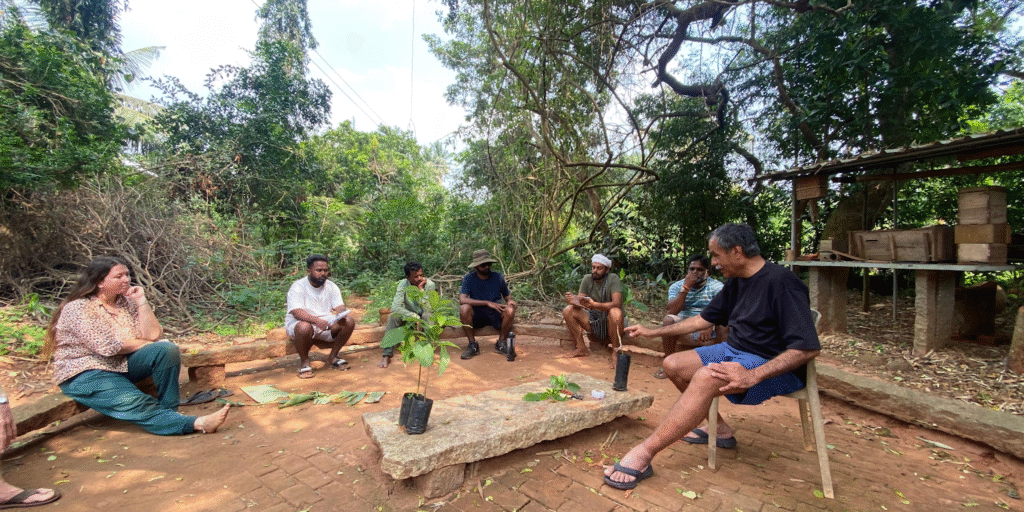
Over the past four months, volunteering at AuroOrchard has been an incredible learning experience. As the founder of Sristi Foundation, where we use farming to empower children and youth with intellectual disabilities, acquiring proper farming skills is essential for me. Home » Blog » Demystifying Avocados with Bala Demystifying Avocados with Bala Jan 31, 2025 · Anuja Khokhani & Chintan Jadwani We recently hosted an insightful workshop with Bala, a passionate Avocado farmer from the picturesque hills of Kodaikanal. Participants were taken on an enlightening journey through the history of Avocados in India, exploring their diverse types and subspecies. Bala shared his wealth of knowledge on the intricacies of Avocado farming, including expert tips on pruning techniques, strategies for cultivating high-density plantations, and the art of grafting for improved yields. Attendees left with a deeper understanding of sustainable practices and practical insights to enhance Avocado cultivation. The session offered a rare blend of inspiration and practical expertise, enabling participants to take their Avocado-growing endeavours to the next level. For a closer look at the grafting technique, check out the videos here and here. Next Article Featured Articles Monthly Updatesㅤㅤㅤㅤㅤㅤㅤㅤ 19 Sep 2025 Abundance Product of the Month 18 Sep 2025 Recipe Alert!ㅤㅤㅤㅤㅤㅤㅤㅤ 22 Sep 2025 Food and Agriculture in Auroville, India 18 Sep 2025
Connecting Through Permaculture
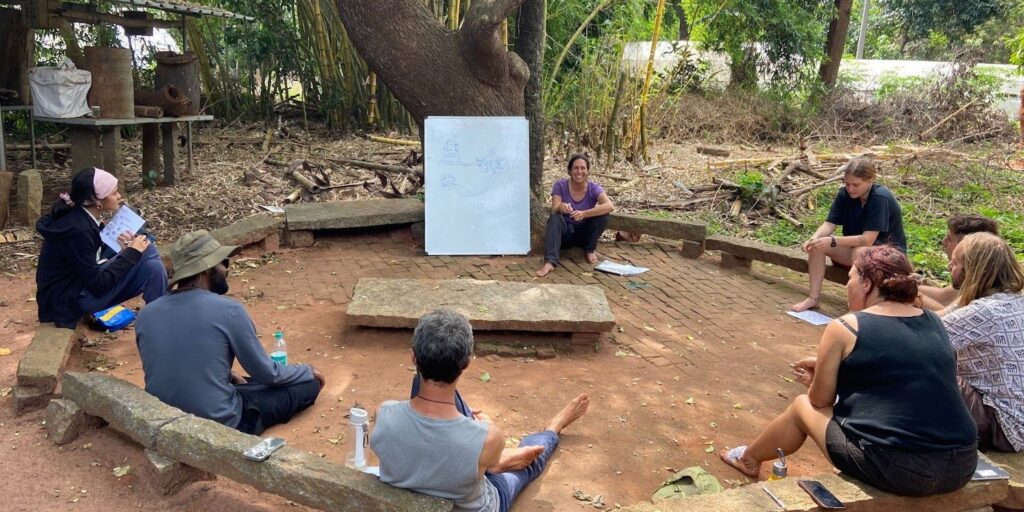
Over the past four months, volunteering at AuroOrchard has been an incredible learning experience. As the founder of Sristi Foundation, where we use farming to empower children and youth with intellectual disabilities, acquiring proper farming skills is essential for me. Home » Blog » Connecting Through Permaculture Connecting Through Permaculture Jan 31, 2025 · Amber Hill This past month, we had the opportunity to come together for a three-day intensive introduction to permaculture. Most of the participants were volunteers already working on the farm, making it a fantastic way to strengthen our sense of community while deepening our understanding of sustainable design. Through this course, we not only learned practical skills but also built stronger connections with each other and the land we nurture. Permaculture teaches us to see our environment through a designer’s eyes, considering the relationships between plants, soil, water, and all the elements that create a thriving ecosystem. By applying these principles, we can assess our farm in a new light—understanding which plants grow best together, where to plant them for maximum benefit, and how to close resource loops within the property. A great example of this is our banana circle: an efficient system where surplus water is redirected to nourish water-loving banana plants, creating a win-win situation for both sustainability and productivity. Beyond these foundational lessons, we also explored future projects that could enrich the farm and involve a wider community. Ideas ranged from hands-on workshops—such as making herbal creams and essential oils from farm-grown plants—to learning about soil health, pollinators, and botany. There’s a lot of enthusiasm for expanding these opportunities, and now we need to determine the best format to make them accessible and engaging for everyone. The energy and excitement from this course have been truly inspiring, and we look forward to seeing how these ideas take root and flourish. If you’re interested in contributing or participating in future initiatives, we’d love to hear your thoughts! Let’s continue growing together—sustainably, creatively, and in harmony with nature. Next Article Featured Articles Monthly Updatesㅤㅤㅤㅤㅤㅤㅤㅤ 19 Sep 2025 Abundance Product of the Month 18 Sep 2025 Recipe Alert!ㅤㅤㅤㅤㅤㅤㅤㅤ 22 Sep 2025 Food and Agriculture in Auroville, India 18 Sep 2025