
Experiments with…
My first weeks at AuroOrchard have been a mix of discoveries, challenges, and moments of reflection. Coming to India to live and work on a farm has allowed me to experience a different rhythm of life and to start seeing everyday things Home » Blog » Experiments with Shumei Natural Farming Experiments with Shumei Natural Farming October 2026 · Sean Kuwata, Junta & Anshul Aggarwal In February 2026, Anshul approached the Shumei Natural Farming team to better understand their philosophy and practices. A series of exchanges led to a visit to AuroOrchard by Kenichi-san and Vishal from the Shumei India team, based in Mumbai. During their visit, they introduced the farm team to Shumei’s philosophy and approach to natural agriculture. As a step towards exploring this approach more deeply, AuroOrchard offered to host trials of Shumei natural farming. Anshul also met with Shumei practitioners online to learn more about their experiences and how they put the philosophy into practice. The intention behind these exchanges is to learn from Shumei’s philosophy and methods, explore their relevance to the farm, and see how agriculture in Auroville can continue to develop through dialogue with ideas and practices from across the world. A brief explanation of Shumei Shumei is a spiritual organisation founded in Japan in 1970. We have three main practices – Jyorei healing, the appreciation of art and beauty, and natural agriculture – for the creation of a world free from sickness, poverty, and strife. As we share the ideal of Sri Aurobindo, human unity, we strive to hold hands despite our differences, for future generations – aiming to become “World Citizens”. About Natural Agriculture This farming method was discovered by Mokichi Okada in Japan, who is the founder of Shumei. Realising that pesticides and fertilizers harm the body, he experimented with this farming method – having deep respect and concern for nature. After the success of the experiment, this farming method has been spreading ever since. Now there are many farmers throughout the world, especially in Japan, who practice this method, achieving wonderful results. The quote below by Mokichi Okada is the discoveries of this experiment. “Used over a period of time, there will not be any need to spend money on fertilizers. Pest damage, such as from insects or parasites, will be reduced to a fraction of what it is now, and damage from wind and water will decrease by more than fifty percent. Also, especially noteworthy is the delicious flavor of the crops grown by this natural approach. Once you taste the rice, wheat, and vegetables grown in this manner, you will become unwilling to eat anything grown with the aid of fertilizer. Fruit also improves greatly in quality after one stops giving the plant or tree man-made fertilizer. The blooms of flowering plants also grow larger and more beautiful, and if they are used for ikebana (the Japanese art of flower arrangement), they do not wither for a long time—a feature which brings much pleasure. The Natural Agricultural approach also brings a drastic decrease in the amount of insect damage. Noxious insects increase as a result of an increase in the use of fertilizers, and it is therefore only natural that if we get rid of the fertilizers, the pests will go with them.” Seen from the discovery above, almost every aspect of crops and even flowers have a drastic improvement when it is practiced through natural agriculture. Next is the reasoning of the decrease of pest damage and the improved roots of natural agriculture plants. “Damage from wind and water occurs almost every year. If you use the Natural Agricultural methods, you will find that this damage decreases noticeably. This is because when the original crops absorb fertilizers, they become extremely weak from the poisoning caused by the absorption of these fertilizers. I have also discovered that this poison provides an attractive diet for pests. Furthermore, these pests can actually be generated by fertilizers, and then, of course, they eat the crops and multiply. Once they appear in the roots, these pests are sure to devastate the root hairs and leave the plant weak and sickly. This process is the cause of withered leaves, drooping or bent stalks, falling blooms, fruit that does not ripen, and such things as yellow dwarf potatoes. Many types of pests also establish themselves in places other than root hairs, but a healthy plant has the capacity to overcome them. If, however, the plant has been weakened by absorbing fertilizer, it is too feeble to resist and is destroyed. When a naturally grown plant encounters wind and rain, it is tough enough to resist being beaten down. The reason for the difference is obvious if we examine the roots. The natural plant has root hairs that are longer and thicker than those of the fertilized plant, and as a consequence are more firmly rooted.” Here is an argument by Mokichi Okada regarding soil and fertilisers. “One point I must stress concerns the properties of the soil. Soil was made by the Creator in order to produce crops to nourish and sustain humans and animals. Therefore, its essential nature is that of a fertilizer. We could even say that it is no less than a great mass of fertilizer. This fact has been unknown before today, and people have mistakenly assumed that fertilizer provides nourishment to crops, and therefore have used all sorts of fertilizers. As a result, the essential nature of the soil has been almost destroyed. Consequently, if you want to increase crop yield, you must strengthen the soil itself as much as possible. To do this, you must avoid mixing anything impure into the soil; you must use only natural compost. That is, you must purify the soil as much as possible, and this will be enough to ensure wonderfully good results. This approach is so revolutionary that a mind sucked in the past can never grasp it.” “The center of the earth is a huge ball of fire
Remembering the Beginnings…
This interview with Gérard from 2020 , by the Lands for Auroville Unified team, takes us back to the earliest beginnings of the farm. Gérard came to the Sri Aurobindo Ashram in 1955 at the age of 23. After working at the Ashram bakery and swimming pool, he spent Home » Blog » Remembering the Beginnings of AuroOrchard With Gerard Cruz (2020) Remembering the Beginnings of AuroOrchard With Gerard Cruz (2020) August 2026 · Anshul Aggarwal This interview with Gérard from 2020 , by the Lands for Auroville Unified team, takes us back to the earliest beginnings of the farm. Gérard came to the Sri Aurobindo Ashram in 1955 at the age of 23. After working at the Ashram bakery and swimming pool, he spent several years caring for an orchard-farm in Mountain Paradise in the Himalayas, growing apples and peaches. Looking back, he describes this period as his apprenticeship in horticulture. In 1967, the Mother asked him to visit a piece of land near Promesse and consider how it might be developed. She later asked whether he would take responsibility for the land and grow fruits and vegetables for the emerging community of Auroville. Gérard returned from the Himalayas towards the end of 1968 and began the gradual work of developing AuroOrchard. The story also carries some lesser-known parts of the farm’s history. The Ganesh temple was already present on the land, and its continued care was one of the conditions under which the Mother acquired the farm. While the temple’s physical connection with the farm was lost in the land exchange in 2023, the daily puja has continued uninterrupted even until today since the beginning, now under the care of Diwakar. What comes through most strongly in Gérard’s memories is his trust in the work he was given and his gratitude for the life that unfolded through it. More than fifty years later, AuroOrchard continues to grow food for Auroville, carrying forward the purpose with which it began. As Gérard reflects: “My heart remains filled with gratitude for this exceptional experience.” You can read the full interview here: https://land.auroville.org/gerard-development-auroorchard/ Previous Article Featured Articles Words of appreciation…ㅤㅤㅤㅤㅤ 27 Aug 2026 Monthly Updatesㅤㅤㅤㅤㅤㅤㅤㅤ 26 Aug 2026 Words of appreciation…ㅤㅤㅤㅤㅤ 27 Aug 2026 Words of appreciation…ㅤㅤㅤㅤㅤ 26 Aug 2026
Conscious Technology…ㅤㅤㅤ
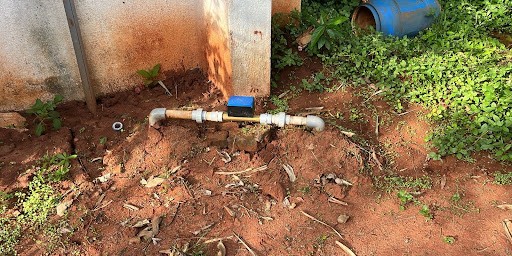
Flow meters that were already installed and became defunct after the land exchange have been revived. In the mango orchard and lemon orchard, they measure the amount of water used for irrigation and help us understand ⠀⠀⠀⠀⠀⠀⠀⠀⠀⠀⠀⠀⠀⠀⠀⠀⠀⠀⠀⠀⠀⠀⠀⠀⠀ Home » Blog » conscious-technology-project-update Conscious Technology Project Update August 2026 · Azhaganandan Veerappan, Anshul Aggarwal Technology, particularly Artificial Intelligence and the Internet of Things, is rapidly transforming agriculture across the world. Some visions of the future imagine farms where machines replace most forms of human labour. While automation can offer significant benefits, it also raises important questions: What happens when agriculture becomes increasingly mechanised? What is the place of the farmer? Can technology deepen our relationship with the land, or does it risk distancing us further from it? We are exploring an approach of technology at a human scale. Through the AuroOrchard Conscious Technology Lab, we are experimenting with ways in which technology can support farmers without displacing them, reduce repetitive labour without removing human attention, and contribute to both ecological stewardship and conscious evolution. The first phase of the project, supported by a grant from the Dutch foundation Stichting De Zaaier, began with one of the farm’s most essential and demanding areas of work: water management. Irrigation requires regular monitoring of pumps, tanks, pipelines and different cultivation areas. It is also an area where small inefficiencies can result in significant water loss. Between February and May 2026, the Lab began establishing an interconnected system for automating irrigation and collecting data about how water moves through the farm. One of the first steps was automating the main irrigation sump. Previously, the three-phase pump had to be started and stopped manually. A float sensor and controller now detect the water level: when the sump is empty, the motor starts automatically, and when it is full, the motor stops. The cabling has been placed underground in protected casing and connected to a new control panel. A similar system has been installed for the overhead water tank, preventing overflow and reducing the need for constant manual intervention. Water meter and automation for drinking water tanks These are simple changes and very simple technologies that have been available for a long time,, but they already reduce repetitive work, improve reliability, prevent dry running of motors and minimise water wastage. More importantly, they allow the farm team to direct its time and attention towards work that requires observation, judgment and care. The Lab has also installed and configured a LoRaWAN gateway. LoRa is a low-power, long-range communication system that allows sensors distributed across the farm to transmit information to one central platform. The gateway now receives data from the connected flow meters and sensors, creating the basic infrastructure for farm-wide monitoring. LoRaWAN gateway installed on the volunteer accommodation structure Flow meters that were already installed and became defunct after the land exchange have been revived. In the mango orchard and lemon orchard, they measure the amount of water used for irrigation and help us understand consumption patterns over time. Another meter monitors irrigation in the banana beds at Hope, where the data can help prevent over-irrigation. A DN20 flow meter has also been installed on the overhead tank to track drinking-water use and daily distribution patterns. Flow meters re-installed after land exchange- Hope, Lemon Orchard and Mango Orchard Alongside water-flow monitoring, a soil sensor has been installed to measure moisture, temperature and electrical conductivity. These measurements can help us move beyond irrigation based only on fixed schedules. Over time, we hope to better understand what the soil and plants actually require under changing weather and seasonal conditions. The sensor and flow-meter data are being brought together through a cloud-based dashboard, currently under development, which offers a real-time view of conditions across the farm. All this data is being put up on this dashboard which is still under construction: https://auroorchard-dashboard.netlify.app/ A screenshot of the dashboard The next phase will focus on making this system more responsive. We plan to refine the soil-moisture sensor design, improve how the data is displayed, and develop valve and motor logic that can switch irrigation on or off in response to field conditions. We will also work on greenhouse irrigation calculations and conduct practical experiments to understand where automation is genuinely useful and where the farmer’s direct presence remains essential. As the project develops, we hope to host workshops and training sessions where farmers, technologists and community members can learn from the systems, question them and reflect together on the relationship between ecology, technology and consciousness. Previous ArticleNext Article Featured Articles Words of appreciation…ㅤㅤㅤㅤㅤ 27 Aug 2026 Monthly Updatesㅤㅤㅤㅤㅤㅤㅤㅤ 26 Aug 2026 Words of appreciation…ㅤㅤㅤㅤㅤ 27 Aug 2026 Words of appreciation…ㅤㅤㅤㅤㅤ 26 Aug 2026
Interview with Christian Tarpin, 2019
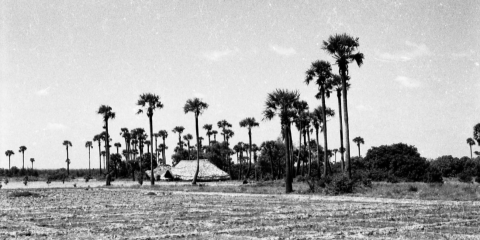
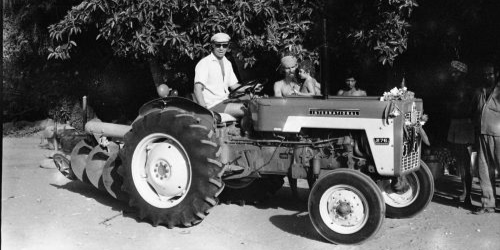
Following is an English translation of the French interview with Christian conducted by Emilie Ponceaud Goreau and Anthony Goreau Ponceaud and published in Open Edition of Journals, a French platform for the humanities and social sciences. Christian worked on the farm from 2012-2019, and was the key driver in Home » Blog » Interview with Christian Tarpin, 2019 Interview with Christian Tarpin, 2019 May 2026 · Anshul Aggarwal Following is an English translation of the French interview with Christian conducted by Emilie Ponceaud-Goreau and Anthony Goreau-Ponceaud and published in Open Edition of Journals, a French platform for the humanities and social sciences. Christian worked on the farm from 2012-2019, and was the key driver in transitioning the farm to fully organic. In this interview, he describes how he began his work at AuroOrchard and reflects on his ideas about agriculture, consumption, and creating a new relationship with the soil. Reference: Emilie Ponceaud-Goreau and Anthony Goreau-Ponceaud, “Entretien avec Christian Tarpin. Ferme AuroOrchard, 12 décembre 2019,” Les Cahiers d’Outre-Mer [online], 281 | January–June, published online January 1, 2022. URL : http://journals.openedition.org/com/11323 DOI : https://doi.org/10.4000/com.11323 Photograph 1: Christian Tarpin, originally trained as a civil engineer and urban planner specializing in mobility systems, is now a farmer at AuroOrchard, the historic farm of the Auroville community, founded by Gérard and Bithi in 1969. Photograph 2: The “Groundnut Field” and the First Cowshed of AuroOrchard What were your impressions upon arriving here? I discovered the farm on February 15, 2012, shortly after Cyclone Thane had passed through (December 31, 2011). It was devastated, yet I fell in love with it. Forty years of conventional agriculture had damaged it; the cultivation practices, maintaining the soil bare and clean, ready to receive new crops, had destroyed its fertility. This is true in general, but even more so in this climate. On top of that, the cyclone had passed through and caused major damage. I still remember Gérard1 standing in front of the four hectares where there are 300 large mango trees, extending his hand and saying: “and there, the mango orchard”… and I could see nothing, the trees were so entangled, broken… The road entering it was not even visible anymore! But I also saw that Gérard had done incredible work. To what extent does the farm at AuroOrchard fit into the evolution of the local landscape? Hmm… To understand that, we will have to take quite a few detours… In fact, the climax ecosystem of this region is the Tropical Dry Evergreen Forest (TDEF)2. This country experiences intense sun and intense rains; only trees are strong enough to withstand and protect the soil from these aggressions. The region is also described as arid because evaporation exceeds precipitation. In reality, it is bistable: either one strips and damages the land and moves toward desert, or one protects and cares for it and moves toward forest. Agroforestry is therefore unavoidable… agriculture must navigate, oscillate between these two “temptations”: desert or forest. The history of this place is linked to that of Pondicherry. The city was built mainly out of wood, which explains the deforestation. It was also burned and rebuilt several times because of the quarrels between the English and the French. In the eighteenth century, the inhabitants also cleared a ten-kilometre “buffer zone” around the city to protect themselves from leopards and elephants. Auroville was established in this place, intentionally desertified by humans. The landscape evolved toward desertification, especially because cattle are left free to roam here; it is a local tradition. At the beginning of Auroville in the 1970s, the plateau was desert-like, though it nevertheless became green during the rainy season… The inhabitants had developed a rainfed agricultural system consisting of enclosing the fields at the end of spring in order to protect them from cows; they sowed as soon as the first rains of the small monsoon arrived in June, and harvested one or two crops. Afterwards, they opened the fields again, the animals ate the stalks, trampled the soil, deposited their excrement… This ecosystem was fragile; the older Aurovilians experienced sandstorms. Today only 2% of the original forest that once covered the eastern coastal strip of the Indian subcontinent remains. Most often, only the sacred groves around temples survive; when entering them, the presence of these old trees is striking, one can breathe there… It would take centuries to recreate this forest! The history of the landscape here has been deeply marked by human beings. It was once an extremely rich, wooded landscape, but today we continue moving toward the desert. When I arrived at AuroOrchard eight years ago, I had difficulty outlining the farm on Google Maps because the surroundings were still green. Today the green form of AuroOrchard emerges like an island of resistance, green amidst the red of exposed earth! We are still pushing the cursor toward desertification because this is an “economic development” zone, highly coveted along the highway… How did you come to take responsibility for the farm? I always had gardens; I was self-sufficient in vegetables, cultivating more than 1,000 square meters of land to feed my family. It was part of my life, but I had no training as a farmer, even less in tropical agriculture. At first, I considered myself an apprentice; I listened to Gérard, conducted small experiments, and continued the BRF3 approach that he had started in 2011. It was a very good direction, which I developed extensively. Bernard and Deepika4, the founders of Pebble Garden, the seed-conservation vegetable garden where I volunteered, encouraged me. I began here in February 2012, initially one day per week. I observed what was being done, learned their methods, and gradually became more and more involved. By October 2012 I was full-time, responsible for the vegetables… One day, because of an excess of potassium, a field bloomed with green, slimy, foul-smelling algae, like the green tides in Brittany, and I really became angry: “either we switch to organic farming or I leave.” Gérard received this very
The Six Seasons of Aurovilleㅤㅤㅤㅤ
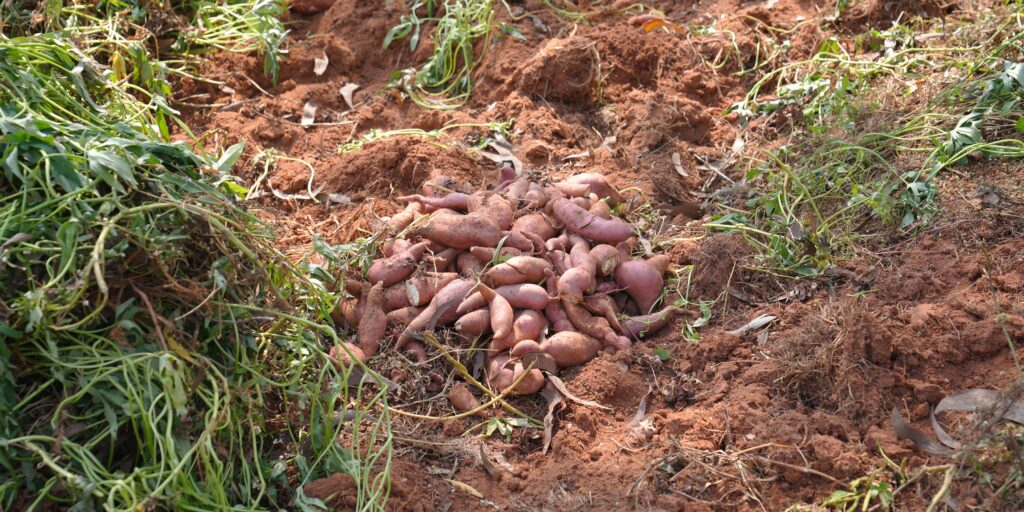
Does Auroville only have one long summer season? That is how it feels. But even the subtle differences make a lot of difference in farming. When I came to Auroville in 2019, I had only farmed in the mountains. I was used to four distinct Home » Blog » The Six Seasons of Auroville The Six Seasons of Auroville April 2026 · Anshul Aggarwal Does Auroville only have one long summer season? That is how it feels. But even the subtle differences make a lot of difference in farming. When I came to Auroville in 2019, I had only farmed in the mountains. I was used to four distinct seasons- of course with their own subtleties, but still the distinction between summer, autumn, winter, spring was quite pronounced. It took me about two years to understand that Auroville actually has six seasons! We have been planning our crops based on this understanding since 2022. Only much later, and recently, I found out that ancient Tamizh literature like Tolkaapiyam, also identifies six seasons for Tamil Nadu. This system of six seasons is called Paruvangal. Each season lasts exactly two Tamizh months, beginning with the Tamizh New Year in mid-April. Interestingly, my observations align perfectly with this age-old system. I will first describe how I observe seasons. The typical cycle of seasons is based on the position of the Earth in relationship to the Sun. The four main events in this yearly cycle with the Sun are- the two equinoxes, where the Earth is in perfect alignment with the Sun and the two solstices, where the Earth is tilted closest or farthest from the Sun. Since we are very close to the equator (12 degrees North) in Auroville, we don’t see the pronounced effects of these movements, and yet there are subtle changes. We can use the visual of breathing in and out- the most fundamental cycle that we experience. As the Earth moves in her cycle, it too breathes in and out. The beginning of the in-breath starts with the Autumn Equinox (September 21st)*. This is the period of going inwards, the year is winding down, we begin to reflect on the activity so far, some have the need to retreat into contemplation and silence, the land starts to cool down after summer and the rhythm of life becomes more relaxed. The peak of this in-breath comes at the Winter solstice (December 21st), the longest night of the year. In-breath, the period of inner activity continues until Spring Equinox (March 21st). We then move to the out-breath, where life starts to wake up from its slumber, flowers bloom, the land and air start to get warmer, microbes and insects multiply, and there is an impulse for external activity. The peak of this cycle is reached at the Summer solstice (June 21st) and this period itself continues until the Autumn Equinox (September 21st), after which it repeats itself. While these periods and patterns don’t apply as per dates and months in the same way to all locations on the Earth, the principles apply to all places and people. Even if not coordinated with seasons, we can easily observe these cycles in our own life. This is the template on which Auroville’s six seasons are based. The breathing cycle of the Earth * These descriptions apply to all of us in the Northern hemisphere of the planet. These patterns will be the exact opposite for people living in the Southern hemisphere. In the case of Auroville, or perhaps larger Tamil Nadu, the two extreme points are Summer and Monsoon, and, in my scheme, they become the reference for all the other seasons. And due to our location close to the equator as well as our proximity to the oceans, our seasons are not only influenced by solar cycles but also by oceanic and wind phenomena. The correlation of these seasons with the calendar months and the Tamizh Paruvangal is as follows: English calendar Solar event Breath cycle Paruvangal Tamizh calendar Pre-Summer Mid-Feb to Mid-April Spring Equinox Out-breath Pin-pani (Late dew) Masi & Panguni Summer Mid-April to Mid-June – Out-breath Ila-venil (Tender heat) Chittirai & Vaikasi Post-Summer Mid-June to Mid-Aug Summer Solstice Peak of out-breath Mudhu-venil (Mature heat) Ani & Adi Pre-Monsoon Mid-Aug to Mid-Oct Autumn Equinox In-breath Kar (Dark clouds) Avani & Purattasi Monsoon Mid-Oct to Mid-Dec – In-breath Kulir (Cold) Aippasi & Kartikai Post-monsoon Mid-Dec to Mid-Feb Winter Solstice Peak of in-breath Mun-pani (Early dew) Margali & Tai I will now describe what these seasons mean to us and how we organise our work based on them. Pre-Summer Paruvangal: Pin-pani (Late dew) | Tamizh calendar: Masi & Panguni | English calendar: Mid-Feb to Mid-April I will put this as the first as this is right after the Pongal festival in mid-January. The first season of a new cycle, and I will call this Pre-Summer. The days are still a bit short and the mornings and evenings are still cool. During this season, we continue planting summer crops like pumpkins, cucumbers, and gourds from the late previous season. We could continue planting some winter crops like spinach, lettuce etc. but the quality of those in this season is not that great due to hot days. The flavour is different and the texture is harder. During Pre-Summer, life is blooming, we can see a diversity of flowers on crops and trees. This is also the best time to save seeds. This season is closely associated with the Post-monsoon season, the last in the cycle (Mun-pani). Summer Paruvangal: Ila-venil (Tender heat) | Tamizh calendar: Chittirai & Vaikasi | English calendar: Mid-April to Mid-June Then, the sun starts to rise in the sky and the days as well as the nights are warmer. This is what I would call the real Summer. The production during this time starts to be limited to a few crops. It’s not so much due to heat but due to limitation of water and pressure from pests. Like many places
Certified Humane International program …

We have been working on this certification for the last 6 months, and our poultry has gone through significant improvements with support from a wonderful pool of resource people who deeply care about ethics of animal care in agriculture. This ce Home » Blog » Certified Humane International program for the Poultry Certified Humane International program for the Poultry March 2026 · Anshul Aggarwal AuroOrchard has just completed the certification process of the Certified Humane International (CHI) program. We have been working on this certification for the last 6 months, and our poultry has gone through significant improvements with support from a wonderful pool of resource people who deeply care about ethics of animal care in agriculture. This certification is quite stringent with a great deal of paperwork, in-person inspection and annual audits. The CHI standards are quite extensive and detailed and have given us a strong foundation and reference to build on. You can read more about CHI standards here. This process has also helped us know more about the conversation on ethical poultry farming in the world, and how different farmers around the world are practicing this in their own ways based on their context and resources. While the certificate in itself is not a big achievement, it affirms our commitment to an unending pursuit of growing the highest quality food for Auroville. Our sincere gratitude to our wonderful community for their support and encouragement in doing this work. You can find some answers to common questions on AuroOrchard eggs here. Previous Article Featured Articles Monthly Updatesㅤㅤㅤㅤㅤㅤㅤㅤ 25 Mar 2026 Year-end updatesㅤㅤㅤㅤㅤㅤㅤㅤ 20 Dec 2025 Certified Humane International program … 27 Mar 2026 Time to Summernate: Ayurveda Healthy Tips by 26 Mar 2026
Food Sovereignty and Seeds of AuroOrchard
Since the Second World War, the agriculture paradigm has shifted dramatically to keep pace with the evolving industrial and economic paradigms. The culture of mono-cropping has grown on some ill-found assumptions and hard realities of the changing social structures in farming communities. As much as monoculture is believed to be the only way to produce high-yields, and a dominant solution to feeding the world, it is also easier for farmers who have no option than to resort to mechanization due to lack of hands working on the fields. The farmers who lack the resources to buy machines or employ family members on the farm suffer the most. However, despite the illusory success of turning large acres of land into monocrop systems, the inequity in food distribution couldn’t have been higher than ever. As per studies done in recent times, collectively we grow food already for about 10 billion people (calorie equivalence) but over a third of this food is wasted while harvesting, storing, shipping and so forth (Holt-Giménez et al., 2012). Home » Blog » Food Sovereignty and Seeds of AuroOrchard Food Sovereignty and Seeds of AuroOrchard March 2026 · Anshul Aggarwal Since the Second World War, the agriculture paradigm has shifted dramatically to keep pace with the evolving industrial and economic paradigms. The culture of mono-cropping has grown on some ill-found assumptions and hard realities of the changing social structures in farming communities. As much as monoculture is believed to be the only way to produce high-yields, and a dominant solution to feeding the world, it is also easier for farmers who have no option than to resort to mechanization due to lack of hands working on the fields. The farmers who lack the resources to buy machines or employ family members on the farm suffer the most. However, despite the illusory success of turning large acres of land into monocrop systems, the inequity in food distribution couldn’t have been higher than ever. As per studies done in recent times, collectively we grow food already for about 10 billion people (calorie equivalence) but over a third of this food is wasted while harvesting, storing, shipping and so forth (Holt-Giménez et al., 2012). Small farms feed the world Interestingly, over 70% of the food that we end up eating, still comes from small-farms (25 acres or less) managed by communities and families for subsistence, and not from large mechanized monocrop systems as we are made to believe. Also small farms have been found to be 4-5 times more productive than large farms because of their intensive diverse cropping integrated with animal rearing(Lerman & Sutton, 2008; Small farmers feed the world, Grain, 2014). We do have enough food to feed the planet and almost three quarters of it comes from small farms. So where does large scale industrial agriculture fit in this story and how can it help if production is not really the primary challenge? The industrialization of agriculture has led to large scale disempowerment of small farmers, degraded rural lands and culture and polluted our soil, water and air and the poor stay hungry no matter how much more food is produced on this planet. Our overwhelming stress on strategies and policies to feed the world are focused only on producing more food. But we forget that this also means more food of a certain quality. As the world wakes up to appreciate the subtle nuances of relationships of humans with nature, other humans and themselves, the subtle qualities of food and their relationship with human health must also be considered. Cheap food does not mean good food and as a global collective, feeding the world population is rather an insufficient objective. That all on this planet should have access to clean and wholesome food is an idea worth living and fighting for, and large scale industrial agriculture has very little to offer in this regard. The solution of lack of access could lie in decentralization and localization of production and distribution. But the road ahead is difficult, especially for small farmers. Changing climatic patterns and a demand from consumers of non-seasonal, non-local produce due to changes in diet preferences, loss of knowledge of using traditional and local foods along with loss of traditional seed varieties due to lack of skill and subsidies on hybrid seeds has led to a loss in agricultural biodiversity and a degradation of local food systems. As a result farmers have had to grow food based on the lopsided market demands and economic incentives. This trend is, of course, changing slowly and research and experimentation in rediscovering a balance of natural farming in the current ecological and social paradigms is emerging both on the fields and within the new food distribution enterprises. Human role in agro-bio-diversity One of the aspects of re-discovering this balance and re-establishing the lost relationship with the land is letting go of our conceptions of order and monocultures towards revitalising the biodiversity in our ecosystems. Since human impact has surpassed that of all others, we have been shaping the evolutionary process of biodiversification, consciously and unconsciously. Our very existence has a definite impact and our role in the ecosystem implores us to walk, work, eat and modify our environment for survival. Yet, in the last few centuries or even since agriculture began thousands of years ago, our impact on our environment has been steadily increasing as we slowly seem to be losing track of what is important and are moving from modification to exploitation. Communities based on land and in forests have evolved with their ecosystems since millennia. They themselves have been a part of the biodiversity of the land. Not only have humans evolved within the ecosystems, they have also contributed in protecting and furthering the evolution of these systems. The Amazon forests, which are now being referred to as the oldest food forests, are the perfect example of how human culture can support and enhance biodiversity and create a synthesis of wild and humanized ecosystems (Panko, 2023;
Our Brewery for Plant Health
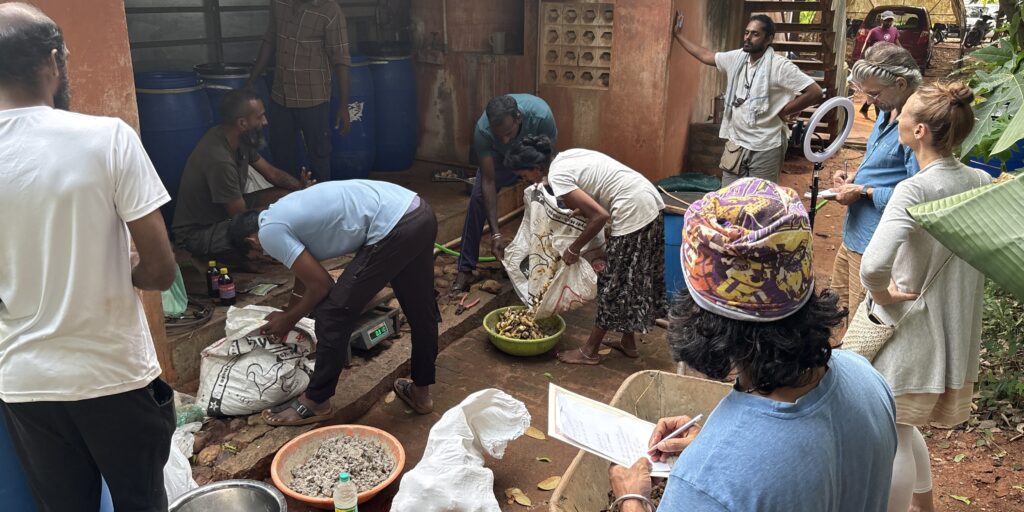
There is a common myth that imbalances in insect populations will disappear if agricultural systems are brought “back into balance.” This assumption rests on the idea that agriculture itself is a balanced ecosystem, which is fundamentally incorrect. Agricultural systems—even in their most natural forms—are human-designed systems, shaped by human needs, diets, and production goals. Home » Blog » Our Brewery for Plant Health Our Brewery for Plant Health December 2025 · Anshul Aggarwal There is a common myth that imbalances in insect populations will disappear if agricultural systems are brought “back into balance.” This assumption rests on the idea that agriculture itself is a balanced ecosystem, which is fundamentally incorrect. Agricultural systems—even in their most natural forms—are human-designed systems, shaped by human needs, diets, and production goals. While diversification and ecological practices can reduce the severity of pest outbreaks, they cannot eliminate them. Modern agriculture, which serves diets limited to a relatively small range of vegetables and fruits, necessarily restricts the diversity that can be accommodated on the farm. In this sense, persistent insect pressure is an inherent feature of agriculture. It cannot be completely resolved, only moderated through careful and continuous management (Oerke, 2005). Moreover, pest pressure today is shaped not only by on-farm diversity, but by the biology of the larger landscape and by changing climatic conditions. Research in agroecology and landscape ecology helps explain why pest pressure can remain high even in diversified farms. Studies show that while ecological practices like crop diversification and habitat enhancement can increase populations of natural enemies, they do not always translate into consistent pest suppression in every field because pest regulation depends strongly on landscape context and habitat structure beyond the farm boundary. For example, natural pest control tends to be stronger in complex, patchy landscapes, with abundant non-crop habitats that support predators and parasitoids, but this effect varies and is not guaranteed (Bianchi et al., 2006; Poveda et al., 2025). Another important limitation of ecological pest regulation lies in the difference between ecological and agricultural time scales. Predator–prey relationships, soil food webs, and habitat-based regulation often require many years to stabilise, whereas farms operate on seasonal cycles that demand immediate outcomes. Farmers must harvest crops within weeks or months, not decades. This temporal mismatch means that even ecologically well-designed farms often need active interventions to bridge the gap between long-term ecological recovery and short-term production needs. In our own production analyses, we found that we lose around 30% of certain crops due to insect damage. These include borers, mealybugs, hoppers, and beetles on brinjal; aphids on long beans; blister beetles on lady fingers and beans; and red gourd beetles on pumpkins, cucumbers, and other gourds—despite years of intercropping, flowering hedges, and multi-layered cropping systems. To prevent severe losses, we have so far relied on neem oil sprays and commercially available biopesticides such as Beauveria bassiana (a fungus) and Bacillus thuringiensis (a bacterium). While effective to a degree, these are purchased inputs. We have therefore been exploring more diverse, farm-made preparations such as Themmor Karaisal, Panchagavya, and fermented leaf extracts using plants like Calotropis, Adhatoda, castor, and moonflower—though not yet with full consistency. Our goal has never been a complete elimination of insects, but the cultivation of systems capable of tolerating a certain level of damage without catastrophic crop loss. So far, we have accepted around 30% as the fair share, our contribution to the ecology, the tax the farmer pays to the land for setting up agriculture. However, given the precarious financial situation on the farm as well as the pressure to deliver more food for the community, we are forced to re-assess if some of these losses can be avoided without damaging the ecosystem. Recently, we met the Aarka team (Elen and Shankar), who have developed formulations aimed at rebuilding functional ecological relationships that were historically embedded in farming systems, though under very different population, climatic, and landscape conditions. Their herbal preparation, Aarka, can be applied in dilution and combined with other ferments—such as oil mixes, fish amino acids, and Themmor Karaisal—for foliar sprays to reduce fungal, bacterial, and insect pressure. These bioferments not only prevent “pests” but also deliver essential herb compounds and micronutrients to the plants, strengthening them and building their own capacity to deal with biological pressures. We organised an afternoon of preparing these different formulations together with our team and developed a plan to use them more consistently, as part of an ongoing effort to reduce crop losses while working within the ecological limits of contemporary agriculture. Our brewery now consists of the following ferments: Aarka solution fermented with sugars and proteins Jeevamrit (fermented mix of cow dung and urine) Panchagavya (fermented mix of the five gifts from the cow–dung, urine, milk, curd, ghee) Themmor Karaisal (fermented mix of curd and coconut milk) Oil concoction (Castor, Mahua, Pongam and Neem oils) Fish amino acids (fish waste fermented with banana) Biopotash solution (ash in rainwater) In the coming days, weeks and months, we aim to consistently inoculate our soil and plant ecology with these ferments and observe the response in terms of plant health and productivity. There is a common myth that imbalances in insect populations will disappear if agricultural systems are brought “back into balance.” This assumption rests on the idea that agriculture itself is a balanced ecosystem, which is fundamentally incorrect. Agricultural systems—even in their most natural forms—are human-designed systems, shaped by human needs, diets, and production goals. While diversification and ecological practices can reduce the severity of pest outbreaks, they cannot eliminate them. Modern agriculture, which serves diets limited to a relatively small range of vegetables and fruits, necessarily restricts the diversity that can be accommodated on the farm. In this sense, persistent insect pressure is an inherent feature of agriculture. It cannot be completely resolved, only moderated through careful and continuous management (Oerke, 2005). Moreover, pest pressure today is shaped not only by on-farm diversity, but by the biology of the larger landscape and by changing climatic conditions. Research in agroecology
COMPOST TEA: A Natural Probiotic for Soil and Plants
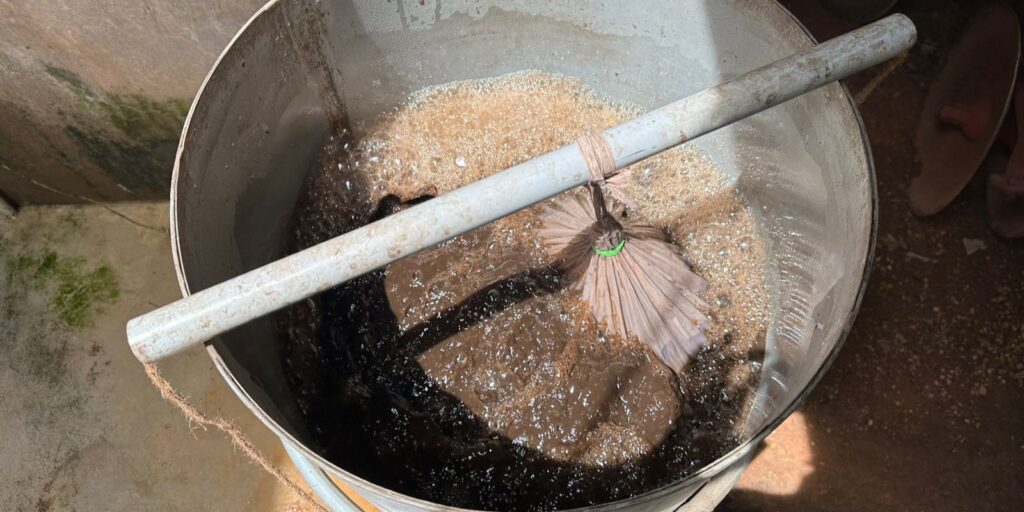
As Dr. Elaine Ingham said, “there is no soil on this planet lacking nutrients to grow plants”, in other words there is intrinsically food (organic matter) in the soil, that we actually just enrich with mulch and compost in farming, according to the needs of our crops. However, sometimes there is not enough microbes to eat that food and release nutrients for the plants. Excess of food can turn into excessive oxidation and there is no conversion back to nutrients. Then compost becomes interesting because it contains a diverse amount of beneficial microbial population which contributes to the decomposition of the organic matter. In that sense spreading solid mature compost can be a solution, but it can be hard to do on a large cultivated area (heavy physical efforts, time consuming process). Turn it into a liquid form seems to be an easier way to do it on an agricultural scale. Dr. Elaine Ingham is the one who helped create the modern version of it : a compost tea using aerobic reaction. Home » Blog » COMPOST TEA: A Natural Probiotic for Soil and Plants COMPOST TEA: A Natural Probiotic for Soil and Plants July 2025 · Lucile As Dr. Elaine Ingham said, “there is no soil on this planet lacking nutrients to grow plants”, in other words there is intrinsically food (organic matter) in the soil, that we actually just enrich with mulch and compost in farming, according to the needs of our crops. However, sometimes there is not enough microbes to eat that food and release nutrients for the plants. Excess of food can turn into excessive oxidation and there is no conversion back to nutrients. Then compost becomes interesting because it contains a diverse amount of beneficial microbial population which contributes to the decomposition of the organic matter. In that sense spreading solid mature compost can be a solution, but it can be hard to do on a large cultivated area (heavy physical efforts, time consuming process). Turn it into a liquid form seems to be an easier way to do it on an agricultural scale. Dr. Elaine Ingham is the one who helped create the modern version of it : a compost tea using aerobic reaction. Compost tea is an organic liquid fertilizer made by brewing mature compost in water with the aim to extract and multiply the beneficial microorganisms present in this compost, through aerobic processes, and introduce it to either directly to the roots or plants to rebalance and enrich the microbiome life. Using compost tea is a permaculture practice that respects the life in the soil, understands how important it is, helps it grow without harming it while still allowing farming to continue. The main intention is important : to make all systems more efficient, in other words an healthy system which works on its own and not with the aim of exploiting the soil. Compost tea can be poured to the roots of the plant to enrich microbial life of the soil as we just explained or it can be applied as a foliar spray by sprinkling it on the leaves to strengthen and protect them. More precisely, compost tea protects the pores on the leaves (called stomata). Because they are open areas, bacteria can deposit there. In general, good bacteria in the compost tea can live on the stomata protecting them from bad bacteria. To make compost tea we first need to start with good cultured mature compost (6 month to 1 year in age). Mature compost means material that only grows beneficial organisms. It is important because we must be sure that nasty elements like pathogens and parasites in the compost have been killed by the composting process, which requires high enough temperature for a long enough time. As a reminder, compost should be made of green and wood materials that help bacteria and fungi grow, and their growth causes the temperature to rise in the compost pile. Of course compost must be made based on what our soil needs. If we need more bacteria, we add more green materials. If we need more fungi, we add wood materials. It depends on what the soil is missing and what biology we want to bring back. Then, to permit our starting culture to grow we need a specific favorable environment who provides space, medium, food and a process to make our compost tea : it’s our machine. In this machine we have : Contents : The tea tank : who should be round shape, with no sharp corners to helps water and air move freely, avoid collect and bacteria from growing and be easy to clean. A tea bag : used to hold the compost during brewing, who will be able to block solid particles and allows microorganisms to pass through. Perfect mesh size is 400-800 microns. The bag should be placed where water and air can flow through it easily and be partially filled to do not block water flow. The medium : Water to extract the beneficial organisms off the solid surface of compost. Water have to be free of chlorine and chloramine which might effect the organisms in the compost extract. For that purpose we use humic acid which is adequate to kill any toxic chemicals that are present in the water. Humic acid also causes the dark brown color in the compost. By chlorine, chloramine, sulfates it decolonizes the humic acid so it is therefore its easier to notice their presence and adapt the concentration of humic acid. Water we brew have to be at room temperature so that the microbial growth is flourishing. The food : The type of food we add to compost tea will influence which kinds of microorganisms grow. It all depends on what we want to achieve. If we want to develop bacteria, we use foods that promote fast bacterial growth. If we want to grow fungi, we need to feed the fungi directly with more complex foods. Here are some good options : Jaggery (unrefined sugar) who helps develop bacteria, promoting rapid microbial growth during brewing.