Nasa Tul: An indigenous perspective…
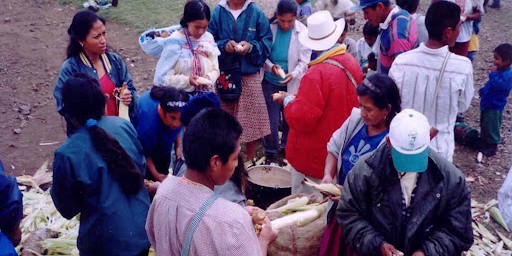
Recently, I had the opportunity to collaborate with Colombian biologist and researcher Lucía Vásquez Celis on a booklet about the Tul, or Nasa Tul, for Colombia’s Land Restitution Home » Blog » Nasa Tul: An indigenous perspective on agriculture from Colombia Open Learning Sessions at the farm Nasa Tul: An indigenous perspective on agriculture from Colombia September 2026 · Anshul Aggarwal Recently, I had the opportunity to collaborate with Colombian biologist and researcher Lucía Vásquez Celis on a booklet about the Tul, or Nasa Tul, for Colombia’s Land Restitution Unit. Lucía has many years of experience engaging with the Indigenous peoples of Colombia and their territorial processes. The Nasa are one of Colombia’s many Indigenous communities. Their ancestral territories are located primarily in Cauca, in southwestern Colombia. They have their own language, Nasa Yuwe, systems of community government, spiritual authorities and collective territories known as resguardos. The Nasa have endured colonisation, displacement, armed conflict and continued appropriation of their lands. In response, they have developed strong movements for cultural survival, territorial recovery and political autonomy. Their collective organisation is guided by four closely connected principles: unity, land, culture and autonomy. You can access the document here: Español (original) / English (translation) For the Nasa, territory is far more than the area of land they inhabit. It is a living space where community, nature, ancestors, spirituality and collective memory come together. Defending the territory therefore means defending a way of life. Agriculture forms an important part of this way of life through a system known as the Tul. The Tul is a space where food and medicinal plants are cultivated, seeds are conserved and knowledge is passed between generations. The booklet describes it as a weave (tejido) of the Earth, made with food, medicinal and spiritual plants. Trees, crops, animals, people, water and the other beings of the territory all participate in this weave. The land provides food, medicine, water and shelter, while people carry responsibilities towards the land. Foundations and Principles of the Tul The Nasa people of Cauca, Colombia The foundations of the Tul lie in the Nasa worldview and their collective life. The Nasa understand life through relationships among different worlds, beings and spiritual forces. At the centre of this worldview is Wét wét Fxi’ze nxi (pronounced Wet wet fyee-eh-zeh n-yee), which can be translated as living in harmony, closely related to the broader Latin American concept of Buen Vivir. Harmony here emphasises the continuous work of bringing the individual, community, territory and other beings of nature into a balanced relationship. Another important idea for the Nasa is sentipensar: feeling-thinking. It questions the separation of thought and feeling, recognising that knowledge arises through the body, land, memory, emotion and collective experience. This worldview takes collective form through the Nasa life plans. These are community processes through which people decide how they will live together, care for their territory and exercise autonomy. They are based on spirituality, respect for Mama Kiwe or Mother Earth, reciprocity and participation. And these foundations become a lived practice through the Tul. Forests, mountains, wild animals, rivers, lagoons and springs are recognised as sources of life that require care and respect. Water is sacred because life emerges from it. The Tul also expresses the Nasa relationship with Mother Earth. The Nasa understand themselves as her children: the Earth gives them life and food, and when they die, they return to her. Caring for the territory therefore includes allowing some areas to rest, protecting water sources and defending the land from activities that cause ecological and social harm. Nasa women play an important role in this work as caretakers of territory and weavers of life. The Nasa people of Cauca, Colombia Community is equally important to the Tul. Work is often carried out collectively through minga, a traditional form of community work among Indigenous peoples of the Andes. People come together to undertake work that benefits a family, the community or the territory, including planting, harvesting, building, repairing paths and caring for water sources. More than shared labour, minga is a space for exchanging knowledge, making collective decisions, sharing food and strengthening relationships. It is based on reciprocity: people offer their time and effort knowing that others will support them when needed. Through the Saakhelu ceremony, people give thanks to Mother Earth, honour the sun, moon and animals, and awaken conserved seeds through dance, music and medicinal plants. The Tul is also a place of education. Children learn through participation: by planting, harvesting, caring for seeds, sharing food, speaking their language and observing how their parents and elders relate to the Earth. In this way, the Tul carries Nasa knowledge and culture from one generation to the next. The Tul is therefore much more than farming. It is an entire system of life rooted in territory and shaped by the principles of unity, land, culture and autonomy. Tul as an ancestral medicine system integrates both forests and agriculture A dialogue with Integral Yoga In my contribution to this document, I brought the Tul into dialogue with ideas from Integral Yoga. Both hold unique worldviews, and yet both open important questions about the unity of life and the place of the human being within it. Sri Aurobindo, drawing from the Upanishads, writes that all matter is food and that the eater is, in turn, eaten. Food can therefore be understood as part of a continuous exchange of matter, energy and life. Every being is nourished by other beings and eventually becomes nourishment itself. Agriculture makes this relationship tangible. The farmer offers the labour and capacities of the body to the land. The land offers its body for the growth of food. Food offers itself to nourish another body. Agriculture connects land, farmer, food and community through an ongoing movement of giving and receiving. And from this point of view, the farmer does more than just grow food; the farmer also becomes food. Our attention, time, strength, knowledge and care enter the land and
Consciousness in Agricultural Systems
The conversation about what makes “good food” is evolving rapidly as we become aware of different aspects and relationships of agricultural systems. We of course know of the ecological impacts of farming (the industrial way of farming which is prevalent today)- loss of forest cover, loss of biodiversity, greenhouse gas emissions, pollution of soil, water, air and so on Home » Blog » Consciousness in Agricultural Systems Consciousness in Agricultural Systems September 2026 · Anshul Aggarwal The conversation about what makes “good food” is evolving rapidly as we become aware of different aspects and relationships of agricultural systems. We of course know of the ecological impacts of farming (the industrial way of farming which is prevalent today)- loss of forest cover, loss of biodiversity, greenhouse gas emissions, pollution of soil, water, air and so on. To address these concerns metrics like food miles and carbon and water footprint of food have come up. There is an assumption here that “organic” or “regenerative” labels are intrinsically faring better on these metrics. But organic and regenerative too have become market labels and part of the large industrial agricultural system, and therefore not necessarily always good for ecology or people. Then, there are social implications of agriculture–exploitation of communities and labour caused by large food conglomerates. The criticism of the ‘big food’ industry has led us to a better understanding of the global implications of trade in food systems. And that has given us the ideas of local, small-scale, fair trade etc. For animal agriculture, there are certifications and standards of pasture-raised, free-range, humane treatment and so on. If you are a farmer and somehow you are looking at all these aspects, you are probably doing the best that you can. But is that enough? In Indian metaphysics, particularly in the Upanishadic tradition, food, body, mind and life-force are understood as intimately connected. A passage in the Chandogya Upanishad illustrates this relationship through the gross and subtle aspects of nourishment (Lokeswarananda, 1998). That which is the subtlest part of curds rises when they are churned and becomes butter. In the same manner, that which is the subtlest part of the food that is eaten rises and becomes mind. The subtlest part of the water that is drunk, rises and becomes prana. The subtlest part of the fire that is eaten rises and becomes speech. (6.5.1-4) In the Vedic tradition, food is associated with matter. Annam is both food and matter. In fact, food is kind of a bridge between the material and spiritual worlds. The rituals of the Vedic tradition are rituals of consummation of these two worlds, mediated by offerings of food. The idea of food as energy continues into the Indian Upanishadic tradition as well. As Sri Aurobindo notes in the Life Divine (2005), “All Matter according to the Upanishads is food, and this is the formula of the material world that ‘the eater eating is himself eaten’” (p. 204). Therefore in the spiritual traditions, food has been not only an object of sustenance but also contemplation, a vehicle of energy- both gross and subtle. The relationship between matter and consciousness finds a very precise articulation in the Integral Yoga philosophy of Sri Aurobindo. For him, this relationship between matter and consciousness directly implies that evolution of matter is linked to evolution of consciousness. Thus, material reality changes, as consciousness evolves–material reality can be changed when consciousness evolves. So, can food be made better by evolving consciousness? How? What is the implication of consciousness on the food that we grow and consume? And before all that, what is consciousness in food? What is consciousness at all? For me, these are the most exciting questions in agriculture today and many are waking up to a hidden dimension of our life, and our agricultural systems that lie at the foundation of who we are, and how we have created this world. Surprisingly (at least for me), some of these questions have been taken up by the United Nations Development Programme through their initiative– Conscious Food Systems Alliance (CoFSA). CoFSA describes consciousness as awareness of the inner and outer phenomena that shape how we relate to ourselves, to one another, to Nature and to future generations. Their focus is on how inner dimensions of people and the institutions they build impact agriculture, and vice versa. The Case Study Collection, Volume 2, published in 2026 by CoFSA brings together nineteen initiatives from different parts of the world. They range from farms and fishing communities to schools, universities, cooperatives, public institutions and global movements. Some use meditation or reflective dialogue explicitly. In others, consciousness is present through cultural memory, spiritual practice, deep listening, shared responsibility or a renewed experience of interdependence. They all show that inner change is beginning to be understood as part of the practical work of transforming food systems and that there is greater acknowledgement for this missing dimension in our food systems. AuroOrchard in Auroville features as the opening case study of this volume. You can access the full volume here. Cultivating food and the person The first group of cases focuses on food production. I share my understanding of an integral view of agriculture which includes the dimensions of ecological, social, intellectual, spiritual and psychological practice. The framework invites attention to five interdependent dimensions of agricultural life – physical, vital, mental, spiritual and psychic – and to the tensions between them and how they are being explored at AuroOrchard in service to food production and a holistic community food system. The Islamic Farming initiative of Global One 2015 works with Muslim farming communities in Kenya, Ethiopia and Nigeria. Conservation practices such as composting, crop rotation and minimum tillage are connected with Qur’anic principles of trust, stewardship, prayer and charity. In Sri Lanka, Sarvodaya’s Awakening Through Natural Farming links chemical-free farming with mindful observation, self-reliance and community awakening. A farmer-to-farmer model helps people recover confidence in their own knowledge and in the biological processes of the farm. The rapid growth of
Puducherry Farmers Visit
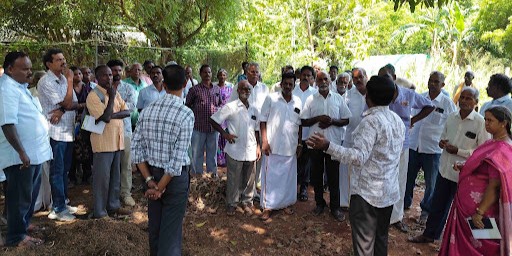
On 9 September 2026, AuroOrchard welcomed more than 80 farmers from the Puducherry region. The visit was organised by the Agricultural Technology Management Agency (ATMA), under the Department of Home » Blog » Puducherry Farmers Visit Puducherry Farmers Visit September 2026 · Anshul Aggarwal On 9 September 2026, AuroOrchard welcomed more than 80 farmers from the Puducherry region. The visit was organised by the Agricultural Technology Management Agency (ATMA), under the Department of Agriculture and Farmers Welfare, Government of Puducherry, through the Farmer Information and Advisory Centres of Kalapet and Thavalakuppam. The farmers were interested in how different activities like vegetable cultivation, fruit orchards, seed saving, nursery production, poultry, food processing, water management, research, education, and distribution are organised, how they support each other, and how the farm manages production across different crops and seasons. There was also interest in AuroOrchard’s experience of farming in red sandy soils and under conditions of intense heat, uncertain rainfall, water limitations, and increasing pressure from pests and other animals. We have always intended for the knowledge and practices developed on the farm to have relevance beyond its boundaries. Ecological farming cannot remain theoretical or be possible only under privileged conditions. It must engage with the realities of the millions of farmers across India and the world who cultivate under constraints of land, water, labour, rising costs, uncertain markets, and a changing climate. The visit was an affirmation of this intention and allowed us to share our struggles and challenges too, which only other farmers can understand fully. We are also excited about the future possibilities of such engagements. Farmers throughout the Puducherry and Auroville bioregion carry extensive knowledge developed through generations of working with local land, crops, and seasons. Their observations, questions, and practical experience can deepen and challenge our own understanding. Building closer relationships with neighbouring farmers is therefore as much an opportunity for AuroOrchard to learn and participate in building a stronger and more resilient regional agriculture. On 9 September 2026, AuroOrchard welcomed more than 80 farmers from the Puducherry region to learn and share. The visit was an affirmation of our intention for the knowledge and practices developed on the farm to have relevance beyond its boundaries and an opportunity to learn and participate in building a stronger regional agriculture. Previous ArticleNext Article Featured Articles Consciousness in Agricultural Systems 23 Sep 2026 Remembering the Beginnings… 27 Aug 2026 Consciousness in Agricultural Systems 23 Sep 2026 Open Learning Sessions at the farm 23 Sep 2026
Remembering the Beginnings…
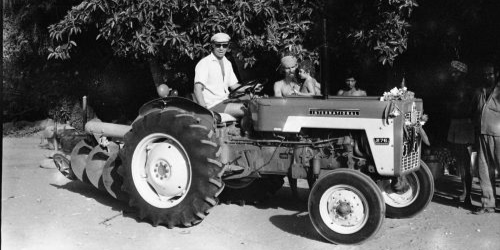
This interview with Gérard from 2020 , by the Lands for Auroville Unified team, takes us back to the earliest beginnings of the farm. Gérard came to the Sri Aurobindo Ashram in 1955 at the age of 23. After working at the Ashram bakery and swimming pool, he spent Home » Blog » Remembering the Beginnings of AuroOrchard With Gerard Cruz (2020) Remembering the Beginnings of AuroOrchard With Gerard Cruz (2020) August 2026 · Anshul Aggarwal This interview with Gérard from 2020 , by the Lands for Auroville Unified team, takes us back to the earliest beginnings of the farm. Gérard came to the Sri Aurobindo Ashram in 1955 at the age of 23. After working at the Ashram bakery and swimming pool, he spent several years caring for an orchard-farm in Mountain Paradise in the Himalayas, growing apples and peaches. Looking back, he describes this period as his apprenticeship in horticulture. In 1967, the Mother asked him to visit a piece of land near Promesse and consider how it might be developed. She later asked whether he would take responsibility for the land and grow fruits and vegetables for the emerging community of Auroville. Gérard returned from the Himalayas towards the end of 1968 and began the gradual work of developing AuroOrchard. The story also carries some lesser-known parts of the farm’s history. The Ganesh temple was already present on the land, and its continued care was one of the conditions under which the Mother acquired the farm. While the temple’s physical connection with the farm was lost in the land exchange in 2023, the daily puja has continued uninterrupted even until today since the beginning, now under the care of Diwakar. What comes through most strongly in Gérard’s memories is his trust in the work he was given and his gratitude for the life that unfolded through it. More than fifty years later, AuroOrchard continues to grow food for Auroville, carrying forward the purpose with which it began. As Gérard reflects: “My heart remains filled with gratitude for this exceptional experience.” You can read the full interview here: https://land.auroville.org/gerard-development-auroorchard/ Previous Article Featured Articles Words of appreciation…ㅤㅤㅤㅤㅤ 27 Aug 2026 Monthly Updatesㅤㅤㅤㅤㅤㅤㅤㅤ 26 Aug 2026 Words of appreciation…ㅤㅤㅤㅤㅤ 27 Aug 2026 Words of appreciation…ㅤㅤㅤㅤㅤ 26 Aug 2026
Monthly Updatesㅤㅤㅤㅤㅤㅤㅤㅤ
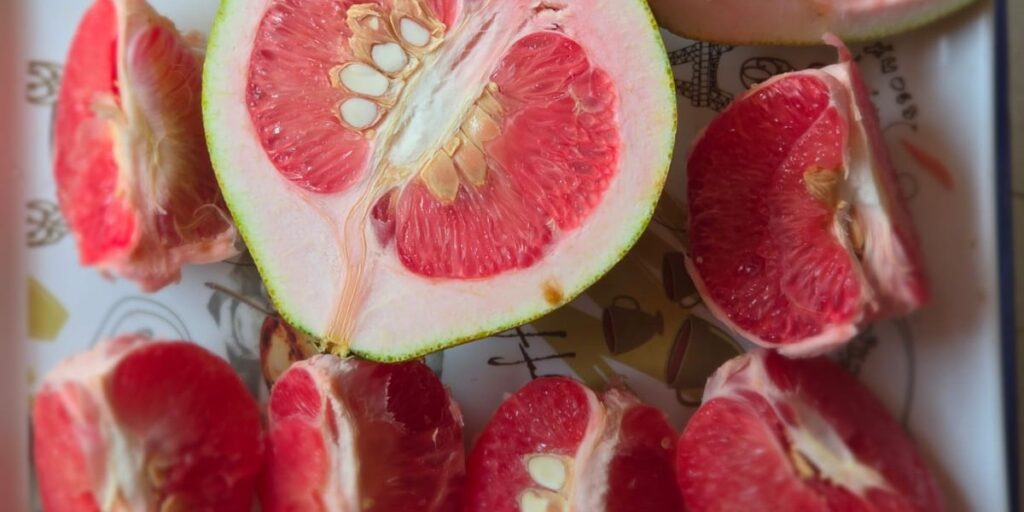
They are now drinking lemon juice from the farm and occasionally some buttermilk to keep cool. The Humane Home » Blog » Monthly Updates Monthly Updates August 2026 · AuroOrchard Poultry Our seventh flock has arrived, and the sixth flock has moved to the laying coop. Only two flocks are currently producing eggs, and we are facing a significant shortage. The sixth flock should begin laying soon, so we are looking forward to an improvement in about a month. Planning these transitions around changes in egg consumption remains a challenge, as the limited availability of chicks makes it difficult to bring in new flocks exactly when needed. We are also exploring additional feed options, including leftover vegetables and fruit, cereal grasses grown in hydroponic systems, and black soldier fly larvae. Vegetable garden Most of the sunnhemp has been cut down, and new brinjal and ladies’ fingers have been planted. We have also planted groundnut for the first time in eight years and are looking forward to seeing how it turns out! We are expanding our sweet potato planting, while the long beans and rosella are doing well. Quite a bit of pumpkin has gone into the ground too, and we hope to get a good crop before the monsoon Orchards There has been plenty of pruning, composting and mulching this month. The syntropic jackfruit and avocado orchards are coming along well. It is wonderful to see the diversity of plants growing together and the changes already visible in the soil. After pruning many mango trees last month, we have now organised the branches and are preparing to plant new mango trees next month as part of the mango conservation project. After losing all our papayas to a virus earlier this year, we have finally planted a new crop. We are hoping for a good harvest in April-May, and that there are no major cyclones. Seeds & Nursery Things are looking better in the nursery now, with everything under cages and mosquito nets! We are considering expanding the nursery to accommodate the growing need for plants for the farm and the community. We have started winged beans, palak and more basil, while taking a break from sowing long beans, cucumber and pumpkin until December. Abundance We continue to maintain stocks of our regular products—summer blend, pesto, turmeric lemon syrup, kombucha and herbal powders. We are also harvesting red chillies for drying. Every Monday afternoon, we work with the YouthLink team to develop new recipes and replenish stocks of some products. These afternoons are open to volunteers and Aurovilians interested in exploring how best to use and preserve Auroville-grown food. We are grateful to Solar Kitchen and Pour Tous DC for proactively prioritising vegetables and fruits grown on Auroville’s farms. Our thanks also to Taste of Korea for a large batch of delicious long bean kimchi! Research & Education September was busy with learning sessions, visits and tours, including a visit by more than 80 farmers from Puducherry. We have a three-day natural beekeeping workshop coming up this weekend and are exploring further learning opportunities around bees and biodiversity on the farm. We harvested the first compost pile from EcoPro’s sludge compost experiment-it is black gold! The first harvests of beans and ladies’ fingers from the Shumei Natural Farming experiment plots are also encouraging. We will continue these experiments after the monsoon, with more planning and over a larger area. We are grateful for the growing community of people interested in agriculture and AuroOrchard’s work. Poultry Egg consumption has again increased in Auroville after the summer. However, our production is now less as we say goodbye to our oldest flock and prepare to shift the youngest flock to the laying coop. Birds in general are doing much better due to better weather and more greens in the free-range after the rains. We will soon be welcoming day-old chicks in our nursery coop. Vegetable garden Happy to receive the rains after a lot of anticipation. Due to extreme heat, vegetable production was not good this season. Many things that were planted simply died due to heat, and lack of moisture in the soil and air. Since the rains, we have planted more beans, brinjal, pumpkin, ladies fingers, sweet potatoes and groundnut! We are planting groundnuts after 8 years on the farm. Herbs continue to be planted in the greenhouse, and we are also starting winter beans like winged beans. Now we begin to reduce vegetable planting in anticipation of the winter monsoon starting in two months. Orchards Finally, we managed to plant lime, papaya, rosella, pineapple- all of which were pending due to the absence of rains. We have established these new clusters in the mango orchard. Our current lime trees are about 40 years old and will reduce/stop producing in the next 3 to 5 years. By then these new trees should start producing. After the massive loss of Papaya trees due to the viral infection last year, we are hoping to have good harvests post-monsoon next year. Our team continues to prune and mulch the existing orchards and we are preparing to plant some native mango varieties in the mango orchard soon. Seeds & Nursery The nursery work is much better now with cages and mosquito nets. The pressure from squirrels and rats is intense and even a single box left unprotected is damaged overnight. Meanwhile, we managed to plant a lot of things from the nursery post-rains, and our wonderful team completed around 30 large nursery orders from our community! We continue to sow, transplant and start tree saplings now in preparation for winter monsoon. Abundance As we have crossed the busy fruit season, we now have more time to organise our stock, focus on abundant vegetables, herbs and greens. At the moment, we are busy processing Pomelos, Lime, Avocados, and leaves of Rosella and Moringa. There has been a growing demand for farm products from other locations in Tamil Nadu, especially Thiruvanamalai, Chennai and even Bangalore. We are
Words of appreciation…ㅤㅤㅤㅤㅤ
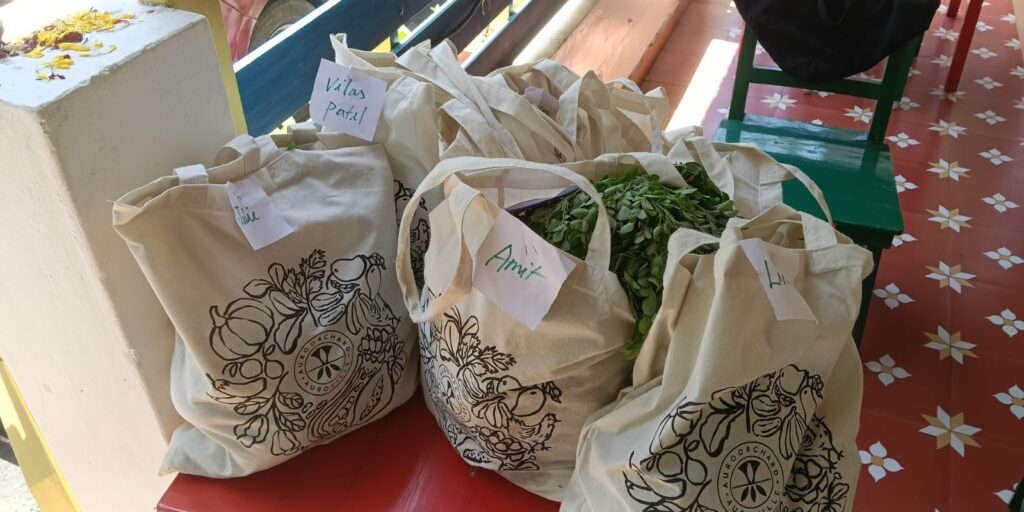
We’re deeply grateful for the encouragement and trust we receive from our community. There is still much to learn, improve, and do. We receive this feedback with humility and gratitude, as a reflection of the relationships and collective effort that make this work possible. Home » Blog » Words of appreciation from the community Words of appreciation from the community August 2026 · Anshul Aggarwal We’re deeply grateful for the encouragement and trust we receive from our community. There is still much to learn, improve, and do. We receive this feedback with humility and gratitude, as a reflection of the relationships and collective effort that make this work possible. A few words from our community on their experience of receiving baskets from the farm: A wonderful way to eat amazing food, enjoy top-notch products…and support Auroville’s farms. All are of exceptional quality- the super fresh fruits and veggies, and the processed foods: amazing taste, long preservation, well presented! Personally, it is a great luxury to receive a fresh vegetable from Auroville farm. I’m very grateful to the people working in the orchard to provide us this service. I’m super happy about your products! Seasonal and very fresh, it’s tasty and good. I tasted pesto, jam and ale, which are all very good! Good job. One of the best places to eat local, organic and seasonal food at AV. A wide selection available year-round, and a genuine effort on the part of the farm to produce fruits and vegetables of excellent quality. Produce we can trust to be organic. Every basket received is full of fresh produce and good will. We support organic farming and farmlands and forests in Auroville. A lot more support was needed. It’s wonderful work that AuroOrchard does and continues to keep bringing new produce. The basket service is a blessing for me as i don’t have any free mornings to go shopping at Ptdc. It’s also very consistent which keeps me assured. Response from Anshul and a few I have interacted with is prompt and addresses the query. The food is wonderful, always feels fresher, safer and more flavourful than any I can find in a store. I’ve been regularly purchasing produce from AuroOrchard organic farm, and the quality has been consistently outstanding. The fruits and vegetables are incredibly fresh, full of natural flavour, and you can truly taste the difference compared to regular market produce. What I appreciate most is the reliability—they maintain the same high standard every time. The produce feels clean, wholesome, and grown with care. This service is very valuable, and the fact that all produce is organic makes it even more valuable. I feel the difference in quality with AuroOrchard being a better quality. The rates of raw products are neither very high nor very low. The basket system is extremely helpful & is a hassle free experience. Amazing quality, very precise delivery, great service. Earlier I could never access AV farm produce, as nothing much is left at 1pm at PTDC. I guess that way neither ptdc nor av farms could really know the demand for their produce. Now it’s so easy! I keep sharing the link for the weekly order and the farm walk…we are blessed with fresh organic food directly from.the farm… prepared with so much care and farming expertise. I’m amazed by the way you responded to an intense situation and the outcome of it which shows more consciousness, adaptability, resilience and the work capacity. The work that AuroOrchard does is absolutely outstanding. Despite all the challenges, blockages, big injustice and even violence AuroOrchard has faced, you not only persevere but have improved tremendously over the last 2-3 years. I admire your strength, courage and endurance! I really appreciate your efforts to find new solutions for egg mass production. Somehow, it doesn’t feel right to me to keep animals to produce food for humans, but as long as we eat eggs at least lets find the most animal-friendly way to produce them. I’m happy to know that you try your best and that you will improve it even more! Your new ready made food production program is great, very creative and innovative! I always enjoy seeing your new products and love to try them out, especially your new syrups and drinks. My absolute favorite products are your turmeric powder, the various greens and the brown eggs. Amazing! Super efficient, top quality products. Such quality, creativity and abundance… cannot be better! A dream coming true for any organic food and farming lover. Thanks for all the efforts going into the direct sales! On top of the orders and my emails are always answered. Good quality products. Wonderful work, very useful Very positive vibrations. Products are good quality with reasonable price. Team mates are good, some are extraordinarily talented , simple and helpful. I wish AuroOchard all the best. Auro Orchard forms an excellent bridge for volunteers and newcomers in auroville. i often hear of people working in Auro orchard in a meaningful way, even if for a short period, and it makes me happy. I also appreciate immensely that the team is flexible and always experimenting and trying things – rare in this sector. Thank you AuroOrchard team and earth! Previous Article Featured Articles Words of appreciation from the communityㅤㅤㅤㅤㅤ 26 Aug 2026 Soil Test Experiments… 26 Aug 2026 Words of appreciation from the communityㅤㅤㅤㅤㅤ 26 Aug 2026 Soil Test Experiments… 26 Aug 2026
Dry Tropical Syntropic Agroforestry
We get asked this question quite a lot! As Permaculture becomes more and more popular and perhaps projected as a wonderful solution for diversity and abundance, it is a general perception that “being a Permaculture farm” is the next big innovation in farming. ⠀⠀⠀⠀⠀⠀⠀⠀⠀⠀⠀⠀⠀⠀⠀⠀⠀⠀⠀⠀⠀⠀⠀⠀⠀ Home » Blog » Dry Tropical Syntropic Agroforestry Dry Tropical Syntropic Agroforestry July 2026 · Anshul Aggarwal Since 2023, we have been experimenting with syntropic agroforestry in different parts of AuroOrchard. This work is part of our wider effort to develop integrated perennial horticulture across the farm through new orchards,⠀⠀⠀⠀⠀⠀⠀⠀⠀⠀⠀⠀⠀⠀ The human relationship with productive forests is older than settled agriculture. Archaeological research shows that hunter-gatherers were actively shaping tropical forest ecologies tens of thousands of years ago through burning, plant movement, selective protection and the concentration of useful species. It would be inaccurate to describe all these practices as agroforestry in the present technical sense. Still, they show that humans were managing trees, plants and forest mosaics for food long before fields of domesticated crops became the basis of settled societies. Many Indigenous and traditional systems continue this long history: home gardens, forest gardens, shifting cultivation, mixed orchards, trees maintained within crop fields and animals grazing beneath tree cover. Modern agroforestry has organised these diverse practices into a recognised field of farming and research, but it did not invent the idea of cultivating with trees. Today, the Food and Agriculture Organization defines agroforestry as the deliberate integration of woody plants—trees, palms, shrubs or bamboo—with crops or animals, arranged together in space or through time. While the term is relatively modern, the practice of growing food within wooded landscapes is very old. Syntropic agriculture, also described as successional agroforestry, is a more recent approach within agroforestry, developed through the work of Swiss farmer and researcher Ernst Götsch.Götsch began field experiments in Europe during the 1970s and later continued his work in Costa Rica and Brazil. After settling in Bahia in the early 1980s, he developed cacao-based systems that combined food crops, fruit trees, service plants and longer-lived forest species. His work gradually became known as syntropic agriculture. In Götsch’s use of the word, syntropy refers to the capacity of living systems to generate increasing organisation, differentiation and complexity. We can create syntropy by understanding how plants can be arranged and managed so that each stage helps create the conditions for the next. Syntropic agriculture uses familiar agroforestry elements—trees, crops, succession, ground cover and biomass—but gives particular attention to: the position of each plant within the vertical canopy; the stage of succession at which it belongs; its life cycle and productive period; its function within the whole system; and the timing of pruning, harvesting and removal. It is therefore more than planting many crops together. It is an actively managed process in which the farmer continually observes how the plants are interacting and changes the system as it develops. Some plants produce food. Others are planted mainly to provide temporary shade, occupy space, protect the soil or generate biomass. Some remain for only a few months. Others become part of the permanent orchard. Designing in space and time A syntropic field is planned with two important considerations. The first is space. Plants are arranged according to the amount of light they require and the height they may eventually occupy. A coconut, avocado, papaya, pineapple and sweet potato use different parts of the vertical space. The second is time. Plants are arranged according to their life cycles and their place in the development of the system. Maize, pumpkin, watermelon and rosella may occupy the first few months. Papaya, moringa and lemongrass may remain for several years. Avocado, jackfruit, citrus and cacao form the longer-term orchard. The first appearance of the field is therefore not its final form. Short-lived plants are harvested. Support plants are pruned repeatedly. Some trees are eventually removed as the main fruit crops require more light and space. A papaya, for example, may protect a young avocado from direct summer sun and produce fruit during the first few years. As the avocado develops, the papaya may need to be cut back or removed. Its role was to help establish the next stage of the system. This combination of vertical stratification, different life cycles and planned succession is central to the design. The Syntropic Trend and the Gap Syntropic agriculture is now being explored in different forms and at very different scales. Its best-known examples are tropical cacao, coffee and fruit systems in Latin America, but the approach has also been adapted to market gardens, school gardens, Mediterranean orchards, temperate fruit and nut systems, and larger experiments combining grains, grasses and rows of trees. Scientific research is also beginning to examine syntropic farming more closely. A 2025 review brought together 67 empirical studies. Most were from tropical countries, with almost three-quarters coming from Brazil and Bolivia. Only one study in the review came from Asia, from Yunnan in China; none of the studies listed were from India. The review found encouraging results in areas such as agrobiodiversity, nutritional diversity, soil fertility, carbon storage, water cycling and plant health. Productivity comparisons with other farming systems were mixed. It also identified considerable demands for labour, knowledge, tools and active management. There is, therefore, a growing body of conceptual writing, practitioner experience and scientific study. What we have found less readily available is open, detailed documentation from dry tropical farms showing actual field dimensions, species quantities, irrigation arrangements, planting chronology, pruning, survival and the changes made over several years. This is the context in which we place our work at AuroOrchard. AuroOrchard has sandy soil, intense summer heat and long periods without significant rain. Young fruit trees require irrigation during establishment, and the plants grown for shade and biomass draw from the same limited water. These conditions shape decisions about density, spacing, species, succession and pruning. Through our trials, we hope to develop and share some practical examples of dry tropical syntropic agroforestry. Design Process Before planting, we
Initiating the Centre for Mango Conservation…
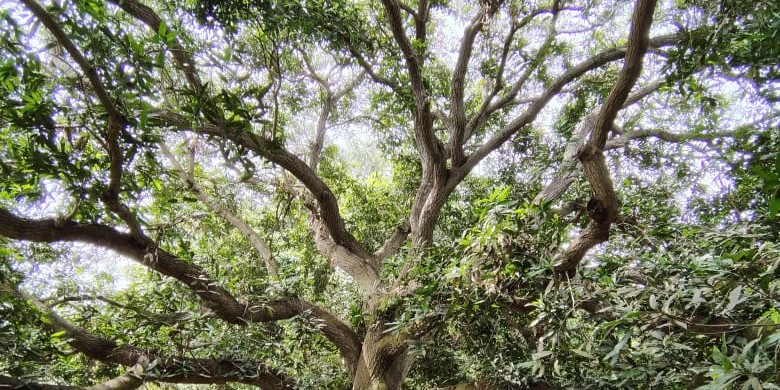
We get asked this question quite a lot! As Permaculture becomes more and more popular and perhaps projected as a wonderful solution for diversity and abundance, it is a general perception that “being a Permaculture farm” is the next big innovation in farming. ⠀⠀⠀⠀⠀⠀⠀⠀⠀⠀⠀⠀⠀⠀⠀ Home » Blog » Initiating the Centre for Mango Conservation & Research Initiating the Centre for Mango Conservation & Research July 2026· Anshul Aggarwal & Charan GP This year’s abundant mango harvest has felt like an auspicious beginning to the work of establishing a Centre for Mango Conservation & Research at AuroOrchard. The orchard has offered mangoes in a remarkable range of shapes, colours, fragrances, flavours and textures. Some are well-known varieties, while others are local, distinctive or still unidentified trees that have grown at AuroOrchard for many years. The harvest has brought renewed attention to the diversity already present here and to the importance of documenting and conserving it. India has one of the richest mango traditions in the world. Across different regions, hundreds of varieties have been selected, named, cultivated and shared over generations. Each carries its own flavour, use, growing characteristics, cultural associations and relationship with a particular place. Yet this diversity is becoming less visible as markets increasingly favour a smaller number of standard commercial varieties. Over the next three years, we hope to develop AuroOrchard’s existing mango orchard into a living collection of more than 100 varieties. This will include local, heritage, rare, regional and traditional mangoes, along with important commercial varieties and promising seedling selections. Our mango orchard currently contains 210 trees and more than 15 known varieties. The main orchard blocks were first surveyed and mapped and the trees were numbered in 2022. We have again surveyed the orchard and the existing records are being updated. This year’s harvest has also allowed us to begin observing and recording the flavour, fragrance, texture, colour and ripening period of the different fruits. The project is being developed in collaboration with Shyju Machathi and the Nattu Manchottil Educational and Indigenous Fruit Plants Conservation and Research Trust in Kerala. Shyju and the Nattu Manchottil community have played an important role in identifying, conserving and propagating indigenous mango varieties. In recognition of this work, the community received the Plant Genome Saviour Community Award in 2021. Their experience in identifying varieties, collecting scion material, grafting, nursery development and community-based conservation will help guide the work at AuroOrchard. The proposed Centre will include a living mango diversity collection, a professional nursery for grafted plants, a research and documentation programme, and a learning space for farmers, students, volunteers, researchers and visitors. We also hope to organise mango walks, tastings, exhibitions, grafting workshops and other programmes that allow people to experience mango diversity directly. Through this Centre, we hope AuroOrchard can become a home for mango varieties that may otherwise be forgotten, and a place where this diversity can continue to be grown, tasted, studied, propagated and shared. Previous ArticleNext Article Featured Articles Dry Tropical Syntropic Agroforestry 30 Jul 2026 Initiating the Centre for Mango Conservation… 29 Jul 2026 Dry Tropical Syntropic Agroforestry 30 Jul 2026 Initiating the Centre for Mango Conservation… 29 Jul 2026
Grateful for Abundance of Mangoes | 2026
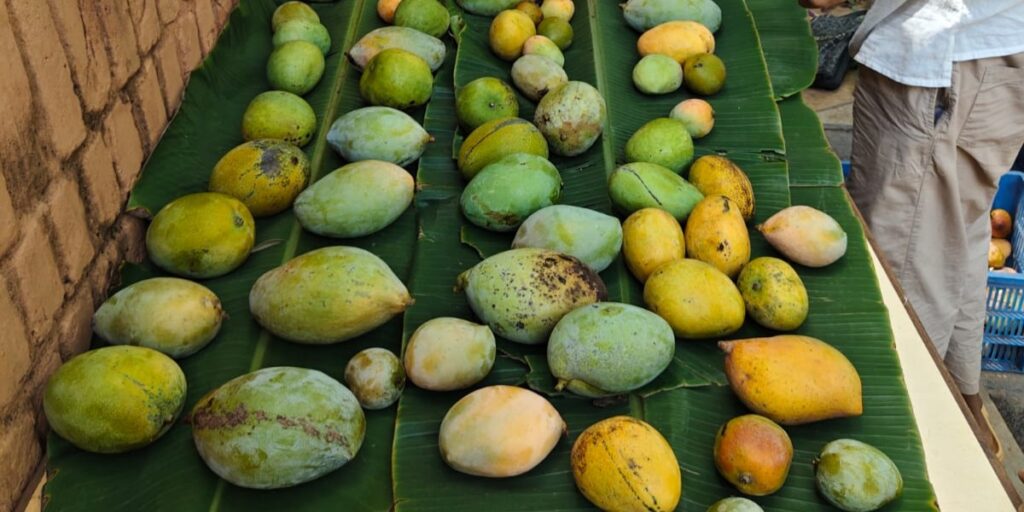
This year, the mango orchard offered us one of its most abundant harvests in recent memory. Over the course of the season, we harvested and distributed approximately 12 tonnes of mangoes. Home » Blog » Grateful for Abundance of Mangoes Grateful for Abundance of Mangoes July 2026· Anshul Aggarwal This year, the mango orchard offered us one of its most abundant harvests in recent memory. Over the course of the season, we harvested and distributed approximately 12 tonnes of mangoes. The orchard contains more than 15 known varieties, each arriving at a slightly different time and with its own particular shape, colour, aroma, flavour and texture. Among them are Banganapalli, Sindhoora, Neelam, ImamPasand, Totapuri, Rajapuri, Malgova, Dilpasand, Kalapadi, Redigola, Kader along with several old and distinctive trees whose varieties are still being identified. A likely part of this year’s abundance could be just the right sequence of the weather. Good rains before the flowering period followed by a relatively drier period allowed appropriate moisture at the right time for flower and fruit setting. However, it seems that several conditions would have come together, and the orchard responded with extraordinary generosity. Of the total harvest, 11.6 tonnes, nearly 97%, were distributed within Auroville! Together with the fruit supplied to the Ashram, practically the entire harvest remained within Auroville and its neighbouring community. This season also renewed our appreciation of the diversity already present at AuroOrchard and strengthened our intention to document, conserve and care for these trees for the years ahead. We want to thank the entire community for helping in distributing these mangoes, for using as much as they could, for their understanding feedback when the mangoes were not good, and for enjoying this abundance with us. Previous ArticleNext Article Featured Articles Dry Tropical Syntropic Agroforestry 30 Jul 2026 Initiating the Centre for Mango Conservation… 29 Jul 2026 Dry Tropical Syntropic Agroforestry 30 Jul 2026 Initiating the Centre for Mango Conservation… 29 Jul 2026
Monthly Updatesㅤㅤㅤㅤㅤㅤㅤㅤ
They are now drinking lemon juice from the farm and occasionally some buttermilk to keep cool. The Humane Home » Blog » Monthly Updates Monthly Updates August 2026 · AuroOrchard Poultry Egg consumption has again increased in Auroville after the summer. However, our production is now less as we say goodbye to our oldest flock and prepare to shift the youngest flock to the laying coop. Birds in general are doing much better due to better weather and more greens in the free-range after the rains. We will soon be welcoming day-old chicks in our nursery coop. Vegetable garden Happy to receive the rains after a lot of anticipation. Due to extreme heat, vegetable production was not good this season. Many things that were planted simply died due to heat, and lack of moisture in the soil and air. Since the rains, we have planted more beans, brinjal, pumpkin, ladies fingers, sweet potatoes and groundnut! We are planting groundnuts after 8 years on the farm. Herbs continue to be planted in the greenhouse, and we are also starting winter beans like winged beans. Now we begin to reduce vegetable planting in anticipation of the winter monsoon starting in two months. Orchards Finally, we managed to plant lime, papaya, rosella, pineapple- all of which were pending due to the absence of rains. We have established these new clusters in the mango orchard. Our current lime trees are about 40 years old and will reduce/stop producing in the next 3 to 5 years. By then these new trees should start producing. After the massive loss of Papaya trees due to the viral infection last year, we are hoping to have good harvests post-monsoon next year. Our team continues to prune and mulch the existing orchards and we are preparing to plant some native mango varieties in the mango orchard soon. Seeds & Nursery The nursery work is much better now with cages and mosquito nets. The pressure from squirrels and rats is intense and even a single box left unprotected is damaged overnight. Meanwhile, we managed to plant a lot of things from the nursery post-rains, and our wonderful team completed around 30 large nursery orders from our community! We continue to sow, transplant and start tree saplings now in preparation for winter monsoon. Abundance As we have crossed the busy fruit season, we now have more time to organise our stock, focus on abundant vegetables, herbs and greens. At the moment, we are busy processing Pomelos, Lime, Avocados, and leaves of Rosella and Moringa. There has been a growing demand for farm products from other locations in Tamil Nadu, especially Thiruvanamalai, Chennai and even Bangalore. We are soon launching our new labels that will allow us to distribute these products beyond Auroville. Research & Education This month we hosted a 3 day course on learning from the land in collaboration with Deepika and Bernard from Pebble Garden. The course was attended by 13 people of different ages and backgrounds. It was heartening to see the interest and curiosity of the participants affirming the need for sharing more of what we do. Weekly open sessions have also been regularly conducted, the last one being on mapping biodiversity at the farm launching a new research project on the farm to assess the impacts of climate change on agriculture in Auroville region and how the practices at AuroOrchard could respond to these challenge Poultry The summer has been tough on the birds. We somehow managed with lime water and buttermilk but clearly the heat was a big stress for the birds. We are now installing large exhaust fans in the coops, to help with ventilation and some temperature regulation. In the last months, we also started working with Egle at Aurora to process the chicken meat into forms that are easily usable by people since the meat from older free-range chickens is tougher and cannot be used like the tender broiler meat that is available in the market. Also grateful to the Auroville Bakery for receiving AuroOrchard eggs during summer when the consumption in Auroville was very low. Vegetable garden Through the summer, we have been harvesting Brinjal, Lady’s fingers, Cucumber, Cluster beans, some pumpkin, Drumsticks, spinach of different kinds. Most beds are under Sunnhemp which is now being cut and left on the bed. As we enter the Aadi Maasam, planting has intensified. Soon, we will be planting Sweet Potato, Tapioca, Peanut among the usual vegetable crops. Grateful to all the long term and day volunteers who have helped tend the garden even under the scorching sun Orchards The last months have been overwhelmingly busy with the mango harvests, collecting, storing, sorting, and distributing. This season has also been exceptionally good for Jackfruit and we distributed about 6 tonnes of Jackfruit within the community. We have also had good Pomelo and Lime harvests. The much anticipated Avocados harvests have also started and we are expecting a good season. For the young orchards, we have been pruning, composting, and mulching. We have a wonderful new team which is paying more attention to the details, and helping in developing our new orchards for the years to come. Seeds & Nursery We have extended some parts of the nursery to accommodate the growing number of saplings that we make now. As we bring newer areas under cultivation, and add more diversity, the nursery is becoming more busy and dynamic than before. We also have a new team member, Usha, who brings a lot of dedication to this work. Despite our best efforts, we are still losing a lot of our saplings to rodents, squirrels, rabbits, etc. There is almost 50% loss every morning. We have managed to prevent some of it with meshes and mosquito nets. However, it does bring up the question of the increasing conflict between human and nature in our agricultural systems. Abundance This has been the busiest time for our Abundance team since last year. The team has been completely occupied