Experiments with…
My first weeks at AuroOrchard have been a mix of discoveries, challenges, and moments of reflection. Coming to India to live and work on a farm has allowed me to experience a different rhythm of life and to start seeing everyday things Home » Blog » Experiments with Shumei Natural Farming Experiments with Shumei Natural Farming October 2026 · Sean Kuwata, Junta & Anshul Aggarwal In February 2026, Anshul approached the Shumei Natural Farming team to better understand their philosophy and practices. A series of exchanges led to a visit to AuroOrchard by Kenichi-san and Vishal from the Shumei India team, based in Mumbai. During their visit, they introduced the farm team to Shumei’s philosophy and approach to natural agriculture. As a step towards exploring this approach more deeply, AuroOrchard offered to host trials of Shumei natural farming. Anshul also met with Shumei practitioners online to learn more about their experiences and how they put the philosophy into practice. The intention behind these exchanges is to learn from Shumei’s philosophy and methods, explore their relevance to the farm, and see how agriculture in Auroville can continue to develop through dialogue with ideas and practices from across the world. A brief explanation of Shumei Shumei is a spiritual organisation founded in Japan in 1970. We have three main practices – Jyorei healing, the appreciation of art and beauty, and natural agriculture – for the creation of a world free from sickness, poverty, and strife. As we share the ideal of Sri Aurobindo, human unity, we strive to hold hands despite our differences, for future generations – aiming to become “World Citizens”. About Natural Agriculture This farming method was discovered by Mokichi Okada in Japan, who is the founder of Shumei. Realising that pesticides and fertilizers harm the body, he experimented with this farming method – having deep respect and concern for nature. After the success of the experiment, this farming method has been spreading ever since. Now there are many farmers throughout the world, especially in Japan, who practice this method, achieving wonderful results. The quote below by Mokichi Okada is the discoveries of this experiment. “Used over a period of time, there will not be any need to spend money on fertilizers. Pest damage, such as from insects or parasites, will be reduced to a fraction of what it is now, and damage from wind and water will decrease by more than fifty percent. Also, especially noteworthy is the delicious flavor of the crops grown by this natural approach. Once you taste the rice, wheat, and vegetables grown in this manner, you will become unwilling to eat anything grown with the aid of fertilizer. Fruit also improves greatly in quality after one stops giving the plant or tree man-made fertilizer. The blooms of flowering plants also grow larger and more beautiful, and if they are used for ikebana (the Japanese art of flower arrangement), they do not wither for a long time—a feature which brings much pleasure. The Natural Agricultural approach also brings a drastic decrease in the amount of insect damage. Noxious insects increase as a result of an increase in the use of fertilizers, and it is therefore only natural that if we get rid of the fertilizers, the pests will go with them.” Seen from the discovery above, almost every aspect of crops and even flowers have a drastic improvement when it is practiced through natural agriculture. Next is the reasoning of the decrease of pest damage and the improved roots of natural agriculture plants. “Damage from wind and water occurs almost every year. If you use the Natural Agricultural methods, you will find that this damage decreases noticeably. This is because when the original crops absorb fertilizers, they become extremely weak from the poisoning caused by the absorption of these fertilizers. I have also discovered that this poison provides an attractive diet for pests. Furthermore, these pests can actually be generated by fertilizers, and then, of course, they eat the crops and multiply. Once they appear in the roots, these pests are sure to devastate the root hairs and leave the plant weak and sickly. This process is the cause of withered leaves, drooping or bent stalks, falling blooms, fruit that does not ripen, and such things as yellow dwarf potatoes. Many types of pests also establish themselves in places other than root hairs, but a healthy plant has the capacity to overcome them. If, however, the plant has been weakened by absorbing fertilizer, it is too feeble to resist and is destroyed. When a naturally grown plant encounters wind and rain, it is tough enough to resist being beaten down. The reason for the difference is obvious if we examine the roots. The natural plant has root hairs that are longer and thicker than those of the fertilized plant, and as a consequence are more firmly rooted.” Here is an argument by Mokichi Okada regarding soil and fertilisers. “One point I must stress concerns the properties of the soil. Soil was made by the Creator in order to produce crops to nourish and sustain humans and animals. Therefore, its essential nature is that of a fertilizer. We could even say that it is no less than a great mass of fertilizer. This fact has been unknown before today, and people have mistakenly assumed that fertilizer provides nourishment to crops, and therefore have used all sorts of fertilizers. As a result, the essential nature of the soil has been almost destroyed. Consequently, if you want to increase crop yield, you must strengthen the soil itself as much as possible. To do this, you must avoid mixing anything impure into the soil; you must use only natural compost. That is, you must purify the soil as much as possible, and this will be enough to ensure wonderfully good results. This approach is so revolutionary that a mind sucked in the past can never grasp it.” “The center of the earth is a huge ball of fire
Learning from the Land
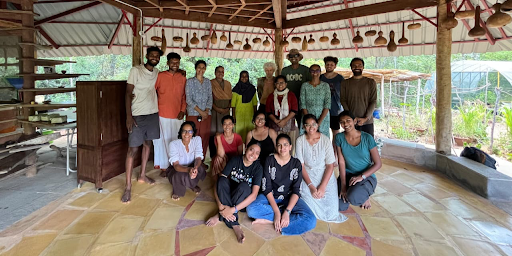
My first weeks at AuroOrchard have been a mix of discoveries, challenges, and moments of reflection. Coming to India to live and work on a farm has allowed me to experience a different rhythm of life and to start seeing everyday things Home » Blog » Learning from the Land Learning from the Land October 2026 · Rahul Tola & Charan GP From 14–16 August 2026, at Pebble Garden and AuroOrchard, we explored ecological restoration, farming, seed saving, food and our relationship with the land. Learning from the Land brought together practical work, walks and conversations, with opportunities to connect ideas with what we could observe and try ourselves. We had a wonderful group of people interested in this work. Some were just beginning to explore farming, some already had land, and others came with well-developed projects. There was joy in being together as a learning community, sharing our experiences, challenging our assumptions and opening ourselves to learning from each other. Land, ecology and culture We began by looking at the relationship between landscape and culture through Ainthinai, the five ecological landscapes described in the Tamil Sangam tradition. Each brings together particular plants, animals, occupations, foods and ways of life. This gave us a starting point for discussing how soil, rainfall and vegetation shape agriculture and how, over time, agricultural practices become part of a culture. At Pebble Garden, Bernard and Deepika shared their experience of working with land that once had exposed rock, gullies and very little topsoil. We looked at the contour bunds and small water bodies that helped slow and retain water, and the pioneer plants that established themselves in these conditions. We discussed the role of plants such as Dodonaea viscosa, Stylosanthes hamata and acacias and how they contributed biomass and shade, gradually creating conditions for other species to grow. Termites and monsoon flows also featured in the account of how soil had moved and accumulated across the site. Seeing these changes on the ground helped us understand the sequence of the work: what could be planted initially, what those plants made possible, and how the choices changed as the land recovered. The group at Pebble Garden Looking at the farm together At AuroOrchard, Rahul’s session on systems thinking helped us examine the relationships between different parts of the farm. We considered water, soil, plants, compost, people and markets, and how a decision in one area affects work elsewhere. What we plant, for example, depends on the season and soil, but also on the people available to care for it and where the harvest will go. Anshul shared his developing ideas on integral agriculture, drawing on the physical, vital, mental, spiritual and psychic dimensions of Sri Aurobindo’s integral philosophy. We discussed how farming involves ecological conditions alongside labour, economics, technology, community and our own motivations and experiences. This opened questions about how we assess a farming practice. How do we understand something that works well ecologically but is difficult to sustain financially? What changes when we adopt a new technology? And how does working on the land affect the people involved? These conversations drew on the practical difficulties of running a farm, where different needs do not always fit neatly together. Farm walk with Anshul Working with soil and plants The practical sessions included working with beds, irrigation and plants. They gave us opportunities to relate the discussions to particular tasks: checking moisture, observing how water moves, looking at plant growth and deciding what attention was needed. We also explored soil care and composting, including the use of mulch, the return of organic matter and ways to avoid compaction. In discussing compost, we looked at how different materials, moisture and air contribute to decomposition, and what we need to pay attention to when managing a pile. Moving between discussion and work was useful. An explanation could give us a starting point, but applying it brought further questions. How wet is the soil below the surface? Is water reaching the roots? What are we noticing about a plant, and what might we need to observe for longer before acting? Food and the meals we shared Charan’s session on food and health brought the conversation to our eating habits and the relationships between food, culture and the body. We discussed how the history of what we eat continues to influence our meals, and considered the connections between everyday food choices and health. The meals during the workshop included produce from AuroOrchard, grains from other Auroville farms and preparations drawing on Tamil food traditions. These gave us something concrete to connect with the discussions about crops, diversity and food culture. We also explored the diversity within familiar crops such as brinjal, alongside yams, winged beans and perennial leafy vegetables. This led to conversations about the relationship between conserving a variety, knowing how to grow it and continuing to use it in the kitchen. Session on food with Charan Saving seeds At Pebble Garden, we learned about Bernard and Deepika’s work conserving and sharing 136 varieties. The session covered seed viability, physical and genetic purity, pollination, and the use of isolation or hand pollination when maintaining particular varieties. We discussed how seed harvesting and processing differ between crops. Beans can be left to dry on the plant, while crops with seeds enclosed in fleshy fruit need different handling. Knowing when a seed is mature and how to prepare it for storage requires familiarity with the plant and attention over time. Their experience helped us appreciate the regular work involved in seed conservation: growing plants, observing them, selecting, harvesting, processing and sharing seeds so that the varieties continue to be cultivated. Continuing the learning Across the three days, we kept returning to the relationship between observation and action. At Pebble Garden, we could see changes built through years of work. At AuroOrchard, we encountered the ongoing decisions and uncertainties of a working farm. The practical sessions and conversations allowed us to examine both. We came away with questions to
Monthly Updatesㅤㅤㅤㅤㅤㅤㅤㅤ
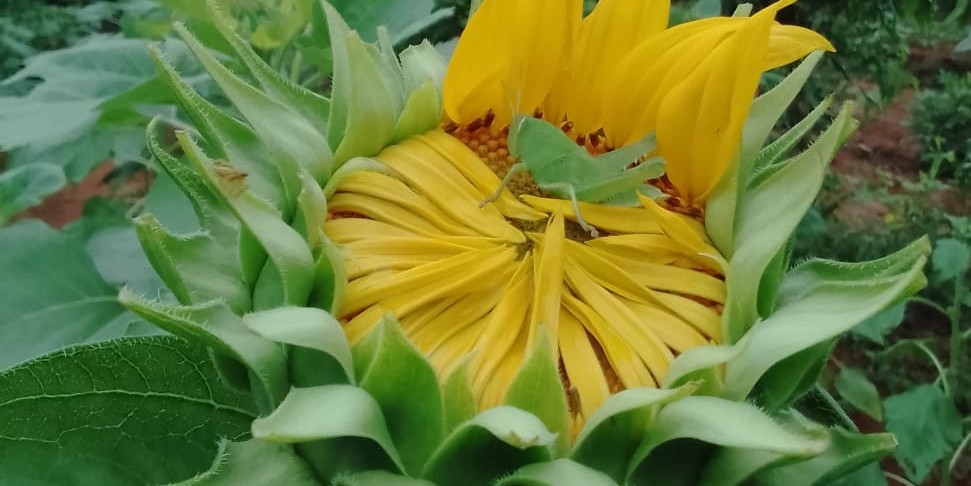
They are now drinking lemon juice from the farm and occasionally some buttermilk to keep cool. The Humane Home » Blog » Monthly Updates Monthly Updates October 2026 · AuroOrchard Poultry The chickens are doing well and enjoying the cooler weather. Egg production has increased, with the new flock now starting to lay. Our youngest flock is almost two months old and ready to begin ranging outdoors. With rising feed prices, limited information about what goes into the feed we buy, and concerns about its quality, we are exploring alternatives, including pulverised vegetable waste and spent grains Vegetable garden We had a very good start with the long bean crop, but during the excessive heat, red blister beetles appeared in large numbers. They fed on the flowers of long beans, ladies’ fingers and pumpkins, leading to an estimated 40–50% loss in production. We tried some traditional sprays using neem, but their effect was limited. Peacocks continue to be a challenge in the groundnut patch. More generally, things are slowing down in the vegetable garden as we prepare for the monsoon. Even the light showers have brought increased weed growth, and keeping up with weeding is becoming a bigger part of the work. The first sunflowers are beginning to flower. Orchards In the coconut orchard, we are removing two out of every three rows of bananas to give the young coconut trees more space and allow more light to reach the remaining central row. The dwarf jackfruit and young avocado trees are doing well, and our experimental banana plot has started producing fruit. We have also had our first coffee harvests. The beans are drying before we pass them on to Coffee Ideas to try out. We expect a larger harvest around February–March. Meanwhile, cacao has been planted alongside papaya and kumquat. Plans for the mango plantation are taking shape, with work underway to source saplings of over 100 varieties. We will also add more biomass plants during the rains. Seeds & Nursery With fewer vegetables being planted during the monsoon, this is a quieter period in the nursery. We are using the time to clean and organise the space, sort seeds, and prepare tree saplings and grasses for planting. We are also extending the shelves to create more room for seedlings as vegetable planting picks up again after the rains. Abundance Most of the work at Abundance this month has been packing and maintaining stock. We also tried new recipes for pickled beans and lime, both of which turned out well. Our farm tea, the Summer Blend, has been receiving a lot of love, with multiple orders coming in from across India. Packaging dried fruit remains a challenge. We need a more robust solution before the next season and are exploring how to improve it. Research & Education October’s Learning Space programme brings together bees, technology, art and health. We began with The Secret Life of Bees, visiting Pebble Garden, AuroOrchard and Sarah’s food forest to explore pollination, biodiversity and natural beekeeping. Azhaa shared our experiments with farm sensors and automated irrigation, discussing how technology can support our work. With Claire, we slowed down to observe the orchard and draw from nature. The month continues with Anushree’s session on food habits, brain and hormonal health, followed by Dr Pavan’s introduction to health and nutrition, opening further conversations about the connections between what we grow, eat and experience together. Poultry Our seventh flock has arrived, and the sixth flock has moved to the laying coop. Only two flocks are currently producing eggs, and we are facing a significant shortage. The sixth flock should begin laying soon, so we are looking forward to an improvement in about a month. Planning these transitions around changes in egg consumption remains a challenge, as the limited availability of chicks makes it difficult to bring in new flocks exactly when needed. We are also exploring additional feed options, including leftover vegetables and fruit, cereal grasses grown in hydroponic systems, and black soldier fly larvae. Vegetable garden Most of the sunnhemp has been cut down, and new brinjal and ladies’ fingers have been planted. We have also planted groundnut for the first time in eight years and are looking forward to seeing how it turns out! We are expanding our sweet potato planting, while the long beans and rosella are doing well. Quite a bit of pumpkin has gone into the ground too, and we hope to get a good crop before the monsoon Orchards There has been plenty of pruning, composting and mulching this month. The syntropic jackfruit and avocado orchards are coming along well. It is wonderful to see the diversity of plants growing together and the changes already visible in the soil. After pruning many mango trees last month, we have now organised the branches and are preparing to plant new mango trees next month as part of the mango conservation project. After losing all our papayas to a virus earlier this year, we have finally planted a new crop. We are hoping for a good harvest in April-May, and that there are no major cyclones. Seeds & Nursery Things are looking better in the nursery now, with everything under cages and mosquito nets! We are considering expanding the nursery to accommodate the growing need for plants for the farm and the community. We have started winged beans, palak and more basil, while taking a break from sowing long beans, cucumber and pumpkin until December. Abundance We continue to maintain stocks of our regular products—summer blend, pesto, turmeric lemon syrup, kombucha and herbal powders. We are also harvesting red chillies for drying. Every Monday afternoon, we work with the YouthLink team to develop new recipes and replenish stocks of some products. These afternoons are open to volunteers and Aurovilians interested in exploring how best to use and preserve Auroville-grown food. We are grateful to Solar Kitchen and Pour Tous DC for proactively prioritising vegetables and fruits grown on Auroville’s farms. Our thanks also
Learning to Slow Down: My First…

My first weeks at AuroOrchard have been a mix of discoveries, challenges, and moments of reflection. Coming to India to live and work on a farm has allowed me to experience a different rhythm of life and to start seeing everyday things Home » Blog » Learning to Slow Down: My First Weeks at AuroOrchard Learning to Slow Down: My First Weeks at AuroOrchard October 2026 · Louise Decq My first weeks at AuroOrchard have been a mix of discoveries, challenges, and moments of reflection. Coming to India to live and work on a farm has allowed me to experience a different rhythm of life and to start seeing everyday things from another perspective. Although my time working on the farm has been shorter than expected because of an ankle injury, I have already discovered things that have changed the way I look at certain aspects of daily life. I came here to learn about agriculture, but I am also discovering the pleasure of learning through experience, adapting to situations, and appreciating simple moments. For me, these first few weeks have been less about finding answers and more about learning to observe, trying new things, and understanding what this experience can bring me. Discovering the Work Behind Food One of the things that has most changed my perspective is becoming aware of all the work involved in producing food. Before coming here, I was used to eating whatever was prepared or given to me without really thinking about everything that happened before the food reached my plate. Food was simply part of everyday life. I did not necessarily stop to think about the time, energy, and care needed to grow it. Being on a farm is starting to change this perception. Through tasks such as bed weeding, collecting lemons, and working with compost, I have begun to discover some of the work involved in maintaining a farm. These activities may seem simple, but they are part of a much larger process that requires time, effort, and patience. It is making me realise that food does not simply appear by magic. Behind what we eat, there are people working, plants growing, and many small tasks that need to be completed over time. I am beginning to appreciate the work that often goes unnoticed when we simply sit down to eat. This experience has made me look differently at something I previously took for granted. I would like to become more aware of where my food comes from and develop a greater appreciation for everything that happens before it reaches my plate. Learning Beyond the Classroom Another aspect of this experience that I have particularly enjoyed is discovering that learning does not necessarily have to take place in a classroom. One example was learning about irrigation and how to repair a component of the system. I found it very satisfying to understand how something works and learn how to fix it. It was a different kind of learning from what I was used to at school: instead of studying information theoretically, I could discover something practical and see how this knowledge could be used in real life. It made me realise how much we can learn by doing things ourselves. Working on a farm means encountering practical problems, understanding how things work, and sometimes figuring out how to repair or improve them. Even small tasks can teach us useful skills and give us a sense of satisfaction. I like the idea that learning does not stop when we leave school. There are so many things we can discover simply by being curious, trying something new, and learning from the people around us. This is something I would like to continue exploring during my time in India: learning about agriculture while also developing practical skills that I might not otherwise have had the opportunity to acquire. One of the things that has most changed my perspective is becoming aware of all the work involved in producing food. Before coming here, I was used to eating whatever was prepared or given to me without really thinking about everything that happened before the food reached my plate. Food was simply part of everyday life. I did not necessarily stop to think about the time, energy, and care needed to grow it. Being on a farm is starting to change this perception. Through tasks such as bed weeding, collecting lemons, and working with compost, I have begun to discover some of the work involved in maintaining a farm. These activities may seem simple, but they are part of a much larger process that requires time, effort, and patience. It is making me realise that food does not simply appear by magic. Behind what we eat, there are people working, plants growing, and many small tasks that need to be completed over time. I am beginning to appreciate the work that often goes unnoticed when we simply sit down to eat. This experience has made me look differently at something I previously took for granted. I would like to become more aware of where my food comes from and develop a greater appreciation for everything that happens before it reaches my plate. Small Moments of Connection with Nature Not every meaningful moment on a farm is necessarily connected to a task or a lesson. Sometimes, it is simply about noticing something unexpected. One moment that made me happy was seeing a rabbit among the tall plants. It was a very simple encounter, but it stayed in my mind because it reminded me that a farm is not just a place where humans work to produce food. It is also a living environment where other creatures exist alongside us. Seeing the rabbit made me stop for a moment and appreciate what was happening around me. In the middle of everyday activities, it was a simple reminder to look up, pay attention, and notice the life around me. I think these small moments are important
Discovering Farm Work and Adapting…
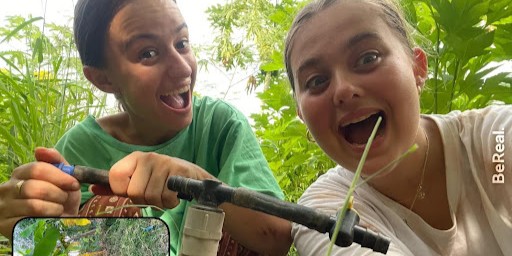
During my first few weeks at AuroOrchard, I discovered agricultural work through a variety of activities in the Vegetable Garden and the orchards. These first days allowed me to become familiar with the daily Home » Blog » Discovering Farm Work and Adapting to a New Environment Discovering Farm Work and Adapting to a New Environment November 2026 · Alexandra Gafilet During my first few weeks at AuroOrchard, I discovered agricultural work through a variety of activities in the Vegetable Garden and the orchards. These first days allowed me to become familiar with the daily life of the farm while gradually adjusting to the Indian climate and a different pace of life. I mainly took part in weeding around young eggplant plants and between rows of spinach. Once the rows had been weeded, I helped spread compost over the crops. As I had only just arrived in India, it took me some time to get used to the temperatures and working conditions. At times, it was difficult to manage a full day of work, but I knew my body needed time to gradually adapt to this change. I also learned how to care for eggplant plants by removing certain leaves to encourage their growth and cutting off those that showed signs of infection. These first tasks helped me understand that agricultural work is not just about planting and harvesting. It also requires observation, patience and regular maintenance to ensure that plants can grow in good conditions. I then joined the Orchard team, working in the jackfruit orchards and around the papaya trees. The activities there were different from those in the Vegetable Garden. I helped cut branches and clear certain areas around the trees. This variety allowed me to discover different aspects of agricultural work and better understand the specific needs of each area of the farm. I appreciate this diversity. Although some tasks, such as weeding, require time and repetition, I find it more motivating to be able to vary my activities, change my surroundings and learn new techniques. This helps me stay curious and gain a better understanding of how the farm operates as a whole. Discovering a Different Approach to Farming Working at AuroOrchard is also allowing me to discover agricultural practices that differ from those I am familiar with. Farming methods depend, in particular, on the climate, the environment and the choices made by each farm. At AuroOrchard, the organic approach places considerable importance on natural methods for maintaining crops and managing the problems that arise. This involves observing plants carefully, identifying signs that may indicate a problem and looking for suitable solutions without necessarily resorting to synthetic chemical products. I find it interesting to discover this different approach to agriculture. It encourages us to understand plants and their environment better rather than systematically looking for an immediate solution. I am still at the beginning of this learning process, but the explanations provided by the team are already helping me understand some of its basic principles. Learning by Doing and Finding Solutions One of the aspects I particularly appreciate about this experience is the opportunity to develop practical skills. I am discovering a field I knew very little about, where I need to learn how to observe, handle new tools and find solutions to the difficulties I encounter. I learned how the farm’s irrigation system works and took part in some repairs. This involved cutting pieces of pipe, finding the right connectors and understanding how to get the system working again. I learned by working alongside Nidin, which helped me better understand the different steps and how to carry them out. I enjoyed this very practical approach because it allows me to understand something by actually doing it. Rather than simply listening to an explanation, I get to handle equipment, test things out and work out how to solve a real problem. These experiences have shown me that it is possible to learn a great deal even when starting from scratch. You have to accept that you will not know everything straight away, take the time to understand and be willing to give things a try. As I take on different tasks, I am gradually becoming more confident and discovering that I can find my own way through certain situations. I have also come to understand that being independent does not necessarily mean doing everything alone. It also means knowing when to ask for help, listening to other people’s advice and looking for the information you need to move forward. It is a balance between what we learn from the people around us and what we are then able to put into practice ourselves. Beyond agricultural work, this experience is encouraging me to become more resourceful and approach unfamiliar situations with greater curiosity. Encounters and Conversations: Another Way of Learning Agricultural activities are not the only things that have shaped these first few weeks. Encounters and conversations also play an important role at AuroOrchard. I have had the opportunity to talk with people whose backgrounds, ideas and ways of seeing the world are sometimes very different from my own. Everyone has their own story and their own reasons for being here. I find it enriching to discover what has led these people to live or work in this environment. Our conversations sometimes go beyond everyday exchanges. We talk about our experiences, our choices, our relationship with work and what gives meaning to what we do. These discussions allow us to discover different perspectives and sometimes question ideas we had previously taken for granted. Some conversations lead me to reflect on the place of work in our lives, while others explore our motivations or the way we want to organise our daily lives. I have also noticed a particular spiritual dimension in this environment. I cannot quite explain it yet, but it is part of what I am discovering here, particularly through the people I meet, the intentions they bring to their work and the conversations
Nasa Tul: An indigenous perspective…
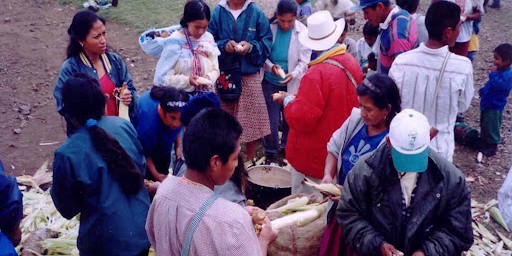
Recently, I had the opportunity to collaborate with Colombian biologist and researcher Lucía Vásquez Celis on a booklet about the Tul, or Nasa Tul, for Colombia’s Land Restitution Home » Blog » Nasa Tul: An indigenous perspective on agriculture from Colombia Open Learning Sessions at the farm Nasa Tul: An indigenous perspective on agriculture from Colombia September 2026 · Anshul Aggarwal Recently, I had the opportunity to collaborate with Colombian biologist and researcher Lucía Vásquez Celis on a booklet about the Tul, or Nasa Tul, for Colombia’s Land Restitution Unit. Lucía has many years of experience engaging with the Indigenous peoples of Colombia and their territorial processes. The Nasa are one of Colombia’s many Indigenous communities. Their ancestral territories are located primarily in Cauca, in southwestern Colombia. They have their own language, Nasa Yuwe, systems of community government, spiritual authorities and collective territories known as resguardos. The Nasa have endured colonisation, displacement, armed conflict and continued appropriation of their lands. In response, they have developed strong movements for cultural survival, territorial recovery and political autonomy. Their collective organisation is guided by four closely connected principles: unity, land, culture and autonomy. You can access the document here: Español (original) / English (translation) For the Nasa, territory is far more than the area of land they inhabit. It is a living space where community, nature, ancestors, spirituality and collective memory come together. Defending the territory therefore means defending a way of life. Agriculture forms an important part of this way of life through a system known as the Tul. The Tul is a space where food and medicinal plants are cultivated, seeds are conserved and knowledge is passed between generations. The booklet describes it as a weave (tejido) of the Earth, made with food, medicinal and spiritual plants. Trees, crops, animals, people, water and the other beings of the territory all participate in this weave. The land provides food, medicine, water and shelter, while people carry responsibilities towards the land. Foundations and Principles of the Tul The Nasa people of Cauca, Colombia The foundations of the Tul lie in the Nasa worldview and their collective life. The Nasa understand life through relationships among different worlds, beings and spiritual forces. At the centre of this worldview is Wét wét Fxi’ze nxi (pronounced Wet wet fyee-eh-zeh n-yee), which can be translated as living in harmony, closely related to the broader Latin American concept of Buen Vivir. Harmony here emphasises the continuous work of bringing the individual, community, territory and other beings of nature into a balanced relationship. Another important idea for the Nasa is sentipensar: feeling-thinking. It questions the separation of thought and feeling, recognising that knowledge arises through the body, land, memory, emotion and collective experience. This worldview takes collective form through the Nasa life plans. These are community processes through which people decide how they will live together, care for their territory and exercise autonomy. They are based on spirituality, respect for Mama Kiwe or Mother Earth, reciprocity and participation. And these foundations become a lived practice through the Tul. Forests, mountains, wild animals, rivers, lagoons and springs are recognised as sources of life that require care and respect. Water is sacred because life emerges from it. The Tul also expresses the Nasa relationship with Mother Earth. The Nasa understand themselves as her children: the Earth gives them life and food, and when they die, they return to her. Caring for the territory therefore includes allowing some areas to rest, protecting water sources and defending the land from activities that cause ecological and social harm. Nasa women play an important role in this work as caretakers of territory and weavers of life. The Nasa people of Cauca, Colombia Community is equally important to the Tul. Work is often carried out collectively through minga, a traditional form of community work among Indigenous peoples of the Andes. People come together to undertake work that benefits a family, the community or the territory, including planting, harvesting, building, repairing paths and caring for water sources. More than shared labour, minga is a space for exchanging knowledge, making collective decisions, sharing food and strengthening relationships. It is based on reciprocity: people offer their time and effort knowing that others will support them when needed. Through the Saakhelu ceremony, people give thanks to Mother Earth, honour the sun, moon and animals, and awaken conserved seeds through dance, music and medicinal plants. The Tul is also a place of education. Children learn through participation: by planting, harvesting, caring for seeds, sharing food, speaking their language and observing how their parents and elders relate to the Earth. In this way, the Tul carries Nasa knowledge and culture from one generation to the next. The Tul is therefore much more than farming. It is an entire system of life rooted in territory and shaped by the principles of unity, land, culture and autonomy. Tul as an ancestral medicine system integrates both forests and agriculture A dialogue with Integral Yoga In my contribution to this document, I brought the Tul into dialogue with ideas from Integral Yoga. Both hold unique worldviews, and yet both open important questions about the unity of life and the place of the human being within it. Sri Aurobindo, drawing from the Upanishads, writes that all matter is food and that the eater is, in turn, eaten. Food can therefore be understood as part of a continuous exchange of matter, energy and life. Every being is nourished by other beings and eventually becomes nourishment itself. Agriculture makes this relationship tangible. The farmer offers the labour and capacities of the body to the land. The land offers its body for the growth of food. Food offers itself to nourish another body. Agriculture connects land, farmer, food and community through an ongoing movement of giving and receiving. And from this point of view, the farmer does more than just grow food; the farmer also becomes food. Our attention, time, strength, knowledge and care enter the land and
Consciousness in Agricultural Systems
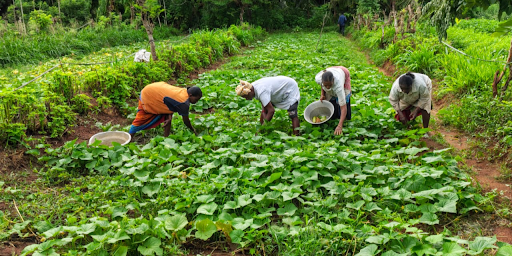
The conversation about what makes “good food” is evolving rapidly as we become aware of different aspects and relationships of agricultural systems. We of course know of the ecological impacts of farming (the industrial way of farming which is prevalent today)- loss of forest cover, loss of biodiversity, greenhouse gas emissions, pollution of soil, water, air and so on Home » Blog » Consciousness in Agricultural Systems Consciousness in Agricultural Systems September 2026 · Anshul Aggarwal The conversation about what makes “good food” is evolving rapidly as we become aware of different aspects and relationships of agricultural systems. We of course know of the ecological impacts of farming (the industrial way of farming which is prevalent today)- loss of forest cover, loss of biodiversity, greenhouse gas emissions, pollution of soil, water, air and so on. To address these concerns metrics like food miles and carbon and water footprint of food have come up. There is an assumption here that “organic” or “regenerative” labels are intrinsically faring better on these metrics. But organic and regenerative too have become market labels and part of the large industrial agricultural system, and therefore not necessarily always good for ecology or people. Then, there are social implications of agriculture–exploitation of communities and labour caused by large food conglomerates. The criticism of the ‘big food’ industry has led us to a better understanding of the global implications of trade in food systems. And that has given us the ideas of local, small-scale, fair trade etc. For animal agriculture, there are certifications and standards of pasture-raised, free-range, humane treatment and so on. If you are a farmer and somehow you are looking at all these aspects, you are probably doing the best that you can. But is that enough? In Indian metaphysics, particularly in the Upanishadic tradition, food, body, mind and life-force are understood as intimately connected. A passage in the Chandogya Upanishad illustrates this relationship through the gross and subtle aspects of nourishment (Lokeswarananda, 1998). That which is the subtlest part of curds rises when they are churned and becomes butter. In the same manner, that which is the subtlest part of the food that is eaten rises and becomes mind. The subtlest part of the water that is drunk, rises and becomes prana. The subtlest part of the fire that is eaten rises and becomes speech. (6.5.1-4) In the Vedic tradition, food is associated with matter. Annam is both food and matter. In fact, food is kind of a bridge between the material and spiritual worlds. The rituals of the Vedic tradition are rituals of consummation of these two worlds, mediated by offerings of food. The idea of food as energy continues into the Indian Upanishadic tradition as well. As Sri Aurobindo notes in the Life Divine (2005), “All Matter according to the Upanishads is food, and this is the formula of the material world that ‘the eater eating is himself eaten’” (p. 204). Therefore in the spiritual traditions, food has been not only an object of sustenance but also contemplation, a vehicle of energy- both gross and subtle. The relationship between matter and consciousness finds a very precise articulation in the Integral Yoga philosophy of Sri Aurobindo. For him, this relationship between matter and consciousness directly implies that evolution of matter is linked to evolution of consciousness. Thus, material reality changes, as consciousness evolves–material reality can be changed when consciousness evolves. So, can food be made better by evolving consciousness? How? What is the implication of consciousness on the food that we grow and consume? And before all that, what is consciousness in food? What is consciousness at all? For me, these are the most exciting questions in agriculture today and many are waking up to a hidden dimension of our life, and our agricultural systems that lie at the foundation of who we are, and how we have created this world. Surprisingly (at least for me), some of these questions have been taken up by the United Nations Development Programme through their initiative– Conscious Food Systems Alliance (CoFSA). CoFSA describes consciousness as awareness of the inner and outer phenomena that shape how we relate to ourselves, to one another, to Nature and to future generations. Their focus is on how inner dimensions of people and the institutions they build impact agriculture, and vice versa. The Case Study Collection, Volume 2, published in 2026 by CoFSA brings together nineteen initiatives from different parts of the world. They range from farms and fishing communities to schools, universities, cooperatives, public institutions and global movements. Some use meditation or reflective dialogue explicitly. In others, consciousness is present through cultural memory, spiritual practice, deep listening, shared responsibility or a renewed experience of interdependence. They all show that inner change is beginning to be understood as part of the practical work of transforming food systems and that there is greater acknowledgement for this missing dimension in our food systems. AuroOrchard in Auroville features as the opening case study of this volume. You can access the full volume here. Cultivating food and the person The first group of cases focuses on food production. I share my understanding of an integral view of agriculture which includes the dimensions of ecological, social, intellectual, spiritual and psychological practice. The framework invites attention to five interdependent dimensions of agricultural life – physical, vital, mental, spiritual and psychic – and to the tensions between them and how they are being explored at AuroOrchard in service to food production and a holistic community food system. The Islamic Farming initiative of Global One 2015 works with Muslim farming communities in Kenya, Ethiopia and Nigeria. Conservation practices such as composting, crop rotation and minimum tillage are connected with Qur’anic principles of trust, stewardship, prayer and charity. In Sri Lanka, Sarvodaya’s Awakening Through Natural Farming links chemical-free farming with mindful observation, self-reliance and community awakening. A farmer-to-farmer model helps people recover confidence in their own knowledge and in the biological processes of the farm. The rapid growth of
Puducherry Farmers Visit
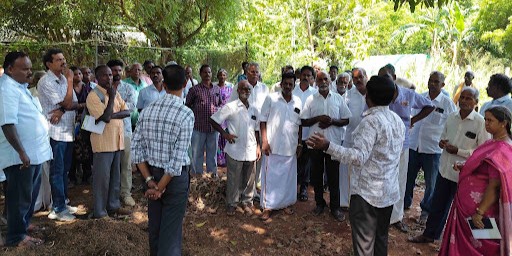
On 9 September 2026, AuroOrchard welcomed more than 80 farmers from the Puducherry region. The visit was organised by the Agricultural Technology Management Agency (ATMA), under the Department of Home » Blog » Puducherry Farmers Visit Puducherry Farmers Visit September 2026 · Anshul Aggarwal On 9 September 2026, AuroOrchard welcomed more than 80 farmers from the Puducherry region. The visit was organised by the Agricultural Technology Management Agency (ATMA), under the Department of Agriculture and Farmers Welfare, Government of Puducherry, through the Farmer Information and Advisory Centres of Kalapet and Thavalakuppam. The farmers were interested in how different activities like vegetable cultivation, fruit orchards, seed saving, nursery production, poultry, food processing, water management, research, education, and distribution are organised, how they support each other, and how the farm manages production across different crops and seasons. There was also interest in AuroOrchard’s experience of farming in red sandy soils and under conditions of intense heat, uncertain rainfall, water limitations, and increasing pressure from pests and other animals. We have always intended for the knowledge and practices developed on the farm to have relevance beyond its boundaries. Ecological farming cannot remain theoretical or be possible only under privileged conditions. It must engage with the realities of the millions of farmers across India and the world who cultivate under constraints of land, water, labour, rising costs, uncertain markets, and a changing climate. The visit was an affirmation of this intention and allowed us to share our struggles and challenges too, which only other farmers can understand fully. We are also excited about the future possibilities of such engagements. Farmers throughout the Puducherry and Auroville bioregion carry extensive knowledge developed through generations of working with local land, crops, and seasons. Their observations, questions, and practical experience can deepen and challenge our own understanding. Building closer relationships with neighbouring farmers is therefore as much an opportunity for AuroOrchard to learn and participate in building a stronger and more resilient regional agriculture. On 9 September 2026, AuroOrchard welcomed more than 80 farmers from the Puducherry region to learn and share. The visit was an affirmation of our intention for the knowledge and practices developed on the farm to have relevance beyond its boundaries and an opportunity to learn and participate in building a stronger regional agriculture. Previous ArticleNext Article Featured Articles Consciousness in Agricultural Systems 23 Sep 2026 Remembering the Beginnings… 27 Aug 2026 Consciousness in Agricultural Systems 23 Sep 2026 Open Learning Sessions at the farm 23 Sep 2026
Monthly Updatesㅤㅤㅤㅤㅤㅤㅤㅤ
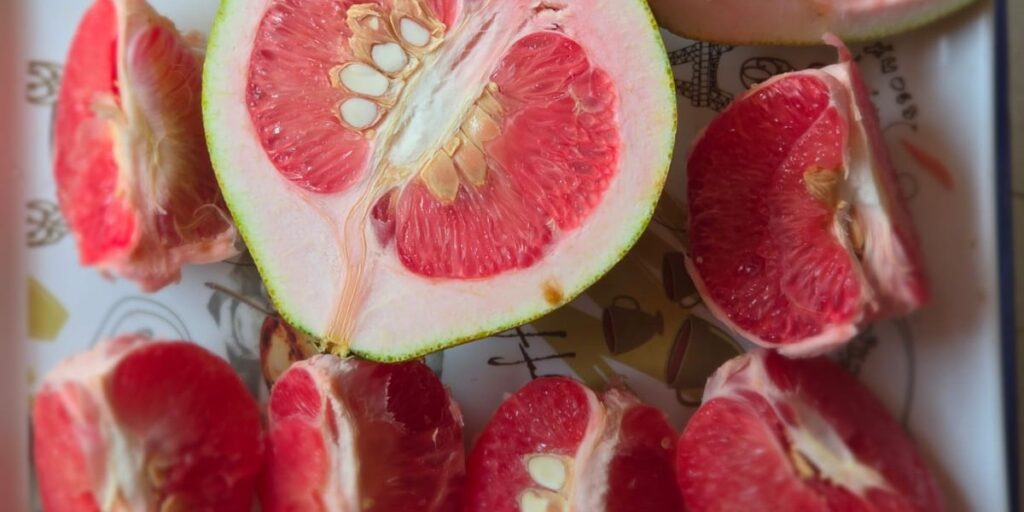
They are now drinking lemon juice from the farm and occasionally some buttermilk to keep cool. The Humane Home » Blog » Monthly Updates Monthly Updates August 2026 · AuroOrchard Poultry Our seventh flock has arrived, and the sixth flock has moved to the laying coop. Only two flocks are currently producing eggs, and we are facing a significant shortage. The sixth flock should begin laying soon, so we are looking forward to an improvement in about a month. Planning these transitions around changes in egg consumption remains a challenge, as the limited availability of chicks makes it difficult to bring in new flocks exactly when needed. We are also exploring additional feed options, including leftover vegetables and fruit, cereal grasses grown in hydroponic systems, and black soldier fly larvae. Vegetable garden Most of the sunnhemp has been cut down, and new brinjal and ladies’ fingers have been planted. We have also planted groundnut for the first time in eight years and are looking forward to seeing how it turns out! We are expanding our sweet potato planting, while the long beans and rosella are doing well. Quite a bit of pumpkin has gone into the ground too, and we hope to get a good crop before the monsoon Orchards There has been plenty of pruning, composting and mulching this month. The syntropic jackfruit and avocado orchards are coming along well. It is wonderful to see the diversity of plants growing together and the changes already visible in the soil. After pruning many mango trees last month, we have now organised the branches and are preparing to plant new mango trees next month as part of the mango conservation project. After losing all our papayas to a virus earlier this year, we have finally planted a new crop. We are hoping for a good harvest in April-May, and that there are no major cyclones. Seeds & Nursery Things are looking better in the nursery now, with everything under cages and mosquito nets! We are considering expanding the nursery to accommodate the growing need for plants for the farm and the community. We have started winged beans, palak and more basil, while taking a break from sowing long beans, cucumber and pumpkin until December. Abundance We continue to maintain stocks of our regular products—summer blend, pesto, turmeric lemon syrup, kombucha and herbal powders. We are also harvesting red chillies for drying. Every Monday afternoon, we work with the YouthLink team to develop new recipes and replenish stocks of some products. These afternoons are open to volunteers and Aurovilians interested in exploring how best to use and preserve Auroville-grown food. We are grateful to Solar Kitchen and Pour Tous DC for proactively prioritising vegetables and fruits grown on Auroville’s farms. Our thanks also to Taste of Korea for a large batch of delicious long bean kimchi! Research & Education September was busy with learning sessions, visits and tours, including a visit by more than 80 farmers from Puducherry. We have a three-day natural beekeeping workshop coming up this weekend and are exploring further learning opportunities around bees and biodiversity on the farm. We harvested the first compost pile from EcoPro’s sludge compost experiment-it is black gold! The first harvests of beans and ladies’ fingers from the Shumei Natural Farming experiment plots are also encouraging. We will continue these experiments after the monsoon, with more planning and over a larger area. We are grateful for the growing community of people interested in agriculture and AuroOrchard’s work. Poultry Egg consumption has again increased in Auroville after the summer. However, our production is now less as we say goodbye to our oldest flock and prepare to shift the youngest flock to the laying coop. Birds in general are doing much better due to better weather and more greens in the free-range after the rains. We will soon be welcoming day-old chicks in our nursery coop. Vegetable garden Happy to receive the rains after a lot of anticipation. Due to extreme heat, vegetable production was not good this season. Many things that were planted simply died due to heat, and lack of moisture in the soil and air. Since the rains, we have planted more beans, brinjal, pumpkin, ladies fingers, sweet potatoes and groundnut! We are planting groundnuts after 8 years on the farm. Herbs continue to be planted in the greenhouse, and we are also starting winter beans like winged beans. Now we begin to reduce vegetable planting in anticipation of the winter monsoon starting in two months. Orchards Finally, we managed to plant lime, papaya, rosella, pineapple- all of which were pending due to the absence of rains. We have established these new clusters in the mango orchard. Our current lime trees are about 40 years old and will reduce/stop producing in the next 3 to 5 years. By then these new trees should start producing. After the massive loss of Papaya trees due to the viral infection last year, we are hoping to have good harvests post-monsoon next year. Our team continues to prune and mulch the existing orchards and we are preparing to plant some native mango varieties in the mango orchard soon. Seeds & Nursery The nursery work is much better now with cages and mosquito nets. The pressure from squirrels and rats is intense and even a single box left unprotected is damaged overnight. Meanwhile, we managed to plant a lot of things from the nursery post-rains, and our wonderful team completed around 30 large nursery orders from our community! We continue to sow, transplant and start tree saplings now in preparation for winter monsoon. Abundance As we have crossed the busy fruit season, we now have more time to organise our stock, focus on abundant vegetables, herbs and greens. At the moment, we are busy processing Pomelos, Lime, Avocados, and leaves of Rosella and Moringa. There has been a growing demand for farm products from other locations in Tamil Nadu, especially Thiruvanamalai, Chennai and even Bangalore. We are
Soil Test Experimentsㅤㅤㅤㅤㅤㅤㅤㅤ

In this report, I share about the soil testing researches and experiments I made while I was volunteering at the farm. I wanted to know more about its components and how it allowed food to grow. Home » Blog » Soil Test Experiments Soil Test Experiments August 2026 · Célia Rouxel In this report, I share about the soil testing researches and experiments I made while I was volunteering at the farm. I wanted to know more about its components and how it allowed food to grow. Some of the resources I used to understand soil and soil testing : 1.“Agriculture in Victoria, Australia” sampling video Soil testing in fields requires a soil corer of 10cm. Soil cannot be sampled around water troughs, gateways, within 4 meters of fence lines, near gullies, stock camps… For a field, it is recommended to determine a soil transect and take a sample every given number of meters according to the size of the transect and the number of samples needed. After using the soil corer, the soil has to be mixed and the greens, rocks and pebbles can be removed to obtain a uniform size soil. Then samples can be put in boxes and analysed. 2.“Soil testing at home” by the University of Arkansas Division of Agriculture Use of soil corer/probe or spade but less accurate. The first step is to divide the landscape into sections based on the plants being grown and the visual performance of those plants. For example, if part of the home yard is growing more poorly than the other, these two areas should be sampled separately. Then, remove the organic matter from the soil surface and insert the soil probe. If using a spade, it is necessary to take a uniform depth and column shape. Soil nutrient concentrations are typically higher at the soil surface and decrease as you go down, so the use of the spade should be done very carefully. The ideal soil core depth will be dependent on what is growing in the soil. Collect the soil and repeat this 10 to 15 times in a zig-zag shape pattern across the landscape. For lawns and permanent landscaping, the soil sample core should be collected from the top 4 inches. For gardens and mature fruit trees, it would be 6 inches (15cm). Label the samples to not mix them up and to keep track of each area where they were collected. In the US, it is recommended to collect soil samples every 2 to 3 years, and taken at the same time each year. Always take samples before adding fertilizers or organic amendments. 3. https://indianfarmer.net/uploads/6_5_2021.pdfhttps://agritech.tnau.ac.in/agriculture/agri_soil_sampling.html What I did at the farm to sample soil : 4th June, 2026– 1st sample with Anshul : He took a clean glass jar and he went to a field, in the vegetable garden, recently ploughed to take the soil. He dug a little bit with a mumty and put some soil in the jar with his hand. He took the right amount according to him, just enough to fill half of the jar. While doing that, we observed life in the soil like a worm and tiny centipedes. The soil was humid. Then, Anshul added water in the jar and some natural soap in order to make the soil fully wet. In fact, he told me that adding soap would help spread the water to every part of the soil and create different layers in the jar. I wondered if the soap disturbs the soil properties or not. 5th June, 2026 After 1 day, we can see a change in the jar. The layers are more obvious. Anshul explained to me how to analyze the different layers and depict their meaning. Jar after 1 day of mixing representing different layers There are different goals to soil sampling, we can either be interested in acknowledging the physical, biological or chemical elements of the soil. So, we can ask ourselves questions depending on what we want to analyze : PHYSICAL PART : What is the structure ? What is the form of that ? (example of the tree : it has a trunk and leaves..) BIOLOGICAL : How will the tree evolve? What will it become? What is going on inside it ? CHEMICAL : some chemical processes going on (carbon is going down..) For the physical part, we want to get to know the components of the soil. The soil is coming from stones or all the rocks that are on the surface of this planet that got eroded by the action of wind and water, they start chipping. So the soil starts taking a little bit of these stones and all the sediments. Because the particles from the rocks for example start dissolving in the water and then they deposit somewhere so it becomes soil. The main components of soil include mineral particles, organic matter, water, and air. The balance between these components determines how well the soil can support plant life and retain nutrients. According to that, mineral particles that come from the weathering (altération) of rocks form the largest portion of the soil. These particles vary in size. The biggest particle that we can find in the soil is sand. Then we have silt and then clay which is the smallest particle. Different combinations of these particles create different soil types. In the first sample: Bottom layer : dark color that has settled down = SAND > it’s the biggest particle, it’s more heavy so it sinks to the bottom Lighter layer above it : it is SILT : a dust-like sediment that water, ice and wind transport and deposit, made up of rock and mineral particles that are larger than clay but smaller than sand. The very thin one above is CLAY What is floating on top is the organic matter : whatever gets mixed in the soil. Also, sand being the biggest particle, makes it