
FARMACY: Ayurveda and the use of TURMERIC

Late summer, with its amount of rains, brings lots of humidity and dampness in the air that affect the body and its Dosha in many different ways: Pitta ferments and shows signs of Home » Blog » Farmacy: Ayurveda and the use of TURMERIC FARMACY: Ayurveda and the use of TURMERIC Anti-inflammatory and anti-oxydant Mar 13, 2025 · Be@Sante Clinic The harvest season of Turmeric is slowly coming to an end. The fresh plant comes at the right time to support our health during Spring when Kapha toxins (cold, heavy, sticky, slimy, viscous, stagnant) need to be expelled from the body otherwise they create a state of fermentation (bloating in the belly), stagnation (swelling in some parts of the body), inflammations (in body tissues and joints), leading to hayfever, allergies, cold, cough with mucus, mild fever. Healthy Kapha in our body is felt in our immunity and helps to resist any external factors, viruses or unhealthy bacteria, it keeps our respiratory system clean and clear and brings strength, endurance and perseverance in the energy, it is warm and generous at heart, soft and kind in its words. Turmeric is a great plant that helps Kapha to maintain its best potential. Here some uses: Early morning, to boost energy and immunity (at Kapha time – between 6am and 10am): drink hot water with some fresh turmeric, fresh ginger and a lemon juice As appetizer for lunch, to stimulate the gastric enzymes for a better digestion: one tsp of fresh turmeric grinded with fresh ginger, lemon juice and a pinch of salt (the mix can be kept in the fridge for some weeks) As digestive, to stimulate the digestion or get rid of heaviness, bloating or indigestion: mix of ginger powder, turmeric powder and black pepper powder (= Be No1), take ½ tsp in a sip of warm water after a meal or anytime when feeling heavy or stuck in the digestion In case of hayfever, allergies, cold and cough with mucus: ½ tsp of turmeric powder or 1 tsp of turmeric flakes with lemon juice and honey, before any meals. An ayurvedic preparation for Kapha allergies (hives, dermatitis, rhinitis, itching, fungal infection) is called Haridrakhanda (it contains turmeric as main ingredient) – 1 tsp twice a day before meals. For sore throat and mucus in sinuses or throat: gargle with hot water, salt and a pinch of turmeric As anti-inflammatory for joints: take 1 Tbsp of sesame or olive or coconut oil + 1 flat tsp of turmeric powder + 1 pinch of black pepper – once or twice daily before meals and apply daily a mix of castor oil and shallaki oil on the painful jointAnti-inflammatory in general: a mix turmeric powder, ginger powder and fenugreek powder (= Be No4), take ½ tsp in warm water early morning To purify the blood and clear the skin of ailments, rashes, prickly heat: mix of turmeric powder or flakes with neem powder and black pepper powder (= Be No2): ½ tsp in warm water twice a day before meals for 2 to 3 months. This great plant (fresh, sun-dried or powdered) is available at AuroOrchard and some other places in Auroville. Nature’s gift to end spring and start summer in the most harmonious way.Take good care and be well Previous ArticleNext Article Featured Articles Monthly Updatesㅤㅤㅤㅤㅤㅤㅤㅤ 19 Sep 2025 Abundance Product of the Month 18 Sep 2025 Recipe Alert – Stir Fried Sweet Potato leaves with Tofu 22 Sep 2025 Food and Agriculture in Auroville, India 18 Sep 2025
The hydrological cost of growing our food
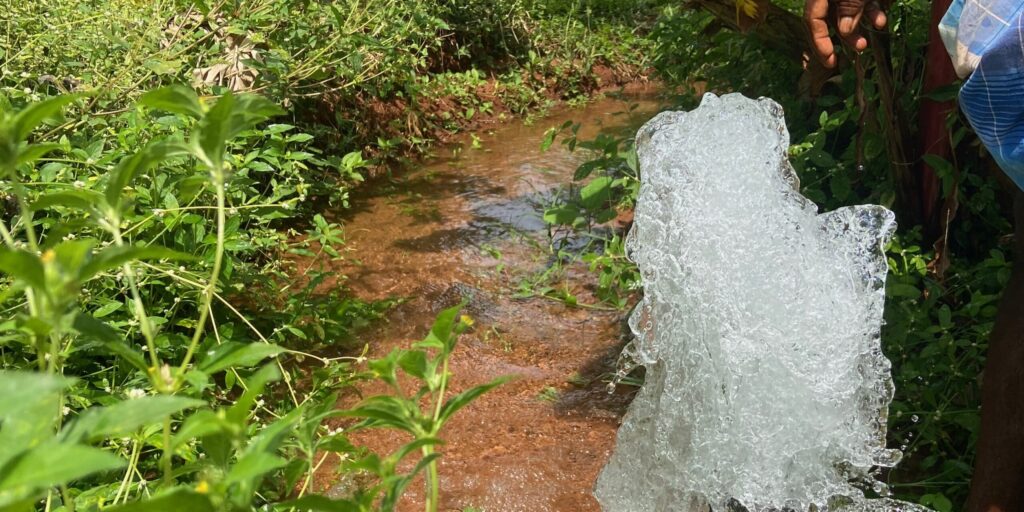
In my last note, I shared about the economic paradigm that is taking us towards a ‘world without agriculture.’ I would like to explore this economic paradigm a little more by isolating the costs of the food that we grow. Let’s take water as the first one. As per several studies, agriculture accounts for about 70% of all freshwater use globally. This number is more than 80% in a country like India where over 50% of the population is still engaged in agriculture. Within Auroville, farms (perhaps along with Matrimandir) are the biggest users of freshwater. The challenges of groundwater depletion, rampant use of free electricity borewells in the bioregion for non-edible crops like casuarina and other fast-growing timber, the beginnings of salination of groundwater and so on offer an opportunity to us to reflect on the hydrological cost of growing food and how can we not only reduce our water consumption but, perhaps what I think is more important to focus on, optimize the use of water in agriculture. Home » Blog » The hydrological cost of growing our food The hydrological cost of growing our food Mar 11, 2025 · Anshul Aggarwal In my last note, I shared about the economic paradigm that is taking us towards a ‘world without agriculture.’ I would like to explore this economic paradigm a little more by isolating the costs of the food that we grow. Let’s take water as the first one. As per several studies, agriculture accounts for about 70% of all freshwater use globally. This number is more than 80% in a country like India where over 50% of the population is still engaged in agriculture. Within Auroville, farms (perhaps along with Matrimandir) are the biggest users of freshwater. The challenges of groundwater depletion, rampant use of free electricity borewells in the bioregion for non-edible crops like casuarina and other fast-growing timber, the beginnings of salination of groundwater and so on offer an opportunity to us to reflect on the hydrological cost of growing food and how can we not only reduce our water consumption but, perhaps what I think is more important to focus on, optimize the use of water in agriculture. There are different ways of thinking about what we should grow and what we can grow depending on people’s preference and the weightage we can give to the ecological and social costs of growing food. Should something be grown only because it’s easier to grow, or because it is more water efficient, or because people really ask for it, or it is less labour intensive and so on. The answer to these questions is never black and white and they change from situation to situation and from time to time. For instance, farmers cannot impose water efficiency over people’s preference for a certain kind of food. At the same time farmers cannot simply chase what the market demands, prioritizing it over its ecological costs. Flood irrigation Flowering Avocado tree A classic case for this is Avocado. It is common knowledge that Avocado is a water guzzling crop. AuroOrchard received its first Avocado seeds from the Mother herself in the early 70s. These we now call the Mother trees. From these trees, many more trees have been planted at AuroOrchard as well as outside. These Avocados are some of the best that we can find in the region, some would say anywhere. There is a huge demand for these Avocados in Auroville and also the Ashram community. Should we be planting more Avocado knowing that we can grow them well? Or should we turn our heads and let people buy Avocados from Pondy market which are nowhere near as good and definitely have a higher ecological cost. Again, the answer is not straightforward and we need to find a balance. We have planted more Avocado trees in the last year but we are exploring how Avocados can be grown with other fruit crops so that water can be used optimally. In such a scenario, the hydrological cost of Avocado gets distributed to many other crops that are growing with it. However, such a solution would then add to the management costs of the system and perhaps the management is even more costly since water for the moment is free. Therefore, if farmers are delegated with the responsibility of conserving our natural resources while farming, there are costs associated with conservation as well and these are to be borne collectively. The hydrological costs of water must not be seen only as the cost of water used to grow food but also the cost to the farmer to be water-wise, to protect the water-source, to optimise farming within the water resource they are entrusted with. Avocados growing with Papayas Previous ArticleNext Article Featured Articles Abundance Product of the Month 22 Oct 2025 Monthly Updatesㅤㅤㅤㅤㅤㅤㅤㅤ 22 Oct 2025 Lessons from Auroville Farm Assessment 2023 22 Oct 2025 Recipe Alert!ㅤㅤㅤㅤㅤㅤㅤㅤㅤㅤㅤ 22 Sep 2025
Recipe Alert!ㅤㅤㅤㅤㅤㅤㅤㅤㅤㅤㅤ

An ordinary omelette with some not-so-ordinary additions, both telling the story of a farm and how it functions except you’d have to take several bites and think on all the different taste-textures that meet your tongue Home » Blog » Recipe Alert! Rocket & Agathi Omelette Feb 14, 2025 · Deepa Reddy An ordinary omelette with some not-so-ordinary additions, both telling the story of a farm and how it functions except you’d have to take several bites and think on all the different taste-textures that meet your tongue—the creaminess of fresh farm eggs; the soft, layered, lightly bitter bite of the petals of Sesbania grandiflora flowers (agathipoo in Tamil), the crunch of onions and the sharpest burst of rucola flavor—to know what I mean. Rocket grows bountifully in AuroOrchard in this season. A few leaves pep and omelette as you see or a sandwich, a few more make a rocket-lifting salad or a pesto, and even more are a simple addition to the humble sambar. True, it’s a pity to cook arugula, but when there’s more than we can use that’s exactly what we do. Thought sambar was just an idli accompaniment? Nah. It’s the medium through which to consume all kinds of usual and unusual ingredients. And rocket has all the virtues of cruciferous vegetables (think: broccoli, kale, brussels sprouts) plus being from your local Auroville farm. It’s also said to reduce insulin resistance, which means it’s good for diabetics and better for general nutrition. Rocket is the cultivated half of this story, agathi flowers are its wilder counterpart, bountiful in this season, too. The trees are a nitrogen-fixing barrier between two planting areas. Locals know the greens as potently medicinal, eaten infrequently to keep GI tract in good health; they’re usually cattle fodder. The flowers are gentler but pack a nutritional punch: high in Calcium, protein, vitamins A and C plus a range of trace minerals the body needs to stay in good overall health. And if not on an omelette, then stir-fried with beans! So, the wild and the cultivated, the raw and the cooked, the bitter and the sweet, the sharp and the creamy—everything in their right proportions for good health and happiness! Previous ArticleNext Article Featured Articles Monthly Updatesㅤㅤㅤㅤㅤㅤㅤㅤ 19 Sep 2025 Abundance Product of the Month 18 Sep 2025 Recipe Alert!ㅤㅤㅤㅤㅤㅤㅤㅤ 22 Sep 2025 Food and Agriculture in Auroville, India 18 Sep 2025
What’s in seasonㅤㅤㅤㅤㅤㅤㅤㅤㅤㅤ
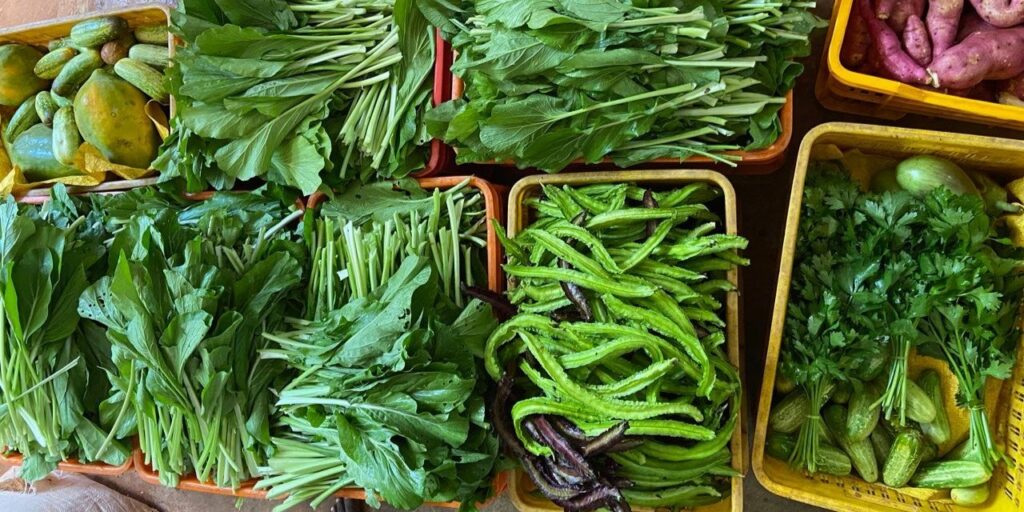
Rucola, also called Arugula, is very tasty and delicious. And Auroorchard offers fresh organic Rucola of the best quality. You can eat it raw in salad, pizza, wraps etc. This green nutrient dense food is high in fiber and phytochemicals. Home » Blog » What’s in season What’s in season Feb 07, 2025 · Fresh Arugula from Auroorchard · Natalie A Rodriguez Rucola, also called Arugula, is very tasty and delicious. And Auroorchard offers fresh organic Rucola of the best quality. You can eat it raw in salad, pizza, wraps etc. This green nutrient dense food is high in fiber and phytochemicals. It has several vital nutrients including.Arugula is a member of the Brassica, or Cruciferous, family. This classification includes mostly cruciferous vegetables, such as Brussels sprouts, kale, cauliflower, and broccoli. Fresh Arugula salad with tomatoes, olives oils and pomegranate, and so healthy and delicious. Harmony is the key for me. As I joined the management core team of the farm years ago, I discovered the incredible perspectives of what we call “the others”. The difficulties to communicate between different cultures and backgrounds when you have no clue, when you don’t know the codes. I could really sense the various parameters related to the local culture and get rid of many of my conditionings, beliefs. Rucola Has benefits like Calcium, Potassium, Folate, Vitamin C, Vitamin K and Vitamin A. Some research associates a high intake of cruciferous vegetables, like arugula, with a lower risk of cancers, including cancers of breast, bladder, lungs, and prostate. (Source: https://www.healthline.com/) Previous ArticleNext Article Featured Articles Monthly Updatesㅤㅤㅤㅤㅤㅤㅤㅤ 19 Sep 2025 Abundance Product of the Month 18 Sep 2025 Recipe Alert!ㅤㅤㅤㅤㅤㅤㅤㅤ 22 Sep 2025 Food and Agriculture in Auroville, India 18 Sep 2025
Unravelling Auroville’s food system
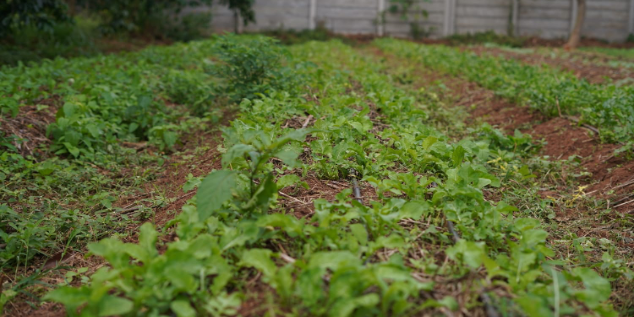
I arrived at AuroOrchard in the summer of 2023, intending to help farms produce more food for Auroville. Mostly I wanted to be closer with people passionate about the same. Home » Blog » Unravelling Auroville’s food system Unravelling Auroville’s food system Jan 31, 2025 · Nidhin Anand I arrived at AuroOrchard in the summer of 2023, intending to help farms produce more food for Auroville. Mostly I wanted to be closer with people passionate about the same. By this time I had already spent a few years working on 2 other farms and supported farm-group-related coordination work. Over the years of interacting with farmers, distributors, and consumers, I realized that the Auroville system is complex and that there isn’t a community-mandated framework and policy to create a conscious food system. Most farms were on their own to support themselves and lacked vision. Production increments in large established farms were hindered by challenges relating to the organizational model of distribution, human resources, accountability structures, and lack of capital funded through the BCC budget. Despite this, I noticed that Aurovillians deeply appreciate Auroville-grown food and that much work could be done within the current system. While I don’t see Auroville farms producing most of Aurovile’s needs due to ecological constraints and dietary habits, I see that there is scope for setting up farming systems to produce many valuable crops and create a fair economy around them. I soon realized that this would require a concerted effort from farmers, distributors, working groups, and other food actors in Auroville toward a common vision. The ‘coming together’ remains an aspiration and a work in progress. This month, I joined Foodlink, the main distribution center of Auroville, after seeing that current frameworks regarding standards of production, pricing, and production planning needed reforms AuroOrchard has helped me see what ecological and social possibilities lie within a 25-acre farming system within Auroville’s geographical context. It helps me ask and answer important questions such as ‘Can we grow all the food we need in Auroville?” and “What is stopping Auroville farms from producing more? The answers I found were complex and included a large share of human behavioral challenges alongside organizational blockages. However, I now see that the tropics offer enormous ecological dynamism and we have the possibility to cultivate a lot more than today’s capacities. This invitation largely remains unresponded. Next Article Featured Articles Monthly Updatesㅤㅤㅤㅤㅤㅤㅤㅤ 19 Sep 2025 Abundance Product of the Month 18 Sep 2025 Recipe Alert!ㅤㅤㅤㅤㅤㅤㅤㅤ 22 Sep 2025 Food and Agriculture in Auroville, India 18 Sep 2025
Lemongrass Tea Recipeㅤㅤㅤ
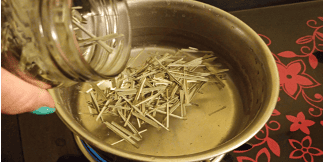
Lemongrass is a great intercrop with our Papaya and Moringa plants. And it not only tastes good but has a lot of health benefits as well. Home » Blog » Recipe Alert! Lemongrass Tea Recipe Jan 31, 2025 · Natalie A Rodrigues Lemongrass is a great intercrop with our Papaya and Moringa plants. And it not only tastes good but has a lot of health benefits as well. Lemongrass tea recipe: Boil lemon grass in a saucepan. Add how much grass as much water you have and the strong flavor you want. Pour into a cup. Plain lemongrass has a lot of benefits in itself but I add fresh lemon and a teaspoon of moringa powder, or organic coconut oil works wonders as it provides saturated fat to the brain.) Add a teaspoon of honey if you want sweetening. The tea that’s it left over I pour into a bottle and cool down. You can use lemon grass in soups and stews as well, take out the grass before you serve. Lemongrass is good to dry and store in glass and you can keep it for a long time. Health benefits: Lemon grass has a variety of antioxidants Many people find the grass relaxing to reduce anxiety, depression, and stress. It helps to dilate blood vessels, improve blood flow and reduce blood pressure The grass is good for muscles and joints and can help fight sweating. The grass is a good source of zinc, potassium and leave. Lemon grass provides good digestion Good to cool down in hot weather, and healthy as well. (Source: https://www.medicalnewstoday.com) Next Article Featured Articles Monthly Updatesㅤㅤㅤㅤㅤㅤㅤㅤ 19 Sep 2025 Abundance Product of the Month 18 Sep 2025 Recipe Alert!ㅤㅤㅤㅤㅤㅤㅤㅤ 22 Sep 2025 Food and Agriculture in Auroville, India 18 Sep 2025
Learning Journey at AuroOrchard
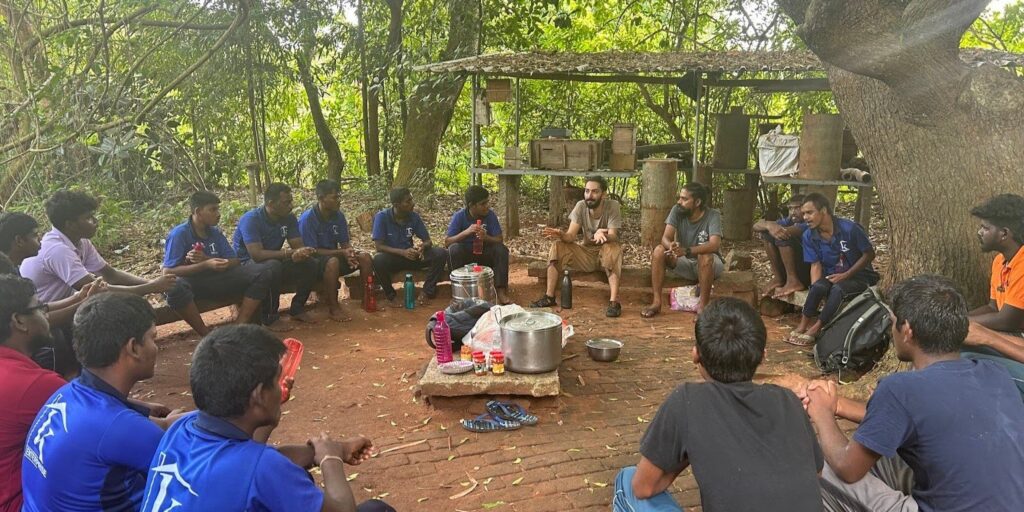
Over the past four months, volunteering at AuroOrchard has been an incredible learning experience. As the founder of Sristi Foundation, where we use farming to empower children and youth with intellectual disabilities, acquiring proper farming skills is essential for me. Home » Blog » Learning Journey at AuroOrchard Learning Journey at AuroOrchard Jan 31, 2025 · Karthikeyan Ganesan Over the past four months, volunteering at AuroOrchard has been an incredible learning experience. As the founder of Sristi Foundation, where we use farming to empower children and youth with intellectual disabilities, acquiring proper farming skills is essential for me. AuroOrchard has provided invaluable lessons that I am implementing in Sristi Village, transforming our farm into a more efficient and productive space. Key learnings include building soil fertility through mulching sun hemp, compost-making with cow dung and dry leaves, effective mulching practices, and numbering beds for better farm management. These practices are making a tangible impact on our work. Last month, we bought 15 youth with intellectual disabilities to Auroorchard for an exposure visit. Elias, a volunteer, guided them through hands-on farming activities, creating a memorable experience for all. I am deeply grateful to Anshul and the AuroOrchard team for this opportunity to learn and grow, as well as for the chance to meet wonderful people from around the world. This journey of learning continues to inspire me. (Karthik is the Founder of Sristi Foundation) Next Article Featured Articles Monthly Updatesㅤㅤㅤㅤㅤㅤㅤㅤ 19 Sep 2025 Abundance Product of the Month 18 Sep 2025 Recipe Alert!ㅤㅤㅤㅤㅤㅤㅤㅤ 22 Sep 2025 Food and Agriculture in Auroville, India 18 Sep 2025
Experiments in the Mango orchard

During the last month, our birds contracted a virus and fell terribly sick. The egg production came down drastically with almost no eggs. The little eggs that we got from the sick birds were discarded. With intensive care and help from the entire team, the birds are now doing well. The fourth batch of birds (one-day old chicks) will arrive in two weeks! This will replace the oldest flock which will complete two years at the end of the year. Home » Blog » Experiments in the Mango Orchard Experiments in the Mango Orchard Jan 31, 2025 · Pictures by Ami Grossman For over two years, we have been trying different crops in the Mango orchard to address the gaps of diversity and optimum land utilisation in this more than 80 year old orchard of over 400 mango trees. In 2023, we pruned the mangoes in one section heavily to rejuvenate them. As the space in between was now open to the Sun, we started planting turmeric, pumpkin and brinjal. Ash and Neem leaves are added around the young Pumpkin plants to protect them from Red-gourd-beetle. Sunflowers are being planted in the hedges for diversity and for more food for the bees. Turmeric planted in between the mango trees in May 2024 is now ready for harvest. Pumpkin seeds saved from the farm being sown Channels being irrigated in preparation for Pumpkin planting Next Article Featured Articles Monthly Updatesㅤㅤㅤㅤㅤㅤㅤㅤ 19 Sep 2025 Abundance Product of the Month 18 Sep 2025 Recipe Alert!ㅤㅤㅤㅤㅤㅤㅤㅤ 22 Sep 2025 Food and Agriculture in Auroville, India 18 Sep 2025
Demystifying Avocados with Bala
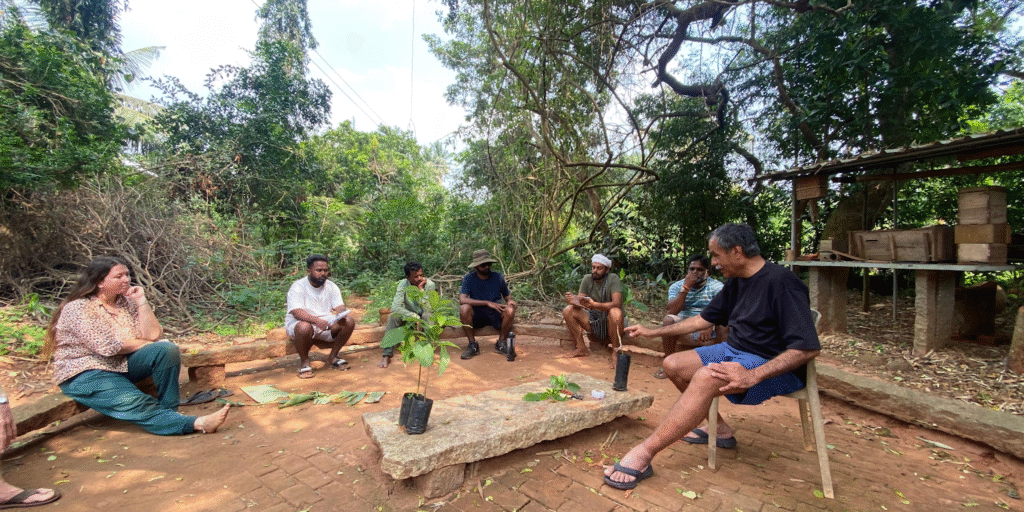
Over the past four months, volunteering at AuroOrchard has been an incredible learning experience. As the founder of Sristi Foundation, where we use farming to empower children and youth with intellectual disabilities, acquiring proper farming skills is essential for me. Home » Blog » Demystifying Avocados with Bala Demystifying Avocados with Bala Jan 31, 2025 · Anuja Khokhani & Chintan Jadwani We recently hosted an insightful workshop with Bala, a passionate Avocado farmer from the picturesque hills of Kodaikanal. Participants were taken on an enlightening journey through the history of Avocados in India, exploring their diverse types and subspecies. Bala shared his wealth of knowledge on the intricacies of Avocado farming, including expert tips on pruning techniques, strategies for cultivating high-density plantations, and the art of grafting for improved yields. Attendees left with a deeper understanding of sustainable practices and practical insights to enhance Avocado cultivation. The session offered a rare blend of inspiration and practical expertise, enabling participants to take their Avocado-growing endeavours to the next level. For a closer look at the grafting technique, check out the videos here and here. Next Article Featured Articles Monthly Updatesㅤㅤㅤㅤㅤㅤㅤㅤ 19 Sep 2025 Abundance Product of the Month 18 Sep 2025 Recipe Alert!ㅤㅤㅤㅤㅤㅤㅤㅤ 22 Sep 2025 Food and Agriculture in Auroville, India 18 Sep 2025
Connecting Through Permaculture
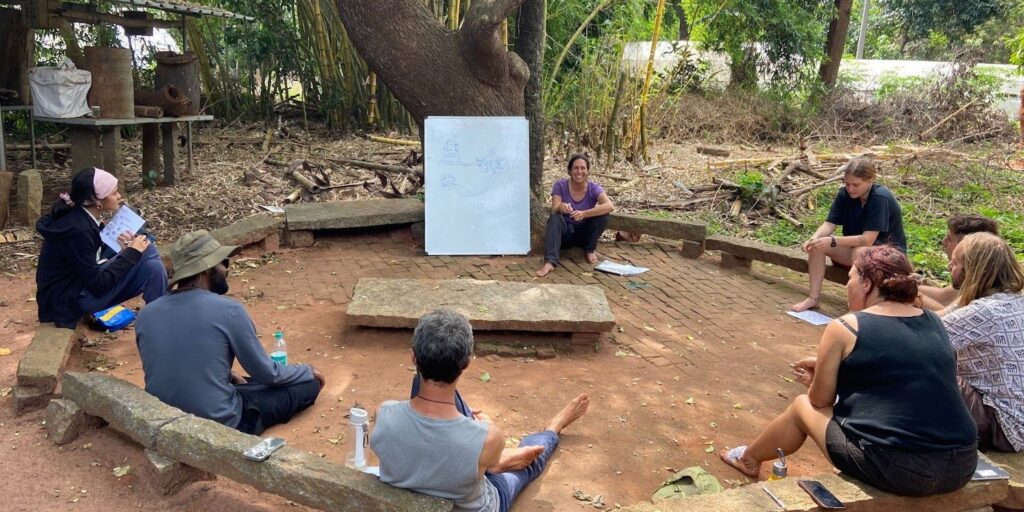
Over the past four months, volunteering at AuroOrchard has been an incredible learning experience. As the founder of Sristi Foundation, where we use farming to empower children and youth with intellectual disabilities, acquiring proper farming skills is essential for me. Home » Blog » Connecting Through Permaculture Connecting Through Permaculture Jan 31, 2025 · Amber Hill This past month, we had the opportunity to come together for a three-day intensive introduction to permaculture. Most of the participants were volunteers already working on the farm, making it a fantastic way to strengthen our sense of community while deepening our understanding of sustainable design. Through this course, we not only learned practical skills but also built stronger connections with each other and the land we nurture. Permaculture teaches us to see our environment through a designer’s eyes, considering the relationships between plants, soil, water, and all the elements that create a thriving ecosystem. By applying these principles, we can assess our farm in a new light—understanding which plants grow best together, where to plant them for maximum benefit, and how to close resource loops within the property. A great example of this is our banana circle: an efficient system where surplus water is redirected to nourish water-loving banana plants, creating a win-win situation for both sustainability and productivity. Beyond these foundational lessons, we also explored future projects that could enrich the farm and involve a wider community. Ideas ranged from hands-on workshops—such as making herbal creams and essential oils from farm-grown plants—to learning about soil health, pollinators, and botany. There’s a lot of enthusiasm for expanding these opportunities, and now we need to determine the best format to make them accessible and engaging for everyone. The energy and excitement from this course have been truly inspiring, and we look forward to seeing how these ideas take root and flourish. If you’re interested in contributing or participating in future initiatives, we’d love to hear your thoughts! Let’s continue growing together—sustainably, creatively, and in harmony with nature. Next Article Featured Articles Monthly Updatesㅤㅤㅤㅤㅤㅤㅤㅤ 19 Sep 2025 Abundance Product of the Month 18 Sep 2025 Recipe Alert!ㅤㅤㅤㅤㅤㅤㅤㅤ 22 Sep 2025 Food and Agriculture in Auroville, India 18 Sep 2025